
1885 - 1916
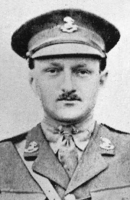
CPL David Wallace Crawford
1887 - 1916
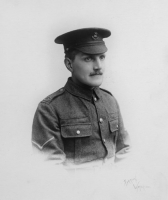
Lce-Corpl John Joseph Nickle
1894 - 1916
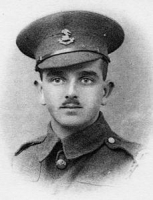
Pte 17911 Morton Neill
1897 - 1916
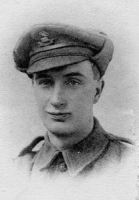
Lieut Edward Stanley Ashcroft
1883 - 1918
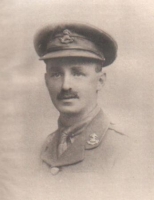
Pte 24993 Findley Ralph Fergusson Foden
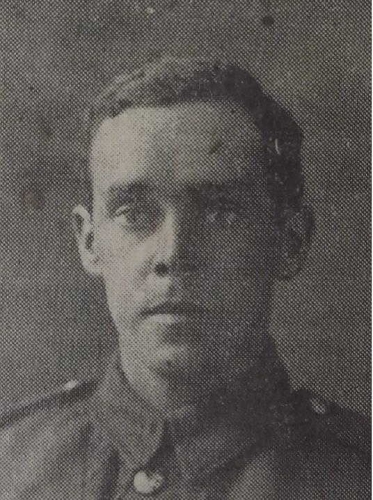
- Age: 29
- From: Seacombe, Cheshire
- Regiment: The King's (Liverpool Regiment) 17th Btn
- K.I.A Thursday 12th October 1916
- Commemorated at: Warlencourt Brit Cem
Panel Ref: V.A.39
Finlay was born on 10th November 1886 in Seacombe, the eldest of 10 children born to Robert Foden and his wife Isabella Murray (nee Fergusson) an eleventh, Charles Irving Foden was born in 1888 but died aged 4 years.
In 1881, his father Robert lives with his parents at 18 Rupert Hill, Everton and on 13th January 1886 he married Isabella Murray Fergusson, the 22 years old daughter of Peter Fergusson, a schoolmaster, in St George’s Church, Everton. Robert was 24 years old, a clerk and son of a bookkeeper and gave his address as 18 Rupert Hill, while Isabella gave hers as 366 Great Homer Street. Their first eight children were boys (one dying in infancy) and their only daughter, Mary Isabel, was not born until 1905 and was followed on 10th July 1908 by the birth of their youngest child, another boy, Harry Bell Foden.
By 1891, the family had moved acroos the Mersey to Seacombe and Robert, an oil merchant, and Isabella live with their first three boys – Finlay Robert, Charles Irving and William Campbell, at 17 Bell Road. On 29th March 1892 their next son, Walter Bell Foden, was born followed by Arthur Fergusson (13.07.1893); Eric Gordon (01.12.1894); and Archibald Murray (28.01.1897)
In 1901 the family still lived at 17 Bell Road. On 18th August 1901, their son Douglas Lauder, was born, followed by Mary Isabel (30.11.1905) and Harry Bell (10.07.1908). Robert’s wife, Isabella, died on 18th July 1908, probably following the birth of her last child, and in 1911 the family has moved to 58 Littledale Road, Seacombe where Robert, widower, oil merchant, lives with eight of his children – all except Finlay, of whom there is no trace in the 1911 Census.
Finlay enlisted in the 20th Battalion of The King's Liverpool Regiment as Private 24993, he arrived in France on 7th November 1915 with the rest of the Liverpool Pals.
Formed in November 1914 the 20th Battalion were originally billeted at Tournament Hall, Knotty Ash before on 29th January 1915 they moved to the hutted accommodation purposely built at Lord Derby’s estate at Knowsley Hall. On 30th April 1915 the 20th Battalion alongside the other three Pals battalions left Liverpool via Prescot Station for further training at Belton Park, Grantham. They remained here until September 1915 when they reached Larkhill Camp on Salisbury Plain.
On 05th July 1915 in Birkenhead he married Mabel Helena Ellison at at St John's Church, Egremont.
He arrived in France on 7th November 1915.
On 12th October 1916, the 17th Battalion was amongst those involved in the Battle of the Transloy Ridges near Flers.
17th Bn War Diary: Battle of Transloy Ridge –
11-10-16 - Gird Trench/Gird Support – Battalion in front line and support trenches. British bombardment of enemy front line system commenced about midday. Hostile shelling was intermittent throughout the day.
12-10-16 - Our bombardment continued. Enemy reply weak. 2.5 p.m. Zero hour. Attack on German front line system commenced. Enemy wire was found to be uncut and attack was unsuccessful. Hostile machine gun fire was very heavy and caused many casualties. Battalion H.Q. and Support Trench were heavily shelled throughout afternoon and evening. […] During this action all communication had to be carried out by runners and carrier pigeons as all wires were being continually cut by enemy shelling.
Casualties: 5 officers killed, 5 officers wounded, 38 OR killed, about 225 OR wounded/missing etc.
Graham Maddocks, in “Liverpool Pals” p.140, adds:
“As the whistle blew, the 17th Battalion left its trenches to move forward. […] As soon as the attacking waves left their trenches the enemy artillery began to register on them, and at the same time, the defending infantry commenced a murderous rain of fire. […] Although their numbers had been depleted by the British bombardment, they were trained and experienced soldiers, well dug in on high ground, and for the most part, looking out on uncut wire. As such, it was virtually impossible for them to miss the City Battalion men struggling to advance in the mud towards them. The 17th Battalion, on the left, was particularly badly hit, as its portion of No Man’s Land contained a slight rise in the ground, and as the troops emerged onto it they were silhouetted against the sky and became easy targets. Those on the left of the attack, who managed to avoid the hail of bullets and make it to the German wire, then found that it was totally uncut, and thus trapped, they too became easy targets, to be picked off almost at the enemy’s will. It was hardly surprising that, seeing the first waves being wiped out, some of the following waves turned back and made for their start lines. These lines were now packed with other waves of troops, however, and the fleeing men added to the congestion already there, and became easy prey for the German gunners. There is some evidence also, to suggest that at this stage, the British trenches were also being hit by their own heavy artillery shells which were falling short.”
Finlay was amongst those killed in action. He now rests at V A 39 at Warlencourt British Cemetery.
Warlencourt Cemetery is entirely a concentration cemetery, begun late in 1919 when graves were brought in from small cemeteries and the battlefields of Warlencourt and Le Sars. The Graves Registration form shows graves from “Le Sars 6/1, 6/2, Hexham Road, Seven Elms”.
Graves were brought in from the original cemeteries at Hexham Road (Le Sars), and Seven Elms (Flers), as well as over 3,000 British graves due to the fighting which took place around the Butte de Warlencourt from the autumn of 1916 to the spring of 1917, and again in the German advance and retreat of 1918. The cemetery now contains 3,505 Commonwealth burials and commemorations of the First World War, 1,823 of which are unidentified.
Monies due to Finlay and his medals were sent home to his widow, Mabel Helena, who was living at 11 Kinglake Road, Wallasey.
Probate in respect of Finlay’s estate was not granted until 01st July 1924, when administration was granted to Mabel with Finlay’s estate declared as £434 9s 0d.
The family suffered grievous losses in addition to losing Finlay. His brothers records are listed below:
Private 1732 Archibald Murray Foden served with 4th Battalion, Cheshire Regiment, landed at Gallipoli on 8th August 1915 and within 10 days had been killed in action aged 18 years and commemorated on the Helles Memorial;
Private 2913 (later 200876) Eric Gordon Foden also served with the Cheshire Regiment and was killed in action on the Menin Road on 14th October 1918, aged 24 years and is buried in Grave XIX D 2 in Hooge Crater British Cemetery;
Corporal William Campbell Foden served with Lancashire and Cheshire Royal Garrison Artillery from 7th August 1914 until discharged on 40% disability pension on 25th February 1919, having been in France since 24th September 1916 and being badly wounded in June 1918 when he was admitted to hospital in Rouen and later transferred to the UK having sustained wounds to his head, shoulder and face caused by an exploding howitzer shell;
L/Corporal 2757 Arthur Fergusson Foden served with the 10th (Scottish) Battalion of the King’s Liverpool Regiment (TF) arriving in France on 1st November 1914 and was awarded a Military Medal for courage during the Battle of Hooge;
Walter Bell Foden served with the 4th Cheshires (TF) from 16th May 1911 until he went to live in Canada, from where he requested his discharge in 1914.
We currently have no further information on Finlay Robert Fergusson Foden, if you have or know someone who may be able to add to the history of this soldier, please contact us.
89th Brigade On This Day.
110 Years Ago.The Battle of the Transloy Ridges begins. more....
Killed On This Day.
(110 Years this day)Monday 16th October 1916.
Pte 22929 Edward Bird
19 years old
(110 Years this day)
Monday 16th October 1916.
Pte 16795 William Frederick Collister
23 years old
(109 Years this day)
Tuesday 16th October 1917.
L/Cpl 49038 Ernest Yardley
31 years old
(108 Years this day)
Wednesday 16th October 1918.
Pte 85187 James Hoy
31 years old
(107 Years this day)
Thursday 16th October 1919.
Pte 36438 Hugh Morris
23 years old