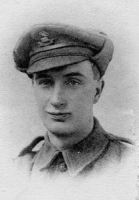
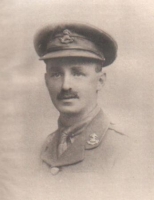
Liverpool Pals Who Died on This Day
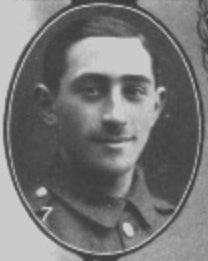
From: Broughton, Manchester
K.I.A (110 Years this day)
Thursday 12th October 1916.
20 years old
Harry’s Grandparents Moses and Rachel Abrahams were migrant Russian Jews who moved to Prestwich, Manchester in the mid-1860s. Moses was by profession a photographer and this would be in the early days of photography. They had four children born in Manchester after their arrival there. Their second child was a son, Levi Abrahams, born there in the September quarter of 1870. He was also known as Louis or Lewis he became a merchant in cotton goods.
In the December Quarter of 1892 Louis married Sarah Rebecca Simon also sometimes recorded as Simons. They married in Leeds which was Sarah’s home but they lived at 15 Broughton Terrace, Prestwich, Manchester and it was here in the June quarter of 1896 that their second child Harold Abrahams was born. He had and older sister Beatrice Abrahams born 1893 and a younger brother Alfred Abrahams born 1902.
On the 1901 census the family are living at 13 Broughton St, Cheetham, Manchester. His father, Louis, is aged 30, a job & tent merchant who was born in Manchester, and his wife Sarah aged 28 born in Leeds, they have two children Beatrice aged 7 and Harold 5 both born in Manchester. Also present are Louis’ brother Maurice aged 29 and family.
The Kelly's Trade Directory for 1905 shows Louis Abrahams at 26 Sussex Road, Southport.
As per his self-completion of the 1911 Census the familuy are now living at 19 Chambres Road, Southport. Louis lists himself still a cotton merchant, his wife Sarah, together with his children, 15 year old scholar Harold and 9 year old scholar Alfred. Presumably 18 year old daughter Beatrice was recorded somewhere else away from home. Also living with Louis and Sarah was his younger brother Benjamin Abrahams also a cotton merchant.
Harry was educated at the Modern School in Southport and prior to enlisting he was working in the business; Messrs. R. Abrahams and sons based at 84 Mosley Street, Manchester.
In late 1914 Harold aged 18 appears to have enlisted locally in Southport, under the name Harry Abrahams rather than his full birth name Harold.
His attestation papers and medals cards have survived and we know that he joined the 17th Battalion of The Kings Liverpool Regiment as Private 52804. This was part of the 89th Brigade and after training the 17th was sent to France, alongside the other 3 Battalions of the Liverpool Pals.
In October 1916 Harry and his Battalion took part in The Battle of Flers which was part of The Battle of Le Transloy.
On 12th October 1916 at Zero hour 2.5 p.m. he and his 17th Pals Battalion went over the top into No Man’s Land.
"The extreme left of the 17th found the Enemy's barbed wire uncut, which held up the progress of the assaulting troops, during which hostile machine gun fire took a heavy toll of the attackers, who were because of the lay of the land silhouetted, making them easy targets and they finally forced back to their original trenches!
Generally, the attack was an utter failure, largely caused by the skill which the Enemy employed his machine guns.
These had not been put out of action by our Artillery Barrage that morning, because of the Mud, they could not be brought forward enough distance and were firing short onto our own troops. During the afternoon the supporting Battalion, the 20th Pals Kings arrived and preceded to consolidate the small gain of some 150 yards taken by some of the 17th Btn who were relieved by Pals 19th and 20th Btn’s during the night of the 12th/13th October 1916"
Their Losses had been very heavy:-
6 Officers and 38 Other Ranks were Killed in Action that afternoon including 20 year old Harry Abrahams.
Also 5 other Officers and 225 Other Ranks were Wounded or Missing.
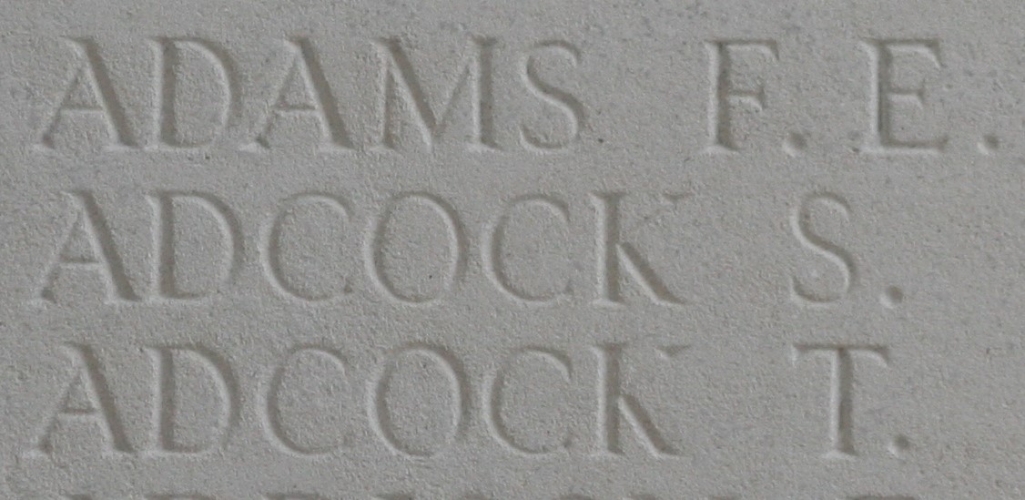
Harry’s body was not recovered from the battlefield or was subsequently lost and he is commemorated on the Thiepval Memorial at Pier and Face 1 D 8B and BC.
The Thiepval Memorial, the Memorial to the Missing of the Somme, bears the names of more than 72,000 officers and men of the United Kingdom and South African forces who died in the Somme sector before 20 March 1918 and have no known grave. Over 90% of those commemorated died between July and November 1916.
On 01st August 1932 the Prince of Wales and the President of France inaugurated the Thiepval Memorial in Picardy. The inscription reads: “Here are recorded the names of officers and men of the British Armies who fell on the Somme battlefields between July 1915 and March 1918 but to whom the fortune of war denied the known and honoured burial given to their comrades in death.”
His death was reported in the Liverpool Daily Post on 30th October 1916:
SOUTHPORT CASUALTIES
Private H. Abrahams, K.L.R., formerly of Chambres Road, Southport;
A further local newspaper reported the following:
PRIVATE H. ABRAHAMS
(Killed in Action.)
Private Harry Abrahams of the King's( Liverpool Regiment), son of Mr. and Mrs. Abrahams, 26 Broom -street, Broughton Park, Manchester, formerly of 19, Chambres-road, Southport, was, we regret to announce, killed in action 12th inst. The deceased soldier joined the King's in August 1914, but had been in France only three months. He was educated at the Modern School, Southport, and previous to enlisting was engaged in his father's business - Messrs. R Abrahams and son, 84 Mosley street, Manchester. He was well known locally.
The UK Army Register of Soldiers Effects are the only Military Record surviving for Harry Abrahams. It shows, sadly, that they sent 8 Shillings and 9 Pence to his father Louis a year later in November 1917 from the Preston Depot.
A War Gratuity W5070 was authorized on 09th July 1919.
His mother, Sarah, died aged 56, in 1930 and his father, died aged 67, on the 18th April 1938.
Probate:-
ABRAHAM Louis oF 30 Vernon Court, Hendon Way London N.W.2 died 18 April 1938 at St Andrews Hospital Dollis Hill London N.W.2 Administration Manchester 19 May to Alfred Abrahams cotton merchants. Effects £148 19s 6d.
Grateful thanks are extended to Alan Chapman for the detailed biography
We currently have no further information on Harry Abrahams, If you have or know someone who may be able to add to the history of this soldier, please contact us.
From: Portsmouth
K.I.A (110 Years this day)
Thursday 12th October 1916.
36 years old
Frank Ernest Adams was born the 7th Child of 8 in the September Quarter of 1880 Portsea Island at 21 Garnier Street, Portsea, Portsmouth the son of John Adams and his wife Caroline (nee Bryant) who married on the 2nd July 1873 at Saint Mary’s, Portsea.
He had 3 elder sisters and 3 elder brothers, however tragedy was to befall the family a number of times. His eldest sister Rosa Kate Adams was born September 1873 died in June 1874. Another elder sister Florence was born September 1878 and died December 1879. His younger sister Catherine Amy Adams born 1883 died 6 months later in1884. His Father John was an Engine Fitter, he died aged only 38 in 1887 when Frank was only 6 years old.
The 1881 Census shows the family living at 21 Garnier Street, Portsea.
The father John is aged 32, an engine fitter b.Portsea, mother Caroline is aged 34 b.Portsea, children John E. 6 a scholar b.St George, London, Frederick 5 a scholar b.St George, London, Albert E. 3 b.Portsea, Caroline M. 2 b.Portsea, and Frank E. 8mths b.Portsea.
The 1891 Census shows Frank as a Scholar living with his widowed mother and his siblings still at 21 Garnier Street, Portsea.
In 1897 aged 17 he moved to London to become a Civil Servant at Whitehall in the Board of Education as an Assistant Clerk. At this time he was living with his elder Brother John Edward Adams and his Wife Clara at 3 Stanmore Road, Tottenham. This is confirmed by the 1901 Census showing him aged 20 living there also with his elder sister Caroline May Adams and elder brother Albert Edmund Adams.
The 1911 Census shows him still living with Caroline and Albert with the three of them living at 83 Boundary Road, Wood Green, Tottenham. Frank is still an Assistant Clerk in Whitehall aged 31. He was an Assistant Clerk (Board of Education, Whitehall) and served nineteen years in Government Service.
In 1914 aged 34 Frank appears to have enlisted as Pte. 20500 in the East Surrey Regiment sadly no attestation papers appear to have survived.
In 1916 now aged 36 he was transferred to 3 Coy 18th Pals Battalion Kings (Liverpool Regiment) and became Pte 52480 under Temporary Captain Guy Ravenscroft. Frank now found himself at the Somme. In October 1916 the 18th Battalion were involved in The Battle of Flers which was part of The Battle of Le Transloy.
Frank was killed in action during the attack of 12 October 1916 involving also other Pals Battalions.
The 18th Battalion suffered heavy losses that afternoon and the death toll shows many of the 18th Battalion had been transferred in from other Regiments to build up the Battalion numbers following the events at Montauban, Trones Wood and Guillemont in July.
Frank’s body was either not recovered or subsequently lost as he is commemorated on the Thiepval Memorial to the Missing of the Somme at Pier and Face 1D 8B and BC.
The Thiepval Memorial, the Memorial to the Missing of the Somme, bears the names of more than 72,000 officers and men of the United Kingdom and South African forces who died in the Somme sector before 20 March 1918 and have no known grave. Over 90% of those commemorated died between July and November 1916.
On 01st August 1932 the Prince of Wales and the President of France inaugurated the Thiepval Memorial in Picardy. The inscription reads: “Here are recorded the names of officers and men of the British Armies who fell on the Somme battlefields between July 1915 and March 1918 but to whom the fortune of war denied the known and honoured burial given to their comrades in death.”
The Commonwealth War Graves Commission site confirms his parents as the late John Adams and Caroline of Wood Green
It also confirms that Frank was a Civil Servant for 19 years in the Department of Education in Whitehall
His soldiers Will left his estate to his elder sister Caroline May Adams who never married.
She also as his Executrix, received his Soldiers Effects and 3 Pounds 4 Shillings and 3 Pence in March 1917 from the Preston Depot plus a War Gratuity in June 1919. She also received his Army Pension and his Medals, address 83 Boundary Road, Wood Green, Tottenham.
Mother died aged 80 on the 22nd May 1927
Probate:-
ADAMS Caroline of 83 Boundary Road, Wood Green, Middlesex widow died 22 March 1927 Probate London 20 April to Caroline May Adams spinster. Effects £136 12s 10d.
We currently have no further information on Frank Ernest Adams, if you have or know someone who may be able to add to the history of this soldier, please contact us.
Grateful thanks are extended to Alan Chapman for the detailed biography
From: Liverpool
K.I.A (110 Years this day)
Thursday 12th October 1916.
21 years old
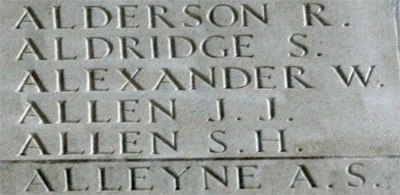
Stanley Howard was born on 23 August 1895 at 15 Caradoc Road, Bootle, and was baptized on 11 September 1895 at St. Matthew's Church, Stanley Road, Bootle.
His father Howard Henry Allen was a fancy goods salesman from Farlam, Cumberland and Stanley was the fourth child of the six children he had with two wives.
He married his first wife Mary Hill in Toxteth in 1887. Mary died aged 26 in June 1890 following the stillbirth of their second child in Toxteth. He remarried on 13th May 1894 to Jessie Isabel Hardcastle of 17 Cyprus Rd, Bootle, at St. Matthew's, Bootle. They had a son Albert Victor in 1889, another son Stanley Howard in 1895, a daughter Ethel Isabel in 1896 and a third son Percival Leslie in 1899.
His father featured in the Liverpool Daily Post on 16th June 1897
PHOTOGRAPHS OF LOCAL CEREMONIES.
Mr. Howard H. Allen, photographer, Spofforth Road, Edge-hill, has made special arrangements to take a series of photographs of the Jubilee celebration in Liverpool and Birkenhead. The Liverpool pictures will include the marine display on the river, the school children in the various parks. Volunteers at Wavertree Playground &c., while those from Birkenhead will embrace the Mayor’s party the Town Hall next Saturday, view the procession, the procession itself to the park, school children the park entrance &c. The pictures will be of various sites, suitable for framing, many will doubtless wish to retain mementoes of so interesting occasion. Copies can be seen on and after the 24th inst. At Simpson’s on the Landing-stage, Messrs. Henstock and Foalkes's, 42, Lord-Street, the Town Hall, Birkenhead, and at Mr. Allen’s studio.
The 1901 Census shows Stanley, a scholar, aged 6 living with his siblings and parents at 23 Liscard Road, Wavertree. His father Howard H. is aged 36, a fancy goods salesman b.Farlam, Cumberland, mother Jessie I. is aged 29 b.Liverpool, children Frances A. aged 12 b.Liverpool, Albert V. aged 11 b.Liverpool, Stanley Howard aged 6 b.Seaforth, Ethel E. aged 5 b.Liverpool, and Percival L. aged 4 b.Liverpool.
From 1903-1905 on the Electoral Roll, father Howard Henry is living at 42 Lawrence Road, Wavertree and he appears on passenger records to Canada soon after.
The 1911 Census at 26 Corney Street, Liverpool shows 15 year old Stanley now a bakers errand boy living with his mother Jessie as head of household, she is working as a waitress. She advised that they have been married for 17 years and have had 3 children. There are two children in the household; Albert Victor is 21 and a fishmonger salesman and 11 year old scholar Percival Leslie. Their father Howard Henry Allen was in Manitoba, Canada. He appears on the 1911 Canadian Census in Dauphin, Manitoba, Canada. He first arrived in Halifax, Nova Scotia on the “Ionian” in 1907, and was a photographer.
Two sons enlisted in the King's Liverpool Regiment:
Stanley Howard Allen as Private. 51684 in 19th (Pals) Battalion of The King's Liverpool Regiment.
Albert Victor Allen as Private. 5555 in 10th Battalion of the King's Liverpool Regiment (Liverpool Scottish). He was killed in action with the 10th Battalion on 09th September 1916 near Longueval, France. He now rests at Caterpillar Valley Cemetery, Longueval.
Just 33 days later Howard and Jessie lost another son when Stanley Howard was killed in action on 12th October 1916 at Le Transloy Ridges.
It had rained incessantly at the beginning of October 1916 and the ground was full of mud. In his book ‘The Liverpool Pals’ Graham Maddocks describes the day of the 12th of October 1916.
It was obvious that the Germans knew an attack was coming and from which direction it would be mounted. On the evening of the 11th the 20th Battalion moved up the line and dug two deep assembly trenches behind the 17th Battalion’s position for the attack the next day. The 19th Battalion also moved into its reserve positions known as Flers Trench. Although the rain has stopped, the ground was like a morass, with all the natural vegetation destroyed, it was difficult to tell exactly where the objectives lay. On the afternoon of the 12th at exactly 2.05pm, the attack began along the whole Corps line, covered by the local batteries of the Royal Field Artillery which still had line of sight. As the whistles blew, the 17th Battalion left its trenches to move forwards, at the same time No.1 and 2 Companies of the 20th Battalion moved forward and occupied the trenches vacated by the 17th. As they too went over the top, No.3 and 4 Companies took their place and waited in their turn to follow. No.2 and 3 Companies of the 19th Battalion moved up to occupy the assembly trenches dug the previous night by the 20th.
As soon as the attacking waves left their trenches the enemy artillery began to register on them and at the same time the defending infantry commenced a murderous rain of fire. Those German regiments were trained and experienced soldiers, well dug in on high ground, and for the most part, looking out on uncut wire. As such it was virtually impossible for them to miss the City Battalion men struggling to advance in the mud towards them.
Brigadier-General F.C.Stanley wrote that the Battalions were also suffering casualties due to the short shooting of the British heavy artillery fire. “I know from practical experience that they were our own guns which were shooting, and which were causing us quite a considerable number of casualties. The fault lay at that time from the fact that the heavy gunners would not send their FOO’s (Forward Observation Officers) far enough forward, but were content to observe us from right back”
Some ground was gained that day, about 150 yards, the 20th Battalion were not relieved until 24 hours later causing the men to endure another day and night in the front line trench.
Stanley's body was not recovered or was subsequently lost as Stanley is commemorated on the Thiepval Memorial.
The Thiepval Memorial, the Memorial to the Missing of the Somme, bears the names of more than 72,000 officers and men of the United Kingdom and South African forces who died in the Somme sector before 20 March 1918 and have no known grave. Over 90% of those commemorated died between July and November 1916.
On 01st August 1932 the Prince of Wales and the President of France inaugurated the Thiepval Memorial in Picardy. The inscription reads: “Here are recorded the names of officers and men of the British Armies who fell on the Somme battlefields between July 1915 and March 1918 but to whom the fortune of war denied the known and honoured burial given to their comrades in death.”
Notice of Albert's death appeared in the Liverpool Echo on 14th November 1916 under the header:
KILLED IN ACTION
Private A E Allen, KLR. His parents live at 41 Cecil Street, Wavertree. He was a pupil at Lawrence Street Council School. His brother Private Stanley H Allen is missing.
On the first anniversary of his death, notice's appeared in the Liverpool Echo on the 12th October 1917 under the Roll of Honour heading as follows:
ALLEN - In ever loving memory of Private Stanley H. Allen (KLR) who was reported missing October 12, 1916 since reported killed.
We know not where he found his grave,
Swept on by death's exalting wave;
For Britain's cause his life he gave
Somewhere in France.
(Fondly remembered by his mother, sister and brother.) - 41 Cecil Street, Wavertree.
ALLEN - In ever loving memory of of Private Stanley H. Allen (KLR) reported missing, now reported killed October 12, 1916 (Gone but not forgotten) Molly.
On the first anniversary of Albert’s death, notice's appeared in the Liverpool Echo on the 08th September 1917 under the Roll of Honour heading as follows:
ALLEN—In loving memory of Private A. V. Allen (Bert), K.L.R., killed action, September 8, 1916.
He lies by the side of his comrades,
A hero's grave unknown;
But his memory will live for ever
In the hearts he has left at home.
- Fondly remembered by his Mother, Sisters and Brother, 41, Cecil-street, Wavertree.
ALLEN—In sad but loving memory of Private A. V. Allen, K.L.R. who was killed in action, September 8, 1916.
(To memory ever dear.)— Dolly.
Their mother Jessie claimed both pensions and effects and was then living at 41 Cecil Street, Wavertree.
It seems that his father returned to Liverpool after the war to pay his respects to his two lost sons. An incoming passenger record exists for the 07th September 1919 aboard the “Melita”, he gave the address 156 Harrowby St, the address of Emma Riden(no family connection found).
His mother died, aged 63, in the March quarter of 1935.
His father died, aged 75, on the 07th March 1939 in Souris, Manitoba, Canada.
We currently have no further information on Stanley Howard Allen, if you have or know someone who may be able to add to the history of this soldier, please contact us.
From: St Helens, Lancs
K.I.A (110 Years this day)
Thursday 12th October 1916.
30 years old
John was born on the 03rd May 1886 in St Helens and resided in Liverpool and was the son of John Almond and his wife Elizabeth (née Littler) of St Helens who had married on the 12th May 1875 at St Mary's (Lowe House) Roman Catholic Church. He was baptised on the 6th May also at St. Mary's, Lowe House Catholic Church, North Road, St Helens.
The 1891 Census shows the family are living at the Windleshaw Abbey Inn, Hard Lane, St Helens. His father John is 47 years of age, a licensed victualler, whilst his mother Elizabeth, born in St Helens in 1852 is 39. John is 4 years of age and his siblings listed are; Catherine 15 a scholar, Thomas 12 a scholar, Matthias 11 a scholar, Joseph 9 a scholar, Mary 1 and Ann just 2 months old.
By the time of the 1901 Census the family are at the Abbey Hotel on Hard Lane, St Helens. His father, John is aged 57, and is still a licensed victualler, his mother, Elizabeth, is aged 49, children Catherine aged 25, Thomas aged 23 is a joiner, Matthias aged 21 is a barman, Joseph aged 19 is employed as a clerk in a municipal office, Mary aged 11 and Annie aged 10 and Minnie who is 7 years of age.
His father, John, died shortly after the census aged 57.
His mother, Elizabeth, remarried to widower John Helsby in 1905, their marriage was registered in Prescot. John was born in 1851 in St Helens, his first wife, Isabella Burrows, died aged 41, in 1896. He died, aged 56, shortly afterwards in 1908.
The 1911 census shows the family have moved from St Helens and are living at the Dog and Gun Inn, Carr Lane, West Derby, Liverpool. His widowed mother, Elizabeth Helsby, is aged 59 is the head of the household and her occupation is shown as Licensed Victualler. John is now aged 24 and is a manufacturers clerk. Of his siblings; Thomas is aged 32, born 1879 and is a Joiner, Matthias aged 31, born 1880 occupation Carman, Mary aged 21 born 1890 is a School teacher, Annie aged 20, born 1891 and Winifred aged 17, born 1894 have no occupation listed.
John enlisted on the 02nd September, 1914 at St George's Hall in Liverpool, joining the 17th Battalion of The King's Liverpool Regiment as Private 15695. He is shown as being aged 28 years and 122 days and gave his occupation as a Clerk. He was 5 foot eight inches tall, weighed 150lbs, with a 37" chest, a fresh complexion, blue eyes, brown hair. He stated his religion as Roman Catholic. His next of kin was his mother, Elizabeth, of 1 Carr Lane, West Derby.
He was billeted at Prescot Watch Factory from 14th September 1914, he trained there and also at Knowsley Hall. On 30th April 1915 the 17th Battalion alongside the other three Pals battalions left Liverpool via Prescot Station for further training at Belton Park, Grantham. They remained here until September 1915 when they reached Larkhill Camp on Salisbury Plain. He arrived in France on the 07th November 1915.
His joining up was featured in the St. Helens Newspaper & Advertiser on Friday 18th February 1916;
Private JOHN ALMOND,
Liverpool Pals.
He is the son of the late Mr John Almond of Denton's Green and Mrs Almond of West Derby. He joined the Liverpool Pals on the formation of the Pals’ battalions in Liverpool and was for some time billeted at the Old Watch Factory, Prescot. He went out to France in November last, and has on many occasions been in the trenches, and so far escaped injury. Before joining the forces he was employed by Messrs. Pilkington Bros. in their export department.
His service record shows:
30.07.16: Wounded to Field Ambulance. Contusion to head transferred to 5 C.C.S.
31.07.16: Moved to No.1 Convalescent Depot at Boulogne with shrapnel wound to left ear.
02.08.16: Joined 24 Infantry Base Depot at Etaples.
07.08.16: Rejoined unit.
02.09.16: Granted 1st Good Conduct Badge on completion of two years service.
John was killed in action on the 12th October 1916, aged 30, during the Battle of the Transloy Ridges which was part of the ongoing Somme Offensive.
17th Bn War Diary: Battle of Transloy Ridge –
11-10-16 - Gird Trench/Gird Support – Battalion in front line and support trenches. British bombardment of enemy front line system commenced about midday. Hostile shelling was intermittent throughout the day.
12-10-16 - Our bombardment continued. Enemy reply weak. 2.5 p.m. Zero hour. Attack on German front line system commenced. Enemy wire was found to be uncut and attack was unsuccessful. Hostile machine gun fire was very heavy and caused many casualties. Battalion H.Q. and Support Trench were heavily shelled throughout afternoon and evening. […] During this action all communication had to be carried out by runners and carrier pigeons as all wires were being continually cut by enemy shelling.
Casualties: 5 officers killed, 5 officers wounded, 38 OR killed, about 225 OR wounded/missing etc.
Graham Maddocks, in “Liverpool Pals” p.140, adds:
“As the whistle blew, the 17th Battalion left its trenches to move forward. […] As soon as the attacking waves left their trenches the enemy artillery began to register on them, and at the same time, the defending infantry commenced a murderous rain of fire. […] Although their numbers had been depleted by the British bombardment, they were trained and experienced soldiers, well dug in on high ground, and for the most part, looking out on uncut wire. As such, it was virtually impossible for them to miss the City Battalion men struggling to advance in the mud towards them. The 17th Battalion, on the left, was particularly badly hit, as its portion of No Man’s Land contained a slight rise in the ground, and as the troops emerged onto it they were silhouetted against the sky and became easy targets. Those on the left of the attack, who managed to avoid the hail of bullets and make it to the German wire, then found that it was totally uncut, and thus trapped, they too became easy targets, to be picked off almost at the enemy’s will. It was hardly surprising that, seeing the first waves being wiped out, some of the following waves turned back and made for their start lines. These lines were now packed with other waves of troops, however, and the fleeing men added to the congestion already there, and became easy prey for the German gunners. There is some evidence also, to suggest that at this stage, the British trenches were also being hit by their own heavy artillery shells which were falling short.”
John has no known grave and is commemorated on the Thiepval Memorial, France.
The Thiepval Memorial, the Memorial to the Missing of the Somme, bears the names of more than 72,000 officers and men of the United Kingdom and South African forces who died in the Somme sector before 20 March 1918 and have no known grave. Over 90% of those commemorated died between July and November 1916.
On 01st August 1932 the Prince of Wales and the President of France inaugurated the Thiepval Memorial in Picardy. The inscription reads: “Here are recorded the names of officers and men of the British Armies who fell on the Somme battlefields between July 1915 and March 1918 but to whom the fortune of war denied the known and honoured burial given to their comrades in death.”
John was reported wounded in the Liverpool Daily Post 11th Sept 1916, and again on the 22nd Nov 1916.
King’s (Liverpool Regiment) - Almond, 15695, J. (Liverpool);
John is commemorated on the Pilkington’s War Memorial.
He was also reported Missing in the St. Helens Newspaper & Advertiser on Friday 15th December 1916;
PRIVATE J. ALMOND (Missing)
News has been received that Private John Almond, of the Liverpool Pals, is missing. He is the son of the late Mr. John Almond of Dentons Green, and Mrs. Almond of West Derby. He joined the Liverpool Pals at the formation of the Pals Battalion in Liverpool, and was for some time billeted at the old watch factory, Prescot. He went out to France in November, 1915, took part in many engagements and was slightly wounded with shrapnel on 31st July last. He rejoined his regiment at the end of August. A notice from the Records Office, Preston, was received by his mother on the 31st October, stating that he was wounded in an engagement on the 6th October. On making inquiries as to the nature of his wounds and whereabouts, no further details could be obtained, but the following sad news has been received from the Army chaplain : — Dear Mrs. Helsby,—l'm afraid we can give you no good news about your son, Private J. Almond. He was wounded in the ear in an attack by us on the 12th. He was roughly bandaged by a comrade and was last seen making his way to a dressing station—that is the last that has been seen or heard by us about him. What we are afraid may have happened is that he was hit again and killed by bursting shells on his way back. In that case his body would have been found and buried by the regiment that comes up for that purpose, but we have absolutely no news at all. I am afraid this is a very sad letter for you, and can only say how deeply I can sympathise with you in your terrible anxiety. I hope you may have had other news by the time you get this from your boy himself. May God, who loves you and gave His only son to die for you, comfort you more in your great trouble. Yours sincerely,
A. L. PRESTON (Chaplain).
John earned his three medals.
Soldiers Effects, army pay of £4 6s 4d, war gratuity of £9, and Pension of 8/6 pw to mother Elizabeth Helsby.
His mother, died aged 69, on the 31st August 1921.
John is commemorated on the Pilkington’s War Memorial.
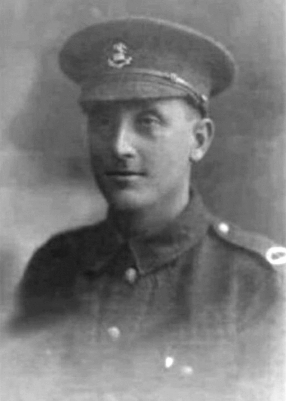
Grateful thanks are extended to the St Helens Roll of Honour website for their kind permission to use the photograph of John.
We currently have no further information on John Almond, If you have or know someone who may be able to add to the history of this soldier, please contact us.
From: Bootle, Liverpool
K.I.A (110 Years this day)
Thursday 12th October 1916.
25 years old
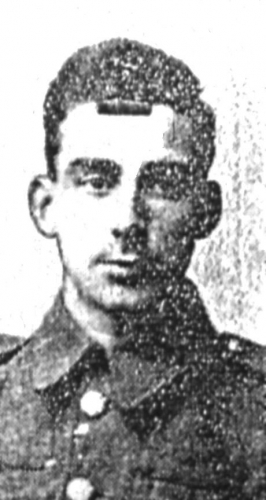
Joseph Asbury was born in Bootle on the 24th October, 1890 and baptised on the 12th November, 1890 at St Paul's Church Of England, Church, the son of Richard and Margaret Asbury of 7 Store Street, Marsh Street, Kirkdale. He was a member of the St Mary’s Men’s Bible Class. (A local newspaper reported he was the first member of the bible class to make the supreme sacrifice when they reported his death).
The 1901 census shows Joseph’s family living at 154 Braemar St, Kirkdale, Liverpool. Joseph's father Richard is aged 49, born in Liverpool in 1862, his occupation is shown as a rigger, whilst his mother, Margaret is aged 47, born in Liverpool in 1864. They have three children at the address Edith aged 13, born 1898, Elizabeth aged 11, born 1900 and still at school and John aged 8, born 1903. The children were all born in Bootle.
The 1911 Census shows Joseph living with relatives at 70 St Johns Road Bootle. The head of the household was John Asbury aged 38, born in Liverpool in 1873 and a carpenters labourer. His wife Annie is aged 38, born 1873 in Wollaston, Shropshire. They have three children, all born in Bootle, William J aged 11, born 1900, Bertha aged 9, born 1902 and Ernest aged 6, born 1905. Also living at the address are Joseph, nephew aged 20, born 1891 and occupation a masons labourer. Joseph White brother-in-law aged 38, born 1873, his occupation is a steam crane driver and his wife Sarah aged 41, born 1870. Also nephew Albert White aged 6, born 1905. There are two boarders living at the property Mildred Beckley aged 18, born 1893 and occupation printing machinist and Albert Allcock also aged 18, and occupation miller. They have a further two visitors at the address Annie Weston aged 22, born 1889 and her daughter Selina aged 1, born 1910.
On the 1911 Census his parents were still living at 154 Braemar Rd, Bootle. Father Richard aged 49, a rigger, mother Margaret (married 23 years 7 children 4 still alive), children Edith 13 at school, Elizabeth E. 11 at school and John 8.
Joseph enlisted in Bootle, Liverpool and was serving in the 17th Battalion, The King’s Liverpool Regiment as Private No 52802 when he was killed in action on the 12th October 1916 aged 25 during the Battle of the Transloy Ridges which was part of the ongoing Somme Offensive.
17th Bn War Diary: Battle of Transloy Ridge –
11-10-16 - Gird Trench/Gird Support – Battalion in front line and support trenches. British bombardment of enemy front line system commenced about midday. Hostile shelling was intermittent throughout the day.
12-10-16 - Our bombardment continued. Enemy reply weak. 2.5 p.m. Zero hour. Attack on German front line system commenced. Enemy wire was found to be uncut and attack was unsuccessful. Hostile machine gun fire was very heavy and caused many casualties. Battalion H.Q. and Support Trench were heavily shelled throughout afternoon and evening. […] During this action all communication had to be carried out by runners and carrier pigeons as all wires were being continually cut by enemy shelling.
Casualties: 5 officers killed, 5 officers wounded, 38 OR killed, about 225 OR wounded/missing etc.
Graham Maddocks, in “Liverpool Pals” p.140, adds:
“As the whistle blew, the 17th Battalion left its trenches to move forward. […] As soon as the attacking waves left their trenches the enemy artillery began to register on them, and at the same time, the defending infantry commenced a murderous rain of fire. […] Although their numbers had been depleted by the British bombardment, they were trained and experienced soldiers, well dug in on high ground, and for the most part, looking out on uncut wire. As such, it was virtually impossible for them to miss the City Battalion men struggling to advance in the mud towards them. The 17th Battalion, on the left, was particularly badly hit, as its portion of No Man’s Land contained a slight rise in the ground, and as the troops emerged onto it they were silhouetted against the sky and became easy targets. Those on the left of the attack, who managed to avoid the hail of bullets and make it to the German wire, then found that it was totally uncut, and thus trapped, they too became easy targets, to be picked off almost at the enemy’s will. It was hardly surprising that, seeing the first waves being wiped out, some of the following waves turned back and made for their start lines. These lines were now packed with other waves of troops, however, and the fleeing men added to the congestion already there, and became easy prey for the German gunners. There is some evidence also, to suggest that at this stage, the British trenches were also being hit by their own heavy artillery shells which were falling short.”
Joseph now rests at Warlencourt British Cemetery, France.
Warlencourt Cemetery is entirely a concentration cemetery, begun late in 1919 when graves were brought in from small cemeteries and the battlefields of Warlencourt and Le Sars. The Graves Registration form shows graves from “Le Sars 6/1, 6/2, Hexham Road, Seven Elms”.
Graves were brought in from the original cemeteries at Hexham Road (Le Sars), and Seven Elms (Flers), as well as over 3,000 British graves due to the fighting which took place around the Butte de Warlencourt from the autumn of 1916 to the spring of 1917, and again in the German advance and retreat of 1918. The cemetery now contains 3,505 Commonwealth burials and commemorations of the First World War, 1,823 of which are unidentified.
He was reported as killed in the Liverpool Daily Post 20th November 1916:
King’s (Liverpool Regiment) - Asbury, 52802, J. ;
Soldiers Effects and Pension to Aunt Annie Asbury, 70 St John’s Road, Bootle.
His aunts and uncles paid tribute to Joseph in the Liverpool Evening Express on 13th October 1919:
ASBURY - in loving memory of Pte. Joseph Asbury, 7th (sic) King's Liverpools, who was killed in action Oct. 12, 1916
No morning dawns, no night returns
But what we think of him.
- His aunts and uncles, 70 St. John's Road, Bootle.
Joseph is commemorated on the following Memorials:
Bootle Civic Memorial
St John’s C. of E. Church.
His father died, aged 70, in 1932 and was buried in St Mary's Churchyard, Bootle on the 03rd June, his address 107 Rice Lane, Walton.
His mother died, aged 69, in 1935.
We currently have no further information on Joseph Asbury, if you have or know someone who may be able to add to the history of this soldier, please contact us.

From: Liverpool
K.I.A (110 Years this day)
Thursday 12th October 1916.
28 years old
Thomas Barber was born on 06th December 1887 at 27 Vaughan Street Toxteth to Liverpool born Dock Labourer Joseph Barber and his Liverpool born wife Ellen (nee Burke). They married in the June quarter of 1880 in Liverpool and had 2 sons and 6 daughters, Thomas was their fifth child. He was baptised on 09th December 1887 at St Patrick's R C Church Toxteth.
On the 1891 Census it shows 4 year old Thomas and his parents Joseph aged 33, Margaret aged 32, and 5 siblings; Sarah 8, Elizabeth 7, Ellen 5, Bridget 3 and Mary Jane 3mths still at 27 Vaughan Street Toxteth. His younger sister Mary Jane who was born in January 1891 died later that year in the December quarter.
His mother Ellen aged 33 died just after giving birth to another daughter Mary born in September 1892.
The 1901 Census shows 14 year old (nephew) Thomas living with his mother's sister Bridget King at 257 Grafton Street Toxteth. Brother John aged 20 and a Dock Labourer, sisters Sarah 18 a laundress, Lizzie 17 a card box maker, Bridget 12 and Mary 8.
1911 Census shows 24 year old Thomas as a time keeper for the Harrison Line living with his 2 sisters Sarah 28 a laundress, Mary 18, still all at Aunt Bridget's home at 257 Grafton Street Toxteth
In 1914 his Father Joseph dies aged 54.
He enlisted in Liverpool and was serving in the 17th Battalion, The King’s Liverpool Regiment as Private No 17233 when he was killed in action on the 12th October 1916, aged 28, during the Battle of the Transloy Ridges which was part of the ongoing Somme Offensive.
17th Bn War Diary: Battle of Transloy Ridge –
11-10-16 - Gird Trench/Gird Support – Battalion in front line and support trenches. British bombardment of enemy front line system commenced about midday. Hostile shelling was intermittent throughout the day.
12-10-16 - Our bombardment continued. Enemy reply weak. 2.5 p.m. Zero hour. Attack on German front line system commenced. Enemy wire was found to be uncut and attack was unsuccessful. Hostile machine gun fire was very heavy and caused many casualties. Battalion H.Q. and Support Trench were heavily shelled throughout afternoon and evening. […] During this action all communication had to be carried out by runners and carrier pigeons as all wires were being continually cut by enemy shelling.
Casualties: 5 officers killed, 5 officers wounded, 38 OR killed, about 225 OR wounded/missing etc.
Graham Maddocks, in “Liverpool Pals” p.140, adds:
“As the whistle blew, the 17th Battalion left its trenches to move forward. […] As soon as the attacking waves left their trenches the enemy artillery began to register on them, and at the same time, the defending infantry commenced a murderous rain of fire. […] Although their numbers had been depleted by the British bombardment, they were trained and experienced soldiers, well dug in on high ground, and for the most part, looking out on uncut wire. As such, it was virtually impossible for them to miss the City Battalion men struggling to advance in the mud towards them. The 17th Battalion, on the left, was particularly badly hit, as its portion of No Man’s Land contained a slight rise in the ground, and as the troops emerged onto it they were silhouetted against the sky and became easy targets. Those on the left of the attack, who managed to avoid the hail of bullets and make it to the German wire, then found that it was totally uncut, and thus trapped, they too became easy targets, to be picked off almost at the enemy’s will. It was hardly surprising that, seeing the first waves being wiped out, some of the following waves turned back and made for their start lines. These lines were now packed with other waves of troops, however, and the fleeing men added to the congestion already there, and became easy prey for the German gunners. There is some evidence also, to suggest that at this stage, the British trenches were also being hit by their own heavy artillery shells which were falling short.”
Thomas now rests at Warlencourt British Cemetery, France.
Warlencourt Cemetery is entirely a concentration cemetery, begun late in 1919 when graves were brought in from small cemeteries and the battlefields of Warlencourt and Le Sars. The Graves Registration form shows graves from “Le Sars 6/1, 6/2, Hexham Road, Seven Elms”.
Graves were brought in from the original cemeteries at Hexham Road (Le Sars), and Seven Elms (Flers), as well as over 3,000 British graves due to the fighting which took place around the Butte de Warlencourt from the autumn of 1916 to the spring of 1917, and again in the German advance and retreat of 1918. The cemetery now contains 3,505 Commonwealth burials and commemorations of the First World War, 1,823 of which are unidentified.
BARBER - In loving remembrance of our dear brother, Private Thomas Barber, K.L.R.., killed in action October 12, 1916 (previous to the war an employee of Harrison Line, Wharfinger department). R.I.P.
"We often think of days gone by
When we were all together
A shadow cast upon our lives-
A dear one gone forever"
Sadly missed by his sisters and brother and all at 257 Grafton Street.
Reported killed in the Liverpool Daily Post 20th Nov 1916.
King’s (Liverpool Regiment) - Barber, 17233, T. ;
Thomas is also commemorated on St Malachy’s R.C. Church, Toxteth.
We currently have no further information on Thomas Barber, if you have or know someone who may be able to add to the history of this soldier, please contact us.
From: Formby
K.I.A (110 Years this day)
Thursday 12th October 1916.
26 years old
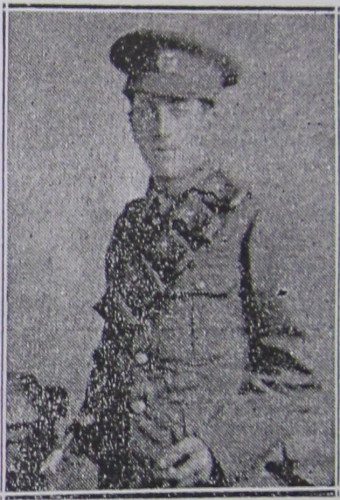
Harold Barker was born in Formby in 1889, the son of Samuel Barker and his wife Martha Jane (nee Hughes). His father was from Bradford in Yorkshire, and his mother was born in Liverpool. They married on the 01st May 1877 at St Mary's Church, Walton and had four surviving children; Harold was the youngest, he had a sister Hannah Florence, born in 1877, and brothers Joseph Edward 1880, and Albert 1884.
At the time of the 1891 census the family is living in Elson Road, Formby. His parents are both 36, his father living on his own means. Joseph is 11, Albert 6, and Harold 1 year old. His sister Florence is with relatives in West Kirby, Cheshire.
The 1901 census finds Albert, 16, and Harold, 11, in Grange, West Kirby, pupils at Calday Hill Grammar School (however, Harold's name is not on the school memorial).
His father is still at “Silverdale”, Elson Road with Florence, 23, and Joseph, 21, an apprentice fitter. They have visitors, Wilson and Maria Fortune from Bradford. His mother is visiting the Vestey family in Hertfordshire.
Harold married Dorothy Ellsum at Woodhall Spa, Lincolnshire on 29th August 1910 no occupation stated. He and his wife had three children, Thomas Duncan Norman (b 1911), Freda Daphne (b1914) and Ronald (b 1915).
In 1911 Harold and Dorothy are at 8 Elson Road, living with his father Samuel, 56, a builder/employer, and his brother Joseph, 31, a mechanical engineer. Harold is 21, a joiner in the building trade. Dorothy, born in Lincolnshire, is 20. His mother is not in the household. His brother Albert, newly married, is visiting his in-laws, the Lavender family in Duke Street, Southport.
He enlisted in Southport on 25th August 1914 as Private 10090, Western Cavalry. He gives his age as 25 years and 60 days, and his occupation as joiner. He is described as being 5’ 5 and a half inches tall, and weighing 130 lbs, with a light complexion, blue eyes, and fair hair. He gives his religion as C of E and as next of kin his wife Dorothy at 8 Elson Road.
He was posted to 2nd Reserve Cavalry on 03rd September 1914.
On 05th November 1914 he put in a request to transfer to the 1st King’s Liverpool Regiment “to serve with older brother”, but was instead transferred to the 17th Bn. K.L.R. on 20th November 1914 as Private 21975.
His service record shows his character as Unsatisfactory, with multiple disciplinary infractions whilst training -
26/06/1915 3 days Confined to Barracks for absence from midnight until 9 a.m.
03/07/1915 3 days C.B. absent from midnight to midnight
05/07/1915 4 days Field Punishment No.2 for breaking out of barracks whilst a defaulter and remaining absent 2 days
16/08/1915 10 days C.B. absent without leave for two days until apprehended by Civil Police at Southport
21/08/1915 10 days F.P. No.2 for breaking out of barracks whilst a defaulter and remaining absent 8 hours, returning to barracks drunk
On 23rd August 1915 he received 10 days Field Punishment No.2 for absence and missing draft to Grantham.
He was posted to the 17th Bn K.L.R. and joined his battalion at Grantham on 03rd September, moving to Larkhill Camp on Salisbury Plain two days later, on the 5th. At the end of September Dorothy provided her husband’s address: C Company, 12th Platoon, 17th Bn, No.8 Camp, Lark Hill, Salisbury Plain.
Two further disciplinary infractions (unfortunately illegible) were recorded whilst at Larkhill, on 19/10/1915 and 23/10/1915.
Harold did not ship to France with his battalion on 7th November 1915 but was returned to Knowsley, posted to the 21st (Reserve) Bn., incurring further punishments -
05/12/1915 2 days C.B. breaking out of barracks when on fatigue
28/12/1915 2 days C.B. absent 6 hours
01/01/1916 3 days C.B. absent one day
16/02/1916 2 days C.B. for 2 days’ absence
27/02/1916 10 days C.B for one day’s absence and missing fatigue
12/03/1916 3 days C.B. improper conduct and absence from barrack room fatigue
On 4th April 1916 he was attached to Messrs. Fleming & Ferguson Ltd. (shipbuilders), in Paisley, Scotland, to work on a minesweeper commissioned by the Admiralty.
The great recruitment of men in 1914 led to lack of manpower in crucial industries, contributing to the shell crisis and other shortages. It was not uncommon for men possessing suitable trades to be seconded to industry to maintain war production. It is probable that Harold’s joinery skills were needed in the shipyard.
He started work at Phoenix Works on the minesweeper Lingfield on 5th April, his home address c/o Du(nlop?), 1 Caledonia Place, Paisley.
He was dismissed on 09th May, as work on the mine sweeper was nearly finished, and on 11th May 1916 was instructed to rejoin his unit at Raven Meols Camp in Formby.
Again, whilst in Formby, on 25/05/1916 he was awarded 7 days’ C.B. for one day’s absence.
On 31st May 1916 he was posted to the 4th K.L.R. (B.E.F.) and embarked at Southampton. The next day he was admitted to No.2 General Hospital at Le Havre with hammer toes. He was sent to Convalescent Camp on 19th June and to 24 Infantry Base Depot at Etaples on 18th July 1916.
He was posted to the 20th Bn K.L.R. on 2nd August 1916 and joined his unit in the field on 4th August.
Harold was killed in action on the 12th October 1916, aged 21, during the Battle of the Transloy Ridges which was part of the ongoing Somme Offensive.
According to the 20th Bn War Diary, on 10th October 1916 the battalion marched from Dernancourt via Mametz to Bazentin Le Grand where it bivouacked for the night. The next day the battalion moved up to site for assembly trenches, arriving about 11 p.m., where it dug in two good trenches, Nos.1 and 2 Coys front and Nos.3 and 4 Coys in rear.
From the War Diary:
Near Eaucourt L’Abbaye. 12/10/1916. The 4th British and 6th French armies continued the attack. Zero 2.5 p.m. The whole XVth Corps attacked […] The attack of 89th Inf Bde was carried out with 2nd Bn Bedf Regt on right, 17th Bn KLR on left, 20th Bn KLR in support, 19th Bn KLR in reserve. Battalions attacked in four waves. On the departure of the attacking battalions Nos. 1 and 2 companies advanced, each in two waves, to garrison the front line trench vacated by 2nd Bn Bedf Regt on right and 17th KLR on left. On Nos 1 and 2 Coys vacating front assembly trench, it was occupied by two platoons of Nos. 3 and 4 Coys respectively, from rear assembly trench. As the assaulting waves left their trenches they were met by intense machine gun fire, especially on our left. The enemy also opened heavy barrages on our front support and assembly trenches. […] Capt. H. Beckett, commanding No.1 company, reached the front line with few casualties, but Lieut R.D. Paterson leading No.2 company was killed. His company also had few casualties. The assaulting battalions were held up by very heavy machine gun fire, and made little progress. […] At 4.20 p.m. two platoons, No.4 Coy, under Cpl Brighouse, were sent up to reinforce the left, and No.3 Coy under Cpl Sutton followed at 4.45 p.m. Battalion HQ moved up to front line at 4.55 and remaining two platoons of No.4 Coy moved up to join Cpl Brighouse.
Casualties during action:
Officers – Killed Lieut. R.D. Paterson, 2nd Lieut G.L. Grennan, Wounded – 2nd Lieuts A.E. Griffin, L.E. Mclean Hayes, C. Buttemer, Wounded Cpl g. Brighouse.
Other Ranks killed – 20.
It had rained incessantly at the beginning of October 1916 and the ground was full of mud. In his book ‘The Liverpool Pals’ Graham Maddocks describes the day Herbert was killed.
It was obvious that the Germans knew an attack was coming and from which direction it would be mounted. On the evening of the 11th the 20th Battalion moved up the line and dug two deep assembly trenches behind the 17th Battalion’s position for the attack the next day. The 19th Battalion also moved into its reserve positions known as Flers Trench. Although the rain has stopped, the ground was like a morass, with all the natural vegetation destroyed, it was difficult to tell exactly where the objectives lay. On the afternoon of the 12th at exactly 2.05pm, the attack began along the whole Corps line, covered by the local batteries of the Royal Field Artillery which still had line of sight. As the whistles blew, the 17th Battalion left its trenches to move forwards, at the same time No.1 and 2 Companies of the 20th Battalion moved forward and occupied the trenches vacated by the 17th. As they too went over the top, No.3 and 4 Companies took their place and waited in their turn to follow. No.2 and 3 Companies of the 19th Battalion moved up to occupy the assembly trenches dug the previous night by the 20th.
As soon as the attacking waves left their trenches the enemy artillery began to register on them and at the same time the defending infantry commenced a murderous rain of fire. Those German regiments were trained and experienced soldiers, well dug in on high ground, and for the most part, looking out on uncut wire. As such it was virtually impossible for them to miss the City Battalion men struggling to advance in the mud towards them.
Brigadier-General F.C.Stanley wrote that the Battalions were also suffering casualties due to the short shooting of the British heavy artillery fire. “I know from practical experience that they were our own guns which were shooting, and which were causing us quite a considerable number of casualties. The fault lay at that time from the fact that the heavy gunners would not send their FOO’s (Forward Observation Officers) far enough forward, but were content to observe us from right back”
Some ground was gained that day, about 150 yards, the 20th Battalion were not relieved until 24 hours later causing the men to endure another day and night in the front line trench.
Harold was initially reported Wounded in Action then Missing on 12th October 1916 during the Battle of the Transloy Ridges.
His death was reported in the Southport Visiter dated 11th November 1916:
Pte Harold Barker of the King's L/Pool Regt, husband of Mrs Barker formerly of Pinfold Lane, Ainsdale, now of 3 Virginia St, Southport, has been reported killed in action. Joining the forces at the outbreak of war, he went to France in the early part of this year. He was 26 years of age and a joiner before enlisting. He joined the Queen's Bays first of all and was subsequently drafted to the K.L.R.
It was also reported in the Liverpool Post & Mercury on 16th November 1916:
“Private Harold Barker (K.L.R.) Virginia Street, Southport, formerly of Pinfold Lane, Ainsdale, previously reported missing, now reported killed.”
Harold's body was not recovered or was subsequently lost as he has no known grave and is commemorated on the Thiepval Memorial to the Missing of the Somme, France.
The Thiepval Memorial, the Memorial to the Missing of the Somme, bears the names of more than 72,000 officers and men of the United Kingdom and South African forces who died in the Somme sector before 20 March 1918 and have no known grave. Over 90% of those commemorated died between July and November 1916.
On 01st August 1932 the Prince of Wales and the President of France inaugurated the Thiepval Memorial in Picardy. The inscription reads: “Here are recorded the names of officers and men of the British Armies who fell on the Somme battlefields between July 1915 and March 1918 but to whom the fortune of war denied the known and honoured burial given to their comrades in death.”
Dorothy requested details of Harold’s death, writing to the Pension Office in December 1916, “I have heard from a fellow out of the same reg’t, he was killed at Billon Wood north of Bray.”
In February 1917 Messrs. Pearce, Jones & Co., Solicitors, 32 John Street, Bedford Row, London wrote on Dorothy’s behalf to the O/C 20th Bn. K.L.R.: “May we ask if it is possible to obtain any information from the officers or men in his Platoon respecting Harold Barker No.21975 No.3 Company 9th Platoon who was reported missing in (October last?). It is of vital interest to his wife and children and also other persons to prove whether he is alive or dead and we thought it probable that some information ought be obtained from the other men of his platoon as to his fate.”
A note in his record states that details regarding his death were not available.
Harold is also commemorated on the Formby Civic Memorial, Southport Civic Memorial and Holy Trinity C. of E. Church, Formby.
Sadly, Harold's death was not the only grievous loss that the family endured as his brother Joseph Edward Barker died in India in 1918 whilst serving with the 1st Garrison Battalion of the Manchester Regiment. Joseph was formerly Private 15867 of the 17th Battalion of The King's Liverpool Regiment (see his own biography on this site), he died (likely from disease) on 04th July 1918 in Fyzabad aged 38. He is commemorated on the Delhi Memorial (India Gate), India
Joseph is commemorated on the Formby Civic Memorial, and at Holy Trinity C. of E. Church, Formby.
His mother died, aged 65, in Waterloo on the 13th June 1920.
In 1920 Dorothy provided information on Harold’s living relatives: She and the children were living at Moss Nook, Burscough Bridge; His brother Albert was living at home with his parents at 8 Elson Road, Formby; Florence was married and living in Scotland, address unknown (it appears she had emigrated to Canada).
Dorothy received Harold’s Army pay and a War Gratuity of £9. She was awarded a pension of £1-6s-3d a week for herself and three children from May 1917 (living at the time at 20 Stanley Street, Southport).
Dorothy had a daughter Desna Simpson Barker in 1918, and remarried to Thomas Bridge in 1924.
His father died, aged 74, in Birkdale on the 31st January 1929
In 1939 Dorothy is living at 28 Moss Lane, Ormskirk, with her husband and their three children. Living with them is son Ronald, 24, a dealer in eggs and agricultural products. Eldest son Thomas is married and living in Southport, working as a bricklayer. Daughter Freda is married and living in Ormskirk.
Dorothy died in 1972 aged 81.
We currently have no further information on Harold Barker, if you have or know someone who may be able to add to the history of this soldier, please contact us.
From: Liverpool
K.I.A (110 Years this day)
Thursday 12th October 1916.
21 years old
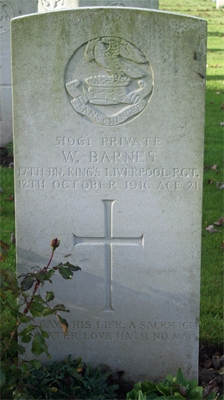
William Barnes was born on 26th August 1895 in Liverpool the son of Samuel Barnes and his wife Elizabeth (nee Marsham) who were married in 1880 in Yarmouth. He was baptised at St Francis de Sales Church on 28th September 1895.
The 1901 Census shows the family are living at 67 Neston Street, Walton, Liverpool. William is 5 years of age and is living with his mother and seven siblings. His mother is head of the household, she is 39 years of age and was born in Middlesex. His five eldest siblings were born in Great Yarmouth and are listed as; Joseph an 18 year old plumbers labourer born in 1883, Harry a 17 year old sailor born in 1884, Annie who is 14 years old, Rose is 13 years old and 11 year old Nellie. His other siblings were born in Liverpool and are listed as; Mary aged 9 and Ada aged 6.
His mother died aged 44 in 1907.
By 1911 the family are living at 29 Emery Street, Walton. William is now 15 years of age and a shop boy for a greengrocer. He lives with his widowed father and three sisters. His father is a 50 year old fisherman born in Great Yarmouth. William's sisters at home are: Nellie now a 21 year old machinist (shirts), Mary an 18 year old printer's feeder and Ada a 16 year old rubber shoe maker.
William married Alice Parkinson in the March quarter of 1916 and a son William, born the same year in Birkenhead.
He enlisted in Liverpool initially joining the 6th Battalion of The King's Liverpool Regiment. After a transfer he was was serving in the 17th Battalion, The King’s Liverpool Regiment as Private No 51961 when he was killed in action on the 12th October 1916 aged 21 during the Battle of the Transloy Ridges which was part of the ongoing Somme Offensive.
17th Bn War Diary: Battle of Transloy Ridge –
11-10-16 - Gird Trench/Gird Support – Battalion in front line and support trenches. British bombardment of enemy front line system commenced about midday. Hostile shelling was intermittent throughout the day.
12-10-16 - Our bombardment continued. Enemy reply weak. 2.5 p.m. Zero hour. Attack on German front line system commenced. Enemy wire was found to be uncut and attack was unsuccessful. Hostile machine gun fire was very heavy and caused many casualties. Battalion H.Q. and Support Trench were heavily shelled throughout afternoon and evening. […] During this action all communication had to be carried out by runners and carrier pigeons as all wires were being continually cut by enemy shelling.
Casualties: 5 officers killed, 5 officers wounded, 38 OR killed, about 225 OR wounded/missing etc.
Graham Maddocks, in “Liverpool Pals” p.140, adds:
“As the whistle blew, the 17th Battalion left its trenches to move forward. […] As soon as the attacking waves left their trenches the enemy artillery began to register on them, and at the same time, the defending infantry commenced a murderous rain of fire. […] Although their numbers had been depleted by the British bombardment, they were trained and experienced soldiers, well dug in on high ground, and for the most part, looking out on uncut wire. As such, it was virtually impossible for them to miss the City Battalion men struggling to advance in the mud towards them. The 17th Battalion, on the left, was particularly badly hit, as its portion of No Man’s Land contained a slight rise in the ground, and as the troops emerged onto it they were silhouetted against the sky and became easy targets. Those on the left of the attack, who managed to avoid the hail of bullets and make it to the German wire, then found that it was totally uncut, and thus trapped, they too became easy targets, to be picked off almost at the enemy’s will. It was hardly surprising that, seeing the first waves being wiped out, some of the following waves turned back and made for their start lines. These lines were now packed with other waves of troops, however, and the fleeing men added to the congestion already there, and became easy prey for the German gunners. There is some evidence also, to suggest that at this stage, the British trenches were also being hit by their own heavy artillery shells which were falling short.”
William now rests at Warlencourt British Cemetery, France where his headstone bears the epitaph:
“HE GAVE HIS LIFE, A SACRIFICE GREATER LOVE HATH NO MAN”
Warlencourt Cemetery is entirely a concentration cemetery, begun late in 1919 when graves were brought in from small cemeteries and the battlefields of Warlencourt and Le Sars. The Graves Registration form shows graves from “Le Sars 6/1, 6/2, Hexham Road, Seven Elms”.
Graves were brought in from the original cemeteries at Hexham Road (Le Sars), and Seven Elms (Flers), as well as over 3,000 British graves due to the fighting which took place around the Butte de Warlencourt from the autumn of 1916 to the spring of 1917, and again in the German advance and retreat of 1918. The cemetery now contains 3,505 Commonwealth burials and commemorations of the First World War, 1,823 of which are unidentified.
Reported killed in the Liverpool Daily Post 16th Nov 1916.
King’s (Liverpool Regiment) - Barnes, 51961, W. ;
Soldier Effects to widow Alice, Pensions to Alice Eaton and child William.
Alice remarried in 1921 to Albert H. Eaton at St. Athanasius, Kirkdale.
Father died aged 72 in 1933.
Alice, dob , 24th April 1889, appears on the 1939 register at 26 September Rd with Albert and son William Barnes, and daughters Alice A. (b.1922) and Glwdys (b.1923). She died aged 81 in 1970
We currently have no further information on William Barnes, If you have or know someone who may be able to add to the history of this soldier, please contact us.
From: Liverpool
K.I.A (110 Years this day)
Thursday 12th October 1916.
25 years old
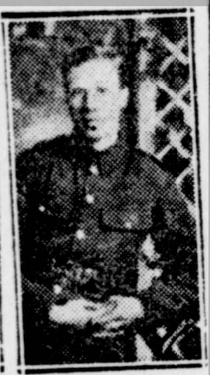
William Barrett was born on 06th February 1891 in Liverpool, the son of Frederick William Barrett and his wife Esther Jane (nee Dickson) who were married on the 25th November 1889 at St Peter's Church, Liverpool. William snr was a 19 year old labourer of Birket Street, father William a mariner, whilst Esther was aged 21 also of Birket Street, father James a plasterer. William was baptised on 15th February 1891 at Holy Trinity Church, Liverpool, parents address 1ct 11h Birkett Street.
William is recorded as a new born baby on the 1891 Census. The family are living at 1 Court, Birkett Street, Liverpool. His father is recorded as William a 21 year old dock labourer born in Liverpool, whilst his mother, shown as Hester is 23 years of age and was also born in Liverpool. They have another son one year old James E. Also present is Esther's brother Thomas Dickson a 20 year old engraver.
The 1901 Census finds the family living at 76 Foley Street, with five children and a domestic servant. His father is aged 30, a dock porter, mother, Esther, is aged 29, children are recorded as Edmund J. 12, William 10, Maggie 8, Esther Jane 4, Frederick 2, and servant Sarah Johnson 15.
The 1911 Census finds the family still living at 76 Foley Street, Liverpool. William is 20 years of age and a dock labourer. He lives with his parents and seven siblings. His parents advised that they had been married for 22 years and had ten children of whom eight have survived. William's seven siblings recorded in the household are: Edmund James a 21 year old dock labourer, Margaret an 18 year old composite box maker, Esther Jane a 14 year old home servant, Frederick a 12 year old scholar, Emily aged 9 and a scholar, Agnes aged 7 also a scholar and George aged 4.
Prior to enlisting William had been employed by the North Dingle Tannery, Liverpool.
He enlisted in Prescot and the amount of the War Gratuity suggests that he enlisted in Spring 1915, arriving in France in 1916.
He married Cecilia Dawson at St Cuthbert's Church in Everton on 06th February 1916. William was a 25 year old tanner of 16 Vienna Street, father Frederick a dock labourer, whilst Cecilia was aged 26 of 9 Venmore Street, father John Moore a carter. His brother Edmund James was his best man.
William was serving in the 17th Battalion of The King’s Liverpool Regiment as Private No 26195 when he was killed in action on the 12th October 1916, during the Battle of the Transloy Ridges which was part of the ongoing Somme Offensive.
17th Bn War Diary: Battle of Transloy Ridge –
11-10-16 - Gird Trench/Gird Support – Battalion in front line and support trenches. British bombardment of enemy front line system commenced about midday. Hostile shelling was intermittent throughout the day.
12-10-16 - Our bombardment continued. Enemy reply weak. 2.5 p.m. Zero hour. Attack on German front line system commenced. Enemy wire was found to be uncut and attack was unsuccessful. Hostile machine gun fire was very heavy and caused many casualties. Battalion H.Q. and Support Trench were heavily shelled throughout afternoon and evening. […] During this action all communication had to be carried out by runners and carrier pigeons as all wires were being continually cut by enemy shelling.
Casualties: 5 officers killed, 5 officers wounded, 38 OR killed, about 225 OR wounded/missing etc.
Graham Maddocks, in “Liverpool Pals” p.140, adds:
“As the whistle blew, the 17th Battalion left its trenches to move forward. […] As soon as the attacking waves left their trenches the enemy artillery began to register on them, and at the same time, the defending infantry commenced a murderous rain of fire. […] Although their numbers had been depleted by the British bombardment, they were trained and experienced soldiers, well dug in on high ground, and for the most part, looking out on uncut wire. As such, it was virtually impossible for them to miss the City Battalion men struggling to advance in the mud towards them. The 17th Battalion, on the left, was particularly badly hit, as its portion of No Man’s Land contained a slight rise in the ground, and as the troops emerged onto it they were silhouetted against the sky and became easy targets. Those on the left of the attack, who managed to avoid the hail of bullets and make it to the German wire, then found that it was totally uncut, and thus trapped, they too became easy targets, to be picked off almost at the enemy’s will. It was hardly surprising that, seeing the first waves being wiped out, some of the following waves turned back and made for their start lines. These lines were now packed with other waves of troops, however, and the fleeing men added to the congestion already there, and became easy prey for the German gunners. There is some evidence also, to suggest that at this stage, the British trenches were also being hit by their own heavy artillery shells which were falling short.”
His name appeared in the list of The Kings Liverpool Regiment "Missing" published in the Liverpool Post & Mercury on 16th November 1916.
Also in the Liverpool Weekly Courier on Saturday 18 November 1916:
MISSING SOLDIERS.
Private William Barrett, K.L.R., of 28 Crete Street, Kirkdale, Liverpool.
William being Missing was again reported in the Liverpool Weekly Courier on Saturday 18 November 1916;
MISSING SOLDIERS.
Private William Barrett, K.L.R., of 28 Crete Street, Kirkdale, Liverpool.
It was not until April 1917 when he was confirmed as having been killed in action. The report of his death appeared in the Liverpool Evening Express on 20th April 1917:
Pte. William Barrett, K.L.R.,who was reported missing on October 12th,1916, is now reported killed in action on that date. Previous to joining the colours he was employed by the North Dingle Tannery, Liverpool.
William now rests at Warlencourt British Cemetery, France.
Warlencourt Cemetery is entirely a concentration cemetery, begun late in 1919 when graves were brought in from small cemeteries and the battlefields of Warlencourt and Le Sars. The Graves Registration form shows graves from “Le Sars 6/1, 6/2, Hexham Road, Seven Elms”.
Graves were brought in from the original cemeteries at Hexham Road (Le Sars), and Seven Elms (Flers), as well as over 3,000 British graves due to the fighting which took place around the Butte de Warlencourt from the autumn of 1916 to the spring of 1917, and again in the German advance and retreat of 1918. The cemetery now contains 3,505 Commonwealth burials and commemorations of the First World War, 1,823 of which are unidentified.
Warlencourt, the Butte de Warlencourt and Eaucourt-L'Abbaye were the scene of very fierce fighting in 1916. Eaucourt was taken by the 47th (London) Division early in October. The Butte (a Roman mound of excavated chalk, about 17 metres high, once covered with pines) was attacked by that and other divisions, but it was not relinquished by the Germans until the following 26 February, when they withdrew to the Hindenburg Line.
The 51st (Highland) Division fought a delaying action here on 25 March 1918 during the great German advance, and the 42nd (East Lancashire) Division recaptured the ground on 25 August 1918.
The cemetery was made late in 1919 when graves were brought in from small cemeteries and the battlefields of Warlencourt and Le Sars.
Cecilia received William’s Army pay and a War Gratuity of £5-10s, and was awarded a pension of 13/9d a week from June 1917, address shown as 28 Crete Street, Walton.
William was remembered by his wife in the Liverpool Evening Express on 13th October 1919:
ROLL OF HONOUR.
BARRETT - In ever loving memory of Private William Barrett, 17th K.L.R.(late Pals), killed in action, October 12, 1916. (Ever remembered by his loving wife, Ciss.)
Dear to memory than words can tell
Are thoughts of him I love so well.
His mother died, in 1920, aged 51.
On the 1921 Census his widowed father is living at 34 Butterfield Street, Everton. He is aged 51, a dock labourer, Frederick 22, ais also a dock labourer, Emily 19, is a tobacco worker, Agnes 17, is a waitress, George 14 is a junior clerk, and Lilian is 10 years old.
Cecilia remarried in 1930 to his younger brother Frederick.
In 1939 Cecilia 49, and Frederick, 40, a discharged soldier, are living at 32 Crete Street. His father, William F., 67, a retired dock labourer, is living at 34 Butterfield Street with son George.
His father, died in 1950, aged 79.
His mother died, aged 51, in 1920.
Cecilia appears to have died in 1979, aged 90.
Sadly, William has not been found on any memorial.
We currently have no further information on William Barrett, If you have or know someone who may be able to add to the history of this soldier, please contact us.
From: Birkdale, Southport
K.I.A (110 Years this day)
Thursday 12th October 1916.
27 years old
The 1891 Census shows them still at 65 Swire Rd Birkdale with his father aged 39?, and mother aged 35?, employed as a Charwoman. Richard is aged 2 and his two elder sisters Ellen 13, and Mary Alice 4.
The 1901 Census at 23a Bury Road Birkdale shows Richard aged 12, father James is 41, a general labourer, mother Eliza A. 40, with elder sister Mary A. 14, and 2 younger brothers James 8 and Henry 6.
The 1911 Census at 8 Broome Road Birkdale shows his father aged 53, who is an asphalt labourer, mother is 52, and 4 siblings Mary Alice 22 a laundry worker, James 18 a porter, Henry 16 a butchers porter, and Charlie 8 at school. Richard as a 22 year old working in a Laundry.
The 17th on the left of the Bedfords were to be the attacking Battalions of the 89th Brigade.
17th Bn War Diary: Battle of Transloy Ridge –
11-10-16 - Gird Trench/Gird Support – Battalion in front line and support trenches. British bombardment of enemy front line system commenced about midday. Hostile shelling was intermittent throughout the day.
12-10-16 - Our bombardment continued. Enemy reply weak. 2.5 p.m. Zero hour. Attack on German front line system commenced. Enemy wire was found to be uncut and attack was unsuccessful. Hostile machine gun fire was very heavy and caused many casualties. Battalion H.Q. and Support Trench were heavily shelled throughout afternoon and evening. […] During this action all communication had to be carried out by runners and carrier pigeons as all wires were being continually cut by enemy shelling.
Graham Maddocks, in “Liverpool Pals” adds:
“As the whistle blew, the 17th Battalion left its trenches to move forward. […] As soon as the attacking waves left their trenches the enemy artillery began to register on them, and at the same time, the defending infantry commenced a murderous rain of fire. […] Although their numbers had been depleted by the British bombardment, they were trained and experienced soldiers, well dug in on high ground, and for the most part, looking out on uncut wire. As such, it was virtually impossible for them to miss the City Battalion men struggling to advance in the mud towards them. The 17th Battalion, on the left, was particularly badly hit, as its portion of No Man’s Land contained a slight rise in the ground, and as the troops emerged onto it they were silhouetted against the sky and became easy targets. Those on the left of the attack, who managed to avoid the hail of bullets and make it to the German wire, then found that it was totally uncut, and thus trapped, they too became easy targets, to be picked off almost at the enemy’s will. It was hardly surprising that, seeing the first waves being wiped out, some of the following waves turned back and made for their start lines. These lines were now packed with other waves of troops, however, and the fleeing men added to the congestion already there, and became easy prey for the German gunners. There is some evidence also, to suggest that at this stage, the British trenches were also being hit by their own heavy artillery shells which were falling short.”
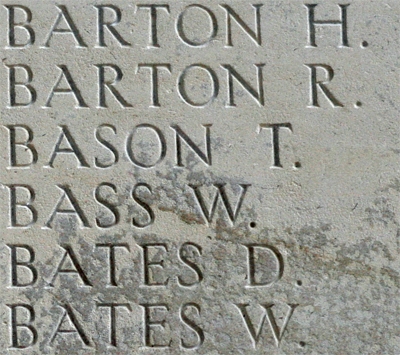
Richard has no known grave and is commemorated on the Thiepval Memorial, France.
The Thiepval Memorial, the Memorial to the Missing of the Somme, bears the names of more than 72,000 officers and men of the United Kingdom and South African forces who died in the Somme sector before 20 March 1918 and have no known grave. Over 90% of those commemorated died between July and November 1916.
On 01st August 1932 the Prince of Wales and the President of France inaugurated the Thiepval Memorial in Picardy. The inscription reads: “Here are recorded the names of officers and men of the British Armies who fell on the Somme battlefields between July 1915 and March 1918 but to whom the fortune of war denied the known and honoured burial given to their comrades in death.”
"A LOVING SON, TRUE AND KIND FOND MEMORIES LEFT BEHIND, FROM DAD"
Reported wounded in the Liverpool Daily Post 22nd Nov 1916.
King’s (Liverpool Regiment) - Barton, 52809, R. (Southport);
The loss of Richard was not the only suffering the family had to endure as on 09th July 1918 north of Arras, his younger brother Pte Harry (No.265952) was killed in action, aged 19, with the 1/7th King's.
His father was present when brother Charles married in 1931, family trees suggest James died in 1933.
Insert at end:-
We currently have no further information on Richard George Henry Barton, if you have or know someone who may be able to add to the history of this soldier, please contact us.
From: Liscard, Cheshire
K.I.A (110 Years this day)
Thursday 12th October 1916.
24 years old
John Griffiths Bellis was born in Liscard in the second quarter of 1892, the son of John and Mary (need Griffiths) Bellis who married in 1872 in Birkenhead.
The 1891 Census shows the family living at Grove House, Wallasey. His father, John, is aged 39, born in Seacombe and is a builder and farmer by trade, his mother Mary is aged 40 born in Liverpool. The children declared in the household are: Martha Ann 18 b.Seacombe, Thomas 14 a telegraph messenger b.Liscard, Emma 12 a scholar b. Liscard, William 10 a scholar b.Liscard, Alfred 8 a scholar b.Liscard, Edith 2 b.Liscard, Edward 1 b.Liscard, and his aunt, Sarah Griffiths 45 b.Liverpool.
His mother died aged 41 on the 15th May 1892 and was buried in Rake Lane Cemetery.
The 1901 Census shows the family still living at Grove House, Wallasey. His father, John, is aged 49, a widower and a brickmaker/bricklayer by trade. John G is aged 8, also present in the house are John's siblings: Martha Ann 28, W.G (son) 20, A.J (son) 18, E.A (daughter) 12, E.M. (son) 10 and his Aunt Sarah Griffiths 62.
The 1911 Census shows the family living at 2 Pelham Road, Liscard. His widowed father is aged 59 (crossed out are details of his marriage, it shows that he was married for 20 years and had 11 children 8 of whom survived). He is a builder/bricklayer, and still head of the household, Aunt Sarah 68 is still living with the family. John Griffiths Bellis is by now 19 years of age and is shown to be a joiner by trade. Also present are his siblings; Martha Ann 38, Edith Harriet 22, Edward Matthew 20.
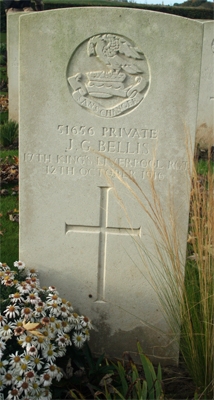
John enlisted in Wallasey as Rifleman 4948 joining the 6th Battalion of The King's Liverpool Regiemnt (Liverpool Rifles). He embarked aboard the SS Princess Victoria from Folkestone-Boulogne on 15th July 1916. He reached the 24th Infantry Base Depot on 16th July 1916 and proceeded to 11th Entrenching Btn on 02nd August 1916. He proceeded to the 17th Battalion K.L.R. on 05th August 1916 and was posted to the 17th Battalion K.L.R. on 05th September 1916 as Private No 51656.
John was killed in action on the 12th October 1916, aged 24, during the Battle of the Transloy Ridges which was part of the ongoing Somme Offensive.
17th Bn War Diary: Battle of Transloy Ridge –
11-10-16 - Gird Trench/Gird Support – Battalion in front line and support trenches. British bombardment of enemy front line system commenced about midday. Hostile shelling was intermittent throughout the day.
12-10-16 - Our bombardment continued. Enemy reply weak. 2.5 p.m. Zero hour. Attack on German front line system commenced. Enemy wire was found to be uncut and attack was unsuccessful. Hostile machine gun fire was very heavy and caused many casualties. Battalion H.Q. and Support Trench were heavily shelled throughout afternoon and evening. […] During this action all communication had to be carried out by runners and carrier pigeons as all wires were being continually cut by enemy shelling.
Casualties: 5 officers killed, 5 officers wounded, 38 OR killed, about 225 OR wounded/missing etc.
Graham Maddocks, in “Liverpool Pals” p.140, adds:
“As the whistle blew, the 17th Battalion left its trenches to move forward. […] As soon as the attacking waves left their trenches the enemy artillery began to register on them, and at the same time, the defending infantry commenced a murderous rain of fire. […] Although their numbers had been depleted by the British bombardment, they were trained and experienced soldiers, well dug in on high ground, and for the most part, looking out on uncut wire. As such, it was virtually impossible for them to miss the City Battalion men struggling to advance in the mud towards them. The 17th Battalion, on the left, was particularly badly hit, as its portion of No Man’s Land contained a slight rise in the ground, and as the troops emerged onto it they were silhouetted against the sky and became easy targets. Those on the left of the attack, who managed to avoid the hail of bullets and make it to the German wire, then found that it was totally uncut, and thus trapped, they too became easy targets, to be picked off almost at the enemy’s will. It was hardly surprising that, seeing the first waves being wiped out, some of the following waves turned back and made for their start lines. These lines were now packed with other waves of troops, however, and the fleeing men added to the congestion already there, and became easy prey for the German gunners. There is some evidence also, to suggest that at this stage, the British trenches were also being hit by their own heavy artillery shells which were falling short.”
John now rests at Warlencourt British Cemetery, France.
Warlencourt Cemetery is entirely a concentration cemetery, begun late in 1919 when graves were brought in from small cemeteries and the battlefields of Warlencourt and Le Sars. The Graves Registration form shows graves from “Le Sars 6/1, 6/2, Hexham Road, Seven Elms”.
Graves were brought in from the original cemeteries at Hexham Road (Le Sars), and Seven Elms (Flers), as well as over 3,000 British graves due to the fighting which took place around the Butte de Warlencourt from the autumn of 1916 to the spring of 1917, and again in the German advance and retreat of 1918. The cemetery now contains 3,505 Commonwealth burials and commemorations of the First World War, 1,823 of which are unidentified.
Reported missing in the Liverpool Daily Post 16th Nov 1916.
King’s (Liverpool Regiment) - Bellis, 51656, J. (Wallasey);
He was originally reported as missing and the Wallasey News reported a request for information as follows:
"Pte J G Bellis, of The King's Liverpool Regt., has been reported missing since Oct 12th. Any information will be gratefully received by his father who resides at 5 Ingleby Road, Wallasey".
He was remembered by his family in the Liverpool Echo on 12th October 1918:
BELLIS - In affectionate remembrance of Private J. G. (Jack) BELLIS, K.L.R., youngest son of John Bellis, 5 Ingleby Road, Wallasey, officially reported missing October 12, 1916.
Fresh in our hearts his memory clings,
Still yet our grief is sore;
Each passing day will ever bring
The day we’ll meet once a once more.
Sadly missed by his Father, Sisters and Brothers.
Soldiers Effects to father John, no Pension record found.
John Griffiths Bellis is commemorated locally on the Wallasey Civic Memorial and has a family memorial in Rake Lane Cemetery which reads:
IN LOVING MEMORY OF
JOHN G. BELLIS, (JACK)
6TH K.L.R.
LOST AT WARLENCOURT ON THE SOMME(?)
His father died, aged 70, on the 24th February 1934 and was buried at Rake Lane Cemetery.
Grateful thanks are extended to Kevin Shannon the author of the book The Liverpool Rifles for providing details of John's service with the 6th Rifles.
We currently have no further information on John Griffith Bellis, If you have or know someone who may be able to add to the history of this soldier, please contact us.
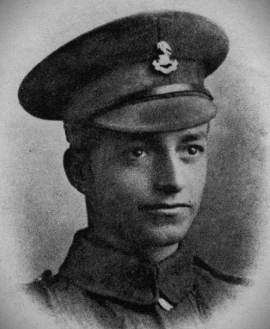
From: Walton,Liverpool
K.I.A (110 Years this day)
Thursday 12th October 1916.
21 years old
Harold Brocklesby Billyard was born on the 11th August 1895 in Liverpool. He was the son of George Billyard and his wife Susannah (nee Brocklesby) who were married in 1889 in Lincoln. He was baptised on the 25th August 1892 at St Mary’s, Walton-on-the-Hill.
He was educated at Arnot Street School, Walton.
The 1901 Census shows the family living at 9 Breeze Lane, Walton, Liverpool. His father, George is aged 40, born in Harpswell, Lincolnshire is a railway clerk, whilst his mother, Susannah, is aged 30, and was born in Rotherham, Yorkshire. They have two children, Florence E. aged 7, born Walton and Harold aged 5, born Walton.
The 1911 Census shows the family are still living at 9 Breeze Lane, Walton, Liverpool. His father, George is aged 51, and is still a railway clerk, whilst his mother, Susannah, is aged 42. They have two children, Florence Elizabeth aged 17, born 1894 no occupation and Harold aged 15, born 1896 and is a student at a Higher Grade School.
Prior to the outbreak of war, Harold had been employed in the City Municipal Engineers Department
He enlisted in Prescot and was serving in the 17th Battalion, The King’s Liverpool Regiment as Private No 26147 when he was killed in action on the 12th October 1916 aged 21 during the Battle of the Transloy Ridges which was part of the ongoing Somme Offensive. He had sailed to France with his Battalion on the 7th November, 1915.
17th Bn War Diary: Battle of Transloy Ridge –
11-10-16 - Gird Trench/Gird Support – Battalion in front line and support trenches. British bombardment of enemy front line system commenced about midday. Hostile shelling was intermittent throughout the day.
12-10-16 - Our bombardment continued. Enemy reply weak. 2.5 p.m. Zero hour. Attack on German front line system commenced. Enemy wire was found to be uncut and attack was unsuccessful. Hostile machine gun fire was very heavy and caused many casualties. Battalion H.Q. and Support Trench were heavily shelled throughout afternoon and evening. […] During this action all communication had to be carried out by runners and carrier pigeons as all wires were being continually cut by enemy shelling.
Casualties: 5 officers killed, 5 officers wounded, 38 OR killed, about 225 OR wounded/missing etc.
Graham Maddocks, in “Liverpool Pals” p.140, adds:
“As the whistle blew, the 17th Battalion left its trenches to move forward. […] As soon as the attacking waves left their trenches the enemy artillery began to register on them, and at the same time, the defending infantry commenced a murderous rain of fire. […] Although their numbers had been depleted by the British bombardment, they were trained and experienced soldiers, well dug in on high ground, and for the most part, looking out on uncut wire. As such, it was virtually impossible for them to miss the City Battalion men struggling to advance in the mud towards them. The 17th Battalion, on the left, was particularly badly hit, as its portion of No Man’s Land contained a slight rise in the ground, and as the troops emerged onto it they were silhouetted against the sky and became easy targets. Those on the left of the attack, who managed to avoid the hail of bullets and make it to the German wire, then found that it was totally uncut, and thus trapped, they too became easy targets, to be picked off almost at the enemy’s will. It was hardly surprising that, seeing the first waves being wiped out, some of the following waves turned back and made for their start lines. These lines were now packed with other waves of troops, however, and the fleeing men added to the congestion already there, and became easy prey for the German gunners. There is some evidence also, to suggest that at this stage, the British trenches were also being hit by their own heavy artillery shells which were falling short.”
Harold death featured in a report in the Liverpool Echo on 16th November 1916:
WALTON MAN KILLED.
Private Harold B. Billyard (21) has been killed in action. He joined the K.L.R. at the age of 19, and prior to the war was employed as clerk in the City Municipal Engineer's Department. He has been in France since November, 1915.
Harold's body was not recovered or was subsequently lost as he has no known grave and is commemorated on the Thiepval Memorial, France.
The Thiepval Memorial, the Memorial to the Missing of the Somme, bears the names of more than 72,000 officers and men of the United Kingdom and South African forces who died in the Somme sector before 20 March 1918 and have no known grave. Over 90% of those commemorated died between July and November 1916.
On 01st August 1932 the Prince of Wales and the President of France inaugurated the Thiepval Memorial in Picardy. The inscription reads: “Here are recorded the names of officers and men of the British Armies who fell on the Somme battlefields between July 1915 and March 1918 but to whom the fortune of war denied the known and honoured burial given to their comrades in death".
Soldiers Effects to father George, Pension to mother Susannah.
Harold was remembered by his family in the Liverpool Echo on the second anniversary of his death on 12th October 1918:
BILLYARD - In ever loving memory of our dear son Private HAROLD (Hal) BILLYARD, who fell in action at Guedecourt, October 12, 1916 in his 21st year (Sans Changer his duty nobly done.) - Sadly missed by Father and Mother, Breeze Lane, Walton.
BILLYARD - In affectionate remembrance of Private HAROLD (Hal) BILLYARD, killed in action October 12, 1916 on the Somme.
On England's role of honour
You will see my brother’s name.
- Never forgotten by Ciss and Harry.
Harold is also commemorated on the St Mary’s C. of E. Church, Walton Young Men’s Bible Class.
His parents appear on the 1939 register at 85 Queens Drive. George, dob 18th Aug 1858, Susannah, dob 24th May 1869.
His father died, aged 87, in the March quarter of 1946.
His mother died, aged 83, in the September quarter of 1951.
Photograph courtesty of the Imperial War Museum
We currently have no further information on Harold Brocklesby Billyard, If you have or know someone who may be able to add to the history of this soldier, please contact us.
From: Liverpool
D.O.W (110 Years this day)
Thursday 12th October 1916.
30 years old
Joseph Blanchard was born at Everton on the 25th March 1886 and was baptised on the 2nd April at St.Michael’s R.C. Church, Everton. He was the son of Henry Blanchard and Ellen (nee Norris) who were married in 1872. His parents were both born in Sefton Parish, his father at Ince Blundell.
The 1891 Census shows the family living at 41 Wordsworth Street, Bootle. His father, Henry, is aged 39, and a dock porter b.Sephton(sic), mother Ellen aged 40 b.Sephton(sic), John 17 b.Sephton(sic), children born Liverpool, Henry 12 a scholar, Mary 10 a scholar, Edward 8 a scholar, Ernest 6 a scholar, Joseph 5 a scholar, Richard 2 and Alice 1.
His mother died aged 47 in 1898.
The 1901 Census shows the family still living at 41 Wordsworth Street, Bootle, his father, Henry, is aged 49, a general labourer b.Ince Blundell, is now a widower with children Ernest 17 a grocers assistant, Joseph 15 a grocers assistant, and Richard 12.
His father re-married in 1902 at Holy Family R.C. Church, Ince Blundell to Alice Blundell.
By the time of the 1911 Census the family at living at 45 Chestnut Grove, Bootle – Brothers Edward aged 28 a removal contractor, Ernest 26 a grocers assistant, Joseph 24 a grocers assistant, and Richard Blanchard 22 a greengrocers assistant, all living with their married sister Mary and husband Robert Quigley and their two daughters. (Mary Blanchard married Robert Quigley in 1904).
His father Henry 59, and step-mother Alice 56, were living alone in Hightown, Ince Blundell.
The Ormskirk Advertiser of 06th May 1915 carried a report on Joseph's father under the header:
INCE BLUNDELL HOUSING QUESTION.
The Council again considered the report on the Surveyor, presented at the last meeting, but deferred for further consideration until this meeting of a cottage in Carr House-lane, Ince Blundell, where the tenant, Hy. Blanchard, declined to move. The house had been previously condemned as unfit for human habitation. The Clerk stated that the matter had been standing in abeyance for a long time the members knew all the particulars. The man said there was no other house to go to at the present time, but there was no doubt it was setting the Council at defiance. The house, he admitted, was kept scrupulously clean. Mr. Backhouse suggested that the matter be deferred to the annual road inspection.
The Clerk : We left it before to the road inspection last year.
The Medical Officer said that on that occasion the whole lot were condemned, and then the Council rescinded it as soon as they got back again (laughter).
The Rev. Father O'Shea : The man he doesn't defy the Council in any way. It was stated that Blanchard had been offered another house, for which he would have to pay rent; but he declined it, his present house being rent free. It was resolved that final action be taken after the Council had again inspected the premises on the occasion of the roads inspection on May 31st.
Joseph enlisted in Bootle as Rifleman 4906 joining the 6th Battalion of The King's Liverpool Regiment (Liverpool Rifles). He embarked aboard the SS Invicta from Folkestone-Boulogne on 14th July 1916. He reached the 24th Infantry Base Depot on 15th July 1916, then proceeded to the 11th Entrenching Battalion on 02nd August 1916, then proceeded to the 17th Battalion K.L.R. on 05th August 1916 and was posted to the 17th Bn on 05th September 1916,
Joseph was serving in the 17th Battalion, The King’s Liverpool Regiment as Private No 51648 when he died of wounds on the 12th October 1916 aged 30.
He now rests at Heilly Station Cemetery, Mericourt, France.
The 36th Casualty Clearing Station was at Heilly from April 1916. It was joined in May by the 38th, and in July by the 2/2nd London, but these hospitals had all moved on by early June 1917. The cemetery was begun in May 1916 and was used by the three medical units until April 1917. From March to May 1918, it was used by Australian units, and in the early autumn for further hospital burials when the 20th Casualty Clearing Station was there briefly in August and September 1918. The last burial was made in May 1919. There are now 2,890 Commonwealth servicemen of the First World War buried or commemorated in this cemetery. Only 12 of the burials are unidentified and special memorials are erected to 21 casualties whose graves in the cemetery could not be exactly located. The cemetery also contains 83 German graves. The burials in this cemetery were carried out under extreme pressure and many of the graves are either too close together to be marked individually, or they contain multiple burials. Some headstones carry as many as three sets of casualty details, and in these cases, regimental badges have had to be omitted. Instead, these badges, 117 in all, have been carved on a cloister wall on the north side of the cemetery. The cemetery was designed by Sir Edwin Lutyens.
His death was reported in the Nottingham and Midland Catholic News on 11th November 1916
CATHOLIC CASUALTIES
Private Joseph Blanchard, son of Mr. Henry and the late Mrs. Blanchard, of Wordsworth Street, Bootle. Liverpool has died of wounds received in action.
His death was also reported in the Bootle Times on the 01st December 1916 in a report which concerned his brother Richard:
Private R. Blanchard, of the Shropshire Light Infantry, son of Mr. H. Blanchard, cartage contractor, Hemer-terrace, Bootle, has been three times wounded, and is now in hospital suffering from shell-shock. He was formerly in the employ of Messrs. Coggins and Griffith, stevedores and master porters. His brother. Rifleman J.. Blanchard, K.L.R., who has died of wounds received in action, was formerly manager of one of Messrs. J. Irwin and Sons' branches. He was well-known and very popular at St.John’s, Fountains-road, and was captain of the cycling club.
Soldiers Effects to sister Mary Quigley, Pension to father Henry, Carr House, Ince Blundell.
Joseph is also remembered on the following Memorials:
St James R.C. Church, Bootle
St John the Evangelist R.C. Church, Kirkdale.
His father died, aged 71, on the 30th July 1923.
Grateful thanks are extended to Kevin Shannon the author of the book The Liverpool Rifles for providing details of Joseph's service with the 6th Rifles.
We currently have no further information on Joseph Blanchard, if you have or know someone who may be able to add to the history of this soldier, please contact us.
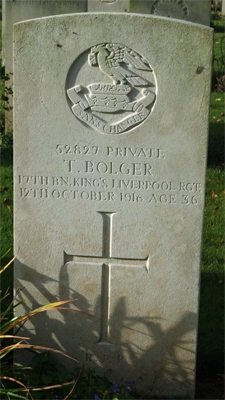
From: Co. Kildare
K.I.A (110 Years this day)
Thursday 12th October 1916.
36 years old
Thomas Bolger was born on the 03rd August 1880 in Athy, Co. Kildare the son of Patt Bolger and his wife Margaret (nee Rigney) who were married on the 25th May 1869 in St Michael’s Church, Athy. Patt was a 19 year old labourer, father David, Margaret was also 19, father John. He was the husband of Annie Bolger and the father of 10 children, 4 of which sadly died.
[Note: SDGW gives this soldier’s birthplace as Liverpool, but on the 1911 census filled in by Thomas, he states he was born in Kildare, Ireland.]
The pension card shows that his mother Margaret lived in Upper William Street, Blackparks (townland), Athy, County Kildare. (Ernest Shackleton was born not far from Athy, where today he is honoured with a statue and a museum.)
A Margaret Rigney married Pat Bolger in 1869; their son Thomas was born on 03rd August 1880. Their other children were David, John, Patrick, Anne, and Eliza(beth). The family was Roman Catholic.
The only Irish censuses show a Margaret Bolger, widowed, living in Newman’s Row, Athy in 1901 with children John, 26, a farm labourer, Anne, 18, and Eliza, 14. Thomas would have been about 20 years old and has left home.
We do know that Thomas married Annie Maher in late 1901, He was the father of 10 children, 4 of which sadly died. Those children we can find records for are; John Joseph, born on 03rd September 1902; Thomas, 1904 died at age 4; Margaret Ann 1905 died at 11 months; Vincent born on 06th January 1907; James 01st January 1909; and Christopher 17th December 1910.
The 1911 finds Thomas and his family at 16 Frith Street, Kirkdale, with four sons. Thomas is 31, employed as a canal porter, Annie, 36, was born in Wakefield, Yorkshire. Their children are listed as; John aged 8, Vincent 4, James 2, and Christopher 3 months old.
They had two more sons, Patrick, born on 22nd January 1913, and Joseph on 25th December 1914.
In 1911 his mother, Margaret, is living in Plewmans Row, Athy, with daughter Anne.
Earlier Ireland censuses have not survived; it has not been possible to positively identify Thomas on censuses or crew lists.
He enlisted in Liverpool, the amount of the War Gratuity suggests that he enlisted in June or July 1915.
Thomas was serving in the 17th Battalion, The King’s Liverpool Regiment as Private No 52827 when he was killed in action on the 12th October 1916, aged 36, during the Battle of the Transloy Ridges which was part of the ongoing Somme Offensive.
17th Bn War Diary: Battle of Transloy Ridge –
11-10-16 - Gird Trench/Gird Support – Battalion in front line and support trenches. British bombardment of enemy front line system commenced about midday. Hostile shelling was intermittent throughout the day.
12-10-16 - Our bombardment continued. Enemy reply weak. 2.5 p.m. Zero hour. Attack on German front line system commenced. Enemy wire was found to be uncut and attack was unsuccessful. Hostile machine gun fire was very heavy and caused many casualties. Battalion H.Q. and Support Trench were heavily shelled throughout afternoon and evening. […] During this action all communication had to be carried out by runners and carrier pigeons as all wires were being continually cut by enemy shelling.
Casualties: 5 officers killed, 5 officers wounded, 38 OR killed, about 225 OR wounded/missing etc.
Graham Maddocks, in “Liverpool Pals” p.140, adds:
“As the whistle blew, the 17th Battalion left its trenches to move forward. […] As soon as the attacking waves left their trenches the enemy artillery began to register on them, and at the same time, the defending infantry commenced a murderous rain of fire. […] Although their numbers had been depleted by the British bombardment, they were trained and experienced soldiers, well dug in on high ground, and for the most part, looking out on uncut wire. As such, it was virtually impossible for them to miss the City Battalion men struggling to advance in the mud towards them. The 17th Battalion, on the left, was particularly badly hit, as its portion of No Man’s Land contained a slight rise in the ground, and as the troops emerged onto it they were silhouetted against the sky and became easy targets. Those on the left of the attack, who managed to avoid the hail of bullets and make it to the German wire, then found that it was totally uncut, and thus trapped, they too became easy targets, to be picked off almost at the enemy’s will. It was hardly surprising that, seeing the first waves being wiped out, some of the following waves turned back and made for their start lines. These lines were now packed with other waves of troops, however, and the fleeing men added to the congestion already there, and became easy prey for the German gunners. There is some evidence also, to suggest that at this stage, the British trenches were also being hit by their own heavy artillery shells which were falling short.”
His name appeared in the list of K.L.R. Killed published in the Liverpool Post & Mercury on 20th November 1916.
King’s (Liverpool Regiment) - Bolger, 52827, T.;
Thomas now rests at Warlencourt British Cemetery, France where his gravestone inscription reads;
“R.I.P.”
Warlencourt Cemetery is entirely a concentration cemetery, begun late in 1919 when graves were brought in from small cemeteries and the battlefields of Warlencourt and Le Sars. The Graves Registration form shows graves from “Le Sars 6/1, 6/2, Hexham Road, Seven Elms”.
Graves were brought in from the original cemeteries at Hexham Road (Le Sars), and Seven Elms (Flers), as well as over 3,000 British graves due to the fighting which took place around the Butte de Warlencourt from the autumn of 1916 to the spring of 1917, and again in the German advance and retreat of 1918. The cemetery now contains 3,505 Commonwealth burials and commemorations of the First World War, 1,823 of which are unidentified.
According to CWGC records a body initially buried as J. Bridges, 4771, K.L.R., (means of identification G.R.U HM.32), was later identified as Pte. T. Bolger 52827, 13th (sic) Bn. K.L.R. [Pte J. Bridges, 4771, K.L.R. was somehow a mis-transcribed name for Pte John Brodie, who was transferred to No. 528019 Labour Corps and received the SWB after receiving a GSW to the hand. Further to this he had an Alias at the start of the war when he joined up as Pte R. Swift, 6886, Cheshire Regt. Further investigation reveals this name came from his sister Sarah Ann’s husband Richard Swift. We are happy to say Brodie survived the war and was married with children on the 1939 register living on Buckingham St, Liverpool.]
SDGW gives Thomas' battalion as the 13th K.L.R., but the Medal Roll shows only the 17th.
His children were 14, 9, 7, 5, 3, and one year old when Thomas was killed.
His widow Annie, of 33 Braemar Street, Kirkdale received Thomas’ Army pay as well as a War Gratuity of £4-10s, and was awarded a pension of £1-13s-9d a week from April 1917 for herself and six children. The pension card shows Nominee; Sister Paul, St. Joseph’s Home, Belmont Road [home for the aged poor]. The pension ledger also shows that his mother Margaret, living in Upper William Street, Blackparks, Athy, received a pension of 8/- for nine months in 1921.
Annie died in St. Joseph’s Home in 1939, aged 62.
Thomas is commemorated in Liverpool’s Hall of Remembrance, Panel 14 Right (T. Bolger 7th Bn.)
We currently have no further information on Thomas Bolger, If you have or know someone who may be able to add to the history of this soldier, please contact us.

From: Manchester
K.I.A (110 Years this day)
Thursday 12th October 1916.
20 years old
Joseph Bernard Broughton was born in 1895 in Chorlton, Manchester and was the son of John Arthur and Rose (nee Brady) Broughton who were married on the 16th May 1887 at St Saviours, Chorlton. John was a 21 year old waiter of 104 Shakespeare St, father John, whilst Rose was from 1a Jeneth? St, father James(deceased).
The 1901 Census shows the family living at 14 Milbourne Street, Blackpool.
His father, John Arthur, is aged 35, born in Sale, Lancashire and is a waiter in a hotel, whilst his mother Rose is aged 39, born Ireland and is a Company House keeper. They have six children, John James aged 12, Arthur aged 8, twins Joseph Bernard and May Lillian aged 5, Rose Dorothy aged 3, and Florence aged 1. They have a boarder Wm John Philips 29, also a hotel waiter.
The 1911 Census shows the family living at 29 Charles Street, Blackpool.
His father, John Arthur, is aged 46, born in Eccles, Lancashire in 1865 and is a waiter in a hotel, whilst his mother Rose is aged 49, born 1862 in Dublin and is a Boarding House keeper, they have been married for 24 years and have had 7 children of which one died. John who is aged 23, born 1888 occupation waiter as is Arthur aged 18, born 1893, Joseph Bernard aged 15, born 1896 is a page in a private hotel, and his twin May Lillian is an assistant at home, the four eldest children were all born in Manchester. Rose Dorothy aged 13, born 1898, born Bradford and Florence aged 11, born 1900 and Gertrude Annie aged 8, born 1903 are at school and born in Blackpool.
Joseph enlisted in Blackpool was serving in the 17th Battalion, The King’s Liverpool Regiment as Private No 52019 when he was killed in action on the 12th October 1916 aged 20 during the Battle of the Transloy Ridges which was part of the ongoing Somme Offensive.
17th Bn War Diary: Battle of Transloy Ridge –
11-10-16 - Gird Trench/Gird Support – Battalion in front line and support trenches. British bombardment of enemy front line system commenced about midday. Hostile shelling was intermittent throughout the day.
12-10-16 - Our bombardment continued. Enemy reply weak. 2.5 p.m. Zero hour. Attack on German front line system commenced. Enemy wire was found to be uncut and attack was unsuccessful. Hostile machine gun fire was very heavy and caused many casualties. Battalion H.Q. and Support Trench were heavily shelled throughout afternoon and evening. […] During this action all communication had to be carried out by runners and carrier pigeons as all wires were being continually cut by enemy shelling.
Casualties: 5 officers killed, 5 officers wounded, 38 OR killed, about 225 OR wounded/missing etc.
Graham Maddocks, in “Liverpool Pals” p.140, adds:
“As the whistle blew, the 17th Battalion left its trenches to move forward. […] As soon as the attacking waves left their trenches the enemy artillery began to register on them, and at the same time, the defending infantry commenced a murderous rain of fire. […] Although their numbers had been depleted by the British bombardment, they were trained and experienced soldiers, well dug in on high ground, and for the most part, looking out on uncut wire. As such, it was virtually impossible for them to miss the City Battalion men struggling to advance in the mud towards them. The 17th Battalion, on the left, was particularly badly hit, as its portion of No Man’s Land contained a slight rise in the ground, and as the troops emerged onto it they were silhouetted against the sky and became easy targets. Those on the left of the attack, who managed to avoid the hail of bullets and make it to the German wire, then found that it was totally uncut, and thus trapped, they too became easy targets, to be picked off almost at the enemy’s will. It was hardly surprising that, seeing the first waves being wiped out, some of the following waves turned back and made for their start lines. These lines were now packed with other waves of troops, however, and the fleeing men added to the congestion already there, and became easy prey for the German gunners. There is some evidence also, to suggest that at this stage, the British trenches were also being hit by their own heavy artillery shells which were falling short.”
Joseph Bernard has no known grave and is commemorated on the Thiepval Memorial, France.
The Thiepval Memorial, the Memorial to the Missing of the Somme, bears the names of more than 72,000 officers and men of the United Kingdom and South African forces who died in the Somme sector before 20 March 1918 and have no known grave. Over 90% of those commemorated died between July and November 1916.
On 01st August 1932 the Prince of Wales and the President of France inaugurated the Thiepval Memorial in Picardy. The inscription reads: “Here are recorded the names of officers and men of the British Armies who fell on the Somme battlefields between July 1915 and March 1918 but to whom the fortune of war denied the known and honoured burial given to their comrades in death.”
Blackpool Gazette 7th Nov 1916
DIED IN FRANCE.
BLACKPOOL FAMILY'S BEREAVEMENT.
Official intimation was received on Saturday, of the death, in France, of Private Bernard Broughton, a well known local young man. The deceased whose home was at 15 Charles street, Blackpool, joined the 5th King's Liverpool Regiment, at the outbreak of war, but was later transferred to the King's (Liverpool Scottish). His parents last heard from him at the beginning of October. The non-receipt of any further letters caused them to make inquiries at the Record Office at Preston, and on Saturday his mother received a message "Regret the death of your son” but when or how he lost his life is not stated. He was 21 years of age, and an "old boy" of Talbot-road, School. Before enlisting he was second waiter at the Lytham and St. Anne, Golf Club.
He is also commemorated on the Blackpool War Memorial.
Soldiers Effects( named as James B.) to father Arthur, Pension to mother Rose.
Father died aged 69 in Conway in 1934 and the mother Rose, dob 23rd April 1862, appears on the 1939 register living at 4 Larbreck Ave, Blackpool with her married daughter May L. Ellershaw. She died aged 85 in 1945.
We currently have no further information on Joseph Bernard Broughton, If you have or know someone who may be able to add to the history of this soldier, please contact us.
From: Millom,Cumberland
K.I.A (110 Years this day)
Thursday 12th October 1916.
20 years old
John Brown was born in 1896 in Millom, Cumberland and was the son of Matthew and Mary Fanny Brown (nee Roberts), of 43 Fernhill St, Toxteth Park, Liverpool. They had married in Anglesey in September 1894. John was educated from 1903 at Lapstone Road Board School (Boys), Millom and they have his date of birth as 21st August 1896.
The 1901 Census shows the family living at 23 Newton Street, Millom. His father, Matthew, is aged 40, born in Ravenglass, Cumberland and is a wood shipwright, whilst his mother, Mary, is aged 31, born in Amlwch, Anglesea. They have two children born in Millom, John aged 4 and Robert aged 1.
The 1911 Census shows the family living at 43 Fernhill Street, Toxteth, Liverpool. His father, Matthew, is aged 48, born 1863 in Ravenglass, Cumberland and is a shipwright- carpenter, whilst his mother, Mary, is aged 40, born 1871 in Anglesey. They have three children all born in Millom, Cumberland. John who is aged 14, born 1897 is a student, Robert aged 11 born 1900 and Martha aged 9, born 1902 both at school.
John enlisted in Liverpool was serving in the 17th Battalion, The King’s Liverpool Regiment as Private No 31091 when he was killed in action on the 12th October 1916 aged 20 during the Battle of the Transloy Ridges which was part of the ongoing Somme Offensive.
17th Bn War Diary: Battle of Transloy Ridge –
11-10-16 - Gird Trench/Gird Support – Battalion in front line and support trenches. British bombardment of enemy front line system commenced about midday. Hostile shelling was intermittent throughout the day.
12-10-16 - Our bombardment continued. Enemy reply weak. 2.5 p.m. Zero hour. Attack on German front line system commenced. Enemy wire was found to be uncut and attack was unsuccessful. Hostile machine gun fire was very heavy and caused many casualties. Battalion H.Q. and Support Trench were heavily shelled throughout afternoon and evening. […] During this action all communication had to be carried out by runners and carrier pigeons as all wires were being continually cut by enemy shelling.
Casualties: 5 officers killed, 5 officers wounded, 38 OR killed, about 225 OR wounded/missing etc.
Graham Maddocks, in “Liverpool Pals” p.140, adds:
"As the whistle blew, the 17th Battalion left its trenches to move forward. […] As soon as the attacking waves left their trenches the enemy artillery began to register on them, and at the same time, the defending infantry commenced a murderous rain of fire. […] Although their numbers had been depleted by the British bombardment, they were trained and experienced soldiers, well dug in on high ground, and for the most part, looking out on uncut wire. As such, it was virtually impossible for them to miss the City Battalion men struggling to advance in the mud towards them. The 17th Battalion, on the left, was particularly badly hit, as its portion of No Man’s Land contained a slight rise in the ground, and as the troops emerged onto it they were silhouetted against the sky and became easy targets. Those on the left of the attack, who managed to avoid the hail of bullets and make it to the German wire, then found that it was totally uncut, and thus trapped, they too became easy targets, to be picked off almost at the enemy’s will. It was hardly surprising that, seeing the first waves being wiped out, some of the following waves turned back and made for their start lines. These lines were now packed with other waves of troops, however, and the fleeing men added to the congestion already there, and became easy prey for the German gunners. There is some evidence also, to suggest that at this stage, the British trenches were also being hit by their own heavy artillery shells which were falling short.”
John has no known grave and is commemorated on the Thiepval Memorial, France.
The Thiepval Memorial, the Memorial to the Missing of the Somme, bears the names of more than 72,000 officers and men of the United Kingdom and South African forces who died in the Somme sector before 20 March 1918 and have no known grave. Over 90% of those commemorated died between July and November 1916.
On 01st August 1932 the Prince of Wales and the President of France inaugurated the Thiepval Memorial in Picardy. The inscription reads: “Here are recorded the names of officers and men of the British Armies who fell on the Somme battlefields between July 1915 and March 1918 but to whom the fortune of war denied the known and honoured burial given to their comrades in death.”
Reported wounded and missing in the Liverpool Daily Post 16h Nov 1916.
King’s (Liverpool Regiment) - Brown, 31091, J.;
Soldiers Effects to father Matthew, Pension to mother Mary.
Parents appears on the 1939 register still living at 43 Fernhill Street. Father Matthew, dob 4th Oct 1860, mother Mary F., dob 6th Aug 1869. Family Trees have their deaths in 1945 and 1943 respectively.
We currently have no further information on John Brown, If you have or know someone who may be able to add to the history of this soldier, please contact us.
Education records show John’s birth year as 1896 and Census records have 1897.

From: Liverpool
K.I.A (110 Years this day)
Thursday 12th October 1916.
20 years old
Thomas Seales Brown was born on 04th October 1896, the only child of Samuel George Brown and Minnie (née Miller). His parents, both from Liverpool, married in St Bride’s Church, Toxteth Park on the 05th September 1893. Samuel was a 24 year old hairdresser of 3 Leece Street, father Thomas Seales, whilst Minnie was of 16 Wolstenholme Sq., father Thomas. Thomas is their only living child on the census records. He was baptised in St. Silas, Liverpool on 10th November 1896, his father’s occupation listed as hairdresser, and parents’ residence 160 Mt. Pleasant. Thomas was named after his paternal grandfather, Thomas Seales Brown (who died in 1901).
In the 1901 Census, Samuel and Minnie are living with her mother, Emily Elliot, at 20, The Woodlands, Birkenhead. Samuel, 31, is a wig maker, his mother Minnie is 33, and Thomas is 4.
He enlisted in Liverpool as Rifleman 4515 joining the 6th Battalion of The King's Liverpool Regiment (Liverpool Rifles). He embarked from Folkestone-Boulogne on 14th July 1916 reaching the 24th Infantry Base Depot on 15th July 1916. He then proceeded to the 11th Entrenching Battalion on 02nd August 1916 and proceeded to the17th Battalion K.L.R. on 05th August 1916 and was posted as Private No 51593 on 05th September 1916.
Thomas was killed in action on the 12th October 1916 during the Battle of the Transloy Ridges which was part of the ongoing Somme Offensive. He had just turned 20 years of age.
17th Bn War Diary: Battle of Transloy Ridge –
11-10-16 - Gird Trench/Gird Support – Battalion in front line and support trenches. British bombardment of enemy front line system commenced about midday. Hostile shelling was intermittent throughout the day.
12-10-16 - Our bombardment continued. Enemy reply weak. 2.5 p.m. Zero hour. Attack on German front line system commenced. Enemy wire was found to be uncut and attack was unsuccessful. Hostile machine gun fire was very heavy and caused many casualties. Battalion H.Q. and Support Trench were heavily shelled throughout afternoon and evening. […] During this action all communication had to be carried out by runners and carrier pigeons as all wires were being continually cut by enemy shelling.
Casualties: 5 officers killed, 5 officers wounded, 38 OR killed, about 225 OR wounded/missing etc.
Graham Maddocks, in “Liverpool Pals” p.140, adds:
“As the whistle blew, the 17th Battalion left its trenches to move forward. […] As soon as the attacking waves left their trenches the enemy artillery began to register on them, and at the same time, the defending infantry commenced a murderous rain of fire. […] Although their numbers had been depleted by the British bombardment, they were trained and experienced soldiers, well dug in on high ground, and for the most part, looking out on uncut wire. As such, it was virtually impossible for them to miss the City Battalion men struggling to advance in the mud towards them. The 17th Battalion, on the left, was particularly badly hit, as its portion of No Man’s Land contained a slight rise in the ground, and as the troops emerged onto it they were silhouetted against the sky and became easy targets. Those on the left of the attack, who managed to avoid the hail of bullets and make it to the German wire, then found that it was totally uncut, and thus trapped, they too became easy targets, to be picked off almost at the enemy’s will. It was hardly surprising that, seeing the first waves being wiped out, some of the following waves turned back and made for their start lines. These lines were now packed with other waves of troops, however, and the fleeing men added to the congestion already there, and became easy prey for the German gunners. There is some evidence also, to suggest that at this stage, the British trenches were also being hit by their own heavy artillery shells which were falling short.”
Warlencourt Cemetery is entirely a concentration cemetery, begun late in 1919 when graves were brought in from small cemeteries and the battlefields of Warlencourt and Le Sars. The Graves Registration form shows graves from “Le Sars 6/1, 6/2, Hexham Road, Seven Elms”.
Graves were brought in from the original cemeteries at Hexham Road (Le Sars), and Seven Elms (Flers), as well as over 3,000 British graves due to the fighting which took place around the Butte de Warlencourt from the autumn of 1916 to the spring of 1917, and again in the German advance and retreat of 1918. The cemetery now contains 3,505 Commonwealth burials and commemorations of the First World War, 1,823 of which are unidentified.
King’s (Liverpool Regiment) - Brown, 51593, T.S.;
In 1939 Samuel and Esther are living at 13 Thorndale Road, Crosby. His father is 70, working as a hairdresser. Samuel appears to have died in 1942 in Birkenhead, aged 72.
Grateful thanks are extended to Kevin Shannon the author of the book The Liverpool Rifles for providing details of Thomas' service with the 6th Rifles.
We currently have no further information on Thomas Seales Brown, if you have or know someone who may be able to add to the history of this soldier, please contact us.
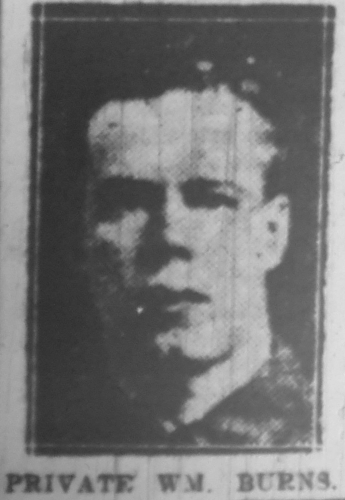
From: Liverpool
K.I.A (110 Years this day)
Thursday 12th October 1916.
25 years old
William Thomas Burns was born in Liverpool on 11th February 1891 at 90 Tatlock Street Kirkdale to Liverpool born marine fireman Thomas Burns and his Liverpool born cigar maker wife Mary (nee Furlong). They married on 12th March 1890 at St Sylvester's Church, Vauxhall, Liverpool and had four sons and two daughters. William Thomas was their first born, he was baptised Roman Catholic at St Sylvester's Church on 21st February 1891.
According to the 20th Bn War Diary, on 10th October 1916 the battalion marched from Dernancourt via Mametz to Bazentin Le Grand where it bivouacked for the night. The next day the battalion moved up to site for assembly trenches, arriving about 11 p.m., where it dug in two good trenches, Nos.1 and 2 Coys front and Nos.3 and 4 Coys in rear.
From the War Diary:
Near Eaucourt L’Abbaye. 12/10/1916. The 4th British and 6th French armies continued the attack. Zero 2.5 p.m. The whole XVth Corps attacked […] The attack of 89th Inf Bde was carried out with 2nd Bn Bedf Regt on right, 17th Bn KLR on left, 20th Bn KLR in support, 19th Bn KLR in reserve. Battalions attacked in four waves. On the departure of the attacking battalions Nos. 1 and 2 companies advanced, each in two waves, to garrison the front line trench vacated by 2nd Bn Bedf Regt on right and 17th KLR on left. On Nos 1 and 2 Coys vacating front assembly trench, it was occupied by two platoons of Nos. 3 and 4 Coys respectively, from rear assembly trench. As the assaulting waves left their trenches they were met by intense machine gun fire, especially on our left. The enemy also opened heavy barrages on our front support and assembly trenches. […] Capt. H. Beckett, commanding No.1 company, reached the front line with few casualties, but Lieut R.D. Paterson leading No.2 company was killed. His company also had few casualties. The assaulting battalions were held up by very heavy machine gun fire, and made little progress. […] At 4.20 p.m. two platoons, No.4 Coy, under Cpl Brighouse, were sent up to reinforce the left, and No.3 Coy under Cpl Sutton followed at 4.45 p.m. Battalion HQ moved up to front line at 4.55 and remaining two platoons of No.4 Coy moved up to join Cpl Brighouse.
Casualties during action:
Officers – Killed Lieut. R.D. Paterson, 2nd Lieut G.L. Grennan, Wounded – 2nd Lieuts A.E. Griffin, L.E. Mclean Hayes, C. Buttemer, Wounded Cpl g. Brighouse.
Other Ranks killed – 20.
It had rained incessantly at the beginning of October 1916 and the ground was full of mud. In his book ‘The Liverpool Pals’ Graham Maddocks describes the 12th of October:
It was obvious that the Germans knew an attack was coming and from which direction it would be mounted. On the evening of the 11th the 20th Battalion moved up the line and dug two deep assembly trenches behind the 17th Battalion’s position for the attack the next day. The 19th Battalion also moved into its reserve positions known as Flers Trench. Although the rain has stopped, the ground was like a morass, with all the natural vegetation destroyed, it was difficult to tell exactly where the objectives lay. On the afternoon of the 12th at exactly 2.05pm, the attack began along the whole Corps line, covered by the local batteries of the Royal Field Artillery which still had line of sight. As the whistles blew, the 17th Battalion left its trenches to move forwards, at the same time No.1 and 2 Companies of the 20th Battalion moved forward and occupied the trenches vacated by the 17th. As they too went over the top, No.3 and 4 Companies took their place and waited in their turn to follow. No.2 and 3 Companies of the 19th Battalion moved up to occupy the assembly trenches dug the previous night by the 20th.
As soon as the attacking waves left their trenches the enemy artillery began to register on them and at the same time the defending infantry commenced a murderous rain of fire. Those German regiments were trained and experienced soldiers, well dug in on high ground, and for the most part, looking out on uncut wire. As such it was virtually impossible for them to miss the City Battalion men struggling to advance in the mud towards them.
Brigadier-General F.C.Stanley wrote that the Battalions were also suffering casualties due to the short shooting of the British heavy artillery fire. “I know from practical experience that they were our own guns which were shooting, and which were causing us quite a considerable number of casualties. The fault lay at that time from the fact that the heavy gunners would not send their FOO’s (Forward Observation Officers) far enough forward, but were content to observe us from right back”
Some ground was gained that day, about 150 yards, the 20th Battalion were not relieved until 24 hours later causing the men to endure another day and night in the front line trench.
His death was reported in the Liverpool Daily Post on 11th December 1916:
KILLED IN ACTION.
Private William Burns, The King’s (Liverpool Regiment), was killed in action on October 12. He was twenty-five years of age, previously to the war was employed Messrs. Fairrie and Co., sugar refiners. He was the eldest son Mrs. Burns, 16 Portland-street.
His death was also reported in the Football Echo on Saturday 16th December 1916 containing the same details as the Daily Post article above but it also contained a photograph of William.
His body was not recovered or was subsequently lost as he has no known grave and is commemorated on the Thiepval Memorial in France.
The Thiepval Memorial, the Memorial to the Missing of the Somme, bears the names of more than 72,000 officers and men of the United Kingdom and South African forces who died in the Somme sector before 20 March 1918 and have no known grave. Over 90% of those commemorated died between July and November 1916.
On 01st August 1932 the Prince of Wales and the President of France inaugurated the Thiepval Memorial in Picardy. The inscription reads: “Here are recorded the names of officers and men of the British Armies who fell on the Somme battlefields between July 1915 and March 1918 but to whom the fortune of war denied the known and honoured burial given to their comrades in death.”
His mother died, aged 67, in 1934 and was buried in Ford Cemetery on the 14 May, her address 12 Tapley Place, Old Swan, Liverpool.
We currently have no further information on William Thomas Burns, if you have or know someone who may be able to add to the history of this soldier, please contact us.
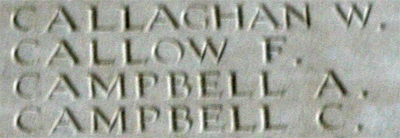
From: Glasgow
K.I.A (110 Years this day)
Thursday 12th October 1916.
17 years old
Charles Merrilees Campbell was born in 1898 in Shettleston, Lanark and was the son of David Campbell and his wife Mary Stevens Merrilees who were married in Liverpool in 1889. His father was born in 1859 in Lanarkshire and was a baker by trade whilst his mother was born in 1861 in Kirkdale, Liverpool.
On the 1901 census the family are living at 8 Victoria Buildings, Shettleston, Lanark. His father, David, is aged 42, a baker born in Lanarkshire, his mother, Mary, is aged 38 born in England, and son Charles 2.
The 1911 Census shows the family living at 9 Cobb Avenue, Litherland, Liverpool. His mother, Mary, is aged 46, and has no occupation listed. She was living with her son Charles aged 12, born 1899 born in Shilliston, Lanark and her adopted daughter Lillie aged 7, born 1904 in Seaforth and of school age. They have a boarder by the name of August Figel aged 22, born 1889 in Meersburg, Germany and he is a ship’s cook. Although his father David is not found on the census, he appears on electoral rolls at 9 Cobb Avenue from 1905 to 1916.
Charles enlisted in Liverpool initially joining the 6th Battalion of The King's Liverpool Regiment. After a transfer he was was serving in the 17th Battalion, The King’s Liverpool Regiment as Private No 51965 when he was killed in action on the 12th October 1916, aged 17, during the Battle of the Transloy Ridges which was part of the ongoing Somme Offensive.
17th Bn War Diary: Battle of Transloy Ridge –
11-10-16 - Gird Trench/Gird Support – Battalion in front line and support trenches. British bombardment of enemy front line system commenced about midday. Hostile shelling was intermittent throughout the day.
12-10-16 - Our bombardment continued. Enemy reply weak. 2.5 p.m. Zero hour. Attack on German front line system commenced. Enemy wire was found to be uncut and attack was unsuccessful. Hostile machine gun fire was very heavy and caused many casualties. Battalion H.Q. and Support Trench were heavily shelled throughout afternoon and evening. […] During this action all communication had to be carried out by runners and carrier pigeons as all wires were being continually cut by enemy shelling.
Casualties: 5 officers killed, 5 officers wounded, 38 OR killed, about 225 OR wounded/missing etc.
Graham Maddocks, in “Liverpool Pals” p.140, adds:
“As the whistle blew, the 17th Battalion left its trenches to move forward. […] As soon as the attacking waves left their trenches the enemy artillery began to register on them, and at the same time, the defending infantry commenced a murderous rain of fire. […] Although their numbers had been depleted by the British bombardment, they were trained and experienced soldiers, well dug in on high ground, and for the most part, looking out on uncut wire. As such, it was virtually impossible for them to miss the City Battalion men struggling to advance in the mud towards them. The 17th Battalion, on the left, was particularly badly hit, as its portion of No Man’s Land contained a slight rise in the ground, and as the troops emerged onto it they were silhouetted against the sky and became easy targets. Those on the left of the attack, who managed to avoid the hail of bullets and make it to the German wire, then found that it was totally uncut, and thus trapped, they too became easy targets, to be picked off almost at the enemy’s will. It was hardly surprising that, seeing the first waves being wiped out, some of the following waves turned back and made for their start lines. These lines were now packed with other waves of troops, however, and the fleeing men added to the congestion already there, and became easy prey for the German gunners. There is some evidence also, to suggest that at this stage, the British trenches were also being hit by their own heavy artillery shells which were falling short.”
Going on the 1911 Census return, it would appear that Charles lied about his age on enlistment as he would appear to be only 17 when he was killed in action.
Charles was initially declared Missing and was reported as such in the Liverpool Daily Post on the 16th November 1916:
King’s (Liverpool Regiment) - Campbell, 51965, C.;
His International Red Cross record shows that Miss Campbell, c/o H. T. Blundell, Estate Agent, 219 Marsh Lane, Bootle, contacted the ICRC seeking information on Charles, missing since 16/10/1916 (sic). She received a response stating they had no information on Charles, sent on 18/05/1918.
Charles' body was not recovered or was subsequently lost as he has no known grave and is commemorated on the Thiepval Memorial, France.
The Thiepval Memorial, the Memorial to the Missing of the Somme, bears the names of more than 72,000 officers and men of the United Kingdom and South African forces who died in the Somme sector before 20 March 1918 and have no known grave. Over 90% of those commemorated died between July and November 1916.
On 01st August 1932 the Prince of Wales and the President of France inaugurated the Thiepval Memorial in Picardy. The inscription reads: “Here are recorded the names of officers and men of the British Armies who fell on the Somme battlefields between July 1915 and March 1918 but to whom the fortune of war denied the known and honoured burial given to their comrades in death.”
Soldiers Effects records that his death was presumed to have occurred on or since 12th October 1916.
War Gratuity of £3 father David.
A pension was paid to his mother, Mary, of 14 shillings a week
9 Cobb Avenue, Litherland
Charles is also commemorated on the following War Memorials:
Litherland Civic Memorial
St Andrew’s C. of E. Church, Linacre
Lander Road School, Litherland
St Philip’s C. of E. Church, Lad’s Brigade, Litherland.
His mother died, aged 60, in 1922 and his father died, aged 90, in 1947 in Wallasey.
We currently have no further information on Charles Campbell, If you have or know someone who may be able to add to the history of this soldier, please contact us.
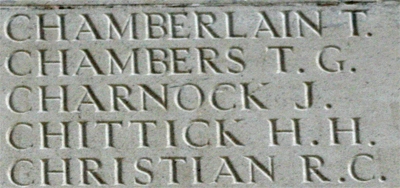
From: Liverpool
K.I.A (110 Years this day)
Thursday 12th October 1916.
20 years old
Thomas Chamberlain was born in Liverpool in the September quarter of 1896, the son of William Chamberlain and his wife Catherine (nee Carter) who were married in 1892 at St Mary’s Church, Kirkdale. He was baptised on the 23rd July 1896 also at St Mary’s..
The 1901 Census shows the family living at 154, Rice Lane, Liverpool. His father, William, is aged 28, born 1873 in Liverpool and is a general labourer, whilst his mother, Catherine, is aged 29, born 1872. They live with their two children, Katherine aged 6, born 1895 and Thomas aged 4, born 1897.
His mother, Catherine, died in March 1902, aged 30, and his father William remarried Annie Lake in June 1908 at St. Athanasius' Church, Kirkdale.
The 1911 Census shows the family living at 41 Maria Road, Liverpool. His father, William is aged 37 and employed as a brick setter labourer. He has remarried and his wife Annie is aged 37. They have been married for three years and have three children. Those listed on the Census are; Thomas aged 14 who is employed as a Carter’s boy, Lillian aged 2, born 1909 and William born in 1911 and he is aged 4 months. They also have three step children, Alice Lake aged 14, born 1897 employed as a servant girl, Annie aged 12, born 1899 and David Lake aged 10, born 1901 are both at school.
Thomas enlisted in Liverpool initially joining the 6th Battalion of The King's Liverpool Regiment. After a transfer he was was serving in the 19th Battalion, The King’s Liverpool Regiment as Private No 51773 when he was killed in action on the 12th October 1916, aged 20, during the Battle of the Transloy Ridges which was part of the ongoing Somme Offensive.
It had rained incessantly at the beginning of October 1916 and the ground was full of mud. In his book ‘The Liverpool Pals’ Graham Maddocks describes the day of the 12th of October 1916.
It was obvious that the Germans knew an attack was coming and from which direction it would be mounted. On the evening of the 11th the 20th Battalion moved up the line and dug two deep assembly trenches behind the 17th Battalion’s position for the attack the next day. The 19th Battalion also moved into its reserve positions known as Flers Trench. Although the rain has stopped, the ground was like a morass, with all the natural vegetation destroyed, it was difficult to tell exactly where the objectives lay. On the afternoon of the 12th at exactly 2.05pm, the attack began along the whole Corps line, covered by the local batteries of the Royal Field Artillery which still had line of sight. As the whistles blew, the 17th Battalion left its trenches to move forwards, at the same time No.1 and 2 Companies of the 20th Battalion moved forward and occupied the trenches vacated by the 17th. As they too went over the top, No.3 and 4 Companies took their place and waited in their turn to follow. No.2 and 3 Companies of the 19th Battalion moved up to occupy the assembly trenches dug the previous night by the 20th.
As soon as the attacking waves left their trenches the enemy artillery began to register on them and at the same time the defending infantry commenced a murderous rain of fire. Those German regiments were trained and experienced soldiers, well dug in on high ground, and for the most part, looking out on uncut wire. As such it was virtually impossible for them to miss the City Battalion men struggling to advance in the mud towards them.
Brigadier-General F.C.Stanley wrote that the Battalions were also suffering casualties due to the short shooting of the British heavy artillery fire. “I know from practical experience that they were our own guns which were shooting, and which were causing us quite a considerable number of casualties. The fault lay at that time from the fact that the heavy gunners would not send their FOO’s (Forward Observation Officers) far enough forward, but were content to observe us from right back”
Some ground was gained that day, about 150 yards, the 20th Battalion were not relieved until 24 hours later causing the men to endure another day and night in the front line trench.
He was reported killed in the Liverpool Daily Post on 07th December 1916
KILLED.
King’s(Liverpools) - Chamberlain, 51773, T.;
Thomas' body was not recovered or was subsequently lost as he has no known grave and is commemorated on the Thiepval Memorial in France.
The Thiepval Memorial, the Memorial to the Missing of the Somme, bears the names of more than 72,000 officers and men of the United Kingdom and South African forces who died in the Somme sector before 20 March 1918 and have no known grave. Over 90% of those commemorated died between July and November 1916.
On 01st August 1932 the Prince of Wales and the President of France inaugurated the Thiepval Memorial in Picardy. The inscription reads: “Here are recorded the names of officers and men of the British Armies who fell on the Somme battlefields between July 1915 and March 1918 but to whom the fortune of war denied the known and honoured burial given to their comrades in death.”
Soldiers effects and Pension to his father William, 56 Maria Road, Walton.
Thomas is also commemorated on the following War Memorials:
Hall of Remembrance, Liverpool Town Hall, Panel 9 Right.
Northcote Road Council School, Walton.
Parents are found on the 1939 register at 45 Buchanan Road, Walton, William is a retired labourer, dob 01st June 1872, Annie dob 29th May 1872.
His step-mother died, aged 68, in the December quarter of 1941.
His father died, aged 70, in the March quarter of 1943.
We currently have no further information on Thomas Chamberlain, If you have or know someone who may be able to add to the history of this soldier, please contact us.
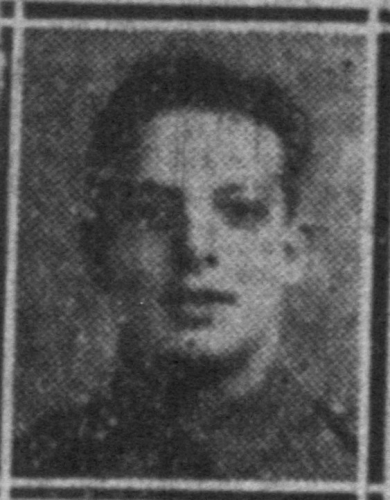
From: Preston, Lancs
K.I.A (110 Years this day)
Thursday 12th October 1916.
21 years old
John Charnock was born on the 17th Deember 1894 in Preston and was the son of Thomas Charnock and his wife Elizabeth/Betsy (nee Woodruff) who were married in 1875.
The 1901 Census shows the family living at 4 Harrington St, Preston. His father Thomas is aged 45, and is a Bricklayer. His wife Betsy is aged 46, and they have five children, Maggie 22 a cotton weaver, Thomas 19 a cotton mill labourer, Ellen 12, John 7 and Alice 2(everybody born Preston).
The 1911 Census shows the family living at 23 Mill Hill, Preston. His father Thomas is aged 55, born 1856 and is a Bricklayer. His wife Betsy is aged 55(married 36 years 9 children 6 still alive), born 1856 and they have one child, John who is aged 17, born 1894 occupation Cotton Weaver. They have a nephew also called John aged 14, born 1897 and he is also a Cotton Weaver and a niece called Alice aged 12, born 1899 still at school living with them at the address.
John married Lilian Hignett in 1916 at Holy Trinity, Preston. She was born in 1892 in Widnes and at the time of the 1911 Census was living with her family at 5 Lowthian Street, Preston and her occupation was a Doffer in a Cotton Mill. They had a daughter Lilian in the Sept quarter 1916.
He enlisted in April, 1915 in Preston and was serving in the 17th Battalion, The King’s Liverpool Regiment as Private No 38132 when he was killed in action on the 12th October 1916 aged 21 during the Battle of the Transloy Ridges which was part of the ongoing Somme Offensive.
17th Bn War Diary: Battle of Transloy Ridge –
11-10-16 - Gird Trench/Gird Support – Battalion in front line and support trenches. British bombardment of enemy front line system commenced about midday. Hostile shelling was intermittent throughout the day.
12-10-16 - Our bombardment continued. Enemy reply weak. 2.5 p.m. Zero hour. Attack on German front line system commenced. Enemy wire was found to be uncut and attack was unsuccessful. Hostile machine gun fire was very heavy and caused many casualties. Battalion H.Q. and Support Trench were heavily shelled throughout afternoon and evening. […] During this action all communication had to be carried out by runners and carrier pigeons as all wires were being continually cut by enemy shelling.
Casualties: 5 officers killed, 5 officers wounded, 38 OR killed, about 225 OR wounded/missing etc.
Graham Maddocks, in “Liverpool Pals” p.140, adds:
“As the whistle blew, the 17th Battalion left its trenches to move forward. […] As soon as the attacking waves left their trenches the enemy artillery began to register on them, and at the same time, the defending infantry commenced a murderous rain of fire. […] Although their numbers had been depleted by the British bombardment, they were trained and experienced soldiers, well dug in on high ground, and for the most part, looking out on uncut wire. As such, it was virtually impossible for them to miss the City Battalion men struggling to advance in the mud towards them. The 17th Battalion, on the left, was particularly badly hit, as its portion of No Man’s Land contained a slight rise in the ground, and as the troops emerged onto it they were silhouetted against the sky and became easy targets. Those on the left of the attack, who managed to avoid the hail of bullets and make it to the German wire, then found that it was totally uncut, and thus trapped, they too became easy targets, to be picked off almost at the enemy’s will. It was hardly surprising that, seeing the first waves being wiped out, some of the following waves turned back and made for their start lines. These lines were now packed with other waves of troops, however, and the fleeing men added to the congestion already there, and became easy prey for the German gunners. There is some evidence also, to suggest that at this stage, the British trenches were also being hit by their own heavy artillery shells which were falling short.”
John's body was not recovered or was subsequently lost as he has no known grave and is commemorated on the Thiepval Memorial, in France.
The Thiepval Memorial, the Memorial to the Missing of the Somme, bears the names of more than 72,000 officers and men of the United Kingdom and South African forces who died in the Somme sector before 20 March 1918 and have no known grave. Over 90% of those commemorated died between July and November 1916.
On 01st August 1932 the Prince of Wales and the President of France inaugurated the Thiepval Memorial in Picardy. The inscription reads: “Here are recorded the names of officers and men of the British Armies who fell on the Somme battlefields between July 1915 and March 1918 but to whom the fortune of war denied the known and honoured burial given to their comrades in death.”
An appeal for information was placed in the Preston Herald on 18th November 1916
INFORMATION WANTED; His parents, who reside 23, Mill-hill, Preston, would be glad of any information concerning Pte, John Charnock, King’s Liverpool Regiment, who was reported missing on October 12th. He was a weaver by trade, but had been working on ammunitions some time before he enlisted.
His death was reported in the Preston Herald on 30 June 1917:
PRESTONIAN KILLED.—Official intimation has been received at his home, 23, Mill-hill, Preston, that Pte. John Charnock, L.N.L. Regt., was killed in action on June 7th. He enlisted about twelve months ago, and had been in France ten months. He was a single man, 20 years of age, and was formerly employed Messrs. Dick, Kerr and Co.’s works. His uncle, Pte. John Charnock, King’s (Liverpool) Regt., has been missing nine months.
It was also reported in the Lancashire Evening Post on 11th July 1917 :
MISSING SOLDIER NOW REPORTED KILLED
Pte. John Charnock (24), King's Liverpool Regt., who was previously reported as missing since October 12th, 1916, has now been officially reported killed in action on that date. Prior to joining up two years ago he was employed by Messrs. Dick. Kerr, and Co., and resided at 23, Mill Hill, Preston. He had been in France three months when he was first reported missing. He leaves a widow and one child. His nephew, Pte, John Charnock, L.N.L. Regt., who lived at the same address, was killed in action on June 7th, 1916.
His family paid tribute to John in the Lancashire Evening Post on 12th October 1918, the second anniversary of his death:
CHARNOCK - In loving memory of my dear husband Pte. JOHN CHARNOCK, 17th King’s Liverpool Regt., missing but reported killed on October 12th 1916.
Some may think that I forget you
When at times they see me smile;
But they little know the sorrow
That the smile hides all the while.
- From his sorrowing wife and child, 25 lady Street.
CHARNOCK - In treasured remembrance of Pte. JOHN CHARNOCK , King’s Liverpool, presumed killed October 12th 1916.
Some may think that we forget him
If at times they see us smile;
But they little know the sorrow
That's behind it all the while.
- Still mourned by his sorrowing Father, Brother Tom, and Sisters Lizzie, Nellie, and Alice, 23, Mill Hill, Preston.
Soldiers Effects and Pension to widow Lilian, and child Lilian.
John is commemorated on the Preston Roll of Honour.
His father died, aged 60, in 1920
Lilian remarried in 1923 to Robert Parker at All Saints, Preston.
They appear on the 1939 register living at 31 Mona Street, Preston. Lilian, dob 10th April 1892, is a cotton weaver.
We currently have no further information on John Charnock, If you have or know someone who may be able to add to the history of this soldier, please contact us.
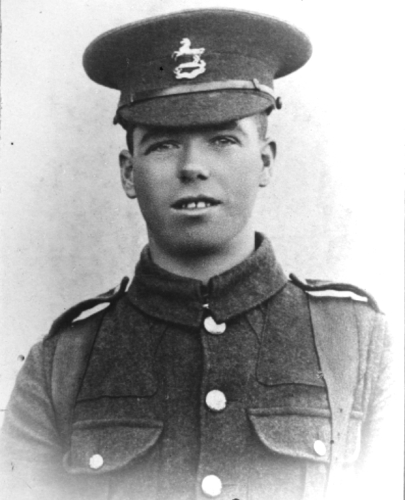
From: Castletown, I.O.M
K.I.A (110 Years this day)
Thursday 12th October 1916.
21 years old
Robert Charles Christian was born in 1895 in Castletown, Isle of Man and was the son of John Christian and his wife Catherine (nee Quillin) who were married on the 23rd Sept 1876 at the Parish Church, Malew.
The 1901 Census shows the family living at 68 Chapel Lane, Malew. His father, John, is aged 54, and is a fisherman born in Rushen, his mother, Catherine, is aged 46, also born in Rushen. They have six children all born in Castletown. John is aged 24, a groom, Florence aged 16, on domestic duties, William aged 14, a butcher’s apprentice, Alfred aged 12, Walter aged 10, and Charley aged 5. Also present is the nephew Charles Bridson aged 6, born in Douglas.
The 1911 Census shows the family living at 17 Queen St, Castletown. His father, John, is aged 63, and is a labourer in a limestone quarry. His wife Catherine is aged 56 and is a cook. They have been married for 34 years and have had 9 children, 7 of whom have survived. They have two children in the household; John is aged 33, is a sailor, and Charles aged 15, is a bakers apprentice. Also present are nephew Charles Bridson aged 16, a bootmakers apprentice, and a grandson Jack Christian aged 4.
He enlisted in Castletown, Isle of Man and was serving in the 20th Battalion, The King’s Liverpool Regiment as Private No 36889 when he was killed in action on the 12th October 1916 aged 21 during the Battle of the Transloy Ridges which was part of the ongoing Somme Offensive.
According to the 20th Bn War Diary, on 10th October 1916 the battalion marched from Dernancourt via Mametz to Bazentin Le Grand where it bivouacked for the night. The next day the battalion moved up to site for assembly trenches, arriving about 11 p.m., where it dug in two good trenches, Nos.1 and 2 Coys front and Nos.3 and 4 Coys in rear.
From the War Diary:
Near Eaucourt L’Abbaye. 12/10/1916. The 4th British and 6th French armies continued the attack. Zero 2.5 p.m. The whole XVth Corps attacked […] The attack of 89th Inf Bde was carried out with 2nd Bn Bedf Regt on right, 17th Bn KLR on left, 20th Bn KLR in support, 19th Bn KLR in reserve. Battalions attacked in four waves. On the departure of the attacking battalions Nos. 1 and 2 companies advanced, each in two waves, to garrison the front line trench vacated by 2nd Bn Bedf Regt on right and 17th KLR on left. On Nos 1 and 2 Coys vacating front assembly trench, it was occupied by two platoons of Nos. 3 and 4 Coys respectively, from rear assembly trench. As the assaulting waves left their trenches they were met by intense machine gun fire, especially on our left. The enemy also opened heavy barrages on our front support and assembly trenches. […] Capt. H. Beckett, commanding No.1 company, reached the front line with few casualties, but Lieut R.D. Paterson leading No.2 company was killed. His company also had few casualties. The assaulting battalions were held up by very heavy machine gun fire, and made little progress. […] At 4.20 p.m. two platoons, No.4 Coy, under Cpl Brighouse, were sent up to reinforce the left, and No.3 Coy under Cpl Sutton followed at 4.45 p.m. Battalion HQ moved up to front line at 4.55 and remaining two platoons of No.4 Coy moved up to join Cpl Brighouse.
Casualties during action:
Officers – Killed Lieut. R.D. Paterson, 2nd Lieut G.L. Grennan, Wounded – 2nd Lieuts A.E. Griffin, L.E. Mclean Hayes, C. Buttemer, Wounded Cpl g. Brighouse.
Other Ranks killed – 20.
It had rained incessantly at the beginning of October 1916 and the ground was full of mud. In his book ‘The Liverpool Pals’ Graham Maddocks describes the 12th of October:
It was obvious that the Germans knew an attack was coming and from which direction it would be mounted. On the evening of the 11th the 20th Battalion moved up the line and dug two deep assembly trenches behind the 17th Battalion’s position for the attack the next day. The 19th Battalion also moved into its reserve positions known as Flers Trench. Although the rain has stopped, the ground was like a morass, with all the natural vegetation destroyed, it was difficult to tell exactly where the objectives lay. On the afternoon of the 12th at exactly 2.05pm, the attack began along the whole Corps line, covered by the local batteries of the Royal Field Artillery which still had line of sight. As the whistles blew, the 17th Battalion left its trenches to move forwards, at the same time No.1 and 2 Companies of the 20th Battalion moved forward and occupied the trenches vacated by the 17th. As they too went over the top, No.3 and 4 Companies took their place and waited in their turn to follow. No.2 and 3 Companies of the 19th Battalion moved up to occupy the assembly trenches dug the previous night by the 20th.
As soon as the attacking waves left their trenches the enemy artillery began to register on them and at the same time the defending infantry commenced a murderous rain of fire. Those German regiments were trained and experienced soldiers, well dug in on high ground, and for the most part, looking out on uncut wire. As such it was virtually impossible for them to miss the City Battalion men struggling to advance in the mud towards them.
Brigadier-General F.C.Stanley wrote that the Battalions were also suffering casualties due to the short shooting of the British heavy artillery fire. “I know from practical experience that they were our own guns which were shooting, and which were causing us quite a considerable number of casualties. The fault lay at that time from the fact that the heavy gunners would not send their FOO’s (Forward Observation Officers) far enough forward, but were content to observe us from right back”
Some ground was gained that day, about 150 yards, the 20th Battalion were not relieved until 24 hours later causing the men to endure another day and night in the front line trench.
His death was reported in the Isle of Man Examiner on 28th October 1916:
CASTLETOWN SOLDIER KILLED IN ACTION.
Mr John Christian, of 31 Queen-street, Castletown, received word from the Rev A. L. Preston (Army Chaplain in France), containing the sad intelligence that his youngest son, Private Robert Charles Christian, 20th King's Liverpool Regiment, was killed in action on the 12th Oct. The letter, under date 17th October, was as follows:— " As chaplain to the 20th King's, I feel I must just write to say how deeply I sympathise with you in your grief at your son's death on 12th October. I am sure it will help you to know- that I was able to find and bury his body just behind the firing-line', with two of his pals, and a cross will mark the spot where he lies. Will you try to remember that he died the nobler death a man can die fighting for his country and the right ? and also that it is only his body that lies here in France, while his soul—the real self you know and love—has gone back to God, who loves him. May God. who in His great love gave His only Son to die for you, comfort you now in your hour of sorrow.—Yours very sincerely. A. L. Preston. Chaplain. 20th King's."
The deceased soldier was 21 years of age. He joined the Army last Spring, and after about three months' training was selected with others to fill the place in the firing-line of a number of men who had been killed and wounded. By trade a butcher, he was formerly employed by Mr W. C. Kennaugh. Castletown. Mr Christian has two other sons in the Manx Service Company, viz., John James, in Salonica; and Walter, in hospital with fever at Malta. A nephew, Private Chas. Bridson, Royal Engineers, who was reared by Mr Christian, was wounded some months ago, and is at present in England.
His death was also reported in the Peel City Guardian, on Saturday, November 04 1916
Pte. Robert Charles Christian, King's Liverpool Regt., son of Mr John Christian, Queen Street, Castletown, was killed in action in France on Oct. 12th.
Despite the Reverend A. L. Preston's best efforts Robert Charles' body was subsequently lost as he has no known grave and is commemorated on the Thiepval Memorial in France.
The Thiepval Memorial, the Memorial to the Missing of the Somme, bears the names of more than 72,000 officers and men of the United Kingdom and South African forces who died in the Somme sector before 20 March 1918 and have no known grave. Over 90% of those commemorated died between July and November 1916.
On 01st August 1932 the Prince of Wales and the President of France inaugurated the Thiepval Memorial in Picardy. The inscription reads: “Here are recorded the names of officers and men of the British Armies who fell on the Somme battlefields between July 1915 and March 1918 but to whom the fortune of war denied the known and honoured burial given to their comrades in death.”
Soldiers Effects and Pension to father John, 31 Queen St, Castletown.
Robert Charles is also commemorated on the following Memorials;
Malew Parish WW1 Memorial,
St Marys Parishioners - WW1 Roll Of Honour
Isle of Man Roll of Honour.
We currently have no further information on Robert Charles Christian, If you have or know someone who may be able to add to the history of this soldier, please contact us.

From: Birkenhead, Cheshire
K.I.A (110 Years this day)
Thursday 12th October 1916.
22 years old
James Dewar Clark was born on the 25th November 1894 in Birkenhead and was the son of Alexander and Margaret (nee Young) Clark who were married on the 20th June 1883 at St Paul, Birkenhead. James was baptised on 30th December, 1894 at St Mary’s Church, Birkenhead.
The 1901 Census shows the family living at 11 Rowland Street, Birkenhead. His father, Alexander, is at sea, mother Margaret is aged 38, and she has three children were born in Birkenhead. James D. is aged 6, a scholar, Annie aged 3, and Alexander aged 1month.
He was educated at Beckwith Street Wesleyan School, Birkenhead.
The 1911 Census shows the family still living at 11 Rowland Street. His father is again not present, his mother Margaret states that she is aged 48, and has been married for 27 years, and has had 4 children, 3 of whom have survived. She has three children declared in the household who were born in Birkenhead. James Dewar is aged 16, born 1895 occupation booking clerk, Annie aged 13, born 1898 and Alexander aged 10 born 1901 both at school.
Prior to the war he had been employed as a Clerk at the Mersey Railway Booking Office.
The 1914 Gores shows that James' father, Alexender, was a ship’s cook and explains him being missing on the 1901-1911 census returns. He is found on the crew list of the Quebec Steamship Co. S.S. Cascapedia out of Liverpool in 1889, he is the chief cook, born Leith, Scotland in 1858. In 1899 he gave an address 45 Ivy Street, Birkenhead.
James enlisted in January 1916 in Birkenhead and was serving as a Private in the 10th Battalion, (Scottish) Liverpool Regiment and he was transferred to the 17th Battalion, The King’s Liverpool Regiment as Private No 51997. He was killed in action on the 12th October 1916, aged 22, during the Battle of the Transloy Ridges which was part of the ongoing Somme Offensive.
17th Bn War Diary: Battle of Transloy Ridge –
11-10-16 - Gird Trench/Gird Support – Battalion in front line and support trenches. British bombardment of enemy front line system commenced about midday. Hostile shelling was intermittent throughout the day.
12-10-16 - Our bombardment continued. Enemy reply weak. 2.5 p.m. Zero hour. Attack on German front line system commenced. Enemy wire was found to be uncut and attack was unsuccessful. Hostile machine gun fire was very heavy and caused many casualties. Battalion H.Q. and Support Trench were heavily shelled throughout afternoon and evening. […] During this action all communication had to be carried out by runners and carrier pigeons as all wires were being continually cut by enemy shelling.
Casualties: 5 officers killed, 5 officers wounded, 38 OR killed, about 225 OR wounded/missing etc.
Graham Maddocks, in “Liverpool Pals” p.140, adds:
“As the whistle blew, the 17th Battalion left its trenches to move forward. […] As soon as the attacking waves left their trenches the enemy artillery began to register on them, and at the same time, the defending infantry commenced a murderous rain of fire. […] Although their numbers had been depleted by the British bombardment, they were trained and experienced soldiers, well dug in on high ground, and for the most part, looking out on uncut wire. As such, it was virtually impossible for them to miss the City Battalion men struggling to advance in the mud towards them. The 17th Battalion, on the left, was particularly badly hit, as its portion of No Man’s Land contained a slight rise in the ground, and as the troops emerged onto it they were silhouetted against the sky and became easy targets. Those on the left of the attack, who managed to avoid the hail of bullets and make it to the German wire, then found that it was totally uncut, and thus trapped, they too became easy targets, to be picked off almost at the enemy’s will. It was hardly surprising that, seeing the first waves being wiped out, some of the following waves turned back and made for their start lines. These lines were now packed with other waves of troops, however, and the fleeing men added to the congestion already there, and became easy prey for the German gunners. There is some evidence also, to suggest that at this stage, the British trenches were also being hit by their own heavy artillery shells which were falling short.”
James now lies in Warlencourt British Cemetery, France.
Warlencourt Cemetery is entirely a concentration cemetery, begun late in 1919 when graves were brought in from small cemeteries and the battlefields of Warlencourt and Le Sars. The Graves Registration form shows graves from “Le Sars 6/1, 6/2, Hexham Road, Seven Elms”.
Graves were brought in from the original cemeteries at Hexham Road (Le Sars), and Seven Elms (Flers), as well as over 3,000 British graves due to the fighting which took place around the Butte de Warlencourt from the autumn of 1916 to the spring of 1917, and again in the German advance and retreat of 1918. The cemetery now contains 3,505 Commonwealth burials and commemorations of the First World War, 1,823 of which are unidentified.
Birkenhead News 1st Nov 1916
CLARK - October 12th, killed in action, aged 21 years, Private James D. Clark (K.L.R.), eldest and dearly beloved son of Mr and Mrs A. Clark, 11 Rowland Street, Birkenhead.
Reported killed in the Birkenhead News 30th Dec 1916
Fallen In The War
- D. CLARKE(sic) K.L.R.
Liverpool Daily Post 12th Oct 1917
CLARK - In loving memory of JAMES D. CLARK (K.L.R.), killed an action, October 12, 1916, aged 22 years. (Sadly missed by Mother, Sister and Brother, 11 Rowland Street, Birkenhead.
Birkenhead News 11th Oct 1919
CLARK - In loving memory of JAMES D. CLARK (K.L.R.), killed an action, October 12, 1916. - Sadly missed by Mother, Alice and Nan, 11 Rowland Street.
CLARK - In fond memory of J. D. CLARK (Jim), (K.L.R.), killed an action, October 12, 1916. “One of the best.” - Always remembered by his pals Edgar, Charlie and Mac.
He is also commemorated on the Birkenhead War Memorial. He is also mentioned in De Ruvigny’s Roll of Honour.
Soldiers Effects and Pension to mother Margaret.
By the 1921 Census Margaret is widowed at 11 Rowland St, she died aged 68 in 1931
Father Alexander is not found on the “Deaths At Sea”, the only UK death is recorded in Woolwich in 1911 aged 52
We currently have no further information on James Dewar Clark, If you have or know someone who may be able to add to the history of this soldier, please contact us.
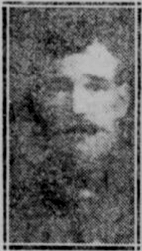
From: Liverpool
K.I.A (110 Years this day)
Thursday 12th October 1916.
30 years old
Edward Clarke was born 07th July 1886 at Liverpool and was baptised 12th July 1886 at St Oswald's Church, Liverpool. He was the son of Francis Clarke and his wife Laura Henrietta (nee Lunt) who were married on the 5th July 1886 also at St Oswald’s. Francis was of 25 Hurst St., father Edward, whilst Laura was of 18 Alexandra St., father William.
The 1891 Census shows the family living in Dagmar Street, Liverpool. Edward's father, Francis, is aged 34, born 1857 in Old Swan, Liverpool and is a general labourer, whilst his mother, Laura, is aged 29, born 1862 has no occupation listed. At the time of the Census they have three children, Edward aged 5, born 1886 is a scholar, Mary aged 3, born 1888 and Laura aged 1, born 1890 all of whom were born in Old Swan. Also living with them at the address is Francis’ mother Mary Clarke a widow aged 75, born 1816 in Ireland.
The 1901 Census shows the family living at 7, Wilton Grove, Liverpool. His father, Francis, now aged 43 is a gasworks fireman and his wife Laura aged 38 is a charwoman. At the time of the Census they have four children, Edward aged 14 is a tinsmith, Mary aged 13, Laura aged 11 and Albert aged 9, born 1892.
His father, Francis, died aged 48, in 1905 and was buried on the 16th March at Yew Tree Cemetery.
Edward married Annie McGinnigle on 08th September 1907 at St Simon's Church, Liverpool. Edward was a 21 year old labourer of 5 Seagrave Street, father, Francis, was a labourer, whilst Annie was aged 21 of 11 Seagrave Street, her father George was a labourer.
The 1911 Census shows Edward and his family living at 10 Cheers Street Old Swan, Liverpool. The Census record shows Edward is aged 21 born 1890 (Previous records have him born 1886) and is employed as a labourer for the city council, his wife Annie is aged 25, born 1886 in Toxteth Park, Liverpool and they have been married for three years and have a son Francis who was born in 1911. Also resident is Florence McGinnigle, sister in law aged 11, born 1900 and who is at school
Prior to the war Edward had been employed by the Liverpool Gas Company.
He enlisted in Liverpool and was serving in the 17th Battalion, The King’s Liverpool Regiment as Private No 30177 when he was killed in action on the 12th October 1916 aged 30 during the Battle of the Transloy Ridges which was part of the ongoing Somme Offensive.
17th Bn War Diary: Battle of Transloy Ridge –
11-10-16 - Gird Trench/Gird Support – Battalion in front line and support trenches. British bombardment of enemy front line system commenced about midday. Hostile shelling was intermittent throughout the day.
12-10-16 - Our bombardment continued. Enemy reply weak. 2.5 p.m. Zero hour. Attack on German front line system commenced. Enemy wire was found to be uncut and attack was unsuccessful. Hostile machine gun fire was very heavy and caused many casualties. Battalion H.Q. and Support Trench were heavily shelled throughout afternoon and evening. […] During this action all communication had to be carried out by runners and carrier pigeons as all wires were being continually cut by enemy shelling.
Casualties: 5 officers killed, 5 officers wounded, 38 OR killed, about 225 OR wounded/missing etc.
Graham Maddocks, in “Liverpool Pals” p.140, adds:
“As the whistle blew, the 17th Battalion left its trenches to move forward. […] As soon as the attacking waves left their trenches the enemy artillery began to register on them, and at the same time, the defending infantry commenced a murderous rain of fire. […] Although their numbers had been depleted by the British bombardment, they were trained and experienced soldiers, well dug in on high ground, and for the most part, looking out on uncut wire. As such, it was virtually impossible for them to miss the City Battalion men struggling to advance in the mud towards them. The 17th Battalion, on the left, was particularly badly hit, as its portion of No Man’s Land contained a slight rise in the ground, and as the troops emerged onto it they were silhouetted against the sky and became easy targets. Those on the left of the attack, who managed to avoid the hail of bullets and make it to the German wire, then found that it was totally uncut, and thus trapped, they too became easy targets, to be picked off almost at the enemy’s will. It was hardly surprising that, seeing the first waves being wiped out, some of the following waves turned back and made for their start lines. These lines were now packed with other waves of troops, however, and the fleeing men added to the congestion already there, and became easy prey for the German gunners. There is some evidence also, to suggest that at this stage, the British trenches were also being hit by their own heavy artillery shells which were falling short.”
Edward has no known grave and is commemorated on the Thiepval Memorial, France.
The Thiepval Memorial, the Memorial to the Missing of the Somme, bears the names of more than 72,000 officers and men of the United Kingdom and South African forces who died in the Somme sector before 20 March 1918 and have no known grave. Over 90% of those commemorated died between July and November 1916.
On 01st August 1932 the Prince of Wales and the President of France inaugurated the Thiepval Memorial in Picardy. The inscription reads: “Here are recorded the names of officers and men of the British Armies who fell on the Somme battlefields between July 1915 and March 1918 but to whom the fortune of war denied the known and honoured burial given to their comrades in death.”
A local newspaper reported his death
Pte Edward Clarke, aged 30, K.L.R. reported missing since October 12. is now reported killed since that date. Previous to the war he was employed by the Liverpool Gas Co. He leaves a widow and one child who reside at 10 Cheer street, Old Swan.
Soldiers effects, a £5 War Gratuity went to his widow Annie, and pension of 18/9 pw to Annie and son Francis.
His widow Annie remarried on the 11th November 1920 to widow William Corner at St Mary's Church, Wavertree. William was a 30 year old labourer of 16 Cheers Street, father, Richard, was a labourer, whilst Annie was aged 34 of 10 Cheers Street, her father, George McGinnigle was deceased. They had a daughter Rose born in 1926.
They appear on the 1939 Register still at 10 Cheers Street, Annie’s date of birth 27th September 1884.
She died, aged 60, in 1945 and was buried at West Derby Cemetery on the 11th June.
His mother, Laura, died aged 78, in 1940.
We currently have no further information on Edward Clarke, If you have or know someone who may be able to add to the history of this soldier, please contact us.
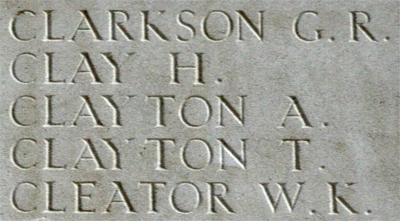
From: Litherland, Liverpool
K.I.A (110 Years this day)
Thursday 12th October 1916.
26 years old
Harold Clay was born in the September quarter of 1889 in Litherland and resided in Waterloo and was the son of Frederick John Clay and his wife Margaret (nee Hankin) who were married on the 29th April 1880 at St Helen, Sefton. Prior to the outbreak of the war he worked as an engineer's labourer.
The 1891 Census shows the family are living with his Grandmother at Ivy Cottage, Ford Lane, Liverpool. His Grandmother is shown as Ellen Hanken, she is 70 year old widow living with her son Thomas aged 34 and daughter Ellen aged 24. Her other daughter is Margaret Clay aged 24 born in Litherland, Liverpool, her husband Frederick is a 42 year old house painter born in Liverpool, their children John aged 8 and Harold aged 1 are also recorded.
The 1901 Census shows the family are now living at 2 Chapel Street, Waterloo. His father, Frederick J. is aged 51, a house painter born in Liverpool, his mother Margaret is aged 50 born in Litherland. Harold is 11 years of age and has two siblings John F. aged 18 a water gas maker (gas co. works) and sister Margaret E. aged 9. All children are recorded as being born in Litherland.
The 1911 Census shows the family living at 18 Chapel Street, Waterloo. His father, Frederick John, is aged 62, and still a house painter, his mother Margaret is aged 60, they advised that they had been married for 30 years and have had five children, three of whom have survived. Those listed on the Census are; Margaret Ethel aged 19, born 1892, John Frederick aged 28, born 1883 is a joiner and Harold aged 21 is an engineers labourer.
He enlisted in Liverpool as Rifleman 4192 joining the 6th Battalion of The King's Liverpool Regiment (Liverpool Rifles). He embarked from Folkestone-Boulogne on 19th July 1916 reaching the 24th Infantry Base Depot on 20th July. He then proceeded to the 11th Entrenching Battalion on 02nd August and proceeded to 17th Battalion K.L.R. on 05th August and was posted from 05th September 1916 to 17th K.L.R. as Private No 51649.
Harold was killed in action on the 12th October 1916 during the Battle of the Transloy Ridges which was part of the ongoing Somme Offensive.
17th Bn War Diary: Battle of Transloy Ridge –
11-10-16 - Gird Trench/Gird Support – Battalion in front line and support trenches. British bombardment of enemy front line system commenced about midday. Hostile shelling was intermittent throughout the day.
12-10-16 - Our bombardment continued. Enemy reply weak. 2.5 p.m. Zero hour. Attack on German front line system commenced. Enemy wire was found to be uncut and attack was unsuccessful. Hostile machine gun fire was very heavy and caused many casualties. Battalion H.Q. and Support Trench were heavily shelled throughout afternoon and evening. […] During this action all communication had to be carried out by runners and carrier pigeons as all wires were being continually cut by enemy shelling.
Casualties: 5 officers killed, 5 officers wounded, 38 OR killed, about 225 OR wounded/missing etc.
Graham Maddocks, in “Liverpool Pals” p.140, adds: “As the whistle blew, the 17th Battalion left its trenches to move forward. […] As soon as the attacking waves left their trenches the enemy artillery began to register on them, and at the same time, the defending infantry commenced a murderous rain of fire. […] Although their numbers had been depleted by the British bombardment, they were trained and experienced soldiers, well dug in on high ground, and for the most part, looking out on uncut wire. As such, it was virtually impossible for them to miss the City Battalion men struggling to advance in the mud towards them. The 17th Battalion, on the left, was particularly badly hit, as its portion of No Man’s Land contained a slight rise in the ground, and as the troops emerged onto it they were silhouetted against the sky and became easy targets. Those on the left of the attack, who managed to avoid the hail of bullets and make it to the German wire, then found that it was totally uncut, and thus trapped, they too became easy targets, to be picked off almost at the enemy’s will. It was hardly surprising that, seeing the first waves being wiped out, some of the following waves turned back and made for their start lines. These lines were now packed with other waves of troops, however, and the fleeing men added to the congestion already there, and became easy prey for the German gunners. There is some evidence also, to suggest that at this stage, the British trenches were also being hit by their own heavy artillery shells which were falling short.”
Harold's body was not recovered or was subsequently lost as he has no known grave and is commemorated on the Thiepval Memorial in France.
The Thiepval Memorial, the Memorial to the Missing of the Somme, bears the names of more than 72,000 officers and men of the United Kingdom and South African forces who died in the Somme sector before 20 March 1918 and have no known grave. Over 90% of those commemorated died between July and November 1916.
On 01st August 1932 the Prince of Wales and the President of France inaugurated the Thiepval Memorial in Picardy. The inscription reads: “Here are recorded the names of officers and men of the British Armies who fell on the Somme battlefields between July 1915 and March 1918 but to whom the fortune of war denied the known and honoured burial given to their comrades in death.”
Liverpool Daily Post 30th Oct 1916
CLAY - October 12, killed in action, age 26 years, Private Harold clay K.L.R., youngest son of Mr and Mrs F. Clay of Waterloo.
Soldiers Effects to father Frederick
Harold is also commemorated on the Waterloo with Seaforth Civic Memorial.
His mother died, aged 77, in 1928 and his father died, aged 82, in 1931.
Grateful thanks are extended to Kevin Shannon the author of the book The Liverpool Rifles for providing details of George's service with the 6th Rifles.
We currently have no further information on Harold Clay, If you have or know someone who may be able to add to the history of this soldier, please contact us.
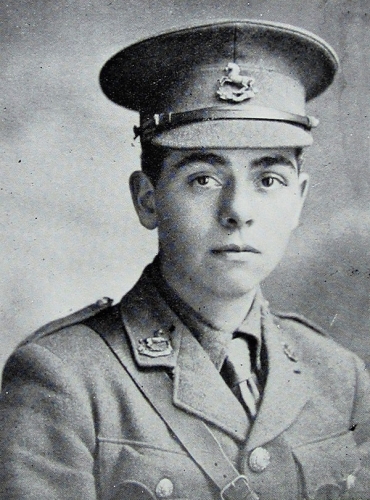
From: Birkenhead, Cheshire
K.I.A (110 Years this day)
Thursday 12th October 1916.
19 years old
Kenneth Glenfield Collin was born in Birkenhead in the first quarter of 1897, the son of James Wilson Collin and his wife Nettie Lee Todhunter who were married in 1896 in Toxteth, Liverpool.
The 1901 Census finds the family living at 20 Milton Road, Birkenhead. His father is aged 30, a joiner born in Liverpool in 1871 whilst his mother is aged 25, born in 1876 in Neston. Kenneth, aged 4, is the eldest of 3 sons. His siblings are Roy b.1899 and Henry b.1901. There is also a servant present in the household.
By 1911 the family are living at 25 Milton Road. His father is aged 40, a shop fitter, whilst his mother is aged 38. They have been married for 15 years and have had 5 children, all of whom have survived. Kenneth is now 14, Roy 12 and Henry 10. They have been joined by siblings Eileen Mary b.1905 and James Angus b.1907. There is a servant present also.
His brother Roy John Collin drowned at sea on 26th October 1914, aged 16.
Kenneth enlisted in Liverpool joining the 6th Battalion (Rifles) of The King's Liverpool Regiment. He was commissioned with the 3rd Battalion and served with the 12th Battalion. On 31st July 1916 he was shell shocked and lightly wounded by a high explosive shell and after hospital treatment was transferred to ‘B’ Company of the 17th Battalion, on 14th August 1916, although his transfer does not seem to have been officially recorded.
Kenneth's wounded status was reported in the Birkenhead News on 12th August 1916
SECOND LIEUTENANT COLLIN WOUNDED
A PERILOUS EXPERIENCE
Councillor J. W. Collin, of 25, Milton-road, Birkenhead, has received news that his son, Second-Lieut. Kenneth Liverpool Rifles, was wounded on July 31st, and has been under treatment in hospital in France. Second-Lieut. Collin joined the Liverpool Rifles August 14th, 1914, when he was still six months reaching 19 years of age. He was gazetted to his commission on April 2nd, 1915, and went out to France on April 28th of this year. When he was wounded on the 31st ult. he got shellshock as well, and he passed through a startling experience, and had a really miraculous escape from more serious injury. A shrapnel shell fell at a point where trenches intersected one another, and injured a Company Sergeant-Major to Lieut. Collin to whom he had just been speaking. Lieut. Collin ran into a transverse trench to get ambulance help, when another shell fell there. He was compelled to turn back into another branch of the trenches when a high explosive shell fell only two yards off him, doing a lot of damage, and bringing a heap of earth down on him. It is a wonder he escaped with his life. In a letter dated August 5th which Mr. and Mrs. Collin have received from their son the latter said he hoped to be out of hospital "in a few days”.
Kenneth was killed in action during the fighting at Warlencourt, near Flers, on 12th October 1916, aged 19.
On that day the objectives were the German front line trenches near Flers, which were attacked by the 89th Brigade. The 2nd Battalion of the Bedfordshire Regiment was on the right, the 17th Battalion was on the left, and the 20th Battalion was in support. The 19th Battalion was in reserve. The attack was in two waves, and as the attackers left their trenches they were met with heavy machine gun fire, along with a fierce Germany bombardment on the front, support and assembly trenches.
17th Bn War Diary: Battle of Transloy Ridge –
11-10-16 - Gird Trench/Gird Support – Battalion in front line and support trenches. British bombardment of enemy front line system commenced about midday. Hostile shelling was intermittent throughout the day.
12-10-16 - Our bombardment continued. Enemy reply weak. 2.5 p.m. Zero hour. Attack on German front line system commenced. Enemy wire was found to be uncut and attack was unsuccessful. Hostile machine gun fire was very heavy and caused many casualties. Battalion H.Q. and Support Trench were heavily shelled throughout afternoon and evening. […] During this action all communication had to be carried out by runners and carrier pigeons as all wires were being continually cut by enemy shelling.
Casualties: 5 officers killed, 5 officers wounded, 38 OR killed, about 225 OR wounded/missing etc.
Graham Maddocks, in “Liverpool Pals” page 40, adds:
“As the whistle blew, the 17th Battalion left its trenches to move forward. […] As soon as the attacking waves left their trenches the enemy artillery began to register on them, and at the same time, the defending infantry commenced a murderous rain of fire. […] Although their numbers had been depleted by the British bombardment, they were trained and experienced soldiers, well dug in on high ground, and for the most part, looking out on uncut wire. As such, it was virtually impossible for them to miss the City Battalion men struggling to advance in the mud towards them. The 17th Battalion, on the left, was particularly badly hit, as its portion of No Man’s Land contained a slight rise in the ground, and as the troops emerged onto it they were silhouetted against the sky and became easy targets. Those on the left of the attack, who managed to avoid the hail of bullets and make it to the German wire, then found that it was totally uncut, and thus trapped, they too became easy targets, to be picked off almost at the enemy’s will. It was hardly surprising that, seeing the first waves being wiped out, some of the following waves turned back and made for their start lines. These lines were now packed with other waves of troops, however, and the fleeing men added to the congestion already there, and became easy prey for the German gunners. There is some evidence also, to suggest that at this stage, the British trenches were also being hit by their own heavy artillery shells which were falling short.”
His status as Missing, believed Killed was reported in the Liverpool Daily Post on 19th October 1916:
SECOND-LIEUTENANT K. G. COLLIN.
Second Lieutenant Kenneth G. Collin, K.L.R., aged 19 and a half, is reported missing, believed to be killed. joined the K.L.R. as a private five days after war was declared, when only 171/2 of age. In April, 1915, he was offered a commission in service battalion his own regiment. He went to France in April of this year. He was reported suffering from shell shock early in August, but recovered. Lieutenant Coilin was in civilian life apprenticed to the wholesale timber trade with Messrs. Williams and Davies. He resided with his parents, Mr. and Mrs. Wilson Collin, at “Cilcen,” Milton-road, Birkenhead. He was their eldest son. Their second son was lost at sea two years ago under circumstances indirectly due to the war.
His father, received a letter from Kenneth's Captain W H Pierce, dated Sunday 15th October 1916 as follows:
Dear Mr Collin,
It is my unfortunate duty to have to acquaint you with the news of your son's death in action on the 12th inst. More words at a time like this are quite inadequate to convey one's feelings. I can only say how much I sorrow with you in your great bereavement.
Your son joined my company about the middle of August last and had charge of No.5 Platoon which he led into action last Thursday with great skill and bravery. His men thought the world of him and it would be a comfort to you to read the letters they send describing their sorrow at his loss. Your son's death was quite instantaneous, he was shot through the heart whilst at the head of his Platoon trying with great courage to get them round a German position which stood in the way of our advance.
Your son, Mr Collin, died like a gallant English gentleman and I, as his company commander feel his loss very terribly.
If I can give you any further information please let me know and I will do my best, though at present I cannot say definitely where he is buried.
I feel your son's death as a personal loss because although I have known him only a short time it does not take long out here to learn a man's true worth, which is not to be judged by age or experience, but by greatness of heart.
Believe me Mr Collin,
Yours very sincerely
W H Pierce
Capt.
Kenneth now rests at Warlencourt British Cemetery where his headstone bears the epitaph:
"TILL THE DAY DAWNS AND THE SHADOWS FLEE AWAY"
Warlencourt Cemetery is entirely a concentration cemetery, begun late in 1919 when graves were brought in from small cemeteries and the battlefields of Warlencourt and Le Sars.
The Graves Registration form shows graves from “Le Sars 6/1, 6/2, Hexham Road, Seven Elms”.
Graves were brought in from the original cemeteries at Hexham Road (Le Sars), and Seven Elms (Flers), as well as over 3,000 British graves due to the fighting which took place around the Butte de Warlencourt from the autumn of 1916 to the spring of 1917, and again in the German advance and retreat of 1918. The cemetery now contains 3,505 Commonwealth burials and commemorations of the First World War, 1,823 of which are unidentified.
His death was confirmed in the Birkenhead News on 21st October 1916:
BIRKENHEAD COUNCILLOR’S BEREAVEMENT
SECOND-LIEUTENANT K. G. COLLIN KILLED IN ACTION
All classes of people in Birkenhead and district will, we are sure, learn with deep regret that Second-Lieut. Kenneth G. Collin. K.L.R., eldest son of Councillor and Mrs. J. W. Collin, 25, Milton-road, has been killed in action. On Tuesday night Mr.- Collin received a communication from the War Office to the effect that his son, was "missing, believed killed:" He has since received confirmation of what it was feared had actually occurred—that the young lieutenant had indeed lost his life. He was killed in the fighting on the 12th October. Second-Lieut. Collin was 191/2 years old, and joined the K.L.R. as a private, five days after the outbreak of war, he then being only 171/2 years of age. In April. 1915 he was offered a commission in a service battalion of his own regiment, and in April of this year he went to France. On the 31st July (as recorded in the "News" at the time) he was wounded, and also suffered from shell-shock. His experience on that occasion was startling, and he miraculously escaped more serious injury. A shrapnel shell, falling at a point where trenches intersected one another, wounded a company sergeant-major to whom Lieut. Collin had just been speaking. Lieut. Collin ran into a transverse trench for ambulance aid, but through the fall of another shell he was compelled to turn into another branch of the trenches, when a high explosive shell fell only two yards from him, doing a lot of damage and bringing a heap of earth down on him. The wonder was that he escaped with his life. In civilian life Lieut. Collin was apprenticed to the wholesale timber trade with Messrs. Williams and Davies. He had been educated at the Higher Elementary School, where he was very popular, taking a prominent part in the school sports. Much sympathy is extended to Mr. and Mrs. Collin, whose second son was lost at sea two years ago under circumstances indirectly due to the war.
Soldiers Effects to father James Wilson, no Pension record has been found.
Kenneth's nature was one of good humour, he was a optimist, always ready to respond to advice. He was a devoted leader, and won a reputation for courage and honesty.
A Memorial service was held for him at Wilmer Road Presbyterian Church, Birkenhead, on 29th October 1916
He is also remembered on the family headstone in Hooton Parish Church, which records his father's death on 04th November 1938 aged 68, and reads:-
James Wilson Collin
Died November 4th 1938 aged 68 years
Also
Kenneth Glenfield Collin
(2nd Lieut.)
Eldest Son of the above
Killed in action October 12th 1916
Aged 19 1/2 years
Interred in the British Cemetery
Warlenlcourt France
Also
Roy John Collin
Second Son of the above
Drowned at Sea October 26th 1914
Aged 16 1/2 years
Kenneth is also commemorated on the following Memorials:
Birkenhead Civic Memorial
Hall of Remembrance, Liverpool Town Hall, Panel 11 Right
His mother Nettie, died, aged 91, in York in 1968.
Grateful thanks are extended to Graham Collin for permission to reproduce the letter sent by Captain W H Pierce in the above biography of Kenneth.
The passage below was taken from the Liverpool Scroll of Fame:
Nobody could be failed to be touched by the spirit which actuated Second-Lieutenant Kenneth Glenfield Collin whilst in the Army. "Well Dad, I hope I come back, but most of all I won't let my men down--they are such grand fellows!" With these words he bade his father "good-bye." Collin did not let his men down, but he won from them a name as a devoted leader, ever cheerful in manner, ever courageous in action, ever true and upright in his standard of living.
In his nature were blended many laudable qualities. Strong in body and spirit, he had yet a tender and loving disposition towards the aged and the helpless, and into the intimacies of the domestic circle he brought all the instincts of a generous-hearted youth. He was as quick to confess a fault as he was to resent a wrong. So open and sunny a nature made him loved by everyone. In his outlook on life he was an optimist, and there were also implanted in him deeply religious sentiments, which gave him an assurance of the ultimate destruction of every kind of injustice. It was this believe that inspired him throughout all the hardships of his military service.
So noble-minded a lad was bound to be responsive when the martial note broke over Europe. Four days after the declaration of hostilities -- then a lad of seventeen he enlisted with the Liverpool Rifles.From this Teritorial Battalion he went in the following April to take up a commission with the 3rd King's. Exactly a year later he went on active service with the 12th Battalion, and at the time of his lamented death, which occurred on La Butte de Warlencourt on the 12th October, 1916, he was attached to the 17th Battalion, one of the units of the heroic Pals Brigades.
Collin was the son of Councillor and Mrs. J. W. Collin, of Beechwood, Oxton. he had been apprenticed to the wholesale timber trade, and a promising career would have been before him, for he was gifted with energy and business aptitude. But in the country's hour of need, as we have already shown, he sacrificed all these prospects immediately. Life had a new and sterner mission for him, and he entered upon it with a boyish ardour, though with a seriousness of purpose almost sublime.
From the time he became an officer--and none was better fitted for a commission or justified it more speedily-- he set out to win the confidence of those committed to his charge. In this he succeeded whole-heartedly. "Kenneth was absolutely worshipped by his men," wrote his company commander to his parents, and he was paying no merely formal compliment. "If only you could have seen the letters written home by his platoon it would have made you prouder of him than ever. Every single man has mentioned his courage and coolness, and the details of his actions, when I can tell you them, will make you glad your son so gallantly played the man in the most awful test I have ever known."
Sec-Lieutenant Collin died in action facing the enemy. It appeared that, with a number of others, he was temporarily taking cover in a shell-hole, and his intention was apparently to get his platoon round a German position that was interrupting our advance on the Somme. For this purpose he rose to take observation when a sniper shot him through the heart with a machine-gun bullet, his death being instantaneous.
In a letter of condolence his Colonel testified to the coolness and sense of leadership of " a very gallant officer" adding to this the comment "I can truly say he died magnificently."
We have also this sincere homage from the chaplain:-
"He was so brave, so fearless, so cheery, always smiling, and so beloved, that we shall miss him ever so greatly."
In this sentence is epitomised is the qualities that made Kenneth Collin so soldier-like a servanyt of his King.
"It does not take long out here to learn a man's true worth, which is not to be judged by age or experience, but by greatness of heart." So wrote his Captain-- and what could be a more fitting epitaph. Under the severest task a man could possibly undergo he was not found wanting. Both as a private and an officer he acquitted himself in a manner which his friends who knew him best would have expected, and, as we have seen, his conduct throughout was worthy of the best traditions of the British nation. He died young, but e has left a legacy which must be an inspiration to those who had the pleasure of being associated with him either in military or civil life.
The peace of is theirs
That lift their swords
In such a just and charitable war
We currently have no further information on Kenneth Glenfield Collin, if you have or know someone who may be able to add to the history of this soldier, please contact us.
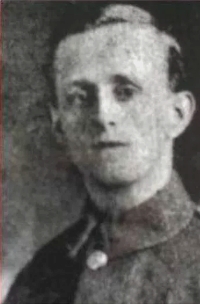
From: Lytham St. Annes, Lancs
K.I.A (110 Years this day)
Thursday 12th October 1916.
25 years old
Arthur Cookson was born in Lytham on 21st August 1891 and was the son of Mrs Harriet Cookson of South Clifton Street, Lytham, Lancashire. Prior to enlisting he was living in Southport and employed at the Chapel Street branch of Messrs Seymour Mead.
The 1901 Census shows the family living at 18, South Clifton Street, Lytham, Fylde, Lancashire. His mother, Harriet, is listed as single, aged 38, born 1863 and employed as a laundress and was born in Lytham, Lancashire as were her three children. She has three children at the time of the Census, Arthur aged 9, born 1892, Alice aged 6, born 1895 and Evelyn aged 3, born 1898. She also has a boarder living at the address, Dorothy Newsham, a widow aged 78, born 1823 in Lytham and living on her own means.
By 1911 the family are still living at 18, South Clifton Street, Lytham, Fylde, Lancashire. His mother Harriet is aged 48, and is still employed as a laundress. She still has her three at the time of the Census, Arthur aged 19, is a grocer’s assistant, Alice aged 17 is employed as a domestic and Evelyn aged 13 is at school.
Arthur enlisted in Southport and was serving in the 17th Battalion, King's Liverpool Regiment as Private 52857 when he was killed in action on 12th October 1916, aged 25, during the Battle of the Transloy Ridges which was part of the ongoing Somme Offensive.
17th Bn War Diary: Battle of Transloy Ridge –
11-10-16 - Gird Trench/Gird Support – Battalion in front line and support trenches. British bombardment of enemy front line system commenced about midday. Hostile shelling was intermittent throughout the day.
12-10-16 - Our bombardment continued. Enemy reply weak. 2.5 p.m. Zero hour. Attack on German front line system commenced. Enemy wire was found to be uncut and attack was unsuccessful. Hostile machine gun fire was very heavy and caused many casualties. Battalion H.Q. and Support Trench were heavily shelled throughout afternoon and evening. […] During this action all communication had to be carried out by runners and carrier pigeons as all wires were being continually cut by enemy shelling.
Casualties: 5 officers killed, 5 officers wounded, 38 OR killed, about 225 OR wounded/missing etc.
Graham Maddocks, in “Liverpool Pals” p.140, adds:
“As the whistle blew, the 17th Battalion left its trenches to move forward. […] As soon as the attacking waves left their trenches the enemy artillery began to register on them, and at the same time, the defending infantry commenced a murderous rain of fire. […] Although their numbers had been depleted by the British bombardment, they were trained and experienced soldiers, well dug in on high ground, and for the most part, looking out on uncut wire. As such, it was virtually impossible for them to miss the City Battalion men struggling to advance in the mud towards them. The 17th Battalion, on the left, was particularly badly hit, as its portion of No Man’s Land contained a slight rise in the ground, and as the troops emerged onto it they were silhouetted against the sky and became easy targets. Those on the left of the attack, who managed to avoid the hail of bullets and make it to the German wire, then found that it was totally uncut, and thus trapped, they too became easy targets, to be picked off almost at the enemy’s will. It was hardly surprising that, seeing the first waves being wiped out, some of the following waves turned back and made for their start lines. These lines were now packed with other waves of troops, however, and the fleeing men added to the congestion already there, and became easy prey for the German gunners. There is some evidence also, to suggest that at this stage, the British trenches were also being hit by their own heavy artillery shells which were falling short.”
Arthur has no known grave and is commemorated on the Thiepval Memorial in France.
The Thiepval Memorial, the Memorial to the Missing of the Somme, bears the names of more than 72,000 officers and men of the United Kingdom and South African forces who died in the Somme sector before 20 March 1918 and have no known grave. Over 90% of those commemorated died between July and November 1916.
On 01st August 1932 the Prince of Wales and the President of France inaugurated the Thiepval Memorial in Picardy. The inscription reads: “Here are recorded the names of officers and men of the British Armies who fell on the Somme battlefields between July 1915 and March 1918 but to whom the fortune of war denied the known and honoured burial given to their comrades in death.”
The Southport Visiter reported his death on the 18th Nov 1916:
PRIVATE ARTHUR COOKSON
(Killed in Action)
News has been received that Private Arthur Cookson, of the King's( Liverpool Regiment), has been killed in action in France. The deceased soldier was employed at the Chapel Street branch of Messrs: T. Seymour Mead's previous to joining the colours, and was very well known locally.
Fleetwood Express 4th Nov 1916:
LYTHAM SOLDIERS KILLED
Official intimation has been received by Mrs Cookson of 17 South Clifton Street, Lytham that her son Private Arthur Cookson of the King's Liverpool Regiment was killed in France on the 12th ult. Private Cookson, who was 25 years of age enlisted in February last and went to France in July.
Soldiers effects and pension to his mother Harriet.
Arthur is also commemorated on the Cenotaph at Clifton Street Lytham and the Southport War Memorial.
Mother Harriet, dob 22nd Nov 1862, appears on the 1939 register at 6 Westby St, Lytham with her married daughter Alice Holden. She died in 1941 aged 78.
We currently have no further information on Arthur Cookson, if you have or know someone who may be able to add to the history of this soldier, please contact us.
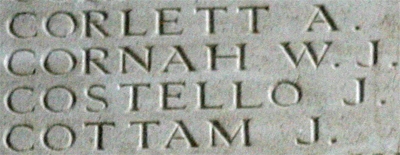
From: Andreas, I.O.M
K.I.A (110 Years this day)
Thursday 12th October 1916.
22 years old
Arthur Corlett was born in 1893 in Andreas, Isle of Man and was baptised the 05th November 1893. He was the son of Henry and Jane(nee Kinnish) Corlett, of Dhowin Andrews, Isle of Man, who were married on the 12th July 1880 in Andreas.
The 1901 Census shows the family living at "Larivane”, Andreas, Isle of Man.
Arthur's father, Henry, is aged 48, an Agricultural Labourer, his mother Jane is aged 41, and is a Dress Maker, children Walter A. aged 13, Edith 9, Arthur 7, Ellen J. 3, and Albert 1.
The 1911 Census shows the family living at Blacklion, Andreas, Isle of Man.
Arthur's father, Henry, is aged 56, born 1855in Andreas, Isle of Man and is a Farm Labourer as were his wife and five children. His mother Jane is aged 50, born 1861 and is a Dress Maker, James aged 26, born 1885 and occupation farm labourer as is Walter aged 23 born 1888, Arthur 17, is a tailor, Nellie aged 13, born 1898 and Albert aged 10, born in 1901 are both still at school.
Arthur enlisted in Seaforth, Liverpool and was serving in the 18th Battalion, The King’s Liverpool Regiment as Private No 36327 when he was killed in action on the 12th October 1916 aged 22 during the Battle of the Transloy Ridges which was part of the ongoing Somme Offensive.
He has no known grave and is commemorated on the Thiepval Memorial in France.
The Thiepval Memorial, the Memorial to the Missing of the Somme, bears the names of more than 72,000 officers and men of the United Kingdom and South African forces who died in the Somme sector before 20 March 1918 and have no known grave. Over 90% of those commemorated died between July and November 1916.
On 01st August 1932 the Prince of Wales and the President of France inaugurated the Thiepval Memorial in Picardy. The inscription reads: “Here are recorded the names of officers and men of the British Armies who fell on the Somme battlefields between July 1915 and March 1918 but to whom the fortune of war denied the known and honoured burial given to their comrades in death.”
Arthur’s death was reported in the Ramsay Courier on 3rd November 1916:
“It is our painful duty to have to record the receipt of news in the form of official word from the War Office that Private Arthur (Artie) Corlett, 23, had been killed in action in France on Oct. 12th. The sad news was conveyed to the young man’s parents, who reside at the Dhowin, Andreas, in an official letter from the War Office last week, which was accompanied by a letter from their Majesties the King and Queen, expressing their deep sympathy with the bereaved parents in their sad loss. Private Arthur Corlett, along with his brother Walter, who is still in France, enlisted in the King’s Liverpool Regiment in March last, and after spending a brief period of training in England, was drafted, in company with his brother, to France. Private Corlett, who was a tailor by trade, served his time with Mr. J. T. Teare, Village, Andreas, and when he enlisted was in the employ of Mr. Herbert Cain, tailor and outfitter, Parliament Street, Ramsay, and while working here amongst us was universally liked by everyone for his sterling qualities. Like so many more of the young men of the Northern district, Private Corlett heard the call of his country and we hope that, now that he has made the supreme sacrifice, it shall not have been in vain. He, like so many more of our brave Northern lads, has died so that we may live. “Greater love hath no man than that he give his life for his brother.” Private Corlett was a first cousin to Privates Robert and Herbert Christian, of Ballaslig, Andreas, who were killed some time ago, also in France.”
Reported killed in the Liverpool Daily Post 11th Nov 1916
King’s (Liverpool Regt.) - Corlett, 36327, A. (Isle of Man);
Isle of Man Examiner 11th Nov 1916
PRIVATE A. CORLETT KILLED.
Mr and Mrs Corlett, of the Dhowin, Andreas, have received official information that their son, Private Arthur Corlett (23) was killed in action on 12th Oct. He was formerly a tailor in Ramsey.
Arthur is commemorated on the Isle of Man Great War Roll of Honour (1914-1918).
Soldiers Effects and Pension to mother Jane, The Dhowin, Smeale Rd, Andreas.
Mother died aged 85 and was buried on the 2nd January 1945 in Andreas and the father died aged 98 and was buried on the 24th May 1951 at Andreas.
We currently have no further information on Arthur Corlett, if you have or know someone who may be able to add to the history of this soldier, please contact us.
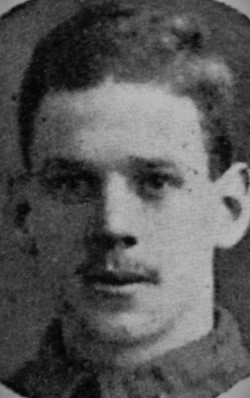
From: Liverpool
K.I.A (110 Years this day)
Thursday 12th October 1916.
23 years old
Robert Gerald D’Arcy was born in the June quarter of 1893 to John D’Arcy and his wife Margaret Campbell (nee Manson), who married in Liverpool on the 9th June 1889 at St George's Church, Everton. John was a 44 year old french polisher of 31 Ellison St, father Philip, whilst Margaret was aged 31 of 6 Mere Lane, father William. Robert's father was from County Mayo, Ireland, and his mother was born in Anderston, Glasgow, Scotland. This was his father’s second marriage, as he had been widowed; Robert was raised with an older stepbrother Henry, and had an older sister Margaret, and younger sisters Jessie and Helen (Nellie). Another child, Allan, died in infancy.
His father is found on the 1881 census with his first wife living at 23 Munsey St, Liverpool. Head John Darcy aged 39, a french polisher b.Ireland, Mary Ellen aged 30 b.Liverpool, sons Henry 5 and Thomas 2 months. From Henry Edward’s baptism on the 23rd March 1876 his mother’s maiden name is Grogan.
The 1901 Census shows the family is living at 53 Stanley Road, Kirkdale. His father John, is aged 55, and is a furniture dealer born in Ireland, his mother Margaret is aged 43 born in Scotland. Children born Liverpool, Henry E. 25 a french polish, Margaret J. 9, Robert G. is aged 8 and Jessie K. 5. They have a domestic servant.
By 1911 the family have moved to 258 Stanley Road, Bootle and are living with his mother’s brother Robert Hanson (who is a joiner) and his family. His father John is aged 69, a French polisher b.Ballyhaunis, Co.Mayo, his mother Margaret is aged 53, a furniture dealer. His stepbrother Henry is aged 35, also a French polisher and his sister Margaret Jean 19 is a saleswoman. Robert is 18, and a clerk in a shipping office.
Prior to enlisting Robert was working in the Accounts Department of Cunard one of the major shipping lines in the City.
His service record has not survived so most of the details and dates are not known, but Robert enlisted at St George's Hall, Liverpool as Private 15352 in the 17th (Pals) Battalion of The King’s Liverpool Regiment.
He was billeted at Prescot Watch Factory from 14th September 1914, he trained there and also at Knowsley Hall. On 30th April 1915 the 17th Battalion alongside the other three Pals battalions left Liverpool via Prescot Station for further training at Belton Park, Grantham. They remained here until September 1915 when they reached Larkhill Camp on Salisbury Plain. He arrived in France on 7th November 1915.
By October 1916 the battalion had been through the fighting on the Somme for some months. This included the successful capture of Montauban on 01st July 1916, the murderous fighting at Trones Wood and the catastrophic day at Guillemont on 30th July 1916. On the 11th October the 17th Battalion assemble in the Longueval-Flers area to take up position for the coming assault on the Transloy Ridges.
17th Bn War Diary: Battle of Transloy Ridge –
11-10-16 - Gird Trench/Gird Support – Battalion in front line and support trenches. British bombardment of enemy front line system commenced about midday. Hostile shelling was intermittent throughout the day.
12-10-16 - Our bombardment continued. Enemy reply weak. 2.5 p.m. Zero hour. Attack on German front line system commenced. Enemy wire was found to be uncut and attack was unsuccessful. Hostile machine gun fire was very heavy and caused many casualties. Battalion H.Q. and Support Trench were heavily shelled throughout afternoon and evening. […] During this action all communication had to be carried out by runners and carrier pigeons as all wires were being continually cut by enemy shelling.
Casualties: 5 officers killed, 5 officers wounded, 38 OR killed, about 225 OR wounded/missing etc.
Graham Maddocks, in “Liverpool Pals” p.140, adds:
“As the whistle blew, the 17th Battalion left its trenches to move forward. […] As soon as the attacking waves left their trenches the enemy artillery began to register on them, and at the same time, the defending infantry commenced a murderous rain of fire. […] Although their numbers had been depleted by the British bombardment, they were trained and experienced soldiers, well dug in on high ground, and for the most part, looking out on uncut wire. As such, it was virtually impossible for them to miss the City Battalion men struggling to advance in the mud towards them. The 17th Battalion, on the left, was particularly badly hit, as its portion of No Man’s Land contained a slight rise in the ground, and as the troops emerged onto it they were silhouetted against the sky and became easy targets. Those on the left of the attack, who managed to avoid the hail of bullets and make it to the German wire, then found that it was totally uncut, and thus trapped, they too became easy targets, to be picked off almost at the enemy’s will. It was hardly surprising that, seeing the first waves being wiped out, some of the following waves turned back and made for their start lines. These lines were now packed with other waves of troops, however, and the fleeing men added to the congestion already there, and became easy prey for the German gunners. There is some evidence also, to suggest that at this stage, the British trenches were also being hit by their own heavy artillery shells which were falling short.”
Robert was declared Missing, and his body apparently found later, in a marked grave, identified by his cap badge.
His family's anxiety is displayed when they placed an appeal for information in the Liverpool Echo on 16th November 1916:
"Wounded - Private R D'Arcy, KLR (of the Cunard office staff) reported wounded, October 12. Any information will be greatly appreciated by his parents at 6 Alroy Road, Anfield, Liverpool"
The family did not learn of his fate until nine months later, placing a notice in the Liverpool Echo on 24th July 1917:
“Reported missing October 12, 1916, now officially reported killed in action, aged 23 years, Robert G. D’Arcy, Signalling Section K.L.R., son of John and Margaret D’Arcy, and grandson of the late William Manson, of Kirkdale.”
Robert’s body was removed after the war when graves were concentrated, and he now rests at Warlencourt British Cemetery, where his headstone bears the epitaph,
“BY THE PATH OF DUTY LIES THE WAY TO GLORY”.
Warlencourt Cemetery is entirely a concentration cemetery, begun late in 1919 when graves were brought in from small cemeteries and the battlefields of Warlencourt and Le Sars. The Graves Registration form shows graves from “Le Sars 6/1, 6/2, Hexham Road, Seven Elms”.
Graves were brought in from the original cemeteries at Hexham Road (Le Sars), and Seven Elms (Flers), as well as over 3,000 British graves due to the fighting which took place around the Butte de Warlencourt from the autumn of 1916 to the spring of 1917, and again in the German advance and retreat of 1918. The cemetery now contains 3,505 Commonwealth burials and commemorations of the First World War, 1,823 of which are unidentified.
His effects and pension went to his mother Margaret, then living at 6 Alroy Road, Liverpool.
On the second anniversary of her only son's death, his mother placed a notice in the Liverpool Echo, on 11th October 1918:
“ In loving memory of Pte. Robert G. D’Arcy, 1st Pals Batt., reported killed October 12, 1916, beloved son of Margaret D’Arcy, 6 Alroy Road, Anfield.”
Robert is commemorated on the following Memorials:
Cunard Staff panels now situated inside Our Lady and St Nicholas' Church, Liverpool
Liverpool’s Hall of Remembrance, Panel 6.
By the time of the 1921 census Margaret is widowed.
His mother died aged 73 on the Wirral in 1931
We currently have no further information on Robert Gerald D’Arcy, if you have or know someone who may be able to add to the history of this soldier, please contact us.

From: Bolton, Lancs
K.I.A (110 Years this day)
Thursday 12th October 1916.
25 years old
Peter Davies was born in Bolton in the first quarter of 1891, the son of Peter and Sophia(nee Warburton) Davies who were married in 1871 at St George, Bolton. He was baptised at St Peter's Church, Bolton Le Moors on 22nd February 1891.
The 1891 Census finds new born Peter living with his parents and 5 elder siblings at Victory Street, Halliwell, Bolton.
His father is recorded as a cotton spinner born in Bolton in 1847, whilst his mother Sophia was born in Bolton in 1845. His five siblings, all born in Bolton are shown as; Herbert a cotton piercer born 1874, Alice a card room hand in a cotton mill born 1875, Robert a schoolboy and part time cotton piercer born 1880, Mary born 1882 and Sophia born 1884.
The father died aged 44 just after the census in 1891.
On the 1901 Census the family have moved to 127 Musgave Rd, Halliwell.
Widowed mother Sophia is aged 56, children Alice 25 a frame tenter in cotton mill, Robert 21 a spinner, Mary 19 a ring spinner, Sophia 17 a ring spinner, and Peter aged 10.
The 1911 Census shows Peter as a 20 year old side piercer in a cotton mill. His mother aged 66, is shown as head of the household and he has 4 siblings still living at home; Alice 36 a drawing tenter, Robert 31 a cotton mill minder, Mary 29 at home, and Sophia 27 a ring spinner.
He enlisted in Preston and was serving in the 18th Battalion, The King’s Liverpool Regiment as Private No 36489 when he was killed in action on the 12th October 1916 during the Battle of the Transloy Ridges which was part of the ongoing Somme Offensive.
He has no known grave and is commemorated on the Thiepval Memorial in France.
The Thiepval Memorial, the Memorial to the Missing of the Somme, bears the names of more than 72,000 officers and men of the United Kingdom and South African forces who died in the Somme sector before 20 March 1918 and have no known grave. Over 90% of those commemorated died between July and November 1916.
On 01st August 1932 the Prince of Wales and the President of France inaugurated the Thiepval Memorial in Picardy. The inscription reads: “Here are recorded the names of officers and men of the British Armies who fell on the Somme battlefields between July 1915 and March 1918 but to whom the fortune of war denied the known and honoured burial given to their comrades in death.”
Details of Peter's death were reported in the Bolton Journal on 17th November 1916:
"Mrs.Davies, 149,Musgrave-rd.,Bolton, has received news of the death of her son, Pte. Peter Davies, King's (Liverpool) Regiment, who was killed on October 12th by the bursting of a shell. He enlisted on March 16th, and went to the front on July 2nd. Before enlisting he was a minder at the Croal Spinning Company's mill, Deane-rd".
Soldiers Effects and Pension to mother Sophia, 149 Musgrave Rd.
The mother Sophia died aged 79 in 1924.
We currently have no further information on Peter Davies, if you have or know someone who may be able to add to the history of this soldier, please contact us.
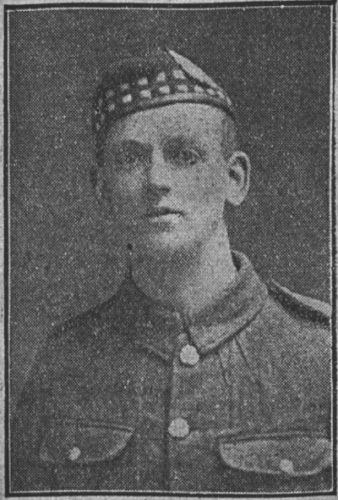
From: Warrington, Cheshire
K.I.A (110 Years this day)
Thursday 12th October 1916.
29 years old
Frederick Arthur Deeley was born in the June quarter of 1887 in Warrington and was the son of Frederick Alexander Deeley and his wife Emily Eliza (nee Meredith) who were married in 1882 at St Paul's Church, Warrington.
The 1891 Census finds the family living at 52 Forshaw Street, Warrington. Frederick A. is three years old and lives with his parents and younger brother. His father, recorded as Frederic A. is a 28 year old joiner, born in Warrington, whilst his mother, Emily E. is 27 years old and was born in Daresbury, Cheshire. His brother Frank is 1 year old, born in Warrington in 1890.
By 1901 the family have moved to 144 Longford Street, Warrington. Frederick A. is now a 13 year old newsboy living with both parents, four siblings and two cousins. His father is now 38 years of age and still a joiner, his mother is 37 years of age. His siblings are: Frank aged 11, Emily E. aged 8, Bertie M. aged 5 and Edith aged 3. His cousins are Ernest Deeely a 16 year old machine driller and Florence M. Deeley a 15 year old domestic servant. Also present is Eliza Meredith a 69 year old widow.
His father died, aged 47, in the March quarter of 1909.
The 1911 Census shows the family living at 83 Longford St Warrington. His mother, Emily Eliza is a widow, aged 48, born 1863 in Warrington. She advises that she had eight children, seven of whom have survived. All of her five children, declared in the household, were born in Warrington. Frederick Arthur is the eldest child and is aged 23, and his occupation is shown as a solicitors clerk. His siblings are shown as; Frank aged 21, born 1890 is a moulder, Elsie aged 18, born 1893, occupation box maker, Bertie aged 15, born in 1896 is an apprentice and Edith aged 13 born 1898 is at school. They have a Boarder Eliza Meredith aged 80, born 1831 in Liverpool.
Frederick enlisted in Liverpool and the following report shows that he initially served in the Army Service Corps.
Widnes Examiner 27th March 1915
THE A.S.C.
Warrington Man Writes Of Duties Behind The Firing Line.'
Driver F. Deeley, who has been in the Army Service Corps for six years, and is now attached to the 9th King's (Liverpool) Regt. writes to his family at Longford-street, Warrington, "just to let them know he is all right."
" We got here," he adds, "on Monday morning, after a twenty-four hours' journey in cattle-trucks. Three of us, with six horses, were in a truck, and there were other trucks with forty men in them. When we did get to France we had a rest for six hours, and were up again at 1.30 a.m., and on our way to the station. We are only five miles from the firing-line, and we can hear the Artillery and Maxim 'fire' quite plainly, whilst aeroplanes are as common as flies. Our particular part of the work is to draw rations. At present fuel, rations, forage, &c., are dumped on the wayside early in the morning by motor transports. Then those things are issued by the Regular A.S.C. to each unit. When we get on the move we may come across the 4th South Lancashires. We are well fed, the only thing we are short of being money."
The photograph held on this site shows Arthur in the Glengarry of the Liverpool Scottish, who were the 10th Battalion of The King’s Liverpool Regiment. At some point Arthur was transferred as he was serving in the 17th Battalion, The King’s Liverpool Regiment as Private No 51952.
He was killed in action on the 12th October 1916, aged 20, during the Battle of the Transloy Ridges which was part of the ongoing Somme Offensive.
17th Bn War Diary: Battle of Transloy Ridge –
11-10-16 - Gird Trench/Gird Support – Battalion in front line and support trenches. British bombardment of enemy front line system commenced about midday. Hostile shelling was intermittent throughout the day.
12-10-16 - Our bombardment continued. Enemy reply weak. 2.5 p.m. Zero hour. Attack on German front line system commenced. Enemy wire was found to be uncut and attack was unsuccessful. Hostile machine gun fire was very heavy and caused many casualties. Battalion H.Q. and Support Trench were heavily shelled throughout afternoon and evening. […] During this action all communication had to be carried out by runners and carrier pigeons as all wires were being continually cut by enemy shelling.
Casualties: 5 officers killed, 5 officers wounded, 38 OR killed, about 225 OR wounded/missing etc.
Graham Maddocks, in “Liverpool Pals” p.140, adds: “As the whistle blew, the 17th Battalion left its trenches to move forward. […] As soon as the attacking waves left their trenches the enemy artillery began to register on them, and at the same time, the defending infantry commenced a murderous rain of fire. […] Although their numbers had been depleted by the British bombardment, they were trained and experienced soldiers, well dug in on high ground, and for the most part, looking out on uncut wire. As such, it was virtually impossible for them to miss the City Battalion men struggling to advance in the mud towards them. The 17th Battalion, on the left, was particularly badly hit, as its portion of No Man’s Land contained a slight rise in the ground, and as the troops emerged onto it they were silhouetted against the sky and became easy targets. Those on the left of the attack, who managed to avoid the hail of bullets and make it to the German wire, then found that it was totally uncut, and thus trapped, they too became easy targets, to be picked off almost at the enemy’s will. It was hardly surprising that, seeing the first waves being wiped out, some of the following waves turned back and made for their start lines. These lines were now packed with other waves of troops, however, and the fleeing men added to the congestion already there, and became easy prey for the German gunners. There is some evidence also, to suggest that at this stage, the British trenches were also being hit by their own heavy artillery shells which were falling short.”
His death was reported in the Warrington Guardian on 01st November 1916:
PRIVATE F A DEELEY
Mrs. E. Deeley, 83 Longford-street, Warrington has received official notification of the death in action of her son, Private Frederick Arthur Deeley, of the King's (Liverpool Regiment). Mrs. Deeley also learnt of her son's death from a comrade who had written stating that he had been killed by a shell.
Private Deeley, who was 28 years of age, joined the Liverpool Scottish in October last year but was transferred to the King's (Liverpool Regiment) some time ago when at the front. He was for eleven years in the service of Messrs. H. B. White and Sons solicitors but at the time of enlisting was a member of the Richmond Gas Stove and Meter Co. Ltd. His early education was received at Hamilton-street, School and later at the Secondary School.
Two younger brothers have "done their bit." Sapper Albert Deeley of the Royal Engineers, has been on active service nearly two years, and Mr Frank Deeley, who has seven years service in the Territorial Army Service Corps. has been discharged as time expired after spending ten months at the front.
His death was also in the St Helens Examiner on 04th November 1916:
PRIVATE A. DEELEY.
Friend Of Late Fred Longshaw Killed On Same Day.
A bosom friend of Private Fred Longshaw, whose death in action we reported elsewhere, Private Arthur Deeley, of the King's (Liverpool) Regiment, son of Mrs. Deeley, a widow, 83, Longford-street, was himself killed on the same day, October 12th. It was a melancholy coincidence, for they enlisted the same day, along with several other friends, and fought in France together. In civil life they were both engaged in the offices of Messrs. Richmond and Co., Academy-street. It is about a fortnight since the news was first received in Warrington, Mr. Pollitt, a Richmond's employee, receiving a letter dated October 19th from a Warrington man named Pearson, of a Liverpool Battalion. "I have met "a fellow in hospital," he wrote, "and he asked me to write and tell you about Arthur Deeley's death. A shell killed him and four more a week yesterday. Arthur Deeley asked me to let his people know if anything happened to him." Since the receipt of this letter official news has come to hand. Of a bright and genial disposition, Private Deeley had made host of friends, by whom he will be much missed. Twenty-eight years of age. he enlisted on October 26th of last year, and had been at the Front eight months. An "old boy" of the Hamilton-street and Secondary Schools, he was for eight years in the office of Mr. H. B. White, magistrates' clerk, Egypt-street, before going to Richmond's. A younger brother, Frank Deeley, served for seven years in the A.S.C., and was at the Front for ten months before being discharged as a time-expired man. He has since received a notice to report himself for home service. Another younger brother, Sapper Albert Deeley, of the Royal Engineers, has been in France almost two years.
He was reported killed in the Liverpool Daily Post on 20th November 1916:
King’s (Liverpool Regiment) - Deeley, 51952, F.A.(Warrington);
Arthur's body was not recovered or was subsequently lost as he has no known grave and is commemorated on the Thiepval Memorial in France.
The Thiepval Memorial, the Memorial to the Missing of the Somme, bears the names of more than 72,000 officers and men of the United Kingdom and South African forces who died in the Somme sector before 20 March 1918 and have no known grave. Over 90% of those commemorated died between July and November 1916.
On 01st August 1932 the Prince of Wales and the President of France inaugurated the Thiepval Memorial in Picardy. The inscription reads: “Here are recorded the names of officers and men of the British Armies who fell on the Somme battlefields between July 1915 and March 1918 but to whom the fortune of war denied the known and honoured burial given to their comrades in death.”
Soldiers Effects and Pension to mother Emily Eliza, 52 Bewsey St.
He was remembered on the first anniversary of his death in the St Helens Examiner on 13th October 1917
DEELEY - In affectionate remembrance of Pte F. A. DEELEY, Liverpool Scottish, killed an action October 12, 1916.
“ And for all time his memory will live enshrined in our hearts.”
His sorrowing MOTHER, BROTHERS & SISTERS, 83 Longford Street, Warrington.
His mother died, aged 66, in Chester in 1929.
We currently have no further information on Frederick Arthur Deeley, If you have or know someone who may be able to add to the history of this soldier, please contact us.
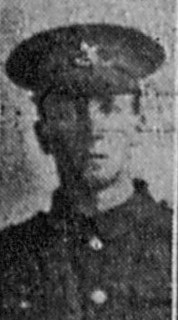
From: Liverpool
K.I.A (110 Years this day)
Thursday 12th October 1916.
22 years old
Martin Timothy Delaney was born on 25th January 1894 in Liverpool and was baptised four days after his birth in Our Lady of Reconciliation Church on 29th January, the son of Denis Delaney and his wife Julia/Judith (nee Farrell) who were married on the 24th May 1876 at the R.C. Chapel of Killasmeestia, Borris-in-Ossory, Queen’s Co., Ireland. Denis was a shopkeeper, father Lawrence, whilst Julia stated her father James, a farmer, was dead.
The 1891 Census shows the family living at 1 in 4 Court, Portland Street, Liverpool.
The father, Denis, is aged 38, born in Ireland and labourer, whilst his mother Judith is aged 35, born also in Ireland. They have three children, Catherine aged 12, a scholar born in Ireland, James aged 5, a scholar born in Liverpool, and Denis aged 3 months, born in Liverpool.
The 1901 Census shows the family living at Court, 6, Eldon Street, Liverpool.
The father, Denis, is aged 47, born in Ireland in 1854 and employed as a sugar house labourer, whilst his mother, Judith is aged 42, born 1859 also in Ireland. They have four children, all born in Liverpool, James aged 15, born 1886, and employed as an assistant in a restaurant, Denis aged 10, born 1891, Martin aged 6, and Julia aged 4 born 1897.
The 1911 Census shows the family living at 43 Mile End, Liverpool.
The father, Denis, is aged 57, and is a charge hand in a sugar refinery, born in Kyle, Queens Co. His mother, Judith, is aged 52(married 34 years, 10 children with only 5 still alive), and was born in Borris-in-Ossory, Queens Co. They have three children living with them, all born in Liverpool, Denis aged 20 and Martin aged 17, are both labourers in an Oil Mill and Julia aged 14 employed as an apprentice machinist.
Martin enlisted on 01st Sept 1914 in Liverpool and gave his age as 19 years and 190 days, and his occupation as a labourer. He was 5' 5 7/8, weighed 123 lbs, chest 35", fresh complexion, blue eyes, brown hair and gave his religion as Roman Catholic.
06.3.15: Posted to France but returned on the 9th invalided with Dental Caries.
04.9.15: Forfeits eleven days pay for absence from 23.8.15-2.9.15 and given fourteen days Field Punishment No 2.
24.9.15: Declared a deserter.
26.11.15: Sentenced to six months detention for when on active service deserting his Majesty's service. Losing by neglect Regimental neccessaries, found not guilty of desertion but absence without leave.
28.2.16: Unexpired portion of detention remitted.
05.6.16: Forfeits six days pay for absence 27.5.16-1.6.16.
06.7.16: Posted to Infantry Brigade.
He was serving in the 18th Battalion, The King’s Liverpool Regiment as Private No 14489 when he was killed in action on the 12th October 1916, aged 22, during the Battle of the Transloy Ridges which was part of the ongoing Somme Offensive.
Martin's body was not recovered or was subsequently lost as he has no known grave and is commemorated on the Thiepval Memorial in France.
The Thiepval Memorial, the Memorial to the Missing of the Somme, bears the names of more than 72,000 officers and men of the United Kingdom and South African forces who died in the Somme sector before 20 March 1918 and have no known grave. Over 90% of those commemorated died between July and November 1916.
On 01st August 1932 the Prince of Wales and the President of France inaugurated the Thiepval Memorial in Picardy. The inscription reads: “Here are recorded the names of officers and men of the British Armies who fell on the Somme battlefields between July 1915 and March 1918 but to whom the fortune of war denied the known and honoured burial given to their comrades in death.”
On the Statement of Family of the deceased his brother Denis was serving as Pte 132965 Labour Corps attached to the Australians.
He was reported killed in action in the Liverpool Eveneing Express on 03rd November 1916:
Pte. Martin Delaney K.L.R. 43 Mile-end, Scotland-road, Liverpool, killed in action.
Reported killed in the Liverpool Daily Post 11th Nov 1916
Soldiers Effects to his father Denis and pension to his mother Julia.
The Electoral register in 1929-30 has Denis Snr and Jnr, Julia Snr and Jnr still at 43 Mile End, but the parents do not appear the following year.
Mother died aged 71 in Walton Hospital and was buried in Ford Cemetery on the 6th Feb 1929, father may have died a few weeks later also in Walton Hospital and was buried on the 19th Feb 1929 aged 76.
Grateful thanks are extended to Joe Devereux for his permission to use the photograph now shown on this site.
We currently have no further information on Martin Timothy Delaney, If you have or know someone who may be able to add to the history of this soldier, please contact us.
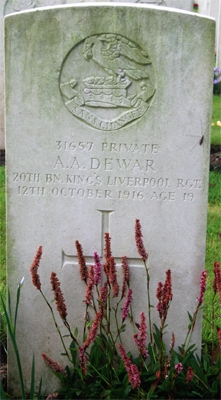
From: Liverpool
K.I.A (110 Years this day)
Thursday 12th October 1916.
19 years old
Alexander Anderson Dewar was born on the 20th January, 1897 in Liverpool and was the son of John Dewar and his wife Emma Lancelot (nee Bretland) who were married on the 30th March 1893 at St Margaret's Church, Walton. He was baptised on the 15th February 1897 at St Mary's Church, Walton, his parents address shown as 54 Breck Road.
The 1901 Census shows the family living at 14 Salop Street, Kirkdale, Liverpool. His father, John, is aged 37, and is a drapers assistant, born in Anchterarder, Perth, Scotland. His wife Emma L. is aged 37, born in Liverpool as were their three children, Alexander A. aged 4, Theodora aged 3, and Ronald aged 8 months.
Ronald sadly died in infancy in 1904.
Alexander was educated at St Margaret's Church of England School, Aigburth.
The 1911 Census shows the family living at 38 August Rd, Tuebrook, Liverpool.His Father John is aged 47, born 1864 and is a drapers assistant, his mpother, Emma, is aged 47. They advised that they have been married for 18 years and have had 4 children, 3 who have survived. Those listed in the household are; Alexander aged 15, born 1896, occupation office boy, Theodora aged 14, born 1896 and Margaret aged 9, born 1902 and both at school. Also at the address is a boarder, Lavinia Bradley, aged 45, born 1866 from Cradley, Staffordshire and her son Samuel aged 7, born 1904 in Liverpool who is at school.
He enlisted in Liverpool and was serving in the 20th Battalion, The King’s Liverpool Regiment as Private No 31657 when he was killed in action on the 12th October 1916 aged 19 during the Battle of the Transloy Ridges which was part of the ongoing Somme Offensive.
According to the 20th Bn War Diary, on 10th October 1916 the battalion marched from Dernancourt via Mametz to Bazentin Le Grand where it bivouacked for the night. The next day the battalion moved up to site for assembly trenches, arriving about 11 p.m., where it dug in two good trenches, Nos.1 and 2 Coys front and Nos.3 and 4 Coys in rear.
From the War Diary:
Near Eaucourt L’Abbaye. 12/10/1916. The 4th British and 6th French armies continued the attack. Zero 2.5 p.m. The whole XVth Corps attacked […] The attack of 89th Inf Bde was carried out with 2nd Bn Bedf Regt on right, 17th Bn KLR on left, 20th Bn KLR in support, 19th Bn KLR in reserve. Battalions attacked in four waves. On the departure of the attacking battalions Nos. 1 and 2 companies advanced, each in two waves, to garrison the front line trench vacated by 2nd Bn Bedf Regt on right and 17th KLR on left. On Nos 1 and 2 Coys vacating front assembly trench, it was occupied by two platoons of Nos. 3 and 4 Coys respectively, from rear assembly trench. As the assaulting waves left their trenches they were met by intense machine gun fire, especially on our left. The enemy also opened heavy barrages on our front support and assembly trenches. […] Capt. H. Beckett, commanding No.1 company, reached the front line with few casualties, but Lieut R.D. Paterson leading No.2 company was killed. His company also had few casualties. The assaulting battalions were held up by very heavy machine gun fire, and made little progress. […] At 4.20 p.m. two platoons, No.4 Coy, under Cpl Brighouse, were sent up to reinforce the left, and No.3 Coy under Cpl Sutton followed at 4.45 p.m. Battalion HQ moved up to front line at 4.55 and remaining two platoons of No.4 Coy moved up to join Cpl Brighouse.
Casualties during action:
Officers – Killed Lieut. R.D. Paterson, 2nd Lieut G.L. Grennan, Wounded – 2nd Lieuts A.E. Griffin, L.E. Mclean Hayes, C. Buttemer, Wounded Cpl g. Brighouse.
Other Ranks killed – 20.
It had rained incessantly at the beginning of October 1916 and the ground was full of mud. In his book ‘The Liverpool Pals’ Graham Maddocks describes the 12th of October:
It was obvious that the Germans knew an attack was coming and from which direction it would be mounted. On the evening of the 11th the 20th Battalion moved up the line and dug two deep assembly trenches behind the 17th Battalion’s position for the attack the next day. The 19th Battalion also moved into its reserve positions known as Flers Trench. Although the rain has stopped, the ground was like a morass, with all the natural vegetation destroyed, it was difficult to tell exactly where the objectives lay. On the afternoon of the 12th at exactly 2.05pm, the attack began along the whole Corps line, covered by the local batteries of the Royal Field Artillery which still had line of sight. As the whistles blew, the 17th Battalion left its trenches to move forwards, at the same time No.1 and 2 Companies of the 20th Battalion moved forward and occupied the trenches vacated by the 17th. As they too went over the top, No.3 and 4 Companies took their place and waited in their turn to follow. No.2 and 3 Companies of the 19th Battalion moved up to occupy the assembly trenches dug the previous night by the 20th.
As soon as the attacking waves left their trenches the enemy artillery began to register on them and at the same time the defending infantry commenced a murderous rain of fire. Those German regiments were trained and experienced soldiers, well dug in on high ground, and for the most part, looking out on uncut wire. As such it was virtually impossible for them to miss the City Battalion men struggling to advance in the mud towards them.
Brigadier-General F.C.Stanley wrote that the Battalions were also suffering casualties due to the short shooting of the British heavy artillery fire. “I know from practical experience that they were our own guns which were shooting, and which were causing us quite a considerable number of casualties. The fault lay at that time from the fact that the heavy gunners would not send their FOO’s (Forward Observation Officers) far enough forward, but were content to observe us from right back”
Some ground was gained that day, about 150 yards, the 20th Battalion were not relieved until 24 hours later causing the men to endure another day and night in the front line trench.
Alexander now rests at Warlencourt British Cemetery, France.
Warlencourt Cemetery is entirely a concentration cemetery, begun late in 1919 when graves were brought in from small cemeteries and the battlefields of Warlencourt and Le Sars. The Graves Registration form shows graves from “Le Sars 6/1, 6/2, Hexham Road, Seven Elms”.
Graves were brought in from the original cemeteries at Hexham Road (Le Sars), and Seven Elms (Flers), as well as over 3,000 British graves due to the fighting which took place around the Butte de Warlencourt from the autumn of 1916 to the spring of 1917, and again in the German advance and retreat of 1918. The cemetery now contains 3,505 Commonwealth burials and commemorations of the First World War, 1,823 of which are unidentified.
His mother died, aged 50, shortly after her son in the December quarter of 1916
Soldiers Effects and Pension to father John.
Alec was remembered by his family on the first anniversary of his death in the Liverpool Daily Post on 13th October 1917:
DEWAR—In loving memory of Private Dewar (Alec), killed in action October 12, 1916, only and dearly loved son, aged 19 years. -Sadly missed by Father and Sisters Dora and Daisy. 63, August-road.
Alec is also commemorated on the following Memorials:
Christ Church, C. of E. Church, Everton
St John the Baptist’s C. of E. Church, Tuebrook.
His father died, aged 72, in the December quarter of 1936.
We currently have no further information on Alexander Anderson Dewar, If you have or know someone who may be able to add to the history of this soldier, please contact us.
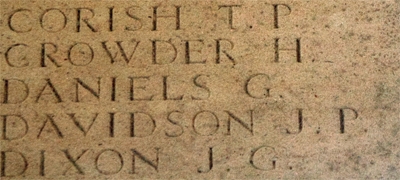
From: Southport, Lancs
K.I.A (110 Years this day)
Thursday 12th October 1916.
31 years old
James Galloway Dixon was born in 1885 in Bowdon, Cheshire the son of James Galloway Dixon and his wife Dora Elizabeth (nee Tolson) who were married in 1883 in Kendal. He was baptised on the 24th January, 1886 at St John’s Church, Altrincham.
The 1891 Census shows the family living at 8 Preston Road, North Meols, Southport. His father, James Galloway is aged 42, born in Manchester and whose occupation is shown as a Cotton Yarn Agent, whilst his mother, Dora Elizabeth, is aged 33, born in Ambleside, Westmoreland. They have three children, James G. Junior is aged 5 b,Bowdon, Dora H. aged 3 b.Bowdon and Lancelot R. aged 10 months b.Southport. The have a visitor Agnes Tolson 64 b.Ambleside, (this is James' grandmother) and 2 servants.
He was educated at Sedbergh School, Cheshire.
On the 1901 census he is aged 15 at Gowers House, Sedbergh School.
Grandmother Agnes Tolson, formerly of Riverside, Ambleside and 5 Bagot St, Sefton Park died on the 18th March 1910.
Prior to the outbreak of the war he had been employed by Messrs Minoprio and Co. at the Liverpool Cotton Association for eight to nine years. He had been a member of the Southport Corinthian Yacht Club for several years and was associated with the Wayfarers Club, Liverpool.
The 1911 Census shows the family living at 16 Park Avenue, Southport. His father, James Galloway is aged 62, born 1849 in Manchester and whose occupation is shown as a Cotton Merchant, whilst his mother, Dora Elizabeth, is aged 53, born 1858 in Ambleside. They have two children, both born in Bowdon, Cheshire. James Galloway Junior is aged 25, born 1886 and occupation Cotton Salesman and Dora Hope Junior aged 23, born 1888 with no occupation. Also living at the address is George Reinhard Seidenburg, a Guest aged 21, born 1890 in Bremen, Germany and occupation Clerk, Ellen Mitchell a Housekeeper aged 36, born 1875 in Millom and Edith Haycocks a Servant aged 36, born 1875 in Liverpool.
James enlisted on the 01st September 1914 in Liverpool joining the 17th Battalion of The King’s Liverpool Regiment as Private No 15185. He was aged 29 years and 44 days and gave his occupation as Cotton Salesman. He stated that he had previously served in the Sedbergh School Rifle Corps. He was described as being 6 feet and a half inch tall, weighed 174lbs, of dark complexion, brown eyes, brown hair and gave his religion as Church of England.
He was billeted at Prescot Watch Factory from 14th September 1914, he trained there and also at Knowsley Hall. On 30th April 1915 the 17th Battalion alongside the other three Pals battalions left Liverpool via Prescot Station for further training at Belton Park, Grantham.
05th April 1915 whilst at Prescot, he was admonished for being absent from midnight 02.04.15 to 09.30am 03.04.15 and forfeited a day’s pay.
He was discharged on the 30th July, 1915 there for the purpose of being re-enlisted in the Inns of Court O.T.C. (Authority G.O.C. 89TH Infantry Brigade, letter dated 21.06.15). He was aged 30 years and twelve days and was 6 feet and a half inch tall. He had already served 333 days (01.09.14-30.07.15).
He was serving as a Second Lieutenant in 17th Battalion, The King’s Liverpool Regiment when he was killed in action on the 12th October 1916 aged 31 during the Battle of the Transloy Ridges which was part of the ongoing Somme Offensive.
17th Bn War Diary: Battle of Transloy Ridge –
11-10-16 - Gird Trench/Gird Support – Battalion in front line and support trenches. British bombardment of enemy front line system commenced about midday. Hostile shelling was intermittent throughout the day.
12-10-16 - Our bombardment continued. Enemy reply weak. 2.5 p.m. Zero hour. Attack on German front line system commenced. Enemy wire was found to be uncut and attack was unsuccessful. Hostile machine gun fire was very heavy and caused many casualties. Battalion H.Q. and Support Trench were heavily shelled throughout afternoon and evening. […] During this action all communication had to be carried out by runners and carrier pigeons as all wires were being continually cut by enemy shelling.
Casualties: 5 officers killed, 5 officers wounded, 38 OR killed, about 225 OR wounded/missing etc.
Graham Maddocks, in “Liverpool Pals” p.140, adds:
“As the whistle blew, the 17th Battalion left its trenches to move forward. […] As soon as the attacking waves left their trenches the enemy artillery began to register on them, and at the same time, the defending infantry commenced a murderous rain of fire. […] Although their numbers had been depleted by the British bombardment, they were trained and experienced soldiers, well dug in on high ground, and for the most part, looking out on uncut wire. As such, it was virtually impossible for them to miss the City Battalion men struggling to advance in the mud towards them. The 17th Battalion, on the left, was particularly badly hit, as its portion of No Man’s Land contained a slight rise in the ground, and as the troops emerged onto it they were silhouetted against the sky and became easy targets. Those on the left of the attack, who managed to avoid the hail of bullets and make it to the German wire, then found that it was totally uncut, and thus trapped, they too became easy targets, to be picked off almost at the enemy’s will. It was hardly surprising that, seeing the first waves being wiped out, some of the following waves turned back and made for their start lines. These lines were now packed with other waves of troops, however, and the fleeing men added to the congestion already there, and became easy prey for the German gunners. There is some evidence also, to suggest that at this stage, the British trenches were also being hit by their own heavy artillery shells which were falling short.”
His death was reported in the Liverpool Echo on 18th October 1916
SECOND-LIEUTENANT J. DIXON
The death action occurred France the 12th inst. of Second Lieutenant James G. Dixon, aged 31, son of Mr. J. G. Dixon, of Park-avenue, Southport. He joined the K.LR. at the outbreak of war, and received a commission last January, when went to the front. He was educated at Sedbergh School, and for a number of years was on the floor of the Liverpool Cotton Exchange.
James' body was not recovered or was subsequently lost as he has no known grave and is commemorated on the Thiepval Memorial, France.
The Thiepval Memorial, the Memorial to the Missing of the Somme, bears the names of more than 72,000 officers and men of the United Kingdom and South African forces who died in the Somme sector before 20 March 1918 and have no known grave. Over 90% of those commemorated died between July and November 1916.
On 01st August 1932 the Prince of Wales and the President of France inaugurated the Thiepval Memorial in Picardy. The inscription reads: “Here are recorded the names of officers and men of the British Armies who fell on the Somme battlefields between July 1915 and March 1918 but to whom the fortune of war denied the known and honoured burial given to their comrades in death.”
Soldiers Effects and Pension to father James Galloway.
Probate on his estate was granted on 08th December 1916 to his Father James Galloway Dixon of £564 10s, 7d.
He is also commemorated locally on the family headstone at Duke Street Cemetery, Southport:
In Loving Memory Of
James Galloway Dixon
Died December 19th 1923 Aged 75 years
Also Of His Son
Lieut. James Galloway Dixon
(King's Liverpool Regiment )
Who Fell In Action At Le Sars
October 12th 1916 Aged 31 Years
Also
Dora Elizabeth Dixon
Of 16 Park Avenue Southport
Who Passed Onto The Higher Life
On November 21st? 1950
Aged 94 Years
James is also commemorated on the following Memorials:
Southport Civic Memorial
Emmanuel C. of E. Church
Sedbergh School War Memorial, Busk Lane Sedbergh
Liverpool Cotton Association War Memorial.
His father died, aged 75, on the 19th Decemeber 1923.
His mother died, aged 95, in 1950.
We currently have no further information on James Galloway Dixon, If you have or know someone who may be able to add to the history of this soldier, please contact us.
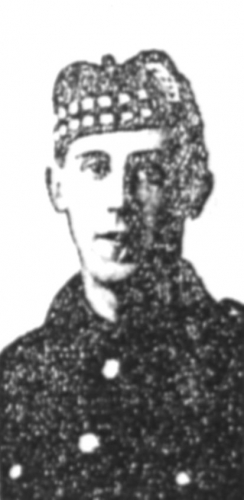
From: Kendal
K.I.A (110 Years this day)
Thursday 12th October 1916.
20 years old
John William Ducksbury was born in the September quarter of 1895 in Kendal, the son of John Ducksbury and his wife Sarah Ann (nee Robinson) Ducksbury who were married in 1891 in Kendal.
The 1901 Census shows the family are living at Woolpack Yard, 4, Stricklandgate, Kendal. His father, John, is aged 35, born in Kendal in 1866 and whose occupation is given as a Girth Web Weaver, his mother, Sarah also aged 35, born in Kendal in 1866 and son John aged 5, born 1896.
His father, John, died aged 38, in 1904 in Kendal.
The 1911 Census shows John and his mother living at 76 Antonio Street, Bootle, Liverpool with her brother William Robinson and his family. John’s mother, Sarah is aged 45, born 1866 in Kendal and has no occupation. John is aged 15, born 1896 and is a grocers errand boy. Her brother, William, is a widower aged 41, born 1870 and occupation Bacon Curer, born in Kendal, Westmorland. He has three children, all born in Bootle,
John enlisted in June, 1915 in Liverpool and was formerly with the Liverpool Scottish before transferring to the 17th Battalion, The King’s Liverpool Regiment as Private No 51953 when he was killed in action on the 12th October 1916 aged 20 during the Battle of the Transloy Ridges which was part of the ongoing Somme Offensive.
17th Bn War Diary: Battle of Transloy Ridge –
11-10-16 - Gird Trench/Gird Support – Battalion in front line and support trenches. British bombardment of enemy front line system commenced about midday. Hostile shelling was intermittent throughout the day.
12-10-16 - Our bombardment continued. Enemy reply weak. 2.5 p.m. Zero hour. Attack on German front line system commenced. Enemy wire was found to be uncut and attack was unsuccessful. Hostile machine gun fire was very heavy and caused many casualties. Battalion H.Q. and Support Trench were heavily shelled throughout afternoon and evening. […] During this action all communication had to be carried out by runners and carrier pigeons as all wires were being continually cut by enemy shelling.
Casualties: 5 officers killed, 5 officers wounded, 38 OR killed, about 225 OR wounded/missing etc.
Graham Maddocks, in “Liverpool Pals” p.140, adds: “As the whistle blew, the 17th Battalion left its trenches to move forward. […] As soon as the attacking waves left their trenches the enemy artillery began to register on them, and at the same time, the defending infantry commenced a murderous rain of fire. […] Although their numbers had been depleted by the British bombardment, they were trained and experienced soldiers, well dug in on high ground, and for the most part, looking out on uncut wire. As such, it was virtually impossible for them to miss the City Battalion men struggling to advance in the mud towards them. The 17th Battalion, on the left, was particularly badly hit, as its portion of No Man’s Land contained a slight rise in the ground, and as the troops emerged onto it they were silhouetted against the sky and became easy targets. Those on the left of the attack, who managed to avoid the hail of bullets and make it to the German wire, then found that it was totally uncut, and thus trapped, they too became easy targets, to be picked off almost at the enemy’s will. It was hardly surprising that, seeing the first waves being wiped out, some of the following waves turned back and made for their start lines. These lines were now packed with other waves of troops, however, and the fleeing men added to the congestion already there, and became easy prey for the German gunners. There is some evidence also, to suggest that at this stage, the British trenches were also being hit by their own heavy artillery shells which were falling short.”
He was reported killed in the Liverpool Daily Post on 20th November 1916:
King’s (Liverpool Regiment) - Ducksbury, 51953, J. W. (Bootle);
John's body was not recovered or was sunsequently lost as he has no known grave and is commemorated on the Thiepval Memorial, France.
The Thiepval Memorial, the Memorial to the Missing of the Somme, bears the names of more than 72,000 officers and men of the United Kingdom and South African forces who died in the Somme sector before 20 March 1918 and have no known grave. Over 90% of those commemorated died between July and November 1916.
On 01st August 1932 the Prince of Wales and the President of France inaugurated the Thiepval Memorial in Picardy. The inscription reads: “Here are recorded the names of officers and men of the British Armies who fell on the Somme battlefields between July 1915 and March 1918 but to whom the fortune of war denied the known and honoured burial given to their comrades in death.”
John was remembered by his Pals on the first anniversary of his death in the Liverpool Echo 12th October 1917:
DUCKSBURY - In loving memory of my friend Private John W. Ducksbury, K.L.R., killed in action October 12, 1916.
Some day I hope to meet him,
Some day I know not when,
To clasp his hand in the better land,
Never to part again.
- From his Pal Harry Davies.
DUCKSBURY – In loving memory of my friend Private John W. Ducksbury, K.L.R., who made the supreme sacrifice October 12, 1916.
A hard fought fight,
A well earned rest,
A victor’s crown in the realms of the blest.
- From his chum Dick Drury.
Soldiers Effects and Pension to mother Sarah Ann, 52 Pine Grove, Bootle.
John is also commemorated on the following Memorials:
Bootle Civic Memorial
Kendal War Memorial
His mother, died aged 73, in Crosby in 1938.
We currently have no further information on John William Ducksbury, If you have or know someone who may be able to add to the history of this soldier, please contact us.

From: Liverpool
K.I.A (110 Years this day)
Thursday 12th October 1916.
20 years old
George Edward Eccleston was born on the 22nd July 1896 in Liverpool, the son of George Eccleston and his wife Annie (nee Williams) Eccleston who were married on the 13th June 1892 at St Matthew's Church, Toxteth. George was a 21 year old platers helper of 39 Brunton Road, father John, whilst Annie was an 18 year old of 49 Miles Street, father John Robert.
George was baptised on the 20th September 1896 at St Peter's Church, Liverpool, father was a labourer of South Street.
The 1901 Census shows the family living at 38 Miles Street, Toxteth, Liverpool. His father George is aged 31, and is a dock labourer, born in Liverpool as were the all the family. His wife Annie is aged 28. They have two children, George aged 5, and William aged 2. Also living at the address was Annie’s widowed mother Annie Williams aged 57.
The 1911 Census shows the family are still living at 38 Miles Street, Toxteth, Liverpool. His father George is aged 41, born 1870 and is a dock labourer. His wife Annie is aged 37, born 1874. They have four children, John aged 18, born 1893 occupation warehouse labourer, George aged 14, born 1897 and occupation shop boy, William aged 12, born 1899 and Elizabeth aged 8, born 1903 of school age. Also living at the address was a boarder named Michael Cox, a widower aged 73, born 1838 and occupation Pedlar.
George enlisted in Liverpool joining the 17th Battalion of The King’s Liverpool Regiment as Private 24638.
His mother, Annie, died aged 40 in the June quarter of 1915.
He had reached the rank of Lance-Corporal No 24638 when he was killed in action on the 12th October 1916, aged 20, during the Battle of the Transloy Ridges which was part of the ongoing Somme Offensive.
17th Bn War Diary: Battle of Transloy Ridge –
11-10-16 - Gird Trench/Gird Support – Battalion in front line and support trenches. British bombardment of enemy front line system commenced about midday. Hostile shelling was intermittent throughout the day.
12-10-16 - Our bombardment continued. Enemy reply weak. 2.5 p.m. Zero hour. Attack on German front line system commenced. Enemy wire was found to be uncut and attack was unsuccessful. Hostile machine gun fire was very heavy and caused many casualties. Battalion H.Q. and Support Trench were heavily shelled throughout afternoon and evening. […] During this action all communication had to be carried out by runners and carrier pigeons as all wires were being continually cut by enemy shelling.
Casualties: 5 officers killed, 5 officers wounded, 38 OR killed, about 225 OR wounded/missing etc.
Graham Maddocks, in “Liverpool Pals” p.140, adds:
“As the whistle blew, the 17th Battalion left its trenches to move forward. […] As soon as the attacking waves left their trenches the enemy artillery began to register on them, and at the same time, the defending infantry commenced a murderous rain of fire. […] Although their numbers had been depleted by the British bombardment, they were trained and experienced soldiers, well dug in on high ground, and for the most part, looking out on uncut wire. As such, it was virtually impossible for them to miss the City Battalion men struggling to advance in the mud towards them. The 17th Battalion, on the left, was particularly badly hit, as its portion of No Man’s Land contained a slight rise in the ground, and as the troops emerged onto it they were silhouetted against the sky and became easy targets. Those on the left of the attack, who managed to avoid the hail of bullets and make it to the German wire, then found that it was totally uncut, and thus trapped, they too became easy targets, to be picked off almost at the enemy’s will. It was hardly surprising that, seeing the first waves being wiped out, some of the following waves turned back and made for their start lines. These lines were now packed with other waves of troops, however, and the fleeing men added to the congestion already there, and became easy prey for the German gunners. There is some evidence also, to suggest that at this stage, the British trenches were also being hit by their own heavy artillery shells which were falling short.”
He was reported missing in the Liverpool Daily Post 16h Nov 1916
King’s (Liverpool Regiment) - Eccleston, 25638, Lce-Corpl. G. E.
Soldiers Effects to father George and brother John, Pension to father.
His death was later presumed to have occurred on 12th October 1916.
George now rests at Warlencourt British Cemetery, France.
Warlencourt Cemetery is entirely a concentration cemetery, begun late in 1919 when graves were brought in from small cemeteries and the battlefields of Warlencourt and Le Sars. The Graves Registration form shows graves from “Le Sars 6/1, 6/2, Hexham Road, Seven Elms”.
Graves were brought in from the original cemeteries at Hexham Road (Le Sars), and Seven Elms (Flers), as well as over 3,000 British graves due to the fighting which took place around the Butte de Warlencourt from the autumn of 1916 to the spring of 1917, and again in the German advance and retreat of 1918. The cemetery now contains 3,505 Commonwealth burials and commemorations of the First World War, 1,823 of which are unidentified.
George is commemorated in the Hall of Remembrance, Liverpool Town Hall, Panel 4.
His father died, aged 50, in the March quarter of 1918.
We currently have no further information on George Edward Eccleston, if you have or know someone who may be able to add to the history of this soldier, please contact us.

From: Widnes
K.I.A (110 Years this day)
Thursday 12th October 1916.
27 years old
Robert Emery was born in October 1889 in Widnes and was the son of John Emery and his wife Eliza Jane (nee Bowen) who were married on the 05th December 1874 in Manchester Cathedral (formerly Manchester Collegiate Church).
The 1891 Census shows the family living at New Road, Ditton, Widnes. His father, John, is aged 37, born in in Trent Vale, Staffordshire in 1854 is a bricklayer, his mother, Eliza Jane, is aged 40, born 1851 in Devon and has no occupation listed. They have six children at the time of the Census; Thomas aged 14, born 1877 in Patricroft, Manchester, John aged 13, born 1878, Albert aged 8, born 1883 and Clara aged 6, born 1885 are all at school and were born in Widnes, Alice aged 4, born 1887 and Robert aged 1, born 1890 were also born in Widnes. Also living with them was a visitor George Bowen (Eliza Jane’s father) aged 77, born 1848 in Devon and he was a shoemaker.
The 1901 Census shows the family now living at 5, Sumner Street, Liverpool. Robert's father ,John, is now aged 46, and is a brick setter, his mother, Eliza Jane, is aged 48, (year of birth now showing as 1853) and has no occupation listed. They have six children at the time of the Census; Thomas aged 25 and Albert aged 19 are both chemical labourers, Clara aged 17 is a domestic servant, Alice is aged 15, Robert aged 12 and Eliza aged 7. They also have a lodger Thomas Moone aged 18, born 1883 in Ireland and he is employed as a chemical labourer.
He enlisted in Bootle, Liverpool and was serving in the 17th Battalion, The King’s Liverpool Regiment as Private No 52797 when he was killed in action on the 12th October 1916 aged 27 during the Battle of the Transloy Ridges which was part of the ongoing Somme Offensive. He was killed just 2 weeks after his 27th birthday.
17th Battalion War Diary: Battle of Transloy Ridge –
11-10-16 - Gird Trench/Gird Support – Battalion in front line and support trenches. British bombardment of enemy front line system commenced about midday. Hostile shelling was intermittent throughout the day.
12-10-16 - Our bombardment continued. Enemy reply weak. 2.5 p.m. Zero hour. Attack on German front line system commenced. Enemy wire was found to be uncut and attack was unsuccessful. Hostile machine gun fire was very heavy and caused many casualties. Battalion H.Q. and Support Trench were heavily shelled throughout afternoon and evening. […] During this action all communication had to be carried out by runners and carrier pigeons as all wires were being continually cut by enemy shelling.
Casualties: 5 officers killed, 5 officers wounded, 38 OR killed, about 225 OR wounded/missing etc.
Graham Maddocks, in “Liverpool Pals” p.140, adds:
“As the whistle blew, the 17th Battalion left its trenches to move forward. […] As soon as the attacking waves left their trenches the enemy artillery began to register on them, and at the same time, the defending infantry commenced a murderous rain of fire. […] Although their numbers had been depleted by the British bombardment, they were trained and experienced soldiers, well dug in on high ground, and for the most part, looking out on uncut wire. As such, it was virtually impossible for them to miss the City Battalion men struggling to advance in the mud towards them. The 17th Battalion, on the left, was particularly badly hit, as its portion of No Man’s Land contained a slight rise in the ground, and as the troops emerged onto it they were silhouetted against the sky and became easy targets. Those on the left of the attack, who managed to avoid the hail of bullets and make it to the German wire, then found that it was totally uncut, and thus trapped, they too became easy targets, to be picked off almost at the enemy’s will. It was hardly surprising that, seeing the first waves being wiped out, some of the following waves turned back and made for their start lines. These lines were now packed with other waves of troops, however, and the fleeing men added to the congestion already there, and became easy prey for the German gunners. There is some evidence also, to suggest that at this stage, the British trenches were also being hit by their own heavy artillery shells which were falling short.”
He was reported killed in the Liverpool Daily Post on 20th November 1916.
King’s (Liverpool Regiment) - Emery, 52797, R;
Robert now rests Warlencourt British Cemetery, France.
Warlencourt Cemetery is entirely a concentration cemetery, begun late in 1919 when graves were brought in from small cemeteries and the battlefields of Warlencourt and Le Sars. The Graves Registration form shows graves from “Le Sars 6/1, 6/2, Hexham Road, Seven Elms”.
Graves were brought in from the original cemeteries at Hexham Road (Le Sars), and Seven Elms (Flers), as well as over 3,000 British graves due to the fighting which took place around the Butte de Warlencourt from the autumn of 1916 to the spring of 1917, and again in the German advance and retreat of 1918. The cemetery now contains 3,505 Commonwealth burials and commemorations of the First World War, 1,823 of which are unidentified.
His widow Elizabeth, at 37 Garibaldi Street, received his effects, including a War Gratuity of £9-10s, and pension of 18/9d a week for herself and child.
His father died, aged 70, in the June quarter of 1924.
His mother aged 71 in the December quarter of 1926.
We currently have no further information on Robert Emery, If you have or know someone who may be able to add to the history of this soldier, please contact us.
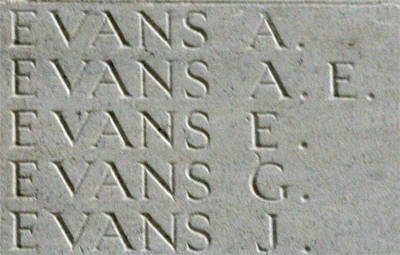
From: Waterloo, Liverpool
K.I.A (110 Years this day)
Thursday 12th October 1916.
23 years old
Albert Edward Evans was born at 13 Doric Street, Seaforth, on the 06th August 1893 and was baptised at St.Thomas' Church, Seaforth, on the 10th September. He was the eldest son of David Evans and Catherine or Kate (nee Massam) who married at St.Peter's Church, Liverpool, in 1888. His father was a railway signalman and was born at Henllan, Denbighshire, Wales, whilst his mother was born at Hightown.
Albert was one of eight children; Florence (1889-1912), Ellen (1891-1907), Frederick William (b 1895), Amy (1897-1917), George Henry (b 1898), Evelyn (b 1904) and David Arnold (b 1909). By 1919 only the three youngest children were still alive. The family were living at 46 Argo Road, Waterloo by 1911 and this was still the family home after the war. Albert then aged seventeen, was a railway porter.
He enlisted in Seaforth and was serving in the 17th Battalion, The King’s Liverpool Regiment as Private No 52859 when he was killed in action at “The Battle of the Transloy Ridges” on the 12th October 1916 aged 23.
17th Bn War Diary: Battle of Transloy Ridge –
11-10-16 - Gird Trench/Gird Support – Battalion in front line and support trenches. British bombardment of enemy front line system commenced about midday. Hostile shelling was intermittent throughout the day.
12-10-16 - Our bombardment continued. Enemy reply weak. 2.5 p.m. Zero hour. Attack on German front line system commenced. Enemy wire was found to be uncut and attack was unsuccessful. Hostile machine gun fire was very heavy and caused many casualties. Battalion H.Q. and Support Trench were heavily shelled throughout afternoon and evening. […] During this action all communication had to be carried out by runners and carrier pigeons as all wires were being continually cut by enemy shelling.
Casualties: 5 officers killed, 5 officers wounded, 38 OR killed, about 225 OR wounded/missing etc.
Graham Maddocks, in “Liverpool Pals” p.140, adds: “As the whistle blew, the 17th Battalion left its trenches to move forward. […] As soon as the attacking waves left their trenches the enemy artillery began to register on them, and at the same time, the defending infantry commenced a murderous rain of fire. […] Although their numbers had been depleted by the British bombardment, they were trained and experienced soldiers, well dug in on high ground, and for the most part, looking out on uncut wire. As such, it was virtually impossible for them to miss the City Battalion men struggling to advance in the mud towards them. The 17th Battalion, on the left, was particularly badly hit, as its portion of No Man’s Land contained a slight rise in the ground, and as the troops emerged onto it they were silhouetted against the sky and became easy targets. Those on the left of the attack, who managed to avoid the hail of bullets and make it to the German wire, then found that it was totally uncut, and thus trapped, they too became easy targets, to be picked off almost at the enemy’s will. It was hardly surprising that, seeing the first waves being wiped out, some of the following waves turned back and made for their start lines. These lines were now packed with other waves of troops, however, and the fleeing men added to the congestion already there, and became easy prey for the German gunners. There is some evidence also, to suggest that at this stage, the British trenches were also being hit by their own heavy artillery shells which were falling short.”
He was reported missing in the Liverpool Daily Post on 16th November 1916.
King’s (Liverpool Regiment) - Evans, 52859, A. E.;
His family appealed for information in the Liverpool Echo on 23rd November 1916:
“Private A. E. Evans, K.L.R., formerly ticket collector at Crosby and Waterloo stations, Lancashire and Yorkshire Railway. His parents live at 46, Argo Street, Waterloo.”
Albert Edward's body was not recovered or was subsequently lost as he has no known grave and is commemorated on the Thiepval Memorial.
The Thiepval Memorial, the Memorial to the Missing of the Somme, bears the names of more than 72,000 officers and men of the United Kingdom and South African forces who died in the Somme sector before 20 March 1918 and have no known grave. Over 90% of those commemorated died between July and November 1916.
On 01st August 1932 the Prince of Wales and the President of France inaugurated the Thiepval Memorial in Picardy. The inscription reads: “Here are recorded the names of officers and men of the British Armies who fell on the Somme battlefields between July 1915 and March 1918 but to whom the fortune of war denied the known and honoured burial given to their comrades in death.”
His brother Private 2172 Frederick William Evans of the 1/7th Battalion K.L.R., aged 19, was killed in action at Festubert on the 16th May 1915. He is commemorated on Panels 6 - 8 on the Le Touret Memorial in France.
Soldiers Effects to mother Kate, the Pensions of Frederick William and Albert Edward also went to his mother.
Albert Edward is also commemorated on the following Memorials:
Waterloo with Seaforth Civic Memorial
Cunard Steam Ship Company (Roll of Honour).
We currently have no further information on Albert Edward Evans, If you have or know someone who may be able to add to the history of this soldier, please contact us.
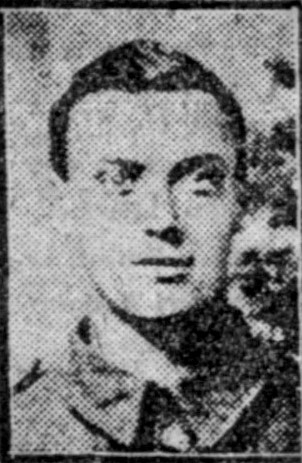
From: Hartford, Cheshire
K.I.A (110 Years this day)
Thursday 12th October 1916.
23 years old
John Oswald Eyes was born in Hartford, Cheshire on 29th April 1893, the son of John Eyes and his wife Annie (née McIntosh) who were married in 1889 at St. John the Evangelist Church, Cheetham, Manchester.. He was baptised on 25th September 1893 in Christ Church, Wharton, his father's occupation listed as a joiner.
The 1901 Census shows the family living on Chester Road, Weaverham, Cheshire. His father John is aged 35, occupation builders foreman and born in Hartford, Cheshire. His wife Annie is aged 38 born in Bareilly (Uttar Pradesh), India. They have three children living at the address. Ethel is aged 11, Linda aged 9, both born in Winsford, Cheshire. John is aged 7 born Hartford.
On 04th September 1906 he was enrolled in the Verdin Technical School in Winsford.
The 1911 Census shows the family living at 9 Brassey Street, Chester. His father John is aged 45, born 1866 and occupation clerk of works. His wife Annie is aged 47. They advise that they have been married for 22 years and have had 3 children. Their three children are resident at the time of the Census; Ethel is aged 21, born 1890 and is a School teacher, Linda aged 19, born 1892 and is a Book-keeper, both born in Winsford, Cheshire. John is aged 17, and his occupation is recorded as assistant builders surveyor.
John Oswald enlisted in Liverpool on the 02nd September 1914, joining the 17th Battalion of The King’s Liverpool Regiment as Private 15985 giving his age as 21 years and 120 days. He gave his occupation as a draughtsman. He was described as being five foot eight inches tall, weighed 138lbs, with a 36” chest. He had a fresh complexion, blue eyes, and fair hair. He stated his religion as Church of England and as his next of kin his father John, of 9 Brassey Street. He had two tattoo marks on his left and right arm.
He was billeted at Prescot Watch Factory from 14th September 1914, he trained there and also at Knowsley Hall. On 30th April 1915 the 17th Battalion alongside the other three Pals battalions left Liverpool via Prescot Station for further training at Belton Park, Grantham. They remained here until September 1915 when they reached Larkhill Camp on Salisbury Plain. He arrived in France on 7th November 1915.
His records state:
27.01.15-01.02.15: Admitted to Whiston Hospital with Influenza for six days.
27.03.16: Giving seven days punishment Confined to Barracks for having a filthy greatcoat on C.O’S inspection.
John’s war records also show:
09.08.16: He was appointed unpaid Lance-Corporal.
02.09.16: qualified to wear G.C. stripe(good conduct) on completion of 2 years service.
During the attack at Guillemont on 30th July John (Ossie) lost many friends and a friend wrote home about their experience which was subsequently featured in Graham Maddock book “Liverpool Pals” (p.123-4), gives details of the events:-
No.3 and No.4 Companies, intermingled because of the fog, soon came across a small German strongpoint on their line of advance, just to the south of Arrowhead Copse, and after a fierce hand-to-hand encounter, they captured it. Two friends from Chester wrote home separately to describe their experiences.
“We were in reserve for a week just behind the line waiting for our third attack. On the night of 29th July we moved up to our position just ahead and on the right of Trones Wood. Here we took up our position in shell holes just behind the 19th, and dug ourselves in for safety, awaiting early morning when the advance was due to take place at 4.45. We were in our stations, myself being with Ossy Eyes [Pte 15985 J.O. Eyes]. Frank [16016 F.A. Pierce] and his mates were quite near, also Sam’s [15938 S.H. Thomas] gun team. We were under constant fire, but not heavy, being mostly gas shells. It would be towards one or two o’clock when poor old Sam met his fate. Our sergeant had just given us our rum ration and gone to the shell hole where the gun team were, and here, unfortunately, one gas shell found its mark, landing in the centre of the gunners. Poor lads, it wiped the whole of them out.
It was a bad start for us, but at 4.45 the boys were up – into the mist they went headed by our section commanders. We ploughed along taking shelter here and there, for they poured one continual rain of lead at us. We were suffering terrible losses but the boys kept on. When we first started the attack, I saw Frank leading his section on. He was on our right, but he disappeared into the mist. We kept pushing forward and were then held up by a German advance trench (a strong point). Here we fought for three-quarters of an hour, when the enemy saw their chance was hopeless they downed arms, hands up, and cried like children for mercy.
We took up our position in what was once the German trench – only three of us out of our section, our NCO, Ossy, and myself. Getting lost, we attached ourselves to the 19th. Here we met another of our Pals who had also got lost. He was one of Frank’s section. Then he told us the terrible news. Frank was leading his section in the charge, and unfortunately was shot through the heart. The sights were bad enough, but the shock of losing Frank and Sam as well! I can’t describe my feelings – it’s heart-breaking. They were two fine fellows, so very popular in the company, and not only were they excellent soldiers, but thorough gentlemen too!” - 15971 Lance Corporal H. Foster (who survived the war).
“Ossy Eyes [15985, J.O. Eyes] and I who managed to come out of this without a scratch are badly cutup over this terrible affair, and I know you, and all those who know those dear comrades of ours will be badly upset about it. Poor old Charlie [21518 C. Heath] met his death while performing a very brave act. Our battalion were in the first wave that went over, and when we advanced so far, we got orders to get down, and Charlie, who noticed a German machine-gun a few yards ahead of him, charged with one or two others to try and capture it, but was fatally hit by a bomb. Frank Pierce [16016 F.A. Pierce] was sniped through the head and Sam Thomas [15938 S.H. Thomas] was knocked out by a gas shell while going up the trenches the night previous to the attack. Gordon Pinches [21589 N.G. Pinches] was killed with a bullet, but where it caught him exactly, I could not say.” – 21646 Private C.J. Wright (recipient of the Military Medal, himself hit and killed by an aerial bomb on 08th October 1918, just a month before the Armistice).
John was killed in action on the 12th October 1916 aged 23 during the Battle of the Transloy Ridges which was part of the ongoing Somme Offensive.
From the 17th Battalion War Diary: Battle of Transloy Ridge –
11-10-16 - Gird Trench/Gird Support – Battalion in front line and support trenches. British bombardment of enemy front line system commenced about midday. Hostile shelling was intermittent throughout the day.
12-10-16 - Our bombardment continued. Enemy reply weak. 2.5 p.m. Zero hour. Attack on German front line system commenced. Enemy wire was found to be uncut and attack was unsuccessful. Hostile machine gun fire was very heavy and caused many casualties. Battalion H.Q. and Support Trench were heavily shelled throughout afternoon and evening. […] During this action all communication had to be carried out by runners and carrier pigeons as all wires were being continually cut by enemy shelling.
Casualties: 5 officers killed, 5 officers wounded, 38 OR killed, about 225 OR wounded/missing etc.
Graham Maddocks, in “Liverpool Pals” p.140, adds: “As the whistle blew, the 17th Battalion left its trenches to move forward. […] As soon as the attacking waves left their trenches the enemy artillery began to register on them, and at the same time, the defending infantry commenced a murderous rain of fire. […] Although their numbers had been depleted by the British bombardment, they were trained and experienced soldiers, well dug in on high ground, and for the most part, looking out on uncut wire. As such, it was virtually impossible for them to miss the City Battalion men struggling to advance in the mud towards them. The 17th Battalion, on the left, was particularly badly hit, as its portion of No Man’s Land contained a slight rise in the ground, and as the troops emerged onto it they were silhouetted against the sky and became easy targets. Those on the left of the attack, who managed to avoid the hail of bullets and make it to the German wire, then found that it was totally uncut, and thus trapped, they too became easy targets, to be picked off almost at the enemy’s will. It was hardly surprising that, seeing the first waves being wiped out, some of the following waves turned back and made for their start lines. These lines were now packed with other waves of troops, however, and the fleeing men added to the congestion already there, and became easy prey for the German gunners. There is some evidence also, to suggest that at this stage, the British trenches were also being hit by their own heavy artillery shells which were falling short.”
On 29.12.16 his war record states that after his death he was mentioned in Sir D. Haig’s dispatches for gallantry and devotion to duty.
The Chester Chronicle on 28th October 1916 published an article about John under the headline:
HARTFORD ARCHITECT KILLED – Hit while carrying Wounded
News has been received at Hartford that Pte John Oswald Eyes, a member of the King’s Liverpool regiment, has been killed in action. Private Eyes was the only son of Mr John Eyes formerly of Helmsdale Hartford and now of Brassey Street Chester, and who is Clerk of Works at Chester. The deceased soldier, who was 23 years of age, was exceedingly well known in Hartford and district and his death will be lamented by the many friends who knew him. He had had a brilliant career and success had attended him from the first, and it is sad to think that such a promising future should be prematurely cut short . As a boy Pte Eyes attended the Hartford school, and under Mr Pierce the headmaster, he made good progress with his education. He won a scholarship entitling him to attend the Winsford Technical School, the erection of which Institute it is interesting to note was superintended by his father. On his fathers removal to Chester Pte Eyes, for a time worked in his fathers office there, and became well known in the city. Later he was engaged by Mr Fairclough, builder of Warrington, as an architect and his prospects were very bright. On the outbreak of war he enlisted in the Liverpool regiment and it was in November 1915 that he left the training camp for France. He saw active service all through the first stages of the great advance and was doing admirable work under fire when he received his death blow on October 12. The first intimation of his death was written to his parents by a chum who spoke of the great friendship which existed between Pte Eyes and his comrades. Later the captain of the battalion informed Pte Eye’s parents that on the 12th of October following a successful attack the gallant soldier was carrying wounded comrades to safety. The enemy however caught sight of him, and turned a machine gun in his direction with the result the Pte Eyes was severely wounded in the back. The captain conveyed him to a dug out and did everything that was possible in the hope of saving his life, but death took place shortly afterwards. The remains were interred on the battlefield and a funeral was attended by several of his pals.
Private Eyes was an all-round athlete and a well educated youth. In almost every examination he undertook he gained a pass, and the medals and diplomas won by him are too numerous to mention. We might say however, that in 1914 he gained a pass for the City and Guilds of London Institute of Technological examinations at the Chester School of Science and Art. He won a medal two years in succession for a similar subject open to all England and also held the Westminster medal for two years. He enjoyed every form of sport and act one time played football with the Chester Sealanders team. While at Hartford he was a member of the parish church choir and was a great favourite amongst the parishioners who feel much sympathy for the bereaved family.
His death was also reported in the Liverpool Weekly Courier on Saturday 04 November 1916:
A BRILLIANT CAREER ENDED.
CHESTER LANCE-CORPORAL KILLED.
Official information has now been received by Mr. and Mrs. John Eyes, of Avonlea, Brassey street, Chester (formerly of Hartford, near Northwich), that their only son, Lance-Corp. John Oswald Eyes, aged 23, was killed in action on Thursday, Oct. 12. He joined the King's (Liverpool Regiment) in August, 1914, and went to France in Nov., 1915, The news of his death is contained in the following letter from " the company commander says :— Dear Mr. Eyes,—l am writing you these few lines to tell you how sorry I am to inform you that your son was killed in action last Thursday, the 12th October. He was the finest soldier in the company, and the men would follow him anywhere, and to me, as company commander, his loss is very great personally. We were close to the German lines when he was hit in the side by a machine-gun and fell. I was able to get him into a shell hole, as the Germans were shooting at the wounded, and I stayed with him until he died. He suffered very little, and died, as he had lived, a true and plucky British soldier. I am glad to be able to tell you that he has been recommended for the Military Medal for the fine work which he did in July, and I hope you may receive the award later on. His loss is regretted by all the company, and his memory will not fade, He’s buried on the field of battle. Lance-Corporal Eyes was educated at the Verdin Secondary School, Winsford, where he won high distinction, and afterwards attended Mr. Marriott's building classes at the Grosvenor Museum. He was the most brilliant and most successful student in that section that the institution had produced, During his three years’ studentship at the evening classes he passed eleven examinations and earned the following distinctions :—Twice placed first in Lancashire and Cheshire examinations, three times placed first in City Guilds examinations open to national competition; five local and national prizes; the highest examination of the Board of Education with distinction; one silver medal and two bronze national competition; the president’s gold medal, Chester School of Science and Art, for the most successful science student of the session. Al this work was done before he was 21 years of age, in addition to his ordinary day’s.
The Liverpool Echo also reported his death on 30th December 1916:
A CHESTER LANCE CORPORAL
Lance-corporal J. O. Eyes, K.L.R., has been killed in action. His parents reside at Avonlea, Brassey-st., Chester, and previous to the war he showed great promise as an architect. He joined the colours in August, 1914, and went to France in November of the following year. He was killed by machine-gun fire.
His death was also reported in the Northwich Guardian on Friday 12 January 1917:
THE LATE PRIVATE G. O. EYES.
In Sir Douglas Haig's recent dispatch mention is made of the name of Private (acting lance-corporal) G. O. Eyes, a record of whose death we published recently. He was 23 years of age, and a son of Mr. and Mrs. John Eyes, of Avonlea, Brassey-street, Chester, formerly of Hartford, Northwich, He was well known as a Chester footballer.
John Oswald's body was not recovered or was subsequently lost as he has no known grave and is commemorated on the Thiepval Memorial to the Missing of the Somme in France.
The Thiepval Memorial, the Memorial to the Missing of the Somme, bears the names of more than 72,000 officers and men of the United Kingdom and South African forces who died in the Somme sector before 20 March 1918 and have no known grave. Over 90% of those commemorated died between July and November 1916.
On 01st August 1932 the Prince of Wales and the President of France inaugurated the Thiepval Memorial in Picardy. The inscription reads: “Here are recorded the names of officers and men of the British Armies who fell on the Somme battlefields between July 1915 and March 1918 but to whom the fortune of war denied the known and honoured burial given to their comrades in death.”
He earned all three medals.
Soldiers Effects, Army pay £2 18s 4d and a War Gratuity of £9 to father John, Pension of 11/- pw to mother Annie.
He is also commemorated on the Chester Citizens Memorial, situated in Chester Town Hall.
John’s father died, aged 63, on the 26th June 1929 and was buried at St John the Baptist, Hartford.
His mother died, aged 80, on the 24th September 1943, also buried at St John the Baptist.
Her death was reported in the Winsford Chronicle on Saturday 02 October 1943:
THE LATE MRS. JOHN EYES
FUNERAL AT HARTFORD.
The death occurred on Friday, after a short illness, of Mrs. Eyes, 27, Vicar's Cross, Chester, widow of Mr. John Eyes, of Hartford and Chester. She is survived by her two daughters,—Mrs. John Moore, Hartford, and Miss Linda Eyes, who is employed at an Army office. Mr. John Oswald Eyes, her only son, was killed in France when on active service during the Great War.
The family grave reads:-
In Loving Memory of
JOHN EYES
Died June 26th 1929, aged 63 years.
Also JOHN OSWALD son of the above
(17th Bn King’s Liverpool Regiment)
Killed in Action in France,
October 12th 1916,
Aged 23 years.
Also ANNIE, the beloved wife of the above,
Died September 24th 1943, aged 80 years.
We currently have no further information on John Oswald Eyes, If you have or know someone who may be able to add to the history of this soldier, please contact us.
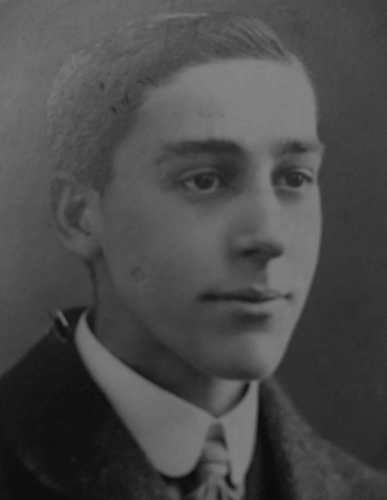
From: Beccles, Suffolk
K.I.A (110 Years this day)
Thursday 12th October 1916.
24 years old
Egbert Lionel Field was born in the March quarter of 1892 in Beccles, Suffolk and was the son of Egbert Field and his wife Violet Ada (nee Robinson), who married in Shoredich in 1890.
The 1901 Census shows the family living at Avondale, Como Street, Romford, Essex. His father Egbert is aged 31, born 1870 and is a Boot Traveller, born in Baldock, Hertfordshire. His wife Violet is aged 30, born 1871 in Huntingdon. They have three children, all born in Beccles, Suffolk, Frederick aged 11, born 1890, Egbert aged 9, born 1892 and Reginald aged 6, born 1895. Also at the address is the Fathers brother John aged 23, born 1878 and occupation School Master.
The 1911 Census show Egbert living at 7 Chaucer Road, Wanstead, London as a visitor. He is now aged 19 and gives his occupation as a Gardener. He is living with the Beecliff family. Head of the household is the father, Alfred Richard Beecliff is aged 47, born 1864 and occupation insurance agent, his wife Jane is aged 47, born 1864 a Housewife and their two children Violet aged 23, born 1888 no occupation and Reuben aged 16, born 1895 and employed as a Clerk.
Egbert enlisted in Liverpool and was serving in the 17th Battalion, The King’s Liverpool Regiment as Private No 26051 when he was killed in action on the 12th October 1916 during the Battle of the Transloy Ridges which was part of the ongoing Somme Offensive.
17th Bn War Diary: Battle of Transloy Ridge –
11-10-16 - Gird Trench/Gird Support – Battalion in front line and support trenches. British bombardment of enemy front line system commenced about midday. Hostile shelling was intermittent throughout the day.
12-10-16 - Our bombardment continued. Enemy reply weak. 2.5 p.m. Zero hour. Attack on German front line system commenced. Enemy wire was found to be uncut and attack was unsuccessful. Hostile machine gun fire was very heavy and caused many casualties. Battalion H.Q. and Support Trench were heavily shelled throughout afternoon and evening. […] During this action all communication had to be carried out by runners and carrier pigeons as all wires were being continually cut by enemy shelling.
Casualties: 5 officers killed, 5 officers wounded, 38 OR killed, about 225 OR wounded/missing etc.
Graham Maddocks, in “Liverpool Pals” p.140, adds: “As the whistle blew, the 17th Battalion left its trenches to move forward. […] As soon as the attacking waves left their trenches the enemy artillery began to register on them, and at the same time, the defending infantry commenced a murderous rain of fire. […] Although their numbers had been depleted by the British bombardment, they were trained and experienced soldiers, well dug in on high ground, and for the most part, looking out on uncut wire. As such, it was virtually impossible for them to miss the City Battalion men struggling to advance in the mud towards them. The 17th Battalion, on the left, was particularly badly hit, as its portion of No Man’s Land contained a slight rise in the ground, and as the troops emerged onto it they were silhouetted against the sky and became easy targets. Those on the left of the attack, who managed to avoid the hail of bullets and make it to the German wire, then found that it was totally uncut, and thus trapped, they too became easy targets, to be picked off almost at the enemy’s will. It was hardly surprising that, seeing the first waves being wiped out, some of the following waves turned back and made for their start lines. These lines were now packed with other waves of troops, however, and the fleeing men added to the congestion already there, and became easy prey for the German gunners. There is some evidence also, to suggest that at this stage, the British trenches were also being hit by their own heavy artillery shells which were falling short.”
His death was reported in the Bedfordshire Times on 27th October 1916:
FIELD - Killed in action, October 12, 1916, Pte Egbert Lionel Field (“Tiger”), aged 24 years, Company Runner, King’s Liverpool Regiment, second and dearly beloved son Mr and Mrs E. C. Field of Glen Thorpe, George Street, Bedford.
Egbert's body was not recovered or was subsequently lost as he has no known grave and is commemorated on the Thiepval Memorial, France.
The Thiepval Memorial, the Memorial to the Missing of the Somme, bears the names of more than 72,000 officers and men of the United Kingdom and South African forces who died in the Somme sector before 20 March 1918 and have no known grave. Over 90% of those commemorated died between July and November 1916.
On 01st August 1932 the Prince of Wales and the President of France inaugurated the Thiepval Memorial in Picardy. The inscription reads: “Here are recorded the names of officers and men of the British Armies who fell on the Somme battlefields between July 1915 and March 1918 but to whom the fortune of war denied the known and honoured burial given to their comrades in death.”
Soldiers Effects to father Egbert C., Pension to mother Violet, 32 George St, Bedford.
His mother Violet, with a date of birth of 01st March 1871, appears on the 1939 register at 250 Goldington Rd, Bedford (father not present).
His father died, aged 75 in 1945
His mother died, aged 84, in 1955
We currently have no further information on Egbert Lionel Field, If you have or know someone who may be able to add to the history of this soldier, please contact us.
From: Crewe, Cheshire
K.I.A (110 Years this day)
Thursday 12th October 1916.
35 years old
James Flynn was born in Crewe in 1881 and was the son of Irish parents Thomas Flynn and his wife Bridget (nee Cogger) who were married on the 10th February 1861 in Kilbeagh, Co.Mayo.
On the 1881 Census the family are living at Oakley Street, Monks Coppenhall, Cheshire. His father, Thomas, is aged 41, an iron labourer born in Mayo, Ireland, mother Bridget is aged 40, also born in Mayo, Ireland. They have seven children in the household; Margaret 18, a dressmaker b.Mayo, Ireland, Martin 17 a scholar b.Oswestry, Thomas 14 a scholar b.Oswestry, Ellen 11 a scholar b.Oswestry, John 9 a scholar b.Oswestry,, Mary Ann 2 b.Crewe, and James 2 months b.Crewe.
His mother, Bridget, died aged 40 soon after the census and was buried on the 26th April 1881.
His father remarried to Elizabeth Jones in 1882 in Oswestry.
On the 1891 Census the family are living at Back Bryn Owen, Bangor. James' father, Thomas, is aged 50, a bricklayers labourer, step-mother Elizabeth is aged 31, born St Asaph, Flint. There are six children in the household; Thomas 24 b.Oswestry, Mary Ann 12 b.Crewe, James 10 b.Crewe, Kate 5 b.Bangor, Emily Edith 3 b.Bangor, and Norah 1 b.Bangor.
On the 1901 census James, aged 20 b.Crewe, is with the District and Provisional Battalion of Imperial Yeomanry at Mandora Barracks, Aldershot.
Many thanks to Peter(PRC) on GWF for this excellent and detailed research:-
[There is a WO96 Militia enlistment record for a James Flynn, born “Crew”, who stated he was aged 19 years and 9 months when he attested at Liverpool on the 1st October 1900. He was then living at 5 Lower Milk Street, Liverpool and had done so for at least the last 12 months. A Labourer, he was working for a Mr Roberts of Lower Milk Street. He was single and had no previous military experience.
He joined the 3rd Battalion of the South Lancashire Regiment and started his 49 days initial training. On the 19th November 1900 he enlisted in the South Wales Borderers.
There is then a WO97 series record for James Flynn, both “Crew”. He was aged 19 years and 9 months when he attested for a short service of 12 years, split 7 and 5, at Liverpool on the 19th November 1900. He was single, a Labourer, and then serving with the Militia in the 3rd Battalion, South Lancashire Regiment. He joined the Depot at Brecon the same day, and was posted to the “2nd” on the 18th February 1900 – the entry does not state Battalion. The next entry shows him posted to the 1st “Battalion” on the 5th January 1902 – these unit distinctions will become important! He sailed for India on that day. On the 1st April 1904 he extended his service to complete 8 years in the colours and on the 27th December 1904 received his first Good Conduct Badge. This was forfeited on the 11th July 1905, being restored a year later and forfeited again on the 12th November 1907. He sailed for the UK on the 22nd October 1908. On the 18th November 1908 he was transferred to the Army Reserve. He was discharged on termination of his period of engagement 18th November 1912.
On enlistment his next of kin was recorded as his father Thomas and stepmother Lizzie, both of 3 Upper Bryn Terrace, Bangor, North Wales.
Private James Flynn, aged 20 and born Crewe, Cheshire, appears on the page 36 of a Barracks return on the 1901 Census of England. Scrolling back it is not at all clear what unit he might be serving with. Where Officers appear, for example on page 23, checking them against Harts 1901 Annual List shows them serving with a variety of units.
Going back to the 1900 Militia enlistment of James Flynn, then living at 5 Lower Milk Street, Liverpool, neither of the two families that made up households at that address on the 1901 Census of England & Wales had any obvious family link to James, just going on place of birth of the family members Household surnames were Woolard and Thompson.]
On the 1911 census his parents are living at 316 Carnarvon Road, Bangor. Thomas is aged 73, a pensioner, Mary Elizabeth is 54. They have been married for 31 years and have had 7 children, 4 of whom have survived.
James cannot be found on the 1911 census, perhaps overseas with the military.
He enlisted in Bury and was formerly Private 411 of the Lancashire Fusiliers and following a transfer, was serving in the 17th Battalion of The King’s Liverpool Regiment as Private No 52689 when he was killed in action on the 12th October 1916, aged 35, during the Battle of the Transloy Ridges which was part of the ongoing Somme Offensive.
17th Bn War Diary: Battle of Transloy Ridge –
11-10-16 - Gird Trench/Gird Support – Battalion in front line and support trenches. British bombardment of enemy front line system commenced about midday. Hostile shelling was intermittent throughout the day.
12-10-16 - Our bombardment continued. Enemy reply weak. 2.5 p.m. Zero hour. Attack on German front line system commenced. Enemy wire was found to be uncut and attack was unsuccessful. Hostile machine gun fire was very heavy and caused many casualties. Battalion H.Q. and Support Trench were heavily shelled throughout afternoon and evening. […] During this action all communication had to be carried out by runners and carrier pigeons as all wires were being continually cut by enemy shelling.
Casualties: 5 officers killed, 5 officers wounded, 38 OR killed, about 225 OR wounded/missing etc.
Graham Maddocks, in “Liverpool Pals” p.140, adds: “As the whistle blew, the 17th Battalion left its trenches to move forward. […] As soon as the attacking waves left their trenches the enemy artillery began to register on them, and at the same time, the defending infantry commenced a murderous rain of fire. […] Although their numbers had been depleted by the British bombardment, they were trained and experienced soldiers, well dug in on high ground, and for the most part, looking out on uncut wire. As such, it was virtually impossible for them to miss the City Battalion men struggling to advance in the mud towards them. The 17th Battalion, on the left, was particularly badly hit, as its portion of No Man’s Land contained a slight rise in the ground, and as the troops emerged onto it they were silhouetted against the sky and became easy targets. Those on the left of the attack, who managed to avoid the hail of bullets and make it to the German wire, then found that it was totally uncut, and thus trapped, they too became easy targets, to be picked off almost at the enemy’s will. It was hardly surprising that, seeing the first waves being wiped out, some of the following waves turned back and made for their start lines. These lines were now packed with other waves of troops, however, and the fleeing men added to the congestion already there, and became easy prey for the German gunners. There is some evidence also, to suggest that at this stage, the British trenches were also being hit by their own heavy artillery shells which were falling short.”
James' body was not recovered or was subsequently lost as he has no known grave and is commemorated on the Thiepval Memorial, France.
The Thiepval Memorial, the Memorial to the Missing of the Somme, bears the names of more than 72,000 officers and men of the United Kingdom and South African forces who died in the Somme sector before 20 March 1918 and have no known grave. Over 90% of those commemorated died between July and November 1916.
On 01st August 1932 the Prince of Wales and the President of France inaugurated the Thiepval Memorial in Picardy. The inscription reads: “Here are recorded the names of officers and men of the British Armies who fell on the Somme battlefields between July 1915 and March 1918 but to whom the fortune of war denied the known and honoured burial given to their comrades in death.”
He was reported killed in the Liverpool Daily Post on 20th November 1916.
King’s (Liverpool Regiment) - Flynn, 52689, J. (Bangor);
Soldiers Effects to brother John, sisters Ellen Hughes, Mary A. Jones, half-sisters Winnie, Emily, Lizzie, No.27323 Thomas King?, N.Staff. Regt, Guernsey, half-sister Kathleen Jennings, nephew John S., niece Norah.
No Pension record found.
His father had died, aged 76, in the September quarter of 1916, so the effects were shared among James' siblings.
We currently have no further information on James Flynn, If you have or know someone who may be able to add to the history of this soldier, please contact us.
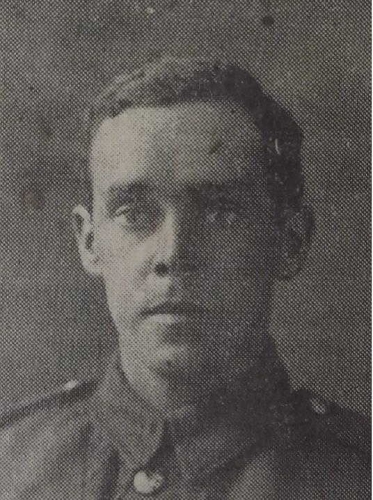
From: Seacombe, Cheshire
K.I.A (110 Years this day)
Thursday 12th October 1916.
29 years old
Finlay was born on 10th November 1886 in Seacombe, the eldest of 10 children born to Robert Foden and his wife Isabella Murray (nee Fergusson) an eleventh, Charles Irving Foden was born in 1888 but died aged 4 years.
In 1881, his father Robert lives with his parents at 18 Rupert Hill, Everton and on 13th January 1886 he married Isabella Murray Fergusson, the 22 years old daughter of Peter Fergusson, a schoolmaster, in St George’s Church, Everton. Robert was 24 years old, a clerk and son of a bookkeeper and gave his address as 18 Rupert Hill, while Isabella gave hers as 366 Great Homer Street. Their first eight children were boys (one dying in infancy) and their only daughter, Mary Isabel, was not born until 1905 and was followed on 10th July 1908 by the birth of their youngest child, another boy, Harry Bell Foden.
By 1891, the family had moved acroos the Mersey to Seacombe and Robert, an oil merchant, and Isabella live with their first three boys – Finlay Robert, Charles Irving and William Campbell, at 17 Bell Road. On 29th March 1892 their next son, Walter Bell Foden, was born followed by Arthur Fergusson (13.07.1893); Eric Gordon (01.12.1894); and Archibald Murray (28.01.1897)
In 1901 the family still lived at 17 Bell Road. On 18th August 1901, their son Douglas Lauder, was born, followed by Mary Isabel (30.11.1905) and Harry Bell (10.07.1908). Robert’s wife, Isabella, died on 18th July 1908, probably following the birth of her last child, and in 1911 the family has moved to 58 Littledale Road, Seacombe where Robert, widower, oil merchant, lives with eight of his children – all except Finlay, of whom there is no trace in the 1911 Census.
Finlay enlisted in the 20th Battalion of The King's Liverpool Regiment as Private 24993, he arrived in France on 7th November 1915 with the rest of the Liverpool Pals.
Formed in November 1914 the 20th Battalion were originally billeted at Tournament Hall, Knotty Ash before on 29th January 1915 they moved to the hutted accommodation purposely built at Lord Derby’s estate at Knowsley Hall. On 30th April 1915 the 20th Battalion alongside the other three Pals battalions left Liverpool via Prescot Station for further training at Belton Park, Grantham. They remained here until September 1915 when they reached Larkhill Camp on Salisbury Plain.
On 05th July 1915 in Birkenhead he married Mabel Helena Ellison at at St John's Church, Egremont.
He arrived in France on 7th November 1915.
On 12th October 1916, the 17th Battalion was amongst those involved in the Battle of the Transloy Ridges near Flers.
17th Bn War Diary: Battle of Transloy Ridge –
11-10-16 - Gird Trench/Gird Support – Battalion in front line and support trenches. British bombardment of enemy front line system commenced about midday. Hostile shelling was intermittent throughout the day.
12-10-16 - Our bombardment continued. Enemy reply weak. 2.5 p.m. Zero hour. Attack on German front line system commenced. Enemy wire was found to be uncut and attack was unsuccessful. Hostile machine gun fire was very heavy and caused many casualties. Battalion H.Q. and Support Trench were heavily shelled throughout afternoon and evening. […] During this action all communication had to be carried out by runners and carrier pigeons as all wires were being continually cut by enemy shelling.
Casualties: 5 officers killed, 5 officers wounded, 38 OR killed, about 225 OR wounded/missing etc.
Graham Maddocks, in “Liverpool Pals” p.140, adds:
“As the whistle blew, the 17th Battalion left its trenches to move forward. […] As soon as the attacking waves left their trenches the enemy artillery began to register on them, and at the same time, the defending infantry commenced a murderous rain of fire. […] Although their numbers had been depleted by the British bombardment, they were trained and experienced soldiers, well dug in on high ground, and for the most part, looking out on uncut wire. As such, it was virtually impossible for them to miss the City Battalion men struggling to advance in the mud towards them. The 17th Battalion, on the left, was particularly badly hit, as its portion of No Man’s Land contained a slight rise in the ground, and as the troops emerged onto it they were silhouetted against the sky and became easy targets. Those on the left of the attack, who managed to avoid the hail of bullets and make it to the German wire, then found that it was totally uncut, and thus trapped, they too became easy targets, to be picked off almost at the enemy’s will. It was hardly surprising that, seeing the first waves being wiped out, some of the following waves turned back and made for their start lines. These lines were now packed with other waves of troops, however, and the fleeing men added to the congestion already there, and became easy prey for the German gunners. There is some evidence also, to suggest that at this stage, the British trenches were also being hit by their own heavy artillery shells which were falling short.”
Finlay was amongst those killed in action. He now rests at V A 39 at Warlencourt British Cemetery.
Warlencourt Cemetery is entirely a concentration cemetery, begun late in 1919 when graves were brought in from small cemeteries and the battlefields of Warlencourt and Le Sars. The Graves Registration form shows graves from “Le Sars 6/1, 6/2, Hexham Road, Seven Elms”.
Graves were brought in from the original cemeteries at Hexham Road (Le Sars), and Seven Elms (Flers), as well as over 3,000 British graves due to the fighting which took place around the Butte de Warlencourt from the autumn of 1916 to the spring of 1917, and again in the German advance and retreat of 1918. The cemetery now contains 3,505 Commonwealth burials and commemorations of the First World War, 1,823 of which are unidentified.
Monies due to Finlay and his medals were sent home to his widow, Mabel Helena, who was living at 11 Kinglake Road, Wallasey.
Probate in respect of Finlay’s estate was not granted until 01st July 1924, when administration was granted to Mabel with Finlay’s estate declared as £434 9s 0d.
The family suffered grievous losses in addition to losing Finlay. His brothers records are listed below:
Private 1732 Archibald Murray Foden served with 4th Battalion, Cheshire Regiment, landed at Gallipoli on 8th August 1915 and within 10 days had been killed in action aged 18 years and commemorated on the Helles Memorial;
Private 2913 (later 200876) Eric Gordon Foden also served with the Cheshire Regiment and was killed in action on the Menin Road on 14th October 1918, aged 24 years and is buried in Grave XIX D 2 in Hooge Crater British Cemetery;
Corporal William Campbell Foden served with Lancashire and Cheshire Royal Garrison Artillery from 7th August 1914 until discharged on 40% disability pension on 25th February 1919, having been in France since 24th September 1916 and being badly wounded in June 1918 when he was admitted to hospital in Rouen and later transferred to the UK having sustained wounds to his head, shoulder and face caused by an exploding howitzer shell;
L/Corporal 2757 Arthur Fergusson Foden served with the 10th (Scottish) Battalion of the King’s Liverpool Regiment (TF) arriving in France on 1st November 1914 and was awarded a Military Medal for courage during the Battle of Hooge;
Walter Bell Foden served with the 4th Cheshires (TF) from 16th May 1911 until he went to live in Canada, from where he requested his discharge in 1914.
We currently have no further information on Finlay Robert Fergusson Foden, if you have or know someone who may be able to add to the history of this soldier, please contact us.

From: Newcastle under Lyne
K.I.A (110 Years this day)
Thursday 12th October 1916.
31 years old
Edward Fox was born 1884 in Newcastle-Under-Lyme, Staffordshire, the son of Samuel Fox and his wife Harriet (nee Moseley) who were married on the o4th December 1870 in Tunstall (near Stoke-Upon-Trent), Stafford. Samuel was a carpenter of Woolley Moor, Alfreton. Edward was baptised on the 1st June 1884 at Clay Cross, Derbyshire.
The 1891 Census shows the family living at 105 Hurdsfield Rd, Macclesfield. His father, Samuel, is aged 55, a confectioner born in Matlock, Derbyshire. His mother, Harriet is aged 50, born in Sandbach, Cheshire. They have four children living at the address. Frederick is aged 16, a confectioners assistant, born Manchester, Rose is aged 14, a confectioners assistant born in Hixon, Staffordshire, William is aged 12, a scholar born in Gotham, Notts, and Edward is aged 6, a scholar born in Newcastle, Staffs.
The 1901 Census shows the family living at 62 Waters, Macclesfield. His father Samuel is aged 66, a confectioner shopkeeper baker. His wife Harriet is aged 59, born Bradwall, Sandbach. They have four children living at the address. Rose is aged 24, William is aged 22, a confectioners assistant, Edward is aged 16, a confectioners assistant. Also at the address was a grandson Frank Fox, aged 5, a servant Mary Buckley aged 49, and a boarder May Wright aged 8.
The 1911 Census shows the family living at 62 Waters, Macclesfield. His father Samuel is aged 75, born 1836 and occupation Refreshment Room Proprietor and born in Matlock, Derbyshire. His mother Harriet is aged 68, born 1843 in Sandbach, Cheshire. They have been married for 40 years and have had 6 children 4 of whom have survived. They have two children living at the address. Rose is aged 34, born 1877 in Hixon, Staffordshire, Edward aged 26, born 1885 and occupation Baker and Confectioner. Also at the address was Frank Fox, a nephew aged 15, born 1896 and also a Baker and Confectioner who was born in Sandbach. There was also a servant Mary Buckley aged 60, born 1851 in Astbury, Cheshire.
Edward enlisted in Macclesfield initially joining the 6th Battalion of The King's Liverpool Regiment. After a transfer he was was serving in the 17th Battalion, The King’s Liverpool Regiment as Private No 51990 when he was killed in action on the 12th October 1916 aged 31 during the Battle of the Transloy Ridges which was part of the ongoing Somme Offensive.
17th Bn War Diary: Battle of Transloy Ridge –
11-10-16 - Gird Trench/Gird Support – Battalion in front line and support trenches. British bombardment of enemy front line system commenced about midday. Hostile shelling was intermittent throughout the day.
12-10-16 - Our bombardment continued. Enemy reply weak. 2.5 p.m. Zero hour. Attack on German front line system commenced. Enemy wire was found to be uncut and attack was unsuccessful. Hostile machine gun fire was very heavy and caused many casualties. Battalion H.Q. and Support Trench were heavily shelled throughout afternoon and evening. […] During this action all communication had to be carried out by runners and carrier pigeons as all wires were being continually cut by enemy shelling.
Casualties: 5 officers killed, 5 officers wounded, 38 OR killed, about 225 OR wounded/missing etc.
Graham Maddocks, in “Liverpool Pals” p.140, adds:
“As the whistle blew, the 17th Battalion left its trenches to move forward. […] As soon as the attacking waves left their trenches the enemy artillery began to register on them, and at the same time, the defending infantry commenced a murderous rain of fire. […] Although their numbers had been depleted by the British bombardment, they were trained and experienced soldiers, well dug in on high ground, and for the most part, looking out on uncut wire. As such, it was virtually impossible for them to miss the City Battalion men struggling to advance in the mud towards them. The 17th Battalion, on the left, was particularly badly hit, as its portion of No Man’s Land contained a slight rise in the ground, and as the troops emerged onto it they were silhouetted against the sky and became easy targets. Those on the left of the attack, who managed to avoid the hail of bullets and make it to the German wire, then found that it was totally uncut, and thus trapped, they too became easy targets, to be picked off almost at the enemy’s will. It was hardly surprising that, seeing the first waves being wiped out, some of the following waves turned back and made for their start lines. These lines were now packed with other waves of troops, however, and the fleeing men added to the congestion already there, and became easy prey for the German gunners. There is some evidence also, to suggest that at this stage, the British trenches were also being hit by their own heavy artillery shells which were falling short.”
Soldiers Effects to mother Harriet, Pension to mother Harriet of 62 Waters Green, and guardian of 1st child Mrs F. Wadsworth of Residential Club, Trafford Park, and guardian of 2nd child Mrs E. Mellor of Pot Bank, Astbury, Congleton.
Edward now rests at Warlencourt British Cemetery, France.
Warlencourt Cemetery is entirely a concentration cemetery, begun late in 1919 when graves were brought in from small cemeteries and the battlefields of Warlencourt and Le Sars. The Graves Registration form shows graves from “Le Sars 6/1, 6/2, Hexham Road, Seven Elms”.
Graves were brought in from the original cemeteries at Hexham Road (Le Sars), and Seven Elms (Flers), as well as over 3,000 British graves due to the fighting which took place around the Butte de Warlencourt from the autumn of 1916 to the spring of 1917, and again in the German advance and retreat of 1918. The cemetery now contains 3,505 Commonwealth burials and commemorations of the First World War, 1,823 of which are unidentified.
He is also commemorated on the following Memorials:
Macclesfield Town Hall and War Memorial, Park Green
St Michael's Church war memorials.
We currently have no further information on Edward Fox, If you have or know someone who may be able to add to the history of this soldier, please contact us.

From: Liverpool
K.I.A (110 Years this day)
Thursday 12th October 1916.
26 years old
John “Jack” Fursland was born in 1890 in Liverpool and was the son of John Fursland and his wife Mary (née Roberts) who were married on the 30th March 1888 at St Mary's Church, Kirkdale. John snr was a 27 year old miller of 43 Major Street, father John a mariner, whilst Mary was aged 21 of Orrell Road, father Griffith a mariner.
The 1891 Census shows the family were living at 23 Pansy Street, Kirkdale. His father, John, is aged 30, a miller who was born in Liverpool. His mother, Mary, is aged 24, and was also born in Liverpool. They have two children living at the address, both born in Liverpool; Mary is aged 2, and John aged 1.
The 1901 Census shows the family have moved and were living at 46 Sessions Road, Kirkdale. His father, John, is aged 40, a flour miller, his mother, Mary is aged 33. They have five children living at the address, all of whom were born in Liverpool. Mary is aged 12, John aged 11, Griffiths is aged 10, Florence aged 8, and Margaret aged 5.
The 1911 Census shows that the family were living at 24 Dart Street, Kirkdale. His father, John, is aged 50, born 1861 and occupation mill hand, his mother Mary is aged 44, they have been married for 23 years and have had 6 children. They have six children living in the household; Mary is aged 22, born 1889, John aged 21, born 1890 and is a Labourer, Griffiths is aged 20, born 1891 and Florence aged 17, born 1894 are also employed as Labourers. Margaret aged 15, born 1896 has no occupation and Ethel aged 8, born 1903 is at school.
Prior to the outbreak of the war Jack had been employed by the North Dingle Tannery, Liverpool.
Jack enlisted in Liverpool and was serving in the 17th Battalion, The King’s Liverpool Regiment as Private No 26197 when he was killed in action on the 12th October 1916 aged 26 during the Battle of the Transloy Ridges which was part of the ongoing Somme Offensive.
17th Bn War Diary: Battle of Transloy Ridge –
11-10-16 - Gird Trench/Gird Support – Battalion in front line and support trenches. British bombardment of enemy front line system commenced about midday. Hostile shelling was intermittent throughout the day.
12-10-16 - Our bombardment continued. Enemy reply weak. 2.5 p.m. Zero hour. Attack on German front line system commenced. Enemy wire was found to be uncut and attack was unsuccessful. Hostile machine gun fire was very heavy and caused many casualties. Battalion H.Q. and Support Trench were heavily shelled throughout afternoon and evening. […] During this action all communication had to be carried out by runners and carrier pigeons as all wires were being continually cut by enemy shelling.
Casualties: 5 officers killed, 5 officers wounded, 38 OR killed, about 225 OR wounded/missing etc.
Graham Maddocks, in “Liverpool Pals” p.140, adds:
“As the whistle blew, the 17th Battalion left its trenches to move forward. […] As soon as the attacking waves left their trenches the enemy artillery began to register on them, and at the same time, the defending infantry commenced a murderous rain of fire. […] Although their numbers had been depleted by the British bombardment, they were trained and experienced soldiers, well dug in on high ground, and for the most part, looking out on uncut wire. As such, it was virtually impossible for them to miss the City Battalion men struggling to advance in the mud towards them. The 17th Battalion, on the left, was particularly badly hit, as its portion of No Man’s Land contained a slight rise in the ground, and as the troops emerged onto it they were silhouetted against the sky and became easy targets. Those on the left of the attack, who managed to avoid the hail of bullets and make it to the German wire, then found that it was totally uncut, and thus trapped, they too became easy targets, to be picked off almost at the enemy’s will. It was hardly surprising that, seeing the first waves being wiped out, some of the following waves turned back and made for their start lines. These lines were now packed with other waves of troops, however, and the fleeing men added to the congestion already there, and became easy prey for the German gunners. There is some evidence also, to suggest that at this stage, the British trenches were also being hit by their own heavy artillery shells which were falling short.”
Jack was reported missing in the Liverpool Daily Post 16th Nov 1916.
King’s (Liverpool Regiment) - Fursland, 26197, J;
His photo appeared in the Liverpool Weekly Courier on Saturday 04 November 1916;
MISSING SOLDIERS.
Pte Jack Fursland, 26187 (K.L.R.);
The tributes in 1917 show Jack was engaged in the Liverpool Evening Express on Friday 12 October 1917:
FURSLAND - Oct 12, 1916, killed in action, aged 26 years, Pte J. Fursland, K.L.R., machine gunner, eldest son of John and Mary Furland, 24 Dart Street, Kirkdale. (Sadly missed by all at home.)
FURSLAND - In loving memory of Private Jack Fursland, K.L.R., killed in action, Oct 12, 1916 .
Thy purpose, Lord, we cannot see,
But all is well that's done by Thee.
(Ever remembered by his sorrowing fiancée Maggie and all at 43 Lancaster Street, Kirkdale.)
Soldiers Effects to father John, Pension to mother Mary
He now rests at Warlencourt British Cemetery, France.
Warlencourt Cemetery is entirely a concentration cemetery, begun late in 1919 when graves were brought in from small cemeteries and the battlefields of Warlencourt and Le Sars. The Graves Registration form shows graves from “Le Sars 6/1, 6/2, Hexham Road, Seven Elms”.
Graves were brought in from the original cemeteries at Hexham Road (Le Sars), and Seven Elms (Flers), as well as over 3,000 British graves due to the fighting which took place around the Butte de Warlencourt from the autumn of 1916 to the spring of 1917, and again in the German advance and retreat of 1918. The cemetery now contains 3,505 Commonwealth burials and commemorations of the First World War, 1,823 of which are unidentified.
His brother Griffith was reported wounded in the Liverpool Daily Post 03rd November 1916.
King’s (Liverpool Regiment) - Fursland, 14037, G;
He was discharged with the SWB on the 25th Nov 1918.
Jack was remembered by his family in the Liverpool Evening Express on 13th October 1919:
ROLL OF HONOUR.
FURSLAND - In loving memory of Private Jack Fursland of the Pals, killed in action, October 12, 1916. (Ever remembered by his sisters and brother-in-law, 32 Venice Street.)
On the 1921 Census the family are living at 24 Dart Street.
Jack is commemorated on the following Memorials:
Hall of Remembrance, Liverpool Town Hall, Panel 64
St Athanasius’ C. of E. Church, Kirkdale.
His mother died, aged 61, in the December quarter of 1928.
Her death was reported in the Liverpool Daily Post on Thursday 20th December 1928;
FURSLAND - December 17, at 24 Dart Street, Kirkdale, aged 61 years, Mary, the dearly loved wife of John Fursland. Funeral at Kirkdale Cemetery, tomorrow (Friday) at 3 30 p.m.
His father died, aged 75, in 1935 and was buried on the 01st June in Kirkdale Cemetery.
We currently have no further information on John “Jack” Fursland, If you have or know someone who may be able to add to the history of this soldier, please contact us.
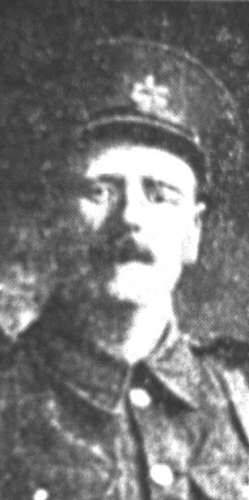
From: Bootle, Liverpool
K.I.A (110 Years this day)
Thursday 12th October 1916.
35 years old
Robert Gerrard was born in Liverpool on the 04th March 1881, the youngest son of John Gerrard and his wife Ellen (nee Partington). His parents were both born in Cheshire but were married at St.Peter’s C.of E. Church, Liverpool on the 22nd February 1858. Robert was baptised on the 1st May 1881 also at St Peter’s. His father was a general labourer but in 1881 the family were also running a fish and general provision shop. His siblings were; Mary (b 1859), William (b 1861), Thomas G (b 1862), John (b 1864), Sarah E (b 1871), Samuel (b 1873) and Eliza (b 1875).
The Gerrard family lived at Hopwood Street in 1861, 1871 and 1881.
His mother died, aged 50, in the June quarter of 1886
In 1891 the family are living at 30 Harcourt Street, Kirkdale. Robert's father, John, is a widow aged 59, a dock labourer born in Chester. He has three children in the household, all born in Liverpool; Samuel aged 18, also a dock labourer, Eliza aged 16, a housekeeper, and Robert aged 10, a scholar.
In 1901 Robert Gerrard was 21 and was working as a carter. He and his widowed father were making their home at 76 Chesnut Grove, Bootle with Robert’s married brother, Samuel Gerrard.
His father, died aged 75, in the September quarter of 1907
In 1911 Robert was aged 31, single, and still a carter but was boarding with the Darrie family at 22 Bala Street, Bootle.
He enlisted in the army at Bootle and was serving with the 17th Battalion of The King's Liverpool Regiment as Private 52829 when he was killed in action on 12/10/1916, aged 35, during the Battle of the Somme.
17th Bn War Diary: Battle of Transloy Ridge –
11-10-16 - Gird Trench/Gird Support – Battalion in front line and support trenches. British bombardment of enemy front line system commenced about midday. Hostile shelling was intermittent throughout the day.
12-10-16 - Our bombardment continued. Enemy reply weak. 2.5 p.m. Zero hour. Attack on German front line system commenced. Enemy wire was found to be uncut and attack was unsuccessful. Hostile machine gun fire was very heavy and caused many casualties. Battalion H.Q. and Support Trench were heavily shelled throughout afternoon and evening. […] During this action all communication had to be carried out by runners and carrier pigeons as all wires were being continually cut by enemy shelling.
Casualties: 5 officers killed, 5 officers wounded, 38 OR killed, about 225 OR wounded/missing etc.
Graham Maddocks, in “Liverpool Pals” p.140, adds: “As the whistle blew, the 17th Battalion left its trenches to move forward. […] As soon as the attacking waves left their trenches the enemy artillery began to register on them, and at the same time, the defending infantry commenced a murderous rain of fire. […] Although their numbers had been depleted by the British bombardment, they were trained and experienced soldiers, well dug in on high ground, and for the most part, looking out on uncut wire. As such, it was virtually impossible for them to miss the City Battalion men struggling to advance in the mud towards them. The 17th Battalion, on the left, was particularly badly hit, as its portion of No Man’s Land contained a slight rise in the ground, and as the troops emerged onto it they were silhouetted against the sky and became easy targets. Those on the left of the attack, who managed to avoid the hail of bullets and make it to the German wire, then found that it was totally uncut, and thus trapped, they too became easy targets, to be picked off almost at the enemy’s will. It was hardly surprising that, seeing the first waves being wiped out, some of the following waves turned back and made for their start lines. These lines were now packed with other waves of troops, however, and the fleeing men added to the congestion already there, and became easy prey for the German gunners. There is some evidence also, to suggest that at this stage, the British trenches were also being hit by their own heavy artillery shells which were falling short.”
A report on his death appeared in the Bootle Times on the 27th October 1916.
Private R. Gerrard (35), K.L.R., who was killed in action on October 12th, joined the Army sixteen months ago, and went to France at the end of July last. He was formerly employed by the Liverpool warehousing Co., and resided with his sister, Mrs. E. Little, at 45, Rhyl Street, Bootle.
Robert's body was not recovered from the battlefield and he is commemorated on the Thiepval Memorial to the Missing of the Somme.
The Thiepval Memorial, the Memorial to the Missing of the Somme, bears the names of more than 72,000 officers and men of the United Kingdom and South African forces who died in the Somme sector before 20 March 1918 and have no known grave. Over 90% of those commemorated died between July and November 1916.
On 01st August 1932 the Prince of Wales and the President of France inaugurated the Thiepval Memorial in Picardy. The inscription reads: “Here are recorded the names of officers and men of the British Armies who fell on the Somme battlefields between July 1915 and March 1918 but to whom the fortune of war denied the known and honoured burial given to their comrades in death.”
Soldiers Effects to sister Mrs Eliza Nicol, no Pension record found.
Robert is also commemorated locally on the Bootle Civic Memorial.
We currently have no further information on Robert Gerrard, if you have or know someone who may be able to add to the history of this soldier, please contact us.
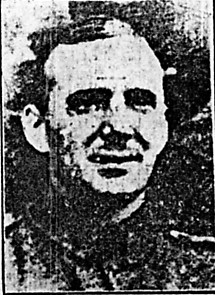
From: Newark, Notts
K.I.A (110 Years this day)
Thursday 12th October 1916.
30 years old
Archer Amos Gibbins was born on 26th December, 1885 in Newark, Nottinghamshire and baptised on 04th May, 1886 at St Peter’s Church of England Church, Liverpool, the family resided in New Brighton. His parents were Amos Gibbins who was born in Bourne Lincolnshire, and Charlotte Ann (nee Keen) who was born in Newark, Nottinghamshire. They were married on the 21st January 1883 at St Peter's Church, Liverpool, Amos was a 25 year old compositor, father Edwin, whilst Charlotte was aged 26, father John, both gave their address Duke Street.
The 1891 census shows the family living at 5 Richmond Street, New Brighton which is within sight of the Perch Rock Lighthouse. Amos is 34 and a printers manager, and Charlotte is also 34. The couple have three children – Eveline aged 7 and Archer aged 5 who were both born in Newark and 5 month old Stanley who was born in New Brighton. Also living with them are Amos’s two cousins, Leah aged 15 and 11 year old Edith.
By the time of the 1901 census the family had moved to 21 Rouen Road, Liverpool. Amos is aged 41, a printers compositor, and still recorded as married but Charlotte is not present. All three children are living at home, Eva A. 17 a pupil teacher, Archer A. 15 a commercial clerk, and Stanley G.R.
The 1911 census shows the family living at 44 Portelet Road, Liverpool. Amos is a widower, and a printer for a Liverpool Salvage Assessor, his wife Charlotte died, aged 53, in 1910. He has three children living at the address. Eveline Annie is an assistant teacher, Archer Amos is a commercial traveller in sanitary fittings and Stanley George Reginald is an insurance clerk for Reliance Marine, born in New Brighton. The family have a housekeeper called Jane Norman who was 43, and had been born in Cleator Moor, Cumberland.
Archer was educated at the Liverpool Institute from 1898.
He enlisted in Liverpool as Rifleman 4920 joining the 6th Battalion of The King's Liverpool Regiment (Liverpool Rifles). He embarked on board the SS Princess Victoria from Folkestone-Boulogne on 15th July 1916 and arrived at the 24th Infantry Base Depot on 16th July, he then proceeded to th 11th Entrenching Battalion on 02nd August and proceeded to the 17th Battalion, The King’s Liverpool Regiment as Private No 51650 on 05th August and was posted to the 17th Battalion from 05th September 1916.
He was killed in action on the 12th October 1916, aged 30, during the Battle of the Transloy Ridges which was part of the ongoing Somme Offensive.
17th Bn War Diary: Battle of Transloy Ridge –
11-10-16 - Gird Trench/Gird Support – Battalion in front line and support trenches. British bombardment of enemy front line system commenced about midday. Hostile shelling was intermittent throughout the day.
12-10-16 - Our bombardment continued. Enemy reply weak. 2.5 p.m. Zero hour. Attack on German front line system commenced. Enemy wire was found to be uncut and attack was unsuccessful. Hostile machine gun fire was very heavy and caused many casualties. Battalion H.Q. and Support Trench were heavily shelled throughout afternoon and evening. […] During this action all communication had to be carried out by runners and carrier pigeons as all wires were being continually cut by enemy shelling.
Casualties: 5 officers killed, 5 officers wounded, 38 OR killed, about 225 OR wounded/missing etc.
Graham Maddocks, in “Liverpool Pals” p.140, adds:
“As the whistle blew, the 17th Battalion left its trenches to move forward. […] As soon as the attacking waves left their trenches the enemy artillery began to register on them, and at the same time, the defending infantry commenced a murderous rain of fire. […] Although their numbers had been depleted by the British bombardment, they were trained and experienced soldiers, well dug in on high ground, and for the most part, looking out on uncut wire. As such, it was virtually impossible for them to miss the City Battalion men struggling to advance in the mud towards them. The 17th Battalion, on the left, was particularly badly hit, as its portion of No Man’s Land contained a slight rise in the ground, and as the troops emerged onto it they were silhouetted against the sky and became easy targets. Those on the left of the attack, who managed to avoid the hail of bullets and make it to the German wire, then found that it was totally uncut, and thus trapped, they too became easy targets, to be picked off almost at the enemy’s will. It was hardly surprising that, seeing the first waves being wiped out, some of the following waves turned back and made for their start lines. These lines were now packed with other waves of troops, however, and the fleeing men added to the congestion already there, and became easy prey for the German gunners. There is some evidence also, to suggest that at this stage, the British trenches were also being hit by their own heavy artillery shells which were falling short.”
Archer was initially declared as Missing in the Liverpool Daily Post on the 16th November 1916 and it was not until the following July that the family were notified that he had been killed in action.
The Liverpool Echo of Thursday 19th July 1917 carried the following notice:
KILLED IN ACTION.
GIBBINS – October 12, 1916 (previously reported missing, now reported killed in action) Rifleman Archer A. Gibbins, King's Liverpool Regiment, the beloved elder son of A. Gibbins, 44 Portelet Road, Stoneycroft, Liverpool.
Archer now rests at Warlencourt British Cemetery, France.
Warlencourt Cemetery is entirely a concentration cemetery, begun late in 1919 when graves were brought in from small cemeteries and the battlefields of Warlencourt and Le Sars. The Graves Registration form shows graves from “Le Sars 6/1, 6/2, Hexham Road, Seven Elms”.
Graves were brought in from the original cemeteries at Hexham Road (Le Sars), and Seven Elms (Flers), as well as over 3,000 British graves due to the fighting which took place around the Butte de Warlencourt from the autumn of 1916 to the spring of 1917, and again in the German advance and retreat of 1918. The cemetery now contains 3,505 Commonwealth burials and commemorations of the First World War, 1,823 of which are unidentified.
Sadly, Archer’s brother Private 355617 Stanley George Reginald Gibbins who was serving with the 1/10 Liverpool (Scottish), was also killed on the 30th November 1917. His body was not recovered or was subsequently lost as he is commemorated at Panel 4 on the Cambrai Memorial in France.
The Liverpool Echo of Friday 11th October 1918 carried the following notice:
GIBBINS – missing November 30th 1917, now reported killed, STANLEY G.R.GIBBINS (Liverpool Scottish). Also in memory of his elder brother ARCHER A.GIBBINS (1st Pals), killed on the Somme, October 12, 1916, only beloved sons of A.Gibbins, 44, Portelet Road, Stoneycroft, Liverpool.
Soldiers Effects to father Amos who also received the Pensions of both Stanley and Archer. Amos died aged 64 on the 17th June 1921, his married daughter Mrs Evelyn Shaw-Smith, 44 Hampstead Rd received the pensions after his death.
Archer is commemorated in the Hall of Remembrance, Liverpool Town Hall at Panel 47 Left and his brother, Stanley, on Panels 48 and 50.
Grateful thanks are extended to Kevin Shannon the author of the book The Liverpool Rifles for providing details of Archer's service with the 6th Rifles.
We currently have no further information on Archer Amos Gibbins, If you have or know someone who may be able to add to the history of this soldier, please contact us.
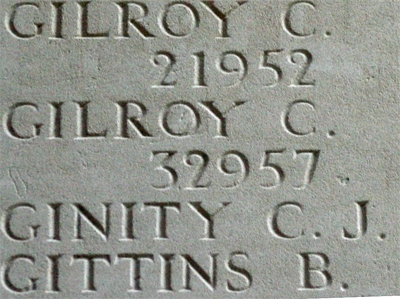
From: Liverpool
K.I.A (110 Years this day)
Thursday 12th October 1916.
19 years old
Benjamin Gittins was born on 02nd October, 1896 in Liverpool and was baptised 22nd November, 1896 in St Chrysostom, Church of England, Church, Everton. He was the son of Benjamin Gittins and his wife Martha Margaret (nee Drayton) who were married in St Timothys Church Everton on the 24th September 1882. The family were living at 129 Whitefield Road, Everton at the time of Benjamin’s baptism. Benjamin senior was a publican and was born in West Felton, Shropshire and his wife Martha in Shrewsbury.
The 1901 Census shows the family were living at 129 Whitefield Road, Everton.
Benjamin senior is 43 and is described as a Licensed Victualler, his wife Martha Margaret is 44 years old. They have three children living with them – Florence R. aged 17, Mary is aged 6, and Benjamin aged 4.
The 1911 Census shows the family living at 2 Pembroke Place, Liverpool.
Benjamin senior is 53 and is described as a Licensed Victualler, his wife Martha Margaret is also 53 years old(married 28 years 10 children 6 still alive). They have three children living with them - Mary is aged 16 and is assisting her mother, Benjamin aged 14 is a student and Winifred Grace was 9 and at school. All the children were born in Walton, Liverpool. The couple had an older daughter called Florence who was born in 1883 and who was married. Sadly only 4 of their 10 children were alive, 6 children had died: John born 1885 who died aged 9, Benjamin George b.1889 died aged 5, Agnes b.1891 died aged 3, Sarah b.1886 died aged 1, William Henry b.1892 died aged 16 months and Elizabeth Elsie b.1899 died aged 9 months.
1916 was a tragic year for the family, both Benjamin’s parents died – his father was aged 58 and buried in February and his mother aged 59 in May.
Benjamin enlisted in Liverpool and was serving in the 18th Battalion, The King’s Liverpool Regiment as Private No 34309 when he was killed in action on the 12th October 1916 aged 19 during the Battle of the Transloy Ridges which was part of the ongoing Somme Offensive.
He has no known grave and is commemorated on the Thiepval Memorial to the Missing of the Somme, France.
The Thiepval Memorial, the Memorial to the Missing of the Somme, bears the names of more than 72,000 officers and men of the United Kingdom and South African forces who died in the Somme sector before 20 March 1918 and have no known grave. Over 90% of those commemorated died between July and November 1916.
On 01st August 1932 the Prince of Wales and the President of France inaugurated the Thiepval Memorial in Picardy. The inscription reads: “Here are recorded the names of officers and men of the British Armies who fell on the Somme battlefields between July 1915 and March 1918 but to whom the fortune of war denied the known and honoured burial given to their comrades in death.”
Reported killed in the Liverpool Daily Post 11th Nov 1916
King’s (Liverpool Regt.) - Gittens(sic), 34309, B.;
He is also commemorated on the Liverpool Cotton Association War Memorial.
Soldiers Effects to sisters Florence R. Blow, Mary and Winifred G., no Pension record found.
We currently have no further information on Benjamin Gittins, If you have or know someone who may be able to add to the history of this soldier, please contact us.
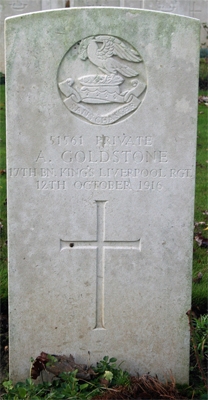
From: Montreal, Canada
K.I.A (110 Years this day)
Thursday 12th October 1916.
The identity of Pte Abraham Goldstone is at present unknown as there are few clues:- SDGW state he was born in Montreal, Canada and resided in Liverpool, this resource is often incorrect.
However, there are two possible passenger records for Abraham Goldstone:-
June 1900 there is a 22 year old Abraham Goldstone, born Germany, who sailed from Liverpool for Quebec aboard the SS Vancouver.
August 1906 there is a 28 year old Abram Goldstone, single and a Tailor, who sailed for Quebec aboard the SS Tunisian.
He enlisted in Liverpool and served initially with the 1/6th Battalion of The King’s Liverpool Regiment as Private 3752. He embarked from Folkestone on 15th July 1916 on board the S.S. Princess Victoria. He joined 24 Infantry Base Depot on arrival on 16th July before joining 11 Entrenching Battalion on 02nd August and was attached to 17th Battalion K.L.R. on 05th August 1916. He was given 7 days Field Punishment No.1 for not complying with an order on 09th August 1916 and was posted to C Company of the 17th Battalion K.L.R. from 05th September 1916 as Private 51561.
He was initially reported as wounded and missing in action on the 12th October 1916 during the Battle of the Transloy Ridges which was part of the ongoing Somme Offensive. His war gratuity of £4-10 suggests that he enlisted in June or July of 1915. His medal roll shows service only with 17th Battalion.
His death was subsequently assumed to have taken place on that date.
17th Bn War Diary: Battle of Transloy Ridge –
11-10-16 - Gird Trench/Gird Support – Battalion in front line and support trenches. British bombardment of enemy front line system commenced about midday. Hostile shelling was intermittent throughout the day.
12-10-16 - Our bombardment continued. Enemy reply weak. 2.5 p.m. Zero hour. Attack on German front line system commenced. Enemy wire was found to be uncut and attack was unsuccessful. Hostile machine gun fire was very heavy and caused many casualties. Battalion H.Q. and Support Trench were heavily shelled throughout afternoon and evening. […] During this action all communication had to be carried out by runners and carrier pigeons as all wires were being continually cut by enemy shelling.
Casualties: 5 officers killed, 5 officers wounded, 38 OR killed, about 225 OR wounded/missing etc.
Graham Maddocks, in “Liverpool Pals” p.140, adds:
“As the whistle blew, the 17th Battalion left its trenches to move forward. […] As soon as the attacking waves left their trenches the enemy artillery began to register on them, and at the same time, the defending infantry commenced a murderous rain of fire. […] Although their numbers had been depleted by the British bombardment, they were trained and experienced soldiers, well dug in on high ground, and for the most part, looking out on uncut wire. As such, it was virtually impossible for them to miss the City Battalion men struggling to advance in the mud towards them. The 17th Battalion, on the left, was particularly badly hit, as its portion of No Man’s Land contained a slight rise in the ground, and as the troops emerged onto it they were silhouetted against the sky and became easy targets. Those on the left of the attack, who managed to avoid the hail of bullets and make it to the German wire, then found that it was totally uncut, and thus trapped, they too became easy targets, to be picked off almost at the enemy’s will. It was hardly surprising that, seeing the first waves being wiped out, some of the following waves turned back and made for their start lines. These lines were now packed with other waves of troops, however, and the fleeing men added to the congestion already there, and became easy prey for the German gunners. There is some evidence also, to suggest that at this stage, the British trenches were also being hit by their own heavy artillery shells which were falling short.”
Abraham now rests at Warlencourt British Cemetery, France.
Warlencourt Cemetery is entirely a concentration cemetery, begun late in 1919 when graves were brought in from small cemeteries and the battlefields of Warlencourt and Le Sars. The Graves Registration form shows graves from “Le Sars 6/1, 6/2, Hexham Road, Seven Elms”.
Graves were brought in from the original cemeteries at Hexham Road (Le Sars), and Seven Elms (Flers), as well as over 3,000 British graves due to the fighting which took place around the Butte de Warlencourt from the autumn of 1916 to the spring of 1917, and again in the German advance and retreat of 1918. The cemetery now contains 3,505 Commonwealth burials and commemorations of the First World War, 1,823 of which are unidentified.
His death was subsequently assumed to have taken place on 12th October 1916 as reported in the Liverpool Daily Post on 04th August 1917:
PREVIOUSLY REPORTED WOUNDED & MISSING, NOW
REPORTED KILLED.
Liverpool R. - Goldstone, 51561, A;
Soldiers Effects went to cousins Bessie and Rosie Goldwater. No Pension record found.
His medals were returned for disposal (Medal Roll).
Bessie Goldwater appears on the Liverpool Electoral Roll from 1918-1920 at 44 Mill Street, Toxteth and 87 Oxford Street, Liverpool. She is not recorded on the 1921 census but we are fairly sure she sailed from Liverpool on the 13th January 1920 aboard the S.S. Carmania bound for New York. She was married, aged 51, and her last place of residence was shown as Liverpool. Her next of kin contact was her mother "Ester" Goldstone of 273 New Bury Road, Manchester. There are three other Goldwater's sailing with her, Myer, (14), Lionel, (13) and Abram, (11), all last resident Liverpool and using the same next of kin contact. All four were heading for Los Angeles, California.
Ester Goldstone is probably the 63 year old "Esther" Goldstone, born Poland, who was recorded living with her husband of 45 years, Jacob, at 15 Moreton Street, Cheetham, Manchester on the 1911 Census of England & Wales. Jacob was also aged 63 and born Poland and was working as a Tailor. The union has produced 12 children, all then still alive.
Bessie Goldwater on the Census of England & Wales:-
1891. Aged 23, born Poland and married to Joseph Samuel Goldwater, aged 29, a Tailor, born Poland. The couple were recorded in one of the two households at 132 Moreton Street, Cheetham Manchester. Living with them are their children Harry, (4, born Manchester), Lily, (2) and Ruby, (8) months, both born Ireland.
1901. Age 32, born "London" and married to Joseph Goldwater, (39, Master Tailor, born Poland) and living at 29 Ashton Street, Liverpool. In the household are children Harry, (14, Tailor, born Manchester), Lily, (12), Rebecca, (10), Rosa, (8), Adelaide, (6), Dora, (5) - all born Ireland, Gertrude, (3), Fanny, (1) and David, (6 months) - all three born Liverpool. The household also runs to a live in servant.
1911. Aged 42, born Germany and married to Joseph Goldwater, (50, Tailor, born Germany), for 25 years. The union has produced 14 children, of which 12 were then still alive. The family were living at 38 Stafford Street, Liverpool. Children still single and living at home are Ida, (17, Tailoress), Dora, (15) - both born Cork, Ireland, Gertie, (13), Fanny, (11) and David, (10) - all three born Liverpool, and Myer, (7, born Cork), Lionel, (6) and Aby, (male, 3) both born Liverpool.
Bessie’s family at 273 Bury New Road in 1921 are:-
Abraham Goldstone b.1887 Manchester
Esther Goldstone b.1850 Poland
Samuel Goldstone b.1877 Manchester
Abraham is mentioned in the 'British Jewry Roll of Honour, 1914-1918' and also remembered in the Canadian First World War Book of Remembrance.
Grateful thanks are extended to Kevin Shannon the author of the book The Liverpool Rifles for providing details of Abraham's service with the 6th Rifles.
We currently have no further information on Abraham Goldstone, If you have or know someone who may be able to add to the history of this soldier, please contact us.
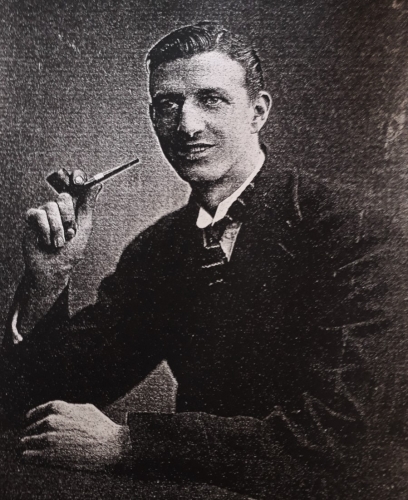
From: Shrewsbury, Salop
K.I.A (110 Years this day)
Thursday 12th October 1916.
36 years old
Joseph was born in 1880 in Shrewsbury the son of Joseph Thomas Goodwin and his wife Elizabeth (nee Warburton) who were married in Birmingham in 1877.
The 1881 Census shows the family are living at Darlington Cottages, Grove Lane, Smethwick. Joseph's father Joseph Thomas is a 24 year old engine fitter, born in Warwick, his wife also 24 was born in Stafford. They live together with their two children Elizabeth aged 3 and Joseph aged 1.
By 1891 the family have moved to 30 Arthur Street, Litherland where Joseph Thomas is now employed as a millswright. He lives with his wife and 4 children, the additions being Alice and Benjamin. Also present is his father Joseph a 59 year old turner.
In the 1901 Census the family are living at 34 Caradoc Road, Seaforth. His father, Joseph, is aged 44, as a marine engine fitter, mother Elizabeth is aged 44 a dressmaker. Joseph is now 21 and a match factory labourer, Alice is 18 at home, Benjamin 17 is a bicycle repairs labourer, and Jack is 13 and at school.There is a further addition to the family, another son John now 3 years of age.
By 1911 the family have moved to 12 Church Street, Bootle. His father, Joseph, is aged 55, and employed as an engine fitter in shipbuilding, his mother ,Elizabeth, is aged 54. They advise that they have been married for 24 years and have had 6 children, 5 of whom have survived. Joseph, now 31, is employed as an engine fitter in shipbuilding, Alice is 24, and Jack is 13 and at school. Also in the household now are his eldest sister Elizabeth, together with her husband Wyndham Large and their 3 children; Wyndham Jr, Annie and Leslie.
Joseph enlisted in Seaforth and was serving with the 17th Battalion of The King's Liverpool Regiment as Private 51905 when he was killed in action on 12th October 1916 during the fighting at Transloy Ridges. He was 36 years of age.
17th Bn War Diary: Battle of Transloy Ridge –
11-10-16 - Gird Trench/Gird Support – Battalion in front line and support trenches. British bombardment of enemy front line system commenced about midday. Hostile shelling was intermittent throughout the day.
12-10-16 - Our bombardment continued. Enemy reply weak. 2.5 p.m. Zero hour. Attack on German front line system commenced. Enemy wire was found to be uncut and attack was unsuccessful. Hostile machine gun fire was very heavy and caused many casualties. Battalion H.Q. and Support Trench were heavily shelled throughout afternoon and evening. […] During this action all communication had to be carried out by runners and carrier pigeons as all wires were being continually cut by enemy shelling.
Casualties: 5 officers killed, 5 officers wounded, 38 OR killed, about 225 OR wounded/missing etc.
Graham Maddocks, in “Liverpool Pals” p.140, adds: “As the whistle blew, the 17th Battalion left its trenches to move forward. […] As soon as the attacking waves left their trenches the enemy artillery began to register on them, and at the same time, the defending infantry commenced a murderous rain of fire. […] Although their numbers had been depleted by the British bombardment, they were trained and experienced soldiers, well dug in on high ground, and for the most part, looking out on uncut wire. As such, it was virtually impossible for them to miss the City Battalion men struggling to advance in the mud towards them. The 17th Battalion, on the left, was particularly badly hit, as its portion of No Man’s Land contained a slight rise in the ground, and as the troops emerged onto it they were silhouetted against the sky and became easy targets. Those on the left of the attack, who managed to avoid the hail of bullets and make it to the German wire, then found that it was totally uncut, and thus trapped, they too became easy targets, to be picked off almost at the enemy’s will. It was hardly surprising that, seeing the first waves being wiped out, some of the following waves turned back and made for their start lines. These lines were now packed with other waves of troops, however, and the fleeing men added to the congestion already there, and became easy prey for the German gunners. There is some evidence also, to suggest that at this stage, the British trenches were also being hit by their own heavy artillery shells which were falling short.”
He was reported missing in the Liverpool Daily Post on 16th November 1916.
King’s (Liverpool Regiment) - Goodwin, 51905, J.;
Joseph's body was not recovered from the battlefield or was subsequently lost as his name is now recorded on the Thiepval Memorial to the Missing.
The Thiepval Memorial, the Memorial to the Missing of the Somme, bears the names of more than 72,000 officers and men of the United Kingdom and South African forces who died in the Somme sector before 20 March 1918 and have no known grave. Over 90% of those commemorated died between July and November 1916.
On 01st August 1932 the Prince of Wales and the President of France inaugurated the Thiepval Memorial in Picardy. The inscription reads: “Here are recorded the names of officers and men of the British Armies who fell on the Somme battlefields between July 1915 and March 1918 but to whom the fortune of war denied the known and honoured burial given to their comrades in death.”
Soldiers Effects to father Joseph T., Pension to mother Elizabeth, 14 Church Rd, Seaforth.
His father died, aged 65, in the March quarter of 1922.
His mother died, in the December quarter of 1927.
We currently have no further information on Joseph Goodwin, if you have or know someone who may be able to add to the history of this soldier, please contact us.
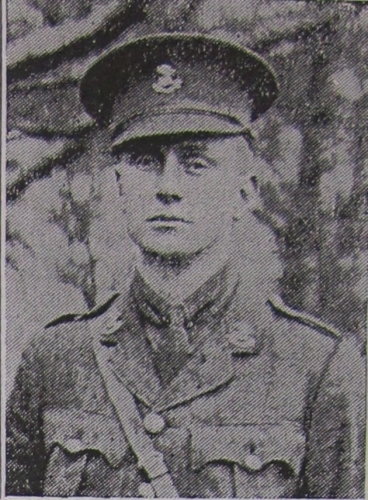
From: Southport, Lancs
K.I.A (110 Years this day)
Thursday 12th October 1916.
19 years old
Gerald Lismore Grennan was born in 1897 the son of Edward Henry Grennan and his wife Mary (Watson). His parents married on 23rd February 1878 at Girgaum, Bombay, whilst his father was a member of the Bombay Police Service. Superintendent Grennan was foremost in opening career paths for literate Indians of the upper classes into the Police. According to the 1921 census his father was born in Derbyshire around 1849, and his mother in Bellary, India in 1858.
The Madras Times of 02nd January 1902 featured details of the wedding of Gerald's sister, Mary Wilhemina.
A WEDDING IN BOMBAY —The wedding solemnised at the Bowen Memorial Church, Apollo Bunder, of Mary Wilhelmina, second daughter of Mr. E. H. Grennan, Superintendent of Police, and Alfred George Newell, M.D., the third son of Captain W. Newell, late of the P. and 0. Dockyard, Bombay. The Church was prettily decorated for the occasion with palms and flowers. The bride, who was given away by her father, was attended by Miss R. Grennan and Miss N. Crummy, as bridesmaids.
The Homeward Mail from India, China and the East edition of 01st December 1906 featured another sisters weeding, this time Ruth:
Nov. 14, at Apollo Bunder, H. Whitehead to Ruth Constance, daughter of E. H. Grennan, late superintendent of police, Bombay.
His brother George Condict Parkman Grennan has a service record, he enlisted on the 18th December 1908 in Bristol as Pte 3219 The Rifle Brigade, aged 21 born in Bombay. He gave his family as:-
Father Edward Henry Grennan, 2 Northumberland Road(should be Street), Canton, Cardiff.
Brother Edward Watson Grennan, Bombay, India.
Brother William Charles Grennan, P.O. Vernon, British Columbia.
Brother Gerald Grennan, 2 Northumberland Rd, Canton, Cardiff.
At the age of 18 George immigrated to Canada arriving on 26 May 1906. He spent two years in Kelowna, B.C. before returning to England. George progressed to CSM 24338 KLR, WO II, then Lt Indian Army.
His brother, William Charles Grennan, who joined him in BC in 1907, stayed in Canada and enlisted with the CEF (#2683718) in 1918.
His father, Edward Henry, appears on the Lancashire Electoral Roll 1912-14, most probably at 21 Chester Road, Southport.
Gerald was educated at Southport Grammar School. He left from the port of Liverpool on the 02nd May, 1914 aboard the Canada, a ship of the White Star- Dominion Line which docked in Montreal. The passenger list has him aged 17 and occupation joiner. He was working in a bank before he returned to this country on the outbreak of war.
He enlisted as Private 17589 joining the 19th Battalion (“Pals”) of The King's Liverpool Regiment on September 03rd, 1914. Two days later he received a commission, and after training at Woolwich, Cheshire and Knowsley and went on Active service in April 1915. He joined the colours aged 17 and was over 19 at the time of his death.
His brother was wounded and reported in theLiverpool Daily Post on 11th September 1916:
King’s (Liverpools) - Grennan, 24338, Sgt G. C. (Southport);
Gerald was serving in the 20th Battalion, The King’s Liverpool Regiment as a Second Lieutenant when he was killed in action on the 12th October 1916, aged 19, during the Battle of the Transloy Ridges which was part of the ongoing Somme Offensive.
According to the 20th Bn War Diary, on 10th October 1916 the battalion marched from Dernancourt via Mametz to Bazentin Le Grand where it bivouacked for the night. The next day the battalion moved up to site for assembly trenches, arriving about 11 p.m., where it dug in two good trenches, Nos.1 and 2 Coys front and Nos.3 and 4 Coys in rear.
From the War Diary:
Near Eaucourt L’Abbaye. 12/10/1916. The 4th British and 6th French armies continued the attack. Zero 2.5 p.m. The whole XVth Corps attacked […] The attack of 89th Inf Bde was carried out with 2nd Bn Bedf Regt on right, 17th Bn KLR on left, 20th Bn KLR in support, 19th Bn KLR in reserve. Battalions attacked in four waves. On the departure of the attacking battalions Nos. 1 and 2 companies advanced, each in two waves, to garrison the front line trench vacated by 2nd Bn Bedf Regt on right and 17th KLR on left. On Nos 1 and 2 Coys vacating front assembly trench, it was occupied by two platoons of Nos. 3 and 4 Coys respectively, from rear assembly trench. As the assaulting waves left their trenches they were met by intense machine gun fire, especially on our left. The enemy also opened heavy barrages on our front support and assembly trenches. […] Capt. H. Beckett, commanding No.1 company, reached the front line with few casualties, but Lieut R.D. Paterson leading No.2 company was killed. His company also had few casualties. The assaulting battalions were held up by very heavy machine gun fire, and made little progress. […] At 4.20 p.m. two platoons, No.4 Coy, under Cpl Brighouse, were sent up to reinforce the left, and No.3 Coy under Cpl Sutton followed at 4.45 p.m. Battalion HQ moved up to front line at 4.55 and remaining two platoons of No.4 Coy moved up to join Cpl Brighouse.
Casualties during action:
Officers – Killed Lieut. R.D. Paterson, 2nd Lieut G.L. Grennan, Wounded – 2nd Lieuts A.E. Griffin, L.E. Mclean Hayes, C. Buttemer, Wounded Cpl g. Brighouse.
Other Ranks killed – 20.
It had rained incessantly at the beginning of October 1916 and the ground was full of mud. In his book ‘The Liverpool Pals’ Graham Maddocks describes the 12th of October:
It was obvious that the Germans knew an attack was coming and from which direction it would be mounted. On the evening of the 11th the 20th Battalion moved up the line and dug two deep assembly trenches behind the 17th Battalion’s position for the attack the next day. The 19th Battalion also moved into its reserve positions known as Flers Trench. Although the rain has stopped, the ground was like a morass, with all the natural vegetation destroyed, it was difficult to tell exactly where the objectives lay. On the afternoon of the 12th at exactly 2.05pm, the attack began along the whole Corps line, covered by the local batteries of the Royal Field Artillery which still had line of sight. As the whistles blew, the 17th Battalion left its trenches to move forwards, at the same time No.1 and 2 Companies of the 20th Battalion moved forward and occupied the trenches vacated by the 17th. As they too went over the top, No.3 and 4 Companies took their place and waited in their turn to follow. No.2 and 3 Companies of the 19th Battalion moved up to occupy the assembly trenches dug the previous night by the 20th.
As soon as the attacking waves left their trenches the enemy artillery began to register on them and at the same time the defending infantry commenced a murderous rain of fire. Those German regiments were trained and experienced soldiers, well dug in on high ground, and for the most part, looking out on uncut wire. As such it was virtually impossible for them to miss the City Battalion men struggling to advance in the mud towards them.
Brigadier-General F.C.Stanley wrote that the Battalions were also suffering casualties due to the short shooting of the British heavy artillery fire. “I know from practical experience that they were our own guns which were shooting, and which were causing us quite a considerable number of casualties. The fault lay at that time from the fact that the heavy gunners would not send their FOO’s (Forward Observation Officers) far enough forward, but were content to observe us from right back”
Some ground was gained that day, about 150 yards, the 20th Battalion were not relieved until 24 hours later causing the men to endure another day and night in the front line trench.
Details of the circumstances surrounding his death appeared in the local press:
"Second-Lieutenant Gerald L. Grennan, Liverpool Regiment was killed on October 12. He was shot by a sniper while cheering his men. His brother officers and Colonel write deploring the loss of a promising officer who died a soldiers deathand "behaved most gallantly throughout the day". The youngest son of Edward Grennan (retired from the Bombay Police Service), he was educated at Southport Grammar School. At the outbreak of war he returned from Canada and joined the Liverpool Regiment in which he got his commission. His brother is in the same regiment".
From the Southport Visiter dated 24th October 1916:
Lieutenant Grennan was the fourth son of Mr & Mrs Grennan, 21 Chester Rd. A letter from one of his fellow officer’s states;
"You will by now have heard of your son's death in action. He was killed by a sniper on the morning of the 12th, and died instantly. We his brother officers of No 3 Company, wish to covey to you our feelings of deep sympathy. We all loved him. There was not a more popular officer in the battalion, amongst the men. He loved his men and always considered their welfare, and it was while he was going round the trenches talking to them that he was shot. We buried him after dark behind the lines. It is difficult to express in words what we feel in our hearts. We can only assure you once more that with you we mourn his loss, yet at the same time, we are proud to have been associated with him."
Liverpool Echo 25th Oct 1916
OFFICER KILLED BY SNIPER.
Second-Lieutenant Gerald Lismore Grennan, K.L.R., who was killed by a sniper, was the fourth son of Mr. and Mrs. Grennan, 21, Chester-road, Southport. He was shot in the head and died instantly. Three months before the commencement of the war he went to Canada take up a banking position. He returned to England in September and joined the King's Liverpools, receiving commission two days after enlisting. He was then only seventeen years of age.
An official telegram was received from the War Office, and on Sunday came a letter from the Commanding Officer, who wrote:
“It is with deepest regret that I write to inform you of the death of your son, Second-Lieut. Grennan of this battalion, who was killed instantly on the 12th and was buried on the field of battle. He was a most Promising Officer, and will be much missed by us all. Please accept our deep sympathy in your sorrow. Your son died a soldier’s death, and had behaved himself gallantly throughout the whole day. We all deplore his loss.”
Sergeant-Major George Grennan, a brother of the deceased officer who is serving with a battalion of the King’s (Liverpool Regiment) at the front, heard of his brother’s death, and in a letter to his parents he said:
“Our brigade made an attack on the German lines on the 12th and it was then that Gerald was killed. I have come through all right myself. I cannot describe to you the horror and scenes of devastation that surround us. We have been in the trenches for six days, and are worn and tired out. I was only talking to Gerald the night before the attack and bid him good-bye. There is one consolation—he died doing his duty, and is now lying in a soldier’s grave on the battlefield.”
Gerald's grave referred to in the above letters must have been destroyed on the later fighting as has no known grave and is commemorated on the Thiepval Memoiral to the Missing of the Somme, France.
The Thiepval Memorial, the Memorial to the Missing of the Somme, bears the names of more than 72,000 officers and men of the United Kingdom and South African forces who died in the Somme sector before 20 March 1918 and have no known grave. Over 90% of those commemorated died between July and November 1916.
On 01st August 1932 the Prince of Wales and the President of France inaugurated the Thiepval Memorial in Picardy. The inscription reads: “Here are recorded the names of officers and men of the British Armies who fell on the Somme battlefields between July 1915 and March 1918 but to whom the fortune of war denied the known and honoured burial given to their comrades in death.”
Soldiers Effects to father Edward, no Pension record found.
Gerald is also commemorated on the following Memorials:
Hall of Remembrance, Liverpool Town Hall, Panel 49
Southport Civic Memorial.
His father died, aged 79, on the 02nd August 1928 in St Leonards, Sussex. He was buried on the 27th August 1928 at St Mary Magdalen.
Probate:-
GRENNAN Edward Henry of 53 Pevensey Road, St Leonards-on-sea died 2 August 1928 Probate Lewes 27 August to Mary Grennan widow. Effects £491 18s 6d. Resworn £515 9s 11d.
There are no UK death records for his mother, however she may have returned to Bombay on the 28th September 1932.
We currently have no further information on Gerald Lismore Grennan, If you have or know someone who may be able to add to the history of this soldier, please contact us.
From: Ormskirk, Lancs
K.I.A (110 Years this day)
Thursday 12th October 1916.
30 years old
William Henry Griffiths was born December 1896 at Ormskirk and was the son of Edward Griffiths and his wife Alice (nee Poole) who were married on the 14th July 1889 at St Peter's Church, Liverpool. Edward was a 20 year old butcher of Duke St, father George, whilst Alice was also 20 of Wood St, father James.
The 1901 Census shows the family living at 47, Mill Street, Ormskirk. His father, Edward, is aged 30, born in West Derby, Liverpool in 1871 is a butcher, his mother, Alice, is aged 31, born in West Derby, Liverpool in 1870 with no occupation listed. They have three children declared in teh household; James aged 8, born 1893 in West Derby, Henrietta aged 6, born 1895 and William Henry aged 4, born 1897 and both were born in Ormskirk.
The 1911 Census shows the family living at 37, Wigan Road, Ormskirk. His father, Edward, is now aged 40, and is still employed as a butcher, his wife Alice is aged 41, no occupation listed and they have been married for twenty years and have had nine children. James aged 18, is a plumber, Henrietta aged 16,is a domestic, William Henry aged 14, is an errand boy for a pork butcher, they have had six further children all of whom were born in Ormskirk, Eliza Meary aged 12, born 1899, Emily aged 9 born 1902, Ellen aged 7 born 1904, Thomas aged 5, born 1906 and Evelyn aged 3, born 1908 are all at school and John is aged 1, born 1910.
He enlisted in Ormskirk and was serving in the 17th Battalion, The King’s Liverpool Regiment as Private No 51932 when he was killed in action on the 12th October 1916 aged 19 during the Battle of the Transloy Ridges which was part of the ongoing Somme Offensive.
17th Bn War Diary: Battle of Transloy Ridge –
11-10-16 - Gird Trench/Gird Support – Battalion in front line and support trenches. British bombardment of enemy front line system commenced about midday. Hostile shelling was intermittent throughout the day.
12-10-16 - Our bombardment continued. Enemy reply weak. 2.5 p.m. Zero hour. Attack on German front line system commenced. Enemy wire was found to be uncut and attack was unsuccessful. Hostile machine gun fire was very heavy and caused many casualties. Battalion H.Q. and Support Trench were heavily shelled throughout afternoon and evening. […] During this action all communication had to be carried out by runners and carrier pigeons as all wires were being continually cut by enemy shelling.
Casualties: 5 officers killed, 5 officers wounded, 38 OR killed, about 225 OR wounded/missing etc.
Graham Maddocks, in “Liverpool Pals” p.140, adds: “As the whistle blew, the 17th Battalion left its trenches to move forward. […] As soon as the attacking waves left their trenches the enemy artillery began to register on them, and at the same time, the defending infantry commenced a murderous rain of fire. […] Although their numbers had been depleted by the British bombardment, they were trained and experienced soldiers, well dug in on high ground, and for the most part, looking out on uncut wire. As such, it was virtually impossible for them to miss the City Battalion men struggling to advance in the mud towards them. The 17th Battalion, on the left, was particularly badly hit, as its portion of No Man’s Land contained a slight rise in the ground, and as the troops emerged onto it they were silhouetted against the sky and became easy targets. Those on the left of the attack, who managed to avoid the hail of bullets and make it to the German wire, then found that it was totally uncut, and thus trapped, they too became easy targets, to be picked off almost at the enemy’s will. It was hardly surprising that, seeing the first waves being wiped out, some of the following waves turned back and made for their start lines. These lines were now packed with other waves of troops, however, and the fleeing men added to the congestion already there, and became easy prey for the German gunners. There is some evidence also, to suggest that at this stage, the British trenches were also being hit by their own heavy artillery shells which were falling short.”
The Ormskirk Advertiser of 02nd November 1916 carried details of a Memorial service:
MEMORIAL SERVICE AT THE PARISH CHURCH
Last evening another very impressive service was held at the Ormskirk Parish Church in memory of five local soldiers who have recently fallen in war, viz., Sergeant James Galland, Private William Griffiths, Private Peter Crompton, and Private Thomas Foster, of the King's Liverpool Regiment, and Sergeant Albert Fairhurst of the Canadian Rifles. There was a good congregation including a number of the relatives and friends of the deceased. The vicar, the Reverend C.E Haynes, officiated, assisted by the Rev. H Flenley, (curate), the former giving the most sympathetic address. Mr John Ball, the the organist played " Blessed are the departed " and " O rest in the Lord " at the beginning and the close of the service. Appropriate hymns also being sung. About 100 members of the Ormskirk Volunteer Training Corps where present, in charge of Ms J.T. Whittle, the company commandant.
He was reported killed in the Liverpool Daily Post on 20th November 1916.
King’s (Liverpool Regiment) - Griffiths, 51932, W.D.(sic) (Ormskirk);
William Henry's body was not recovered or was subsequently lost as he has no known grave and is commemorated on the Thiepval Memorial, France.
The Thiepval Memorial, the Memorial to the Missing of the Somme, bears the names of more than 72,000 officers and men of the United Kingdom and South African forces who died in the Somme sector before 20 March 1918 and have no known grave. Over 90% of those commemorated died between July and November 1916.
On 01st August 1932 the Prince of Wales and the President of France inaugurated the Thiepval Memorial in Picardy. The inscription reads: “Here are recorded the names of officers and men of the British Armies who fell on the Somme battlefields between July 1915 and March 1918 but to whom the fortune of war denied the known and honoured burial given to their comrades in death.”
Soldiers Effects and Pension to mother Alice.
His father died, aged 64, in the March quarter of 1935.
His mother died aged 72 in the December quarter of 1941.
We currently have no further information on William Henry Griffiths, If you have or know someone who may be able to add to the history of this soldier, please contact us.
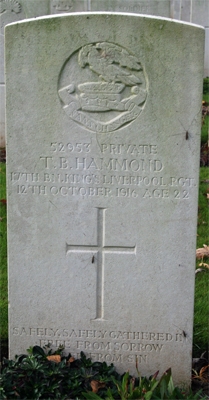
From: Alton, Hants
K.I.A (110 Years this day)
Thursday 12th October 1916.
22 years old
Thomas Bertram Hammond was born on the 16th February 1895 at Alton, Hants and resided in Romford, Essex and was the son of Alfred James Hammond and his wife Kate Blanche (nee Pragnell) who married in 1891 in Stockbridge, Hampshire. He was baptised on the 30th June 1895 at St Nicholas' Church, Guildford, parents address Walnut Tree Close.
The 1901 Census shows the family living on Queen Street, Great Warley, Hampshire. His father Alfred James is aged 36, occupation Plumber (houses) and born in Alton, his wife Kate Blanche aged 36, born in Salisbury, Wiltshire. Children Edgar aged 7 born Alton, Bertram aged 6 born Alton, Bernard aged 4 born Woking, Winifred aged 3, born Woking, Daisy aged 1, born Teddington, Middlesex.
The 1911 Census shows the family living at, 22 Chase Road Brentwood Essex. His father Alfred James is aged 45, born 1866 and occupation Painter (Houses) and born in Brentwood, Essex, his wife Kate Blanche aged 45, born 1866 also in Brentwood as were all of their six children. Thomas Bertram is aged 16, born 1895 and Herbert Bernard aged 14, born 1897 are both Errand Boys. Winifred aged 13, born 1898, Daisy aged 11, born 1900 and Wilfred Cecil aged 6, born 1905 are at school and Leslie Cyril aged 1 born 1910.
Thomas joined the Great Eastern Railway in July 1914, working at Romford Station as a goods porter until he enlisted in November 1915, with the Essex Regiment. His father also fought in the war, and 2 of his brothers also enlisted with one receiving the Distinguished Conduct Medal.
He enlisted in Ilford, Essex and served originally as Private 23570, Essex Regiment. Following a transfer he was serving in the 17th Battalion of The King’s Liverpool Regiment as Private No 52953 when he was killed in action on the 12th October 1916, aged 22, during the Battle of the Transloy Ridges which was part of the ongoing Somme Offensive.
17th Bn War Diary: Battle of Transloy Ridge –
11-10-16 - Gird Trench/Gird Support – Battalion in front line and support trenches. British bombardment of enemy front line system commenced about midday. Hostile shelling was intermittent throughout the day.
12-10-16 - Our bombardment continued. Enemy reply weak. 2.5 p.m. Zero hour. Attack on German front line system commenced. Enemy wire was found to be uncut and attack was unsuccessful. Hostile machine gun fire was very heavy and caused many casualties. Battalion H.Q. and Support Trench were heavily shelled throughout afternoon and evening. […] During this action all communication had to be carried out by runners and carrier pigeons as all wires were being continually cut by enemy shelling.
Casualties: 5 officers killed, 5 officers wounded, 38 OR killed, about 225 OR wounded/missing etc.
Graham Maddocks, in “Liverpool Pals” p.140, adds:
“As the whistle blew, the 17th Battalion left its trenches to move forward. […] As soon as the attacking waves left their trenches the enemy artillery began to register on them, and at the same time, the defending infantry commenced a murderous rain of fire. […] Although their numbers had been depleted by the British bombardment, they were trained and experienced soldiers, well dug in on high ground, and for the most part, looking out on uncut wire. As such, it was virtually impossible for them to miss the City Battalion men struggling to advance in the mud towards them. The 17th Battalion, on the left, was particularly badly hit, as its portion of No Man’s Land contained a slight rise in the ground, and as the troops emerged onto it they were silhouetted against the sky and became easy targets. Those on the left of the attack, who managed to avoid the hail of bullets and make it to the German wire, then found that it was totally uncut, and thus trapped, they too became easy targets, to be picked off almost at the enemy’s will. It was hardly surprising that, seeing the first waves being wiped out, some of the following waves turned back and made for their start lines. These lines were now packed with other waves of troops, however, and the fleeing men added to the congestion already there, and became easy prey for the German gunners. There is some evidence also, to suggest that at this stage, the British trenches were also being hit by their own heavy artillery shells which were falling short.”
4th November 1916:
The War Office have officially notified Pt. J Hammond, Irish Guards, and Mrs. Hammond, of 37 Vine Street, Romford, of the death of their son Pt, Thomas Bertram Hammond, Liverpool Regt, who was killed in action in France on Oct. 12. Pt. T. B. Hammond was 22 years of age, and was formerly in the Essex Regt.
Thomas now rests at Warlencourt British Cemetery, France. The Inscription on his headstone reads:
“SAFELY,SAFELY GATHERED IN FREE FROM SORROW FREE FROM SIN”
Warlencourt Cemetery is entirely a concentration cemetery, begun late in 1919 when graves were brought in from small cemeteries and the battlefields of Warlencourt and Le Sars. The Graves Registration form shows graves from “Le Sars 6/1, 6/2, Hexham Road, Seven Elms”.
Graves were brought in from the original cemeteries at Hexham Road (Le Sars), and Seven Elms (Flers), as well as over 3,000 British graves due to the fighting which took place around the Butte de Warlencourt from the autumn of 1916 to the spring of 1917, and again in the German advance and retreat of 1918. The cemetery now contains 3,505 Commonwealth burials and commemorations of the First World War, 1,823 of which are unidentified.
Soldiers Effects to father Alfred J., Pension to mother Kate B., 27 Vine St, Romford.
His father served in the war as Guardsman 5624 James Hammond, Irish Guards, enlisting on the 01st October 1914 but discharged on the 16th May 1918 for which he received the SWB. His pension card states he died on 25th January 1924 “Died of Disease”. He had appeared on the 1921 census with wife Kate.
Two of his brothers also enlisted. Private 14448 Alfred Edgar Hammond, of the Royal Fusiliers apparantly receiving the Distinguished Conduct Medal.
The award of the D.C.M. featured in the Essex Newsman on 08th July 1916:
D.C.M. FOR ROMFORD.
The Distinguished Conduct Medal has been awarded to Alfred Edgar Hammond, Royal Fusiliers, for bravery the field. His parents reside 27 Vine Street, Romford.
Also in the Essex Times on 19th August 1916
ROMFORD D.C.M. WOUNDED
News has been received by his parents that Cpl Alfred Corbell Edgar Hammond D.C.M. of the Royal Fusiliers has been wounded in action in France and is now under the treatment in our base hospital. Corporal Hammond was stationed at Lucknow before joining the British Expeditionary Force in France. He received the D.C.M. for bravery in the field. He has two brothers in the army. His parents reside at 27 Vine Street, Romford, his father being private James Hammond, Irish guards who went through the South African and Egyptian campaigns and has three medals.
On closer inspection this DCM story quickly unravels into fantasy, there is no citation for him in Distinguished Medal Citations nor mention of the of the DCM in the medal rolls nor on his medal index card. However, he had an interesting war with 3/Royal Fus. attached to 175 Tunnelling Coy R.E at one stage and also attached Deputy Assistant Director Railway Transport. He spent time with 23/Royal Fusiliers, 36/Northumberland Fusiliers and was attached to a Divisional Lewis Gun School as well as serving with 338/PoW Labour Company(all according to his medal roll entry). He was also listed wounded 3 times on the Daily Casualty Lists, most seriously a GSW to the eye, and later leg burns.
After the war, from 1919 until at least 1934, he sadly became a serial criminal and fraudster with frequent bouts in prison. In 1926 the newspaper reports:-
His name was given as Alfred Edgar Hammond, aged 35, and according to the prosecuting council he is a married man with a small house at Romford. After he had been found guilty a bad record was mentioned against him. When a youth he joined the army and served in it 11 years. After his discharge he was fined (in 1919) 5 pounds for stealing, and in 1923 was sentenced to six months’ imprisonment for obtaining money by false pretences. After being released from prison he got a situation in Buckinghamshire, and, according to a police officer, his employer in that County gave him a character as “ an inveterate liar, a deceitful man, and a hypocritical humbug. ” He is in gaol once more this time for 18 months hard labour.
His mother died, aged 91, in the December quarter of 1955.
We currently have no further information on Thomas Bertram Hammond, If you have or know someone who may be able to add to the history of this soldier, please contact us.
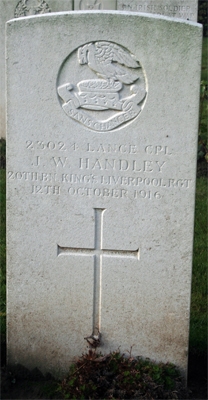
From: Shap
K.I.A (110 Years this day)
Thursday 12th October 1916.
20 years old
Joseph William Handley was born on the 03rd May in 1896 in Shap, Westmorland, the son of George Handley, a farmers son, and his wife Isabella (nee Bellas). The couple were married in 1891 in Westmorland.
The 1901 census shows the five year old Joseph living with his parents and siblings in Clapham-cum-Newby, Yorkshire – Nannie aged 9, Alice 7, Maggie 2 and 5 month old John. His father George is 35 born Sedbergh, Yorkshire, and working on a farm, his mother Isabella is 29 born in Orton, Westmorland.
The 1911 Census shows the family living at, 117 Handel Street, Toxteth Park, Liverpool. Joseph has two more siblings – 6 year old Doris born in Wavertree Liverpool, and 2 year old George born in Crosby, so the family must have moved to Liverpool somewhere between 1901 and 1904 when Doris was born. Their father George, is aged 45, and was working as a self employed cow keeper, mother is now 39. They have been married for 20 years and have had 7 children. Nannie was employed as a dairy maid in the business and both Joseph and his mother were also assisting George. Maggie, John and Doris were at school and George junior was at home.
Joseph enlisted on the 10th November, 1914 in Liverpool, joining the 20th Battalion, The King’s Liverpool Regiment as Private 23024. He was aged 19 years and advised that he had been born in Shap and gave his occupation as a Clerk. He was 5 foot nine inches tall and weighed 118lbs, he was of fresh complexion, had grey eyes, light brown hair and gave his religion as Church of England.
Formed in November 1914 the 20th Battalion were originally billeted at Tournament Hall, Knotty Ash before on 29th January 1915 they moved to the hutted accommodation purposely built at Lord Derby’s estate at Knowsley Hall. On 30th April 1915 the 20th Battalion alongside the other three Pals battalions left Liverpool via Prescot Station for further training at Belton Park, Grantham. They remained here until September 1915 when they reached Larkhill Camp on Salisbury Plain. He arrived in France on 7th November 1915.
His service record survives and shows:
08.03.16: Sick to No 98 Field Ambulance.
09.03.16: Influenza admitted to 22 Field Ambulance.
11.03.16: 96 Field Ambulance.
22.04.16: Myalgia 9 G.H
02.05.16: Discharged
03.05.16: Rouen.
09.05.16: Joined 301 Base Depot Ex. 9 Gen.Hosp.
14.05.16: 20th K.L.R
30.07.16: He was appointed unpaid Lance-Corporal.
12.10.16: Killed in action or died of wounds on or shortly after 12.10.16.
He was serving in the 20th Battalion as Lance-Corporal when he was killed in action on the 12th October 1916, aged 20, during the Battle of the Transloy Ridges which was part of the ongoing Somme Offensive.
According to the 20th Bn War Diary, on 10th October 1916 the battalion marched from Dernancourt via Mametz to Bazentin Le Grand where it bivouacked for the night. The next day the battalion moved up to site for assembly trenches, arriving about 11 p.m., where it dug in two good trenches, Nos.1 and 2 Coys front and Nos.3 and 4 Coys in rear.
From the War Diary:
Near Eaucourt L’Abbaye. 12/10/1916. The 4th British and 6th French armies continued the attack. Zero 2.5 p.m. The whole XVth Corps attacked […] The attack of 89th Inf Bde was carried out with 2nd Bn Bedf Regt on right, 17th Bn KLR on left, 20th Bn KLR in support, 19th Bn KLR in reserve. Battalions attacked in four waves. On the departure of the attacking battalions Nos. 1 and 2 companies advanced, each in two waves, to garrison the front line trench vacated by 2nd Bn Bedf Regt on right and 17th KLR on left. On Nos 1 and 2 Coys vacating front assembly trench, it was occupied by two platoons of Nos. 3 and 4 Coys respectively, from rear assembly trench. As the assaulting waves left their trenches they were met by intense machine gun fire, especially on our left. The enemy also opened heavy barrages on our front support and assembly trenches. […] Capt. H. Beckett, commanding No.1 company, reached the front line with few casualties, but Lieut R.D. Paterson leading No.2 company was killed. His company also had few casualties. The assaulting battalions were held up by very heavy machine gun fire, and made little progress. […] At 4.20 p.m. two platoons, No.4 Coy, under Cpl Brighouse, were sent up to reinforce the left, and No.3 Coy under Cpl Sutton followed at 4.45 p.m. Battalion HQ moved up to front line at 4.55 and remaining two platoons of No.4 Coy moved up to join Cpl Brighouse.
Casualties during action:
Officers – Killed Lieut. R.D. Paterson, 2nd Lieut G.L. Grennan, Wounded – 2nd Lieuts A.E. Griffin, L.E. Mclean Hayes, C. Buttemer, Wounded Cpl g. Brighouse.
Other Ranks killed – 20.
It had rained incessantly at the beginning of October 1916 and the ground was full of mud. In his book ‘The Liverpool Pals’ Graham Maddocks describes the 12th of October:
It was obvious that the Germans knew an attack was coming and from which direction it would be mounted. On the evening of the 11th the 20th Battalion moved up the line and dug two deep assembly trenches behind the 17th Battalion’s position for the attack the next day. The 19th Battalion also moved into its reserve positions known as Flers Trench. Although the rain has stopped, the ground was like a morass, with all the natural vegetation destroyed, it was difficult to tell exactly where the objectives lay. On the afternoon of the 12th at exactly 2.05pm, the attack began along the whole Corps line, covered by the local batteries of the Royal Field Artillery which still had line of sight. As the whistles blew, the 17th Battalion left its trenches to move forwards, at the same time No.1 and 2 Companies of the 20th Battalion moved forward and occupied the trenches vacated by the 17th. As they too went over the top, No.3 and 4 Companies took their place and waited in their turn to follow. No.2 and 3 Companies of the 19th Battalion moved up to occupy the assembly trenches dug the previous night by the 20th.
As soon as the attacking waves left their trenches the enemy artillery began to register on them and at the same time the defending infantry commenced a murderous rain of fire. Those German regiments were trained and experienced soldiers, well dug in on high ground, and for the most part, looking out on uncut wire. As such it was virtually impossible for them to miss the City Battalion men struggling to advance in the mud towards them.
Brigadier-General F.C.Stanley wrote that the Battalions were also suffering casualties due to the short shooting of the British heavy artillery fire. “I know from practical experience that they were our own guns which were shooting, and which were causing us quite a considerable number of casualties. The fault lay at that time from the fact that the heavy gunners would not send their FOO’s (Forward Observation Officers) far enough forward, but were content to observe us from right back”
Some ground was gained that day, about 150 yards, the 20th Battalion were not relieved until 24 hours later causing the men to endure another day and night in the front line trench.
It would appear Joseph had lied about his age on enlistment stating he was aged 19 when in fact he was only 18 when looking at his date on birth on Baptismal and Census records.
He was reported wounded in the Liverpool Daily Post 22nd Nov 1916
King’s (Liverpool Regiment) - Handley, 23024, Lce.-Corpl. J.W.;
He now rests at Warlencourt British Cemetery, France.
Warlencourt Cemetery is entirely a concentration cemetery, begun late in 1919 when graves were brought in from small cemeteries and the battlefields of Warlencourt and Le Sars. The Graves Registration form shows graves from “Le Sars 6/1, 6/2, Hexham Road, Seven Elms”.
Graves were brought in from the original cemeteries at Hexham Road (Le Sars), and Seven Elms (Flers), as well as over 3,000 British graves due to the fighting which took place around the Butte de Warlencourt from the autumn of 1916 to the spring of 1917, and again in the German advance and retreat of 1918. The cemetery now contains 3,505 Commonwealth burials and commemorations of the First World War, 1,823 of which are unidentified.
His family remembered him on the first anniversary of his death in the Liverpool Echo on 12th October 1917:
HANDLEY - In loving memory of our dearly-loved son and brother Lance Corporal J. W. Handley K.L.R., who was killed in action October 12, 1916. Sadly missed by Father, Mother, Brothers and Sisters at 6 Russian Drive, Stoneycroft.
He sleeps beside his comrades,
In a hallowed grave unknown;
But his name is written in letters of love
On the hearts he left at home.
Also in the Liverpool Daily Post on 13th October 1917
HANDLEY - In loving memory of Lance Corporal J. W. Handley, of Russian Drive(late Handel Street), who was killed in action October 12, 1916, somewhere in France.
We often think of days gone by,
When we were all together.
A shadow cast upon our life,
A dear one gone for ever.
Sadly missed by Father, Mother, Brothers and Sisters.
His father George Handley received Joseph’s Identity disc as well as his war medals, their address then being 6 Russian Drive, Green Lane, Stoneycroft.
Soldiers Effects and Pension to father George, later addresses 21 Alexandra Drive, Bootle and Holland Farm House, Walton-le-Dale, Lancs.
Joseph is commemorated in the Hall of Remembrance, Liverpool Town Hall, Panel 51 Right
Joseph’s mother and father were both listed in the 1939 Register as living at 24 Balfour Road, Bootle next door to their youngest son George and his wife. Both George senior and junior were described as farmers.
His father, George, died, aged 85, in Bootle in the March quarter of 1950.
His mother, Isabella returned to the Lake District and died, aged 83, in Ulverston in 1956.
We currently have no further information on Joseph William Handley, If you have or know someone who may be able to add to the history of this soldier, please contact us.
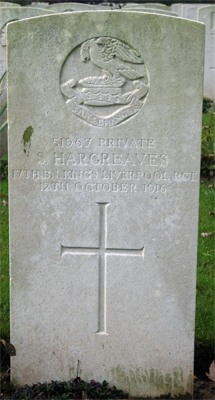
From: Darwen, Lancs
K.I.A (110 Years this day)
Thursday 12th October 1916.
27 years old
Stanley Hargreaves was born in 1889 in Darwen, the son of William Hargreaves and his wife Helen (nee McGhie) who were married in 1886. .
The 1891 Census shows the 2 year old Stanley living with his parents and siblings – Fred aged 3 and Minnie aged 1, at 32 Harwood Street Darwen. His father William was a 39 year old house painter who had been born in Darwen, and his mother was 29 and had been born in Scotland. The 1881 census shows Ellen as being born in Gatehouse, Kirkcudbrightshire, at that time she was unmarried and working as a servant in the home of John Walmsley a cotton manufacturer who employed 350-400 people.
The 1901 Census shows the family at the same address. His father, William, is aged 49, still a house painter, mother Helen is aged 38, Stanley aged 12 is now an apprentice painter, his brother Fred, aged 13, is an errand boy and Thomas aged 9, Bessie 5 and Norah aged 3 months
The 1911 Census shows the family living at, 108 Tockholes Road, Darwen. His father, William, is aged 59, a house painter, mother Helen is aged 49. Stanley’s brother Thomas had died the year before and the census records his mother had borne seven children but only Fred, Stanley, Bessie and Norah have survived. Fred aged 23, is employed as a cotton manufacturer’s clerk, Stanley aged 22, is a house painter, Bessie aged 15, is a cotton winder and Nora is now aged 10.
His father died, aged 59, in the March quarter of 1912.
Stanley enlisted in Liverpool and was serving in the 17th Battalion, The King’s Liverpool Regiment as Private No 51967 when he was killed in action on the 12th October 1916, aged 27, during the Battle of the Transloy Ridges which was part of the ongoing Somme Offensive.
17th Bn War Diary: Battle of Transloy Ridge –
11-10-16 - Gird Trench/Gird Support – Battalion in front line and support trenches. British bombardment of enemy front line system commenced about midday. Hostile shelling was intermittent throughout the day.
12-10-16 - Our bombardment continued. Enemy reply weak. 2.5 p.m. Zero hour. Attack on German front line system commenced. Enemy wire was found to be uncut and attack was unsuccessful. Hostile machine gun fire was very heavy and caused many casualties. Battalion H.Q. and Support Trench were heavily shelled throughout afternoon and evening. […] During this action all communication had to be carried out by runners and carrier pigeons as all wires were being continually cut by enemy shelling.
Casualties: 5 officers killed, 5 officers wounded, 38 OR killed, about 225 OR wounded/missing etc.
Graham Maddocks, in “Liverpool Pals” p.140, adds: “As the whistle blew, the 17th Battalion left its trenches to move forward. […] As soon as the attacking waves left their trenches the enemy artillery began to register on them, and at the same time, the defending infantry commenced a murderous rain of fire. […] Although their numbers had been depleted by the British bombardment, they were trained and experienced soldiers, well dug in on high ground, and for the most part, looking out on uncut wire. As such, it was virtually impossible for them to miss the City Battalion men struggling to advance in the mud towards them. The 17th Battalion, on the left, was particularly badly hit, as its portion of No Man’s Land contained a slight rise in the ground, and as the troops emerged onto it they were silhouetted against the sky and became easy targets. Those on the left of the attack, who managed to avoid the hail of bullets and make it to the German wire, then found that it was totally uncut, and thus trapped, they too became easy targets, to be picked off almost at the enemy’s will. It was hardly surprising that, seeing the first waves being wiped out, some of the following waves turned back and made for their start lines. These lines were now packed with other waves of troops, however, and the fleeing men added to the congestion already there, and became easy prey for the German gunners. There is some evidence also, to suggest that at this stage, the British trenches were also being hit by their own heavy artillery shells which were falling short.”
Soldiers Effects and Pension to mother Helen, 2 Dale Ave, Bispham, Blackpool.
Stanley rests at Warlencourt British Cemetery, France.
Warlencourt Cemetery is entirely a concentration cemetery, begun late in 1919 when graves were brought in from small cemeteries and the battlefields of Warlencourt and Le Sars. The Graves Registration form shows graves from “Le Sars 6/1, 6/2, Hexham Road, Seven Elms”.
Graves were brought in from the original cemeteries at Hexham Road (Le Sars), and Seven Elms (Flers), as well as over 3,000 British graves due to the fighting which took place around the Butte de Warlencourt from the autumn of 1916 to the spring of 1917, and again in the German advance and retreat of 1918. The cemetery now contains 3,505 Commonwealth burials and commemorations of the First World War, 1,823 of which are unidentified.
His mother died, aged 83, in the June quarter of 1945.
We currently have no further information on Stanley Hargreaves, If you have or know someone who may be able to add to the history of this soldier, please contact us.
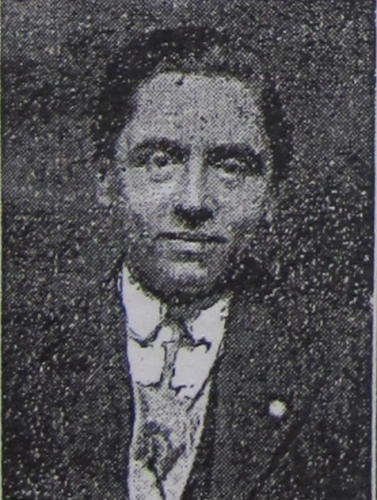
From: Southport, Lancs
K.I.A (110 Years this day)
Thursday 12th October 1916.
21 years old
William Donald Harris was born in 1896 the son of William John Harris and his wife Catherine (nee MacDonald) who were married in 1895 at Holy Trinity Church, Southport. .
The 1901 Census records the four year old William Donald living with his father and grandmother, Sarah, aged 68, at 10 Tulketh Street, in Southport. His father William J. aged 37, is a shopkeeper born in Manchester, and is recorded as being married, his mother is not present.
The 1911 Census shows William was in Southport Infirmary at that date. At the age of 14 he is recorded as a printers apprentice. William’s father and grandmother still living together now at 55 Hall Street, Southport. His father, is aged 48, and employed as a plumber, is still recorded as married but no wife is recorded in the census.
Previous to enlisting William was employed on board S. S. Dominion, sailing between Liverpool and Philadelphia.
He enlisted at Southport and was serving with the 17th Battalion of The King's Liverpool Regiment as Private 52806 when he was killed in action on 12/10/1916 aged 21.
17th Bn War Diary: Battle of Transloy Ridge –
11-10-16 - Gird Trench/Gird Support – Battalion in front line and support trenches. British bombardment of enemy front line system commenced about midday. Hostile shelling was intermittent throughout the day.
12-10-16 - Our bombardment continued. Enemy reply weak. 2.5 p.m. Zero hour. Attack on German front line system commenced. Enemy wire was found to be uncut and attack was unsuccessful. Hostile machine gun fire was very heavy and caused many casualties. Battalion H.Q. and Support Trench were heavily shelled throughout afternoon and evening. […] During this action all communication had to be carried out by runners and carrier pigeons as all wires were being continually cut by enemy shelling.
Casualties: 5 officers killed, 5 officers wounded, 38 OR killed, about 225 OR wounded/missing etc.
Graham Maddocks, in “Liverpool Pals” p.140, adds: “As the whistle blew, the 17th Battalion left its trenches to move forward. […] As soon as the attacking waves left their trenches the enemy artillery began to register on them, and at the same time, the defending infantry commenced a murderous rain of fire. […] Although their numbers had been depleted by the British bombardment, they were trained and experienced soldiers, well dug in on high ground, and for the most part, looking out on uncut wire. As such, it was virtually impossible for them to miss the City Battalion men struggling to advance in the mud towards them. The 17th Battalion, on the left, was particularly badly hit, as its portion of No Man’s Land contained a slight rise in the ground, and as the troops emerged onto it they were silhouetted against the sky and became easy targets. Those on the left of the attack, who managed to avoid the hail of bullets and make it to the German wire, then found that it was totally uncut, and thus trapped, they too became easy targets, to be picked off almost at the enemy’s will. It was hardly surprising that, seeing the first waves being wiped out, some of the following waves turned back and made for their start lines. These lines were now packed with other waves of troops, however, and the fleeing men added to the congestion already there, and became easy prey for the German gunners. There is some evidence also, to suggest that at this stage, the British trenches were also being hit by their own heavy artillery shells which were falling short.”
William Donald was initally reported as Missing in the Manchester Evening News 30th December 1916
SOUTHPORT
Pte W. D. HARRIS, son of Mr W. J. Harris, Lord Street, Southport, who was previously reported wounded, is now reported wounded and missing.
A report in the Southport Visitor of 30th December 1916 reports William Donald's death
A letter from D. A. Q. M. G Godfrey Dalrymple White, M. P. for Southport ,now at the front stated :
“Dear Mr Harris, it is with the deepest sorrow that I have to forward to you this letter in answer to my enquiries. I fear that it must be a parallel case to poor Billy Standring -that is to say, I am afraid your poor boy was seen to be wounded in the advance, and was so reported by some comrade. Before he could be picked up he must have been killed instantaneously by a shell. This is of course only my assumption, but it has alas, proved to be the case in so many Instances. I fear therefore, that you should not buoy yourself with false hopes, but should realise that he has, almost certainly, been added to that great number of gallant men who have made ‘the great sacrifice ‘for their country. You, also, have made the great sacrifice, and in so doing you have the very deepest sympathy of myself and family. It will be a sad Xmas for you I fear. May God help you to bear it
Yours very truly, G. Dalrymple White. “
Soldiers Effects and Pension to father William J., 341 Lord St, Southport.
He now rests at Warlencourt British Cemetery France.
Warlencourt Cemetery is entirely a concentration cemetery, begun late in 1919 when graves were brought in from small cemeteries and the battlefields of Warlencourt and Le Sars. The Graves Registration form shows graves from “Le Sars 6/1, 6/2, Hexham Road, Seven Elms”.
Graves were brought in from the original cemeteries at Hexham Road (Le Sars), and Seven Elms (Flers), as well as over 3,000 British graves due to the fighting which took place around the Butte de Warlencourt from the autumn of 1916 to the spring of 1917, and again in the German advance and retreat of 1918. The cemetery now contains 3,505 Commonwealth burials and commemorations of the First World War, 1,823 of which are unidentified.
William Donald is Commemorated on St. Mark’s Methodist Church Memorial, Southport and on the family grave at Duke Street Cemetery in Southport.
His father altered his name to William James on remarrying in 1916 to Mary Halsall. He is found on the 1921 census at 341 Lord Street, Mary is his wife.
His father died, aged 64, in the December quarter of 1927.
We currently have no further information on William Donald Harris, if you have or know someone who may be able to add to the history of this soldier, please contact us.
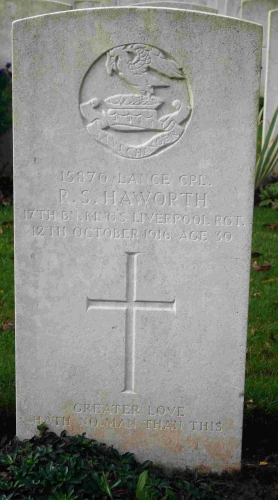
From: Blackburn
K.I.A (110 Years this day)
Thursday 12th October 1916.
30 years old
Randolph Singleton was born on on 23rd February 1886 in Blackburn the son of Moses Haworth and his wife Margaret (nee Singleton) who were married on the 15th April 1879 at St James' Church, Accrington. Moses at the time of the marriage was a 28 year old canal agent of 89 Whalley Road, father James, whilst Margaret was aged 25 of Green Haworth, father George.
Randolph was baptised on the 17th March 1886 at St Peter's Church, Blackburn, parents address 50 Eanam, father a canal agent.
The 1891 Census shows the family living at Canal Cottage, Eanam, Blackburn. His father, Moses, is aged 49, a canal agent, born in Accrington, mother Margaret is aged 37 born in Haslingden. Their children were all born Blackburn, George Herbert 11 a scholar, James Cecil 8 a scholar, Charles Singleton 7 a scholar, Randolph 5 a scholar, Reginald 3 and Sidney 1. Also present is Moses’ mother Elizabeth aged 68.
By 1901 the family have moved away from Blackburn and are living at 54 Ferndale Road, Waterloo. His father, Moses, is aged 50, a canal assistant manager, mother Margaret is aged 47. They have four children in the household; Charles Singleton aged 17, an art student, Randolph aged 15, a day scholar, Reginald 13 and Sydney 11.
Randolph attended Merchant Taylor's School between 1901 - 1902. When he left school he went to work in Finance. In 1906 working at the Bank of Liverpool, Victoria Street, he passed the Institute of Banker's Preliminary Examination. In 1907 working for the same company but now based at Linacre he passed the Institute of Bankers Final Examination.
The 1911 Census shows the family living at Freshfield Farm, Freshfield with Randolph working as a bank clerk for the Bank of Liverpool. His father ,Moses is aged 60, a canal conveying agent, His mother Margaret is aged 57(. They advise that they ahve been married for 26 years and have had 6 children. Reginald is aged 23, an accounts clerk, and Sydney is aged 21, a farmer .
Randolph was a keen sportsman excelling at Golf, Billiards and Cricket.
He enlisted at the first opportunity at St George's Hall in Liverpool, joining the 17th Battalion of The King's Liverpool Regiment as Private 15870 on 31st August 1914. He advised the recruiting desk that that he was born in Blackburn and was 28 years and 300 days old, occupation clerk. He was desrcibed as being 5’5 and a half inches tall, weighed 120lbs, chest 35”, with a sallow complexion, blue eye sand brown hair. He stated his religion as C.of E.
He was billeted at Prescot Watch Factory from 14th September 1914, he trained there and also at Knowsley Hall. On 30th April 1915 the 17th Battalion alongside the other three Pals battalions left Liverpool via Prescot Station for further training at Belton Park, Grantham. They remained here until September 1915 when they reached Larkhill Camp on Salisbury Plain.
04.8.15 - transferred to 30th Divn. Cyclist Coy.
17.9.15 - transferred to 17/KLR.
He arrived in France on 07th November 1915.
30.5.16 - appointed unpaid L/Cpl.
16.7.16 - appointed paid L/Cpl.
31.8.16 - awarded 1st good conduct badge for completing 2 years service.
He was promoted to unpaid Lance Corporal in May 1916 and again to paid Lance Corporal on 16th July 1916. He received his good conduct badge for 2 years service on 31st August 1916. He was attached to the 30th Divisional Cycling Company from 04th August - 18th September 1915 but returned to the 17th Battalion.
Randolph was killed in action on 12th October 1916 at Le Transloy aged 30.
17th Bn War Diary: Battle of Transloy Ridge –
11-10-16 - Gird Trench/Gird Support – Battalion in front line and support trenches. British bombardment of enemy front line system commenced about midday. Hostile shelling was intermittent throughout the day.
12-10-16 - Our bombardment continued. Enemy reply weak. 2.5 p.m. Zero hour. Attack on German front line system commenced. Enemy wire was found to be uncut and attack was unsuccessful. Hostile machine gun fire was very heavy and caused many casualties. Battalion H.Q. and Support Trench were heavily shelled throughout afternoon and evening. […] During this action all communication had to be carried out by runners and carrier pigeons as all wires were being continually cut by enemy shelling.
Casualties: 5 officers killed, 5 officers wounded, 38 OR killed, about 225 OR wounded/missing etc.
Graham Maddocks, in “Liverpool Pals” p.140, adds:
“As the whistle blew, the 17th Battalion left its trenches to move forward. […] As soon as the attacking waves left their trenches the enemy artillery began to register on them, and at the same time, the defending infantry commenced a murderous rain of fire. […] Although their numbers had been depleted by the British bombardment, they were trained and experienced soldiers, well dug in on high ground, and for the most part, looking out on uncut wire. As such, it was virtually impossible for them to miss the City Battalion men struggling to advance in the mud towards them. The 17th Battalion, on the left, was particularly badly hit, as its portion of No Man’s Land contained a slight rise in the ground, and as the troops emerged onto it they were silhouetted against the sky and became easy targets. Those on the left of the attack, who managed to avoid the hail of bullets and make it to the German wire, then found that it was totally uncut, and thus trapped, they too became easy targets, to be picked off almost at the enemy’s will. It was hardly surprising that, seeing the first waves being wiped out, some of the following waves turned back and made for their start lines. These lines were now packed with other waves of troops, however, and the fleeing men added to the congestion already there, and became easy prey for the German gunners. There is some evidence also, to suggest that at this stage, the British trenches were also being hit by their own heavy artillery shells which were falling short.”
Randolph rests at Warlencourt British Cemetery at II.B.26 where his headstone bears the epitaph:
"GREATER LOVE HATH NO MAN THAN THIS".
Warlencourt Cemetery is entirely a concentration cemetery, begun late in 1919 when graves were brought in from small cemeteries and the battlefields of Warlencourt and Le Sars. The Graves Registration form shows graves from “Le Sars 6/1, 6/2, Hexham Road, Seven Elms”.
Graves were brought in from the original cemeteries at Hexham Road (Le Sars), and Seven Elms (Flers), as well as over 3,000 British graves due to the fighting which took place around the Butte de Warlencourt from the autumn of 1916 to the spring of 1917, and again in the German advance and retreat of 1918. The cemetery now contains 3,505 Commonwealth burials and commemorations of the First World War, 1,823 of which are unidentified.
His identity disc was sent to mother Margaret, Freshfield Farm, Freshfield.
After his death on the declared statement his father was dead, mother was living at 22 Riding Street, Southport. Reginald was in France with the army, and Sydney was in Salisbury, Rhodesia.
There is a death record for a Moses Haworth who died, aged 67, in the March quarter of 1917 in Westbury on Severn, Gloucs.
Soldiers Effects to mother Margaret and brother James C., Pension to mother, Freshfield Farm.
Randolph is commemorated on the following Memorials;
Holy Trinity Church, Formby
Formby Cross
Queen Elizabeth Grammar School, Blackburn
Litherland War Memorial
Southport War Memorial
Bank of Liverpool Active Service roll
Martin's Bank Ltd
In 1921 Margaret was living with son George Herbert
She died, aged 89, in the December quarter of 1939.
We currently have no further information on Randolph Singleton Haworth, if you have or know someone who may be able to add to the history of this soldier, please contact us.
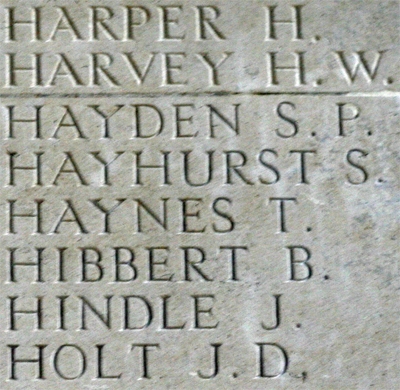
From: Queendon, Essex
K.I.A (110 Years this day)
Thursday 12th October 1916.
27 years old
Stanley Percy Hayden was born in 1889 in Quendon, Essex and resided in Newport, Essex. He was the son of Owen Charles Harry and Sarah Bathiah(nee Percy) Hayden of 3 Red Cottages, Quendon, Newport, Essex. They were married on the 24th Dec 1881 in Saffron Walden.
The 1901 Census shows the family living in Quendon Street, Rickling, Saffron Walden.
His father Charles Owen is aged 44, born 1857 and occupation Blacksmith and Beer Seller and born in Newport, Essex. His wife Sarah is aged 45, born 1856 in Wimborne, Dorset. They have two sons, both born in Rickling, Essex. Harold is aged 14, born 1887 and occupation Journeyman Baker and Stanley aged 11.
On the 1911 Census Stanley was boarding with the Barnes family at 25a Golden Noble Hill, Colchester. He was a 21 year old grocers assistant, born in Quendon, Essex. His parents and brother Harold Owen were living at 3 Red Cottages, Quendon.
He enlisted in Saffron Walden, Essex and was formerly 26229, Essex Regiment and was serving in the 17th Battalion, The King’s Liverpool Regiment as Lance Corporal No 52954 when he was killed in action on the 12th October 1916 aged 27 during the Battle of the Transloy Ridges which was part of the ongoing Somme Offensive.
17th Bn War Diary: Battle of Transloy Ridge –
11-10-16 - Gird Trench/Gird Support – Battalion in front line and support trenches. British bombardment of enemy front line system commenced about midday. Hostile shelling was intermittent throughout the day.
12-10-16 - Our bombardment continued. Enemy reply weak. 2.5 p.m. Zero hour. Attack on German front line system commenced. Enemy wire was found to be uncut and attack was unsuccessful. Hostile machine gun fire was very heavy and caused many casualties. Battalion H.Q. and Support Trench were heavily shelled throughout afternoon and evening. […] During this action all communication had to be carried out by runners and carrier pigeons as all wires were being continually cut by enemy shelling.
Casualties: 5 officers killed, 5 officers wounded, 38 OR killed, about 225 OR wounded/missing etc.
Graham Maddocks, in “Liverpool Pals” p.140, adds: “As the whistle blew, the 17th Battalion left its trenches to move forward. […] As soon as the attacking waves left their trenches the enemy artillery began to register on them, and at the same time, the defending infantry commenced a murderous rain of fire. […] Although their numbers had been depleted by the British bombardment, they were trained and experienced soldiers, well dug in on high ground, and for the most part, looking out on uncut wire. As such, it was virtually impossible for them to miss the City Battalion men struggling to advance in the mud towards them. The 17th Battalion, on the left, was particularly badly hit, as its portion of No Man’s Land contained a slight rise in the ground, and as the troops emerged onto it they were silhouetted against the sky and became easy targets. Those on the left of the attack, who managed to avoid the hail of bullets and make it to the German wire, then found that it was totally uncut, and thus trapped, they too became easy targets, to be picked off almost at the enemy’s will. It was hardly surprising that, seeing the first waves being wiped out, some of the following waves turned back and made for their start lines. These lines were now packed with other waves of troops, however, and the fleeing men added to the congestion already there, and became easy prey for the German gunners. There is some evidence also, to suggest that at this stage, the British trenches were also being hit by their own heavy artillery shells which were falling short.”
Stanley Percy has no known grave and is commemorated on the Thiepval Memorial to the Missing of the Somme, France.
The Thiepval Memorial, the Memorial to the Missing of the Somme, bears the names of more than 72,000 officers and men of the United Kingdom and South African forces who died in the Somme sector before 20 March 1918 and have no known grave. Over 90% of those commemorated died between July and November 1916.
On 01st August 1932 the Prince of Wales and the President of France inaugurated the Thiepval Memorial in Picardy. The inscription reads: “Here are recorded the names of officers and men of the British Armies who fell on the Somme battlefields between July 1915 and March 1918 but to whom the fortune of war denied the known and honoured burial given to their comrades in death.”
Reported wounded in the Western Mail on the 26th Nov 1916 (incorrectly with the Welsh casualties because it was Newport).
King’s Liverpool Regiment - Hayden, 52954, S.P.(Newport);
Essex Newsman 28th April 1917
Mr. Owen Hayden, Rickling is officially informed that his youngest son. L.-Cpl. S. P. Hayden, King's Liverpool Regt., was killed action last October.
Brother Harold, serving as Pte Harold Hayden 12706 1/Irish Guards was killed on the 27th Aug 1918 and is commemorated at Vis-En-Artois Memorial.
https://www.cwgc.org/find-records/find-war-dead/casualty-details/1743501/harold-hayden/
Soldiers Effect to father Owen, the Pensions of Harold and Stanley to mother Sarah.
Mother died aged 72 in 1926, she was buried on the 20th March 1926 at St Simon And St Jude, Quendon. The father died aged 70 in 1927, he was buried on the 23rd Aug 1927 at St Simon And St Jude, Quendon.
We currently have no further information on Stanley Percy Hayden, If you have or know someone who may be able to add to the history of this soldier, please contact us.
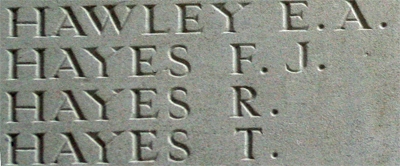
From: Widnes
K.I.A (110 Years this day)
Thursday 12th October 1916.
21 years old
In 1901 the family, with seven children, is living at 59 Lord Street, South Manchester, his father, 40, and Samuel, 17, are labourers in an iron works, mother is aged 39, Samuel 17 b.Manchester, James H. 14 b.Manchester, Mary J. 13 b.Widnes, Eli 10 b.Widnes, William F. 8 b.Widnes, Thomas is 6 b.Widnes, and younger siblings Alice 5 b.Widnes, and Louisa 1 b.Manchester.
In 1911 his parents, with five children at home, are at 21 Harrold Street, Bradford, Manchester. His father, 50, William, 20, and Eli, 18, are all labourers in the iron works, his mother is 49(married 30 years, 11 children, 9 still alive), Thomas 16, is learning house painting in a painter’s shop, Louisa, 13, and Arthur, 9, are at school.
He enlisted in Manchester and was serving in the 20th Battalion, The King’s Liverpool Regiment as Private No 37183 when he was killed in action, aged 21, on the 12th October 1916 during the Battle of the Transloy Ridges which was part of the ongoing Somme Offensive.
According to the 20th Bn War Diary, on 10th October 1916 the battalion marched from Dernancourt via Mametz to Bazentin Le Grand where it bivouacked for the night. The next day the battalion moved up to site for assembly trenches, arriving about 11 p.m., where it dug in two good trenches, Nos.1 and 2 Coys front and Nos.3 and 4 Coys in rear.
From the War Diary:
Near Eaucourt L’Abbaye. 12/10/1916. The 4th British and 6th French armies continued the attack. Zero 2.5 p.m. The whole XVth Corps attacked […] The attack of 89th Inf Bde was carried out with 2nd Bn Bedf Regt on right, 17th Bn KLR on left, 20th Bn KLR in support, 19th Bn KLR in reserve. Battalions attacked in four waves. On the departure of the attacking battalions Nos. 1 and 2 companies advanced, each in two waves, to garrison the front line trench vacated by 2nd Bn Bedf Regt on right and 17th KLR on left. On Nos 1 and 2 Coys vacating front assembly trench, it was occupied by two platoons of Nos. 3 and 4 Coys respectively, from rear assembly trench. As the assaulting waves left their trenches they were met by intense machine gun fire, especially on our left. The enemy also opened heavy barrages on our front support and assembly trenches. […] Capt. H. Beckett, commanding No.1 company, reached the front line with few casualties, but Lieut R.D. Paterson leading No.2 company was killed. His company also had few casualties. The assaulting battalions were held up by very heavy machine gun fire, and made little progress. […] At 4.20 p.m. two platoons, No.4 Coy, under Cpl Brighouse, were sent up to reinforce the left, and No.3 Coy under Cpl Sutton followed at 4.45 p.m. Battalion HQ moved up to front line at 4.55 and remaining two platoons of No.4 Coy moved up to join Cpl Brighouse.
Casualties during action:
Officers – Killed Lieut. R.D. Paterson, 2nd Lieut G.L. Grennan, Wounded – 2nd Lieuts A.E. Griffin, L.E. Mclean Hayes, C. Buttemer, Wounded Cpl g. Brighouse.
Other Ranks killed – 20.
It had rained incessantly at the beginning of October 1916 and the ground was full of mud. In his book ‘The Liverpool Pals’ Graham Maddocks describes the 12th of October:
It was obvious that the Germans knew an attack was coming and from which direction it would be mounted. On the evening of the 11th the 20th Battalion moved up the line and dug two deep assembly trenches behind the 17th Battalion’s position for the attack the next day. The 19th Battalion also moved into its reserve positions known as Flers Trench. Although the rain has stopped, the ground was like a morass, with all the natural vegetation destroyed, it was difficult to tell exactly where the objectives lay. On the afternoon of the 12th at exactly 2.05pm, the attack began along the whole Corps line, covered by the local batteries of the Royal Field Artillery which still had line of sight. As the whistles blew, the 17th Battalion left its trenches to move forwards, at the same time No.1 and 2 Companies of the 20th Battalion moved forward and occupied the trenches vacated by the 17th. As they too went over the top, No.3 and 4 Companies took their place and waited in their turn to follow. No.2 and 3 Companies of the 19th Battalion moved up to occupy the assembly trenches dug the previous night by the 20th.
As soon as the attacking waves left their trenches the enemy artillery began to register on them and at the same time the defending infantry commenced a murderous rain of fire. Those German regiments were trained and experienced soldiers, well dug in on high ground, and for the most part, looking out on uncut wire. As such it was virtually impossible for them to miss the City Battalion men struggling to advance in the mud towards them.
Brigadier-General F.C.Stanley wrote that the Battalions were also suffering casualties due to the short shooting of the British heavy artillery fire. “I know from practical experience that they were our own guns which were shooting, and which were causing us quite a considerable number of casualties. The fault lay at that time from the fact that the heavy gunners would not send their FOO’s (Forward Observation Officers) far enough forward, but were content to observe us from right back”
Some ground was gained that day, about 150 yards, the 20th Battalion were not relieved until 24 hours later causing the men to endure another day and night in the front line trench.
Thomas' body was not recovered or was subsequently lost as he has no known grave and is commemorated on the Thiepval Memorial. He was 21 years old.
The Thiepval Memorial, the Memorial to the Missing of the Somme, bears the names of more than 72,000 officers and men of the United Kingdom and South African forces who died in the Somme sector before 20 March 1918 and have no known grave. Over 90% of those commemorated died between July and November 1916.
On 01st August 1932 the Prince of Wales and the President of France inaugurated the Thiepval Memorial in Picardy. The inscription reads: “Here are recorded the names of officers and men of the British Armies who fell on the Somme battlefields between July 1915 and March 1918 but to whom the fortune of war denied the known and honoured burial given to their comrades in death.”
His father died, aged 60, in the June quarter of 1920.
By the time of the 1921 Census at 21 Harrold Street, mother Elizabeth is widowed:-
Elizabeth, Hayes, 1861, b. Littledean, Gloucestershire, England, North Manchester, Prestwich, Lancashire.
His mother died, aged 64, in the March quarter of 1926.
From: Everton, Liverpool
K.I.A (110 Years this day)
Thursday 12th October 1916.
31 years old
It had rained incessantly at the beginning of October 1916 and the ground was full of mud. In his book ‘The Liverpool Pals’ Graham Maddocks describes the day of the 12th of October 1916.
It was obvious that the Germans knew an attack was coming and from which direction it would be mounted. On the evening of the 11th the 20th Battalion moved up the line and dug two deep assembly trenches behind the 17th Battalion’s position for the attack the next day. The 19th Battalion also moved into its reserve positions known as Flers Trench. Although the rain has stopped, the ground was like a morass, with all the natural vegetation destroyed, it was difficult to tell exactly where the objectives lay. On the afternoon of the 12th at exactly 2.05pm, the attack began along the whole Corps line, covered by the local batteries of the Royal Field Artillery which still had line of sight. As the whistles blew, the 17th Battalion left its trenches to move forwards, at the same time No.1 and 2 Companies of the 20th Battalion moved forward and occupied the trenches vacated by the 17th. As they too went over the top, No.3 and 4 Companies took their place and waited in their turn to follow. No.2 and 3 Companies of the 19th Battalion moved up to occupy the assembly trenches dug the previous night by the 20th.
As soon as the attacking waves left their trenches the enemy artillery began to register on them and at the same time the defending infantry commenced a murderous rain of fire. Those German regiments were trained and experienced soldiers, well dug in on high ground, and for the most part, looking out on uncut wire. As such it was virtually impossible for them to miss the City Battalion men struggling to advance in the mud towards them.
Brigadier-General F.C.Stanley wrote that the Battalions were also suffering casualties due to the short shooting of the British heavy artillery fire. “I know from practical experience that they were our own guns which were shooting, and which were causing us quite a considerable number of casualties. The fault lay at that time from the fact that the heavy gunners would not send their FOO’s (Forward Observation Officers) far enough forward, but were content to observe us from right back”
Some ground was gained that day, about 150 yards, the 20th Battalion were not relieved until 24 hours later causing the men to endure another day and night in the front line trench.
He was reported among the Misisng in the Liverpool Weekly Courier on Saturday 25 November 1916:
Missing Soldiers.
Information concerning the following soldiers who are reported missing at the front will be welcomed at the addresses given:-
Pte F. Henderson, K.L.R. News requested by his wife at 2 Stanfield Road, Everton, Liverpool.
He was also reported missing in the Liverpool Daily Post on the 07th December 1916:
MISSING.
King’s(Liverpools) - Henderson, 52037, F.;
Warlencourt Cemetery is entirely a concentration cemetery, begun late in 1919 when graves were brought in from small cemeteries and the battlefields of Warlencourt and Le Sars. The Graves Registration form shows graves from “Le Sars 6/1, 6/2, Hexham Road, Seven Elms”.
Graves were brought in from the original cemeteries at Hexham Road (Le Sars), and Seven Elms (Flers), as well as over 3,000 British graves due to the fighting which took place around the Butte de Warlencourt from the autumn of 1916 to the spring of 1917, and again in the German advance and retreat of 1918. The cemetery now contains 3,505 Commonwealth burials and commemorations of the First World War, 1,823 of which are unidentified.
Alice remarried to Michael Andrew Duddy on the 27th January 1920 at St. Francis Xavier's Church, Liverpool. Michael was the son of Michael and Mary Duddy of 78 Evelyn Street, Kirkdale. They had two sons, Walter (born in 1921) and Arthur John (born in 1923).,
His father Phillip died, aged 67, in March 1918 and was buried on the 20th March at Walton Park Cemetery, his address at the time of hios death was 2 Stanfield Road.
On the 1921 Census at 30 Rupert Grove, Alice Duddy is aged 34, Michael is aged 31, a tailors dresser born in Garston, Alice Henderson is 5, and Walter Duddy is aged 1 month.
Having lost five of her sons, his mother Jane died, aged 67, in 1922. She was buried on the 18th February also at Walton Park Cemetery, same address.
We currently have no further information on Frank Henderson, if you have or know someone who may be able to add to the history of this soldier, please contact us.
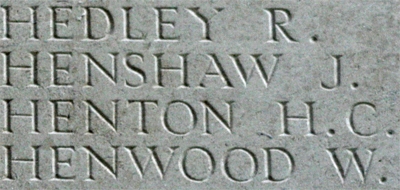
From: Liverpool
K.I.A (110 Years this day)
Thursday 12th October 1916.
29 years old
John Henshaw was born in 1887 in Liverpool and was the son of James Henshaw and his wife Mary (nee Bowes) who married on the 25th April 1875 at Sacred Heart, Liverpool. James was of 15a Charles Street, father George, whilst Mary was of 33 Sherdley Street, father Michael.
The 1891 census shows James and Mary and their family were living at 18 Warren Street, Mount Pleasant, Liverpool. They were both fish and poultry dealers operating in St Johns Market, Liverpool. Their 14 year old daughter Mary was assisting them in the business and their other children were Alfred aged 13, James 10, Thomas 8, Rose 5, John 3 and Arthur Peter aged 2.
By 1901 the family were living at 28 Pleasant Street. John’s father, aged 47, is now described as a master poulterer and is an employer, mother Mary is aged 49. Living at home are all the children except Alfred who appears as a boarder in a household in Northumberland, he is also a poulterer. Daughter Mary aged 25, is a fishmonger, James aged 20 is a poulterer, Thomas is 18 is a poulterer, Rose is 16, John is 14 and Peter is 12.
John’s sister Rose died in 1907 at the age of 21.
The 1911 census shows John’s parents living at 114 Leopold Road with two of their sons Alfred aged 33, a poulterer and Arthur aged 22 who is working as a ships steward. His parents are shown as having had nine children, four of whom had died. John aged 23, is recorded as a bar attendant at 67 Oxford Street, with the licensed victualler Morgan Rees Taylor.
Of the rest of John’s siblings: Mary married in 1901, James was a ships steward and Thomas was married with 2 young children and was working as a poulterer and fishmonger at Muirheads in Leece Street.
John enlisted in Liverpool and was serving in the 17th Battalion, The King’s Liverpool Regiment as Private No 24592 when he was killed in action on the 12th October 1916 aged 29 during the Battle of the Transloy Ridges which was part of the ongoing Somme Offensive.
17th Bn War Diary: Battle of Transloy Ridge –
11-10-16 - Gird Trench/Gird Support – Battalion in front line and support trenches. British bombardment of enemy front line system commenced about midday. Hostile shelling was intermittent throughout the day.
12-10-16 - Our bombardment continued. Enemy reply weak. 2.5 p.m. Zero hour. Attack on German front line system commenced. Enemy wire was found to be uncut and attack was unsuccessful. Hostile machine gun fire was very heavy and caused many casualties. Battalion H.Q. and Support Trench were heavily shelled throughout afternoon and evening. […] During this action all communication had to be carried out by runners and carrier pigeons as all wires were being continually cut by enemy shelling.
Casualties: 5 officers killed, 5 officers wounded, 38 OR killed, about 225 OR wounded/missing etc.
Graham Maddocks, in “Liverpool Pals” p.140, adds: “As the whistle blew, the 17th Battalion left its trenches to move forward. […] As soon as the attacking waves left their trenches the enemy artillery began to register on them, and at the same time, the defending infantry commenced a murderous rain of fire. […] Although their numbers had been depleted by the British bombardment, they were trained and experienced soldiers, well dug in on high ground, and for the most part, looking out on uncut wire. As such, it was virtually impossible for them to miss the City Battalion men struggling to advance in the mud towards them. The 17th Battalion, on the left, was particularly badly hit, as its portion of No Man’s Land contained a slight rise in the ground, and as the troops emerged onto it they were silhouetted against the sky and became easy targets. Those on the left of the attack, who managed to avoid the hail of bullets and make it to the German wire, then found that it was totally uncut, and thus trapped, they too became easy targets, to be picked off almost at the enemy’s will. It was hardly surprising that, seeing the first waves being wiped out, some of the following waves turned back and made for their start lines. These lines were now packed with other waves of troops, however, and the fleeing men added to the congestion already there, and became easy prey for the German gunners. There is some evidence also, to suggest that at this stage, the British trenches were also being hit by their own heavy artillery shells which were falling short.”
John was originally reported as Missing.
Reported missing in the Liverpool Daily Post on the 16th November 1916:
King’s (Liverpool Regt.) - Henshaw, 24952, J.;
John's body was not recovered or was subsequently lost as he has no known grave and is commemorated on the Thiepval Memorial.
The Thiepval Memorial, the Memorial to the Missing of the Somme, bears the names of more than 72,000 officers and men of the United Kingdom and South African forces who died in the Somme sector before 20 March 1918 and have no known grave. Over 90% of those commemorated died between July and November 1916.
On 01st August 1932 the Prince of Wales and the President of France inaugurated the Thiepval Memorial in Picardy. The inscription reads: “Here are recorded the names of officers and men of the British Armies who fell on the Somme battlefields between July 1915 and March 1918 but to whom the fortune of war denied the known and honoured burial given to their comrades in death.”
In the Liverpool Echo, on 30th July 1917 his family paid tribute to Jack who had been reported missing since the previous October and had obviously only then, some nine months later, been informed of his official status of Killed in Action:
“Missing since October 12, 1916, now officially reported killed, in his 29th year, P. John Henshaw (our Jack), K.L.R. (Pals), fourth dearly-beloved son of James and Mary Henshaw, 14, Leopold Road. R.I.P. (Deeply mourned by all at home, and his three Brothers, serving with the colours.)
The Nottingham and Midland Catholic News also reported his death on Saturday 04 August 1917:
Private John Henshaw of the Liverpool "Pals," posted as missing since October 12th of last year, is now officially reported killed on or about that date. He was 28 years of age, and the fourth son of Mr. And Mrs. James Renshaw, of 14, Leopold Road, Kensington. Three of his brothers are serving with the forces. They are members of the Sacred Heart congregation.
Soldiers Effect to father James, Pensions to mother Mary.
His father died, aged 68, in 1921 and was buried on the 21st October 1921 at Ford Cemetery.
His mother died, aged 76, in 1926 and was buried on the 08th March 1926 at Ford Cemetery.
We currently have no further information on John Henshaw, If you have or know someone who may be able to add to the history of this soldier, please contact us.
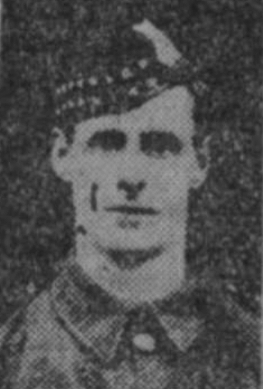
From: Kirkdale, Liverpool
K.I.A (110 Years this day)
Thursday 12th October 1916.
28 years old
William James Hoos was born on the 17th May 1887 in Liverpool and baptised 26th May 1887 at St Peter, Church of England, Liverpool. He was the son of James Hoos and his wife Martha Ann (nee King) who had married in November 1877 at St Timothys Church, Everton.
The 1891 census shows the family living at 6 Prince Edwin Lane, Everton. William’s father James is a plumber aged 38, and his mother Martha is 37. He has siblings: Eleanor aged 11, George 9, Martha 6 and Albert aged 1. The couple had also had two sons who had died in childhood : David who was born in 1878 and had died at the age of 10 weeks, and Thomas who had died at 3 months in 1884. All the family were born in Liverpool.
By the time of the 1901 census the family were living at 122 Prince Edwin Lane. William’s younger brother Albert had died aged just 22 months and was buried in January 1892 in Kirkdale Cemetery, the same year as Elizabeth his sister was born.
The 1911 Census shows the family at 54 Mackenzie Street Everton Liverpool. James and Martha have four of their children living at home, Eleanor now aged 31, who is a General Shop Keeper, Martha Jane aged 27, whose occupation is Book Sewing and Folding, William James is aged 23 is a Carter and Elizabeth Ann aged 19, is a Vest Maker. William’s brother George by then had been married for six years and had three small children.
William married Florence Elizabeth Rycraft in 1915, their marriage is recorded as being in the second quarter of that year. His mother Martha died early in 1916 and was buried in Kirkdale Cemetery on the 9th January.
William James enlisted in Liverpool and was serving in the 17th Battalion, The King’s Liverpool Regiment as Private No 51963 when he was killed in action on the 12th October 1916 aged 28 during the Battle of the Transloy Ridges which was part of the ongoing Somme Offensive.
17th Bn War Diary: Battle of Transloy Ridge –
11-10-16 - Gird Trench/Gird Support – Battalion in front line and support trenches. British bombardment of enemy front line system commenced about midday. Hostile shelling was intermittent throughout the day.
12-10-16 - Our bombardment continued. Enemy reply weak. 2.5 p.m. Zero hour. Attack on German front line system commenced. Enemy wire was found to be uncut and attack was unsuccessful. Hostile machine gun fire was very heavy and caused many casualties. Battalion H.Q. and Support Trench were heavily shelled throughout afternoon and evening. […] During this action all communication had to be carried out by runners and carrier pigeons as all wires were being continually cut by enemy shelling.
Casualties: 5 officers killed, 5 officers wounded, 38 OR killed, about 225 OR wounded/missing etc.
Graham Maddocks, in “Liverpool Pals” p.140, adds: “As the whistle blew, the 17th Battalion left its trenches to move forward. […] As soon as the attacking waves left their trenches the enemy artillery began to register on them, and at the same time, the defending infantry commenced a murderous rain of fire. […] Although their numbers had been depleted by the British bombardment, they were trained and experienced soldiers, well dug in on high ground, and for the most part, looking out on uncut wire. As such, it was virtually impossible for them to miss the City Battalion men struggling to advance in the mud towards them. The 17th Battalion, on the left, was particularly badly hit, as its portion of No Man’s Land contained a slight rise in the ground, and as the troops emerged onto it they were silhouetted against the sky and became easy targets. Those on the left of the attack, who managed to avoid the hail of bullets and make it to the German wire, then found that it was totally uncut, and thus trapped, they too became easy targets, to be picked off almost at the enemy’s will. It was hardly surprising that, seeing the first waves being wiped out, some of the following waves turned back and made for their start lines. These lines were now packed with other waves of troops, however, and the fleeing men added to the congestion already there, and became easy prey for the German gunners. There is some evidence also, to suggest that at this stage, the British trenches were also being hit by their own heavy artillery shells which were falling short.”
William James rests at Warlencourt British Cemetery, France.
Warlencourt Cemetery is entirely a concentration cemetery, begun late in 1919 when graves were brought in from small cemeteries and the battlefields of Warlencourt and Le Sars. The Graves Registration form shows graves from “Le Sars 6/1, 6/2, Hexham Road, Seven Elms”.
Graves were brought in from the original cemeteries at Hexham Road (Le Sars), and Seven Elms (Flers), as well as over 3,000 British graves due to the fighting which took place around the Butte de Warlencourt from the autumn of 1916 to the spring of 1917, and again in the German advance and retreat of 1918. The cemetery now contains 3,505 Commonwealth burials and commemorations of the First World War, 1,823 of which are unidentified.
He is also commemorated on the War Memorial at St Athanasius’ C. of E. Church, Kirkdale.
A photograph of William appeared in the Liverpool Echo of the 16th December 1916 together with the report that:
Private William James Hoos aged twenty nine, of the King’s (Liverpool Regiment) has been killed in action in France. He was the son of James and the late Martha Ann Hoos of 54 Mackenzie Street, Everton, Liverpool.
The mother Martha died aged 61 in 1916 and father James died aged 67 in 1919.
Soldiers Effects and Pensions to Florence E., 54 Mackenzie St.
His widow Florence, aged 37, father Henry Horatio, remarried to Robert Francis Jones on the 29th April 1919 at St. Nathaniel, Edge Hill, both of Portwood St.
We currently have no further information on William James Hoos, If you have or know someone who may be able to add to the history of this soldier, please contact us.
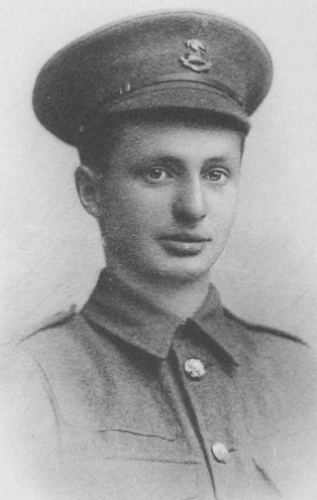
From: Garstang, Lancs
K.I.A (110 Years this day)
Thursday 12th October 1916.
23 years old
William Hornby was born on the 18th August 1893 in St Michael’s on Wyre, Garstang, Lancashire, the third son of the Venerable Phipps John Hornby (O.R. 1866-1872), Archdeacon of Lancaster and Vicar of St Michael’s on Wyre, and of his wife Agnes Eleanor Leycester(nee Penrhyn) who were married on the 30th Dec 1885 at Christ Church, East Sheen, Surrey.
On the 1901 census the family are living at the Vicarage, Upper Rawcliffe, Garstang, Lancashire. His father, Phipps John, is aged 48, a clergyman of the Church of England, born in St Michael’s on Wyre, Lancs, his mother, Agnes Eleanor, is aged 42, born in East Sheen, Surrey. They have five children declared in the household all were born St Michael’s; Geoffrey Phipps 10, daughter Cecil Vere 8, William 7, Edward Windham 5, and Katherine 4. They also have 4 servants.
William was educated at Rugby school from 1907-1912 and afterwards at Balliol College, Oxford. He then entered the offices of Messrs. Wilson, Hiles and Co, Cotton Brokers, Liverpool.
At the outbreak of war he enlisted in the ranks of the 17th Battalion, The King’s Liverpool Regiment as Private No 15048.
He was billeted at Prescot Watch Factory from 14th September 1914, he trained there and also at Knowsley Hall. On 30th April 1915 the 17th Battalion alongside the other three Pals battalions left Liverpool via Prescot Station for further training at Belton Park, Grantham. They remained here until September 1915 when they reached Larkhill Camp on Salisbury Plain. He arrived in France on 7th November 1915.
He had more than one chance of a Commission, but declined as “he thought he was more useful where he was.” He went to France in November 1915 and spent all the winter and the following summer in or near the trenches.
On July 1st, 1916, he was wounded in the head, but rejoined before the end of the month, and was acting as commander of” the runners” in the fighting on the Somme. He received a commission in September, and was killed while leading his Platoon in an attack on German lines a mile north west of Flers, October 12th 1916, aged 23.
His Colonel wrote:-
“He was a very gallant officer and was getting well hold of his work.”
His Company Commander wrote:-
“ I would like, very inadequately, to express my personal sense of loss at his death. He joined my company when he given his Commission in September, and a finer Officer one could not possibly wish to meet. He was extremely popular with his brother Officers, and his men simply worshipped him. I join with you in grieving over the loss of a gallant soldier and a true gentleman.”
17th Bn War Diary: Battle of Transloy Ridge –
11-10-16 - Gird Trench/Gird Support – Battalion in front line and support trenches. British bombardment of enemy front line system commenced about midday. Hostile shelling was intermittent throughout the day.
12-10-16 - Our bombardment continued. Enemy reply weak. 2.5 p.m. Zero hour. Attack on German front line system commenced. Enemy wire was found to be uncut and attack was unsuccessful. Hostile machine gun fire was very heavy and caused many casualties. Battalion H.Q. and Support Trench were heavily shelled throughout afternoon and evening. […] During this action all communication had to be carried out by runners and carrier pigeons as all wires were being continually cut by enemy shelling.
Casualties: 5 officers killed, 5 officers wounded, 38 OR killed, about 225 OR wounded/missing etc.
Graham Maddocks, in “Liverpool Pals” p.140, adds:
“As the whistle blew, the 17th Battalion left its trenches to move forward. […] As soon as the attacking waves left their trenches the enemy artillery began to register on them, and at the same time, the defending infantry commenced a murderous rain of fire. […] Although their numbers had been depleted by the British bombardment, they were trained and experienced soldiers, well dug in on high ground, and for the most part, looking out on uncut wire. As such, it was virtually impossible for them to miss the City Battalion men struggling to advance in the mud towards them. The 17th Battalion, on the left, was particularly badly hit, as its portion of No Man’s Land contained a slight rise in the ground, and as the troops emerged onto it they were silhouetted against the sky and became easy targets. Those on the left of the attack, who managed to avoid the hail of bullets and make it to the German wire, then found that it was totally uncut, and thus trapped, they too became easy targets, to be picked off almost at the enemy’s will. It was hardly surprising that, seeing the first waves being wiped out, some of the following waves turned back and made for their start lines. These lines were now packed with other waves of troops, however, and the fleeing men added to the congestion already there, and became easy prey for the German gunners. There is some evidence also, to suggest that at this stage, the British trenches were also being hit by their own heavy artillery shells which were falling short.”
William now rests at Warlencourt British Cemetery, France.
Warlencourt Cemetery is entirely a concentration cemetery, begun late in 1919 when graves were brought in from small cemeteries and the battlefields of Warlencourt and Le Sars. The Graves Registration form shows graves from “Le Sars 6/1, 6/2, Hexham Road, Seven Elms”.
Graves were brought in from the original cemeteries at Hexham Road (Le Sars), and Seven Elms (Flers), as well as over 3,000 British graves due to the fighting which took place around the Butte de Warlencourt from the autumn of 1916 to the spring of 1917, and again in the German advance and retreat of 1918. The cemetery now contains 3,505 Commonwealth burials and commemorations of the First World War, 1,823 of which are unidentified.
The Ormskirk Advertiser of 29th July 1915 noted an accident involving his father:
ARCHDEACON'S MISHAP.— The Rev. Phipps John Hornby, Archdeacon of Lancaster, was seriously hurt whilst following his parochial duties at St. Michael’s-on-Wyre, near Preston, on Sunday afternoon. In crossing a road he was knocked down by a motor-car and thrown head first on to a heap of stones. The Archdeacon was removed home in an unconscious condition, suffering from concussion and severe cuts on the head. He is progressing satisfactorily. Archdeacon Hornby is fairly well known in the Ormskirk district, being closely connected with the Lancashire Federation of Rural Friendly Societies.
William's death was reported in the Yorkshire Post on 19th October 1916:
WILLIAM HORNBY, King's Liverpool Regt., third son of the Archdeacon Lancaster (the Rev. P. J. Hornby), is officially reported to have been killed in action October 12 while gallantly leading his men. Sec-Lieut. Hornby was educated at Rugby and Balliol, and was in business in Liverpool when the war broke out. He enlisted in September, 1914, and went out the Front in November last. He was wounded on July 1, but rejoined his regiment. He received commission in the same battalion on September 9, and was 23 years of age. One of his brothers was killed at Ypres on May 8. 1915.
William's loss was the second that his family had to endure as his brother 2nd Lieutenant Geoffrey Phipps Hornby also fell. He was killed in action on 08th May 1915, aged 24 whilst serving with the Suffolk Regiment. His body was not recovered or was subsequently lost as he has no known grave and is commemorated on the Memin Gate Memorial at Ypres.
William is commemorated on the following Memorials:
Hall of Remembrance, Liverpool Town Hall, Panel 51 Left
Southport Civic Memorial
St Michael’s on Wyre Church.
Soldiers Effects to father Phipps John, no Pension record found.
His mother, Agnes Eleanor, died on the 21st May 1934, aged 75.
Probate 1934:-
HORNBY Agnes Eleanor of the Old House, St Michael's-on-Wyre Lancashire wife of the venerable Phipps John Hornby died 21 May 1934 Probate Lancaster 4 July to the said venerable Phipps John Hornby Archdeacon of Lancaster. Effects £453 19s 3d.
His father died on the 04th April 1936, aged 83.
Probate 1936:-
HORNBY The venerable Phipps John Hornby Archdeacon of the Old House, St Michael's-on-Wyre Lancashire died 4 April 1936 Probate Lancaster 27 May to the Reverend Hugh Leycester Hornby clerk and Edward Windham Hornby gentleman of independent means. Effects £6058 6s 8d.
Grateful thanks are extended to Rugby School for the permission to use the photograph of William Hornby now shown on the website.
We currently have no further information on William Hornby, If you have or know someone who may be able to add to the history of this soldier, please contact us.

From: London
K.I.A (110 Years this day)
Thursday 12th October 1916.
21 years old
Stanley Cottrell Seymour Horser was born on 29 December 1894 the son of Percy George Horser and his wife Emily Buckingham who were married in 1892 in Headington, Oxfordshire. He was baptised on the 2nd May 1895 at St Mary and St John, Cowley. Father was a woollen buyer on 19 Divinity Rd. He was educated at New College School, Oxford and Queens College, Oxford. He was in the Cricket XI in 1914 and also played Hockey in 1913-14.
The 1901 Census shows the family living at 19 Divinity Road, Cowley St John, Oxford.
His father Percy G. is aged 36, a woollen born in Oxford. His wife Emily is aged 34, born in Eynsham, Oxfordshire. They have two children Gladys K. aged 7, and Stanley C.S. aged 6, both scholars born in Cowley St John. They also have a boarder Louisa Chappell aged 40.
The 1911 Census shows the family living at 37 Beechcroft Road Summertown Oxford.
His father Percy George is aged 46, born 1865 and occupation Tailors Manager and was born in Oxford. His wife Emily is aged 44, born 1867 in Eynsham, Oxfordshire. They have two children Gladys Kate aged 17, born 1894 and Stanley aged 16, both at school and born in Oxford. They also have a General Domestic Servant Kate Higgs, aged 16, born 1895 in Wolvercote, also in Oxfordshire living at the address.
Stanley received a commission on the 30th December 1914 and joined the 17th Battalion of the King's Liverpool Regiment (Pals) and was later promoted to Captain. He was killed in action on 12th October 1916, aged 21, during the attack on the Transloy Ridges.
17th Bn War Diary: Battle of Transloy Ridge –
11-10-16 - Gird Trench/Gird Support – Battalion in front line and support trenches. British bombardment of enemy front line system commenced about midday. Hostile shelling was intermittent throughout the day.
12-10-16 - Our bombardment continued. Enemy reply weak. 2.5 p.m. Zero hour. Attack on German front line system commenced. Enemy wire was found to be uncut and attack was unsuccessful. Hostile machine gun fire was very heavy and caused many casualties. Battalion H.Q. and Support Trench were heavily shelled throughout afternoon and evening. […] During this action all communication had to be carried out by runners and carrier pigeons as all wires were being continually cut by enemy shelling.
Casualties: 5 officers killed, 5 officers wounded, 38 OR killed, about 225 OR wounded/missing etc.
Graham Maddocks, in “Liverpool Pals” p.140, adds: “As the whistle blew, the 17th Battalion left its trenches to move forward. […] As soon as the attacking waves left their trenches the enemy artillery began to register on them, and at the same time, the defending infantry commenced a murderous rain of fire. […] Although their numbers had been depleted by the British bombardment, they were trained and experienced soldiers, well dug in on high ground, and for the most part, looking out on uncut wire. As such, it was virtually impossible for them to miss the City Battalion men struggling to advance in the mud towards them. The 17th Battalion, on the left, was particularly badly hit, as its portion of No Man’s Land contained a slight rise in the ground, and as the troops emerged onto it they were silhouetted against the sky and became easy targets. Those on the left of the attack, who managed to avoid the hail of bullets and make it to the German wire, then found that it was totally uncut, and thus trapped, they too became easy targets, to be picked off almost at the enemy’s will. It was hardly surprising that, seeing the first waves being wiped out, some of the following waves turned back and made for their start lines. These lines were now packed with other waves of troops, however, and the fleeing men added to the congestion already there, and became easy prey for the German gunners. There is some evidence also, to suggest that at this stage, the British trenches were also being hit by their own heavy artillery shells which were falling short.”
Stanley has no known grave and is commemorated on the Thiepval Memorial, France.
The Thiepval Memorial, the Memorial to the Missing of the Somme, bears the names of more than 72,000 officers and men of the United Kingdom and South African forces who died in the Somme sector before 20 March 1918 and have no known grave. Over 90% of those commemorated died between July and November 1916.
On 01st August 1932 the Prince of Wales and the President of France inaugurated the Thiepval Memorial in Picardy. The inscription reads: “Here are recorded the names of officers and men of the British Armies who fell on the Somme battlefields between July 1915 and March 1918 but to whom the fortune of war denied the known and honoured burial given to their comrades in death.”
Oxford Chronicle 10th March 1916
HOCKEY
ISIS v. AN ARMY XI.
In this match at Oxford on Saturday, the ISIS although having most of the play, were in the end beaten by two goals to nil. There was little to choose between the teams in the first half, but while the Isis forwards failed to seize their chances. Robinson and Dunn each registered a clever goal for the Army. In the second half Turner was practically a spectator, only once having to save his charge, but although the Isis forwards were constantly pressing they could not break through the Army defence. The Isis have now played 14 games with Army teams, have won 8, lost 4, and drew 2. The following were the sides:—
Army XI.: Sec.-Lt. A. C. Roper (28th R.F.), goal: Lt. J. T. Price (28th R.F.), and Sec.-Lt. W. F. Cooper (28th R.F.), backs; Sec-Lt. E. F. Taylor (30th R.F.), Lt. W. H. Bambridge 128th R.P.), and Sergt. F. J. Dyball (28th R.F.), half-backs, Sec.-Lt. G. Herbert (28th R.F.), A. T. Robinson (28th R.F.), Sec.-Lt. C. L. Dunn (30th R.F.), Sec.-Lt P. J. Barnett 130th R.F.). and Sgt. W. H. Walker (28th R.F.), forwards.
Isis: J. R. F. Turner, goal; C. P. Starke-Jones and Capt. D. Hamilton Venour (O.T.C. Staff), backs; H. S. Stark, P. Edwards, and A. Kamal. half-backs; Sec.-Lt. 0. D. Smallwood (8th Royal Warwicks), Lt. S. C. S. Horser (15th King's Liverpools), B. G. Holdsworth, J. B. C. Crompton. and B. R. Kumar, forwards.
Following his death he received an obituary in Wisden. as follows:
CAPT STANLEY COTTERELL SEYMOUR HORSER (King's Liverpool Regt) killed October 12, aged 21. Queen's College (Ox) XI 1914
He is commemorated on the War Memorial at Queens College Oxford University and the Oxford City Honour Roll.
Soldiers Effects to father Percy George, no Pension record found.
The mother died aged 67 in 1932 in Willisden, Middlesex and father died aged 78 in 1943 in Bournemouth.
We currently have no further information on Stanley Cottrell Seymour Horser, if you have or know someone who may be able to add to the history of this soldier, please contact us.
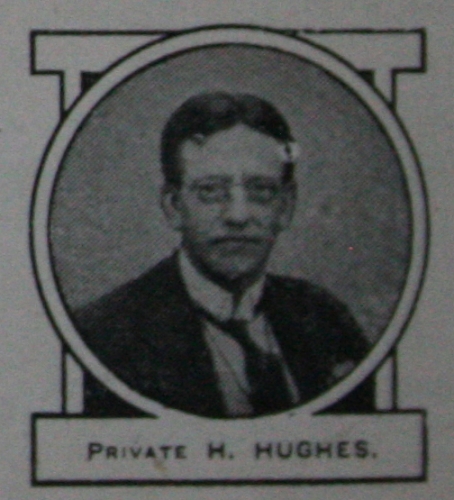
From: Liverpool
D.O.W (110 Years this day)
Thursday 12th October 1916.
34 years old
Harry Hughes was born in 1882 in Liverpool and was the son of Welsh parents, John and Margaret Hughes who were married on the 8th July 1865 at St David, Liverpool. Prior to the outbreak of the war he worked in the Artists Department of Lever Brothers, Port Sunlight.
The key to this chap is the family notice on 12th Oct 1917 which gives the address only, 73 Ferndale Rd.
Electoral roll gives David William and Catherine Davies at this address, and 1921 census expands this further to Catherine Ann b.1880, their son David has mother Hughes. (so his sister)
The 1891 Census shows the family living at 18 Squires St, Toxteth. Father John is aged 48, a railway engine stoker b.Conway, Caernarvon, mother Margaret is aged 49 b.Minffordd, Merionethshire, children born Liverpool, Jane aged 24, William 21 a clerk, John 17 a whitesmiths apprentice, Robert 15 a blacksmiths apprentice, David 13 a scholar, Catherine A. 11 a scholar, and Harry aged 9 a scholar.
Father died on aged 54 on the 21st Sept 1897
The 1901 Census shows the family have moved to 6 River Avon Street, Toxteth.
Widowed mother Margaret is aged 49 b.Sanysarn?, Merionethshire, children William 31 a shipping book keeper, John 27 a brass finisher, David 23 a shipping book keeper, Catherine 21, and Henry aged 19 an apprentice lithographic artist.
Mother died aged on the 9th Oct 1903.
Probate:-
HUGHES Margaret of River Avon Street, Liverpool widow died 9 October 1903 Administration Liverpool 11 November to William Hughes book keeper. Effects £136 6s 8d.
The 1911 Census shows Harry as Boarder at 14 King Street, Birkenhead.
The head of the Household is Stephen Whitney aged 77, born 1834 occupation Groceries and Provisions Dealer, born in Alsager, Cheshire. Also at the address is his daughter Grace, aged 37, born 1874 and occupation Housekeeper and she was born in Birkenhead. Harry is aged 29, born 1882 and occupation Lithographic- Artist Soap Manufacture.
He enlisted in Liverpool and was serving in the 18th Battalion, The King’s Liverpool Regiment as Private No 16245 when he died of wounds on the 12th October 1916 aged 34 during the Battle of the Transloy Ridges which was part of the ongoing Somme Offensive.
He has no known grave and is commemorated on the Thiepval Memorial, France.
The Thiepval Memorial, the Memorial to the Missing of the Somme, bears the names of more than 72,000 officers and men of the United Kingdom and South African forces who died in the Somme sector before 20 March 1918 and have no known grave. Over 90% of those commemorated died between July and November 1916.
On 01st August 1932 the Prince of Wales and the President of France inaugurated the Thiepval Memorial in Picardy. The inscription reads: “Here are recorded the names of officers and men of the British Armies who fell on the Somme battlefields between July 1915 and March 1918 but to whom the fortune of war denied the known and honoured burial given to their comrades in death.”
Liverpool Echo 12th Oct 1917
HUGHES - In affectionate remembrance of Private Harry Hughes, who fell in action October 12, 1916. - 73 Ferndale Road.
Liverpool Echo 14th Oct 1918
HUGHES - In affectionate remembrance of my dear brother Private Harry Hughes, who fell in action at Flers, October 12, 1916. - 73 Ferndale Road.
He is also commemorated on the Port Sunlight and Lever Brothers Ltd Employees War Memorial.
Soldiers Effects to brother William, no Pension record found.
We currently have no further information on Harry Hughes, If you have or know someone who may be able to add to the history of this soldier, please contact us.
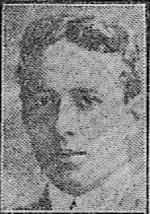
From: Liverpool
K.I.A (110 Years this day)
Thursday 12th October 1916.
28 years old
Arthur Stanley Huntley was born in 1888 in Liverpool and was the son of Walter Huntley and his wife Margaret (nee Cain) who were married at St Michaels in the Hamlet Church, Liverpool on the 1st August 1895. Margaret had been born in Liverpool 1855 and was the daughter of Patrick, a shipwright, and Mary Cain who were both born in the Isle of Man. Walter’s parents were Thomas and Emma Huntley who had moved to Liverpool from their native city of London where Walter had been born in 1853.
Arthur was the seventh child of nine children born to Walter and Margaret – the others were Edith born in 1876, Emma 1878, Walter 1880, Ernest 1881, Florence 1883, Gertrude 1885, Vera who died in infancy in 1891 and Percy born in 1892.
The 1891 census shows that Arthur’s father Walter was the librarian for the free public library at 18 Great Nelson Street in Liverpool, and the family’s address was given as number 16, so next door.
Walter died in June 1895 at the age of 41 and is buried in Anfield Cemetery.
The 1901 census shows the widowed Margaret living at 82 County Road, Walton with seven of her eight surviving children, the eldest Edith having married in 1896. Her children Walter and Ernest are both working as provision merchant’s clerks and Florence and Gertrude are school teachers. Margaret’s elderly mother Mary is also living there.
Margaret married a widower named Thomas Green, a 51 year old book keeper, on the 9th December 1906 at St Nicholas Church. They gave their address as Queen St.
The 1911 Census shows the family living at 51 Spellow Lane, Walton Liverpool.
Margaret’s new husband is not present in the household and Margaret is shown as the head. Living at home are daughter Florence who is a teacher, Gertrude who is now married, Arthur is working as a clerk for an oil manufacturer and Percy is a clerk for a cigar importer. Also visiting at the time of the census is son Ernest who is a clerk, with his wife Fidelia aged 27, and their three children - Vera Fidelia aged 4, born 1907, Rita Gertrude aged 2, born 1909 and Elizabeth born 1911. All three children were born in Seacombe.
Arthur enlisted at St George's Hall in Liverpool on the 02nd September 1914, joining the 17th Battalion, The King’s Liverpool Regiment as Private No 15996. He gave his age as 26 years and 245 days and gave his occupation as a Clerk. He was 5 foot, 5 Inches tall, of fresh complexion, had brown eyes, brown hair and gave his religion as Church of England.
He was billeted at Prescot Watch Factory from 14th September 1914, he trained there and also at Knowsley Hall. On 30th April 1915 the 17th Battalion alongside the other three Pals battalions left Liverpool via Prescot Station for further training at Belton Park, Grantham. They remained here until September 1915 when they reached Larkhill Camp on Salisbury Plain.
He embarked for France with his Battalion on the 7th November, 1915.
His service records show:
16.07.15: Belton Park: Absent from 10pm 16.07.15 to 7.40pm 17.07.15. He was admonished and forfeited two days pay.
05.09.15: Lark Hill, Salisbury
27.09.15: Absent from midnight 26.09.15 to midnight 27.09.15. 7 days CB and forfeit 1 days pay.
27.06.16: 96 Field Ambulance- Gunshot wound to right arm. Admitted
27.06.16: 21 Casualty Clearing Station- Gunshot wound to right arm. Admitted
30.07.16: Wounded remained at duty. (Wound to Right arm)
02.09.16: Granted first good behaviour badge on completion of two year’s service.
Arthur was killed in action on the 12th October 1916 aged 28 during the Battle of the Transloy Ridges which was part of the ongoing Somme Offensive.
He was part of the Machine Gun section and had been previously gassed and wounded. On one occasion he was the only man remaining at his gun when a shell burst killing his comrades.
17th Bn War Diary: Battle of Transloy Ridge –
11-10-16 - Gird Trench/Gird Support – Battalion in front line and support trenches. British bombardment of enemy front line system commenced about midday. Hostile shelling was intermittent throughout the day.
12-10-16 - Our bombardment continued. Enemy reply weak. 2.5 p.m. Zero hour. Attack on German front line system commenced. Enemy wire was found to be uncut and attack was unsuccessful. Hostile machine gun fire was very heavy and caused many casualties. Battalion H.Q. and Support Trench were heavily shelled throughout afternoon and evening. […] During this action all communication had to be carried out by runners and carrier pigeons as all wires were being continually cut by enemy shelling.
Casualties: 5 officers killed, 5 officers wounded, 38 OR killed, about 225 OR wounded/missing etc.
Graham Maddocks, in “Liverpool Pals” p.140, adds: “As the whistle blew, the 17th Battalion left its trenches to move forward. […] As soon as the attacking waves left their trenches the enemy artillery began to register on them, and at the same time, the defending infantry commenced a murderous rain of fire. […] Although their numbers had been depleted by the British bombardment, they were trained and experienced soldiers, well dug in on high ground, and for the most part, looking out on uncut wire. As such, it was virtually impossible for them to miss the City Battalion men struggling to advance in the mud towards them. The 17th Battalion, on the left, was particularly badly hit, as its portion of No Man’s Land contained a slight rise in the ground, and as the troops emerged onto it they were silhouetted against the sky and became easy targets. Those on the left of the attack, who managed to avoid the hail of bullets and make it to the German wire, then found that it was totally uncut, and thus trapped, they too became easy targets, to be picked off almost at the enemy’s will. It was hardly surprising that, seeing the first waves being wiped out, some of the following waves turned back and made for their start lines. These lines were now packed with other waves of troops, however, and the fleeing men added to the congestion already there, and became easy prey for the German gunners. There is some evidence also, to suggest that at this stage, the British trenches were also being hit by their own heavy artillery shells which were falling short.”
His death was reported in the Liverpool Echo on 01st November 1916:
"Private Arthur S.Huntley,K.L.R.,has been killed in action. During his service with his battalion in France he had been wounded and gassed. He was in the machine gun section,and on one occasion was the only man left at his gun, a shell killing the rest of the gun team. Much regret will be felt in the Aintree district by many to whom he had endered himself by his bright and happy personality. He lived with his mother at 51,Spellow lane".
Letter of disposal of items belonging to the late Private Arthur Stanley Huntley was issued by the War Office to Infantry Records, Preston and sent to Mrs Green his mother at 51 Spellow Lane, Liverpool.
Arthur Stanley has no known grave and is commemorated on the Thiepval Memorial to the Missing of the Somme in France.
The Thiepval Memorial, the Memorial to the Missing of the Somme, bears the names of more than 72,000 officers and men of the United Kingdom and South African forces who died in the Somme sector before 20 March 1918 and have no known grave. Over 90% of those commemorated died between July and November 1916.
On 01st August 1932 the Prince of Wales and the President of France inaugurated the Thiepval Memorial in Picardy. The inscription reads: “Here are recorded the names of officers and men of the British Armies who fell on the Somme battlefields between July 1915 and March 1918 but to whom the fortune of war denied the known and honoured burial given to their comrades in death.”
Liverpool Echo 12th Oct 1917
HUNTLEY—In loving memory of our dear son and brother. Arthur Stanley (sans changer) who was killed in action October 12, 1916 – Sadly miss by sorrowing Mother, Edith, Florence and Percy(in hospital).— 5l, Spellow Lane, Liverpool.
HUNTLEY—In loving remembrance of Arthur, who was killed in action October 12, 1916. (Ever remembered bv Ethelle.)
He is also commemorated at St Luke’s Church, Walton.
Soldiers Effects to mother Margaret Green but Pension to Margaret Huntley.
Arthur’s brother Ernest served in the R.A.M.C as Private 119021 from May 1916 to January 1919, and brother Percy served in The King's Liverpool Regiment from December 1915 to April 1918.
Their mother died aged 73 in March 1928.
We currently have no further information on Arthur Stanley Huntley, If you have or know someone who may be able to add to the history of this soldier, please contact us.

From: Chorley, Lancs
K.I.A (110 Years this day)
Thursday 12th October 1916.
34 years old
Albert Ince was born 1882 in Chorley and baptised on the 13th Jan 1882 in St George's Church, Chorley. On his baptism record his mother is shown as Rachel Ince, of “Cowley”, who is a frame tenter (which is a job looking after the spinning frames in a mill). His father is not mentioned but Rachel had married James Ince on the 24th September 1868 at St Paul, Addlington, her maiden name was Baxendale.
Rachel is listed as being married in the 1871 and 1881 census, but James is not found at the same address. She has a son, Edward in 1869, and a daughter Melinda in 1880, as well as Albert in 1882.
In 1871 James is boarding at 32 Bengal St, Chorley, he is aged 25, married, and a cotton mill worker born in Chorley.
It is not known when Albert’s father died but his mother Rachel married William McClelland in July 1887 at St James, Chorley. Rachel and William, who is a watchman in a cotton mill, are living at 61 Cowling Road, Chorley with all three of Rachel’s children. Albert is 9 years old, Edward is 22 and a shipper and grinder and Melinda, at the age of 12 is a threader in a cotton bleach works.
The 1901 census shows Albert living with his sister Melinda and her husband Joseph Higgins and Joseph’s mother. The 19 year old Albert is a Private in the 8th Lancashire Fusiliers.
According to the Police Gazette of April 2nd 1901, Albert Ince is recorded as having enlisted in the 4th Lancs Fusiliers on 4th July 1900 and deserted the Army on the 6th March 1901.
Albert married Mary Helen Twist in 1910 in Chorley.
The 1911 Census shows Albert living at 12 William Street, Chorley with his wife Mary Helen. Albert is aged 29, born 1882, a general labourer on the railway, born in Chorley, and his wife Mary aged 35, born 1876 in St Helens. The census shows the couple had been married for less than a year.
He enlisted in Bury and was formerly 7976, Lancashire Fusiliers, following a transfer he was serving in the 17th Battalion, The King’s Liverpool Regiment as Corporal 52919 when he was killed in action on the 12th October 1916 aged 34 during the Battle of the Transloy Ridges which was part of the ongoing Somme Offensive.
17th Bn War Diary: Battle of Transloy Ridge –
11-10-16 - Gird Trench/Gird Support – Battalion in front line and support trenches. British bombardment of enemy front line system commenced about midday. Hostile shelling was intermittent throughout the day.
12-10-16 - Our bombardment continued. Enemy reply weak. 2.5 p.m. Zero hour. Attack on German front line system commenced. Enemy wire was found to be uncut and attack was unsuccessful. Hostile machine gun fire was very heavy and caused many casualties. Battalion H.Q. and Support Trench were heavily shelled throughout afternoon and evening. […] During this action all communication had to be carried out by runners and carrier pigeons as all wires were being continually cut by enemy shelling.
Casualties: 5 officers killed, 5 officers wounded, 38 OR killed, about 225 OR wounded/missing etc.
Graham Maddocks, in “Liverpool Pals” p.140, adds: “As the whistle blew, the 17th Battalion left its trenches to move forward. […] As soon as the attacking waves left their trenches the enemy artillery began to register on them, and at the same time, the defending infantry commenced a murderous rain of fire. […] Although their numbers had been depleted by the
British bombardment, they were trained and experienced soldiers, well dug in on high ground, and for the most part, looking out on uncut wire. As such, it was virtually impossible for them to miss the City Battalion men struggling to advance in the mud towards them. The 17th Battalion, on the left, was particularly badly hit, as its portion of No Man’s Land contained a slight rise in the ground, and as the troops emerged onto it they were silhouetted against the sky and became easy targets. Those on the left of the attack, who managed to avoid the hail of bullets and make it to the German wire, then found that it was totally uncut, and thus trapped, they too became easy targets, to be picked off almost at the enemy’s will. It was hardly surprising that, seeing the first waves being wiped out, some of the following waves turned back and made for their start lines. These lines were now packed with other waves of troops, however, and the fleeing men added to the congestion already there, and became easy prey for the German gunners. There is some evidence also, to suggest that at this stage, the British trenches were also being hit by their own heavy artillery shells which were falling short.”
A newspaper gave the following account:
Albert Ince, 52919, Corporal, Lancashire Fusiliers Reservist.
Enlisted 1900. Called up August 5th, 1914 and served in France from November, 1914, he took part in the battles of Ypres, Yser and served in various parts on the French Front. Suffered from frost-bite in the feet. Went to France on Ascension Day, 1915. Invalided home again with nervous complaint, returned for the third time and on June 29th on SS St Peter & Paul, 1916. Killed at Butte-de-Warlencourt, on the Somme, on 12th October, 1916. He had been transferred August, 1916, to the King’s Liverpool Regiment. Attended St Mary’s Church.
Albert rests at Warlencourt British Cemetery, France.
Warlencourt Cemetery is entirely a concentration cemetery, begun late in 1919 when graves were brought in from small cemeteries and the battlefields of Warlencourt and Le Sars. The Graves Registration form shows graves from “Le Sars 6/1, 6/2, Hexham Road, Seven Elms”.
Graves were brought in from the original cemeteries at Hexham Road (Le Sars), and Seven Elms (Flers), as well as over 3,000 British graves due to the fighting which took place around the Butte de Warlencourt from the autumn of 1916 to the spring of 1917, and again in the German advance and retreat of 1918. The cemetery now contains 3,505 Commonwealth burials and commemorations of the First World War, 1,823 of which are unidentified.
Farnworth Chronicle 26th Jan 1917
EX-RAILWAY WORKER KILLED.
Corpl. A .Ince, of the Lancashire Fusiliers, who had been reported missing since October 12th, 1916, is now reported to have been killed in action on that date. The deceased soldier, who was 36 years of age, was formerly employed[report not finished]
Soldiers Effects and Pension to widow Mary H. and children Mary Teresa(b.1911) and Helen(b.1912), 18 William St, Chorley.
Widow Mary, dob 15th April 1875, appears on the 1939 register still at 18 William Street with daughter Mary Teresa.
She died aged 70 in 1945.
We currently have no further information on Albert Ince, If you have or know someone who may be able to add to the history of this soldier, please contact us.
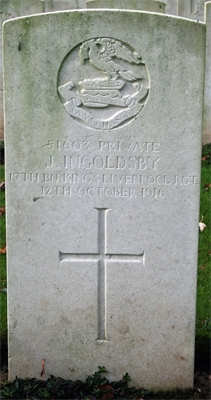
From: Liverpool
K.I.A (110 Years this day)
Thursday 12th October 1916.
22 years old
Joseph Ingoldsby was born on the 15th May, 1894 in Liverpool and was baptised 08th April, 1897 in St Francis Xavier, Liverpool and was the son of John Henry Ingoldsby and his wife Margaret (nee Meek) who were married in 1882. Margaret was widow after her first husband Thomas Bradley died.
The 1901 Census shows the family living at 86 Stitt Street, Everton, Liverpool.
Father John is aged 37, a print compositor born in Liverpool, mother Margaret is aged 34 and born in Kings Cross, London. Children John aged 18, occupation shops butcher and born Liverpool, William is aged 9, born Liverpool, and Joseph aged 6 and born King’s Cross?.
Joseph's father ,John Henry, died aged 41 in Walton workhouse in 1903 and was buried at Ford Cemetery on the 05th August 1903.
Joseph was educated at St Francis Xavier School from 1900 and St Francis Xavier Roman Catholic Schools and Campion Bilateral Secondary Modern before he left school in 1908 as he was of working age.
The 1911 Census shows the family living at 32 Field Street, Everton, Liverpool.
His mother Margaret is aged 50, born 1861 and born in London. She is a widow and has three sons, all born in Liverpool. John is aged 24, born 1887 and occupation is carter, William aged 18, born 1893, a shop assistant, (butcher) and Joseph working as a shop assistant. Joseph has no GRO but on the baptism mother is “Meek”.
His mother died, aged 54, in 1915 and was buried in Ford Cemetery on the 12th November, her address 114 Stitt Street.
Joseph married Josephine O’Donnell on the 07th May 1916 at St. Francis Xavier. Joseph was of 114 Stitt St, parents Joseph Henry and Margaret, whilst Josephine was of 12 Elizabeth Terrace, Salisbury St, parents Bernard and Ellen.
He enlisted as Rifleman 4598 joining the 6th Battalion of The King's Liverpool Regiment (Liverpool Rifles). He embarked from Folkestone - Boulogne on 19th July 1916 and reached the 24th Infantry Base Depot on 20th July. He then proceeded to the 11th Entrenching Battalion on 02nd August before proceeding to the 17th Battalion K.L.R. on 05th August and was posted to the 17th Battalion on 05th September 1916 as Private No 51603.
Joseph was killed in action on the 12th October 1916, aged 22, during the Battle of the Transloy Ridges which was part of the ongoing Somme Offensive.
17th Bn War Diary: Battle of Transloy Ridge –
11-10-16 - Gird Trench/Gird Support – Battalion in front line and support trenches. British bombardment of enemy front line system commenced about midday. Hostile shelling was intermittent throughout the day.
12-10-16 - Our bombardment continued. Enemy reply weak. 2.5 p.m. Zero hour. Attack on German front line system commenced. Enemy wire was found to be uncut and attack was unsuccessful. Hostile machine gun fire was very heavy and caused many casualties. Battalion H.Q. and Support Trench were heavily shelled throughout afternoon and evening. […] During this action all communication had to be carried out by runners and carrier pigeons as all wires were being continually cut by enemy shelling.
Casualties: 5 officers killed, 5 officers wounded, 38 OR killed, about 225 OR wounded/missing etc.
Graham Maddocks, in “Liverpool Pals” p.140, adds:
“As the whistle blew, the 17th Battalion left its trenches to move forward. […] As soon as the attacking waves left their trenches the enemy artillery began to register on them, and at the same time, the defending infantry commenced a murderous rain of fire. […] Although their numbers had been depleted by the British bombardment, they were trained and experienced soldiers, well dug in on high ground, and for the most part, looking out on uncut wire. As such, it was virtually impossible for them to miss the City Battalion men struggling to advance in the mud towards them. The 17th Battalion, on the left, was particularly badly hit, as its portion of No Man’s Land contained a slight rise in the ground, and as the troops emerged onto it they were silhouetted against the sky and became easy targets. Those on the left of the attack, who managed to avoid the hail of bullets and make it to the German wire, then found that it was totally uncut, and thus trapped, they too became easy targets, to be picked off almost at the enemy’s will. It was hardly surprising that, seeing the first waves being wiped out, some of the following waves turned back and made for their start lines. These lines were now packed with other waves of troops, however, and the fleeing men added to the congestion already there, and became easy prey for the German gunners. There is some evidence also, to suggest that at this stage, the British trenches were also being hit by their own heavy artillery shells which were falling short.”
Joseph was initially reported as Missing in the Liverpool Daily Post on 16th November 1916:
MISSING.
King’s (Liverpool Regt.) - Ingoldsby, 51603, J.;
Confirmation of his death was reported in the Liverpool Daily Post on 20th April 1917:
PREVIOUSLY REPORTED MISSING, NOW
REPORTED KILLED.
King’s (Liverpool Regt.) - Ingoldsby, 51603, J.;
Joseph now rests at Warlencourt British cemetery, France.
Warlencourt Cemetery is entirely a concentration cemetery, begun late in 1919 when graves were brought in from small cemeteries and the battlefields of Warlencourt and Le Sars. The Graves Registration form shows graves from “Le Sars 6/1, 6/2, Hexham Road, Seven Elms”.
Graves were brought in from the original cemeteries at Hexham Road (Le Sars), and Seven Elms (Flers), as well as over 3,000 British graves due to the fighting which took place around the Butte de Warlencourt from the autumn of 1916 to the spring of 1917, and again in the German advance and retreat of 1918. The cemetery now contains 3,505 Commonwealth burials and commemorations of the First World War, 1,823 of which are unidentified.
Soldiers Effects and Pension to widow Josephine (later Barrett), 3 Marvin Street, Kensington. Josephine remarried to Leo Patrick Barrett on the 11th March 1920, both of 33 Prospect StREET. They had three children; Leo B.(1920), Veronica (1923) and Bernard J.(1927).
They appear on the 1939 register at 88 Empress Road, Josephine has a date of birth of 07th April 1895. She died aged 88 in 1983.
Grateful thanks are extended to Kevin Shannon the author of the book The Liverpool Rifles for providing details of Joseph's service with the 6th Rifles.
We currently have no further information on Joseph Ingoldsby, if you have or know someone who may be able to add to the history of this soldier, please contact us.
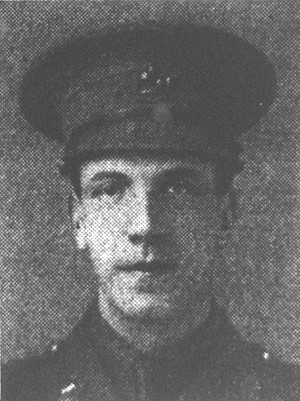
From: Lisburn
K.I.A (110 Years this day)
Thursday 12th October 1916.
27 years old
Samuel James Ireland was born on the 21st January 1889 in Lisburn, Northern Ireland. His parents John Ireland and Sarah Ann (nee Potter) were both born in County Down and were married on the 28th March 1888 in Great Victoria Street Presbyterian Church, Belfast. Samuel was the eldest of four children, all born in Antrim; his siblings were John, Emily, and William, as well as an older half-sister, Sarah.
In 1901 the family is living at 136 Rugby Avenue, Cromac, Antrim. His father John is aged 35, a carpenter, born Co.Down, mother Sarah Ann is aged 36, born Co.Down, children born Antrim, Samuel J. 12 a scholar, Sarah Anne 10 a scholar, John 7 a scholar, Emily 5 a scholar, and William 3.
The family are still at the same address at the 1911 Census. His father John is aged 45, a carpenter, mother Sarah Ann is aged 45. They have been married for 23 years and have had five children, all of whom are declared in the household; Samuel 22 is a clerk, Sarah 20, John 17 a scholar, Emily 15 a scholar, and William 13 a scholar.
Samuel was a student at Queens University, Belfast. As his service record has not survived, the dates and full details of his service are not fully known. However, according to the Queen’s University Book of Remembrance, Samuel’s occupation was ‘mercantile’ when he began Officer Training at Queen’s University, Belfast, on 03rd May 1915; he received his commission on 29th October 1915.
Samuel was one of seven junior officers who joined the 17th King’s (Liverpool) Bn on the evening of 03rd July, just after the first day of the Battle of the Somme.
He was serving in the 17th Battalion, The King’s Liverpool Regiment when he was killed in action on the 12th October 1916, aged 27, during the Battle of the Transloy Ridges which was part of the ongoing Somme Offensive.
17th Bn War Diary: Battle of Transloy Ridge –
11-10-16 - Gird Trench/Gird Support – Battalion in front line and support trenches. British bombardment of enemy front line system commenced about midday. Hostile shelling was intermittent throughout the day.
12-10-16 - Our bombardment continued. Enemy reply weak. 2.5 p.m. Zero hour. Attack on German front line system commenced. Enemy wire was found to be uncut and attack was unsuccessful. Hostile machine gun fire was very heavy and caused many casualties. Battalion H.Q. and Support Trench were heavily shelled throughout afternoon and evening. […] During this action all communication had to be carried out by runners and carrier pigeons as all wires were being continually cut by enemy shelling.
Casualties: 5 officers killed, 5 officers wounded, 38 OR killed, about 225 OR wounded/missing etc.
Graham Maddocks, in “Liverpool Pals” p.140, adds: “As the whistle blew, the 17th Battalion left its trenches to move forward. […] As soon as the attacking waves left their trenches the enemy artillery began to register on them, and at the same time, the defending infantry commenced a murderous rain of fire. […] Although their numbers had been depleted by the British bombardment, they were trained and experienced soldiers, well dug in on high ground, and for the most part, looking out on uncut wire. As such, it was virtually impossible for them to miss the City Battalion men struggling to advance in the mud towards them. The 17th Battalion, on the left, was particularly badly hit, as its portion of No Man’s Land contained a slight rise in the ground, and as the troops emerged onto it they were silhouetted against the sky and became easy targets. Those on the left of the attack, who managed to avoid the hail of bullets and make it to the German wire, then found that it was totally uncut, and thus trapped, they too became easy targets, to be picked off almost at the enemy’s will. It was hardly surprising that, seeing the first waves being wiped out, some of the following waves turned back and made for their start lines. These lines were now packed with other waves of troops, however, and the fleeing men added to the congestion already there, and became easy prey for the German gunners. There is some evidence also, to suggest that at this stage, the British trenches were also being hit by their own heavy artillery shells which were falling short.”
Samuel James' body was not recovered or was subsequently lost as he has no known grave and is commemorated on the Thiepval Memorial, France.
The Thiepval Memorial, the Memorial to the Missing of the Somme, bears the names of more than 72,000 officers and men of the United Kingdom and South African forces who died in the Somme sector before 20 March 1918 and have no known grave. Over 90% of those commemorated died between July and November 1916.
On 01st August 1932 the Prince of Wales and the President of France inaugurated the Thiepval Memorial in Picardy. The inscription reads: “Here are recorded the names of officers and men of the British Armies who fell on the Somme battlefields between July 1915 and March 1918 but to whom the fortune of war denied the known and honoured burial given to their comrades in death.”
His death was reported in the Belfast News-Letter on 21st October 1916
THE ROLL OF HONOUR.
Belfast Officer Killed.
SECOND-LIEUTENANT S. J. IRELAND, The King’s (Liverpool Regiment), killed in action on the I2th inst., was a son of Mr. John Ireland, 46, Victoria, Road, Sydenham, Belfast. Before the war the deceased was in business in Belfast with Messrs. Young & Anderson, Donegal Street. He entered Queen’s University Officers’ Training Corps, Belfast, in 1915, and in October of that year was posted to commission in the King’s (Liverpool Regiment). After receiving his commission he attended a school instruction in the city, and then joined his battalion in England, subsequently proceeding to the front on 4th July. He was gassed and received shell shock on 31st July, and on recovering rejoined his regiment. He was 27 years of age.
Also two days later in The Northern Whig on 23rd October 1916
IN MEMORIAM
S. J. Ireland (King's Liverpool Regiment), Killed in Action 12th October, 1916
If I should tell you, now, the day is breaking
Over the sad, drenched fieIds beside the river.
Where once you walked and planned your life and poetry—
Would you not hear me still, would you not come ?
Or have you taken with you dream, and poetry
That none will ever write, since it was yours—
Taken them down into that world darkness
Where you lie now so quietly, at rest, and alone?
All that you had you gave—your life, your youth.
Your youth's ambition— gave it ungrudgingly.
They have taken all, and left you dead and heedless
Of what may be.
You lie there patiently, sharing a secret glory,
Far from these woods that knew you,
these sad, drenched fields, this sad, grey river.
Unknown, unvisited, by a few remembered,
In your last deep sleep in your cold, earthy bed.
FORREST REID.
Soldiers Effects to father John, Pension record has no award.
The Northern Whig of 09th December 1916 featured Samuel's name among the fallen:
QUEEN’S UNIVERSITY OF BELFAST.
The Names Of The Dead.
S. J. Ireland second-lieutenant the King’s Liverpool Regiment;
His family placed a notice on the first anniversary of his death in the Belfast Telegraph on 12th October 1917:
OUR HEROES – IN MEMORIAM.
IRELAND—In ever loving memory of our dearly beloved son, Second-Lieutenant S. J. Ireland, King's Liverpool Regiment, killed in action on the 12th October, 1916: also our dear daughter, Sadie. who departed this life on the 14th February, 1912.
The dead who died for England
Sleep far beneath the waves;
In foreign lands, on foreign strands,
In consecrated graves.
Then brush aside the tears that stand,
And let us proudly give—
He dies a sacred death who dies
That we and England live.
Lonely for those we love.
Oh! Phrase as old as death;
Do they lean from the golden bar of Heaven
To catch one whispering breath?
From some star divine for a dwelling-place
Do they yearn for the desolate hearth?
Does memory thrill through the sift of space
To a sad song sung on earth?
Sadly missed by their loving Father, Mother, Brothers, and Sister.
“ Granian.” Kensington Road, Knock.
His name was included in the Belfast News-Letter on 31st March 1919 :
NAMES OF THE FALLEN.
King’s (Liverpool Regiment) - S. J. Ireland, 51603, J.;
Samuel is also commemorated on the family headstone at Knockbreda Cemetery, Belfast and on the following Memorials;
Queens University, Belfast
McQuiston Presbyterian Church Roll of Honour
Ireland’s Roll of Honour
His father, John, died on the 05th July 1938.
His mother died on the 19th January 1942.
We currently have no further information on Samuel James Ireland, if you have or know someone who may be able to add to the history of this soldier, please contact us.
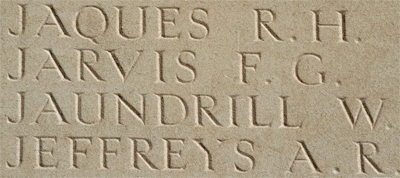
From: London
K.I.A (110 Years this day)
Thursday 12th October 1916.
23 years old
Reg enlisted as Rifleman 4437, joining the 6th Battalion of The King's Liverpool Regiment (Liverpool Rifles). He embarked aboard the S.S. Princess Victoria from Folkestone-Boulogne on 15th July 1916, reaching the 24th Infantry Base Depot on 16th July, he then proceeded to the 11th Entrenching Battalion on 02nd August then proceeded to the 17th Battalion K.L.R. on 05th August and was posted from 05th September 1916 to the 17th Battalion K.L.R. as Private No 51591.
17th Bn War Diary: Battle of Transloy Ridge –
11-10-16 - Gird Trench/Gird Support – Battalion in front line and support trenches. British bombardment of enemy front line system commenced about midday. Hostile shelling was intermittent throughout the day.
12-10-16 - Our bombardment continued. Enemy reply weak. 2.5 p.m. Zero hour. Attack on German front line system commenced. Enemy wire was found to be uncut and attack was unsuccessful. Hostile machine gun fire was very heavy and caused many casualties. Battalion H.Q. and Support Trench were heavily shelled throughout afternoon and evening. […] During this action all communication had to be carried out by runners and carrier pigeons as all wires were being continually cut by enemy shelling.
Casualties: 5 officers killed, 5 officers wounded, 38 OR killed, about 225 OR wounded/missing etc.
Graham Maddocks, in “Liverpool Pals” p.140, adds: “As the whistle blew, the 17th Battalion left its trenches to move forward. […] As soon as the attacking waves left their trenches the enemy artillery began to register on them, and at the same time, the defending infantry commenced a murderous rain of fire. […] Although their numbers had been depleted by the British bombardment, they were trained and experienced soldiers, well dug in on high ground, and for the most part, looking out on uncut wire. As such, it was virtually impossible for them to miss the City Battalion men struggling to advance in the mud towards them. The 17th Battalion, on the left, was particularly badly hit, as its portion of No Man’s Land contained a slight rise in the ground, and as the troops emerged onto it they were silhouetted against the sky and became easy targets. Those on the left of the attack, who managed to avoid the hail of bullets and make it to the German wire, then found that it was totally uncut, and thus trapped, they too became easy targets, to be picked off almost at the enemy’s will. It was hardly surprising that, seeing the first waves being wiped out, some of the following waves turned back and made for their start lines. These lines were now packed with other waves of troops, however, and the fleeing men added to the congestion already there, and became easy prey for the German gunners. There is some evidence also, to suggest that at this stage, the British trenches were also being hit by their own heavy artillery shells which were falling short.”
Reg's body was not recovered or was subsequently lost as he has no known grave and is commemorated on the Thiepval Memorial to the Misisng of the Somme, France.
The Thiepval Memorial, the Memorial to the Missing of the Somme, bears the names of more than 72,000 officers and men of the United Kingdom and South African forces who died in the Somme sector before 20 March 1918 and have no known grave. Over 90% of those commemorated died between July and November 1916.
On 01st August 1932 the Prince of Wales and the President of France inaugurated the Thiepval Memorial in Picardy. The inscription reads: “Here are recorded the names of officers and men of the British Armies who fell on the Somme battlefields between July 1915 and March 1918 but to whom the fortune of war denied the known and honoured burial given to their comrades in death.”
“In sad but loving birthday (March 21) remembrance of Arthur Reginald Jeffreys (Reg.), K.L.R., killed in action October 12, 1916. - Fondly remembered by Ray.”
We currently have no further information on Arthur Reginald Jeffreys. If you have or know someone who may be able to add to the history of this soldier, please contact us.
Grateful thanks are extended to Kevin Shannon the author of the book The Liverpool Rifles for providing details of Reg's service with the 6th Rifles.
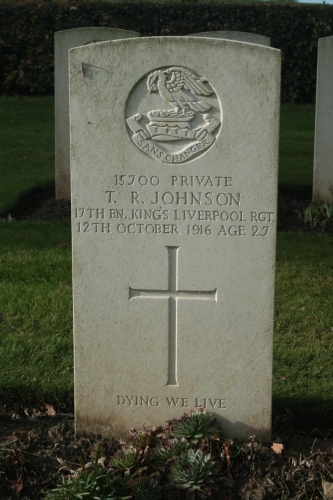
From: Garston, Liverpool
K.I.A (110 Years this day)
Thursday 12th October 1916.
27 years old
Thomas Roscoe Johnson was born on the 17th February 1889 in Garston, Liverpool, the eldest son of John Johnson and his wife Honora (née Roscoe). His father was born in Chorlton on Medlock, and his mother in St. Pancras, London. They married in London in 1888 and had four children. Thomas had younger siblings Richard Roscoe, born in 1890, Alice Honora 1891, and Michael Roscoe 1898, all born in Garston.
He attended Sedbergh School, at that time in Yorkshire, and sat his Law Examinations whilst residing in Liverpool from 1907 until 1914.
A newspaper report states that Thomas served as a Lewis gunner.
On 01st September 1916 he was granted a Good Conduct Badge on completion of two years service.
Thomas was declared Missing on 12th October 1916.
He was reported as Missing in the Liverpool Daily Post on 16th November 1916
MISSING.
King’s (Liverpool Regt.) - Johnson, 15700, T. R.;
17th Bn War Diary: Battle of Transloy Ridge –
11-10-16 - Gird Trench/Gird Support – Battalion in front line and support trenches. British bombardment of enemy front line system commenced about midday. Hostile shelling was intermittent throughout the day.
12-10-16 - Our bombardment continued. Enemy reply weak. 2.5 p.m. Zero hour. Attack on German front line system commenced. Enemy wire was found to be uncut and attack was unsuccessful. Hostile machine gun fire was very heavy and caused many casualties. Battalion H.Q. and Support Trench were heavily shelled throughout afternoon and evening. […] During this action all communication had to be carried out by runners and carrier pigeons as all wires were being continually cut by enemy shelling.
Casualties: 5 officers killed, 5 officers wounded, 38 OR killed, about 225 OR wounded/missing etc.
Graham Maddocks, in “Liverpool Pals” p.140, adds:
“As the whistle blew, the 17th Battalion left its trenches to move forward. […] As soon as the attacking waves left their trenches the enemy artillery began to register on them, and at the same time, the defending infantry commenced a murderous rain of fire. […] Although their numbers had been depleted by the British bombardment, they were trained and experienced soldiers, well dug in on high ground, and for the most part, looking out on uncut wire. As such, it was virtually impossible for them to miss the City Battalion men struggling to advance in the mud towards them. The 17th Battalion, on the left, was particularly badly hit, as its portion of No Man’s Land contained a slight rise in the ground, and as the troops emerged onto it they were silhouetted against the sky and became easy targets. Those on the left of the attack, who managed to avoid the hail of bullets and make it to the German wire, then found that it was totally uncut, and thus trapped, they too became easy targets, to be picked off almost at the enemy’s will. It was hardly surprising that, seeing the first waves being wiped out, some of the following waves turned back and made for their start lines. These lines were now packed with other waves of troops, however, and the fleeing men added to the congestion already there, and became easy prey for the German gunners. There is some evidence also, to suggest that at this stage, the British trenches were also being hit by their own heavy artillery shells which were falling short.”
Thomas was buried near to where he fell, and his grave marked with a cross. After the war when graves were concentrated his body was removed and reburied in Warlencourt British Cemetery, Pas de Calais, where he now rests. His headstone bears the epitaph:
“DYING WE LIVE”
Warlencourt Cemetery is entirely a concentration cemetery, begun late in 1919 when graves were brought in from small cemeteries and the battlefields of Warlencourt and Le Sars. The Graves Registration form shows graves from “Le Sars 6/1, 6/2, Hexham Road, Seven Elms”.
Graves were brought in from the original cemeteries at Hexham Road (Le Sars), and Seven Elms (Flers), as well as over 3,000 British graves due to the fighting which took place around the Butte de Warlencourt from the autumn of 1916 to the spring of 1917, and again in the German advance and retreat of 1918. The cemetery now contains 3,505 Commonwealth burials and commemorations of the First World War, 1,823 of which are unidentified.
His father died aged 64, six months after Thomas on the 07th April 1917 (from headstone).
The Whitehaven Advertiser and Cleator Moor and Egremont Observer wrote on 30th March 1918:
At Carlisle Consistory Court, on Tuesday, Chancellor Prescott granted a faculty to Mr. Charles Hornung, Send Manor, Ripley, Surrey, authorising the erection in St George’s, Millom, of a white marble tablet in memory of Charles Alfred Peter Hornung, Royal Fusiliers, who was killed in action in France on February 7th, 1916, aged 18 years and 9 months, the same morning that he received his commission. The Chancellor also granted a faculty authorising the insertion of stained glass in a window in Newlands Church, Keswick, in memory of Thomas Roscoe Johnson, who fell in action in France in October, 1916, aged 27 years.
“... their son, Thomas Roscoe Johnson, who was killed in action in France October 12th 1916”
Thomas is commemorated on the following Memorials:
Sedbergh School Roll of honour
Hall of Remembrance, Liverpool Town Hall, Panel 69
and also commemorated on a stained glass window in Newlands Church, near Keswick, Cumbria:-
“To the glory of God and in grateful memory of all those who gave their lives for their country and rest in unknown graves and especially of Thomas Roscoe Johnson who fell in action in France October 12th 1916, aged 27 years. Not dead but living unto Thee”
The information board in the church reads:-
“The stained glass window on the south wall of the church is dedicated to the fallen of WW1 and in memory of Thomas Roscoe Johnson. He was born on the 17th February 1889, was educated at Sedbergh School and joined his local Pal's Regiment - 17th Battalion, King’s Liverpool in September 1914. He was killed in action on 16th(sic) October 1916 and is buried at Wallencourt British Cemetery in France. The window is in Newlands Church because there had been a long connection with the Swainson family at Littletown and the area held many happy memories for the Johnson family.”
The Runcorn Examiner dated the 14th May 1904 – The Johnson family must have holidayed frequently with Mrs Swainson.
LAKE DISTRICT Comfortable farmhouse apartments ; fine mountain scenery, bracing air, lovely neighbourhood ; near Lake Derwentwater ; terms moderate. - Mrs Swainson, Croft Farm, Newlands, near Keswick.
We currently have no further information on Thomas Roscoe Johnson, if you have or know someone who may be able to add to the history of this soldier, please contact us.
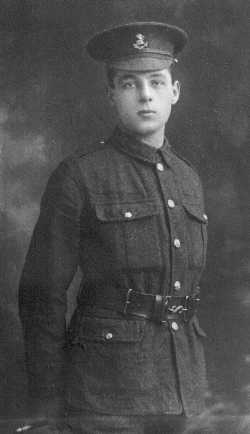
From: Salford, Manchester
K.I.A (110 Years this day)
Thursday 12th October 1916.
19 years old
William Johnson was born on the 01st January, 1897 in Salford and was the son of William Johnson and his wife Mary Hannah (nee Chapman) who were married on the 30th September 1896 at Christ Church, Salford. William was a 21 year old railway porter of 49 Hodge Lane, father Joseph, whilst Mary was a 23 year old “jack tenter” of 47 Hodge Lane, father Abraham.
William was baptised on the 14th February 1897 also at Christ Church, Salford, his parents gave their address as 47 Hodge Lane.
The 1901 Census shows the family living at 121 Higher Green, Astley, Salford.
His father, William, is aged 26, and is a railway signal man born in Ince, Cheshire. His wife ,Mary Hannah, is aged 26, born in Salford. They have three children. William aged 4 born in Salford, Amy aged 3 born in Salford, and Henry aged 1, born in Astley.
The 1911 Census shows that the family have moved to Liverpool and are living at 26 Whitland Road, Fairfield, Liverpool.
His father William is aged 35, born 1876 and is a superintendent and was born in Ince, Cheshire. His wife Mary Hannah is aged 38, born 1873, in Salford. They have six children declared in the household. William aged 14, born 1897, Amy aged 13, born 1898 both at school and both born in Salford. Henry aged 11, born is also at school and born in Astley, as were Frank aged 9, born 1902 and Winifred aged 6, born 1905. Their youngest son John aged 2, was born in Leigh in 1909.
Prior to the outbreak of the war he was employed as a clerk at the Liverpool Cotton Exchange.
He enlisted at St George's Hall in Liverpool joining in the 17th Battalion, The King’s Liverpool Regiment as Private No 15557.
He was billeted at Prescot Watch Factory from 14th September 1914, he trrained there and also at Knowsley Hall. On 30th April 1915 the 17th Battalion alongside the other three Pals battalions left Liverpool via Prescot station for further training at Belton Park, Grantham. They remained here until September 1915 when they reached Larkhill Camp on Salisbury Plain. He arrived in France on 07th November 1915.
William was killed in action on the 12th October 1916 aged 19 during the Battle of the Transloy Ridges which was part of the ongoing Somme Offensive.
17th Bn War Diary: Battle of Transloy Ridge –
11-10-16 - Gird Trench/Gird Support – Battalion in front line and support trenches. British bombardment of enemy front line system commenced about midday. Hostile shelling was intermittent throughout the day.
12-10-16 - Our bombardment continued. Enemy reply weak. 2.5 p.m. Zero hour. Attack on German front line system commenced. Enemy wire was found to be uncut and attack was unsuccessful. Hostile machine gun fire was very heavy and caused many casualties. Battalion H.Q. and Support Trench were heavily shelled throughout afternoon and evening. […] During this action all communication had to be carried out by runners and carrier pigeons as all wires were being continually cut by enemy shelling.
Casualties: 5 officers killed, 5 officers wounded, 38 OR killed, about 225 OR wounded/missing etc.
Graham Maddocks, in “Liverpool Pals” p.140, adds: “As the whistle blew, the 17th Battalion left its trenches to move forward. […] As soon as the attacking waves left their trenches the enemy artillery began to register on them, and at the same time, the defending infantry commenced a murderous rain of fire. […] Although their numbers had been depleted by the British bombardment, they were trained and experienced soldiers, well dug in on high ground, and for the most part, looking out on uncut wire. As such, it was virtually impossible for them to miss the City Battalion men struggling to advance in the mud towards them. The 17th Battalion, on the left, was particularly badly hit, as its portion of No Man’s Land contained a slight rise in the ground, and as the troops emerged onto it they were silhouetted against the sky and became easy targets. Those on the left of the attack, who managed to avoid the hail of bullets and make it to the German wire, then found that it was totally uncut, and thus trapped, they too became easy targets, to be picked off almost at the enemy’s will. It was hardly surprising that, seeing the first waves being wiped out, some of the following waves turned back and made for their start lines. These lines were now packed with other waves of troops, however, and the fleeing men added to the congestion already there, and became easy prey for the German gunners. There is some evidence also, to suggest that at this stage, the British trenches were also being hit by their own heavy artillery shells which were falling short.”
William has no known grave and is commemorated on the Thiepval Memorial, France.
The Thiepval Memorial, the Memorial to the Missing of the Somme, bears the names of more than 72,000 officers and men of the United Kingdom and South African forces who died in the Somme sector before 20 March 1918 and have no known grave. Over 90% of those commemorated died between July and November 1916.
On 01st August 1932 the Prince of Wales and the President of France inaugurated the Thiepval Memorial in Picardy. The inscription reads: “Here are recorded the names of officers and men of the British Armies who fell on the Somme battlefields between July 1915 and March 1918 but to whom the fortune of war denied the known and honoured burial given to their comrades in death.”
William is commemorated in the Hall of Remembrance, Liverpool Town Hall, Panel New
Soldiers Effects to father William, Pension to mother Mary H., of 27 Fazakerley Rd, Walton, Liverpool.
His father died, aged 73, on the 18th October 1948 in Wallasey and was buried in Everton Cemetery on the 21st October.
His mother died, aged 89, on the 03rd July 1962 and was buried in Everton Cemetery on the 6th July.
Grateful thanks are extended to Sefton RUFC for permission to use the photograph of William.
We currently have no further information on William Johnson, if you have or know someone who may be able to add to the history of this soldier, please contact us.
Grateful thanks are extended to Sefton RUFC for permission to use the photograph of William.
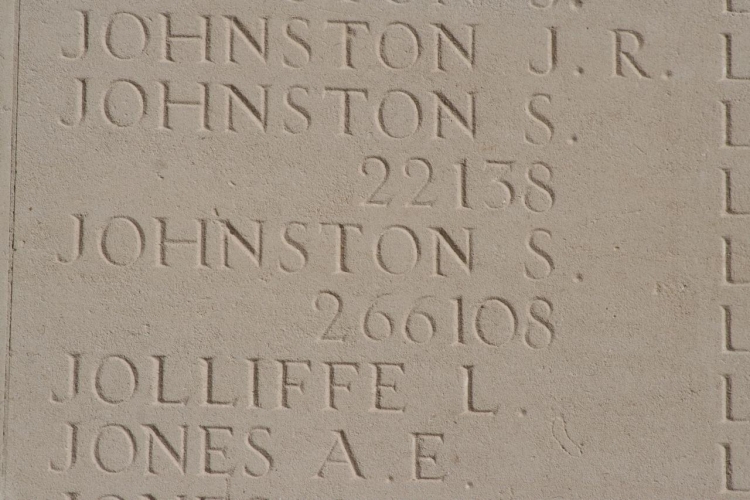
From: Liverpool
K.I.A (110 Years this day)
Thursday 12th October 1916.
23 years old
Albert Ernest Jones (known as Bert) was born in the September quarter of 1893, son of William Jones and his wife Mary Anne (née Cryer). His parents were both born in Liverpool and married there in 1890 at Holy Trinity, Walton Breck, his father was a 27 year old grocer of 16 Chelsea Rd, father Richard, whilst Mary Ann was aged 25 of 287 Rice Lane, father Edmund. They had four children, all boys. Albert had two older brothers, Richard Edmund, born in 1890, and William Valentine in 1892, and a younger brother Frederick, born in 1900.
In 1901 the family is living at 4 Hadden Avenue, Orrell Park, his father 37, is a grocer’s assistant, mother is 36, Richard is 10, William 9, Albert 7, and Frederick is 6 months old.
By 1911 they have moved to 7 Chevin Road, Walton. His father is a grocery dealer (employer), Richard, 20, is a salesman, William, 19, is a railway clerk, Albert, 17, is an assistant, at home, and Frederick is 10, at school.
He enlisted in Liverpool and was serving in the 17th Battalion, The King’s Liverpool Regiment as Private No 51964 when he was killed in action on the 12th October 1916 during the Battle of the Transloy Ridges which was part of the ongoing Somme Offensive. He was 22 or possibly 23 years old.
17th Bn War Diary: Battle of Transloy Ridge –
11-10-16 - Gird Trench/Gird Support – Battalion in front line and support trenches. British bombardment of enemy front line system commenced about midday. Hostile shelling was intermittent throughout the day.
12-10-16 - Our bombardment continued. Enemy reply weak. 2.5 p.m. Zero hour. Attack on German front line system commenced. Enemy wire was found to be uncut and attack was unsuccessful. Hostile machine gun fire was very heavy and caused many casualties. Battalion H.Q. and Support Trench were heavily shelled throughout afternoon and evening. […] During this action all communication had to be carried out by runners and carrier pigeons as all wires were being continually cut by enemy shelling.
Casualties: 5 officers killed, 5 officers wounded, 38 OR killed, about 225 OR wounded/missing etc.
Graham Maddocks, in “Liverpool Pals” p.140, adds: “As the whistle blew, the 17th Battalion left its trenches to move forward. […] As soon as the attacking waves left their trenches the enemy artillery began to register on them, and at the same time, the defending infantry commenced a murderous rain of fire. […] Although their numbers had been depleted by the British bombardment, they were trained and experienced soldiers, well dug in on high ground, and for the most part, looking out on uncut wire. As such, it was virtually impossible for them to miss the City Battalion men struggling to advance in the mud towards them. The 17th Battalion, on the left, was particularly badly hit, as its portion of No Man’s Land contained a slight rise in the ground, and as the troops emerged onto it they were silhouetted against the sky and became easy targets. Those on the left of the attack, who managed to avoid the hail of bullets and make it to the German wire, then found that it was totally uncut, and thus trapped, they too became easy targets, to be picked off almost at the enemy’s will. It was hardly surprising that, seeing the first waves being wiped out, some of the following waves turned back and made for their start lines. These lines were now packed with other waves of troops, however, and the fleeing men added to the congestion already there, and became easy prey for the German gunners. There is some evidence also, to suggest that at this stage, the British trenches were also being hit by their own heavy artillery shells which were falling short.”
Albert Ernest has no known grave and is commemorated on the Thiepval Memorial, France.
The Thiepval Memorial, the Memorial to the Missing of the Somme, bears the names of more than 72,000 officers and men of the United Kingdom and South African forces who died in the Somme sector before 20 March 1918 and have no known grave. Over 90% of those commemorated died between July and November 1916.
On 01st August 1932 the Prince of Wales and the President of France inaugurated the Thiepval Memorial in Picardy. The inscription reads: “Here are recorded the names of officers and men of the British Armies who fell on the Somme battlefields between July 1915 and March 1918 but to whom the fortune of war denied the known and honoured burial given to their comrades in death.”
He was reported killed in paper 20th Nov 1916.
King’s (Liverpool Regiment) - Jones, 51964, A. E.;
On the first anniversary of his death, his family placed a notice in the Liverpool Echo, on 12th October 1917 :
“In loving remembrance of Private Albert E. (Bert) Jones, K.L.R., killed in action October 12, 1916 (Duty nobly done.)
Father in Thy gracious keeping,
Leave we now our dear one sleeping.
- 7 Chevin Road, Aintree.”
His father William received his effects, including a War Gratuity of £3.
Albert Ernest Jones is commemorated on the Memorial at St John the Evangelist Church in Walton.
Father drops off the electoral roll at 7 Chevin Rd in 1930, he probably died aged 60 in 1929 and the mother drops off the electoral roll at 7 Chevin Rd in 1934, leaving son William Valentine.
We currently have no further information on Albert Ernest Jones, if you have or know someone who may be able to add to the history of this soldier, please contact us.
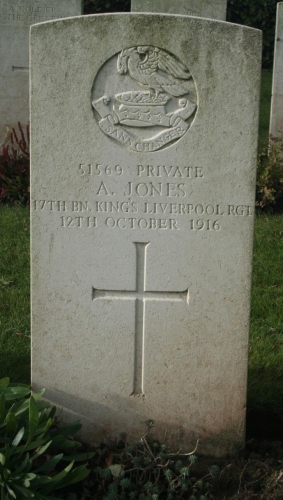
From: Liverpool
K.I.A (110 Years this day)
Thursday 12th October 1916.
18 years old
Arthur Frederick Jones was born on 13th December 1897, the son of John Jones and his wife Mary Ellen (née Littler). John, from Shropshire/Wales, and Mary Ellen, from Liverpool, who were married on the 13th April 1888 at St Mary’s, Edge Hill. John was a 24 year old railway police officer, father John, whist Mary was aged 25, father Samuel, both of 56 Lissant St. They had six children, their first child, Edward, born in 1890, died at age 6, the next child, Mary, born in 1893, died in infancy. Arthur was the second of the surviving children: he had an older brother John Samuel, born in 1895, and younger brothers, twins David Allen and George Sydney born in 1900. Arthur was baptized in St. Peter’s, Liverpool, on 30th December 1897, his parents residence Underley Street, Toxteth Park, and his father’s occupation labourer.
In 1901, the family, with four sons, is living with his maternal grandparents, Samuel and Elizabeth Littler at 15 Bryanston Road, Aigburth. Samuel is a retired farrier/blacksmith, Arthur’s father is a van driver, John is 5, Arthur is 3, the twins are three months old.
By 1911 they live around the corner from their previous residence, and are now at 6 Chetwynd Street, Aigburth.
His father, 46, is a tea salesman b.Llansillen, Nr Oswestry, his mother is 47, they have been married for 22 years,and have had 6 children, of which two died, John is 16, is a hosiery shop assistant, Arthur 13, David and George, 10, are at school.
He enlisted in Liverpool as Rifleman 3948, joining the 6th Battalion of The King's Liverpool Regiment (Liverpool Rifles). He embarked from Folkestone-Boulogne on 15th July 1916, reaching the 24th Infantry Base Depot on 16th July. He then proceeded to the 11th Entrenching Battalion on 02nd August 1916 and further proceeded to the 17th Battalion K.L.R. on 05th August and was posted from 05th September 1916 to the 17th battalion K.L.R. as Private 51569.
Arthur was killed in action on the 12th October 1916, aged 18, during the Battle of the Transloy Ridges which was part of the ongoing Somme Offensive.
17th Bn War Diary: Battle of Transloy Ridge –
11-10-16 - Gird Trench/Gird Support – Battalion in front line and support trenches. British bombardment of enemy front line system commenced about midday. Hostile shelling was intermittent throughout the day.
12-10-16 - Our bombardment continued. Enemy reply weak. 2.5 p.m. Zero hour. Attack on German front line system commenced. Enemy wire was found to be uncut and attack was unsuccessful. Hostile machine gun fire was very heavy and caused many casualties. Battalion H.Q. and Support Trench were heavily shelled throughout afternoon and evening. […] During this action all communication had to be carried out by runners and carrier pigeons as all wires were being continually cut by enemy shelling.
Casualties: 5 officers killed, 5 officers wounded, 38 OR killed, about 225 OR wounded/missing etc.
Graham Maddocks, in “Liverpool Pals” p.140, adds:
“As the whistle blew, the 17th Battalion left its trenches to move forward. […] As soon as the attacking waves left their trenches the enemy artillery began to register on them, and at the same time, the defending infantry commenced a murderous rain of fire. […] Although their numbers had been depleted by the British bombardment, they were trained and experienced soldiers, well dug in on high ground, and for the most part, looking out on uncut wire. As such, it was virtually impossible for them to miss the City Battalion men struggling to advance in the mud towards them. The 17th Battalion, on the left, was particularly badly hit, as its portion of No Man’s Land contained a slight rise in the ground, and as the troops emerged onto it they were silhouetted against the sky and became easy targets. Those on the left of the attack, who managed to avoid the hail of bullets and make it to the German wire, then found that it was totally uncut, and thus trapped, they too became easy targets, to be picked off almost at the enemy’s will. It was hardly surprising that, seeing the first waves being wiped out, some of the following waves turned back and made for their start lines. These lines were now packed with other waves of troops, however, and the fleeing men added to the congestion already there, and became easy prey for the German gunners. There is some evidence also, to suggest that at this stage, the British trenches were also being hit by their own heavy artillery shells which were falling short.”
Arthur rests at Warlencourt British Cemetery, France.
Warlencourt Cemetery is entirely a concentration cemetery, begun late in 1919 when graves were brought in from small cemeteries and the battlefields of Warlencourt and Le Sars. The Graves Registration form shows graves from “Le Sars 6/1, 6/2, Hexham Road, Seven Elms”.
Graves were brought in from the original cemeteries at Hexham Road (Le Sars), and Seven Elms (Flers), as well as over 3,000 British graves due to the fighting which took place around the Butte de Warlencourt from the autumn of 1916 to the spring of 1917, and again in the German advance and retreat of 1918. The cemetery now contains 3,505 Commonwealth burials and commemorations of the First World War, 1,823 of which are unidentified.
Arthur’s name appeared in the list of those Killed published in the Liverpool Post & Mercury on 20th November 1916. His parents received Arthur’s effects, including a War Gratuity of £3-10s. The pension card does not show the amount awarded.
Brother John Samuel enlisted on 7th August 1914, as 337178, 87th Field Ambulance, R.A.M.C. He served in Gallipoli before being sent to the western front in 1916. John was wounded on 25th November 1917, and died the same day. He was 22. John now rests at Rocquigny-Equancourt Road British Cemetery, Manancourt, Somme.
John's death was reported in the Liverpool Echo on 14th December 1917:
“Jones - November 25, died of wounds, in his 23rd year, Private John Samuel; also in loving birthday remembrance of Private Arthur Frederick, killed in action, October 12, 1916, in his 19th year. - Lovingly remembered by Annie Wooley and little Doris, 6 Chetwynd Street, Aigburth.”
In 1919 his parents provided the Army information on John’s living relatives: they were still living at 16 Chetwynd Street, Aigburth. The twins, now 18 and a half, were serving; George with the Royal Navy on H.M.S. Constance, and David with the R.A.F. at Wendover.
His parents drop off the Electoral Roll at 6 Chetwynd Street in 1930 leaving just George Sydney.
Grateful thanks are extended to Kevin Shannon the author of the book The Liverpool Rifles for providing details of Arthur's service with the 6th Rifles.
We currently have no further information on Arthur Frederick Jones, if you have or know someone who may be able to add to the history of this soldier, please contact us.
From: Abergele, N.Wales
K.I.A (110 Years this day)
Thursday 12th October 1916.
18 years old
George Frederick Jones was born in Abergele in late 1897 or early 1898, the second son of William Henry Jones and his wife Martha (née Rimmer), and baptised in Rhyl on the 9th March 1898, parents address 24 Abbey St. His father was born in St. Asaph, Flintshire, and spoke both English and Welsh. His mother was from Liverpool. They married in late 1894 in St Asaph and had three children. George had an older brother, William Lothian, born in 1896, and a younger brother, Harold Edgar, born in 1907. George was raised speaking both languages.
In 1901 the family is living at Penybont House, Abergele. His father, 30, is a plumber, his mother is 28, William is 5, George is 3. They have a domestic servant, a boarder, and a visitor from Ireland, Margaret Williams, 34, a Hospital nurse.
The 1911 Census shows the family living at the same address.
The father, 40, is a master plumber and house painter, his mother is 38 and they have been married for married 16 years and have 3 children, William aged 14 and George aged are both at school and Harold is aged 3.
17th Bn War Diary: Battle of Transloy Ridge –
11-10-16 - Gird Trench/Gird Support – Battalion in front line and support trenches. British bombardment of enemy front line system commenced about midday. Hostile shelling was intermittent throughout the day.
12-10-16 - Our bombardment continued. Enemy reply weak. 2.5 p.m. Zero hour. Attack on German front line system commenced. Enemy wire was found to be uncut and attack was unsuccessful. Hostile machine gun fire was very heavy and caused many casualties. Battalion H.Q. and Support Trench were heavily shelled throughout afternoon and evening. […] During this action all communication had to be carried out by runners and carrier pigeons as all wires were being continually cut by enemy shelling.
Casualties: 5 officers killed, 5 officers wounded, 38 OR killed, about 225 OR wounded/missing etc.
Graham Maddocks, in “Liverpool Pals” p.140, adds: “As the whistle blew, the 17th Battalion left its trenches to move forward. […] As soon as the attacking waves left their trenches the enemy artillery began to register on them, and at the same time, the defending infantry commenced a murderous rain of fire. […] Although their numbers had been depleted by the British bombardment, they were trained and experienced soldiers, well dug in on high ground, and for the most part, looking out on uncut wire. As such, it was virtually impossible for them to miss the City Battalion men struggling to advance in the mud towards them. The 17th Battalion, on the left, was particularly badly hit, as its portion of No Man’s Land contained a slight rise in the ground, and as the troops emerged onto it they were silhouetted against the sky and became easy targets. Those on the left of the attack, who managed to avoid the hail of bullets and make it to the German wire, then found that it was totally uncut, and thus trapped, they too became easy targets, to be picked off almost at the enemy’s will. It was hardly surprising that, seeing the first waves being wiped out, some of the following waves turned back and made for their start lines. These lines were now packed with other waves of troops, however, and the fleeing men added to the congestion already there, and became easy prey for the German gunners. There is some evidence also, to suggest that at this stage, the British trenches were also being hit by their own heavy artillery shells which were falling short.”
George Frederick has no known grave and is commemorated on the Thiepval Memorial to the Missing of the Somme, France.
The Thiepval Memorial, the Memorial to the Missing of the Somme, bears the names of more than 72,000 officers and men of the United Kingdom and South African forces who died in the Somme sector before 20 March 1918 and have no known grave. Over 90% of those commemorated died between July and November 1916.
On 01st August 1932 the Prince of Wales and the President of France inaugurated the Thiepval Memorial in Picardy. The inscription reads: “Here are recorded the names of officers and men of the British Armies who fell on the Somme battlefields between July 1915 and March 1918 but to whom the fortune of war denied the known and honoured burial given to their comrades in death.”
North Wales Weekly News 2nd Nov 1916
ABERGELE MAN WOUNDED.
Official news reached Mr. and Mrs. W. H. Jones, Penybont House, Abergele, on Sunday morning that their young son, Private Teddy Jones had been severely wounded in action. " Teddy " was under 18 when he joined the Liverpool Scottish, but he was keen on soldiering, and once in khaki he was keener still on going out to the front. Everyone in Abergele will wish the gallant lad a speedy recovery.
North Wales Weekly News 7th Dec 1916
PRIVATE F. JONES, ABERGELE
It is about a month since Mr. and Mrs. W. H. Jones, Penybont House, Abergele. received intimation from the War Office that their son, Private Freddy Jones, was wounded in action. From that day to this the anxious parents have heard nothing more about their lad, although they have made repeated enquiries to various quarters. Should paragraph meet the eye of anyone who can give any information to the father and mother concerning their young son, they would esteem it a great kindness if he would communicate with them.
North Wales Weekly News 13th March 1919
HANDSOME DONATION PROMISED.
Mr. G. Perkins held similar views, and suggested e monument, towards which he knew of a certain person who was prepared to contribute a handsome donation. Mr. W. P. Morris hoped that those present would not be confused on the question of finance. His idea about a hall was that it should be built by public subscriptions. Mr. W. H. Jones, Penybont House, supported the suggestion of a public garden and a monument.
North Wales Weekly News 30th Oct 1919
OUR FALLEN HEROES.—
At a special vestry meeting held this week, the vicar (Rev. H. R. Hughes) presiding, it was derided to fix a mural in St. Michael's Church in memory of Abergele men (between 60 and 70 in number) who fell in the great war. The marble tablet, measuring 6ft. by 4ft. 4in., is the gift of Mr. W. H. Jones, Penybont House, one of whose sons (Pte. Freddie Jones) made the supreme sacrifice in France. The design of the tablet is that of Mr. Edw. Williams, monumental mason.
OUR FALLEN HEROES.—The church people of Abergele have decided to place a mural tablet in St. Michael's in memory of local men (between 6o and 70) who fell in the great war. The marble tablet is the gift of Mr. W. H. Jones, Penybont House, one of whose sons made the supreme sacrifice in France. The design and the execution of the tablet has been entrusted to Mr. E. Willams, who also lost his only son in the war.
Flintshire County Herald 14th Nov 1919
ABERGELE WAR MEMORIAL AT ABERGELE
It has been decided to erect in the C. E. Mixed School at Abergele a tablet in memory of former scholars who have fallen in the war. The School belongs to the Countess of Dundonald, Gwrych Castle, Abergele, and she has given mission for the memorial to be placed on one of the interior walls of the school. The memorial is to take the form of a finely-sculptured tablet in white Sicilian marble, and made up into two panels which have been given by Mr. W. H. Jones, Penybont House, Abergele, whose son was killed in the war, and on these panels the names of the 45 fallen soldiers will be inscribed. The panels will he flanked by nice marble pilasters, and the cornice and pediment are to be moulded. The memorial has been subscribed for by the former pupils of the school in honour of their fellow pupils who have fallen in the war. The contract for the work has been placed in the hands of Mr. Samuel Welsby, sculptor, Widnes and Mossley Hill, Liverpool, and it is hoped to have the tablet fixed during the Christmas holidays.
We currently have no further information on George Frederick Jones, if you have or know someone who may be able to add to the history of this soldier, please contact us.
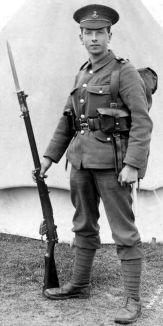
From: Llanrian
K.I.A (110 Years this day)
Thursday 12th October 1916.
22 years old
Griffith Jones was born in Llanrug, Caernarvonshire on the 11th May 1894 and resided in Liverpool and was the son of David and Margaret (nee Roberts) Jones who were married in 1893 in Caernarvon.
The 1901 Census shows the family living at 56 Herschell St, Everton, Liverpool.
His father David is aged 32, occupation shown as a joiner born in in Cwm-y-glo, Caernarvonshire, whilst his mother Margaret is aged 31, born in Llanrug, Caernarvonshire. Griffith is aged 6. He has two siblings born in Liverpool, Alun aged 3, and David aged 1,
The 1911 Census shows the family have moved to 128 Herschell St, Everton, Liverpool.
His father David is aged 42, occupation shown as a joiner born in 1869 in Cwm-y-glo, Caernarvonshire, whilst his mother Margaret is aged 41(married 17 years 6 children, 5 still alive), born 1870 in Llanrug, Caernarvonshire. Griffith is aged 16, and his occupation is a clerk. He has four siblings, all born in Liverpool and at school, Alun H, aged 13, born 1898, David Emlyn aged 11, born 1900, Trevor Wyn aged 7, born 1903 and Glyn aged 4, born 1907.
Griffith enlisted in Liverpool and was serving in the 18th Battalion, The King’s Liverpool Regiment as Private No 32659 when he was killed in action on the 12th October 1916 aged 22 during the Battle of the Transloy Ridges which was part of the ongoing Somme Offensive.
He has no known grave and is commemorated on the Thiepval Memorial to the Missing of the Somme, France.
The Thiepval Memorial, the Memorial to the Missing of the Somme, bears the names of more than 72,000 officers and men of the United Kingdom and South African forces who died in the Somme sector before 20 March 1918 and have no known grave. Over 90% of those commemorated died between July and November 1916.
On 01st August 1932 the Prince of Wales and the President of France inaugurated the Thiepval Memorial in Picardy. The inscription reads: “Here are recorded the names of officers and men of the British Armies who fell on the Somme battlefields between July 1915 and March 1918 but to whom the fortune of war denied the known and honoured burial given to their comrades in death.”
Liverpool Daily Post 12th Oct 1917
JONES - In loving memory of Private Griff Jones (K.L.R.), killed in action October 12, 1916, aged 22 years, the dearly loved son of David and Margaret Jones, 128 Herschell Street. (Sadly missed by Father, Mother and Brothers.)
Liverpool Daily Post 13th Oct 1919
JONES - In loving memory of GRIFF, the dearly loved eldest son of D. and M. Jones, 128 Herschel Street, killed in France, October 12, 1916. - Sadly missed by Mother, Father and Brothers.
Soldiers Effects to mother Margaret, Pension to father David.
Father David died aged 68 on the 13th Feb 1937 and was buried at Everton Cemetery.
Liverpool Daily Post 15th Feb 1937
JONES - February 13 at 128 Herschell Street, aged 68 years, DAVID. the dearly beloved husband of Margaret Jones. Funeral service at Douglas Road Welsh C.M. Church on Wednesday next at 11 a.m. Interment follows at Everton Cemetery at 12 o'clock.
By the 1939 register only brother Trevor Wyn is living at 128 Herschell Street, so mother most probably died in the interim.
We currently have no further information on Griffith Jones, If you have or know someone who may be able to add to the history of this soldier, please contact us.

From: Crewe, Cheshire
K.I.A (110 Years this day)
Thursday 12th October 1916.
23 years old
Harold Jones was born on the 30th April 1893 and baptised 30th August, 1893 at Christ Church, Crewe. He was the son of Samuel Stanley Jones and his wife Alice (nee Eaton) who were also married in 1893.
The 1901 census shows the family living at Back Mill Street, Crewe.
Samuel is working as a tin smith, he had been born in Whenlock, Salop and was 35 years old. His wife was 32 and had been born in Crewe. Harold was 7 and had two brothers, 3 year old Albert and 8 month old Jack.
Harold was educated at Edleston Road National School, Crewe.
The 1911 Census shows the family living at 14 Brook Street, Crewe.
Samuel is aged 45 and still a tin smith for a railway company. His wife Alice is aged 42(married 18 years 8 children 5 still alive) and was looking after their five children: Harold aged 17, who is now working as a house painter, Albert 13 at school, Jack 10 at school, and two more children born after the last census - Walter aged 5 at school and Amy aged 3.
Harold enlisted in Liverpool and was serving in the 18th Battalion, The King’s Liverpool Regiment as Private No 32775 when he was killed in action on the 12th October 1916 aged 23 during the Battle of the Transloy Ridges which was part of the ongoing Somme Offensive.
He has no known grave and is commemorated on the Thiepval Memorial to the Missing of the Somme, France.
The Thiepval Memorial, the Memorial to the Missing of the Somme, bears the names of more than 72,000 officers and men of the United Kingdom and South African forces who died in the Somme sector before 20 March 1918 and have no known grave. Over 90% of those commemorated died between July and November 1916.
On 01st August 1932 the Prince of Wales and the President of France inaugurated the Thiepval Memorial in Picardy. The inscription reads: “Here are recorded the names of officers and men of the British Armies who fell on the Somme battlefields between July 1915 and March 1918 but to whom the fortune of war denied the known and honoured burial given to their comrades in death.”
Father died aged 50 shortly before his sons death.
Liverpool Daily Post 4th Nov 1916
LATEST CREWE CASUALTIES.
Mrs Jones of Brook Street, Crewe, has being notified of the death in action of her son, Private Harold Jones (22), of the Liverpool Regiment. Formally a carter in Crewe.
Chester Chronicle 4th Nov 1916
ROLE OF HONOUR.
KILLED IN ACTION.
JONES - Harold Jones, King’s Liverpool Regiment, killed in action, October 12, 1916.
Soldiers Effects and Pension to mother Alice.
Mother Alice, dob 17th Jan 1869, appears on the 1939 register at 32 St Clair St, Crewe with children Jack, Walter, Amy and Alice M.
Mother died aged 75 in 1944.
Crewe Chronicle 25th Nov 1944
FUNERAL OF MRS. A. JONES. —The funeral took place on Wednesday of Mrs. Jones. aged 75, of 32, St. Clair-street, Crewe a member of the Flag-lane Methodist Church and a St. Clair-street resident all her life. Mr. Osborne officiated at the Flag-lane Church and the mourners were Miss A. Jones (daughter), Mr. J. Jones and Mr. W. Jones (sons), Mrs. E. Yates (granddaughter), Mr. J. T. Parrett, Mrs. A. E. Jones, Mrs. W. Jones, Mr. J. Parrett, Mrs. Morrison, Mrs. Griffiths, Mrs. Owen, Mr. E. Yates, Miss W. Sainter, Mrs. B. James, Mrs. Shaw, Miss E. Cannon, and Mrs. Whitmore. The Co-operative Society were the undertakers.
We currently have no further information on Harold Jones, If you have or know someone who may be able to add to the history of this soldier, please contact us.

From: Jackfield, Salop
K.I.A (110 Years this day)
Thursday 12th October 1916.
24 years old
John Jones was born in 1892 in Jackfield, Salop and was the son of John Jones and his wife Elizabeth (nee Burns) who had been married in November 1879.
The 1901 census shows the family living at Lloyds Head, Ironbridge, Salop. John senior is 48 and is a roofing tile presser, he was born in Madley, Salop. His wife Elizabeth was 43 and had been born in Jackfield, Salop as were all seven of their children – Alfred aged 20 and 17 year old Henry who are both roofing tile pressers assistants, Susannah 13 a general servant, Henrietta 11, John 9, Edward 6 and 4 year old Harriet.
By the time of the 1911 census the family live at 82 Lloyds Head. John and Elizabeth had been married for 32 years and had 9 children, 7 of whom are still living. Only John junior and William Edward are still living at home. John jnr is a pipe maker in an ironworks and William is working in an encaustic tile factory. Their younger sister at the age of 14 had also been working in the tile factory, but at this time she is a patient in the nearby Lady Forester Hospital and described as a former tile sorter. Sadly Harriet died a few months later. Their sister Henrietta is a servant in the household of an accountant in Edgbaston.
John was serving in the 19th Battalion, The King’s Liverpool Regiment as Private No 53133 when he was killed in action on the 12th October 1916, aged 24, during the Battle of the Transloy Ridges which was part of the ongoing Somme Offensive.
It had rained incessantly at the beginning of October 1916 and the ground was full of mud. In his book ‘The Liverpool Pals’ Graham Maddocks describes the day John was killed:
It was obvious that the Germans knew an attack was coming and from which direction it would be mounted. On the evening of the 11th the 20th Battalion moved up the line and dug two deep assembly trenches behind the 17th Battalion’s position for the attack the next day. The 19th Battalion also moved into its reserve positions known as Flers Trench. Although the rain has stopped, the ground was like a morass, with all the natural vegetation destroyed, it was difficult to tell exactly where the objectives lay. On the afternoon of the 12th at exactly 2.05pm, the attack began along the whole Corps line, covered by the local batteries of the Royal Field Artillery which still had line of sight. As the whistles blew, the 17th Battalion left its trenches to move forwards, at the same time No.1 and 2 Companies of the 20th Battalion moved forward and occupied the trenches vacated by the 17th. As they too went over the top, No.3 and 4 Companies took their place and waited in their turn to follow. No.2 and 3 Companies of the 19th Battalion moved up to occupy the assembly trenches dug the previous night by the 20th.
As soon as the attacking waves left their trenches the enemy artillery began to register on them and at the same time the defending infantry commenced a murderous rain of fire. Those German regiments were trained and experienced soldiers, well dug in on high ground, and for the most part, looking out on uncut wire. As such it was virtually impossible for them to miss the City Battalion men struggling to advance in the mud towards them.
Brigadier-General F.C.Stanley wrote that the Battalions were also suffering casualties due to the short shooting of the British heavy artillery fire. “I know from practical experience that they were our own guns which were shooting, and which were causing us quite a considerable number of casualties. The fault lay at that time from the fact that the heavy gunners would not send their FOO’s (Forward Observation Officers) far enough forward, but were content to observe us from right back”
Some ground was gained that day, about 150 yards, the 20th Battalion were not relieved until 24 hours later causing the men to endure another day and night in the front line trench.
John now rests at Caterpillar Valley Cemetery, Longueval, France. The inscription on his headstone reads:
“IN JESU'S KEEPING”
Caterpillar Valley was the name given by the army to the long valley which runs West to East, past "Caterpillar Wood", to the high ground at Guillemont. Longueval village is on the Northern crest of this valley and 500 metres West of the village, on the South side of the road to Contalmaison, is Caterpillar Valley Cemetery.
Caterpillar Valley was captured during a successful night assault by the 3rd, 7th and 9th Divisions on Bazentin Ridge on 14 July 1916. It was lost in the German advance of March 1918 and recovered by the 38th (Welsh) Division on 28 August 1918, when a little cemetery was made (now Plot 1 of this cemetery) containing 25 graves of the 38th Division and the 6th Dragoon Guards. After the Armistice, this cemetery was hugely increased when the graves of more than 5,500 officers and men were brought in from other small cemeteries, and the battlefields of the Somme. The great majority of these soldiers died in the autumn of 1916 and almost all the rest in August or September 1918.
CATERPILLAR VALLEY CEMETERY now contains 5,573 Commonwealth burials and commemorations of the First World War. 3,798 of the burials are unidentified but there are special memorials to 32 casualties known or believed to be buried among them, and to three buried in McCormick's Post Cemetery whose graves were destroyed by shell fire.
On the 6th November 2004, the remains of an unidentified New Zealand soldier were removed from this cemetery and entrusted to New Zealand at a ceremony held at the Longueval Memorial, France. The remains had been exhumed by staff of the Commonwealth War Graves Commission from Plot 14, Row A, Grave 27 and were later laid to rest within the Tomb of the Unknown Warrior, at the National War Memorial, Wellington, New Zealand.
On the east side of the cemetery is the CATERPILLAR VALLEY (NEW ZEALAND) MEMORIAL, commemorating more than 1,200 officers and men of the New Zealand Division who died in the Battles of the Somme in 1916, and whose graves are not known.
This is one of seven memorials in France and Belgium to those New Zealand soldiers who died on the Western Front and whose graves are not known. The memorials are all in cemeteries chosen as appropriate to the fighting in which the men died.
Both cemetery and memorial were designed by Sir Herbert Baker.
Soldiers Effects to father John, Pension to mother Elizabeth, 82 Lloyds Head, Jackfield.
He is also commemorated on the Jackfield and Coalport Memorial Bridge.
During the war his parents lived at 47, Ladywood Terrace, Ironbridge, Salop.
His father John died in 1927 and his mother Elizabeth in 1931.
We currently have no further information on John Jones, If you have or know someone who may be able to add to the history of this soldier, please contact us.
From: Liverpool
K.I.A (110 Years this day)
Thursday 12th October 1916.
20 years old
John Albert Jones was born in Anfield, Liverpool, on 20th November 1895, the eldest son of John Jones and his wife Elizabeth (née Evans). They married in about 1894, possibly at St John, Egremont, and had five children, one of whom died young. Albert was the eldest surviving child; his siblings were Haida (Haidee) Margaret, William Henry, and Mabel. John was baptized in St. Mary’s, Kirkdale, on 20th January 1896, his parents’ residence 4 Attwood Street, and his father’s occupation ship’s cook.
They are still at 4 Attwood Street in 1901; his mother Elizabeth, 35, is head of household, his father is not listed (likely away at sea), John is 5, Haidee is 4, William is 1.
They are at the same address in 1911. His mother Elizabeth, 45, married, is head of household, his father is not listed, John is 15, a junior clerk for a fruit merchant, Haidee, 13, William, 11, and Mabel, 9 are at school.
Sister Haidee died aged 19 in 1916 and was buried in Kirkdale Cemetery on the 14th December.
John enlisted in Liverpool on 2nd September 1914, as Private 16002, 17th (Pals) Bn, King’s (Liverpool) Regiment, giving his age as 19 years (in fact he was still 18), and his occupation as clerk. He is described as being 5’ 5” tall, weighing 122 lbs, with a fresh complexion, hazel eyes, and brown hair. He gives his father John as next of kin, at 41 Burleigh Road South, Anfield. He was billeted at Prescot Watch Factory from 14th September 1914, he trained there and also at Knowsley Hall. On 30th April 1915 the 17th Battalion alongside the other three Pals battalions left Liverpool via Prescot Station for further training at Belton Park, Grantham. They remained here until September 1915 when they reached Larkhill Camp on Salisbury Plain. He arrived in France on 7th November 1915. 0n 2/9/1916 John received a Good Conduct Badge on completion of two years’ service.
John was declared Missing on 12th October, 1916. His name appeared in the list of Missing published in the Liverpool Post & Mercury on 16th November 1916. In March 1917 John was reported to have been buried by the 1st Australian Bn. It is not known when his family received news of his fate. John’s death was later officially presumed to have occurred in action on 12/10/1916. His body was subsequently lost as he has no known grave and is commemorated on the Thiepval Memorial to the Missing of the Somme.
The Thiepval Memorial, the Memorial to the Missing of the Somme, bears the names of more than 72,000 officers and men of the United Kingdom and South African forces who died in the Somme sector before 20 March 1918 and have no known grave. Over 90% of those commemorated died between July and November 1916.
On 01st August 1932 the Prince of Wales and the President of France inaugurated the Thiepval Memorial in Picardy. The inscription reads: “Here are recorded the names of officers and men of the British Armies who fell on the Somme battlefields between July 1915 and March 1918 but to whom the fortune of war denied the known and honoured burial given to their comrades in death.”
In this time of anguish, his parents suffered further loss when their daughter Haidee died aged 19 in December 1916.
The 17th Bn War Diary describes the action on 12th October 1916 during the Battle of Transloy Ridge –
11-10-16 - Gird Trench/Gird Support – Battalion in front line and support trenches. British bombardment of enemy front line system commenced about midday. Hostile shelling was intermittent throughout the day.
12-10-16 - Our bombardment continued. Enemy reply weak. 2.5 p.m. Zero hour. Attack on German front line system commenced. Enemy wire was found to be uncut and attack was unsuccessful. Hostile machine gun fire was very heavy and caused many casualties. Battalion H.Q. and Support Trench were heavily shelled throughout afternoon and evening. […] During this action all communication had to be carried out by runners and carrier pigeons as all wires were being continually cut by enemy shelling.
Casualties: 5 officers killed, 5 officers wounded, 38 OR killed, about 225 OR wounded/missing etc.
Graham Maddocks, in “Liverpool Pals” p.140, adds: “As the whistle blew, the 17th Battalion left its trenches to move forward. […] As soon as the attacking waves left their trenches the enemy artillery began to register on them, and at the same time, the defending infantry commenced a murderous rain of fire. […] Although their numbers had been depleted by the British bombardment, they were trained and experienced soldiers, well dug in on high ground, and for the most part, looking out on uncut wire. As such, it was virtually impossible for them to miss the City Battalion men struggling to advance in the mud towards them. The 17th Battalion, on the left, was particularly badly hit, as its portion of No Man’s Land contained a slight rise in the ground, and as the troops emerged onto it they were silhouetted against the sky and became easy targets. Those on the left of the attack, who managed to avoid the hail of bullets and make it to the German wire, then found that it was totally uncut, and thus trapped, they too became easy targets, to be picked off almost at the enemy’s will. It was hardly surprising that, seeing the first waves being wiped out, some of the following waves turned back and made for their start lines. These lines were now packed with other waves of troops, however, and the fleeing men added to the congestion already there, and became easy prey for the German gunners. There is some evidence also, to suggest that at this stage, the British trenches were also being hit by their own heavy artillery shells which were falling short.”
John earned his three medals. In August 1919 his parents received his personal effects: 1 (identity)disc. His parents received his effects, including a War Gratuity of £9 and a pension of 4/6d a week, their address 41 Burleigh Rd South, Liverpool.
John is commemorated on Liverpool’s Hall of Remembrance, Panel 66.
Pension card states mother Elizabeth died on the 10th March 1924, she was aged 58.
The father John, dob 24th April 1864, a retired ships cook, appears on the 1939 register living at 19 Burleigh Rd with his married daughter Mabel Guy.
We currently have no further information on John Albert Jones, if you have or know someone who may be able to add to the history of this soldier, please contact
From: Liverpool
K.I.A (110 Years this day)
Thursday 12th October 1916.
21 years old
John Edward Jones was born in Toxteth Park, Liverpool in the summer of 1895, the eldest son of Robert Edward Jones and Mary (née Hughes). Robert, from Denbighshire, and Mary, from Anglesey, married in Holyhead, Anglesey, in 1894 and had three children. John had younger brothers Robert Alwyn, born in 1900, and Silvanus, in 1903.
The 1901 Census shows the family living at 167 Northbrook Street, Toxteth Park. His father, aged 32, is a coal merchant born in Glyndyfrdwy, Denbigh, his mother is 35 born in Ty Croes, Anglesey, John is aged 5, and Robert is 10 months old.
The 1911 Census shows the family have moved to 48 Kingsley Road, Toxteth. His father is a coal dealer, on his own account, and his mother, 45, is assisting in the business. John, 15, Robert, 10, and Silvanus, 7, are at school.
John enlisted in Liverpool as Rifleman 4675 joining the 6th Battalion of The King's Liverpool Regiment (Liverpool Rifles). He embarked aboard the SS Princess Victoria from Folkestone-Boulogne on 15th July 1916, reaching the 24th Infantry Base Depot on 16th July. He proceeded to the 11th Entrenching Battalion on 02nd August and proceeded to the 17th Battalion K.L.R. on 05th August and was posted to the 17th Bn from 05th September 1916 as Private No 51624.
He was killed in action on the 12th October 1916 during the Battle of the Transloy Ridges which was part of the ongoing Somme Offensive.
17th Battalion War Diary: Battle of Transloy Ridge –
11-10-16 - Gird Trench/Gird Support – Battalion in front line and support trenches. British bombardment of enemy front line system commenced about midday. Hostile shelling was intermittent throughout the day.
12-10-16 - Our bombardment continued. Enemy reply weak. 2.5 p.m. Zero hour. Attack on German front line system commenced. Enemy wire was found to be uncut and attack was unsuccessful. Hostile machine gun fire was very heavy and caused many casualties. Battalion H.Q. and Support Trench were heavily shelled throughout afternoon and evening. […] During this action all communication had to be carried out by runners and carrier pigeons as all wires were being continually cut by enemy shelling.
Casualties: 5 officers killed, 5 officers wounded, 38 OR killed, about 225 OR wounded/missing etc.
Graham Maddocks, in “Liverpool Pals” p.140, adds: “As the whistle blew, the 17th Battalion left its trenches to move forward. […] As soon as the attacking waves left their trenches the enemy artillery began to register on them, and at the same time, the defending infantry commenced a murderous rain of fire. […] Although their numbers had been depleted by the British bombardment, they were trained and experienced soldiers, well dug in on high ground, and for the most part, looking out on uncut wire. As such, it was virtually impossible for them to miss the City Battalion men struggling to advance in the mud towards them. The 17th Battalion, on the left, was particularly badly hit, as its portion of No Man’s Land contained a slight rise in the ground, and as the troops emerged onto it they were silhouetted against the sky and became easy targets. Those on the left of the attack, who managed to avoid the hail of bullets and make it to the German wire, then found that it was totally uncut, and thus trapped, they too became easy targets, to be picked off almost at the enemy’s will. It was hardly surprising that, seeing the first waves being wiped out, some of the following waves turned back and made for their start lines. These lines were now packed with other waves of troops, however, and the fleeing men added to the congestion already there, and became easy prey for the German gunners. There is some evidence also, to suggest that at this stage, the British trenches were also being hit by their own heavy artillery shells which were falling short.”
John Edward's body was not recovered or was subsequently lost as he has no known grave and is commemorated on the Thiepval Memorial, to the Missing of the Somme.
The Thiepval Memorial, the Memorial to the Missing of the Somme, bears the names of more than 72,000 officers and men of the United Kingdom and South African forces who died in the Somme sector before 20 March 1918 and have no known grave. Over 90% of those commemorated died between July and November 1916.
On 01st August 1932 the Prince of Wales and the President of France inaugurated the Thiepval Memorial in Picardy. The inscription reads: “Here are recorded the names of officers and men of the British Armies who fell on the Somme battlefields between July 1915 and March 1918 but to whom the fortune of war denied the known and honoured burial given to their comrades in death.”
His mother received a letter from Rev. P.H. Turnbull, Chaplain:-
“I deeply regret to tell you that your son Pte. J.E. Jones, of the King’s (Liverpool Regiment), died in this dressing station from wounds received in action on the 12th October. Everything possible was done for him, but he was too badly hurt. Please accept my deepest sympathy in your great sorrow. You can rest assured that you have reason to be proud of your boy, who gave his life for his country so bravely.”
His family placed a notice in the Liverpool Echo on 30th October 1916:
“October 12, killed in action, aged 21 years, Private John Edward Jones, eldest and dearly-beloved son of Mr. and Mrs. R.E. Jones, 48, Kingsley Road.”
He was reported killed in paper 20th Nov 1916.
King’s (Liverpool Regiment) - Jones, 51624, J. E.;
His father received John’s effects, including a War Gratuity of £3, his mother received his Pension.
John is also commemorated on the following Memorials:
Hall of Remembrance, Liverpool Town Hall, Panel 60 Right
London Joint City and Midland Bank Memorial.
His parents had moved back to Anglesey by the time of the 1939 register and are living on Valley Rd at Cefn Coed, Ty Croes. Robert, dob 19th Dec 1869 is partly retired, Mary has dob 12th Aug 1865.
His father died, aged 80, in 1949.
Grateful thanks are extended to Kevin Shannon the author of the book The Liverpool Rifles for providing details of John's service with the 6th Rifles.
We currently have no further information on John Edward Jones, If you have or know someone who may be able to add to the history of this soldier, please contact us.
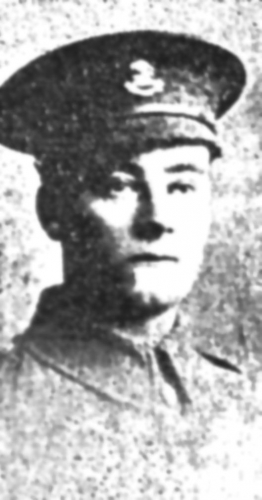
From: Liverpool
K.I.A (110 Years this day)
Thursday 12th October 1916.
23 years old
John Rimmer Cartwright Jones was born on the 10th of May 1892 in Liverpool and was the son of Charles William and Louisa Jane Rimmer Cartwright who were married at St George's Church, Everton on 28th December 1884. Louisa was born in October 1857 in Liverpool, she lived with her family at Tower Chambers, The Old Churchyard until she was married as her father was an office keeper (presumably a caretaker) from at least 1851 until his death in 1890. Charles was born in 1860 in Liverpool. The couple lived at 3 Spellow Place after their marriage.
The 1901 census finds the family living at 127 Gloucester Road, Bootle. His father, Charles, is aged 41, working as a foreman stevedore, mother Louisa is also 41 and the couple have four sons – Charles William aged 15 who is working as an office boy, Harold Herbert 13, Arthur Percy 12 and 8 year old John Rimmer. Also living with the family is Charles’s mother Mary Jane who was 68, and his 24 year old sister Alice The couple had a daughter called Louisa Jane Rimmer early in 1891 but sadly she died aged just 6 months at her grandparents address in Tower Chambers and was buried in the Necropolis, Low Hill Cemetery.
The 1911 Census shows the family living at 45 Keble Road, Bootle. Charles aged 51 is now working as a grain foreman and Louisa is also aged 51. They have been married for 26 years and have had 5 children 4 of whom have survived. All four sons are now working – Charles William is aged 25, a commercial clerk as is Harold Herbert aged 23, Arthur Percy is aged 22, a grain foreman like his father and John R.C. is aged 18, an electrical engineer. They have a niece Emily Gibney aged 13, born 1898 in Seacombe and still at school, living at the address.
John enlisted in Liverpool and was serving in the 20th Battalion, The King’s Liverpool Regiment as Private No 31658.
Formed in November 1914 the 20th Battalion were originally billeted at Tournament Hall, Knotty Ash before on 29th January 1915 they moved to the hutted accommodation purposely built at Lord Derby’s estate at Knowsley Hall. On 30th April 1915 the 20th Battalion alongside the other three Pals battalions left Liverpool via Prescot Station for further training at Belton Park, Grantham. They remained here until September 1915 when they reached Larkhill Camp on Salisbury Plain and arrived in France on 7th November 1915.
John was killed in action on the 12th October 1916, aged 23, during the Battle of the Transloy Ridges which was part of the ongoing Somme Offensive.
According to the 20th Bn War Diary, on 10th October 1916 the battalion marched from Dernancourt via Mametz to Bazentin Le Grand where it bivouacked for the night. The next day the battalion moved up to site for assembly trenches, arriving about 11 p.m., where it dug in two good trenches, Nos.1 and 2 Coys front and Nos.3 and 4 Coys in rear.
From the War Diary:
Near Eaucourt L’Abbaye. 12/10/1916. The 4th British and 6th French armies continued the attack. Zero 2.5 p.m. The whole XVth Corps attacked […] The attack of 89th Inf Bde was carried out with 2nd Bn Bedf Regt on right, 17th Bn KLR on left, 20th Bn KLR in support, 19th Bn KLR in reserve. Battalions attacked in four waves. On the departure of the attacking battalions Nos. 1 and 2 companies advanced, each in two waves, to garrison the front line trench vacated by 2nd Bn Bedf Regt on right and 17th KLR on left. On Nos 1 and 2 Coys vacating front assembly trench, it was occupied by two platoons of Nos. 3 and 4 Coys respectively, from rear assembly trench. As the assaulting waves left their trenches they were met by intense machine gun fire, especially on our left. The enemy also opened heavy barrages on our front support and assembly trenches. […] Capt. H. Beckett, commanding No.1 company, reached the front line with few casualties, but Lieut R.D. Paterson leading No.2 company was killed. His company also had few casualties. The assaulting battalions were held up by very heavy machine gun fire, and made little progress. […] At 4.20 p.m. two platoons, No.4 Coy, under Cpl Brighouse, were sent up to reinforce the left, and No.3 Coy under Cpl Sutton followed at 4.45 p.m. Battalion HQ moved up to front line at 4.55 and remaining two platoons of No.4 Coy moved up to join Cpl Brighouse.
Casualties during action:
Officers – Killed Lieut. R.D. Paterson, 2nd Lieut G.L. Grennan, Wounded – 2nd Lieuts A.E. Griffin, L.E. Mclean Hayes, C. Buttemer, Wounded Cpl g. Brighouse.
Other Ranks killed – 20.
It had rained incessantly at the beginning of October 1916 and the ground was full of mud. In his book ‘The Liverpool Pals’ Graham Maddocks describes the day Herbert was killed.
It was obvious that the Germans knew an attack was coming and from which direction it would be mounted. On the evening of the 11th the 20th Battalion moved up the line and dug two deep assembly trenches behind the 17th Battalion’s position for the attack the next day. The 19th Battalion also moved into its reserve positions known as Flers Trench. Although the rain has stopped, the ground was like a morass, with all the natural vegetation destroyed, it was difficult to tell exactly where the objectives lay. On the afternoon of the 12th at exactly 2.05pm, the attack began along the whole Corps line, covered by the local batteries of the Royal Field Artillery which still had line of sight. As the whistles blew, the 17th Battalion left its trenches to move forwards, at the same time No.1 and 2 Companies of the 20th Battalion moved forward and occupied the trenches vacated by the 17th. As they too went over the top, No.3 and 4 Companies took
their place and waited in their turn to follow. No.2 and 3 Companies of the 19th Battalion moved up to occupy the assembly trenches dug the previous night by the 20th.
As soon as the attacking waves left their trenches the enemy artillery began to register on them and at the same time the defending infantry commenced a murderous rain of fire. Those German regiments were trained and experienced soldiers, well dug in on high ground, and for the most part, looking out on uncut wire. As such it was virtually impossible for them to miss the City Battalion men struggling to advance in the mud towards them.
Brigadier-General F.C.Stanley wrote that the Battalions were also suffering casualties due to the short shooting of the British heavy artillery fire. “I know from practical experience that they were our own guns which were shooting, and which were causing us quite a considerable number of casualties. The fault lay at that time from the fact that the heavy gunners would not send their FOO’s (Forward Observation Officers) far enough forward, but were content to observe us from right back”
Some ground was gained that day, about 150 yards, the 20th Battalion were not relieved until 24 hours later causing the men to endure another day and night in the front line trench.
John's body was not recovered or was subsequently lost as he has no known grave and is commemorated on the Thiepval Memorial to the Missing of the Somme, France.
The Thiepval Memorial, the Memorial to the Missing of the Somme, bears the names of more than 72,000 officers and men of the United Kingdom and South African forces who died in the Somme sector before 20 March 1918 and have no known grave. Over 90% of those commemorated died between July and November 1916.
On 01st August 1932 the Prince of Wales and the President of France inaugurated the Thiepval Memorial in Picardy. The inscription reads: “Here are recorded the names of officers and men of the British Armies who fell on the Somme battlefields between July 1915 and March 1918 but to whom the fortune of war denied the known and honoured burial given to their comrades in death.”
Probate 1916:-
JONES John Rimmer Cartwright of 31 Hertford Road, Bootle Lancashire Private 20th Battalion K.L.R. died 12 October 1916 in France Probate Liverpool 22 December to Harold Herbert Jones timekeeper. Effects £226 7s 6d.
Soldiers Effects to brother Harold Herbert, Pension to father Charles William.
His family paid tribute to John on the first anniversary of his death in the Liverpool Echo on 13th October 1917:
JONES—In loving memory of our dear brother John R. C. JONES (‘Our Jack’), K.L.R., killed in action October 12, 1916.
We have lost, Heaven has gained,
One of the best the world contained.
— Charlie and Kitty, 21, Marion road.
Also on the second anniversary of his death in the Liverpool Echo on 13th October 1918:
JONES—In loving memory of our dear brother JOHN R. C. JONES (Jack), who was killed in action October 12, 1916, aged 24 years.
He gave his life, his best, his all,
That we he might live.
— Charlie and Kitty, 21, Marion road.
JONES—In loving memory Private J. R. C. JONES (Jack), K.L.R., killed in action October 12, 1916.
A loving brother, true and kind,
A beautiful memory left behind.
— Never forgotten by his brother and sister, Arthur and Florrie, 31, Hertford-road, Bootle.
He is also commemorated on the following Memorials:
Bootle Civic Memorial
Christ Church C. of E. School, Bootle.
John’s brother married Catherine Maher in August 1914 and Arthur married Florence Gough in February 1918, and subsequently married Maud Gough in December 1929.
John’s mother died, aged 74, in the March quarter of 1931.
His father died, aged 74, on the 09th April 1934. (from pension card).
We currently have no further information on John Rimmer Cartwright Jones, If you have or know someone who may be able to add to the history of this soldier, please contact us.
From: Crewe, Cheshire
D.O.W (110 Years this day)
Thursday 12th October 1916.
18 years old
John William Jones was born in 1898 in Crewe, Cheshire and was the eldest child of Thomas Jones and his wife Theresa Ellen (nee Thomason) who were married in 1897 at St Michael's Church, Coppenhall, Crewe. He was baptised on the 06th March 1898 at Coppenhall.
The 1901 Census shows the couple living at 6 Holland Street in Crewe with 3 year old John. Thomas was working as a railway coal lifter, he was 24 and was born in Tarporley, Cheshire. Theresa, known as Ellen, was 23 and was born in Crewe.
The 1911 Census shows the family living at 23 Holland Street, Crewe. His father, Thomas, is now a scrap wheeler on furnace at the railway works. His mother, Ellen, is at home looking after three children. At the time of the Census they had been married for 14 years. John has a brother Thomas Edward aged 7, and a sister Gladys May aged 5. All the children were still at school.
Prior to the outbreak of war John had been employed as a fitter in a steel works.
He was a member of the Men’s Own Brotherhood and the Henry Street Primitive Church,
He enlisted in Crewe and was serving in the 18th Battalion, The King’s Liverpool Regiment as Private No 30822 when he died of wounds on the 12th October 1916, aged 18, during the Battle of the Transloy Ridges which was part of the ongoing Somme Offensive.
His death was reported in the Nantwich Guardian on 27th October 1916
PRIVATE J. W. JONES.
Private John William Jones, of the King’s (Livepool Regiment), and eldest son of Mr. and Mrs. Jones. 78, Remer-street. Crewe, has died of wounds received in action. He enlisted shortly after the war broke out, and had been at the front since June last. Prior to enlistment he was employed as a fitter in the Steel Works. He was a member of the Men’s Own Brotherhood and also of the Henry street Primitive Methodist Church. He was in his 19th year. His mother has received a letter from the Rev. P. H. Turnbull, chaplain, in the following terms;— “I deeply regret to tell you that your son, Pte. J. W. Jones, of the King’s (Liverpool Regiment), died in this dressing station from wounds received in action on the 12th October. Everything possible was done for him, but was too badly hurt. Please accept deepest sympathy in your great sorrow. You can rest assured that you have reason to be proud your boy, who gave his life for his country so bravely.”
His name was among those listed in the Cheshire Observer on 18th November 1916:
DIED OF WOUNDS.
King’s (Liverpool Regt.) - Jones, 30822, T. W. (Crewe);
John William now rests at Dartmoor Cemetery, Becordel-Becourt, France, where his headstone bears the epitaph:
“AT REST IN THE LORD”
Dartmoor Cemetery was begun (as Becordel-Becourt Military Cemetery) in August 1915 and was used by the battalions holding that part of the line; its name was changed in May 1916 at the request of the 8th and 9th Battalions of the Devonshire Regiment. In September 1916, the XV Corps Main Dressing Station was established in the neighbourhood, but throughout 1917, the cemetery was scarcely used. It passed into German hands on 26 March 1918, but was retaken on 24 August by the 12th Division. There are five burials of August 1918, in Plot II, Row E. In adjoining graves in Plot I, Row A, are buried a father and son, who served in the same artillery battery, and were killed in action on the same day. Dartmoor Cemetery contains 768 Commonwealth burials of the First World War. The cemetery was designed by Sir Edwin Lutyens.
Soldiers Effects and Pension to mother Theresa Ellen, 78 Remer Street, Crewe.
Parents appear on the 1939 register living at 22 Minshull New Rd, Crewe. Thomas, dob , 19th April 1876, Theresa E., dob 27th Nov 1877, and married daughter Gladys M. and Sydney Packer.
His mother died, aged 88, on 05th March 1966
Probate
JONES Teresa Ellen of 22 Minshull New Road Crewe died 5 March 1966 Probate Chester 15 April to Thomas Edward Jones general labourer and Gladys May Parker married woman. £1310.
It is not known for sure when his father Thomas died.
We currently have no further information on John William Jones, If you have or know someone who may be able to add to the history of this soldier, please contact us.
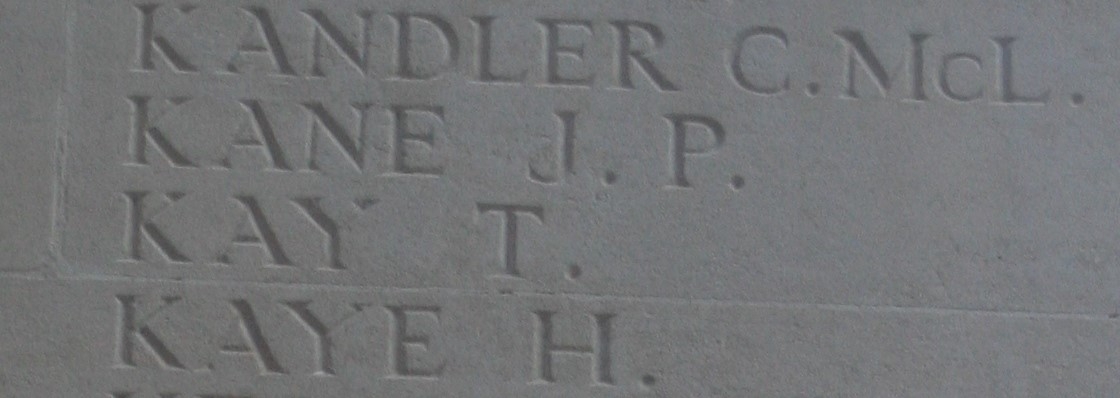
From: Glen, Co. Longford
K.I.A (110 Years this day)
Thursday 12th October 1916.
25 years old
This soldier, serving as Kane, was born Patrick Keane, on 03rd December 1890 in Glynn (Glen), Edgeworthstown, Co.Longford, the son of Patrick Keane and his wife Mary Anne (nee McDonnell) who were married about 1887 (no marriage record found).
The 1901 Census finds this family living at House 1, Shantum Townland, Ballymuigh, Longford. His father Patrick is 40, his mother, Mary Anne is 34, they have three sons, John, 11, Patrick, 10, and Francis, 8. The family is Roman Catholic, all family members born in County Longford.
In 1911 the family is living at House 2, Ballindagny and Cullyvore (which borders Shantum), Edgeworthstown, Longford. They have four sons and a daughter at home. There are discrepancies in the parents’ ages. The father Patrick is 58, a farm labourer, not literate, and the mother Mary Anne, 40, can read and write. They state they have had eight children, five of whom are still living. John, 22, Pat, 21, and Francis, 18, are all labourers, Joseph is 9, and Mary Kate 7.
Some time before enlisting, Patrick moved to Barrow in Furness, where there were thriving steel and shipbuilding industries. At one point Barrow had the largest steelworks in the world. By the 1890s the Vickers shipyard was heavily engaged in the construction of warships and submarines for the Royal Navy and for export, and by 1914 the UK had the most advanced submarine fleet in the world, with 94% of it constructed by Vickers. Vickers also had a significant armament division in Barrow, supplying ammunition for the British Army and Royal Navy throughout both world wars.
He enlisted in Liverpool as Private No 51958 and it seems he served in the Liverpool Scottish initially as the service record of 51988 Pte E. R. Milner exists which shows:-
E.R. Milner enlisted as No.5998 10th Liverpool (Scottish) on the 29th Dec 1915, embarked Folkestone 05th July 1916, proceeded at Boulogne to the 11th Entrenching Battn, then allocated the No.51988 with the 17/KLR. Given the close proximity to Patrick's number it is highly likely that his transfer took place which saw him serving in the 17th Battalion of The King's Liverpool Regiment. Further to this, casualties Pte 51951 Fred Longshaw, Pte 51952 Frederick Arthur Deeley have photographs in the Widnes Examiner on 04th November 1916 wearing the uniform of the 10th Battalion K.L.R. (Liverpool Scottish). Based on this, Patrick possibly had, although not documented, an earlier 4 digit 59xx number with the 10th, then after embarkation went on to 11th and 17th in early August 1916. Given his war gratuity on Soldiers Effects was the minimum £3, this means that he had less than a years service and this in turn supports that idea.
Joseph Patrick Keane married Florence Crowther Hargreaves in the June quarter of 1916 in Old Fylde Register Office, Fylde district, Lancashire, which includes Blackpool. No records of children born to the marriage have been found.
He was killed in action on the 12th October 1916, aged 25, during the Battle of the Transloy Ridges which was part of the ongoing Somme Offensive.
17th Bn War Diary: Battle of Transloy Ridge –
11-10-16 - Gird Trench/Gird Support – Battalion in front line and support trenches. British bombardment of enemy front line system commenced about midday. Hostile shelling was intermittent throughout the day.
12-10-16 - Our bombardment continued. Enemy reply weak. 2.5 p.m. Zero hour. Attack on German front line system commenced. Enemy wire was found to be uncut and attack was unsuccessful. Hostile machine gun fire was very heavy and caused many casualties. Battalion H.Q. and Support Trench were heavily shelled throughout afternoon and evening. […] During this action all communication had to be carried out by runners and carrier pigeons as all wires were being continually cut by enemy shelling.
Casualties: 5 officers killed, 5 officers wounded, 38 OR killed, about 225 OR wounded/missing etc.
Graham Maddocks, in “Liverpool Pals” p.140, adds: “As the whistle blew, the 17th Battalion left its trenches to move forward. […] As soon as the attacking waves left their trenches the enemy artillery began to register on them, and at the same time, the defending infantry commenced a murderous rain of fire. […] Although their numbers had been depleted by the British bombardment, they were trained and experienced soldiers, well dug in on high ground, and for the most part, looking out on uncut wire. As such, it was virtually impossible for them to miss the City Battalion men struggling to advance in the mud towards them. The 17th Battalion, on the left, was particularly badly hit, as its portion of No Man’s Land contained a slight rise in the ground, and as the troops emerged onto it they were silhouetted against the sky and became easy targets. Those on the left of the attack, who managed to avoid the hail of bullets and make it to the German wire, then found that it was totally uncut, and thus trapped, they too became easy targets, to be picked off almost at the enemy’s will. It was hardly surprising that, seeing the first waves being wiped out, some of the following waves turned back and made for their start lines. These lines were now packed with other waves of troops, however, and the fleeing men added to the congestion already there, and became easy prey for the German gunners. There is some evidence also, to suggest that at this stage, the British trenches were also being hit by their own heavy artillery shells which were falling short.”
The Longford Leader reported his death on 04th November 1916:
“Death of Private Patk Keane, late of Cullyvore
We regret to record the death of Pte. Patk. Keane, late of Cullyvore who was killed in action in France on October 12th last. Private Keane was not yet 25 years old and was in the King's Liverpool Regiment. He was one of the nicest and best liked young men in the whole parish, and universal regret is felt at his death so soon after going on active service. He was home on furlough only last spring and he looked fine and handsome in his kilt and Scottish uniform. We deeply sympathise with his sorrowing father and mother and family in their great affliction. R.I.P.”
Joseph Patrick's body was not recovered or was subsequently lost as he has no known grave and is commemorated on the Thiepval Memorial to the Missing of the Somme, France.
The Thiepval Memorial, the Memorial to the Missing of the Somme, bears the names of more than 72,000 officers and men of the United Kingdom and South African forces who died in the Somme sector before 20 March 1918 and have no known grave. Over 90% of those commemorated died between July and November 1916.
On 01st August 1932 the Prince of Wales and the President of France inaugurated the Thiepval Memorial in Picardy. The inscription reads: “Here are recorded the names of officers and men of the British Armies who fell on the Somme battlefields between July 1915 and March 1918 but to whom the fortune of war denied the known and honoured burial given to their comrades in death.”
His military records all show the surname Kane, perhaps the discrepancy is due to the perceived pronunciation when enlisting.
His widow Florence received Pat’s Army effects, including a War Gratuity of £3. The pension card, shows Florence with a date of birth of 06th July 1884, giving her address as 12 St. Chad’s Road, Blackpool, shows that she was awarded a pension of 13/9d a week from April 1917.
On the 1921 census widow Florence is living with her parents Frances and John F. Hargreaves in Blackpool.
Florence, Kane, 1884, Pudsey, Yorkshire, England, Blackpool, Fylde
Frances, Hargreaves, 1859, Pudsey, Yorkshire, England, Blackpool, Fylde, Lancashire
John F, Hargreaves, 1856, Farsley, Yorkshire, England, Blackpool, Fylde, Lancashire
Florence can’t be found on the 1939 register with her dob.
Patrick Kane is commemorated on the following memorials -
Ireland’s National Roll of Honour
Longford County Council Somme Plaque
We currently have no further information on Joseph Patrick Kane, if you have or know someone who may be able to add to the history of this soldier, please contact us.

From: Liverpool
K.I.A (110 Years this day)
Thursday 12th October 1916.
19 years old
James Kelly was born in 1897 and resided in Liverpool and was the son of James Kelly and his wife Ann (nee Gregory). His father James was born in Woolton in 1869 and his mother Ann in Everton in 1871. They were married on the 5th Jan 1890 at St. Bartholomew, James was a 20 year old horse keeper, father Thomas, whilst Ann was aged 19, father John Walter. They both gave their address as 1 Banastre St, Vauxhall.
The 1901 Census shows the family living at 348A Netherfield Road, Everton.
James senior was working as a general labourer and he and his wife have six children – Thomas aged 10, Betsy 9, Annie 7, Alice 5, James 4 and 2 year old Margaret.
The 1911 Census shows the family now living at 12 Hackthorpe Street, Everton, Liverpool.
The father James senior is working as a dock labourer, his wfe wife Ann is a charwoman and they have been married for 21 years and have had seven children of which one had died. They still have three children living at home: Annie Gregory employed in a Sweet Factory, James employed as a Coal Lad and Maggie aged 12 was still at school.
James enlisted in Liverpool and was serving in the 17th Battalion, The King’s Liverpool Regiment as Private No 52847 when he was killed in action on the 12th October 1916 aged 19 during the Battle of the Transloy Ridges which was part of the ongoing Somme Offensive.
17th Bn War Diary: Battle of Transloy Ridge –
11-10-16 - Gird Trench/Gird Support – Battalion in front line and support trenches. British bombardment of enemy front line system commenced about midday. Hostile shelling was intermittent throughout the day.
12-10-16 - Our bombardment continued. Enemy reply weak. 2.5 p.m. Zero hour. Attack on German front line system commenced. Enemy wire was found to be uncut and attack was unsuccessful. Hostile machine gun fire was very heavy and caused many casualties. Battalion H.Q. and Support Trench were heavily shelled throughout afternoon and evening. […] During this action all communication had to be carried out by runners and carrier pigeons as all wires were being continually cut by enemy shelling.
Casualties: 5 officers killed, 5 officers wounded, 38 OR killed, about 225 OR wounded/missing etc.
Graham Maddocks, in “Liverpool Pals” p.140, adds: “As the whistle blew, the 17th Battalion left its trenches to move forward. […] As soon as the attacking waves left their trenches the enemy artillery began to register on them, and at the same time, the defending infantry commenced a murderous rain of fire. […] Although their numbers had been depleted by the British bombardment, they were trained and experienced soldiers, well dug in on high ground, and for the most part, looking out on uncut wire. As such, it was virtually impossible for them to miss the City Battalion men struggling to advance in the mud towards them. The 17th Battalion, on the left, was particularly badly hit, as its portion of No Man’s Land contained a slight rise in the ground, and as the troops emerged onto it they were silhouetted against the sky and became easy targets. Those on the left of the attack, who managed to avoid the hail of bullets and make it to the German wire, then found that it was totally uncut, and thus trapped, they too became easy targets, to be picked off almost at the enemy’s will. It was hardly surprising that, seeing the first waves being wiped out, some of the following waves turned back and made for their start lines. These lines were now packed with other waves of troops, however, and the fleeing men added to the congestion already there, and became easy prey for the German gunners. There is some evidence also, to suggest that at this stage, the British trenches were also being hit by their own heavy artillery shells which were falling short.”
James has no known grave and is commemorated on the Thiepval Memorial to the Missing of the Somme, France.
The Thiepval Memorial, the Memorial to the Missing of the Somme, bears the names of more than 72,000 officers and men of the United Kingdom and South African forces who died in the Somme sector before 20 March 1918 and have no known grave. Over 90% of those commemorated died between July and November 1916.
On 01st August 1932 the Prince of Wales and the President of France inaugurated the Thiepval Memorial in Picardy. The inscription reads: “Here are recorded the names of officers and men of the British Armies who fell on the Somme battlefields between July 1915 and March 1918 but to whom the fortune of war denied the known and honoured burial given to their comrades in death.”
He was reported killed in the Liverpool Daily Post 20th Nov 1916.
King’s (Liverpool Regiment) - Kelly, 51847, J.;
Soldiers Effects to father James and pension to mother Ann.
We currently have no further information on James Kelly, if you have or know someone who may be able to add to the history of this soldier, please contact us.
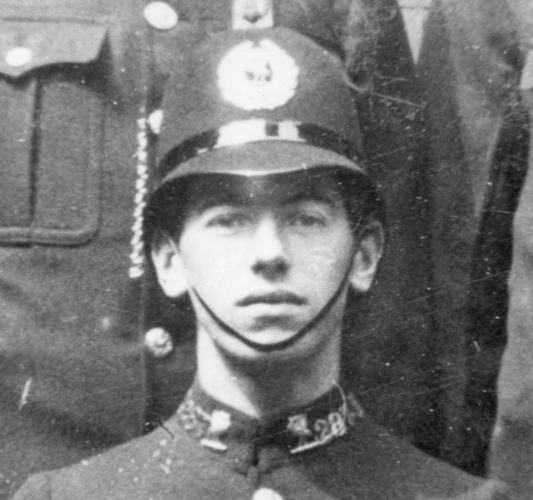
From: Lonan, I.O.M
K.I.A (110 Years this day)
Thursday 12th October 1916.
24 years old
William James Kelly was born in Lonan, Isle of Man on 05th April 1892, the eldest son of James Henry Kelly and his wife Isabella (née Kewley). He was baptised on the 24th June 1892 at Christ Church, Laxey. His parents married on the 18th July 1885 at Lonan Parish Church and had nine children. William had older sisters Catherine, Bessie, and Clara, and younger siblings Emma, Nesta, John, Florence and Emily. His father speaks both Manx and English, the rest of the family only English.
In 1901 they are in Agneash, a few miles from Laxey. His father James is aged 37, a blacksmith b.Maughold, mother Isabella is aged 38 b,Rushen, children all born Lonan, Catherine is 14 and a dressmaker, Bessie, 12, Clara, 11, William 8, Emma 7, Nesta 5, John 3, Florence 1.
In 1911 the family are still at Agneash, Lonan. His father, 47, is a mining blacksmith (lead mining), his mother is 48. They have been married for 25 years and have had 9 children. Five children are declared in the household; William is 18, a shoemaker’s apprentice, Nesta, 15, is a dressmaker’s apprentice, John, 13, Florence, 11, and Emily, 8, are at school.
His father died on the 26th March 1913, aged 49.
William James Kelly joined the Police Force on the 14th April 1913 as Constable 234F. He joined the Army on the 03rd February 1916.
William enlisted as Rifleman 4846 on 03rd February 1916, joining the 6th Battalion of The King's Liverpool Regiment (Liverpool Rifles). He embarked from Folkestone-Boulogne on 27th July 1916, reaching the 24th Infantry Base Depot on 29th July. He proceeded to the 17th Battalion K.L.R. on 06th August and was posted from 5.9.16 to the 20th Battalion K.L.R. as Private No 51738.
He was killed in action on the 12th October 1916, aged 24, during the Battle of the Transloy Ridges which was part of the ongoing Somme Offensive.
According to the 20th Bn War Diary, on 10th October 1916 the battalion marched from Dernancourt via Mametz to Bazentin Le Grand where it bivouacked for the night. The next day the battalion moved up to site for assembly trenches, arriving about 11 p.m., where it dug in two good trenches, Nos.1 and 2 Coys front and Nos.3 and 4 Coys in rear.
From the War Diary:
Near Eaucourt L’Abbaye. 12/10/1916. The 4th British and 6th French armies continued the attack. Zero 2.5 p.m. The whole XVth Corps attacked […] The attack of 89th Inf Bde was carried out with 2nd Bn Bedf Regt on right, 17th Bn KLR on left, 20th Bn KLR in support, 19th Bn KLR in reserve. Battalions attacked in four waves. On the departure of the attacking battalions Nos. 1 and 2 companies advanced, each in two waves, to garrison the front line trench vacated by 2nd Bn Bedf Regt on right and 17th KLR on left. On Nos 1 and 2 Coys vacating front assembly trench, it was occupied by two platoons of Nos. 3 and 4 Coys respectively, from rear assembly trench. As the assaulting waves left their trenches they were met by intense machine gun fire, especially on our left. The enemy also opened heavy barrages on our front support and assembly trenches. […] Capt. H. Beckett, commanding No.1 company, reached the front line with few casualties, but Lieut R.D. Paterson leading No.2 company was killed. His company also had few casualties. The assaulting battalions were held up by very heavy machine gun fire, and made little progress. […] At 4.20 p.m. two platoons, No.4 Coy, under Cpl Brighouse, were sent up to reinforce the left, and No.3 Coy under Cpl Sutton followed at 4.45 p.m. Battalion HQ moved up to front line at 4.55 and remaining two platoons of No.4 Coy moved up to join Cpl Brighouse.
Casualties during action:
Officers – Killed Lieut. R.D. Paterson, 2nd Lieut G.L. Grennan, Wounded – 2nd Lieuts A.E. Griffin, L.E. Mclean Hayes, C. Buttemer, Wounded Cpl g. Brighouse.
Other Ranks killed – 20.
It had rained incessantly at the beginning of October 1916 and the ground was full of mud. In his book ‘The Liverpool Pals’ Graham Maddocks describes the 12th of October:
It was obvious that the Germans knew an attack was coming and from which direction it would be mounted. On the evening of the 11th the 20th Battalion moved up the line and dug two deep assembly trenches behind the 17th Battalion’s position for the attack the next day. The 19th Battalion also moved into its reserve positions known as Flers Trench. Although the rain has stopped, the ground was like a morass, with all the natural vegetation destroyed, it was difficult to tell exactly where the objectives lay. On the afternoon of the 12th at exactly 2.05pm, the attack began along the whole Corps line, covered by the local batteries of the Royal Field Artillery which still had line of sight. As the whistles blew, the 17th Battalion left its trenches to move forwards, at the same time No.1 and 2 Companies of the 20th Battalion moved forward and occupied the trenches vacated by the 17th. As they too went over the top, No.3 and 4 Companies took their place and waited in their turn to follow. No.2 and 3 Companies of the 19th Battalion moved up to occupy the assembly trenches dug the previous night by the 20th.
As soon as the attacking waves left their trenches the enemy artillery began to register on them and at the same time the defending infantry commenced a murderous rain of fire. Those German regiments were trained and experienced soldiers, well dug in on high ground, and for the most part, looking out on uncut wire. As such it was virtually impossible for them to miss the City Battalion men struggling to advance in the mud towards them.
Brigadier-General F.C.Stanley wrote that the Battalions were also suffering casualties due to the short shooting of the British heavy artillery fire. “I know from practical experience that they were our own guns which were shooting, and which were causing us quite a considerable number of casualties. The fault lay at that time from the fact that the heavy gunners would not send their FOO’s (Forward Observation Officers) far enough forward, but were content to observe us from right back”
Some ground was gained that day, about 150 yards, the 20th Battalion were not relieved until 24 hours later causing the men to endure another day and night in the front line trench.
William's body was not recovered or was subsequently lost as he has no known grave and is commemorated on the Thiepval Memorial, in France.
The Thiepval Memorial, the Memorial to the Missing of the Somme, bears the names of more than 72,000 officers and men of the United Kingdom and South African forces who died in the Somme sector before 20 March 1918 and have no known grave. Over 90% of those commemorated died between July and November 1916.
On 01st August 1932 the Prince of Wales and the President of France inaugurated the Thiepval Memorial in Picardy. The inscription reads: “Here are recorded the names of officers and men of the British Armies who fell on the Somme battlefields between July 1915 and March 1918 but to whom the fortune of war denied the known and honoured burial given to their comrades in death.”
SDGW shows incorrectly 13th Bn but the medal roll shows only 20th Bn. William’s military records are misleadingly found under regimental numbers 21738(cwgc), 31738(can’t find any ref), 51738(SDGW, soldiers effects, medal roll, mic, pension).
The family notice in the Liverpool Echo 14th Oct 1918 states he was with the 6th Liverpool Rifles. This is quite correct as the Casualties Book of the 1/6th records he embarked at Folkstone on the 27th July 1916, destined for the 1/6th KLR. Diverted at 24 Infantry Base Depot to 17/KLR on 6 August and then posted to the 20th Bn on the 05th September 1916. Struck off the 1/6th's books as of then. (Kevin on GWF). They were one of the Rifle Volunteer units that chose to carry on the Rifles tradition after the formations of the TF. They traced their antecedents back to the Lancashire Volunteer Rifle Corps. In 1888 they became a volunteer battalion of the King's (Liverpool) Regiment but were given express permission to retain their distinctive uniform that was similar to that of the King's Royal Rifles (60th). The 6th was classified as a "class" corps and was composed mainly of professional and commercial men, particularly in employment related to the Liverpool Exchange. He probably enlisted with the 6th Battalion and was later posted to the 13th Battalion but the family saw him as remaining a 6th man. (Bordercollie on GWF)]
His death was reported in the Isle of Man Examiner on 11th November 1916
KELLY.—Killed in action, on October 12th, aged 24 years, Lance-Corpl. Willie Kelly (Liverpool Pals), elder son of Mrs Kelly and the late J. H. Kelly (blacksmith and fitter), Agneash, near Laxey.
The Isle of Man Examiner reported on 16th November 1916:
LANCE-CORPORAL J. W. KELLY KILLED.
News has been received that Lance-Corporal James W. Kelly. King’s Liverpool Regiment, was killed in action in France on October 12th. He is a son of the late Mr J. H. Kelly, Agneash, Laxey. He served his apprentice~ ship as a shoemaker with Messrs. Groome, Laxey, but about three years ago he joined the Liverpool Police Force. He was 24 years of age and had been just over two months on active service. Mrs W. J. Kermeen, of Glen Auldyn, Ramsey, is his sister. In a letter to the deceased’s mother, the Rev A. L. Preston (chaplain) says: “Your son died the finest death a man can die—fighting for his Country and the Right. It is only the body that lies in France, while the soul—the real self you know and love—has gone back to the God who loves him.”
He was reported killed in the Liverpool Daily Post on 20th November 1916
King’s (Liverpool Regiment) - Kelly, 51738, J.W.(Isle of Man);
His family paid tribute to him in the Liverpool Echo on 14th October 1918
KELLY - In fond memory of our WILL, (Lance Corporal 6th Liverpool Rifles), killed in action October 12, 1916. Our loving son, a brother kind.
A beautiful memory left behind.
Sadly missed by Mother, Sisters and only Brother (R.A.F. Mesopotamia), Agneash, Laxey, I.O.M.
His mother received his soldiers effects, including a War Gratuity of £3, and a pension of 10/- a week.
His mother died on the 10th June 1936, aged 73.
William is remembered on his parents’ gravestone in All Saints Church, Lonan:
“Also their son...William James, killed in France, Oct. 12th 1916, aged 24.”
William is also commemorated on the following memorials -
Men of Lonan and Laxey WW1 Tablet, All Saints Church, Lonan, IoM
Laxey Village War Memorial
The Manx National Memorial
Liverpool City Police Roll of Honour.
Grateful thanks are extended to Kevin Shannon the author of the book The Liverpool Rifles for providing details of William's service with the 6th Rifles.
Grateful thanks are also extended to Neil Murphy for permission to use the photograph of William now on the website.
We currently have no further information on William James Kelly, if you have or know someone who may be able to add to the history of this soldier, please contact us.
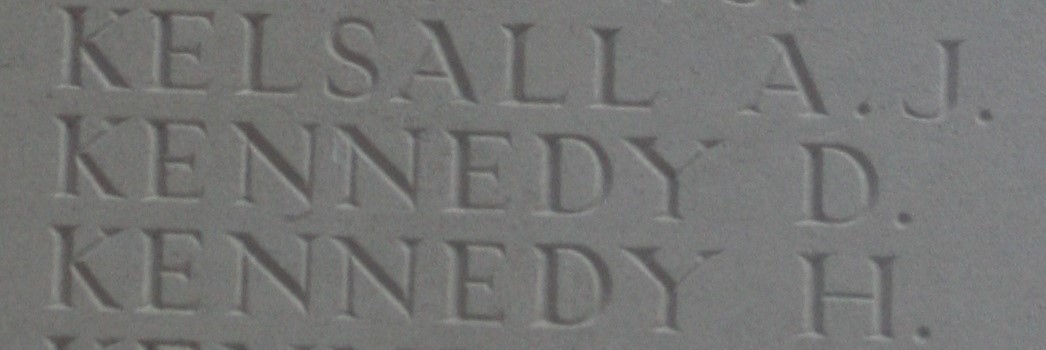
From: Scarisbrick, Lancs
K.I.A (110 Years this day)
Thursday 12th October 1916.
22 years old
Hugh Kennedy was born on 11th November 1893 in Scarisbrick, Ormskirk the youngest son of Dodgson Kennedy and his wife Jane (nee Halewood) who were married in 1879 at St. Michael’s, Aughton. Dodgson was an Accountant. Hugh was baptised on 10th December 1893 at St Michael's Church, Aughton. They had seven other children,
The 1901 Census shows the family are living at “Lanercost”, Winifred Lane, Aughton.
Father Dodgson is aged 47, an accountant b.Aughton, mother Jane is aged 42 b.Liverpool, Hugh is aged 7 b.Scarisbrick, other children born Aughton, Agnes 21, George 10, Frances 5, and Kathleen 11mths. They also have a cook and a domestic servant.
His mother died aged 47 on the 4th March 1906.
Hugh attended Merchant Taylors school from 1906 - 1908.
His father remarried in 1907 to Ellen Ford at St Mary, Lancaster.
Hugh's father died aged 55 on 27th October 1910.
The Morning Leader 6th Dec 1910
Mr Dodgson Kennedy, aged 55, Aughton, Lancs, land agent and accountant, and connected with the firm of Messrs. Kennedy and Glover, Solicitors..... £15,583.
The Morning Leader 6th Dec 1910
TWO YEARS' TEST
A gift of £100 to each of his sons who shall for two years before his father’s death have abstained from the use tobacco and intoxicating liquor is a curious bequest under the will of the late Mr. Dodgson Kennedy, of Aughton, Lancashire, whose estate has been sworn at £15,583 gross.
The 1911 Census shows Hugh living at Fairhaven, Swanpool Lane, Aughton with his brother William aged 26, occupation Solicitor and his wife Ellen aged 24, born 1887 and a servant named Phoebe Ellen Croston, aged 21 born 1890. Hugh who is aged 17 and is a Stock Brokers Apprentice.
Hugh enlisted on the 2nd September, 1914 in Liverpool, joining the 17th Battalion of The King's Liverpool Regiment as Private 15793. He gave his age as 20 years and 10 months and his occupation as a Clerk. He is described as being 5 foot 7 and half inches tall, weighing 146lbs, has a fresh complexion, grey eyes, brown hair and gave his religion as C. of E.
30.7.16 - wounded and shell shock, to F.A.
31.7.16 - moved from Camiers to 4th Gen. Hospital
5.8.16 - to 5 Convalescent Depot, Cayiers.
31.8.16 - to Etaples
15.9.16 - rejoined battalion in the field
12.10.16 - wounded and missing
His brother William was also a Liverpool Pal, joining the 17th Battalion as Private 23647 before receving a Commission as outlined in the Liverpool Daily Post report below on the 1st Feb 1916.
Mr. William Kennedy solictor of the form Messrs.Leo Kennedy and Glover, who joined the 1st Pals Liverpool Regiment nearly 12 months ago as a ranker has received a commission as second lieutant and been drafted to the 21st King's Liverpool Regiment stationed at Knowsley. Lieutant Kennedy belongs to a family with an excellent recruiting record. He is one of five brothers, sons of the late Mr.Dodgson Kennedy, of Ormskirk and Aughton, who joined the King's forces since the war broke out, one of whom, Private Hugh Kennedy, of the 17th King's Liverpool Regiment is in hospital in France suffering from wounds.
Ormskirk Advertiser 17th Dec 1914
ORMSKIRK SOLICITOR JOINS THE REGULARS.
THREE OTHER BROTHERS WITH THE COLOURS.
Another Ormskirk solicitor, Mr. Wm. Kennedy, of the firm of Messrs. Kennedy and Glover, has joined the King's Forces. Along with his younger brother, Mr. Alan Kennedy (who has recently returned from Canada to enlist) Mr. Kennedy yesterday journeyed to Liverpool to the recruiting office at Cooper's and became enrolled as rankers in the 1st City Battalion (" Pals") of the King's Liverpool Regiment, in which his brother, Hugh. has been a member since the war broke out. The eldest brother, Clem, is also with the 4th Dragoon Guards at Tidsworth. As is generally known, these four loyal men, all for active service, are the sons of the late Mr. Dodgson Kennedy, of " Lanercost," Aughton, and of this town, and they are to be congratulated on the step they have taken, all of course having volunteered their service since the war broke out. There are five brothers in all, and four have done their duty to their King and country —a glorious percentage, and one which other families might seek to emulate. Before joining the Forces. Mr. Wm. Kennedy, who resides at Aughton, and who is land agent for the Bishop of Whalley (the rector of Croston) made arrangements with his lordship whereby he is released of this position until the war is over, the Bishop, in a letter to him. expressing the hope that the example set by his agent would be followed by the young men eligible for enlistment in the Croston area. Mr. Kennedy and his brother will go into training at Prescot after the Christmas holidays.
Ormskirk Advertiser 5th June 1915
A PATRIOTIC FAMILY.
Mr. Geo. Holmes, of Bolton-le-sands, a son-in-law of the late Mr. Dodgson Kennedy, of " Lanercost," Aughton, joined the forces some three weeks ago, and is now in France as a motor-driver. He has thus followed the example of his four brothers-in-law, sons of Mr, Kennedy, who are now with the colours. Another brother-in-law of Mr. Holmes, Lieutenant Kirk, the amateur Bradford City footballer, was killed in action a little time back.
Hugh married Elizabeth Harrison on the 14th July, 1915 at Halsall Parish Church. As of 1915, they were living in Mill House, Halsall, Ormskirk. He had a daughter born on 31st December 1915. His wife informed the military that she changed the baby's name from Mary to Jane.
On 30.07.16 Hugh was wounded at Guillemont and by the time he was hospitalised he was additionally recorded as suffering from shell shock. He was admitted on 31.07.16 to a General Hospital at Rouen.
The Liverpool Echo of 05th August 1916 reported the circumstances of Hugh's injuries:
"Private Hugh Kennedy, of the "Pals," son of the late Dodson Kennedy, of Ormskirk,has been wounded, and is hospital at Rouen. He was buried in a trench by a German shell, eighth of his comrades being killed on the spot. He was dug out along with two or three others by an officer.".
Hugh returned to his battalion on 15th September 1916 and was killed in action on the 12th October 1916 aged 22 during the Battle of the Transloy Ridges which was part of the ongoing Somme Offensive.
17th Bn War Diary: Battle of Transloy Ridge –
11-10-16 - Gird Trench/Gird Support – Battalion in front line and support trenches. British bombardment of enemy front line system commenced about midday. Hostile shelling was intermittent throughout the day.
12-10-16 - Our bombardment continued. Enemy reply weak. 2.5 p.m. Zero hour. Attack on German front line system commenced. Enemy wire was found to be uncut and attack was unsuccessful. Hostile machine gun fire was very heavy and caused many casualties. Battalion H.Q. and Support Trench were heavily shelled throughout afternoon and evening. […] During this action all communication had to be carried out by runners and carrier pigeons as all wires were being continually cut by enemy shelling.
Casualties: 5 officers killed, 5 officers wounded, 38 OR killed, about 225 OR wounded/missing etc.
Graham Maddocks, in “Liverpool Pals” p.140, adds: “As the whistle blew, the 17th Battalion left its trenches to move forward. […] As soon as the attacking waves left their trenches the enemy artillery began to register on them, and at the same time, the defending infantry commenced a murderous rain of fire. […] Although their numbers had been depleted by the British bombardment, they were trained and experienced soldiers, well dug in on high ground, and for the most part, looking out on uncut wire. As such, it was virtually impossible for them to miss the City Battalion men struggling to advance in the mud towards them. The 17th Battalion, on the left, was particularly badly hit, as its portion of No Man’s Land contained a slight rise in the ground, and as the troops emerged onto it they were silhouetted against the sky and became easy targets. Those on the left of the attack, who managed to avoid the hail of bullets and make it to the German wire, then found that it was totally uncut, and thus trapped, they too became easy targets, to be picked off almost at the enemy’s will. It was hardly surprising that, seeing the first waves being wiped out, some of the following waves turned back and made for their start lines. These lines were now packed with other waves of troops, however, and the fleeing men added to the congestion already there, and became easy prey for the German gunners. There is some evidence also, to suggest that at this stage, the British trenches were also being hit by their own heavy artillery shells which were falling short.”
Private Hugh Kennedy, of the "Pals," son of the late Dodson Kennedy, of Ormskirk,has been wounded, and is hospital at Rouen. He was buried in a trench by a German shell, eighth of his comrades being killed on the spot. He was dug out along with two or three others by an officer. (Lpool Echo 5/8/16).
Hugh has no known grave and is commemorated on the Thiepval Memorial, France.
The Thiepval Memorial, the Memorial to the Missing of the Somme, bears the names of more than 72,000 officers and men of the United Kingdom and South African forces who died in the Somme sector before 20 March 1918 and have no known grave. Over 90% of those commemorated died between July and November 1916.
On 01st August 1932 the Prince of Wales and the President of France inaugurated the Thiepval Memorial in Picardy. The inscription reads: “Here are recorded the names of officers and men of the British Armies who fell on the Somme battlefields between July 1915 and March 1918 but to whom the fortune of war denied the known and honoured burial given to their comrades in death.”
Liverpool Daily Post 1st Feb 1916
Mr. William Kennedy, solicitor of the form Messrs. Leo Kennedy and Glover, who joined the 1st Pals Liverpool Regiment nearly 12 months ago as a ranker has received a commission as second lieutenant and been drafted to the 21st King's Liverpool Regiment stationed at Knowsley. Lieutenant Kennedy belongs to a family with an excellent recruiting record. He is one of five brothers, sons of the late Mr.Dodgson Kennedy, of Ormskirk and Aughton, who joined the King's forces since the war broke out, one of whom, Private Hugh Kennedy, of the 17th King's Liverpool Regiment is in hospital in France suffering from wounds.
Liverpool Echo of 05th August 1916 reported the circumstances of Hugh's injuries:
"Private Hugh Kennedy, of the "Pals," son of the late Dodson Kennedy, of Ormskirk, has been wounded, and is hospital at Rouen. He was buried in a trench by a German shell, eight of his comrades being killed on the spot. He was dug out along with two or three others by an officer."
He was reported wounded in the Liverpool Daily Post 11th Sept 1916.
King’s (Liverpool Regiment) - Kennedy, 15973, H.;
Liverpool Daily Post of 13th November 1916 reported
MISSING ORMSKIRK MAN.
After being officially wounded in France by the War Office two or three weeks ago, no news has been heard of Private Hugh Kennedy of the King's (Liverpool Regiment), the youngest son of the late Mr Dodgson Kennedy of " Lanercost" Aughton, and Ormskirk. Any information concerning him will be gladly welcomed by his wife, Mrs Kennedy of Halsall near Ormskirk.
Ormskirk Advertiser 15th March 1917
JOINING THEIR BRETHREN.
In regard to Mr. Kennedy, who is a partner in the firm of Messrs. Kennedy and Glover, solicitors, of Ormskirk. He is also one of five sons of the late Mr. Dodgson Kennedy, of " Lanercost," Aughton, to don khaki. The eldest son, Clem, is in France, the next, William is Lieut. and Assistant Adjutant of his battalion at Ripon, Allan has been recently discharged as medically unfit, whilst the youngest son, Hugh, has been reported missing in France for some months. Mr. Kennedy's brother-in-law, Mr. F. Holme has had two years in France with the A.S.C., as a transport driver, and was over military age when he volunteered. Mr. G. D. Kennedy is the second partner of the firm to join up, whilst three of the office staff are with the colours. These are worthy records, and the best wishes of their many friends accompany the two soldiers.
Ormskirk Advertiser 10th Jan 1918
AUGHTON OFFICER WOUNDED.
Lieutenant W. Kennedy, of Fairhaven, Aughton, of the firm of Kennedy and Glover, solicitors, Ormskirk, has been wounded in action, and is in hospital in France. He only went out to France a day or two before Christmas. Lieutenant Kennedy is one of the five sons of the late Mr Dodgson Kennedy, all of whom joined the Army. One the youngest, Hugh, has been killed in action, whilst Allan has been discharged medically unfit.
Hugh is also commemorated on the following Memorials:
Halsall Civic Memorial
Aughton Civic Memorial
Merchant Taylor’s School, Crosby
Aughton Institute
St Cuthbert’s, C. of E. Church, Halsall
Ormskirk Comrades Roll of Honour
Liverpool Stock Exchange.
Soldiers Effects had executors Elizabeth, George D. and James Draper.
His wife Elizabeth, dob 30th Oct 1895, received a pension of 18/9 for herself and child Jane from 09/07/17.
Widow Elizabeth remarried to James Milbourn in 1919 at St. Cuthbert's, Halsall.
She appears divorced on the 1939 register at 167 Bedford St. South, Liverpool, dob 30th Oct 1895, a domestic, and died aged 72 in 1968.
We currently have no further information on Hugh Kennedy, if you have or know someone who may be able to add to the history of this soldier, please contact us.
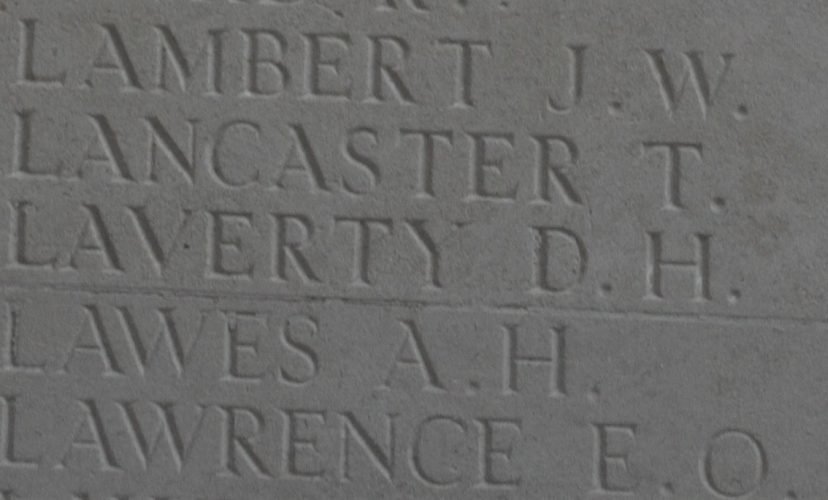
From: Liverpool
K.I.A (110 Years this day)
Thursday 12th October 1916.
21 years old
Ernest Orchard Lawrence was born on the 02nd April 1895 and baptised 30th June, 1895 at St Clement, C. of E. Church, Toxteth. He was the son of Henry Orchard Lawrence and his wife Annie Louisa (nee Minty) who married in Liverpool in 1890 at St. John The Baptist, Tuebrook.
The 1901 census sees the family living at 39 Granby Street. His father, Henry Orchard, is aged 36, born in 1866 in Weston Super Mare, and whose occupation is poultry dealer and shopkeeper. His wife Annie is aged 39, born 1862 and was born in Bath, Somerset. The couple have four children – Elizabeth aged 9, Frederick 7, Ernest 5 and 4 year old Marjorie. All the children have been born in Liverpool.
The 1911 Census shows the family now living at 164A Aigburth Road, Liverpool. His father Orchard is aged 45, born in 1866 in Weston Super Mare, and whose occupation is a Fishmonger and Poulterer His wife Annie is aged 49(married 20 years 5 children 4 still alive), born 1862 and is assisting in the business, she was born in Bath, Somerset. Elizabeth aged 19, is an Art Student, Frederick aged 17, is an Architectural student, Ernest aged 16, is assisting in the business and Marjorie aged 14 is at school.
Ernest enlisted as Rifleman 5141 joining the 6th Battalion of The King's Liverpool Regiment (Liverpool Rifles). He embarked from Folkestone-Boulogne on 19th July 1916, reaching the 24th Infantry Base Depot on 20th July, and proceeded to the 11th Entrenching Battalion on 02nd August. He then subsequently proceeded to the 17th Battalion K.L.R. on 05th August and was posted to the 17th Bn from 05th September 1916 as Private No 51670.
He was killed in action on the 12th October 1916 aged 21 during the Battle of the Transloy Ridges which was part of the ongoing Somme Offensive.
17th Bn War Diary: Battle of Transloy Ridge –
11-10-16 - Gird Trench/Gird Support – Battalion in front line and support trenches. British bombardment of enemy front line system commenced about midday. Hostile shelling was intermittent throughout the day.
12-10-16 - Our bombardment continued. Enemy reply weak. 2.5 p.m. Zero hour. Attack on German front line system commenced. Enemy wire was found to be uncut and attack was unsuccessful. Hostile machine gun fire was very heavy and caused many casualties. Battalion H.Q. and Support Trench were heavily shelled throughout afternoon and evening. […] During this action all communication had to be carried out by runners and carrier pigeons as all wires were being continually cut by enemy shelling.
Casualties: 5 officers killed, 5 officers wounded, 38 OR killed, about 225 OR wounded/missing etc.
Graham Maddocks, in “Liverpool Pals” p.140, adds:
“As the whistle blew, the 17th Battalion left its trenches to move forward. […] As soon as the attacking waves left their trenches the enemy artillery began to register on them, and at the same time, the defending infantry commenced a murderous rain of fire. […] Although their numbers had been depleted by the British bombardment, they were trained and experienced soldiers, well dug in on high ground, and for the most part, looking out on uncut wire. As such, it was virtually impossible for them to miss the City Battalion men struggling to advance in the mud towards them. The 17th Battalion, on the left, was particularly badly hit, as its portion of No Man’s Land contained a slight rise in the ground, and as the troops emerged onto it they were silhouetted against the sky and became easy targets. Those on the left of the attack, who managed to avoid the hail of bullets and make it to the German wire, then found that it was totally uncut, and thus trapped, they too became easy targets, to be picked off almost at the enemy’s will. It was hardly surprising that, seeing the first waves being wiped out, some of the following waves turned back and made for their start lines. These lines were now packed with other waves of troops, however, and the fleeing men added to the congestion already there, and became easy prey for the German gunners. There is some evidence also, to suggest that at this stage, the British trenches were also being hit by their own heavy artillery shells which were falling short.”
Ernest's body was not recovered or was subsequently lost as he has no known grave and is commemorated on the Thiepval Memorial to the Missing of the Somme, France.
The Thiepval Memorial, the Memorial to the Missing of the Somme, bears the names of more than 72,000 officers and men of the United Kingdom and South African forces who died in the Somme sector before 20 March 1918 and have no known grave. Over 90% of those commemorated died between July and November 1916.
On 01st August 1932 the Prince of Wales and the President of France inaugurated the Thiepval Memorial in Picardy. The inscription reads: “Here are recorded the names of officers and men of the British Armies who fell on the Somme battlefields between July 1915 and March 1918 but to whom the fortune of war denied the known and honoured burial given to their comrades in death.”
He was reported killed in the Liverpool Daily Post 20th November 1916.
King’s (Liverpool Regiment) - Lawrence, 51670, E.;
He is also commemorated on the following Memorials
St Michael in the Hamlet, C. of E. Church.
Hall of Remembrance, Liverpool Town Hall, Panel 24 Right
Ernest’s brother also served in the army, as Sapper 446638 in the Royal Engineers.
Soldiers Effects to father Henry O., Pension to mother Annie.
His parents moved to Devon around 1924.
Henry died aged 65 on the 29th May 1928.
Probate:-
LAWRENCE Henry Orchard of Westray Kingsneighton Devonshire died 29 May 1928 administration London 24 September to Annie Louise Lawrence widow. Effects £889 6s.
Annie died aged 86 in 1947 in Devon.
Grateful thanks are extended to Kevin Shannon the author of the book The Liverpool Rifles for providing details of Ernest's service with the 6th Rifles.
We currently have no further information on Ernest Orchard Lawrence, If you have or know someone who may be able to add to the history of this soldier, please contact us.
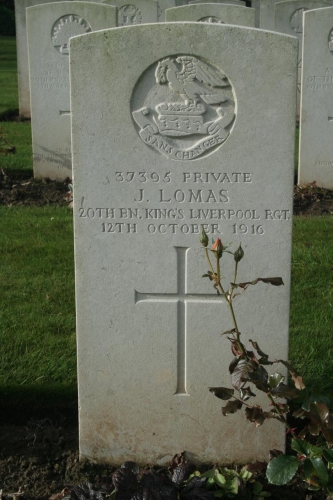
From: Ashton-under-Lyne, Lancs
K.I.A (110 Years this day)
Thursday 12th October 1916.
19 years old
In 1901 Jesse and Betty are living at 32 Buckley Street with three children. His father is aged 30, a self-employed market gardener, mother is aged 29, Alice A. is 5, James is 4, and Alfred is 2. They have two boarders, William and Mary Parker, both cotton mill workers. Lomas relatives live down the street at number 18.
They are still at 32 Buckley Street in 1911. His father, 40, is a market gardener, his mother is 39, they have been married for 16 years and declare that they have had 7 children, 6 of whom have survived. Six children are in the household; Alice, 15, is a cloth weaver in a cotton mill, James is 14, a cotton mule piecer, Alfred is 12, Harold 9, Jesse 6, and Edith 2.
According to the 20th Bn War Diary, on 10th October 1916 the battalion marched from Dernancourt via Mametz to Bazentin Le Grand where it bivouacked for the night. The next day the battalion moved up to site for assembly trenches, arriving about 11 p.m., where it dug in two good trenches, Nos.1 and 2 Coys front and Nos.3 and 4 Coys in rear.
From the War Diary:
Near Eaucourt L’Abbaye. 12/10/1916. The 4th British and 6th French armies continued the attack. Zero 2.5 p.m. The whole XVth Corps attacked […] The attack of 89th Inf Bde was carried out with 2nd Bn Bedf Regt on right, 17th Bn KLR on left, 20th Bn KLR in support, 19th Bn KLR in reserve. Battalions attacked in four waves. On the departure of the attacking battalions Nos. 1 and 2 companies advanced, each in two waves, to garrison the front line trench vacated by 2nd Bn Bedf Regt on right and 17th KLR on left. On Nos 1 and 2 Coys vacating front assembly trench, it was occupied by two platoons of Nos. 3 and 4 Coys respectively, from rear assembly trench. As the assaulting waves left their trenches they were met by intense machine gun fire, especially on our left. The enemy also opened heavy barrages on our front support and assembly trenches. […] Capt. H. Beckett, commanding No.1 company, reached the front line with few casualties, but Lieut R.D. Paterson leading No.2 company was killed. His company also had few casualties. The assaulting battalions were held up by very heavy machine gun fire, and made little progress. […] At 4.20 p.m. two platoons, No.4 Coy, under Cpl Brighouse, were sent up to reinforce the left, and No.3 Coy under Cpl Sutton followed at 4.45 p.m. Battalion HQ moved up to front line at 4.55 and remaining two platoons of No.4 Coy moved up to join Cpl Brighouse.
Casualties during action:
Officers – Killed Lieut. R.D. Paterson, 2nd Lieut G.L. Grennan, Wounded – 2nd Lieuts A.E. Griffin, L.E. Mclean Hayes, C. Buttemer, Wounded Cpl g. Brighouse.
Other Ranks killed – 20.
It had rained incessantly at the beginning of October 1916 and the ground was full of mud. In his book ‘The Liverpool Pals’ Graham Maddocks describes the 12th of October:
It was obvious that the Germans knew an attack was coming and from which direction it would be mounted. On the evening of the 11th the 20th Battalion moved up the line and dug two deep assembly trenches behind the 17th Battalion’s position for the attack the next day. The 19th Battalion also moved into its reserve positions known as Flers Trench. Although the rain has stopped, the ground was like a morass, with all the natural vegetation destroyed, it was difficult to tell exactly where the objectives lay. On the afternoon of the 12th at exactly 2.05pm, the attack began along the whole Corps line, covered by the local batteries of the Royal Field Artillery which still had line of sight. As the whistles blew, the 17th Battalion left its trenches to move forwards, at the same time No.1 and 2 Companies of the 20th Battalion moved forward and occupied the trenches vacated by the 17th. As they too went over the top, No.3 and 4 Companies took their place and waited in their turn to follow. No.2 and 3 Companies of the 19th Battalion moved up to occupy the assembly trenches dug the previous night by the 20th.
As soon as the attacking waves left their trenches the enemy artillery began to register on them and at the same time the defending infantry commenced a murderous rain of fire. Those German regiments were trained and experienced soldiers, well dug in on high ground, and for the most part, looking out on uncut wire. As such it was virtually impossible for them to miss the City Battalion men struggling to advance in the mud towards them.
Brigadier-General F.C.Stanley wrote that the Battalions were also suffering casualties due to the short shooting of the British heavy artillery fire. “I know from practical experience that they were our own guns which were shooting, and which were causing us quite a considerable number of casualties. The fault lay at that time from the fact that the heavy gunners would not send their FOO’s (Forward Observation Officers) far enough forward, but were content to observe us from right back”
Some ground was gained that day, about 150 yards, the 20th Battalion were not relieved until 24 hours later causing the men to endure another day and night in the front line trench.
He was reported as Missing in the Stalybridge Reporter 04th November 1916:
Private J. Lomas, No. 37395, of the King’s Liverpool Regiment, son of Mrs. Lomas, 32 Buckley Street, Ryecroft, Ashton, is reported missing since October 12th. Previous to joining the army on the 8th April, 1916, he worked at Messrs. Buckley and Co., Ryecroft, as a piecer.
Also in the Stalybridge Reporter 18th November 1916
Ashton Soldier Missing
An official communication has bree received from the Military Record Office, stating that Pte. James Lomas, of the King's Liverpool Regiment, has been missing since August(sic) 12th, 1916. Private J. Lomas is 19 years of age, and joined the forces on April 8th, 1916. He was drafted out to France on July 17. Before joining the Army he followed his employment as a piecer Messrs. Buckley and Co., Ryecroft. His mother, Mrs. Lomas, of 32, Buckley street, Ryecroft, Ashton, would be glad of any information concerning him.
Warlencourt Cemetery is entirely a concentration cemetery, begun late in 1919 when graves were brought in from small cemeteries and the battlefields of Warlencourt and Le Sars. The Graves Registration form shows graves from “Le Sars 6/1, 6/2, Hexham Road, Seven Elms”.
Graves were brought in from the original cemeteries at Hexham Road (Le Sars), and Seven Elms (Flers), as well as over 3,000 British graves due to the fighting which took place around the Butte de Warlencourt from the autumn of 1916 to the spring of 1917, and again in the German advance and retreat of 1918. The cemetery now contains 3,505 Commonwealth burials and commemorations of the First World War, 1,823 of which are unidentified.
His parents appear on the 1939 register still at Buckley Street. Father Jesse, dob 27th Sept 1870, mother Betty, dob 29th Dev 1872, with son Herbert.
His father died, aged 79 in the March quarter of 1950.
His mother died, aged 83, in the June quarter of 1955.
We currently have no further information on James Lomas, if you have or know someone who may be able to add to the history of this soldier, please contact us.
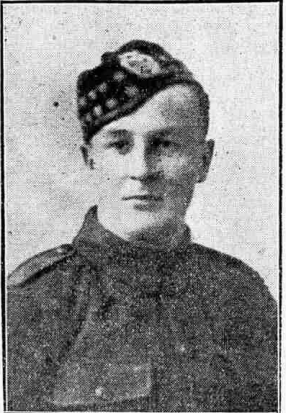
From: Warrington, Cheshire
K.I.A (110 Years this day)
Thursday 12th October 1916.
35 years old
Born at the beginning of March 1881 as Fred (not Frederick) Longshaw at 52 Parker Street, Warrington to Vulcan village, Warrington born joiner John Longshaw and his Thelwall, Cheshire born wife Margaret (nee Rowlinson). They married in Warrington in March 1871 at All Saints, Thelwall and had 7 children- 5 sons 2 daughters. Fred was their 5th child of the 7 born. His younger brother Charles Edward appears to have been stillborn the following December 1882.
The April 1891 Census shows the family still at 52 Parker Street. Father John is aged 43, a joiner, mother Margaret is aged 43 b.Thelwall. Children Harry 18 a joiner, Margaret 1 a scholar, Fred 10, and May 3. They also have a 13 year old servant, Ellen.
The March 1901 Census shows the family have moved to a new address 46 Lovely Road, Warrington. Father John is aged 55, a joiner, mother Margaret is aged 53. Children Harry 28 a joiner, John Wm. 23 a joiner, Margaret 21, a scholar, 20 year old Fred now a Clerk for a Gas and Stove Manufacturer in Warrington, and May is 13.
The 1911 Census shows the family living at Lynhurst, Thelwall Road, Latchford Warrington. His widowed father John is aged 64, born 1847, still working as a joiner. He has three children at the address all born in Warrington. John William aged 33, born 1878 is a joiner, Fred now aged 30, is a Commercial Clerk and May aged 24, born 1887.
In the October quarter of 1911 his father, John, now aged 64 remarried to a 55 year old Emily Seed at at St Paul's Church, Warrington.
The Widnes Examiner of 13th March 1915 reports Fred Longshaw received a Red-Cross first aid certificate at Raddon Court Red Cross Hospital.
Fred enlisted in Liverpool, the photograph of Fred, shown on this site suggests that he originally joined the 10th Battalion of The King's Liverpool Regiment before transferring to the 17th Battalion of The King’s Liverpool Regiment as Private No 51951
He was killed in action on the 12th October 1916, aged 35, during the Battle of the Transloy Ridges which was part of the ongoing Somme Offensive.
17th Bn War Diary: Battle of Transloy Ridge –
11-10-16 - Gird Trench/Gird Support – Battalion in front line and support trenches. British bombardment of enemy front line system commenced about midday. Hostile shelling was intermittent throughout the day.
12-10-16 - Our bombardment continued. Enemy reply weak. 2.5 p.m. Zero hour. Attack on German front line system commenced. Enemy wire was found to be uncut and attack was unsuccessful. Hostile machine gun fire was very heavy and caused many casualties. Battalion H.Q. and Support Trench were heavily shelled throughout afternoon and evening. […] During this action all communication had to be carried out by runners and carrier pigeons as all wires were being continually cut by enemy shelling.
Casualties: 5 officers killed, 5 officers wounded, 38 OR killed, about 225 OR wounded/missing etc.
Graham Maddocks, in “Liverpool Pals” p.140, adds:
“As the whistle blew, the 17th Battalion left its trenches to move forward. […] As soon as the attacking waves left their trenches the enemy artillery began to register on them, and at the same time, the defending infantry commenced a murderous rain of fire. […] Although their numbers had been depleted by the British bombardment, they were trained and experienced soldiers, well dug in on high ground, and for the most part, looking out on uncut wire. As such, it was virtually impossible for them to miss the City Battalion men struggling to advance in the mud towards them. The 17th Battalion, on the left, was particularly badly hit, as its portion of No Man’s Land contained a slight rise in the ground, and as the troops emerged onto it they were silhouetted against the sky and became easy targets. Those on the left of the attack, who managed to avoid the hail of bullets and make it to the German wire, then found that it was totally uncut, and thus trapped, they too became easy targets, to be picked off almost at the enemy’s will. It was hardly surprising that, seeing the first waves being wiped out, some of the following waves turned back and made for their start lines. These lines were now packed with other waves of troops, however, and the fleeing men added to the congestion already there, and became easy prey for the German gunners. There is some evidence also, to suggest that at this stage, the British trenches were also being hit by their own heavy artillery shells which were falling short.”
Fred now rests at Warlencourt British Cemetery, France where his headstone bears the epitaph:
“IN LOVING REMEMBRANCE”
Warlencourt Cemetery is entirely a concentration cemetery, begun late in 1919 when graves were brought in from small cemeteries and the battlefields of Warlencourt and Le Sars. The Graves Registration form shows graves from “Le Sars 6/1, 6/2, Hexham Road, Seven Elms”.
Graves were brought in from the original cemeteries at Hexham Road (Le Sars), and Seven Elms (Flers), as well as over 3,000 British graves due to the fighting which took place around the Butte de Warlencourt from the autumn of 1916 to the spring of 1917, and again in the German advance and retreat of 1918. The cemetery now contains 3,505 Commonwealth burials and commemorations of the First World War, 1,823 of which are unidentified.
Ferd's death was reported in the Liverpool Echo on 01st November 1916
PRIVATE LONGSHAW, WARRINGTON.
News has been received by Mr John Longshaw of Lynhurst, Thellwall New-road, Latchford, that his son Private Fred Longshaw, of the Liverpool Regiment has been killed in action in France. Private Longshaw was thirty-four years of age, and prior to enlistment twelve months ago was employed by the Richmond Gas Stove and Meter Co. Of Warrington.
Also in the Widnes Examiner on 04th November 1916:
PRIVATE F. LONGSHAW.
Killed After Only Three Months In France.
After spending only three months in France, Private Fred Longshaw is now reported killed. Official news reached his father, Mr. John Longshaw, who resides at Lynhurst, Thelwall New-road, Latchford Without, on Saturday morning, saying he had been killed in action on October 12th. Well known in the Latchford Without district and in Warrington, where he was born, Private Longshaw had been in the Army twelve months, and was 35 years of age. He was educated at the People's College, and latterly attended Grappenhall Church. After leaving school he became a member of the office staff of the Richmond Gas Stove and Meter Co., Ltd., with whom he was connected for 18 years. A cousin was killed in the early stages of the war. Private Longshaw enlisted about 12 months ago, first going in for signalling, but his eyesight being inefficient, he was given other work. It is a remarkable coincidence that his friend, Private A. Deeley, enlisted on the same day and was killed on the same day. Before he enlisted Private Longshaw was secretary to the Red Cross Society at Haddon Court. It is interesting to record that Private Longshaw's grandfather was in the Army at the time of the Battle of Waterloo, although not actually in the fray, arriving just as hostilities ceased.
On 26th February 1917 his elder brother Thomas Longshaw enlisted as Pte 129235 in the Labour Corp but because of his Bronchitis was discharged on 13 December 1917 as unfit. He died at home in March 1919.
Fred is commemorated on the family headstone in Warrington Cemetery.
We currently have no further information on Fred Longshaw, if you have or know someone who may be able to add to the history of this soldier, please contact us.
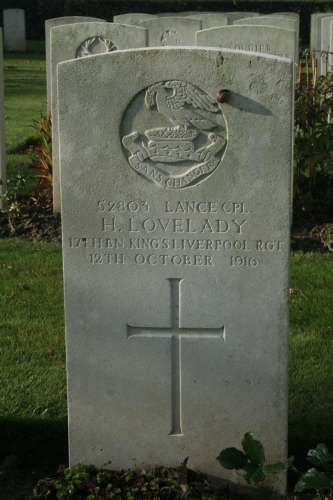
From: Great Crosby, Liverpool
K.I.A (110 Years this day)
Thursday 12th October 1916.
28 years old
Henry was born in Great Crosby, Lancashire, in late 1887 or early 1888, the son of William Lovelady and his wife Sarah (née Rimmer), both born in Crosby, who married in 1882 at West Derby Register Office. They had six children: Henry had older brothers John and William, and younger siblings Mary, Thomas, and Annie.
In 1891 the family is living at 4 Bellions Court, Victoria Road, Great Crosby.
His father William is aged 35, a gas stoker, mother Sarah is aged 29, they have four children, John aged 7, William aged 5, Henry is 3, and Mary 1(everybody born Great Crosby).
They are still at the same address in 1901.
His father aged 46, is a gas stoker, mother Sarah is aged 40, John 17, is a baker’s shop assistant, William, 15, is a general labourer, Henry is 13, Mary 11, THomas 6, and Annie 2.
Henry cannot be found on the 1911 census. His parents have moved to 5 York Road, Great Crosby, with William, Thomas, and Annie. His father aged 56, is listed as a scavenger (refuse collector/street cleaner) for the urban district council, mother Sarah is aged 49(married 28 years 6 children), William aged 25, is a parks gardener, Thomas aged 16 is a greengrocers shop assistant, Annie aged 12, is at school.
17th Bn War Diary: Battle of Transloy Ridge –
11-10-16 - Gird Trench/Gird Support – Battalion in front line and support trenches. British bombardment of enemy front line system commenced about midday. Hostile shelling was intermittent throughout the day.
12-10-16 - Our bombardment continued. Enemy reply weak. 2.5 p.m. Zero hour. Attack on German front line system commenced. Enemy wire was found to be uncut and attack was unsuccessful. Hostile machine gun fire was very heavy and caused many casualties. Battalion H.Q. and Support Trench were heavily shelled throughout afternoon and evening. […] During this action all communication had to be carried out by runners and carrier pigeons as all wires were being continually cut by enemy shelling.
Casualties: 5 officers killed, 5 officers wounded, 38 OR killed, about 225 OR wounded/missing etc.
Graham Maddocks, in “Liverpool Pals” p.140, adds:
“As the whistle blew, the 17th Battalion left its trenches to move forward. […] As soon as the attacking waves left their trenches the enemy artillery began to register on them, and at the same time, the defending infantry commenced a murderous rain of fire. […] Although their numbers had been depleted by the British bombardment, they were trained and experienced soldiers, well dug in on high ground, and for the most part, looking out on uncut wire. As such, it was virtually impossible for them to miss the City Battalion men struggling to advance in the mud towards them. The 17th Battalion, on the left, was particularly badly hit, as its portion of No Man’s Land contained a slight rise in the ground, and as the troops emerged onto it they were silhouetted against the sky and became easy targets. Those on the left of the attack, who managed to avoid the hail of bullets and make it to the German wire, then found that it was totally uncut, and thus trapped, they too became easy targets, to be picked off almost at the enemy’s will. It was hardly surprising that, seeing the first waves being wiped out, some of the following waves turned back and made for their start lines. These lines were now packed with other waves of troops, however, and the fleeing men added to the congestion already there, and became easy prey for the German gunners. There is some evidence also, to suggest that at this stage, the British trenches were also being hit by their own heavy artillery shells which were falling short.”
Henry now rests at Warlencourt British Cemetery.
Warlencourt Cemetery is entirely a concentration cemetery, begun late in 1919 when graves were brought in from small cemeteries and the battlefields of Warlencourt and Le Sars. The Graves Registration form shows graves from “Le Sars 6/1, 6/2, Hexham Road, Seven Elms”.
Graves were brought in from the original cemeteries at Hexham Road (Le Sars), and Seven Elms (Flers), as well as over 3,000 British graves due to the fighting which took place around the Butte de Warlencourt from the autumn of 1916 to the spring of 1917, and again in the German advance and retreat of 1918. The cemetery now contains 3,505 Commonwealth burials and commemorations of the First World War, 1,823 of which are unidentified.
“Previously reported wounded and missing, now officially reported killed October 12, 1916, Henry, third beloved son of William and Sarah Lovelady, 5, York Road, Great Crosby.”
Henry is remembered on his parents’ gravestone in St. Peter and St. Paul churchyard in Crosby: “Also Henry Lovelady, son of the above, killed in France Octr. 12th 1916 aged 28 years.”
We currently have no further information on Henry Lovelady, if you have or know someone who may be able to add to the history of this soldier, please contact us.
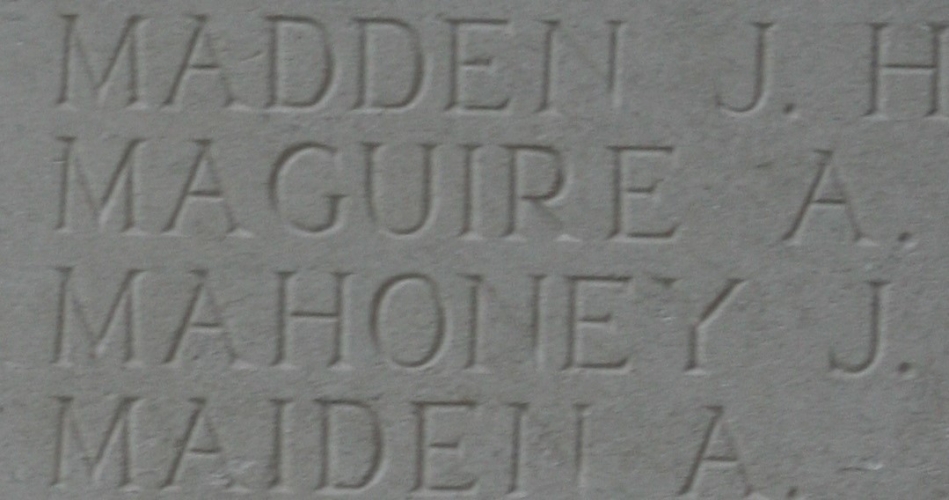
From: Liverpool
K.I.A (110 Years this day)
Thursday 12th October 1916.
26 years old
Joseph Henry Madden was born in the March quarter of 1890, the youngest son of Thomas Madden and Eliza (née Essery). Thomas was born in Liverpool and Eliza in Barnstaple, Devon; they married 19th February 1871 at Walton –On-The-Hill, Liverpool. They had twelve children, three of whom died young. Eliza Mary was born in 1871, and another child in 1873 (who appears to have died young as she does not appear on any census). The next child, Thomas Ralph, was born in St. Petersburg, Russia in 1876. It is not known how or why the parents travelled to Russia, but by 1878 they have returned to Liverpool, where the rest of their children were born: Elizabeth Louisa in 1878, Florence Amy 1880, Frederick Arthur 1885, George 1886, Edith Alice 1889, Joseph Henry 1890, and Adelaide May in 1892.
In 1891 the family is living at 25 Rennie Street, Kirkdale, with eight children. His father is a tinsmith. Joseph is 1 year old.
By 1901 they have moved to 72 Burleigh Road South, Everton. His father works for a rubber manufacturer. There are seven children in the household; Joseph is 11. Also in the household is his widowed grandfather Richard Essery, 75.
They are still at 72 Burleigh Road South in 1911. His father Thomas, 67, is a tinsmith for a rubber shoe manufacturer, his mother Eliza is 59, George, 24, is a telegraphist for the Canal Company, Edith is 22, no occupation, Joseph, 21, is a butcher, and Adelaide, 18, is a machinist for a rubber shoe manufacturer.
His father died later in 1911.
Although his military record has not survived, we do know that Joseph enlisted in Liverpool, and was serving in the 17th Battalion of The King’s Liverpool Regiment as Private No 51915 when he was killed in action on the 12th October 1916 aged 26 during the Battle of the Transloy Ridges which was part of the ongoing Somme Offensive.
17th Bn War Diary: Battle of Transloy Ridge –
11-10-16 - Gird Trench/Gird Support – Battalion in front line and support trenches. British bombardment of enemy front line system commenced about midday. Hostile shelling was intermittent throughout the day.
12-10-16 - Our bombardment continued. Enemy reply weak. 2.5 p.m. Zero hour. Attack on German front line system commenced. Enemy wire was found to be uncut and attack was unsuccessful. Hostile machine gun fire was very heavy and caused many casualties. Battalion H.Q. and Support Trench were heavily shelled throughout afternoon and evening. […] During this action all communication had to be carried out by runners and carrier pigeons as all wires were being continually cut by enemy shelling.
Casualties: 5 officers killed, 5 officers wounded, 38 OR killed, about 225 OR wounded/missing etc.
Graham Maddocks, in “Liverpool Pals” p.140, adds: “As the whistle blew, the 17th Battalion left its trenches to move forward. […] As soon as the attacking waves left their trenches the enemy artillery began to register on them, and at the same time, the defending infantry commenced a murderous rain of fire. […] Although their numbers had been depleted by the British bombardment, they were trained and experienced soldiers, well dug in on high ground, and for the most part, looking out on uncut wire. As such, it was virtually impossible for them to miss the City Battalion men struggling to advance in the mud towards them. The 17th Battalion, on the left, was particularly badly hit, as its portion of No Man’s Land contained a slight rise in the ground, and as the troops emerged onto it they were silhouetted against the sky and became easy targets. Those on the left of the attack, who managed to avoid the hail of bullets and make it to the German wire, then found that it was totally uncut, and thus trapped, they too became easy targets, to be picked off almost at the enemy’s will. It was hardly surprising that, seeing the first waves being wiped out, some of the following waves turned back and made for their start lines. These lines were now packed with other waves of troops, however, and the fleeing men added to the congestion already there, and became easy prey for the German gunners. There is some evidence also, to suggest that at this stage, the British trenches were also being hit by their own heavy artillery shells which were falling short.”
Joseph Henry has no known grave and is commemorated on the Thiepval Memorial to the Missing of the Somme, France.
The Thiepval Memorial, the Memorial to the Missing of the Somme, bears the names of more than 72,000 officers and men of the United Kingdom and South African forces who died in the Somme sector before 20 March 1918 and have no known grave. Over 90% of those commemorated died between July and November 1916.
On 01st August 1932 the Prince of Wales and the President of France inaugurated the Thiepval Memorial in Picardy. The inscription reads: “Here are recorded the names of officers and men of the British Armies who fell on the Somme battlefields between July 1915 and March 1918 but to whom the fortune of war denied the known and honoured burial given to their comrades in death.”
He is also remembered on St Cuthbert’s C. of E. Church, Everton.
We currently have no further information on Joseph Henry Madden, if you have or know someone who may be able to add to the history of this soldier, please contact us.

From: Liverpool
K.I.A (110 Years this day)
Thursday 12th October 1916.
20 years old
Joseph Gilbert Maine was born on the 20th May 1896 in Liverpool, baptised on the 7th June 1896 at St Charles Borromeo, Aigburth. He was the son of Joseph Henry and his wife Amoy (nee Williams) who were married on the 8th February 1894 at Our Lady of Mount Carmel Church. Joseph senior was a plumber of 3 Fairview Place, born in 1866, son of a plumber from Ireland. Amoy was of 7 Lucerne St, father Richard, born in Liverpool in 1871.
By the time of the 1901 census the couple had three children, Marguerite Caroline aged 6, Joseph Gilbert aged 4 and 1 year old Amy Frances. The family were living at 7 Siddeley Street, Toxteth.
The 1911 Census shows the family living at 4 Windbourne Rd, St. Michael's Hamlet, Liverpool. All of Joseph’s siblings were living at home: Marguerite Caroline aged 16, Amy Francis aged 11 at school, Richard aged 7 at school, and 4 year old John Francis at school. The census shows his father aged 45, was working as a plumber for the G.P.O., mother Amoy is aged 40(married 18 years 5 children), and Joseph Gilbert aged 14, was a messenger boy for the Western Union.
He enlisted on the 10th November, 1914 in Liverpool, joining the in the 20th Battalion of The King’s Liverpool Regiment as Private 22464. He gave his age as 21 years and 186 days. His birth had actually been registered in the second quarter of 1896 so he would be 18 not 21. He gave his occupation as clerk and he was described as 5 foot eight and half inches tall, weighed 125lbs, with a fresh complexion, brown eyes, dark brown hair and gave his religion as Roman Catholic.
Formed in November 1914 the 20th Battalion were originally billeted at Tournament Hall, Knotty Ash before on 29th January 1915 they moved to the hutted accommodation purposely built at Lord Derby’s estate at Knowsley Hall. On 30th April 1915 the 20th Battalion alongside the other three Pals battalions left Liverpool via Prescot Station for further training at Belton Park, Grantham. They remained here until September 1915 when they reached Larkhill Camp on Salisbury Plain. He arrived in France on 7th November 1915.
Joseph was appointed Paid Lance Corporal in February 1916, then acting Corporal in July 1916 and confirmed in that rank on July 3rd 1916.
Joseph was killed in action on the 12th October 1916, aged 20, during the Battle of the Transloy Ridges which was part of the ongoing Somme Offensive.
According to the 20th Bn War Diary, on 10th October 1916 the battalion marched from Dernancourt via Mametz to Bazentin Le Grand where it bivouacked for the night. The next day the battalion moved up to site for assembly trenches, arriving about 11 p.m., where it dug in two good trenches, Nos.1 and 2 Coys front and Nos.3 and 4 Coys in rear.
From the War Diary:
Near Eaucourt L’Abbaye. 12/10/1916. The 4th British and 6th French armies continued the attack. Zero 2.5 p.m. The whole XVth Corps attacked […] The attack of 89th Inf Bde was carried out with 2nd Bn Bedf Regt on right, 17th Bn KLR on left, 20th Bn KLR in support, 19th Bn KLR in reserve. Battalions attacked in four waves. On the departure of the attacking battalions Nos. 1 and 2 companies advanced, each in two waves, to garrison the front line trench vacated by 2nd Bn Bedf Regt on right and 17th KLR on left. On Nos 1 and 2 Coys vacating front assembly trench, it was occupied by two platoons of Nos. 3 and 4 Coys respectively, from rear assembly trench. As the assaulting waves left their trenches they were met by intense machine gun fire, especially on our left. The enemy also opened heavy barrages on our front support and assembly trenches. […] Capt. H. Beckett, commanding No.1 company, reached the front line with few casualties, but Lieut R.D. Paterson leading No.2 company was killed. His company also had few casualties. The assaulting battalions were held up by very heavy machine gun fire, and made little progress. […] At 4.20 p.m. two platoons, No.4 Coy, under Cpl Brighouse, were sent up to reinforce the left, and No.3 Coy under Cpl Sutton followed at 4.45 p.m. Battalion HQ moved up to front line at 4.55 and remaining two platoons of No.4 Coy moved up to join Cpl Brighouse.
Casualties during action:
Officers – Killed Lieut. R.D. Paterson, 2nd Lieut G.L. Grennan, Wounded – 2nd Lieuts A.E. Griffin, L.E. Mclean Hayes, C. Buttemer, Wounded Cpl g. Brighouse.
Other Ranks killed – 20.
It had rained incessantly at the beginning of October 1916 and the ground was full of mud. In his book ‘The Liverpool Pals’ Graham Maddocks describes the 12th of October:
It was obvious that the Germans knew an attack was coming and from which direction it would be mounted. On the evening of the 11th the 20th Battalion moved up the line and dug two deep assembly trenches behind the 17th Battalion’s position for the attack the next day. The 19th Battalion also moved into its reserve positions known as Flers Trench. Although the rain has stopped, the ground was like a morass, with all the natural vegetation destroyed, it was difficult to tell exactly where the objectives lay. On the afternoon of the 12th at exactly 2.05pm, the attack began along the whole Corps line, covered by the local batteries of the Royal Field Artillery which still had line of sight. As the whistles blew, the 17th Battalion left its trenches to move forwards, at the same time No.1 and 2 Companies of the 20th Battalion moved forward and occupied the trenches vacated by the 17th. As they too went over the top, No.3 and 4 Companies took their place and waited in their turn to follow. No.2 and 3 Companies of the 19th Battalion moved up to occupy the assembly trenches dug the previous night by the 20th.
As soon as the attacking waves left their trenches the enemy artillery began to register on them and at the same time the defending infantry commenced a murderous rain of fire. Those German regiments were trained and experienced soldiers, well dug in on high ground, and for the most part, looking out on uncut wire. As such it was virtually impossible for them to miss the City Battalion men struggling to advance in the mud towards them.
Brigadier-General F.C.Stanley wrote that the Battalions were also suffering casualties due to the short shooting of the British heavy artillery fire. “I know from practical experience that they were our own guns which were shooting, and which were causing us quite a considerable number of casualties. The fault lay at that time from the fact that the heavy gunners would not send their FOO’s (Forward Observation Officers) far enough forward, but were content to observe us from right back”
Some ground was gained that day, about 150 yards, the 20th Battalion were not relieved until 24 hours later causing the men to endure another day and night in the front line trench.
Joseph has no known grave and is commemorated on the Thiepval Memorial to the Missing of the Somme, France.
The Thiepval Memorial, the Memorial to the Missing of the Somme, bears the names of more than 72,000 officers and men of the United Kingdom and South African forces who died in the Somme sector before 20 March 1918 and have no known grave. Over 90% of those commemorated died between July and November 1916.
On 01st August 1932 the Prince of Wales and the President of France inaugurated the Thiepval Memorial in Picardy. The inscription reads: “Here are recorded the names of officers and men of the British Armies who fell on the Somme battlefields between July 1915 and March 1918 but to whom the fortune of war denied the known and honoured burial given to their comrades in death.”
Liverpool Daily Post 7th Nov 1916
MAINE - Mr and Mrs J. H. Maine and family sincerely thank relatives and friends for the many kind letters and expressions of sympathy extended to them in their sorrow. 4 Windburn Road St Michael's.
Reported killed in the Liverpool Daily Post 20th Nov 1916
King’s (Liverpool Regiment) - Maine, 22464, Cpl. J.;
He is also remembered on the following Memorials:
Hall of Remembrance, L;iverpool Town Hall, Panel 19
St Charles Borromeo’s R.C. Church, Aigburth
St Michael in the Hamlet C. of E. Church.
Soldiers Effects to father Joseph H.,(Personal effects returned – 1 photo, 1 metal watch(broken), knife? cleaner), and pension to mother Amoy.
He is also commemorated on the gravestone of his parents Amoy, who died in 1934 and Joseph, who died in 1945 which is in St Austin's churchyard, Aigburth Road
We currently have no further information on Joseph Gilbert Maine, If you have or know someone who may be able to add to the history of this soldier, please contact us.
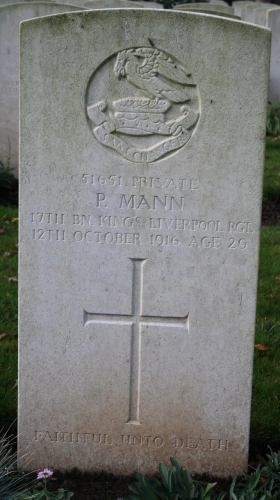
From: Liverpool
K.I.A (110 Years this day)
Thursday 12th October 1916.
29 years old
Percy Mann was born on the 08th August 1887 in Liverpool and was the son of David Mann and his wife Elizabeth (nee Stephenson). He was baptised at Emmanuel, Everton on October 30th in the same year where his parents address is recorded as 13 Denton Grove, Rocky Lane. David’s occupation is given as tobacconist, he had been born in Whitehaven, Cumberland in 1856 and Elizabeth was born in Liverpool in 1854. The couple were married on Boxing Day 1881 at St. Mary The Virgin, West Derby, David giving his residence as St Peters, Nottingham.
The 1891 census shows David and Elizabeth still at the same address, but now with four children – David junior aged 8, William 2, Percy 3 and 11 month old Ethel. David was working as a tobacco manufacturers foreman.
The family are at the same address at the time of the 1901 census.
Elizabeth is looking after six children now with Eleanor being born in 1893 and Mabel in 1894. Percy’s father is missing from the family in the 1901 and 1911 census, but when he died in 1923 his probate record states he is a ships steward so it has to be presumed he is away at sea.
The 1911 Census shows the family still living at the same address.
Elizabeth aged 55 has been married for 29 years and had 8 children of which two died, her remaining six children are all living at home with her. David junior aged 28, is working as a mechanic, Percy aged 23, is a clerk for a provisions merchant, William Simpson aged 22, is also a clerk for a timber merchant, Ethel aged 20, is a dressmaker, Eleanor Elizabeth aged 18, is a student and Mabel Georgina aged 16, is at home.
Percy enlisted in Liverpool and was serving in the 17th Battalion, The King’s Liverpool Regiment as Private No 51651 when he was killed in action on the 12th October 1916 aged 29 during the Battle of the Transloy Ridges which was part of the ongoing Somme Offensive.
17th Bn War Diary: Battle of Transloy Ridge –
11-10-16 - Gird Trench/Gird Support – Battalion in front line and support trenches. British bombardment of enemy front line system commenced about midday. Hostile shelling was intermittent throughout the day.
12-10-16 - Our bombardment continued. Enemy reply weak. 2.5 p.m. Zero hour. Attack on German front line system commenced. Enemy wire was found to be uncut and attack was unsuccessful. Hostile machine gun fire was very heavy and caused many casualties. Battalion H.Q. and Support Trench were heavily shelled throughout afternoon and evening. […] During this action all communication had to be carried out by runners and carrier pigeons as all wires were being continually cut by enemy shelling.
Casualties: 5 officers killed, 5 officers wounded, 38 OR killed, about 225 OR wounded/missing etc.
Graham Maddocks, in “Liverpool Pals” p.140, adds:
“As the whistle blew, the 17th Battalion left its trenches to move forward. […] As soon as the attacking waves left their trenches the enemy artillery began to register on them, and at the same time, the defending infantry commenced a murderous rain of fire. […] Although their numbers had been depleted by the British bombardment, they were trained and experienced soldiers, well dug in on high ground, and for the most part, looking out on uncut wire. As such, it was virtually impossible for them to miss the City Battalion men struggling to advance in the mud towards them. The 17th Battalion, on the left, was particularly badly hit, as its portion of No Man’s Land contained a slight rise in the ground, and as the troops emerged onto it they were silhouetted against the sky and became easy targets. Those on the left of the attack, who managed to avoid the hail of bullets and make it to the German wire, then found that it was totally uncut, and thus trapped, they too became easy targets, to be picked off almost at the enemy’s will. It was hardly surprising that, seeing the first waves being wiped out, some of the following waves turned back and made for their start lines. These lines were now packed with other waves of troops, however, and the fleeing men added to the congestion already there, and became easy prey for the German gunners. There is some evidence also, to suggest that at this stage, the British trenches were also being hit by their own heavy artillery shells which were falling short.”
Percy now rests at Warlencourt British Cemetery, France, where his headstone bears the epitaph:
“FAITHFUL UNTO DEATH”
Warlencourt Cemetery is entirely a concentration cemetery, begun late in 1919 when graves were brought in from small cemeteries and the battlefields of Warlencourt and Le Sars. The Graves Registration form shows graves from “Le Sars 6/1, 6/2, Hexham Road, Seven Elms”.
Graves were brought in from the original cemeteries at Hexham Road (Le Sars), and Seven Elms (Flers), as well as over 3,000 British graves due to the fighting which took place around the Butte de Warlencourt from the autumn of 1916 to the spring of 1917, and again in the German advance and retreat of 1918. The cemetery now contains 3,505 Commonwealth burials and commemorations of the First World War, 1,823 of which are unidentified.
Originally posted as Missing in the Liverpool Daily Post on 16th Nov 1916.
King’s (Liverpool Regt.) - Mann, 51651, P.;
Percy’s parents took out a notice in the Liverpool Daily Post on 26th April 1917:
Mann – October 12, 1916, killed in action, previously reported missing, aged 29 years, Rifleman Percy Mann (K.L.R.), the dearly beloved second son of David and Elizabeth Mann, 13 Denton Grove, Anfield.
Liverpool Daily Post on 12th Oct 1917.
MANN - In loving memory of Rifleman P. MANN (K.L.R.), killed in action October 12, 1916. (Ever fondly remembered by Alice and Ray.)
He is also remembered on the Memorial in St Margaret’s C. of E. Church, Anfield.
Soldier Effects and Pension to parents David and Elizabeth.
Percy’s mother died aged 64 in 1918 and was buried on the 21st March at West Derby Cemetery.
His father died aged 66 on the 17th Feb 1923.
Probate 1923:-
MANN David of 13 Denton Grove Anfield Liverpool ships Steward died 17th February 1923 Administration Liverpool 10 April to William Simpson Mann salesman. Effects £142 5s.
Both of Percy’s brothers served in the RAF during the war.
We currently have no further information on Percy Mann, If you have or know someone who may be able to add to the history of this soldier, please contact us.
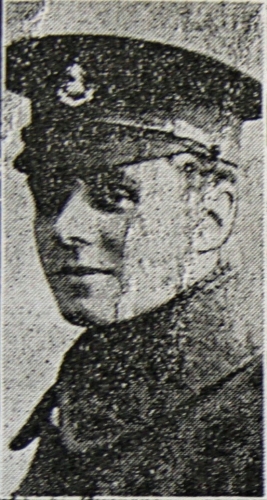
From: Crosby
K.I.A (110 Years this day)
Thursday 12th October 1916.
21 years old
Herbert Bright Mawdsley was born in 1895 in Crosby, the son of John Mawdsley and his wife Sarah Ellen(nee Whittle) who were married in 1888 at St Helen’s, Sefton. John was a joiner by trade who had been born in Crosby in 1864, Sarah had been born in 1862 in Maghull.
At the time of the 1901 census the family were living at 73 Victoria Road, Crosby.
Father John aged 37, a joiner b. Great Crosby, mother Sarah E. aged 39 b.Maghull, Children born Crosby, 6 year old Herbert and his four sisters: Alice aged 11, Margaret 9, Emily 7 and 5 year old Edith.
The 1911 census records him, his parents and all of his sisters living at 5 Claremont Terrace, Victoria Road, Crosby.
Father John aged 47 still a joiner, mother Sarah Ellen aged 49(married 23 years 5 children). Alice 21 is at home, Margaret 19 and Emily 17 are both postal clerks, Herbert B. 16 is a greengrocers apprentice and Edith 15 works in a sweetshop.
Herbert was on the staff of Messrs. Parker and Co., fruit merchants, Rainford Square, Liverpool prior to the war.
He enlisted on the 10th November 1914 and joined the 20th Battalion as Private 22765 at the age of 19 years and 11 months. He was born in Great Crosby, occupation fruiterer, and described as 5’ 11” tall, weighing 140 lbs, 37” chest, having a sallow complexion with brown eyes and dark brown hair. Religion C. of E. He gave his NOK as father John, 5 Claremont Terrace. Service record states he was a Signaller.
Formed in November 1914 the 20th Battalion were originally billeted at Tournament Hall, Knotty Ash before on 29th January 1915 they moved to the hutted accommodation purposely built at Lord Derby’s estate at Knowsley Hall. On 30th April 1915 the 20th Battalion alongside the other three Pals battalions left Liverpool via Prescot Station for further training at Belton Park, Grantham. They remained here until September 1915 when they reached Larkhill Camp on Salisbury Plain.
He sailed to France with his Battalion on 7th November 1915.
He was killed in action by a shell on 12th October, 1916, aged 21.
According to the 20th Bn War Diary, on 10th October 1916 the battalion marched from Dernancourt via Mametz to Bazentin Le Grand where it bivouacked for the night. The next day the battalion moved up to site for assembly trenches, arriving about 11 p.m., where it dug in two good trenches, Nos.1 and 2 Coys front and Nos.3 and 4 Coys in rear.
From the War Diary:
Near Eaucourt L’Abbaye. 12/10/1916. The 4th British and 6th French armies continued the attack. Zero 2.5 p.m. The whole XVth Corps attacked […] The attack of 89th Inf Bde was carried out with 2nd Bn Bedf Regt on right, 17th Bn KLR on left, 20th Bn KLR in support, 19th Bn KLR in reserve. Battalions attacked in four waves. On the departure of the attacking battalions Nos. 1 and 2 companies advanced, each in two waves, to garrison the front line trench vacated by 2nd Bn Bedf Regt on right and 17th KLR on left. On Nos 1 and 2 Coys vacating front assembly trench, it was occupied by two platoons of Nos. 3 and 4 Coys respectively, from rear assembly trench. As the assaulting waves left their trenches they were met by intense machine gun fire, especially on our left. The enemy also opened heavy barrages on our front support and assembly trenches. […] Capt. H. Beckett, commanding No.1 company, reached the front line with few casualties, but Lieut R.D. Paterson leading No.2 company was killed. His company also had few casualties. The assaulting battalions were held up by very heavy machine gun fire, and made little progress. […] At 4.20 p.m. two platoons, No.4 Coy, under Cpl Brighouse, were sent up to reinforce the left, and No.3 Coy under Cpl Sutton followed at 4.45 p.m. Battalion HQ moved up to front line at 4.55 and remaining two platoons of No.4 Coy moved up to join Cpl Brighouse.
Casualties during action:
Officers – Killed Lieut. R.D. Paterson, 2nd Lieut G.L. Grennan, Wounded – 2nd Lieuts A.E. Griffin, L.E. Mclean Hayes, C. Buttemer, Wounded Cpl g. Brighouse.
Other Ranks killed – 20.
It had rained incessantly at the beginning of October 1916 and the ground was full of mud. In his book ‘The Liverpool Pals’ Graham Maddocks describes the day Herbert was killed.
It was obvious that the Germans knew an attack was coming and from which direction it would be mounted. On the evening of the 11th the 20th Battalion moved up the line and dug two deep assembly trenches behind the 17th Battalion’s position for the attack the next day. The 19th Battalion also moved into its reserve positions known as Flers Trench. Although the rain has stopped, the ground was like a morass, with all the natural vegetation destroyed, it was difficult to tell exactly where the objectives lay. On the afternoon of the 12th at exactly 2.05pm, the attack began along the whole Corps line, covered by the local batteries of the Royal Field Artillery which still had line of sight. As the whistles blew, the 17th Battalion left its trenches to move forwards, at the same time No.1 and 2 Companies of the 20th Battalion moved forward and occupied the trenches vacated by the 17th. As they too went over the top, No.3 and 4 Companies took their place and waited in their turn to follow. No.2 and 3 Companies of the 19th Battalion moved up to occupy the assembly trenches dug the previous night by the 20th.
As soon as the attacking waves left their trenches the enemy artillery began to register on them and at the same time the defending infantry commenced a murderous rain of fire. Those German regiments were trained and experienced soldiers, well dug in on high ground, and for the most part, looking out on uncut wire. As such it was virtually impossible for them to miss the City Battalion men struggling to advance in the mud towards them.
Brigadier-General F.C.Stanley wrote that the Battalions were also suffering casualties due to the short shooting of the British heavy artillery fire. “I know from practical experience that they were our own guns which were shooting, and which were causing us quite a considerable number of casualties. The fault lay at that time from the fact that the heavy gunners would not send their FOO’s (Forward Observation Officers) far enough forward, but were content to observe us from right back”
Some ground was gained that day, about 150 yards, the 20th Battalion were not relieved until 24 hours later causing the men to endure another day and night in the front line trench.
Herbert now rests at Warlencourt British Cemetery where his headstone bears the epitaph:
"FOREVER WITH THE LORD"
Warlencourt Cemetery is entirely a concentration cemetery, begun late in 1919 when graves were brought in from small cemeteries and the battlefields of Warlencourt and Le Sars. The Graves Registration form shows graves from “Le Sars 6/1, 6/2, Hexham Road, Seven Elms”.
Graves were brought in from the original cemeteries at Hexham Road (Le Sars), and Seven Elms (Flers), as well as over 3,000 British graves due to the fighting which took place around the Butte de Warlencourt from the autumn of 1916 to the spring of 1917, and again in the German advance and retreat of 1918. The cemetery now contains 3,505 Commonwealth burials and commemorations of the First World War, 1,823 of which are unidentified.
Liverpool Daily Post 1st Nov 1916
KILLED.
Private Herbert Mawdsley, K.L.R. Previously joining the colours he was employed by Messrs Parker and Co., wholesale fruit merchants, Rainford-square. He lived with his parents at 5, Claremont-terrace, Victoria-road, Great Crosby.
A report on his death appeared in the Bootle Times dated 03rd November 1916:
Widespread sympathy has been expressed with Mr. and Mrs. Mawdsley, of Victoria-road, Crosby, who like many other unhappy parents, have sustained an irreparable family loss in the death of their only son, Private Herbert (Bert) Mawdsley, K.L.R., at the early age of 21. A native of Crosby, educated at St. Luke's Boys' School, Bert Mawdsley was a bright, cheery lad of great promise. After leaving school he joined the staff of Messrs. Parker and Co., fruit merchants, Rumford Square, Liverpool. He gained the fullest esteem and confidence of his employers, with whom he remained until duty called him to serve his country. Young Mawdsley joined the K.L.R. about two years ago and underwent a good training at Knowsley. Prior to being sent to France some twelve months ago, he paid a brief visit to his parents, and was then as usual full of hope and promise. His letters home were characterised by the same spirit. He shared in numerous engagements without receiving a scratch. But on October 12th, so the chaplain writes, he was killed instantaneously by a shell. Among many letters of sympathy sent to the bereaved family was one from Messrs. Parker and Co., expressing confidence that the sacrifice their boy had made would not be in vain.
In February 1917 his parents received some of Bert’s possessions – playing cards, a greetings card, a letter, a medallion, a key and a purse. Followed a year later by the rest – a disc, a watch (broken), correspondence and photos and a religious book.
Bert is commemorated on the following Memorials:
Crosby and Blundellsands Civic Memorial
St Luke's Church, Crosby
St Michael's Church, Blundellsands.
His parents were living in Kings Road, Crosby at the time of the 1939 Register.
Soldiers Effects to father John, pension to mother Sarah Ellen.
His mother died aged 78 on the 24th Dec 1940 and his father aged 78 in 1941.
We currently have no further information on Herbert Bright Mawdsley, If you have or know someone who may be able to add to the history of this soldier, please contact us.
From: Southport, Lancs
K.I.A (110 Years this day)
Thursday 12th October 1916.
26 years old
John Mawdsley was born in Southport in the spring of 1890, the son of John Mawdsley and Alice (née Anyon). John, from Southport, and Alice, from Newton, Cheshire, married at Our Lady & St. Nicholas & St. Anne Church, Liverpool in 1874 and had nine children, all born in Southport: Edithborn in 1875, Arthur 1877, James William 1879, Frederick 1881, Alice 1883, Frances Mary 1885, Annie 1888, John 1890, and Sam Anyon 1892.
In 1891 the family is living at 9 Boundary Street, Southport. His father John aged 36, is a general labourer, his mother Alice is 39, they have eight children, Edith 16, Arthur 13 an errand boy, James William 12 an errand boy, Frederick 10 a scholar, Alice 8 a scholar, Frances Mary 6 a scholar, Annie 3 a scholar, and John is 1.
His mother Alice died in 1898, aged 47 when John was aged 8.
His father remarried at St. Paul's, Southport in 1900 to Lucy Strongitharm, born in Hamstall, Staffordshire.
He enlisted in Southport and was serving in the 17th Battalion, The King’s Liverpool Regiment as Private No 52828 when he was killed in action on the 12th October 1916 during the Battle of the Transloy Ridges which was part of the ongoing Somme Offensive.
17th Bn War Diary: Battle of Transloy Ridge –
11-10-16 - Gird Trench/Gird Support – Battalion in front line and support trenches. British bombardment of enemy front line system commenced about midday. Hostile shelling was intermittent throughout the day.
12-10-16 - Our bombardment continued. Enemy reply weak. 2.5 p.m. Zero hour. Attack on German front line system commenced. Enemy wire was found to be uncut and attack was unsuccessful. Hostile machine gun fire was very heavy and caused many casualties. Battalion H.Q. and Support Trench were heavily shelled throughout afternoon and evening. […] During this action all communication had to be carried out by runners and carrier pigeons as all wires were being continually cut by enemy shelling.
Casualties: 5 officers killed, 5 officers wounded, 38 OR killed, about 225 OR wounded/missing etc.
Graham Maddocks, in “Liverpool Pals” p.140, adds: “As the whistle blew, the 17th Battalion left its trenches to move forward. […] As soon as the attacking waves left their trenches the enemy artillery began to register on them, and at the same time, the defending infantry commenced a murderous rain of fire. […] Although their numbers had been depleted by the British bombardment, they were trained and experienced soldiers, well dug in on high ground, and for the most part, looking out on uncut wire. As such, it was virtually impossible for them to miss the City Battalion men struggling to advance in the mud towards them. The 17th Battalion, on the left, was particularly badly hit, as its portion of No Man’s Land contained a slight rise in the ground, and as the troops emerged onto it they were silhouetted against the sky and became easy targets. Those on the left of the attack, who managed to avoid the hail of bullets and make it to the German wire, then found that it was totally uncut, and thus trapped, they too became easy targets, to be picked off almost at the enemy’s will. It was hardly surprising that, seeing the first waves being wiped out, some of the following waves turned back and made for their start lines. These lines were now packed with other waves of troops, however, and the fleeing men added to the congestion already there, and became easy prey for the German gunners. There is some evidence also, to suggest that at this stage, the British trenches were also being hit by their own heavy artillery shells which were falling short.”
John was declared Missing on 12/10/1916 and death later assumed for official purposes as having occurred on or since that date, he has no known grave and is commemorated on the Thiepval Memorial, France.
The Thiepval Memorial, the Memorial to the Missing of the Somme, bears the names of more than 72,000 officers and men of the United Kingdom and South African forces who died in the Somme sector before 20 March 1918 and have no known grave. Over 90% of those commemorated died between July and November 1916.
On 01st August 1932 the Prince of Wales and the President of France inaugurated the Thiepval Memorial in Picardy. The inscription reads: “Here are recorded the names of officers and men of the British Armies who fell on the Somme battlefields between July 1915 and March 1918 but to whom the fortune of war denied the known and honoured burial given to their comrades in death.”
His sons were 7 and 4 years old when John was killed. His widow Mary, at 123 Banastre Road, Southport, received his effects of £3-7-3d, a War Gratuity of £4-10s, and a pension of £1-2-11d a week.
Southport Civic Memorial
Hampton Road Congregational Mission, Southport.
We currently have no further information on John Mawdsley, if you have or know someone who may be able to add to the history of this soldier, please contact us.

From: Southport, Lancs
K.I.A (110 Years this day)
Thursday 12th October 1916.
28 years old
John Maxwell was born the 18th September, 1888 in Southport and baptised on 11th November, 1888 at St Paul’s C. of E. Church, Southport. He was the son of John Maxwell and his wife Harriet (nee Todd). His father, born in Kirkudbrightshire, Scotland, and his mother, from Southport, married in 1884 at St Luke, Southport and had six children. John had older sisters Janet Ellen C., born in 1885 and Edith Harriet 1887 (who died in infancy), and younger siblings Gordon 1890, Harriet 1893, and Gwendolyn, born in 1899.
At the time of the 1891 census the family is living at 38 Hope Street, Southport.
His father is a tailor, both his parents are 30 years old, Janet is 5, John 2, and Gordon 1 year old. Also in the household are his widowed maternal grandmother Ellen Todd, 56, and his uncle William Todd, 14.
By 1901 they have moved next door to No. 40 Hope Street and have five children. His father aged 40, is employed as a tailor, and his mother aged 40, is a dressmaker working on her own account, children Jane Ellen 15, John 12, Gordon 11, Harriet 8, and Gwendolyn 1.
John married Maria Fluke at St Andrew’s Church on 25th December, 1910. Both the bride and groom were aged 22. John’s father was recorded as a tailor and Maria’a father, Robert (deceased) had been a gold refiner.
The 1911 Census shows John and his wife living at 76 Eastbank Street, Southport. The head of the household is Edward Marshall aged 40, born 1871, occupation boot finisher who had married Maria’s mother Mary now aged 48, born 1863 and was assisting in the business, and she had been born in Cradley Heath, Staffordshire. John, a gentlemen’s tailor, and Maria who was a woman’s tailoress lived at the address along with Henry Fluke, aged 21, born 1890 occupation boot repairer, Rosannah Fluke, aged 16, born 1895, occupation tailoress, Robert Marshall, aged 13, born 1898, Elizabeth Marshall aged 11 born 1900 and Florence Marshall aged 9, born 1902, all still at school. Also at the address was a lodger Ellen Brookfield, aged 72, born 1839.
His parents, with Gordon, 21, Harriet, 18, and Gwendolyn, 11, are living at 17 Hope Street.
His daughter Marjorie was born on 02nd September 1913.
He enlisted in Bootle, Liverpool. The amount of the War Gratuity suggests that he served for no more than one year before he was killed.
John was serving in the 17th Battalion, The King’s Liverpool Regiment as Private No 52871 when he was killed in action on the 12th October 1916, aged 28, during the Battle of the Transloy Ridges which was part of the ongoing Somme Offensive.
17th Bn War Diary: Battle of Transloy Ridge –
11-10-16 - Gird Trench/Gird Support – Battalion in front line and support trenches. British bombardment of enemy front line system commenced about midday. Hostile shelling was intermittent throughout the day.
12-10-16 - Our bombardment continued. Enemy reply weak. 2.5 p.m. Zero hour. Attack on German front line system commenced. Enemy wire was found to be uncut and attack was unsuccessful. Hostile machine gun fire was very heavy and caused many casualties. Battalion H.Q. and Support Trench were heavily shelled throughout afternoon and evening. […] During this action all communication had to be carried out by runners and carrier pigeons as all wires were being continually cut by enemy shelling.
Casualties: 5 officers killed, 5 officers wounded, 38 OR killed, about 225 OR wounded/missing etc.
Graham Maddocks, in “Liverpool Pals” p.140, adds:
“As the whistle blew, the 17th Battalion left its trenches to move forward. […] As soon as the attacking waves left their trenches the enemy artillery began to register on them, and at the same time, the defending infantry commenced a murderous rain of fire. […] Although their numbers had been depleted by the British bombardment, they were trained and experienced soldiers, well dug in on high ground, and for the most part, looking out on uncut wire. As such, it was virtually impossible for them to miss the City Battalion men struggling to advance in the mud towards them. The 17th Battalion, on the left, was particularly badly hit, as its portion of No Man’s Land contained a slight rise in the ground, and as the troops emerged onto it they were silhouetted against the sky and became easy targets. Those on the left of the attack, who managed to avoid the hail of bullets and make it to the German wire, then found that it was totally uncut, and thus trapped, they too became easy targets, to be picked off almost at the enemy’s will. It was hardly surprising that, seeing the first waves being wiped out, some of the following waves turned back and made for their start lines. These lines were now packed with other waves of troops, however, and the fleeing men added to the congestion already there, and became easy prey for the German gunners. There is some evidence also, to suggest that at this stage, the British trenches were also being hit by their own heavy artillery shells which were falling short.”
Maxwell—Killed in action October 12th, 1916, Aged 28, Pte. John Maxwell,
Could I have raised his dying head,
Or heard his last farewell,
The grief would not have been so hard,
For one who loved him well,
From his heartbroken wife and child.
His death was reported in the Southport Visiter on 24th October 1916:
The sad news was received on Sunday by M Maxwell, of 76 Eastbank street, Southport, that her husband Private. John Maxwell of the Kings (Liverpool Regiment) had been killed in action. The information was contained in a letter from Private George Robinson, a local lad, dated October 14th, in which it was stated stated that Maxwell was "shot through the heartthree days ago" "We were in the front line," continues the writer , "and it will be some consolation to you to know that death was instantaneous and that he did not suffer at all. We all admired his cheerful spirit. He died nobly, doing his duty.Please accept the sympathy of all his comrades here."
The deceased soldier who was the eldest son of Mr & Mrs Maxwell, Virginia street, was in business in the town as a tailor, previous to joining the forces in April last, and had only been on active service three months. He was 28 years of age, and a member of the local R.A.O.B. Much sympathy will be felt for his wife and child.
Liverpool Daily Post on 30th Oct 1916.
SOUTHPORT CASUALTIES.
Official intimation has been received that Private Maxwell. K.L.R., 76 East Bank-street, and Private Isaac Halsall, K.L.R., 5 King Street have been killed.
John has no known grave and is commemorated on the Thiepval Memorial, France.
The Thiepval Memorial, the Memorial to the Missing of the Somme, bears the names of more than 72,000 officers and men of the United Kingdom and South African forces who died in the Somme sector before 20 March 1918 and have no known grave. Over 90% of those commemorated died between July and November 1916.
On 01st August 1932 the Prince of Wales and the President of France inaugurated the Thiepval Memorial in Picardy. The inscription reads: “Here are recorded the names of officers and men of the British Armies who fell on the Somme battlefields between July 1915 and March 1918 but to whom the fortune of war denied the known and honoured burial given to their comrades in death.”
The Thiepval Memorial, the Memorial to the Missing of the Somme, bears the names of more than 72,000 officers and men of the United Kingdom and South African forces who died in the Somme sector before 20 March 1918 and have no known grave. Over 90% of those commemorated died between July and November 1916.
On 01st August 1932 the Prince of Wales and the President of France inaugurated the Thiepval Memorial in Picardy. The inscription reads: “Here are recorded the names of officers and men of the British Armies who fell on the Somme battlefields between July 1915 and March 1918 but to whom the fortune of war denied the known and honoured burial given to their comrades in death.”
He is also remembered on Southport Civic Memorial and Holy Trinity C. of E. Church and St Andrew’s C. of E. Church, Southport.
Maria, living at 76 Eastbank Street, received his Army pay and a War Gratuity of £3, and was awarded a pension of 18/9d from April 1917, subsequently changed to an Alternative Pension of £1-15s from June 1918.
His father appears to have died in 1936 aged 75, and his mother in 1937 aged 76.
In 1939 Maria, 51, a “war pensioner”, is living at 58 Cypress Road in Southport with married daughter Marjorie, 26, and her husband. Maria died in 1973, at the age of 84. His daughter Marjorie lived until 2003, dying at age 90.
We currently have no further information on John Maxwell, If you have or know someone who may be able to add to the history of this soldier, please contact us.

From: Liverpool
K.I.A (110 Years this day)
Thursday 12th October 1916.
36 years old
Daniel McCarthy was born on the 16th December 1879, the eldest son of Daniel McCarthy and his wife Mary Ann (née Walsh). His father, born in Ireland, and his mother in Liverpool, married on the 23rd Nov 1875 at the Oratory of St Philip Neri, Mt Pleasant, and had at least nine children. Daniel had older sisters Marion and Teresa, and younger siblings Austin, Charles, Florence (who died at age 3), Emily (who died in infancy), Alice, and David. Daniel was baptised in St. Nicholas Roman Catholic Church, Liverpool, on 23rd December 1979.
In 1881 the family, with three children, is living at 51 Brownlow Street with his maternal grandparents Joseph and Teresa Walsh and uncle John Walsh.
His father is aged 35, a shipping clerk, mother is aged 29, Marion is 4, Teresa is 3, and Daniel is one year old.
The 1891 census finds them at 204 Mount Pleasant, with six children.
His father is aged 44, a wharfinger’s clerk, mother is aged 38, Marion 14, Teresa 13, Daniel is 11, Austin 9, Charles 6, and Alice 1. Also living with them is his widowed grandmother, Teresa Walsh, 70, and his uncle John Walsh, a joiner.
His brother Austin died in January 1901 at the age of 18.
His father is 56, a wharfinger and his mother is 50. Teresa is 23, a shop assistant, and Daniel, 21, is a shipping clerk. Charles, 16, is an electrician’s apprentice, Alice is 11, and David 8. Also living with them is his uncle John Walsh, 48, a joiner.
He enlisted in Liverpool and was serving in the 17th Battalion, The King’s Liverpool Regiment as Private No 24910 when he was killed in action on the 12th October 1916 aged 36 during the Battle of the Transloy Ridges which was part of the ongoing Somme Offensive.
17th Bn War Diary: Battle of Transloy Ridge –
11-10-16 - Gird Trench/Gird Support – Battalion in front line and support trenches. British bombardment of enemy front line system commenced about midday. Hostile shelling was intermittent throughout the day.
12-10-16 - Our bombardment continued. Enemy reply weak. 2.5 p.m. Zero hour. Attack on German front line system commenced. Enemy wire was found to be uncut and attack was unsuccessful. Hostile machine gun fire was very heavy and caused many casualties. Battalion H.Q. and Support Trench were heavily shelled throughout afternoon and evening. […] During this action all communication had to be carried out by runners and carrier pigeons as all wires were being continually cut by enemy shelling.
Casualties: 5 officers killed, 5 officers wounded, 38 OR killed, about 225 OR wounded/missing etc.
Graham Maddocks, in “Liverpool Pals” p.140, adds: “As the whistle blew, the 17th Battalion left its trenches to move forward. […] As soon as the attacking waves left their trenches the enemy artillery began to register on them, and at the same time, the defending infantry commenced a murderous rain of fire. […] Although their numbers had been depleted by the British bombardment, they were trained and experienced soldiers, well dug in on high ground, and for the most part, looking out on uncut wire. As such, it was virtually impossible for them to miss the City Battalion men struggling to advance in the mud towards them. The 17th Battalion, on the left, was particularly badly hit, as its portion of No Man’s Land contained a slight rise in the ground, and as the troops emerged onto it they were silhouetted against the sky and became easy targets. Those on the left of the attack, who managed to avoid the hail of bullets and make it to the German wire, then found that it was totally uncut, and thus trapped, they too became easy targets, to be picked off almost at the enemy’s will. It was hardly surprising that, seeing the first waves being wiped out, some of the following waves turned back and made for their start lines. These lines were now packed with other waves of troops, however, and the fleeing men added to the congestion already there, and became easy prey for the German gunners. There is some evidence also, to suggest that at this stage, the British trenches were also being hit by their own heavy artillery shells which were falling short.”
The amount of the War Gratuity suggests that Daniel enlisted in late 1914. Although he would have been expected to ship to France with his battalion in November 1915, a 1914-1915 Star medal roll has not been found.
Daniel was initially reported as Wounded and Missing in Action; his wife requested information in the Liverpool Echo on 23rd December 1916:
“Mrs. McCarthy, of 9, Ashdale Road, Fazakerley, is anxious for news of her husband, Private Daniel McCarthy, King’s (Liverpool) Regiment, who was wounded in the face on October 12, whilst taking part in the Somme offensive, and who is now reported missing.”
His body was not recovered or was subsequently lost as he has no known grave and is commemorated on the Thiepval Memorial to the Missing of the Somme, France.
The Thiepval Memorial, the Memorial to the Missing of the Somme, bears the names of more than 72,000 officers and men of the United Kingdom and South African forces who died in the Somme sector before 20 March 1918 and have no known grave. Over 90% of those commemorated died between July and November 1916.
On 01st August 1932 the Prince of Wales and the President of France inaugurated the Thiepval Memorial in Picardy. The inscription reads: “Here are recorded the names of officers and men of the British Armies who fell on the Somme battlefields between July 1915 and March 1918 but to whom the fortune of war denied the known and honoured burial given to their comrades in death.”
He now rests in Beuvry Communal Cemetery, Pas de Calais.
Widow Frances, dob 1st July 1878, is found on the 1939 register still living at 9 Ashdale Road with brother John Green Sammon and sister Josephine Sammon.
She died aged 61 in 1948
We currently have no further information on Daniel McCarthy, If you have or know someone who may be able to add to the history of this soldier, please contact us.
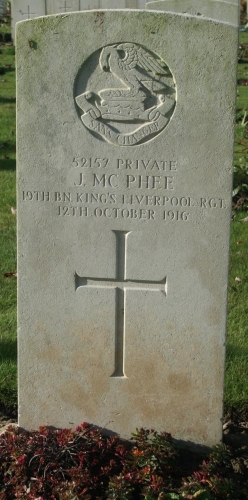
From: Manchester
K.I.A (110 Years this day)
Thursday 12th October 1916.
21 years old
James Hynes McPhee was born in 1896 in Manchester and was the son of Daniel McPhee and his wife Sarah (nee McAllister) who had been married in Glasgow in November 1887.
James was the third of Daniel and Sarah’s four children. The eldest two, John and Jane had been born in Scotland in 1889 and 1891. James and his younger brother Andrew (born in 1898) were both born in Manchester.
James’s father died in the September quarter of 1899, aged 38, when James was just three years old.
His widowed mother Sarah is found in the 1901 census living with her four children at 4 Poole Buildings, Hulme, Manchester.
Sarah is 35 years old at this point and had been born in Ardrossan, Scotland. She remarried in 1902 at St Marks in Hulme, her second husband was called Ralph Shaw. Sarah and Ralph went on to have two children – Lavinia in 1903 and Alexander in 1907.
The 1911 Census shows the family living at 42 Russell St Hulme Manchester.
Ralph is aged 51, born 1860, a smallware weaver, who had been born in Langley, Macclesfield. Five children are living at home Jeanie (Jane) is employed by Cornbrook Brewery Company James is an apprentice smallware weaver, Andrew and Lavinia are at school and 4 year old Alexander is at home. Their eldest brother, John, had been married in October 1910 and was living in Salford with his new wife Ellen.
James enlisted in Manchester and was originally Private 2945 in the Manchester Regiment. Following a transfer he was serving in the 19th Battalion, The King’s Liverpool Regiment as Private No 52157 when he was killed in action on the 12th October 1916, aged 21, during the Battle of the Transloy Ridges which was part of the ongoing Somme Offensive.
It had rained incessantly at the beginning of October 1916 and the ground was full of mud. In his book ‘The Liverpool Pals’ Graham Maddocks describes the day James was killed:
It was obvious that the Germans knew an attack was coming and from which direction it would be mounted. On the evening of the 11th the 20th Battalion moved up the line and dug two deep assembly trenches behind the 17th Battalion’s position for the attack the next day. The 19th Battalion also moved into its reserve positions known as Flers Trench. Although the rain has stopped, the ground was like a morass, with all the natural vegetation destroyed, it was difficult to tell exactly where the objectives lay. On the afternoon of the 12th at exactly 2.05pm, the attack began along the whole Corps line, covered by the local batteries of the Royal Field Artillery which still had line of sight. As the whistles blew, the 17th Battalion left its trenches to move forwards, at the same time No.1 and 2 Companies of the 20th Battalion moved forward and occupied the trenches vacated by the 17th. As they too went over the top, No.3 and 4 Companies took their place and waited in their turn to follow. No.2 and 3 Companies of the 19th Battalion moved up to occupy the assembly trenches dug the previous night by the 20th.
As soon as the attacking waves left their trenches the enemy artillery began to register on them and at the same time the defending infantry commenced a murderous rain of fire. Those German regiments were trained and experienced soldiers, well dug in on high ground, and for the most part, looking out on uncut wire. As such it was virtually impossible for them to miss the City Battalion men struggling to advance in the mud towards them.
Brigadier-General F.C.Stanley wrote that the Battalions were also suffering casualties due to the short shooting of the British heavy artillery fire. “I know from practical experience that they were our own guns which were shooting, and which were causing us quite a considerable number of casualties. The fault lay at that time from the fact that the heavy gunners would not send their FOO’s (Forward Observation Officers) far enough forward, but were content to observe us from right back”
Some ground was gained that day, about 150 yards, the 20th Battalion were not relieved until 24 hours later causing the men to endure another day and night in the front line trench.
James now rests at Warlencourt British Cemetery, France.
Warlencourt Cemetery is entirely a concentration cemetery, begun late in 1919 when graves were brought in from small cemeteries and the battlefields of Warlencourt and Le Sars. The Graves Registration form shows graves from “Le Sars 6/1, 6/2, Hexham Road, Seven Elms”.
Graves were brought in from the original cemeteries at Hexham Road (Le Sars), and Seven Elms (Flers), as well as over 3,000 British graves due to the fighting which took place around the Butte de Warlencourt from the autumn of 1916 to the spring of 1917, and again in the German advance and retreat of 1918. The cemetery now contains 3,505 Commonwealth burials and commemorations of the First World War, 1,823 of which are unidentified.
Manchester Evening 13th October 1919
McPHEE - In loving memory of my dear brother, Private JAMES MCPHEE, 19th Kings Liverpool's, who was killed October 12, 1916.
Greater love hath no man than this.
That a man lay down his life for his friends.
- Sadly missed by his brother ANDY, 4 Chapel Street, Hulme.
Both of his brothers served in the Army, John from enlisting in the Royal Army Service Corps as a driver from September 1914 to discharge in March 1919. He had been in Egypt, The Dardanelles and France. Andrew also enlisted into the Manchester Regiment in November 1914 at the age of 16.
Their mother Sarah was living with her husband Ralph in Chapel Street, Manchester at the time of the 1939 Register.
His step-father died, aged 81, in the June quarter of 1940.
His mother Sarah, died aged 76, in 1943 and was buried on the 31st December at the Southern Cemetery, Manchester.
He died in 1940, and Sarah died in 1943.
We currently have no further information on James Hynes McPhee, If you have or know someone who may be able to add to the history of this soldier, please contact us.
.
From: Liverpool
K.I.A (110 Years this day)
Thursday 12th October 1916.
22 years old
Robert Walmsley Moore was born in Liverpool on the 17th Jan 1894 and was one of four sons and a daughter born to James Roskell Moore and his wife Mary Jane (nee Walmsley) who were married on the 17th April 1893 at Our Lady of Lourdes and St Bernard, Toxteth. James was of 168 Lodge Lane whilst Mary lived next door at 168 Lodge Lane.
Robert was baptised on the 04th February 1894 also at Our Lady of Lourdes and St Bernard's Church.
The 1901 Census shows his father James, aged 34 was living at his confectionery shop premises at 23 High Street, Wavertree. His mother, Mary, is 36 years of age and was born in Rochdale. They have four children in the household; Robert aged 7, Albert James, recorded as James is aged 6, Mary aged 4 and new born Francis. Also declared is Ellen Walmsley a 68 year old widow born in Rochdale and described as Mother in Law. The family also employ two servants.
The family was still at the same address in 1911, his father was running his own catering business assisted by his wife and their eldest daughter Mary aged 14. His parents advised that they had been married for 18 years and had five children all of whom had survived. Robert is now 17 and employed as a clerk in the Corn Trade, Albert James is shown as James and in 1911 was employed as a clerk in the cotton trade, Francis is aged 10 and at school as is John aged 6. Also declared is Constance Armitage described as an assistant confectioner.
On 31st August 1914, both Robert and his brother Albert James enlisted in Liverpool and were serving in the 17th Battalion, James gave his age as 20 years 330 days and enlisted as Private 15814 and Robert as Private 15608.
His service record gives his age as 21 years and 7 months, occupation as a clerk. He was described as being 5’ 7½" tall, weight 141lbs, chest 36”, with a sallow complexion, brown hair and brown eyes. He states his religion as Roman Catholic and his next of kin as his father, James, of 23 High Street.
He was billeted at Prescot Watch Factory from 14th September 1914, he trained there and also at Knowsley Hall. On 30th April 1915 the 17th Battalion alongside the other three Pals battalions left Liverpool via Prescot Station for further training at Belton Park, Grantham. They remained here until September 1915 when they reached Larkhill Camp on Salisbury Plain. He arrived in France on 7th November 1915.
His service record shows that in 1915, Robert was convicted of two discipline offences while in the UK - destroying Government clothing (3 days CB) and being 11 minutes late on parade (2 days CB). He too landed in France on 7th November 1915, earning his 3 medals but between 31st March and 15th April 1916 was admitted to 22nd Field Ambulance suffering from “PUO”, possibly Pain of Unknown Origin, and later diagnosed as Myalgia, ie muscle pain.
On 30th July 1916, Robert sustained a gunshot wound to his left forearm at Camiers and was hospitalised. On 16th August 1916 he rejoined his Unit and on 31st August was awarded his first Good Conduct badge for 2 years service.
Robert was killed in action, on 12th October 1916, aged 22, during the Battle of Transloy Ridges.
17th Bn War Diary: Battle of Transloy Ridge –
11-10-16 - Gird Trench/Gird Support – Battalion in front line and support trenches. British bombardment of enemy front line system commenced about midday. Hostile shelling was intermittent throughout the day.
12-10-16 - Our bombardment continued. Enemy reply weak. 2.5 p.m. Zero hour. Attack on German front line system commenced. Enemy wire was found to be uncut and attack was unsuccessful. Hostile machine gun fire was very heavy and caused many casualties. Battalion H.Q. and Support Trench were heavily shelled throughout afternoon and evening. […] During this action all communication had to be carried out by runners and carrier pigeons as all wires were being continually cut by enemy shelling.
Casualties: 5 officers killed, 5 officers wounded, 38 OR killed, about 225 OR wounded/missing etc.
Graham Maddocks, in “Liverpool Pals” p.140, adds:
“As the whistle blew, the 17th Battalion left its trenches to move forward. […] As soon as the attacking waves left their trenches the enemy artillery began to register on them, and at the same time, the defending infantry commenced a murderous rain of fire. […] Although their numbers had been depleted by the British bombardment, they were trained and experienced soldiers, well dug in on high ground, and for the most part, looking out on uncut wire. As such, it was virtually impossible for them to miss the City Battalion men struggling to advance in the mud towards them. The 17th Battalion, on the left, was particularly badly hit, as its portion of No Man’s Land contained a slight rise in the ground, and as the troops emerged onto it they were silhouetted against the sky and became easy targets. Those on the left of the attack, who managed to avoid the hail of bullets and make it to the German wire, then found that it was totally uncut, and thus trapped, they too became easy targets, to be picked off almost at the enemy’s will. It was hardly surprising that, seeing the first waves being wiped out, some of the following waves turned back and made for their start lines. These lines were now packed with other waves of troops, however, and the fleeing men added to the congestion already there, and became easy prey for the German gunners. There is some evidence also, to suggest that at this stage, the British trenches were also being hit by their own heavy artillery shells which were falling short.”
His death was reported in the Liverpool Echo on Monday 30th October 1916;
MOORE - October 12, killed in action, aged 22 years, R. W. Moore (K.L R.), the eldest son of James and Mary Moore, 23, High-street, Wavertree. (Once again God’s will be done) R.I.P.
Also in the Nottingham and Midland Catholic News on Saturday 11th November 1916;
Private R. W. Moore, eldest son of Mr. and Mrs. James Moore, of 23, High Street, Wavertree, Liverpool, has been killed in action. Deceased was 22 years of age, and was attached to the King's Liverpool Regiment. He resided in Our Lady's Parish, Wavertree.
Also in the Liverpool Daily Post on Monday 20th November 1916;
Killed.
King’s (Liverpool Regiment) - Moore, 15608, R.;
Robert has no known grave and is commemorated on the Thiepval Memorial.
The Thiepval Memorial, the Memorial to the Missing of the Somme, bears the names of more than 72,000 officers and men of the United Kingdom and South African forces who died in the Somme sector before 20 March 1918 and have no known grave. Over 90% of those commemorated died between July and November 1916.
On 01st August 1932 the Prince of Wales and the President of France inaugurated the Thiepval Memorial in Picardy. The inscription reads: “Here are recorded the names of officers and men of the British Armies who fell on the Somme battlefields between July 1915 and March 1918 but to whom the fortune of war denied the known and honoured burial given to their comrades in death.”
Robert's death was reported in the Liverpool Echo on 19th May 1917
Moore – October 12 Killed in Action age 22 R.W. Moore (KLR) the eldest son of James and Mary Moore, 23 High Street, Wavertree. (Once again Gods Will be done) RIP.
Soldiers Effects, army pay of £3 14s, war gratuity of £9 to father James, the Pensions of Robert and Albert went to mother Mary, 23 High Street, Wavertree.
Robert's loss was the second tragedy to befall the family in 1916 as his brother, Albert James, was killed in action on 11th May 1916 and was buried in Cerisy-Gailly Cemetery, Grave II.D.2
His death was reported in the Liverpool Daily Post on Thursday 01st June 1916;
Killed.
King’s (Liverpools) - Moore, 15614, J. (Liverpool);
Robert is commemorated on the Catholic Institute School, Liverpool.
Robert’s father had to endure the deaths of his two remaining sons in the Second World War.
Merchant Navy Steward John Moore died on the 25th September 1942 when S.S. New York was torpedoed.
John is commemorated on the Tower Hill Memorial, London at Panel 73.
Senior Aircraftman 1st Class 1681561 Francis Joseph Moore, aged 45, died on the 07th March 1946 at the Royal Infirmary, Liverpool of coronary thrombosis. He has a CWGC headstone and now rests at Thurstaston (St Bartholomew Churchyard), Wirral.
Their parents celebrated their Golden Wedding Anniversary which was reported in the Liverpool Echo on 17h April 1943:
GOLDEN WEDDING
MOORE—WALMSLEY— ApriI 17, 1893 at St. Bernard’s, Kingsley Road, Liverpool, JAMES ROSKELL MOORE to MARY JANE WALMSLEY, —Gowan Hill, Seaview Avenue, Irby (late High Street, Wavertree). Congratulations on your golden wedding.
His mother, Mary, died aged 79, just days after their Golden Wedding on 26th April 1943.
Her death was reported in the Liverpool Echo on 29th April 1943:
DEATHS
MOORE— April 26, at Gowanhill. Seaview Avenue, Irby, formerly of High Street, Wavertree, MARY JANE, dearly-loved wife of James Moore. Funeral at Thurstaston Parish Church, to-morrow (Friday), at 2 p.m.
His father died, aged 80, on the 09th July 1947.
Probate:-
MOORE James Roskell of Gowan Hill, Seaview Avenue, Irby, Cheshire died 9 July 1947 Probate Lancaster 8 September to Mary Moore spinster. Effects £4045 10s 4d.
We currently have no further information on Robert Walmsley Moore, If you have or know someone who may be able to add to the history of this soldier, please contact us.

From: Bootle, Liverpool
K.I.A (110 Years this day)
Thursday 12th October 1916.
19 years old
Frederick Joseph Morgan was born in 1897 in Bootle, Liverpool and was the son of Robert Henry and Minnie Slater who were married in Hulme, Manchester in May 1889 at St George, Hulme. Robert was a 28 year old Private in the 9th Lancers at the time and gives his address as Hulme Barracks, he had been born in Liverpool. Minnie was 19 and was born in York.
The family were living at 33 Downing Road, Bootle at the time of the 1901 census. Robert aged 39 was working as a porter in a bank, Minnie was aged 37, born in York. The couple had five children at this point – Amy aged 11 b.Manchester, born Bootle: Walter 9, Robert 7, Frederick 5 and 1 year old Elizabeth.
Two more daughters were born before the next census, Winifred in 1904 and Muriel in 1906.
The 1911 census finds the family living at 101 Downing Road.
The father Robert is aged 50, is employed as a bank porter, mother Minnie is aged 42, they have been married for 21 years and have had 7 children). All their children except Robert are living at home. The younger children are at school, but the older ones are working. Amy aged 21 is a feather curler in a dyers, Walter aged 19 is a clerk in an estate office and Frederick aged 14 is a clerk in a wooden hoop manufacturers.
Prior to his enlistment, Frederick had been employed by Uveco Cereals Ltd. He was associated with the Balliol Road, Wesleyan Church and was a Staff Sergeant of the Boys Brigade.
Frederick enlisted in Liverpool and was serving in the 20th Battalion, The King’s Liverpool Regiment as Private No 32700 when he was killed in action on the 12th October 1916, aged 19, during the Battle of the Transloy Ridges which was part of the ongoing Somme Offensive.
According to the 20th Bn War Diary, on 10th October 1916 the battalion marched from Dernancourt via Mametz to Bazentin Le Grand where it bivouacked for the night. The next day the battalion moved up to site for assembly trenches, arriving about 11 p.m., where it dug in two good trenches, Nos.1 and 2 Coys front and Nos.3 and 4 Coys in rear.
From the War Diary:
Near Eaucourt L’Abbaye. 12/10/1916. The 4th British and 6th French armies continued the attack. Zero 2.5 p.m. The whole XVth Corps attacked […] The attack of 89th Inf Bde was carried out with 2nd Bn Bedf Regt on right, 17th Bn KLR on left, 20th Bn KLR in support, 19th Bn KLR in reserve. Battalions attacked in four waves. On the departure of the attacking battalions Nos. 1 and 2 companies advanced, each in two waves, to garrison the front line trench vacated by 2nd Bn Bedf Regt on right and 17th KLR on left. On Nos 1 and 2 Coys vacating front assembly trench, it was occupied by two platoons of Nos. 3 and 4 Coys respectively, from rear assembly trench. As the assaulting waves left their trenches they were met by intense machine gun fire, especially on our left. The enemy also opened heavy barrages on our front support and assembly trenches. […] Capt. H. Beckett, commanding No.1 company, reached the front line with few casualties, but Lieut R.D. Paterson leading No.2 company was killed. His company also had few casualties. The assaulting battalions were held up by very heavy machine gun fire, and made little progress. […] At 4.20 p.m. two platoons, No.4 Coy, under Cpl Brighouse, were sent up to reinforce the left, and No.3 Coy under Cpl Sutton followed at 4.45 p.m. Battalion HQ moved up to front line at 4.55 and remaining two platoons of No.4 Coy moved up to join Cpl Brighouse.
Casualties during action:
Officers – Killed Lieut. R.D. Paterson, 2nd Lieut G.L. Grennan, Wounded – 2nd Lieuts A.E. Griffin, L.E. Mclean Hayes, C. Buttemer, Wounded Cpl g. Brighouse.
Other Ranks killed – 20.
It had rained incessantly at the beginning of October 1916 and the ground was full of mud. In his book ‘The Liverpool Pals’ Graham Maddocks describes the 12th of October:
It was obvious that the Germans knew an attack was coming and from which direction it would be mounted. On the evening of the 11th the 20th Battalion moved up the line and dug two deep assembly trenches behind the 17th Battalion’s position for the attack the next day. The 19th Battalion also moved into its reserve positions known as Flers Trench. Although the rain has stopped, the ground was like a morass, with all the natural vegetation destroyed, it was difficult to tell exactly where the objectives lay. On the afternoon of the 12th at exactly 2.05pm, the attack began along the whole Corps line, covered by the local batteries of the Royal Field Artillery which still had line of sight. As the whistles blew, the 17th Battalion left its trenches to move forwards, at the same time No.1 and 2 Companies of the 20th Battalion moved forward and occupied the trenches vacated by the 17th. As they too went over the top, No.3 and 4 Companies took their place and waited in their turn to follow. No.2 and 3 Companies of the 19th Battalion moved up to occupy the assembly trenches dug the previous night by the 20th.
As soon as the attacking waves left their trenches the enemy artillery began to register on them and at the same time the defending infantry commenced a murderous rain of fire. Those German regiments were trained and experienced soldiers, well dug in on high ground, and for the most part, looking out on uncut wire. As such it was virtually impossible for them to miss the City Battalion men struggling to advance in the mud towards them.
Brigadier-General F.C.Stanley wrote that the Battalions were also suffering casualties due to the short shooting of the British heavy artillery fire. “I know from practical experience that they were our own guns which were shooting, and which were causing us quite a considerable number of casualties. The fault lay at that time from the fact that the heavy gunners would not send their FOO’s (Forward Observation Officers) far enough forward, but were content to observe us from right back”
Some ground was gained that day, about 150 yards, the 20th Battalion were not relieved until 24 hours later causing the men to endure another day and night in the front line trench.
Frederick's body was not recovered or was subsequently lost as he has no known grave and is commemorated on the Thiepval Memorial to the Missing of the Somme, France.
The Thiepval Memorial, the Memorial to the Missing of the Somme, bears the names of more than 72,000 officers and men of the United Kingdom and South African forces who died in the Somme sector before 20 March 1918 and have no known grave. Over 90% of those commemorated died between July and November 1916.
On 01st August 1932 the Prince of Wales and the President of France inaugurated the Thiepval Memorial in Picardy. The inscription reads: “Here are recorded the names of officers and men of the British Armies who fell on the Somme battlefields between July 1915 and March 1918 but to whom the fortune of war denied the known and honoured burial given to their comrades in death.”
Liverpool Echo 13th August 1917
MORGAN—In sad but loving 21st birthday remembrance of our dearly-loved and youngest son (our Fred), K.L.R., who was killed action October 12, 1916.
" God's will be done,'' I faintly cry,
My longing heart may break;
Deemed him mine, but he is Thine,
And He Who gives can take.
We loved him too dearly e'er forget,
- Deeply mourned by Mother, Father, Sisters and Brothers, and Will. — 101, Downing-road, Bootle.
He is also commemorated on the following Memorials:
Bootle Civic Memorial
Bedford Road School War Memorial
Liverpool Presbytery, Caradoc Street Mission, Seaforth.
Soldiers Effects and pension to mother Minnie.
Father died aged 70 in 1931 and the mother died aged 90 in 1959.
We currently have no further information on Frederick Joseph Morgan, If you have or know someone who may be able to add to the history of this soldier, please contact us.
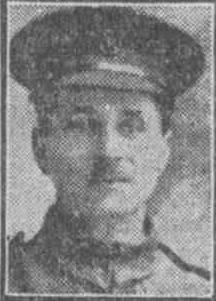
From: Birkenhead, Cheshire
K.I.A (110 Years this day)
Thursday 12th October 1916.
28 years old
Alfred Morris was born in 1888 in Birkenhead, the son of Arthur Morris and his wife Mary Levi (nee Belcher). His parents married in Newcastle in 1887. Alfred was their only child. An online commemoration site (British Jews in the First World War) gives his birthdate as 18th March 1888.
The 1891 census shows the 3 year old Alfred living with his parents Arthur, aged 26 who had been born in Russia, and 23 year old Mary who was born in Newcastle. Arthur was a furniture dealer and the family were living at 143 Conway Street, Birkenhead. They also had a 16 year old servant, Lizzie Connell.
In 1892 Arthur applied for and receives his British naturalization. His papers show that he was actually born in a place called Działoszyn, Russian transcription Zoloshin, situated between Warsaw and Lodz, Poland. It had a strong Jewish population.
By the time of the 1901 census the family are living are living at 135 Conway Street. Living with them is a niece Selena Goldberg aged 20 and a 23 year old servant called Alice Roscoe. Arthur’s profession is recorded as financial and estate agent.
His father, Arthur died a wealthy man, aged 39, on the 03rd July 1904 in Liverpool.
MORRIS Arthur of 87 Bedford Street, Liverpool gentleman died 3 July 1904 Probate Liverpool 19 August to Mary Morris widow Maria Tearle(wife of Isaac Tearle) David Belcher financial agent and Griffith Caradog Rees solicitor. Effects £13,808 1s 11d.
Alfred’s mother remarried in 1906 at Liverpool Old Hebrew Congregation, her husband is William Isaac Wolfe who is a German born and American naturalised Merchant Tailor.
At the time of the 1911 census Alfred is living with his mother and stepfather at 87 Bedford Street South in Liverpool. He is working as a solicitor’s articled clerk. Also living at the address is Lizzie Leyland a 27 year old cook and general servant and Julia Goldberg a 50 year old lady described as a sister in law who is probably Mary’s sister.
Alfred enlisted in Liverpool joining the 6th Battalion before he was transferred to the 17th Battalion, The King’s Liverpool Regiment as Private No 51647, he served in the 12th Platoon. Based on the amount of the War Gratuity, Alfred had served for no more than one year before he was killed, enlisting in the second half of 1915, and arriving in France in 1916.
He was killed in action on the 12th October 1916, aged 28, during the Battle of the Transloy Ridges which was part of the ongoing Somme Offensive.
17th Bn War Diary: Battle of Transloy Ridge –
11-10-16 - Gird Trench/Gird Support – Battalion in front line and support trenches. British bombardment of enemy front line system commenced about midday. Hostile shelling was intermittent throughout the day.
12-10-16 - Our bombardment continued. Enemy reply weak. 2.5 p.m. Zero hour. Attack on German front line system commenced. Enemy wire was found to be uncut and attack was unsuccessful. Hostile machine gun fire was very heavy and caused many casualties. Battalion H.Q. and Support Trench were heavily shelled throughout afternoon and evening. […] During this action all communication had to be carried out by runners and carrier pigeons as all wires were being continually cut by enemy shelling.
Casualties: 5 officers killed, 5 officers wounded, 38 OR killed, about 225 OR wounded/missing etc.
Graham Maddocks, in “Liverpool Pals” p.140, adds:
“As the whistle blew, the 17th Battalion left its trenches to move forward. […] As soon as the attacking waves left their trenches the enemy artillery began to register on them, and at the same time, the defending infantry commenced a murderous rain of fire. […] Although their numbers had been depleted by the British bombardment, they were trained and experienced soldiers, well dug in on high ground, and for the most part, looking out on uncut wire. As such, it was virtually impossible for them to miss the City Battalion men struggling to advance in the mud towards them. The 17th Battalion, on the left, was particularly badly hit, as its portion of No Man’s Land contained a slight rise in the ground, and as the troops emerged onto it they were silhouetted against the sky and became easy targets. Those on the left of the attack, who managed to avoid the hail of bullets and make it to the German wire, then found that it was totally uncut, and thus trapped, they too became easy targets, to be picked off almost at the enemy’s will. It was hardly surprising that, seeing the first waves being wiped out, some of the following waves turned back and made for their start lines. These lines were now packed with other waves of troops, however, and the fleeing men added to the congestion already there, and became easy prey for the German gunners. There is some evidence also, to suggest that at this stage, the British trenches were also being hit by their own heavy artillery shells which were falling short.”
Alfred now rests at Warlencourt British Cemetery, France where his headstone bears the poignant epitaph:
“MY SON, MY LIFE, MY ALL DUTY NOBLY DONE MOTHER”
The Hebrew inscription on his headstone translates as, "May his soul be bound up in the bond of life." (A quotation from the Book of Samuel.)
Warlencourt Cemetery is entirely a concentration cemetery, begun late in 1919 when graves were brought in from small cemeteries and the battlefields of Warlencourt and Le Sars. The Graves Registration form shows graves from “Le Sars 6/1, 6/2, Hexham Road, Seven Elms”.
Graves were brought in from the original cemeteries at Hexham Road (Le Sars), and Seven Elms (Flers), as well as over 3,000 British graves due to the fighting which took place around the Butte de Warlencourt from the autumn of 1916 to the spring of 1917, and again in the German advance and retreat of 1918. The cemetery now contains 3,505 Commonwealth burials and commemorations of the First World War, 1,823 of which are unidentified.
He was initially declared as Missing and a notice was placed together with his photograph in the local press:
"Private Alfred Morris of the King's (Liverpool Regiment) is reported Missing since Oct. 12 1916. Any information regarding him will be gladly received by his mother, at 87 Bedford Street South, Liverpool".
Mr. Myer D. Goldberg (cousin), c/o The Anderson Galleries, Inc., Madison Ave. at 40th Str. New York, USA, contacted the International Red Cross in Geneva. He received a response dated 12th January 1917 that they held no information on Alfred. (This is possibly the son of his aunt Julia and brother of Selena.)
His mother received Alfred’s outstanding Army pay and a War Gratuity of £3. She was refused a pension in June 1917 on the grounds of “no prior dependence”.
Details of Probate was reported in the Liverpool Evening Express on 09th August 1918:
Alfred Morris of 37 Bedford Street South, Liverpool, law student, Private in the 17th Battalion Kings (Liverpool Regiment) who died on active service in France left £3,132 gross.
On the 1939 register William I. Wolfe, dob 17th May 1872, is living at 76 Queens Drive, Mossley Hill but they appear on the electoral roll at 128 Islington, their business address.
His mother was widowed in 1950, her husband William Wolfe dying on 12th October, the same date as her son's death. She died in 1951 at the age of 85.
Alfred's name is one of the thirteen inscribed on the memorial at the Princes Road Synagogue in Liverpool. The wording is:
A tribute to the sons of the Liverpool Old Hebrew Congregation who made the supreme sacrifice in the World War 1914-1919 “They jeoparded their lives unto the death on the high places of the field” Judges 5:18
He is also commemorated on the British Jewry Roll of Honour
Grateful thanks are extended to Mikhail on GWF, who enabled us to provide accurate details on Alfred's father, Arthur's place of birth.
We currently have no further information on Alfred Morris, if you have or know someone who may be able to add to the history of this soldier, please contact us.
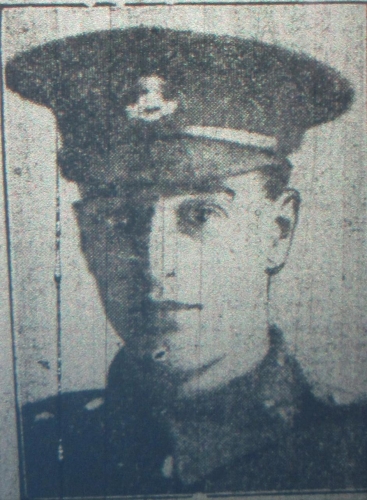
From: Seacombe, Cheshire
K.I.A (110 Years this day)
Thursday 12th October 1916.
21 years old
Reginald Charles Mortimore was born in 1894 in Seacombe, Cheshire and was the son of Samuel George Mortimore and his wife Rachel (nee Turner) who were married in 1891 at Christ Church, Claughton. Samuel was a self employed house painter who had been born in Torpoint in Devon in 1866 and Rachel had been born in 1867 in Bebington.
The 1901 census shows Samuel and Rachel living with their three children – Samuel George (known as George) aged 8, Reggie aged 6 and 1 year old Claude at 59 Brighton Street, Seacombe.
The next census in 1911 records the family living at 4 Florence Road, Seacombe but without their son Claude who had sadly died aged 4 in 1903.
Father Samuel is aged 45, still a house painter, mother Rachel is aged 44(married 20 years, 3 children, 2 still alive). Reggie’s brother George, aged 18, was working as an apprentice marine engineer and Reggie, aged 16, as a junior clerk in a shipping office.
He enlisted in Liverpool on the 09th November 1914 joining the 20th Battalion of The King’s Liverpool Regiment as Private No 22488. He is described in his enlistment papers as aged 20 years 1 month, born Seacombe occupation clerk, being 5’ 6” tall, 120 lbs in weight, 35” chest, and with brown hair and eyes and gave his religion as Church of England.
Formed in November 1914 the 20th Battalion were originally billeted at Tournament Hall, Knotty Ash before on 29th January 1915 they moved to the hutted accommodation purposely built at Lord Derby’s estate at Knowsley Hall. On 30th April 1915 the 20th Battalion alongside the other three Pals battalions left Liverpool via Prescot Station for further training at Belton Park, Grantham. They remained here until September 1915 when they reached Larkhill Camp on Salisbury Plain.
3.4.15 - lost 2 days pay for absence
18.8.15 - posted to 22/KLR
28.10.15 - appointed unpaid L/Cpl
8.3.16 - appointed paid L/Cpl
3.5.16 - deprived of L/Cpl stripe for absence on parade
17.5.16 - appointed paid L/Cpl
13.6.16 - deprived of L/Cpl stripe for absence on parade
26.7.16 - posted to 24 IBD
27.7.16 - posted to 18/KLR at Etaples
7.8.16 - posted to 20/KLR
Reginald was killed in action on the 12th October 1916, aged 21, during the Battle of the Transloy Ridges which was part of the ongoing Somme Offensive.
According to the 20th Bn War Diary, on 10th October 1916 the battalion marched from Dernancourt via Mametz to Bazentin Le Grand where it bivouacked for the night. The next day the battalion moved up to site for assembly trenches, arriving about 11 p.m., where it dug in two good trenches, Nos.1 and 2 Coys front and Nos.3 and 4 Coys in rear.
From the War Diary:
Near Eaucourt L’Abbaye. 12/10/1916. The 4th British and 6th French armies continued the attack. Zero 2.5 p.m. The whole XVth Corps attacked […] The attack of 89th Inf Bde was carried out with 2nd Bn Bedf Regt on right, 17th Bn KLR on left, 20th Bn KLR in support, 19th Bn KLR in reserve. Battalions attacked in four waves. On the departure of the attacking battalions Nos. 1 and 2 companies advanced, each in two waves, to garrison the front line trench vacated by 2nd Bn Bedf Regt on right and 17th KLR on left. On Nos 1 and 2 Coys vacating front assembly trench, it was occupied by two platoons of Nos. 3 and 4 Coys respectively, from rear assembly trench. As the assaulting waves left their trenches they were met by intense machine gun fire, especially on our left. The enemy also opened heavy barrages on our front support and assembly trenches. […] Capt. H. Beckett, commanding No.1 company, reached the front line with few casualties, but Lieut R.D. Paterson leading No.2 company was killed. His company also had few casualties. The assaulting battalions were held up by very heavy machine gun fire, and made little progress. […] At 4.20 p.m. two platoons, No.4 Coy, under Cpl Brighouse, were sent up to reinforce the left, and No.3 Coy under Cpl Sutton followed at 4.45 p.m. Battalion HQ moved up to front line at 4.55 and remaining two platoons of No.4 Coy moved up to join Cpl Brighouse.
Casualties during action:
Officers – Killed Lieut. R.D. Paterson, 2nd Lieut G.L. Grennan, Wounded – 2nd Lieuts A.E. Griffin, L.E. Mclean Hayes, C. Buttemer, Wounded Cpl g. Brighouse.
Other Ranks killed – 20.
It had rained incessantly at the beginning of October 1916 and the ground was full of mud. In his book ‘The Liverpool Pals’ Graham Maddocks describes the day Reginald was killed.
It was obvious that the Germans knew an attack was coming and from which direction it would be mounted. On the evening of the 11th the 20th Battalion moved up the line and dug two deep assembly trenches behind the 17th Battalion’s position for the attack the next day. The 19th Battalion also moved into its reserve positions known as Flers Trench. Although the rain has stopped, the ground was like a morass, with all the natural vegetation destroyed, it was difficult to tell exactly where the objectives lay. On the afternoon of the 12th at exactly 2.05pm, the attack began along the whole Corps line, covered by the local batteries of the Royal Field Artillery which still had line of sight. As the whistles blew, the 17th Battalion left its trenches to move forwards, at the same time No.1 and 2 Companies of the 20th Battalion moved forward and occupied the trenches vacated by the 17th. As they too went over the top, No.3 and 4 Companies took their place and waited in their turn to follow. No.2 and 3 Companies of the 19th Battalion moved up to occupy the assembly trenches dug the previous night by the 20th.
As soon as the attacking waves left their trenches the enemy artillery began to register on them and at the same time the defending infantry commenced a murderous rain of fire. Those German regiments were trained and experienced soldiers, well dug in on high ground, and for the most part, looking out on uncut wire. As such it was virtually impossible for them to miss the City Battalion men struggling to advance in the mud towards them.
Brigadier-General F.C.Stanley wrote that the Battalions were also suffering casualties due to the short shooting of the British heavy artillery fire. “I know from practical experience that they were our own guns which were shooting, and which were causing us quite a considerable number of casualties. The fault lay at that time from the fact that the heavy gunners would not send their FOO’s (Forward Observation Officers) far enough forward, but were content to observe us from right back”
Some ground was gained that day, about 150 yards, the 20th Battalion were not relieved until 24 hours later causing the men to endure another day and night in the front line trench.
Reginald has no known grave and is commemorated on the Thiepval Memorial to the Missing of the Somme.
The Thiepval Memorial, the Memorial to the Missing of the Somme, bears the names of more than 72,000 officers and men of the United Kingdom and South African forces who died in the Somme sector before 20 March 1918 and have no known grave. Over 90% of those commemorated died between July and November 1916.
On 01st August 1932 the Prince of Wales and the President of France inaugurated the Thiepval Memorial in Picardy. The inscription reads: “Here are recorded the names of officers and men of the British Armies who fell on the Somme battlefields between July 1915 and March 1918 but to whom the fortune of war denied the known and honoured burial given to their comrades in death.”
His death was reported in the Wallasey News:
Killed In Action
Private Reginald C. Mortimore, of the K.L.R., the second son of Mr and Mrs S.G. Mortimore, of 4, Florence Road, Seacombe has been killed in action. He attended the Higher Elementary School, New Brighton, and was a keen footballer and swimmer. He afterwards entered the firm of Messrs. W. Lowden and Co., Water Street, Liverpool. Second Lieutenant J.C. Muir writes:- “Dear sir, - It is with the greatest regret that I have to inform you that your son, Private R.C. Mortimore, of my platoon, is missing, believed to be killed. I am afraid I cannot entertain much hope from the inquiries I have made from the boys. He was a good boy and was an excellent soldier, well-liked by his comrades. They join with me in sending their deepest sympathy. I am sure you could not have wished him to have had a more glorious end than fighting for his country. I only hope, when it is my turn to go, if it be His will, that I may go doing my bit as your son did. I have been with my platoon for a bit now, and I am very fond of my boys, and your son was one of my favourites., as he was a nice clean boy, and every time I used to censor his letters to you I thought that he was very fond of his home and people, consequently I am sure you will feel his loss very much. I cannot say how sorry I am about it. Again I tender you my deepest sympathy.” Messrs. W. Lowden and Co., Water Street, Liverpool, write:- “Dear Madam, - It was with the greatest regret we received your letter this morning. Everyone in the office liked and esteemed your brave boy, and we looked forward to a bright future for him. He has died nobly, and we can only express the deep sympathy which we one and all feel for you in your sorrow. We think it may be some consolation to you that he has given his life in such a great cause.”
Liverpool Echo 2nd Nov 1916
MORTIMORE - Mr and Mrs Mortimore and Son desire to thank all their relatives and friends for their kind expressions of sympathy in their sad bereavement. 4 Florence Road, Seacombe.
Liverpool Echo 26th Oct 1918
MORTIMORE - In sorrowful but loving 24th birthday remembrance (October 26) of REGINALD CHARLES (Reg), Liverpool Pals, presumed killed in action, in France, October 12, 1916.
The link will never sever,
Mother's love and remembrance lives for ever.
- Mother 4 Florence Road, Seacombe.
Reginald is also remembered on the Wallasey Civic Memorial and the Wallasey Roll of Honour.
Soldiers Effects and pension to mother Rachel.
Reggie’s mother died aged 72 in 1936
Deaths Sep 1936
Probate 1936:-
MORTIMORE Rachel of 4 Florence Road, Wallasey Cheshire wife of Samuel George Mortimore died 12 September 1936 Probate Liverpool 12 October to Samuel George Mortimore (the younger) marine engineer. Effects £908 11s 10d.
His father died aged 72 on the 31st Dec 1938 and was buried in Bebington Cemetery.
His brother George was still living in 4 Florence Street at the time of the 1939 Register, he was a marine engineer and also an A.R.P. warden.
We currently have no further information on Reginald Charles Mortimore, If you have or know someone who may be able to add to the history of this soldier, please contact us.
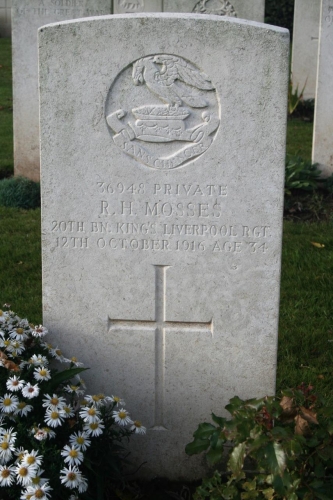
From: Liverpool
K.I.A (110 Years this day)
Thursday 12th October 1916.
34 years old
Richard Holden Mosses was born in January 1883 in Liverpool and was the youngest child of Edwin Mosses and his wife Elizabeth (nee Holden) who were married in St Nicholas, Liverpool on the 6th July 1859. Edwin was a shipwright of Cuerden St, father William, Elizabeth was also of Cuerden St, father William.
Richard’s father worked as a ships carpenter all his life, and both he and his wife Elizabeth were born in Liverpool in 1839.
At the time of the 1891 census the family were living at 40 Rishton Street, Everton. Richard was living at home with his parents as well as his siblings - 27 year old William who was a dock labourer, Elizabeth 13, and 11 year old Mary Ellen. He had an older brother called Edwin, a sailor, who married in December 1890 and was living with his new wife Sarah around the corner in Poplar Street. He also had two older sisters 21 year old Annie who was married and 16 year old Amy who was a servant in the household of a clerk in Everton
Richard’s father died in December 1900 aged 61 and the family splits up. His widow is recorded as a boarder with a family at 90 Rishton Street, and the 19 year old Richard goes to live in the household of his sister Amy and her husband and two small daughters at 19 Priory Grove, Everton. Richard is working as a shoemaker.
The 1911 census shows Richard still working as a boot & shoe maker and living as a boarder in a grocery shop at 57 Breckfield Road South.
Richard enlisted in the 20th Battalion of The King’s Liverpool Regiment as Private No 36948. He was killed in action on the 12th October 1916 aged 34 during the Battle of the Transloy Ridges which was part of the ongoing Somme Offensive.
According to the 20th Bn War Diary, on 10th October 1916 the battalion marched from Dernancourt via Mametz to Bazentin Le Grand where it bivouacked for the night. The next day the battalion moved up to site for assembly trenches, arriving about 11 p.m., where it dug in two good trenches, Nos.1 and 2 Coys front and Nos.3 and 4 Coys in rear.
From the War Diary:
Near Eaucourt L’Abbaye. 12/10/1916. The 4th British and 6th French armies continued the attack. Zero 2.5 p.m. The whole XVth Corps attacked […] The attack of 89th Inf Bde was carried out with 2nd Bn Bedf Regt on right, 17th Bn KLR on left, 20th Bn KLR in support, 19th Bn KLR in reserve. Battalions attacked in four waves. On the departure of the attacking battalions Nos. 1 and 2 companies advanced, each in two waves, to garrison the front line trench vacated by 2nd Bn Bedf Regt on right and 17th KLR on left. On Nos 1 and 2 Coys vacating front assembly trench, it was occupied by two platoons of Nos. 3 and 4 Coys respectively, from rear assembly trench. As the assaulting waves left their trenches they were met by intense machine gun fire, especially on our left. The enemy also opened heavy barrages on our front support and assembly trenches. […] Capt. H. Beckett, commanding No.1 company, reached the front line with few casualties, but Lieut R.D. Paterson leading No.2 company was killed. His company also had few casualties. The assaulting battalions were held up by very heavy machine gun fire, and made little progress. […] At 4.20 p.m. two platoons, No.4 Coy, under Cpl Brighouse, were sent up to reinforce the left, and No.3 Coy under Cpl Sutton followed at 4.45 p.m. Battalion HQ moved up to front line at 4.55 and remaining two platoons of No.4 Coy moved up to join Cpl Brighouse.
Casualties during action:
Officers – Killed Lieut. R.D. Paterson, 2nd Lieut G.L. Grennan, Wounded – 2nd Lieuts A.E. Griffin, L.E. Mclean Hayes, C. Buttemer, Wounded Cpl g. Brighouse.
Other Ranks killed – 20.
It had rained incessantly at the beginning of October 1916 and the ground was full of mud. In his book ‘The Liverpool Pals’ Graham Maddocks describes the day Herbert was killed.
It was obvious that the Germans knew an attack was coming and from which direction it would be mounted. On the evening of the 11th the 20th Battalion moved up the line and dug two deep assembly trenches behind the 17th Battalion’s position for the attack the next day. The 19th Battalion also moved into its reserve positions known as Flers Trench. Although the rain has stopped, the ground was like a morass, with all the natural vegetation destroyed, it was difficult to tell exactly where the objectives lay. On the afternoon of the 12th at exactly 2.05pm, the attack began along the whole Corps line, covered by the local batteries of the Royal Field Artillery which still had line of sight. As the whistles blew, the 17th Battalion left its trenches to move forwards, at the same time No.1 and 2 Companies of the 20th Battalion moved forward and occupied the trenches vacated by the 17th. As they too went over the top, No.3 and 4 Companies took their place and waited in their turn to follow. No.2 and 3 Companies of the 19th Battalion moved up to occupy the assembly trenches dug the previous night by the 20th.
As soon as the attacking waves left their trenches the enemy artillery began to register on them and at the same time the defending infantry commenced a murderous rain of fire. Those German regiments were trained and experienced soldiers, well dug in on high ground, and for the most part, looking out on uncut wire. As such it was virtually impossible for them to miss the City Battalion men struggling to advance in the mud towards them.
Brigadier-General F.C.Stanley wrote that the Battalions were also suffering casualties due to the short shooting of the British heavy artillery fire. “I know from practical experience that they were our own guns which were shooting, and which were causing us quite a considerable number of casualties. The fault lay at that time from the fact that the heavy gunners would not send their FOO’s (Forward Observation Officers) far enough forward, but were content to observe us from right back”
Some ground was gained that day, about 150 yards, the 20th Battalion were not relieved until 24 hours later causing the men to endure another day and night in the front line trench.
Richard now rests at Warlencourt British Cemetery,France.
Warlencourt Cemetery is entirely a concentration cemetery, begun late in 1919 when graves were brought in from small cemeteries and the battlefields of Warlencourt and Le Sars. The Graves Registration form shows graves from “Le Sars 6/1, 6/2, Hexham Road, Seven Elms”.
Graves were brought in from the original cemeteries at Hexham Road (Le Sars), and Seven Elms (Flers), as well as over 3,000 British graves due to the fighting which took place around the Butte de Warlencourt from the autumn of 1916 to the spring of 1917, and again in the German advance and retreat of 1918. The cemetery now contains 3,505 Commonwealth burials and commemorations of the First World War, 1,823 of which are unidentified.
He was reported missing in the press on 22nd November 1916
King’s (Liverpool Regiment) - Mosses, 36948, R.H.;
Weekly Casualty List 28th August 1917
Previously reported missing, now reported
KILLED
King’s (Liverpool Regiment) - Mosses, 36948, R.H. (Liverpool);
Richard is commemorated in the Hall of Remembrance, Liverpool Town Hall, Panel 20.
Soldiers Effects and Pension to his mother Elizabeth, her address now 57 Breckfield Road South.
His mother died aged 87 in 1927.
We currently have no further information on Richard Holden Mosses, If you have or know someone who may be able to add to the history of this soldier, please contact us.
From: Colvend, Kirkcudbrightshire
K.I.A (110 Years this day)
Thursday 12th October 1916.
23 years old
Although CWGC gives his surname as Murdoch, his military records (Medal Roll, Pension cards, Soldiers’ Effects) show the name as Murdock.
William Murdoch was born in 1893 in Colvend, Kirkudbrightshire, 2-3 miles from Kippford on the Solway coast, and five miles south of Dalbeattie. He was the son of John Murdoch and his wife Catherine (née Halliday) who were married in 1881 in Colvend. William was the youngest of four surviving children; he had brothers James and John Halliday, and a sister Janet Campbell, all born in Colvend. His parents were both born in Kirkcudbrightshire, John at Colvend and Catherine at Southwick. His father, a Master Mariner, is not found on censuses, being away at sea.
The family had a long history of sea-faring, and a number of family members were lost at sea. William’s cousin, also William Murdoch, was the First Officer in charge on the bridge of the Titanic in April 1912 when she hit the iceberg and was one of the more than 1,500 people who died when the ship sank.
In 1891 before William’s birth his mother is found living at Auckland Cottage, Colvend, listed as a Master Mariner’s wife.
The 1901 census finds Catherine with four children at no.11 Kippford, Colvend. She is 42, a mariner’s wife. James is 14, Janet 11, John 10, and William is 7, all at school.
His father died at sea in 1907, aged 49, on the ship Alcides of Donaldson Line, Glasgow. The family grave in Colvend Churchyard has an incription:-
JOHN, their son who died at sea
10th April 1907 in his 50th Year.
The 1911 Census shows the family have moved to Liverpool and are living at 11 Dundonald Road, Aigburth. His mother, Catherine, is aged 52, born 1859 and she has two of her children living with her; Janet Campbell aged 26, born 1885, and occupation Typist and son William aged 17, born 1894 occupation Insurance Clerk.
He enlisted as Rifleman 4142 joining the 6th Battalion of The King's Liverpool Regiment (Liverpool Rifles). He embarked from Folkestone-Boulogne on 19th July 1916 and arrived at 24th Infantry Baes Depot on 20th July 1916. He proceeded to the 17th Bn K.L./R. on 05th August and was posted to the 17th Bn from 05th September 1916 as Private No 51665
William was killed in action on the 12th October 1916, aged 23, during the Battle of the Transloy Ridges which was part of the ongoing Somme Offensive.
17th Bn War Diary: Battle of Transloy Ridge –
11-10-16 - Gird Trench/Gird Support – Battalion in front line and support trenches. British bombardment of enemy front line system commenced about midday. Hostile shelling was intermittent throughout the day.
12-10-16 - Our bombardment continued. Enemy reply weak. 2.5 p.m. Zero hour. Attack on German front line system commenced. Enemy wire was found to be uncut and attack was unsuccessful. Hostile machine gun fire was very heavy and caused many casualties. Battalion H.Q. and Support Trench were heavily shelled throughout afternoon and evening. […] During this action all communication had to be carried out by runners and carrier pigeons as all wires were being continually cut by enemy shelling.
Casualties: 5 officers killed, 5 officers wounded, 38 OR killed, about 225 OR wounded/missing etc.
Graham Maddocks, in “Liverpool Pals” p.140, adds:
“As the whistle blew, the 17th Battalion left its trenches to move forward. […] As soon as the attacking waves left their trenches the enemy artillery began to register on them, and at the same time, the defending infantry commenced a murderous rain of fire. […] Although their numbers had been depleted by the British bombardment, they were trained and experienced soldiers, well dug in on high ground, and for the most part, looking out on uncut wire. As such, it was virtually impossible for them to miss the City Battalion men struggling to advance in the mud towards them. The 17th Battalion, on the left, was particularly badly hit, as its portion of No Man’s Land contained a slight rise in the ground, and as the troops emerged onto it they were silhouetted against the sky and became easy targets. Those on the left of the attack, who managed to avoid the hail of bullets and make it to the German wire, then found that it was totally uncut, and thus trapped, they too became easy targets, to be picked off almost at the enemy’s will. It was hardly surprising that, seeing the first waves being wiped out, some of the following waves turned back and made for their start lines. These lines were now packed with other waves of troops, however, and the fleeing men added to the congestion already there, and became easy prey for the German gunners. There is some evidence also, to suggest that at this stage, the British trenches were also being hit by their own heavy artillery shells which were falling short.”
William's body was not recovered or was subsequently lost as his name is recorded on the Thiepval Memorial.
The Thiepval Memorial, the Memorial to the Missing of the Somme, bears the names of more than 72,000 officers and men of the United Kingdom and South African forces who died in the Somme sector before 20 March 1918 and have no known grave. Over 90% of those commemorated died between July and November 1916.
On 01st August 1932 the Prince of Wales and the President of France inaugurated the Thiepval Memorial in Picardy. The inscription reads: “Here are recorded the names of officers and men of the British Armies who fell on the Somme battlefields between July 1915 and March 1918 but to whom the fortune of war denied the known and honoured burial given to their comrades in death.”
His death was reported on 24th October 1916 in the Liverpool Echo:
“October 12, killed instantly by shell, in his 23rd year, Rifleman William Murdoch, youngest beloved son of Mrs. Murdoch, 11 Dundonald Road, Aigburth (late of the Bank of Liverpool).”
Further details were published in the Dumfries and Galloway Saturday Standard on 04th November 1916:
Kippford Soldier Killed
"Private William Murdoch of the King’s Liverpool Rifles was killed on 12th October by the bursting of a shell. He was the youngest son of the late Captain John Murdoch of Kippford, and Mrs. Murdoch, now of Aigburth, Liverpool. He was born at Kippford 23 years ago and was educated partly at Barnbarroch School and later at St. Michael’s in the Hamlet School, Liverpool. He held an appointment in the Bank of Liverpool. Early this year he joined the King’s Liverpool Rifles and went to the front in August last with the “Pals” battalion. He was a young man of exemplary character and great business aptitude. Of his two surviving brothers Lieutenant John Murdoch has seen several months’ fighting on the Tigris on the “Mafitis” and lately was commander of a gunboat between Bombay and Persia; whilst Captain James Murdoch, who is in the Mercantile Marine, was thirty hours in an open boat last winter when his vessel was torpedoed in the Bay of Biscay.”
Both of his brothers survived the war.
SDGW confusingly states he enlisted in “Keithley, Yorks”, they must mean Keighley, but he is recorded on the Skipton War Memorial.
Probate in the amount of £149-7s-3d was granted to his mother Catherine.
His mother, address 11 Dundonald Road, Aigburth, and later 31 Victoria Road, West Kirby, Cheshire, received his Army pay as well as a War Gratuity of £3 and was awarded a pension of 10/- a week from May 1917.
In 1939 his mother, now 81, is living at 31 Victoria Road, Hoylake with married daughter Janet, 55, and her husband, a Master Mariner, and son John, 49, Chief Officer, Ex(tra)-Master.
His mother died in 1949 aged 90.
William is also commemorated on the following Memorials:
Bank Of Liverpool And Martins Tablet WW1 (Murdoch)
St Michael in the Hamlet School (Murdock)
Scotland’s National War Memorial (Murdock)
We currently have no further information on William Murdoch, If you have or know someone who may be able to add to the history of this soldier, please contact us.
Grateful thanks are extended to Kevin Shannon the author of the book The Liverpool Rifles for providing details of William's service with the 6th Rifles.
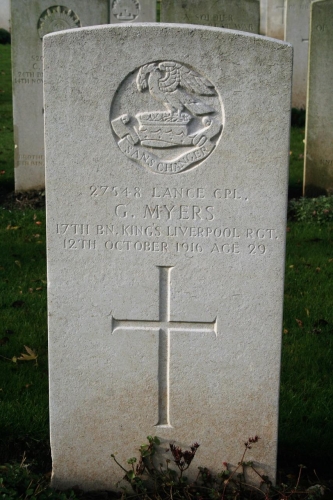
From: Liverpool
K.I.A (110 Years this day)
Thursday 12th October 1916.
29 years old
George Myers was born George Candlish Meyer in the December quarter of 1887, the eldest surviving son of Ludwig Meyer, born in Hanover, Germany, and Minnie Ann (née Candlish), from Dalbeattie, Scotland. They married in Liverpool in 1878, at St George's Church, Everton, his father signing the marriage register Ludwick. He also appears on records as Louis, or John H. L. Meyer, suggesting that his full German name was Johann Heinrich Ludwig Meyer. The family appears on all records as Meyer up until the war.
He was serving as Lance-Corporal No 27548 when he was killed in action on the 12th October 1916, aged 29, during the Battle of the Transloy Ridges which was part of the ongoing Somme Offensive.
17th Bn War Diary: Battle of Transloy Ridge –
11-10-16 - Gird Trench/Gird Support – Battalion in front line and support trenches. British bombardment of enemy front line system commenced about midday. Hostile shelling was intermittent throughout the day.
12-10-16 - Our bombardment continued. Enemy reply weak. 2.5 p.m. Zero hour. Attack on German front line system commenced. Enemy wire was found to be uncut and attack was unsuccessful. Hostile machine gun fire was very heavy and caused many casualties. Battalion H.Q. and Support Trench were heavily shelled throughout afternoon and evening. […] During this action all communication had to be carried out by runners and carrier pigeons as all wires were being continually cut by enemy shelling.
Casualties: 5 officers killed, 5 officers wounded, 38 OR killed, about 225 OR wounded/missing etc.
Graham Maddocks, in “Liverpool Pals” p.140, adds:
“As the whistle blew, the 17th Battalion left its trenches to move forward. […] As soon as the attacking waves left their trenches the enemy artillery began to register on them, and at the same time, the defending infantry commenced a murderous rain of fire. […] Although their numbers had been depleted by the British bombardment, they were trained and experienced soldiers, well dug in on high ground, and for the most part, looking out on uncut wire. As such, it was virtually impossible for them to miss the City Battalion men struggling to advance in the mud towards them. The 17th Battalion, on the left, was particularly badly hit, as its portion of No Man’s Land contained a slight rise in the ground, and as the troops emerged onto it they were silhouetted against the sky and became easy targets. Those on the left of the attack, who managed to avoid the hail of bullets and make it to the German wire, then found that it was totally uncut, and thus trapped, they too became easy targets, to be picked off almost at the enemy’s will. It was hardly surprising that, seeing the first waves being wiped out, some of the following waves turned back and made for their start lines. These lines were now packed with other waves of troops, however, and the fleeing men added to the congestion already there, and became easy prey for the German gunners. There is some evidence also, to suggest that at this stage, the British trenches were also being hit by their own heavy artillery shells which were falling short.”
“October 12, 1916, previously reported wounded and missing, now officially reported killed, aged 29 years, Lance-Corporal George Myers (K.L.R), the dearly-loved elder brother of Mr. and Mrs. Candlish, 31, Fernhill Road, Bootle".
Warlencourt Cemetery is entirely a concentration cemetery, begun late in 1919 when graves were brought in from small cemeteries and the battlefields of Warlencourt and Le Sars. The Graves Registration form shows graves from “Le Sars 6/1, 6/2, Hexham Road, Seven Elms”.
Graves were brought in from the original cemeteries at Hexham Road (Le Sars), and Seven Elms (Flers), as well as over 3,000 British graves due to the fighting which took place around the Butte de Warlencourt from the autumn of 1916 to the spring of 1917, and again in the German advance and retreat of 1918. The cemetery now contains 3,505 Commonwealth burials and commemorations of the First World War, 1,823 of which are unidentified.
“In loving and affectionate remembrance of our dear brother, Lance-corporal George Myers K.L.R., killed in action October 12, 1916. - Fondly remembered by Father, Sisters, and Brother, 31, Fernhill Road, Bootle. He gave his best - his life, his all!”
George is commemorated on the following Memorials
Bootle Civic Memorial.
Union Presbyterian Church, Kirkdale (George C. Myers)
We currently have no further information on George Myers, If you have or know someone who may be able to add to the history of this soldier, please contact us.
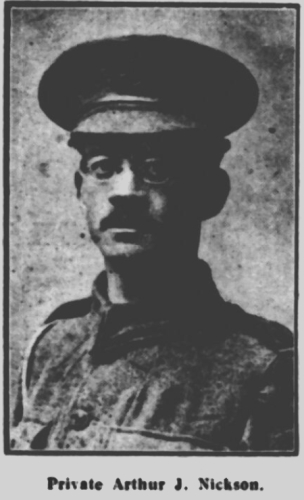
From: Blackpool, Lancs
K.I.A (110 Years this day)
Thursday 12th October 1916.
32 years old
Arthur John Nickson was born on the 06th June, 1884 in Blackpool the third child of John Nickson and his wife Mary (nee Buckley) who were married at St James' Church, Oldham, Lancashire in April 1877. He was baptised on the 16th September 1884 at All Hallows, Bispham.
In boyhood Arthur lived with his parents at the Talbot Hotel where his father was the Licensed Victualler. In earlier days Arthur’s grandfather Robert was also a Licensed Victualler at the Talbot Hotel and his father John was brought up there and took over when Robert retired. John is shown as the Licensee in the 1881 census. Licensed Victuallers were often people of some standing in the local community and John certainly was a well known figure in Blackpool as he was also a Councillor. The pub was a large building with stabling for fifty horses and also had a bowling green where a famous annual tournament took place known as the Derby of the crown green bowls world. The competition in 1886 for instance had prize money of £105, £45 (around £5000 at todays values) of which was contributed by John. The pub would stay in the Nickson family from 1856 to 1921. It was demolished in 1968 to make way for a multistory office and shops block.
The 1891 Census at the Talbot Hotel, Talbot Road, Blackpool, shows Arthur at the age of 6 with his 40 year old father, his 38 year old mother, born in Oldham and four of his brothers, born in Blackpool – Herbert is aged 10 and a scholar, William aged 9 is also a scholar, Frank 3 and 1 year old Charles. The couple also had two older children, a son Robert Oddie aged 13 who was a boarder at Rossall School in Fleetwood and a daughter, Eliza Mary, aged 12 who was boarding at King Street school for Ladies in Whalley, Clitheroe. The census also lists seven live in staff.
Mary gave birth to another son called Ernest at the end of April 1891, but the birth was overshadowed by her death, aged 38, and she was buried on the 06th May just a few days after giving birth. The Blackpool Gazette reported that she was ill for ten days “greatly accelerated by her confinement”. Her husband John was also a local Councillor and honours were paid to his late wife at the next Council meeting saying she was “well known in the town and held in high esteem by all”.
John married Harriet Iredale in November 1895, at Christ Church, Blackpool. Harriet was listed as part of the staff of the hotel in the 1891 census. The couple had two sons Percy in 1897 and Hugh in 1899.
At the time of the 1901 Census still at the Talbot Hotel are father John is aged 58, mother Harriet is aged 38, born in Greenfield, Saddleworth, Yorkshire, Arthur aged 16, and five of his brothers Herbert Buckley 20 a brewers ?, William Harold 19 an architects pupil, Frank Iddeson 13, Charles Geoffrey 11, Ernest Walter 9, his sister Eliza Mary 22, and his two half brothers Percy 3, Hugh 1. Also living there were an uncle and nine live in staff.
Arthur’s father John died on 07th February 1904, aged 52. He was a popular figure in the town and his funeral was attended by hundreds of people, the Blackpool Gazette reported that there were 33 carriages of people in the cortege at the funeral. Harriet took over at the Talbot Hotel after the death of her husband.
Probate 1904:-
NICKSON John of the “Talbot” hotel Blackpool died 7 February 1904 Probate London 18 April to William Joseph Dickson and Robert Oddie Nickson solicitors. Effects £17930 6s 9d.
The 1911 census shows Harriet living with her own two sons Percy and Hugh who were still at school, her step sons Frank, who was a chartered accountant, Charles, a marine engineers fitter, and Ernest a marine engineers apprentice. There were ten staff live in staff at this time.
The 1911 census also records his eldest brother Robert living in Blackpool and practising as a solicitor. His brother William was married with a baby daughter and was a tea and coffee merchant, Herbert was living with William and is shown as living on private means. Eliza Mary married in 1907 and in 1911 had two young children.
Arthur was educated at King William’s College, Castletown, Isle of Man between 1897-1900. He is found in the shipping passenger manifests of 1910 as landing in Quebec in June 1910 and in the 1911 Canadian census in Ontario working as an electrician at a hydro electric plant. At some point he returned back to the UK as he married Emily Finetta Bocock at St Barnabas, Cambridge on the 14th May, 1916. His occupation is recorded as electrical engineer, but it’s not known how long they lived in Cambridge. Emily was the daughter of a farmer from Suffolk.
Under the headline “A Cambridge Wedding of Interest to Blackpool” the Blackpool Gazette published an article on June 6th 1916:
A wedding of considerable interest to Blackpool, the bridegroom being a member of one of our best known families, took place at St Barnabas Church, Cambridge, on Friday. The bridegroom was Mr Arthur John Nickson of the 6th Kings Liverpool Regiment, fourth son of the late Ald. John Nickson of Blackpool, and the bride was Miss Emily Finetta (“Netta”) Bocock youngest daughter of the late Mr and Mrs Bocock of the Manor House, Gazeby. The wedding was of a very quiet nature, only members of the two families being present.
The ceremony was performed by the Rev. E.R.Pearse, Rector of Wacton, Norfolk, brother in law of the bride, assisted by the Rev W.Norman Vicar of the parish. The bride was given away by her brother, Mr Percy Bocock of Gazeby, and Mr R.O.Nickson who is in training with the Officer Training Corps at Cambridge was the best man.
Arthur enlisted in Blackpool as Rifleman 4804 joining the 6th Battalion of The King's Liverpool Regiment (Liverpool Rifles). He embarked aboard the SS Princess Victoria sailing from Folkestone-Boulogne on 15th July 1916. He reached the 24 Infantry Base Depot on 16th July, proceeded to 11th Entrenching Battalion on 02nd August, then proceeded to 17th Battalion K.L.R. on 05th August, and was posted from 05th September 1916 to the 17th Battalion as Private 51641.
He was killed in action on the 12th October 1916, aged 32, during the Battle of the Transloy Ridges which was part of the ongoing Somme Offensive. The couple had only been married for five months.
17th Battalion War Diary: Battle of Transloy Ridge –
11-10-16 - Gird Trench/Gird Support – Battalion in front line and support trenches. British bombardment of enemy front line system commenced about midday. Hostile shelling was intermittent throughout the day.
12-10-16 - Our bombardment continued. Enemy reply weak. 2.5 p.m. Zero hour. Attack on German front line system commenced. Enemy wire was found to be uncut and attack was unsuccessful. Hostile machine gun fire was very heavy and caused many casualties. Battalion H.Q. and Support Trench were heavily shelled throughout afternoon and evening. […] During this action all communication had to be carried out by runners and carrier pigeons as all wires were being continually cut by enemy shelling.
Casualties: 5 officers killed, 5 officers wounded, 38 OR killed, about 225 OR wounded/missing etc.
Graham Maddocks, in “Liverpool Pals” p.140, adds:
“As the whistle blew, the 17th Battalion left its trenches to move forward. […] As soon as the attacking waves left their trenches the enemy artillery began to register on them, and at the same time, the defending infantry commenced a murderous rain of fire. […] Although their numbers had been depleted by the British bombardment, they were trained and experienced soldiers, well dug in on high ground, and for the most part, looking out on uncut wire. As such, it was virtually impossible for them to miss the City Battalion men struggling to advance in the mud towards them. The 17th Battalion, on the left, was particularly badly hit, as its portion of No Man’s Land contained a slight rise in the ground, and as the troops emerged onto it they were silhouetted against the sky and became easy targets. Those on the left of the attack, who managed to avoid the hail of bullets and make it to the German wire, then found that it was totally uncut, and thus trapped, they too became easy targets, to be picked off almost at the enemy’s will. It was hardly surprising that, seeing the first waves being wiped out, some of the following waves turned back and made for their start lines. These lines were now packed with other waves of troops, however, and the fleeing men added to the congestion already there, and became easy prey for the German gunners. There is some evidence also, to suggest that at this stage, the British trenches were also being hit by their own heavy artillery shells which were falling short.”
Arthur was declared as Missing in the Fleetwood Chronicle 10th November 1916
Private Arthur J. Nickson, No. 51,641, King's Liverpool Regiment, one of the six soldier sons of the late Alderman and Mrs J. Nickson of the Talbot Hotel, Blackpool, has been missing since an engagement in France on October 12th. His relatives would welcome any news concerning him. Formerly an electrician at the Tower, he returned from Canada to join the colours.
Also in the Blackpool Gazette and Herald 10th Nov 1916
MISSING IN FRANCE.
NEWS WANTED BY ANXIOUS RELATIVES.
An official intimation has been received that Private Arthur J. Nickson, No. 51,641, King's Liverpool Regiment, has been missing since an engagement in France on October last. Private Nickson is one of the six soldier sons of the Alderman and Mrs. John Nickson, of the Talbot Hotel, Blackpool, who was serving with the colours. He was an electrician at the Tower for several years, afterwards joined the staff of Messrs. Dick Kerr and Co., Preston, but later accepted an appointment on the L. and Y. electric railway between Southport and Liverpool. He went to Canada a few years ago, but came home when the Motherland called for men, and joined the 6th King's Liverpool Regiment, being afterwards transferred to one of the Liverpool “Pals" Battalions. He was married four months ago, his bride being an English young lady, whom he met in Canada, and who is at present living in the South of England. He is 32 years of age. His relatives would welcome any news concerning him from any of his comrades at the front.
Arthur now rests at Warlencourt British Cemetery, France, where his headstone bears the epitaph:
“TIME FLIES, SUNS RISE AND SHADOWS FALL LOVE REIGNS FOR EVER OVER ALL”
Warlencourt Cemetery is entirely a concentration cemetery, begun late in 1919 when graves were brought in from small cemeteries and the battlefields of Warlencourt and Le Sars. The Graves Registration form shows graves from “Le Sars 6/1, 6/2, Hexham Road, Seven Elms”.
Graves were brought in from the original cemeteries at Hexham Road (Le Sars), and Seven Elms (Flers), as well as over 3,000 British graves due to the fighting which took place around the Butte de Warlencourt from the autumn of 1916 to the spring of 1917, and again in the German advance and retreat of 1918. The cemetery now contains 3,505 Commonwealth burials and commemorations of the First World War, 1,823 of which are unidentified.
Probate 1919:-
NICKSON Arthur John of the Talbot Hotel Blackpool private Liverpool Regiment died 12 October 1916 in France Probate London 16 July to Harriet Nickson widow and Robert Oddie Nickson solicitor. Effects £6358 11s 9d.
Soldiers Effects to widow Emily F., Pension record has several addresses, 2 Davis St, Liverpool, 43 Glisson? St, Cambridge and 2052 Granite St, Oak Bay, Victoria BC.
Arthur is also commemorated on the following Memorials:
King William College War Memorial
Men Of Cambridgeshire and The Isle Of Ely War Memorial.
He also has a plaque dedicated to him in All Hallows Church, Bispham, Blackpool, the church where he was baptised.
His widow emigrated to Canada after the war. She gave her address to the CWGC as 804, Foul Bay Rd., Victoria, British Columbia. Emily never remarried and died in Vancouver in April 1959.
John’s brothers also served in the Army: Robert in the Royal Garrison Artillery 141257, Herbert Royal Army Veterinary Corps 18527, Charles Royal Army Service Corps 052055 and Ernest also in the Royal Army Service Corps 182641.
Grateful thanks are extended to Kevin Shannon the author of the book The Liverpool Rifles for providing details of Arthur's service with the 6th Rifles.
We currently have no further information on Arthur John Nickson, If you have or know someone who may be able to add to the history of this soldier, please contact us.

From: Liverpool
K.I.A (110 Years this day)
Thursday 12th October 1916.
20 years old
George Oborn was born on the 15th January 1896 in Liverpool. He was the eldest child of George Oborn and his wife Sarah Elizabeth (nee Jamieson) who were married in St Peters Church, Liverpool on the 10th December 1894. George and Sarah Elizabeth were both born in Liverpool. George was baptised at St Ambrose Church, Everton on the 22nd January 1896, his parents’ residence given as 11 Netherfield Place, and his father’s occupation as labourer.
In 1901 the family, listed as Aborn, is found in court housing in Portland Place, with two children. His father is aged 27, and is a sugar house labourer, mother Elizabeth is aged 25. George's age 2, and Samuel’s, 5, have been transposed.
The 1911 Census shows the family living at 48 Beresford Street, Everton, Liverpool. His father George is aged 36 and his occupation is a sugar boiler, his mother Sarah Elizabeth is aged 35. They have been married for 16 years and have had seven children, one of whom has died. All of the children have been born in Liverpool. Those listed on the Census are; George aged 15 is an errand boy, Samuel aged 12 is at school, William aged 9, Sarah Elizabeth aged 6, Lilian aged 2 and Ernest born early in 1911. Their daughter Louise born in 1907 had died in 1909 aged 2.
Sadly baby Ernest died later in 1911 aged just 8 months. Six more children were born in the following few years; Sidney in 1912, Agnes in 1913, Ruth in 1915 and twins George Edward and John Ernest in 1917 and Roseina in 1919. The family were then living at 78 Kilshaw Street, Everton.
George enlisted in Liverpool and was serving in the 17th Battalion, The King’s Liverpool Regiment as Private No 30160. The amount of the War Gratuity suggests that George enlisted in about May 1915, when he was 19 years old, and the medal roll shows that he arrived in France on 29th December 1915.
He was killed in action on the 12th October 1916, aged 20, during the Battle of the Transloy Ridges which was part of the ongoing Somme Offensive. It appears that the military records are the only ones that record his name as O'Born, every other record refers to him as Oborn.
17th Bn War Diary: Battle of Transloy Ridge –
11-10-16 - Gird Trench/Gird Support – Battalion in front line and support trenches. British bombardment of enemy front line system commenced about midday. Hostile shelling was intermittent throughout the day.
12-10-16 - Our bombardment continued. Enemy reply weak. 2.5 p.m. Zero hour. Attack on German front line system commenced. Enemy wire was found to be uncut and attack was unsuccessful. Hostile machine gun fire was very heavy and caused many casualties. Battalion H.Q. and Support Trench were heavily shelled throughout afternoon and evening. […] During this action all communication had to be carried out by runners and carrier pigeons as all wires were being continually cut by enemy shelling.
Casualties: 5 officers killed, 5 officers wounded, 38 OR killed, about 225 OR wounded/missing etc.
Graham Maddocks, in “Liverpool Pals” p.140, adds:
“As the whistle blew, the 17th Battalion left its trenches to move forward. […] As soon as the attacking waves left their trenches the enemy artillery began to register on them, and at the same time, the defending infantry commenced a murderous rain of fire. […] Although their numbers had been depleted by the British bombardment, they were trained and experienced soldiers, well dug in on high ground, and for the most part, looking out on uncut wire. As such, it was virtually impossible for them to miss the City Battalion men struggling to advance in the mud towards them. The 17th Battalion, on the left, was particularly badly hit, as its portion of No Man’s Land contained a slight rise in the ground, and as the troops emerged onto it they were silhouetted against the sky and became easy targets. Those on the left of the attack, who managed to avoid the hail of bullets and make it to the German wire, then found that it was totally uncut, and thus trapped, they too became easy targets, to be picked off almost at the enemy’s will. It was hardly surprising that, seeing the first waves being wiped out, some of the following waves turned back and made for their start lines. These lines were now packed with other waves of troops, however, and the fleeing men added to the congestion already there, and became easy prey for the German gunners. There is some evidence also, to suggest that at this stage, the British trenches were also being hit by their own heavy artillery shells which were falling short.”
His name appeared in the list of K.L.R. killed on 20th November 1916.
King's (Liverpool Regiment) - Oborn, 30160, G
George's body was not recovered or was subsequently lost as he has no known grave and is commemorated on the Thiepval Memorial to the Misisng of the Somme, France.
The Thiepval Memorial, the Memorial to the Missing of the Somme, bears the names of more than 72,000 officers and men of the United Kingdom and South African forces who died in the Somme sector before 20 March 1918 and have no known grave. Over 90% of those commemorated died between July and November 1916.
On 01st August 1932 the Prince of Wales and the President of France inaugurated the Thiepval Memorial in Picardy. The inscription reads: “Here are recorded the names of officers and men of the British Armies who fell on the Somme battlefields between July 1915 and March 1918 but to whom the fortune of war denied the known and honoured burial given to their comrades in death.”
George earned his three medals. One medal roll shows his surname as Oborn and the other as O’born.
His mother received his Army pay and a War Gratuity of £5. The pension card (O’Born) in the name of his mother, at 78 Kilshaw Street, and later 14 Oxford Drive, Waterloo, shows that she was awarded a pension of 10/6d a week from May 1917.
Sadly, George has not been found on any memorial.
Having already suffered the loss of two children, baby Ernest and 2 year old Louisa, George senior and Sarah Elizabeth had now lost their 20 year old son George. As if this wasn’t enough tragedy for one family to suffer, 5 year old Sidney and 4 year old Agnes died within weeks of each other in December 1917 and baby George Edward, (who had presumably been named after his brother) died in February 1918 aged just 11 months.
Their son Samuel also enlisted aged 17 in September 1916 and served in France as Private 54771 in the Manchester Regiment. He was demobilised in May 1919.
George’s parents were retired and still living at Kilshaw Street at the time of the 1939 Register. George’s parents were retired and still living at Kilshaw Street at the time of the 1939 Register, George dob 26th Oct 1874, Sarah E. dob 7th March 1874, and brother John E.
His mother died, aged 80, in 1955 in Crosby.
His father George died, aged 87, in 1962.
We currently have no further information on George O’Born or Oborn, If you have or know someone who may be able to add to the history of this soldier, please contact us.
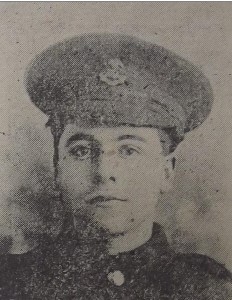
From: Carrog, Denbigh
K.I.A (110 Years this day)
Thursday 12th October 1916.
23 years old
Thomas Herbert Parry was born in 1893 in Carrog, Denbigh, the son of Lewis James Parry and his wife Elizabeth Ellen (nee Palgrave) who were married in February 1890 in the church at Llandrillo-Yn-Rhos. Lewis was born in Amlwch, Anglesey, his marriage certificate shows that he was working as a private school master and was the son of a clerk in Holy Orders. Elizabeth was born in Bangor, North Wales where her father was a solicitor.
At the time of the 1901 census the family were living at 12 Hertford Drive, Liscard. Lewis was 47, and Elizabeth was 36. They are recorded as living on their own means. The couple had five children – John Palgrave aged 10, James Roose 9, both born in Llanfairfechan, Thomas Herbert 8 born in Carrog, Kathleen 6 born in Kew, Surrey and 4 year old Mabel who was born in Carrog.
Thomas’s father Lewis died in the December quarter of 1906, aged 53.
The 1911 Census shows his widowed mother, Elizabeth Ellen, aged 46, living at 9 Ormonde Street, Liscard, Birkenhead with her four youngest children. James Roose aged 19, who was a railway clerk, Thomas Herbert aged 18, is a book-keeper for a salt manufacturer, Kathleen aged 16, is at home and Mabel aged 14, is at school.
Thomas enlisted in Liverpool on the 31st August 1914 at the age of 21, and served in the 19th Battalion, The King’s Liverpool Regiment as Private No 17680. His enlistment papers show that he was aged 21 years and 7 months, occupation clerk. He was described as being 5ft 6 inches tall, weighed 112 lbs, and had a fair complexion, blue eyes and brown hair. He stated his religion as C. of E.
Formed on 07th September 1914 the 19th Battalion trained locally at Sefton Park and remained living at home or in rented accommodation until November 1914. They then moved to the hutted accommodation at Lord Derby’s estate at Knowsley Hall. On 30th April 1915 the 19th Battalion alongside the other three Pals battalions left Liverpool via Prescot Station for further training at Belton Park, Grantham. They remained here until September 1915 when they reached Larkhill Camp on Salisbury Plain. He arrived in France on 7th November 1915.
His service records are incomplete, he was at some stage appointed Lance Corporal.
15.9.15 - reverts to the rank of Pte at own request.
16.1.16 - Sick, sent Field Ambulance.
21.1.16 - rejoined Battn.
Thomas was killed in action on the 12th October 1916 during the Battle of the Transloy Ridges which was part of the ongoing Somme Offensive.
It had rained incessantly at the beginning of October 1916 and the ground was full of mud. In his book ‘The Liverpool Pals’ Graham Maddocks describes the day of the 12th of October 1916.
It was obvious that the Germans knew an attack was coming and from which direction it would be mounted. On the evening of the 11th the 20th Battalion moved up the line and dug two deep assembly trenches behind the 17th Battalion’s position for the attack the next day. The 19th Battalion also moved into its reserve positions known as Flers Trench. Although the rain has stopped, the ground was like a morass, with all the natural vegetation destroyed, it was difficult to tell exactly where the objectives lay. On the afternoon of the 12th at exactly 2.05pm, the attack began along the whole Corps line, covered by the local batteries of the Royal Field Artillery which still had line of sight. As the whistles blew, the 17th Battalion left its trenches to move forwards, at the same time No.1 and 2 Companies of the 20th Battalion moved forward and occupied the trenches vacated by the 17th. As they too went over the top, No.3 and 4 Companies took their place and waited in their turn to follow. No.2 and 3 Companies of the 19th Battalion moved up to occupy the assembly trenches dug the previous night by the 20th.
As soon as the attacking waves left their trenches the enemy artillery began to register on them and at the same time the defending infantry commenced a murderous rain of fire. Those German regiments were trained and experienced soldiers, well dug in on high ground, and for the most part, looking out on uncut wire. As such it was virtually impossible for them to miss the City Battalion men struggling to advance in the mud towards them.
Brigadier-General F.C.Stanley wrote that the Battalions were also suffering casualties due to the short shooting of the British heavy artillery fire. “I know from practical experience that they were our own guns which were shooting, and which were causing us quite a considerable number of casualties. The fault lay at that time from the fact that the heavy gunners would not send their FOO’s (Forward Observation Officers) far enough forward, but were content to observe us from right back”
Some ground was gained that day, about 150 yards, the 20th Battalion were not relieved until 24 hours later causing the men to endure another day and night in the front line trench.
His death was reported in the Liverpool Daily Post on 30th October 1916:
Private Thomas Herbert Parry (23), K.L.R., of 14 Leominster Road, Liscard. He was previously employed the Salt Union, Liscard.
Thomas' body was not recovered or was subsequently lost as he has no known grave and is commemorated on the Thiepval Memorial to the Missing of the Somme, France.
The Thiepval Memorial, the Memorial to the Missing of the Somme, bears the names of more than 72,000 officers and men of the United Kingdom and South African forces who died in the Somme sector before 20 March 1918 and have no known grave. Over 90% of those commemorated died between July and November 1916.
On 01st August 1932 the Prince of Wales and the President of France inaugurated the Thiepval Memorial in Picardy. The inscription reads: “Here are recorded the names of officers and men of the British Armies who fell on the Somme battlefields between July 1915 and March 1918 but to whom the fortune of war denied the known and honoured burial given to their comrades in death.”
His death was also reported in the Wallasey News
Killed While Repairing Telephone Lines
Another Wallasey soldier has given his life for his country in Private Thomas Herbert Parry, who was killed by a shell on October 12th whilst engaged in mending the telephone wires in the trenches during an attack on the German lines. The deceased soldier was 23 years of age, and was the second surviving son of Mrs. Parry, 14, Leominster Road, Liscard. Another son is also serving in the Army.
During the early weeks of the war the late Private Parry left the service of the Salt Union Ltd., to join the Army as a member of the King's Liverpool Regiment, and went through his training at Knowsley, Salisbury Plain, and Grantham. Thence he was drafted to last November and took part in the great advance of this summer. He escaped unhurt until called upon to make the supreme sacrifice, his death being mercifully instantaneous.
His loss will be keenly felt by his friends and comrades, to whom he had endeared himself by his genial and kindly disposition.
Soldiers Effects and Pension to mother Elizabeth, Victoria Rd, Prestatyn.
Thomas is also commemorated on the Wallasey Civic Memorial and Wallasey Roll of Honour.
We currently have no further information on Thomas Herbert Parry, If you have or know someone who may be able to add to the history of this soldier, please contact us.
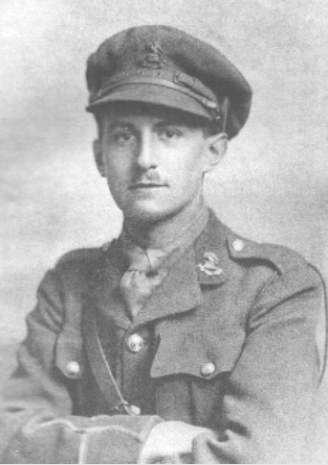
From: Rock Ferry, Cheshire
K.I.A (110 Years this day)
Thursday 12th October 1916.
23 years old
Robert was born on 18th December 1892 in Birkenhead and was baptised 15th January 1893 at Rock Ferry the son of Robert and Florence Patterson (nee Baker) who were married in 1886 at St Peters, Rock Ferry. Robert jnr was baptised on the 15th Jan 1893 in Rock Ferry.
The 1891 Census shows the family living at Redwood, Egerton Park, Tranmere. Robert and Florence are living with their daughter Kathleen Maud and three servants, Robert is a Solicitor.
His father died, aged 39, on 16th June 1895 with Probate to his wife Florence in the sum of £1,909.10s.9d. with Philip Edward Curry (Manager) and John Noble (Surgeon) as executors.
In the 1901 Census the family have moved to 207 Old Chester Road, Florence aged 38, is now a widow and living on her own means with Kathleen aged 13 and Robert Denzil aged 8, and two servants.
His mother, Florence, re-married on the 03rd July 1901 at St Pauls Chapel, Bebington to John Noble (the surgeon who was an executor for his fathers will in 1895). They went on to have three sons James, John and William.
The 1911 Census shows Robert Denzil is a boarder at Birkenhead School, Oxton.
Whilst living on the Wirral he was also an active member of Birkenhead Park Rugby Football Club, and Rock Ferry Cricket Club.
He originally enlisted in the 17th (Pals) Battalion of The King's Liverpool Regiment as Private 15211.
Civil and Military Gazette 16th February 1915 :
The undermentioned to be temporary second-lieutenants- Dated 9. Nov. Robert Denzil Paterson;
He won a commission and was serving in the 20th Battalion, King's Liverpool Regiment when in April 1916, he attended a course of instruction at the 4th Army School and on 26th June, in the front line trenches at Maricourt on the Somme, he suffered shell shock when the Germans laid down a heavy artillery barrage which killed or wounded sixty officers and men.
The Civil and Military Gazette of 08th July 1916 reported as follows:
Wounded.
Lieut. R. D. Paterson, (Liverpools).
He must have been slightly wounded again, or reported sick, in early September, as the 20th Battalion War Diary records that on 05th September 1916 he returned from the Field Ambulance and took over command of No.2 Company, when it was in Brigade Reserve at Gorre, near Givenchy.
He was killed in action just over a month later on 12th October 1916, on the Somme.
According to the 20th Bn War Diary, on 10th October 1916 the battalion marched from Dernancourt via Mametz to Bazentin Le Grand where it bivouacked for the night. The next day the battalion moved up to site for assembly trenches, arriving about 11 p.m., where it dug in two good trenches, Nos.1 and 2 Coys front and Nos.3 and 4 Coys in rear.
From the War Diary:
Near Eaucourt L’Abbaye. 12/10/1916. The 4th British and 6th French armies continued the attack. Zero 2.5 p.m. The whole XVth Corps attacked […] The attack of 89th Inf Bde was carried out with 2nd Bn Bedf Regt on right, 17th Bn KLR on left, 20th Bn KLR in support, 19th Bn KLR in reserve. Battalions attacked in four waves. On the departure of the attacking battalions Nos. 1 and 2 companies advanced, each in two waves, to garrison the front line trench vacated by 2nd Bn Bedf Regt on right and 17th KLR on left. On Nos 1 and 2 Coys vacating front assembly trench, it was occupied by two platoons of Nos. 3 and 4 Coys respectively, from rear assembly trench. As the assaulting waves left their trenches they were met by intense machine gun fire, especially on our left. The enemy also opened heavy barrages on our front support and assembly trenches. […] Capt. H. Beckett, commanding No.1 company, reached the front line with few casualties, but Lieut R.D. Paterson leading No.2 company was killed. His company also had few casualties. The assaulting battalions were held up by very heavy machine gun fire, and made little progress. […] At 4.20 p.m. two platoons, No.4 Coy, under Cpl Brighouse, were sent up to reinforce the left, and No.3 Coy under Cpl Sutton followed at 4.45 p.m. Battalion HQ moved up to front line at 4.55 and remaining two platoons of No.4 Coy moved up to join Cpl Brighouse.
Casualties during action:
Officers – Killed Lieut. R.D. Paterson, 2nd Lieut G.L. Grennan, Wounded – 2nd Lieuts A.E. Griffin, L.E. Mclean Hayes, C. Buttemer, Wounded Cpl g. Brighouse.
Other Ranks killed – 20.
On that day the objectives were the German front line trenches near Flers, which were attacked by the 89th Brigade. The 2nd Battalion The Bedfordshire Regiment was on the right, the 17th Battalion The King’s Liverpool Regiment was on the left, and the 20th Battalion was in support. The 19th Battalion was in reserve. The attack commenced at 14.05 and was mounted in two waves. As the attackers left their trenches, they were met with intense machine gun fire and a fierce bombardment was also mounted on the front, support and assembly trenches. As the 20th Battalion moved up to occupy the old front line, recently vacated by the first two waves of attackers, it was hit by this German barrage and sustained some Casualties.
By this time, the first waves had been held up on the German wire, and could not go any further and as a result, some of No.3 and No.4 Companies were sent forward to reinforce the line, and they began to dig in, just in front of the old British front line. By nightfall, all the 20th Battalion was in the trenches previously held by the 17th Battalion, but overall, only about two hundred yards had been gained along the Brigade front, for the loss of many casualties. Apart from Lieutenant Paterson, the 20th Battalion lost twenty nine other ranks killed or died of wounds on that day. Paterson was aged twenty three.
He now rests at Caterpillar Valley Cemetery, Longueval commemorated on a Special Memorial. His headstone has no private family inscription.
Caterpillar Valley was the name given by the army to the long valley which runs West to East, past "Caterpillar Wood", to the high ground at Guillemont. Longueval village is on the Northern crest of this valley and 500 metres West of the village, on the South side of the road to Contalmaison, is Caterpillar Valley Cemetery.
Caterpillar Valley was captured during a successful night assault by the 3rd, 7th and 9th Divisions on Bazentin Ridge on 14 July 1916. It was lost in the German advance of March 1918 and recovered by the 38th (Welsh) Division on 28 August 1918, when a little cemetery was made (now Plot 1 of this cemetery) containing 25 graves of the 38th Division and the 6th Dragoon Guards. After the Armistice, this cemetery was hugely increased when the graves of more than 5,500 officers and men were brought in from other small cemeteries, and the battlefields of the Somme. The great majority of these soldiers died in the autumn of 1916 and almost all the rest in August or September 1918.
CATERPILLAR VALLEY CEMETERY now contains 5,573 Commonwealth burials and commemorations of the First World War. 3,798 of the burials are unidentified but there are special memorials to 32 casualties known or believed to be buried among them, and to three buried in McCormick's Post Cemetery whose graves were destroyed by shell fire.
Both cemetery and memorial were designed by Sir Herbert Baker.
Robert’s death was reported in the Liverpool Echo on 17th October 1916:
DEATHS – Killed in Action – PATTERSON – October 12 killed in action Lieutenant Robert Denzil Paterson, King’s Liverpool regiment so of the late Robert Paterson and Mrs Noble of Rock Ferry.
Also a more detailed report appeared in the Liverpool Echo of 18th October 1916:
Lieutenant Robert Denzil Paterson, K.L.R., is officially reported killed in action on the 12th inst. Lieutenant Paterson, universally loved and known as "Roy," was one of the most distinguished scholars of Birkenhead School, and took his P.A. degree at Clare College, Cambridge University, in 1914. He was looking forward to a scholastic career, but on the outbreak of the war he enlisted as a private, being quickly offered a commission as second-lieutenant, and a little later, in 1915 was promoted to a full lieutenancy. He left for France in November 1915. He spent the winter in the trenches, and acted as adjutant of his battalion. His high intelligence and devotion to his military duties received the warm praise of the entire command, and justified his imminent appointment as captain. But his brilliant career was cut short in last week's fighting. Roy Paterson was well known and loved in Rock Ferry, where the keenest sympathy is felt for his relatives. His grandfather will be remembered as twice Mayor of Birkenhead. In the Birkenhead Football Club and the Rock Ferry Cricket Club he will be long remembered. He was in his twenty-fourth year.
The Master of Clare College wrote:
‘As soon as your son came up, his energy and personality won him the regard and affection of all who knew him, and his memory will not soon fail here.’
He was a member of Rock Ferry Cricket Club and appears in Wisden on the Great War: The Lives of Cricket's Fallen 1914-1918 as follows:
LT ROBERT DENZIL PATERSON (The King's Liverpool Regiment), killed on October 12, aged 23, played with success for the Rock Ferry CC. He was educated at Birkenhead School and Clare College, Cambridge.
Soldiers Effects went his mother Mrs Florence Noble, no Pension record has been found.
Robert is also commemorated on the following Memorials:
Birkenhead Park Rugby Club
Birkenhead School
The Old Birkonian Society
Birkenhead War Memorial, Hamilton Square
Clare College, Cambridge
CWGC record his next of kin as: Son of Mrs. F. Noble, of Oxenford, Rock Ferry, Birkenhead, Cheshire.
The extract below as taken from Liverpool's Scroll of Fame.
Robert Denzil Paterson was another one of our public school boys who gave his life in the cause of right. The son of the late Mr. Robert Paterson and Mrs. M Noble, of Rock Ferry, he was born on December 18th, 1892, and was killed in action in France on October 12th, 1916.
His scholastic career was a highly successful one. He entered Birkenhead School in 1902, where he became school prefect, head of the house, and captain of cricket and football elevens. On leaving in 1911, he went up to Clare College, Cambridge, where again he gained his place in the cricket and football teams, edited the magazine, became president of the Debating Society, and was a member of the Hawker Club. After taking his degree he went as a master to Copthorn School in Sussex, but on the outbreak of war he was one of the first to respond to his country's call, and joined the ranks. His stirling qualities were quickly recognised and he obtained a commission in one of the "Pals" battalions of the King's (Liverpool Regiment). It was during the first Battle of the Somme that he met his death, which occurred between Geuedecourt and La Sars. At the time he was acting Captain and Adjutant.
In offering his sincerest sympathy to the bereaved relatives, The Colonel of Lieut. Paterson's regiment declared that "he died doing his duty gallantly to the end," and the Major wrote the following tribute to him:- "He was a very capable and keen officer, and one in whom I had every confidence. He will be a great loss to the army and the country."
Another officer who knew him more intimately wrote:- "It certainly requires the very highest form of courage to stick on when things are as terrible as they were on the Somme, and I know from various sources that Roy refused several times to leave his men when he might very well have done so, simply because he had a strong sense of honour and of duty. I knew him as an excellent officer myself, and several others, as well as officers, have told me he was both courageous and efficient in France.”
His mother died, aged 77, in 1939.
We currently have no further information on Robert Denzil Paterson, if you have or know someone who may be able to add to the history of this soldier, please contact us.
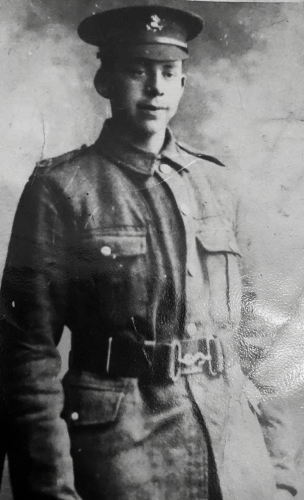
From: Liverpool
K.I.A (110 Years this day)
Thursday 12th October 1916.
21 years old
Herbert John Pennock was born in 1893 in Liverpool and was the son of Herbert William Pennock and his wife Alice (nee Guile) who were married on the 23rd November 1891 in St George's Church, Everton. Herbert was a 23 year old sailmaker of 128 Priory Grove, father Robert, whilst Alice was 23 of 6 Mere Lane, Everton, father John. Their first child, also Herbert John, died in infancy in 1892.
The 1901 census records Herbert’s mother Alice, aged 33, living at 6 Walton Lane with her three children, Herbert aged 7, Alice aged 5 and 2 year old Robert. The family are living with her own parents John and Catherine Guile and three of Alice’s siblings. John has a newsagents shop. There is no record of Herbert senior, but as he is listed as a sail maker on their marriage certificate it is possible he was away at sea. Young Robert sadly died in 1905.
The 1911 Census shows the family living at 31 Herschell St, Everton.
Herbert senior is aged 45, and is working as a warehouse porter, his wife Alice is aged 43(married 19 years, 5 children 3 still alive). They had both been born in Liverpool. Herbert junior is 17 and is a painter and decorators apprentice. His siblings Alice aged 15 is at home. They have another son who is also called Robert and who was born in 1908.
Herbert enlisted in Liverpool and was serving in the 20th Battalion, The King’s Liverpool Regiment as Private No 24240 when he was killed in action on the 12th October 1916 during the Battle of the Transloy Ridges which was part of the ongoing Somme Offensive.
According to the 20th Bn War Diary, on 10th October 1916 the battalion marched from Dernancourt via Mametz to Bazentin Le Grand where it bivouacked for the night. The next day the battalion moved up to site for assembly trenches, arriving about 11 p.m., where it dug in two good trenches, Nos.1 and 2 Coys front and Nos.3 and 4 Coys in rear.
From the War Diary:
Near Eaucourt L’Abbaye. 12/10/1916. The 4th British and 6th French armies continued the attack. Zero 2.5 p.m. The whole XVth Corps attacked […] The attack of 89th Inf Bde was carried out with 2nd Bn Bedf Regt on right, 17th Bn KLR on left, 20th Bn KLR in support, 19th Bn KLR in reserve. Battalions attacked in four waves. On the departure of the attacking battalions Nos. 1 and 2 companies advanced, each in two waves, to garrison the front line trench vacated by 2nd Bn Bedf Regt on right and 17th KLR on left. On Nos 1 and 2 Coys vacating front assembly trench, it was occupied by two platoons of Nos. 3 and 4 Coys respectively, from rear assembly trench. As the assaulting waves left their trenches they were met by intense machine gun fire, especially on our left. The enemy also opened heavy barrages on our front support and assembly trenches. […] Capt. H. Beckett, commanding No.1 company, reached the front line with few casualties, but Lieut R.D. Paterson leading No.2 company was killed. His company also had few casualties. The assaulting battalions were held up by very heavy machine gun fire, and made little progress. […] At 4.20 p.m. two platoons, No.4 Coy, under Cpl Brighouse, were sent up to reinforce the left, and No.3 Coy under Cpl Sutton followed at 4.45 p.m. Battalion HQ moved up to front line at 4.55 and remaining two platoons of No.4 Coy moved up to join Cpl Brighouse.
Casualties during action:
Officers – Killed Lieut. R.D. Paterson, 2nd Lieut G.L. Grennan, Wounded – 2nd Lieuts A.E. Griffin, L.E. Mclean Hayes, C. Buttemer, Wounded Cpl g. Brighouse.
Other Ranks killed – 20.
It had rained incessantly at the beginning of October 1916 and the ground was full of mud. In his book ‘The Liverpool Pals’ Graham Maddocks describes the day Herbert was killed.
It was obvious that the Germans knew an attack was coming and from which direction it would be mounted. On the evening of the 11th the 20th Battalion moved up the line and dug two deep assembly trenches behind the 17th Battalion’s position for the attack the next day. The 19th Battalion also moved into its reserve positions known as Flers Trench. Although the rain has stopped, the ground was like a morass, with all the natural vegetation destroyed, it was difficult to tell exactly where the objectives lay. On the afternoon of the 12th at exactly 2.05pm, the attack began along the whole Corps line, covered by the local batteries of the Royal Field Artillery which still had line of sight. As the whistles blew, the 17th Battalion left its trenches to move forwards, at the same time No.1 and 2 Companies of the 20th Battalion moved forward and occupied the trenches vacated by the 17th. As they too went over the top, No.3 and 4 Companies took their place and waited in their turn to follow. No.2 and 3 Companies of the 19th Battalion moved up to occupy the assembly trenches dug the previous night by the 20th.
As soon as the attacking waves left their trenches the enemy artillery began to register on them and at the same time the defending infantry commenced a murderous rain of fire. Those German regiments were trained and experienced soldiers, well dug in on high ground, and for the most part, looking out on uncut wire. As such it was virtually impossible for them to miss the City Battalion men struggling to advance in the mud towards them.
Brigadier-General F.C.Stanley wrote that the Battalions were also suffering casualties due to the short shooting of the British heavy artillery fire. “I know from practical experience that they were our own guns which were shooting, and which were causing us quite a considerable number of casualties. The fault lay at that time from the fact that the heavy gunners would not send their FOO’s (Forward Observation Officers) far enough forward, but were content to observe us from right back”
Some ground was gained that day, about 150 yards, the 20th Battalion were not relieved until 24 hours later causing the men to endure another day and night in the front line trench.
Soldiers Effects and Pension to mother Alice.
Herbert's body was not recovered or was subsequently lost as he has no known grave and is commemorated on the Thiepval Memorial to the Misisng of the Somme, France.
The Thiepval Memorial, the Memorial to the Missing of the Somme, bears the names of more than 72,000 officers and men of the United Kingdom and South African forces who died in the Somme sector before 20 March 1918 and have no known grave. Over 90% of those commemorated died between July and November 1916.
On 01st August 1932 the Prince of Wales and the President of France inaugurated the Thiepval Memorial in Picardy. The inscription reads: “Here are recorded the names of officers and men of the British Armies who fell on the Somme battlefields between July 1915 and March 1918 but to whom the fortune of war denied the known and honoured burial given to their comrades in death.”
He is also commemorated on the War Memorial at Breckfield Council School, Everton.
On the 13th October 1917, a year after his death his family posted a notice in the Liverpool Daily Post:
Pennock – In fondest memory of Private H. Pennock (Bert), K.L.R., eldest son of Mr and Mrs Pennock of 31 Herschell Street, who was killed in action in France, October 12 1916. (“Greater love hath no man than this, that a man lay down his life for his friend”)
Soldiers Effects and Pension to mother Alice.
His mother died, aged 69, in the December quarter of 1937.
His father died soon after, aged 72, in the March quarter of 1938.
Grateful thanks are extended to Liam Pennock for permission to use the photograph of Herbert now on this site.
We currently have no further information on Herbert Pennock, If you have or know someone who may be able to add to the history of this soldier, please contact us.

From: Cockermouth
K.I.A (110 Years this day)
Thursday 12th October 1916.
29 years old
John Perry was born in Brigham, Cockermouth in 1888, the son of Henry Perry and his wife Margaret Ann (nee Morley) who were married in 1885 in Cockermouth, Cumberland.
The Census of 1891 records John as a 3 year old living with his parents, Henry who was 34 and a limestone quarry labourer b.Brigham, and Margaret Ann who was 33 b.Bridgefoot, Workington. Margaret had a 13 year old daughter called Elizabeth Ann B.Greysouthern, who is living with the couple and has been given the Perry surname too. The couple have two other children - Robert aged 5 b.Whitehaven, and baby George Henry aged just 1 b.Broughton, who sadly died the same year. The family lived in Arlecdon, near Whitehaven, Cumberland.
By 1901 they were living in Fothergill, Flimby a coal mining area where John’s father Henry aged 46, was working as a labourer in a brickyard, mother Margaret A. is aged 45. Both John and his brother Robert at the ages of 13 and 15 respectively are working below ground in a coal mine as pit pony drivers. This would often be a boys first job in the mines, hard physical work for youngsters. There were three new additions to the family – William aged 8, Margaret aged 6 and Thomas aged 3. Sadly little Margaret died in 1906.
When the 1911 Census is taken, John’s sister Elizabeth was married to Charles Thompson, a slate quarryman and living in Keswick. Elizabeth is an innkeeper and has two children. John, also a quarryman, and his brothers William and Thomas are living with Elizabeth and her husband. Their parents are both living in Cockermouth Workhouse, so must have fallen on tough times. Their other son Robert is married with two children and living in Maryport.
Father died aged 62 in the June quarter of 1916 shortly before his son.
John was serving in the 17th Battalion of The King's Liverpool Regiment as Private 52014 when he was killed in action on October 12th 1916, aged 29.
It had rained incessantly at the beginning of October 1916 and the ground was full of mud. In his book ‘The Liverpool Pals’ Graham Maddocks describes the day John was killed.
It was obvious that the Germans knew an attack was coming and from which direction it would be mounted. On the evening of the 11th the 20th Battalion moved up the line and dug two deep assembly trenches behind the 17th Battalion’s position for the attack the next day. The 19th Battalion also moved into its reserve positions known as Flers Trench. Although the rain has stopped, the ground was like a morass, with all the natural vegetation destroyed, it was difficult to tell exactly where the objectives lay. On the afternoon of the 12th at exactly 2.05pm, the attack began along the whole Corps line, covered by the local batteries of the Royal Field Artillery which still had line of sight. As the whistles blew, the 17th Battalion left its trenches to move forwards, at the same time No.1 and 2 Companies of the 20th Battalion moved forward and occupied the trenches vacated by the 17th. As they too went over the top, No.3 and 4 Companies took their place and waited in their turn to follow. No.2 and 3 Companies of the 19th Battalion moved up to occupy the assembly trenches dug the previous night by the 20th.
As soon as the attacking waves left their trenches the enemy artillery began to register on them and at the same time the defending infantry commenced a murderous rain of fire. Those German regiments were trained and experienced soldiers, well dug in on high ground, and for the most part, looking out on uncut wire. As such it was virtually impossible for them to miss the City Battalion men struggling to advance in the mud towards them.
Brigadier-General F.C.Stanley wrote that the Battalions were also suffering casualties due to the short shooting of the British heavy artillery fire. “I know from practical experience that they were our own guns which were shooting, and which were causing us quite a considerable number of casualties. The fault lay at that time from the fact that the heavy gunners would not send their FOO’s (Forward Observation Officers) far enough forward, but were content to observe us from right back”
Some ground was gained that day, about 150 yards, the 20th Battalion were not relieved until 24 hours later causing the men to endure another day and night in the front line trench.
John was originally posted as Missing.
His death was reported in the Penrith Observer on 03rd January 1917:
News has reached Keswick that Private John Perry, King's Liverpool Regiment, had been found dead on the battlefield. The War Office had reported him missing from October 12th, but a letter has since been received from a friend who saw him lying dead, and he forwarded a New Testament and a sixpence which had been given to the dead soldier as a keepsake, and which had been found clenched in his hands, proving that his thoughts had been turned homeward when he died. The Testament contained the address of his sweetheart at Portinscale, and that is how the news reached home. The body was found by a dispatch rider, who wrote to the address at Portinscale. Private Perry, who was 29 years of age, enlisted last February; previously he had worked at the Honister Quarries for eight years.
John was engaged to a Miss Tweddle of Gray Crag, Portinscale.
John now rests at Warlencourt British Cemetery where his headstone contains the epitaph:
"GREATER LOVE HATH NO MAN WHO LAY DOWN HIS LIFE SO THAT OTHERS MIGHT LIVE".
Warlencourt Cemetery is entirely a concentration cemetery, begun late in 1919 when graves were brought in from small cemeteries and the battlefields of Warlencourt and Le Sars. The Graves Registration form shows graves from “Le Sars 6/1, 6/2, Hexham Road, Seven Elms”.
Graves were brought in from the original cemeteries at Hexham Road (Le Sars), and Seven Elms (Flers), as well as over 3,000 British graves due to the fighting which took place around the Butte de Warlencourt from the autumn of 1916 to the spring of 1917, and again in the German advance and retreat of 1918. The cemetery now contains 3,505 Commonwealth burials and commemorations of the First World War, 1,823 of which are unidentified.
Soldiers Effects to sister Elizabeth A. Thompson, Pension to mother Margaret Ann.
John is commemorated on the Keswick War Memorial.
John’s mother died in the June quarter of 1924.
We currently have no further information on John Perry, if you have or know someone who may be able to add to the history of this soldier, please contact us.

From: Aughton, Lancs
K.I.A (110 Years this day)
Thursday 12th October 1916.
29 years old
Edward Lea Phillips was born in 1887 and was baptised on 08th September, 1887 at St Peter & Paul, Church, Aughton the son of John and Annie Phillips (nee Dutton). His parents married on Christmas Day 1869 at St Andrew's Church, Bebington, Wirral. John was a 27 year old clerk, father Robert, whilst Ann was aged 21, father Joseph, the both resided in Higher Bebington. They had ten children. The family lived on the Wirral, where Annie Beatrice, John Arthur, Charles Cecil, Ethel Summers, Herbert Dutton, and Agnes Gertrude were born, and in about 1884 moved to Aughton, where Florence Muriel, Edward, Enid Laing, and Gladys Elaine were born.
At the time of the 1891 census they are living at “Belmont” in Aughton Park, with eight children, a cook, and a housemaid. Edward is 3 years old. His father is a stock exchange secretary.
The 1901 Census shows the family living at (Belmont), Aughton Park, Aughton, Ormskirk. His father John is aged 59, born 1842 occupation Secretary to Stock Exchange and Secretary to Limited Liability Company, born Horsham, Sussex, his wife Annie is aged 52, born 1849 in Liverpool. They have six children. Ethel S aged 20, born 1881, Agnes G Aged 18, born 1883, both born in Rock Ferry, Florence M aged 16, born 1885, Edward Lea aged 13, born 1888, Enid L aged 11, born 1890 and Gladys E aged 10, born 1891 all born in Aughton. They have two servants living at the address Mary J Hall, aged 17, born 1884 occupation Cook(Domestic) born in Skelmersdale and Elizabeth Abraham aged 16, born 1885 occupation Housemaid (Domestic ) born in Lydiate.
Edward has not been found on the 1911 census. His parents are still at Belmont with four daughters and a domestic servant. His father, 69, is secretary to the stock exchange and to a limited liability company, his mother is 62. None of the daughters has an occupation.
His father retired in 1914 shortly before the war, but with the mass enlistment of young men he returned to the Stock Exchange and worked another three years.
Edward enlisted in Liverpool and was serving in the 17th Battalion, The King’s Liverpool Regiment as Private No 24835. Based on the amount of the War Gratuity, Edward enlisted in about December 1914.
He was billeted at Prescot Watch Factory, he trained there and also at Knowsley Hall. On 30th April 1915 the 17th Battalion alongside the other three Pals battalions left Liverpool via Prescot Station for further training at Belton Park, Grantham. They remained here until September 1915 when they reached Larkhill Camp on Salisbury Plain.
He arrived in France with his battalion, disembarking at Boulogne on 07th November 1915.
He was killed in action on the 12th October 1916 aged 29 during the Battle of the Transloy Ridges which was part of the ongoing Somme Offensive.
17th Bn War Diary: Battle of Transloy Ridge –
11-10-16 - Gird Trench/Gird Support – Battalion in front line and support trenches. British bombardment of enemy front line system commenced about midday. Hostile shelling was intermittent throughout the day.
12-10-16 - Our bombardment continued. Enemy reply weak. 2.5 p.m. Zero hour. Attack on German front line system commenced. Enemy wire was found to be uncut and attack was unsuccessful. Hostile machine gun fire was very heavy and caused many casualties. Battalion H.Q. and Support Trench were heavily shelled throughout afternoon and evening. […] During this action all communication had to be carried out by runners and carrier pigeons as all wires were being continually cut by enemy shelling.
Casualties: 5 officers killed, 5 officers wounded, 38 OR killed, about 225 OR wounded/missing etc.
Graham Maddocks, in “Liverpool Pals” p.140, adds:
“As the whistle blew, the 17th Battalion left its trenches to move forward. […] As soon as the attacking waves left their trenches the enemy artillery began to register on them, and at the same time, the defending infantry commenced a murderous rain of fire. […] Although their numbers had been depleted by the British bombardment, they were trained and experienced soldiers, well dug in on high ground, and for the most part, looking out on uncut wire. As such, it was virtually impossible for them to miss the City Battalion men struggling to advance in the mud towards them. The 17th Battalion, on the left, was particularly badly hit, as its portion of No Man’s Land contained a slight rise in the ground, and as the troops emerged onto it they were silhouetted against the sky and became easy targets. Those on the left of the attack, who managed to avoid the hail of bullets and make it to the German wire, then found that it was totally uncut, and thus trapped, they too became easy targets, to be picked off almost at the enemy’s will. It was hardly surprising that, seeing the first waves being wiped out, some of the following waves turned back and made for their start lines. These lines were now packed with other waves of troops, however, and the fleeing men added to the congestion already there, and became easy prey for the German gunners. There is some evidence also, to suggest that at this stage, the British trenches were also being hit by their own heavy artillery shells which were falling short.”
He was initially declared Missing in Liverpool Echo 01st November 1916.
MISSING.
Pte Edward Lea Phillips K.L.R. His father lives at Belmont, Aughton.
A further report appeared in the Ormskirk Advertiser on 02nd November 1916:
“Aughton Soldier Reported Missing -
Mr. John Phillips of “Belmont”, Aughton Park, has received official news that his youngest son, Private Edward Lea Phillips, of the King’s Liverpool Regiment, has been posted as missing since an engagement on October 12th last. Private Phillips has been at the front for about twelve months. Mr. Phillips has lost one son, Rifleman H. D. Phillips, in the war.”
Subsequently in the Liverpool Daily Post 16th November 1916.
MISSING.
King’s (Liverpool Regt.) - Phillips, 24835, E. L.(Ormskirk);
His death was later presumed for official purposes to have occurred on or since 12th October 1916.
Edward's body was not recovered or was subsequently lost as he has no known grave and is commemorated on the Thiepval Memorial, France.
The Thiepval Memorial, the Memorial to the Missing of the Somme, bears the names of more than 72,000 officers and men of the United Kingdom and South African forces who died in the Somme sector before 20 March 1918 and have no known grave. Over 90% of those commemorated died between July and November 1916.
On 01st August 1932 the Prince of Wales and the President of France inaugurated the Thiepval Memorial in Picardy. The inscription reads: “Here are recorded the names of officers and men of the British Armies who fell on the Somme battlefields between July 1915 and March 1918 but to whom the fortune of war denied the known and honoured burial given to their comrades in death.”
Edward earned his three medals.
Probate records: Administration 19 October to John Phillips retired secretary. Effects £174 14s 15d.
His father, John, received his Army pay and a War Gratuity of £8. No pension card has been found, suggesting that Edward had no dependents or that his father did not apply for a pension.
His brother Herbert, 34, married with two daughters, served with the 1/6th Bn. K.L.R. He was wounded in action and died on 19th April 1915 at No.3 C.C.S. at Hazebrouck. (Another daughter was born a month after his death.) Herbert now rests in Poperinghe Old Military Cemetery, where his epitaph reads,
“THY WAY NOT MINE O LORD”.
The family home, Belmont, a 14-room, “detached freehold house with good garden” was put up for sale in August 1918.
His parents celebrated their golden wedding anniversary in 1919.
His father died the following year in Stratford on Avon, aged 78.
His mother died, aged 75, in 1924 in Stratford.
Edward and Herbert are commemorated on the Aughton Civic Memorial and the Ormskirk Comrades Roll of Honour.
We currently have no further information on Edward Lea Phillips, If you have or know someone who may be able to add to the history of this soldier, please contact us.
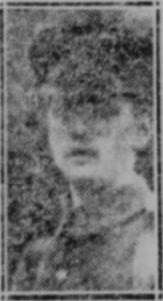
From: Liverpool
K.I.A (110 Years this day)
Thursday 12th October 1916.
21 years old
Alfred Piercy was born in Liverpool on the 03rd April 1895, the son of Alfred Piercy and his wife Florence (née Lees). Alfred, from Liverpool, and Florence, from Walsall, Staffordshire, married in Liverpool on the 28th September 1893 at St John the Baptist Church, Toxteth Park. Alfred snr was a 25 year old baker of 27a Bembridge Street, father Cornelius a deceased baker, whilst Florence was aged 23, same address, father Henry an engine turner. They had nine children: Margaret Ann born in 1894, and after Alfred they had Emma in 1896 (died at 11 months), Thomas in 1898, Florence 1900, Annie 1901, Alice 1903, Ada 1905, and John 1907. Alfred was baptised in St. Cleopas' Church, Toxteth, on 17th April 1895, his parents living at 6 Vere Street, and his father’s occupation listed as baker.
In 1901 the family is living in 3 House 4 Court in Laxey Street, Toxteth Park, with four children. His father, 31, is a railway labourer, his mother is 29, Margaret is 6, and Florence is 1. The ages of Thomas and Alfred have been reversed, Alfred is 5 and Thomas 2. Thomas died not long after the census was taken at age 3. Annie was born later in the year, then two more daughters, Alice and Ada. The family suffered another loss when Florence died in 1906, age 6. Another son, John, was born in 1907, who sadly died at age 1, which meant that Alfred was the only surviving son.
In 1911 they are at 1 School Place, Threlfall Street, Toxteth, with five surviving children. His father, 42, is a shipbuilding labourer, his mother is 38(married 18 years 9 children, 5 still alive), Maggie, 17, is a domestic servant, Alfred, 16, is a shop boy, Annie is 10, Alice 8, and Ada is 6.
As his service record has not survived, the details of Alfred’s service are not known. He enlisted in the 20th (Pals) Bn, King’s (Liverpool) Regiment as Private 29657. The 20th Bn was raised in November 1914 and quartered in Tournament Hall in Knotty Ash and in January 1915 moved to Knowsley and the four Pals battalions began training as a brigade. On 30th April 1915 the Pals leave Liverpool for Belton Park Camp in Lincolnshire, and in September for final infantry training at Larkhill Camp on Salisbury Plain before shipping to the front.In October, as part of the 89th Brigade, the battalion takes up position for the coming assault on the Transloy Ridges. Alfred was one of the 213 Other Ranks from the Pals battalions killed in this battle.
According to the 20th Bn War Diary, on 10th October 1916 the battalion marched from Dernancourt via Mametz to Bazentin Le Grand where it bivouacked for the night. The next day the battalion moved up to site for assembly trenches, arriving about 11 p.m., where it dug in two good trenches, Nos.1 and 2 Coys front and Nos.3 and 4 Coys in rear.
From the War Diary:
Near Eaucourt L’Abbaye. 12/10/1916. The 4th British and 6th French armies continued the attack. Zero 2.5 p.m. The whole XVth Corps attacked […] The attack of 89th Inf Bde was carried out with 2nd Bn Bedf Regt on right, 17th Bn KLR on left, 20th Bn KLR in support, 19th Bn KLR in reserve. Battalions attacked in four waves. On the departure of the attacking battalions Nos. 1 and 2 companies advanced, each in two waves, to garrison the front line trench vacated by 2nd Bn Bedf Regt on right and 17th KLR on left. On Nos 1 and 2 Coys vacating front assembly trench, it was occupied by two platoons of Nos. 3 and 4 Coys respectively, from rear assembly trench. As the assaulting waves left their trenches they were met by intense machine gun fire, especially on our left. The enemy also opened heavy barrages on our front support and assembly trenches. […] Capt. H. Beckett, commanding No.1 company, reached the front line with few casualties, but Lieut R.D. Paterson leading No.2 company was killed. His company also had few casualties. The assaulting battalions were held up by very heavy machine gun fire, and made little progress. […] At 4.20 p.m. two platoons, No.4 Coy, under Cpl Brighouse, were sent up to reinforce the left, and No.3 Coy under Cpl Sutton followed at 4.45 p.m. Battalion HQ moved up to front line at 4.55 and remaining two platoons of No.4 Coy moved up to join Cpl Brighouse.
Casualties during action:
Officers – Killed Lieut. R.D. Paterson, 2nd Lieut G.L. Grennan, Wounded – 2nd Lieuts A.E. Griffin, L.E. Mclean Hayes, C. Buttemer, Wounded Cpl g. Brighouse.
Other Ranks killed – 20.
It had rained incessantly at the beginning of October 1916 and the ground was full of mud. In his book ‘The Liverpool Pals’ Graham Maddocks describes the day Herbert was killed.
It was obvious that the Germans knew an attack was coming and from which direction it would be mounted. On the evening of the 11th the 20th Battalion moved up the line and dug two deep assembly trenches behind the 17th Battalion’s position for the attack the next day. The 19th Battalion also moved into its reserve positions known as Flers Trench. Although the rain has stopped, the ground was like a morass, with all the natural vegetation destroyed, it was difficult to tell exactly where the objectives lay. On the afternoon of the 12th at exactly 2.05pm, the attack began along the whole Corps line, covered by the local batteries of the Royal Field Artillery which still had line of sight. As the whistles blew, the 17th Battalion left its trenches to move forwards, at the same time No.1 and 2 Companies of the 20th Battalion moved forward and occupied the trenches vacated by the 17th. As they too went over the top, No.3 and 4 Companies took their place and waited in their turn to follow. No.2 and 3 Companies of the 19th Battalion moved up to occupy the assembly trenches dug the previous night by the 20th.
As soon as the attacking waves left their trenches the enemy artillery began to register on them and at the same time the defending infantry commenced a murderous rain of fire. Those German regiments were trained and experienced soldiers, well dug in on high ground, and for the most part, looking out on uncut wire. As such it was virtually impossible for them to miss the City Battalion men struggling to advance in the mud towards them.
Brigadier-General F.C.Stanley wrote that the Battalions were also suffering casualties due to the short shooting of the British heavy artillery fire. “I know from practical experience that they were our own guns which were shooting, and which were causing us quite a considerable number of casualties. The fault lay at that time from the fact that the heavy gunners would not send their FOO’s (Forward Observation Officers) far enough forward, but were content to observe us from right back”
Some ground was gained that day, about 150 yards, the 20th Battalion were not relieved until 24 hours later causing the men to endure another day and night in the front line trench.
He was reported Missing in the Liverpool Weekly Courier on Saturday 09th December 1916:
Missing.
Private Alfred Piercy, K.L.R., is reported missing since October 12th. His parents who reside at 27 Greta Street, High Park Street, Liverpool, will be glad to receive any information his comrades can give.
Alfred earned his two medals.
The Thiepval Memorial, the Memorial to the Missing of the Somme, bears the names of more than 72,000 officers and men of the United Kingdom and South African forces who died in the Somme sector before 20 March 1918 and have no known grave. Over 90% of those commemorated died between July and November 1916.
On 01st August 1932 the Prince of Wales and the President of France inaugurated the Thiepval Memorial in Picardy. The inscription reads: “Here are recorded the names of officers and men of the British Armies who fell on the Somme battlefields between July 1915 and March 1918 but to whom the fortune of war denied the known and honoured burial given to their comrades in death.”
He was still listed as Missing in the Liverpool Echo on the 28th November 1916:
MISSING MEN - NEWS WANTED.
Private Alfred Percy(sic), K.L.R. His parents reside at 27, Greta-street, High Park-street, Liverpool.
His father, living at 27 Greta Street, Dingle, received Alfred‘s effects of £2-17-6d, and a War Gratuity of £5-10s. His mother received a pension of 13/6 pw.
PIERCY— November 16, suddenly, ALFRED, the beloved husband of Florence Piercy. Interment at Everton Cemetery, to-morrow (Wednesday), at 5.45 p.m.—25 Ashdale Road, Walton.
We currently have no further information on Alfred Piercy, if you have or know someone who may be able to add to the history of this soldier, please contact us.
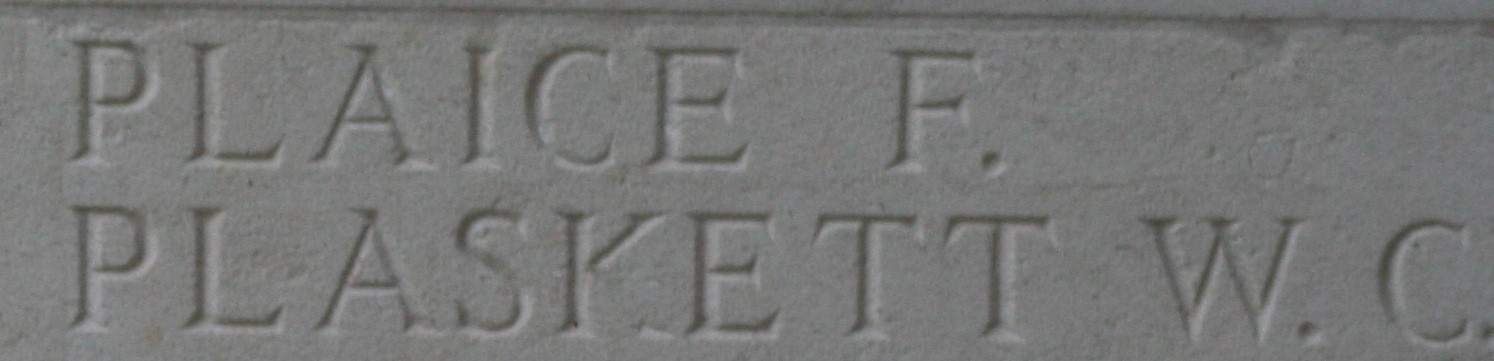
From: Shouldham Norfolk
K.I.A (110 Years this day)
Thursday 12th October 1916.
26 years old
Frank Plaice was born in 1890 in Shouldham, Norfolk, the son of Frederick and his wife Berry Sabina (nee Golder) who married on the 12th October 1878 n Stokesby Church, Norfolk.
The 1891 census shows the family living ‘On the Hill’ Shouldham. Frederick is 34 and is an agricultural labourer who was born in Shouldham. Berry is 34 and was born in Stokesby. The couple had seven children at this time – Elizabeth 12, Frances 10, Harriet 8, Florence 6, Margaret 5, Edward 3 and Frank aged 1.
By 1901 the family live at Westgate Street, Shouldham. The couple have several more children – Ralph aged 8, Walter 6 and Maurice aged 3. Frank and Margaret are still at home and Edward at the age of 13 is an agricultural labourer like his father.
The 1911 census records Frank is working as a footman, part of a staff of 25, in the household of Adelbert Wellington Brownlow Cust, 3rd Earl of Brownlow at Belton House, Grantham, Lincs.
His parents are still on Shouldham. His father is now a licencee and coal dealer. Records show that Frederick was licencee of The Rampant Horse from 1912 to 1926. The census record shows that Frederick and Berry have been married for 31 years and have had 10 children all of whom are alive (sadly daughter Harriet dies in 1912). Still living at home were Florence who is a domestic servant, Ralph and Walter who are farm labourers and Maurice at the age of 13 is a harness maker.
Frank’s service records have survived and show he enlisted in the Kings Liverpool Regiment in Liverpool on the 12th August 1914 aged 24 years and 160 days and gave his occupation as a Footman.
12.8.14 - Attested and posted.
20.8.14 - Promoted to Corporal.
21.8.14 - Posted to the 11th Service Battn.
20.11.14 - Reverted to Private at his own request.
19.5.15 - Embarked for France.
5-12.6.15 - Admitted to 12 Gen. Hospital. Rouen with Gonorrhoea.
1.3.16 - to C.C.S.
11.7.16 - Posted to the 17th Battalion.
19.8.16 - Late on Parade, 3 days CB, and losing respirator, 2 day CB.
28.9.16 - Not complying with an order given by an Officer for which he was given seven days Field Punishment No1.
12.10.16 - Wounded and missing.
He was serving in the 17th Battalion, The King’s Liverpool Regiment as Private No 12052 when he was killed in action on the 12th October 1916 aged 26 during the Battle of the Transloy Ridges which was part of the ongoing Somme Offensive.
17th Battalion War Diary: Battle of Transloy Ridge –
11-10-16 - Gird Trench/Gird Support – Battalion in front line and support trenches. British bombardment of enemy front line system commenced about midday. Hostile shelling was intermittent throughout the day.
12-10-16 - Our bombardment continued. Enemy reply weak. 2.5 p.m. Zero hour. Attack on German front line system commenced. Enemy wire was found to be uncut and attack was unsuccessful. Hostile machine gun fire was very heavy and caused many casualties. Battalion H.Q. and Support Trench were heavily shelled throughout afternoon and evening. […] During this action all communication had to be carried out by runners and carrier pigeons as all wires were being continually cut by enemy shelling.
Casualties: 5 officers killed, 5 officers wounded, 38 OR killed, about 225 OR wounded/missing etc.
Graham Maddocks, in “Liverpool Pals” p.140, adds: “As the whistle blew, the 17th Battalion left its trenches to move forward. […] As soon as the attacking waves left their trenches the enemy artillery began to register on them, and at the same time, the defending infantry commenced a murderous rain of fire. […] Although their numbers had been depleted by the British bombardment, they were trained and experienced soldiers, well dug in on high ground, and for the most part, looking out on uncut wire. As such, it was virtually impossible for them to miss the City Battalion men struggling to advance in the mud towards them. The 17th Battalion, on the left, was particularly badly hit, as its portion of No Man’s Land contained a slight rise in the ground, and as the troops emerged onto it they were silhouetted against the sky and became easy targets. Those on the left of the attack, who managed to avoid the hail of bullets and make it to the German wire, then found that it was totally uncut, and thus trapped, they too became easy targets, to be picked off almost at the enemy’s will. It was hardly surprising that, seeing the first waves being wiped out, some of the following waves turned back and made for their start lines. These lines were now packed with other waves of troops, however, and the fleeing men added to the congestion already there, and became easy prey for the German gunners. There is some evidence also, to suggest that at this stage, the British trenches were also being hit by their own heavy artillery shells which were falling short.”
The People of the 12th November 1916 – His mother inserts an entry in the “Inquiries From Anxious Relatives and Friends”
PLAICE, 12052. Pte. Frank, King’s Liverpool Regt.—Mother enquires—Write, Mrs Plaice, Rampant Horse Inn, Shouldham, Downham, Norfolk.
He was reported as Wounded in the Evening Star on 22nd November 1916.
WOUNDED.
King’s (Liverpool Regt.) - Plaice, 12052, F.(Norfolk);
Soldiers Effects to father Frederick, Pension to mother Berry Sabina, The Rampant Horse, Shouldham, Downham.
Frank's body was not recovered or was subsequently lost as he has no known grave and is commemorated on the Thiepval Memorial to the Missing of the Somme in France.
The Thiepval Memorial, the Memorial to the Missing of the Somme, bears the names of more than 72,000 officers and men of the United Kingdom and South African forces who died in the Somme sector before 20 March 1918 and have no known grave. Over 90% of those commemorated died between July and November 1916.
On 01st August 1932 the Prince of Wales and the President of France inaugurated the Thiepval Memorial in Picardy. The inscription reads: “Here are recorded the names of officers and men of the British Armies who fell on the Somme battlefields between July 1915 and March 1918 but to whom the fortune of war denied the known and honoured burial given to their comrades in death.”
After the war the list of his close relatives show that his brother Edward had emigrated to Canada, and all his sisters were married. Walter had served as 60984 in the Royal Engineers and Ralph as 16338 in the Norfolk Regiment. The 1939 Register shows Maurice was a Police Sergeant in Bristol.
Their father died, aged 82, in 1939 in Downham, and their mother, aged 87, in 1944 in Amersham.
We currently have no further information on Frank Plaice, If you have or know someone who may be able to add to the history of this soldier, please contact us.
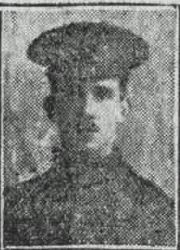
From: Middlewich
K.I.A (110 Years this day)
Thursday 12th October 1916.
19 years old
Harry Preston was born on the 04th July, 1897 in Middlewich, Cheshire, the son of Elijah Preston and his wife Eliza (nee Cooke). He was baptised on the 19th July, 1897 at Central Wesleyan Methodist Chapel, Middlewich. His parents married in 1897 at St Michael & All Angels Church, Middlewich. Harry was the eldest of three children.
At the time of the 1901 census the family have moved to Liverpool and are living at 44 Micawber Street, Toxteth Park, Liverpool. His father, Elijah, is aged 30, a police constable born in Middlewich, mother Eliza is aged 30 also born in Middlewich. They have three children, Harry is 3, Frank Cooke is 2 and Charlotte W. Cooke aged 6 months were born in Liverpool. Also in the household is his grandmother Charlotte Cooke, aged 65, a retired dressmaker, born in Knutsford.
Harry attended Upper Park Street School in Toxteth Park and after he turned 12 was admitted to Liverpool Collegiate School as a day scholar in September 1909. He left the school in July 1912.
The 1911 Census record records the family living at 50 Elaine Street Liverpool. His father Elijah is aged 40, born 1871 in Middlewich, Cheshire, occupation Police Constable, whilst his mother Eliza is aged 40, born 1871 in Middlewich. Cheshire. They have three children, Harry aged 13, born 1898, in Middlewich, Frank aged 12, born 1899 and Charlotte W aged 10, born 1901 both born in Liverpool are all still at school. Also living at the property is Harry's grandmother Charlotte Cooke now showing as being aged 73.
Harry enlisted in Liverpool and was serving in the 17th Battalion, The King’s Liverpool Regiment as Private No 51587 when he was killed in action on the 12th October 1916 aged 19 during the Battle of the Transloy Ridges which was part of the ongoing Somme Offensive.
17th Bn War Diary: Battle of Transloy Ridge –
11-10-16 - Gird Trench/Gird Support – Battalion in front line and support trenches. British bombardment of enemy front line system commenced about midday. Hostile shelling was intermittent throughout the day.
12-10-16 - Our bombardment continued. Enemy reply weak. 2.5 p.m. Zero hour. Attack on German front line system commenced. Enemy wire was found to be uncut and attack was unsuccessful. Hostile machine gun fire was very heavy and caused many casualties. Battalion H.Q. and Support Trench were heavily shelled throughout afternoon and evening. […] During this action all communication had to be carried out by runners and carrier pigeons as all wires were being continually cut by enemy shelling.
Casualties: 5 officers killed, 5 officers wounded, 38 OR killed, about 225 OR wounded/missing etc.
Graham Maddocks, in “Liverpool Pals” p.140, adds:
“As the whistle blew, the 17th Battalion left its trenches to move forward. […] As soon as the attacking waves left their trenches the enemy artillery began to register on them, and at the same time, the defending infantry commenced a murderous rain of fire. […] Although their numbers had been depleted by the British bombardment, they were trained and experienced soldiers, well dug in on high ground, and for the most part, looking out on uncut wire. As such, it was virtually impossible for them to miss the City Battalion men struggling to advance in the mud towards them. The 17th Battalion, on the left, was particularly badly hit, as its portion of No Man’s Land contained a slight rise in the ground, and as the troops emerged onto it they were silhouetted against the sky and became easy targets. Those on the left of the attack, who managed to avoid the hail of bullets and make it to the German wire, then found that it was totally uncut, and thus trapped, they too became easy targets, to be picked off almost at the enemy’s will. It was hardly surprising that, seeing the first waves being wiped out, some of the following waves turned back and made for their start lines. These lines were now packed with other waves of troops, however, and the fleeing men added to the congestion already there, and became easy prey for the German gunners. There is some evidence also, to suggest that at this stage, the British trenches were also being hit by their own heavy artillery shells which were falling short.”
His death was not confirmed until a report in the Liverpool Echo on 03rd January 1917:
A LIVERPOOL COLLEGIATE BOY
Private Harry Preston (nineteen) the K.L.R.. has been killed in action. He was the son of Mr. and Mrs. Preston, 50. Elaine-street. Liverpool. He joined the forces in November, 1915, was drafted out to France in July 1916. He was a Liverpool Collegiate boy, and at the time of enlisting was in the employ of Messrs. Alfred Hopps and Co., oil merchants, Old Hall street. He was a member of Wesley Chapel, Upper Stanhope street, and a captain of the late Wesley Football Club.
Harry's body was not recovered or was subsequently lost as he has no known grave and is commemorated on the Thiepval Memorial, France.
The Thiepval Memorial, the Memorial to the Missing of the Somme, bears the names of more than 72,000 officers and men of the United Kingdom and South African forces who died in the Somme sector before 20 March 1918 and have no known grave. Over 90% of those commemorated died between July and November 1916.
On 01st August 1932 the Prince of Wales and the President of France inaugurated the Thiepval Memorial in Picardy. The inscription reads: “Here are recorded the names of officers and men of the British Armies who fell on the Somme battlefields between July 1915 and March 1918 but to whom the fortune of war denied the known and honoured burial given to their comrades in death.”
An online memorial site (Middlewich-heritage.org.uk) states that Harry enlisted at the age of 18 and was sent to France at the beginning of the Battle of the Somme in July 1916, but this has not been verified. The amount of the War Gratuity suggests that he served for no more than a year before he was killed.
On the first anniversary of his death a notice was placed in the Liverpool Daily Post, perhaps by a sweetheart:
“In loving memory of Rifleman H. Preston (Harry) (K.L.R.), who fell in action October 12, 1916. (To memory ever dear.) - Ethel.”
His Army pay and a War Gratuity of £3 went to his father. His mother was awarded a pension of 6/- a week from June 1917, her address at that time still 50 Elaine Street. His parents later moved to Newton Hall Cottage, St. Ann’s Road, Middlewich.
In 1939 his parents, both 69, are at “Wynroy”, St. Ann’s Road, Middlewich. His father is retired. Living with them is married daughter Charlotte and her family.
His father died in 1949, at the age of 79, and his mother in 1950, aged 80.
Harry is commemorated on the following Memorials:
BICC Rod Rollers, Prescot
Liverpool Collegiate School, Everton.
He is also remembered on the family gravestone in Middlewich Cemetery -
TREASURED MEMORIES OF
ALSO HARRY THEIR SON
KILLED IN ACTION
12TH OCT. 1916, AGED 19 YEARS
Harry’s name was initially omitted from the Middlewich War Memorial and Roll of Honour. As a result of research by Geoff Page and Philip Andrews of Middlewich Heritage, Harry was one of 14 men whose names were added for the centennial commemorations in 1918.
We currently have no further information on Harry Preston, If you have or know someone who may be able to add to the history of this soldier, please contact us.
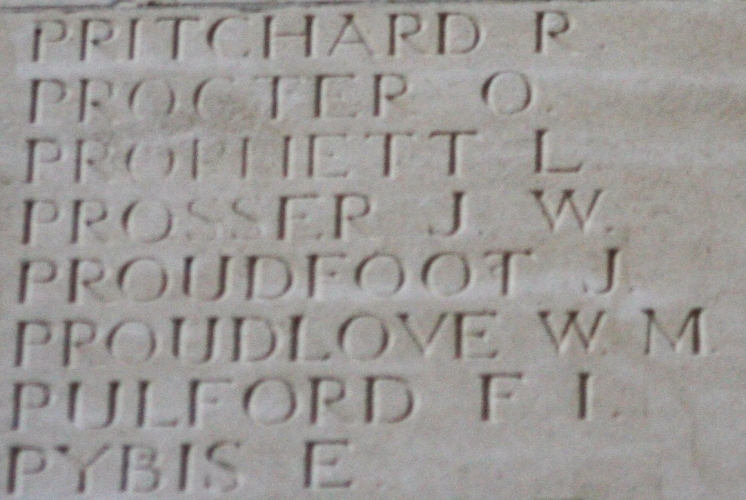
From: Middlesex, London
K.I.A (110 Years this day)
Thursday 12th October 1916.
30 years old
Frederick Ivor Pulford was born in Tottenham on 11th August 1886 , the son of Thomas Pulford and his wife Rhoda Louisa (nee Law). His parents married in Battersea in 1883 and had three children. Fred had an older sister Mary Gwendoline, born in 1885, and a younger sister Winifred May, born in 1888 in Wandsworth.
At the time of the 1891 census Frederick, 4, is living with his parents and two sisters at 40 Broomwood Road, Battersea, London. His father is a commercial clerk. They have a boarder and a domestic servant.
He attended Bowes Park School in North London until the family moved to Liverpool in 1898 when he enrolled in Clint Road Council School in Edge Hill. He was admitted to the Liverpool Institute School in May 1899 when he was 12.
The 1901 census finds the family at 40 Rufford Road, Fairfield, Liverpool. His father, 51, is a fruit merchant’s clerk, his mother is 44, Mary is 16, Frederick 14, and Winifred 12.
He left the Liverpool Institute school a month before his sixteenth birthday.
He began his banking career in June 1903.
The 1911 census shows the family living at 26 Rufford Road, Fairfield, Liverpool. His father Thomas is aged 61, born 1850 and occupation Commercial Clerk, born in Liverpool, his wife Rhoda aged 54, born 1857 in Holloway, London. They have two children both born in Edmonton, London. Mary Gwendoline aged 26, born 1885 and Frederick Ivor aged 24, born 1887 occupation Bank Clerk. His sister Winifred, 22, is a certified elementary school teacher boarding in Neville’s Cross, Durham.
Fred was a keen walker and enjoyed outdoor holidays in Wales and the Lake District. On 20th July 1912 a group of six young backpackers from Merseyside took the train to London and the overnight Southampton-Le Havre ferry for a fortnight’s holiday in northern France. Their memories are preserved in an album with photographs, “Six Nomads in Normandy”. Fred had booked all the tickets for “Mr. Pulford’s party”, and the album records him “keeping his friends awake at night reciting comic monologues and falling in love with every pretty French girl”. Their story ends with the toast, “To friendship, long life and happy days”.
As a junior clerk, working for the London, City and Midland Bank, he would for many years be paid considerably less than manual workers of the same age. Fred's important career move came in the summer of 1914 when he was promoted from the Bootle branch to the Midland's new banking hall in Threadneedle Street in the City of London.
His service records have survived and show he enlisted on the 09th November 1914 in Prescot, joining the 17th Battalion of The King's Liverpool Regiment as Private 21998. He advised that he was aged 28 years and 88 days and gave his occupation as a clerk. He had previously served in the Territorial Force with the Liverpool Scottish. He was five foot five and a quarter inch tall, weighed 138lbs, of fresh complexion, had blue eyes, dark brown hair and gave his religion as Congregational. He gave as next of kin his parents at 26 Rufford Road, Liverpool.
He was billeted at Prescot Watch Factory, he trained there and also at Knowsley Hall. On 30th April 1915 the 17th Battalion alongside the other three Pals battalions left Liverpool via Prescot Station for further training at Belton Park, Grantham. They remained here until September 1915 when they reached Larkhill Camp on Salisbury Plain. He arrived in France on 7th November 1915.
08/12/15: he was confined to barracks for 5 days as of 09/12/15.(hesitating to attend to an order given by an NCO)
01/2/07/16: Wounded to Field Ambulance.
03/07/16: 96 Field Ambulance (Shrapnel to wrist).
03/07/16: 45 C.C.S. Gunshot wound to left wrist
05/07/16: To Le Havre?
08/07/16: Etaples.
11/07/16: Rejoined 17th Battalion.
13/08/16: Sick to Field Ambulance.
14/08/16: Rejoined unit.
He was killed in action on the 12th October 1916 aged 30 during the Battle of the Transloy Ridges which was part of the ongoing Somme Offensive.
17th Bn War Diary: Battle of Transloy Ridge –
11-10-16 - Gird Trench/Gird Support – Battalion in front line and support trenches. British bombardment of enemy front line system commenced about midday. Hostile shelling was intermittent throughout the day.
12-10-16 - Our bombardment continued. Enemy reply weak. 2.5 p.m. Zero hour. Attack on German front line system commenced. Enemy wire was found to be uncut and attack was unsuccessful. Hostile machine gun fire was very heavy and caused many casualties. Battalion H.Q. and Support Trench were heavily shelled throughout afternoon and evening. […] During this action all communication had to be carried out by runners and carrier pigeons as all wires were being continually cut by enemy shelling.
Casualties: 5 officers killed, 5 officers wounded, 38 OR killed, about 225 OR wounded/missing etc.
Graham Maddocks, in “Liverpool Pals” p.140, adds:
“As the whistle blew, the 17th Battalion left its trenches to move forward. […] As soon as the attacking waves left their trenches the enemy artillery began to register on them, and at the same time, the defending infantry commenced a murderous rain of fire. […] Although their numbers had been depleted by the British bombardment, they were trained and experienced soldiers, well dug in on high ground, and for the most part, looking out on uncut wire. As such, it was virtually impossible for them to miss the City Battalion men struggling to advance in the mud towards them. The 17th Battalion, on the left, was particularly badly hit, as its portion of No Man’s Land contained a slight rise in the ground, and as the troops emerged onto it they were silhouetted against the sky and became easy targets. Those on the left of the attack, who managed to avoid the hail of bullets and make it to the German wire, then found that it was totally uncut, and thus trapped, they too became easy targets, to be picked off almost at the enemy’s will. It was hardly surprising that, seeing the first waves being wiped out, some of the following waves turned back and made for their start lines. These lines were now packed with other waves of troops, however, and the fleeing men added to the congestion already there, and became easy prey for the German gunners. There is some evidence also, to suggest that at this stage, the British trenches were also being hit by their own heavy artillery shells which were falling short.”
His father sent a telegram on 19th October: “Received news from a comrade that my son 21998 Private F. I. Pulford Lewis Gun section 17th Battn King’s Liverpool killed 12th. Is it true. Pulford 26 Rufford Road Liverpool”
And he wrote to the Army Record Office in Preston: “At noon today I wired you that I had received from a Comrade of my son No.21998 Private F. I. Pulford, Lewis Gun Section, 17th Service Battalion, King’s Liverpool Regiment in France, news of my son having been killed on the 12th inst., and asking if it is true, to which up to the time of writing I have no reply. I may state that the Comrade in question is not only a very old personal friend of my son’s but also the Quarter Master Sergeant of his Company but as so many mistakes have been made in this sad War about men being reported killed and afterwards being found to be alive, that I and my family are lothe to give up hope while there is any possibility of a mistake. My young friend’s letter is very short giving no particulars beyond stating that my son was killed on the 12th or 13th. The absence of particulars and doubt about the date leads us to cling to the hope that after all it may not be true. I shall be glad if it is possible for you to remove our suspense. Yours faithfully, T. Pulford.”
Just over a week later, his family received confirmation of his death. His family placed a notice in the Liverpool Echo on 28th October 1916:
“October 12, killed in action, aged 30 years, Private F. J. (sic) Pulford, dearly-loved only son of Mr. and Mrs. T Pulford, 26, Rufford Road, Fairfield.”
Frederick Ivor has no known grave and is commemorated on the Thiepval Memorial, France.
The Thiepval Memorial, the Memorial to the Missing of the Somme, bears the names of more than 72,000 officers and men of the United Kingdom and South African forces who died in the Somme sector before 20 March 1918 and have no known grave. Over 90% of those commemorated died between July and November 1916.
On 01st August 1932 the Prince of Wales and the President of France inaugurated the Thiepval Memorial in Picardy. The inscription reads: “Here are recorded the names of officers and men of the British Armies who fell on the Somme battlefields between July 1915 and March 1918 but to whom the fortune of war denied the known and honoured burial given to their comrades in death.”
Probate was granted on 06th January 1917 to Thomas Pulford Company Secretary and John Evans, Builders Merchant. Effects of £509 2s 5d.
On the first anniversary of his death a notice was placed by a friend or sweetheart:
“In loving memory of Frederick I. Pulford (K.L.R.), who was killed in action October 12, 1916. Lilian.”
Fred earned his three medals.
His father Thomas and uncle John Evans received his Army pay and a War Gratuity of £9. No pension card has been found.
By 1919 his parents had moved back to the London area, and were living at 20 Airedale Road, Wandsworth Common with daughter Winifred, aged 31. His sister Mary Gwendoline, 34, had married and remained in Liverpool, and was living in Ampthill Road, Aigburth.
Fred is commemorated on the following Memorials:
Liverpool Institute School
Institute of Bankers Roll of Honour
Midland Bank, Birmingham
London Joint City and Midland Bank, Canary Wharf
And on the family headstone in Anfield Cemetery -
In Loving Memory of
ALSO FREDERICK IVOR PULFORD
BELOVED ONLY SON OF THE ABOVE
KILLED IN ACTION IN FRANCE
12TH OCTR. 1916, AGED 30 YEARS.
His father died in 1923 aged 73.
In 1939 his mother Rhoda, 83, is in Liverpool, living with married daughter Mary and her husband at 33 Booker Avenue. She died in the March quarter of 1942 at the age of 85.
We currently have no further information on Frederick Ivor Pulford, If you have or know someone who may be able to add to the history of this soldier, please contact us.
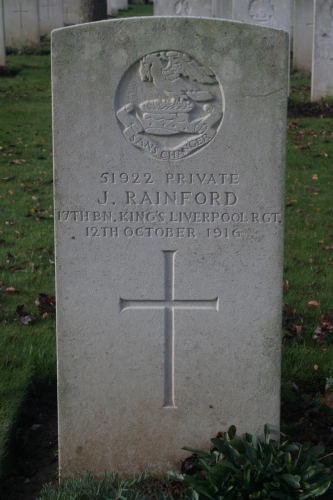
From: Skelmersdale, Lancs
K.I.A (110 Years this day)
Thursday 12th October 1916.
33 years old
In 1891 the family, with the five younger boys, are living at 67 Sherratt Street, Skelmersdale. His father, 49, is a collier, his mother is 45, William, 18, and Ralph, 15, are colliery labourers, James 11, John, 8, and Thomas, 5, are at school.
His mother died in 1900 aged 54 when John was 17.
In 1901 his father and the three youngest are at 123 Sandy Lane. His father, 59 ‘stops at home’, James, 21, John, 18, and Thomas, 15, are all employed as coal miners/hewers.
John is still living at home with his father in 1911, in Sandy Lane. His father William is 69, no occupation listed, John is 28, a coal miner/hewer for Blaguegate Coal Company. His father states that ten children were born, five of whom have since died.
When he was 31 John enlisted in Seaforth as Private 51922, 17th (Pals) Battalion of The King’s Liverpool Regiment.
John was declared Missing on 12th October and his death later presumed for official purposes as occurring on or since that date.
17th Battalion War Diary: Battle of Transloy Ridge –
11-10-16 - Gird Trench/Gird Support – Battalion in front line and support trenches. British bombardment of enemy front line system commenced about midday. Hostile shelling was intermittent throughout the day.
12-10-16 - Our bombardment continued. Enemy reply weak. 2.5 p.m. Zero hour. Attack on German front line system commenced. Enemy wire was found to be uncut and attack was unsuccessful. Hostile machine gun fire was very heavy and caused many casualties. Battalion H.Q. and Support Trench were heavily shelled throughout afternoon and evening. […] During this action all communication had to be carried out by runners and carrier pigeons as all wires were being continually cut by enemy shelling.
Casualties: 5 officers killed, 5 officers wounded, 38 OR killed, about 225 OR wounded/missing etc.
Graham Maddocks, in “Liverpool Pals” p.140, adds:
“As the whistle blew, the 17th Battalion left its trenches to move forward. […] As soon as the attacking waves left their trenches the enemy artillery began to register on them, and at the same time, the defending infantry commenced a murderous rain of fire. […] Although their numbers had been depleted by the British bombardment, they were trained and experienced soldiers, well dug in on high ground, and for the most part, looking out on uncut wire. As such, it was virtually impossible for them to miss the City Battalion men struggling to advance in the mud towards them. The 17th Battalion, on the left, was particularly badly hit, as its portion of No Man’s Land contained a slight rise in the ground, and as the troops emerged onto it they were silhouetted against the sky and became easy targets. Those on the left of the attack, who managed to avoid the hail of bullets and make it to the German wire, then found that it was totally uncut, and thus trapped, they too became easy targets, to be picked off almost at the enemy’s will. It was hardly surprising that, seeing the first waves being wiped out, some of the following waves turned back and made for their start lines. These lines were now packed with other waves of troops, however, and the fleeing men added to the congestion already there, and became easy prey for the German gunners. There is some evidence also, to suggest that at this stage, the British trenches were also being hit by their own heavy artillery shells which were falling short.”
John was reported Missing in the Ormskirk Advertiser on 02nd November under the heading:
‘Skelmersdale Soldier Missing’:
“Mr. Wm Rainford, of Sandy Lane, Skelmersdale, has received information from the War Office that his son, Private John Rainford, (51922) of the King’s Liverpool Regt., has been posted as missing after an engagement in France on October 11th.”
John’s name also appeared in the list of Missing in the Wigan Observer on 18th November 1916. It is not known when his family received definite news of his fate. John was the sixth of his father’s ten children to die.
His death was confirmed in the local press
Pte John Rainford (34) K.L.R., son of Mr W. Rainford, Sandy Lane, Skelmersdale, has been killed in action, after being missing since October last. He formerly worked as a miner at the White Moss Colliery.
John now rests at Warlencourt British Cemetery, France.
Warlencourt Cemetery is entirely a concentration cemetery, begun late in 1919 when graves were brought in from small cemeteries and the battlefields of Warlencourt and Le Sars. The Graves Registration form shows graves from “Le Sars 6/1, 6/2, Hexham Road, Seven Elms”.
Graves were brought in from the original cemeteries at Hexham Road (Le Sars), and Seven Elms (Flers), as well as over 3,000 British graves due to the fighting which took place around the Butte de Warlencourt from the autumn of 1916 to the spring of 1917, and again in the German advance and retreat of 1918. The cemetery now contains 3,505 Commonwealth burials and commemorations of the First World War, 1,823 of which are unidentified.
His father received John’s effects, and after his death in 1919 aged 77, his brother Thomas received the War Gratuity of £3. No pension was received as his father died before the pension could be paid.John is commemorated on the following memorials -
Skelmersdale Memorial and Garden
St. Paul’s Church, Skelmersdale
We currently have no further information on John Rainford, if you have or know someone who may be able to add to the history of this soldier, please contact us.
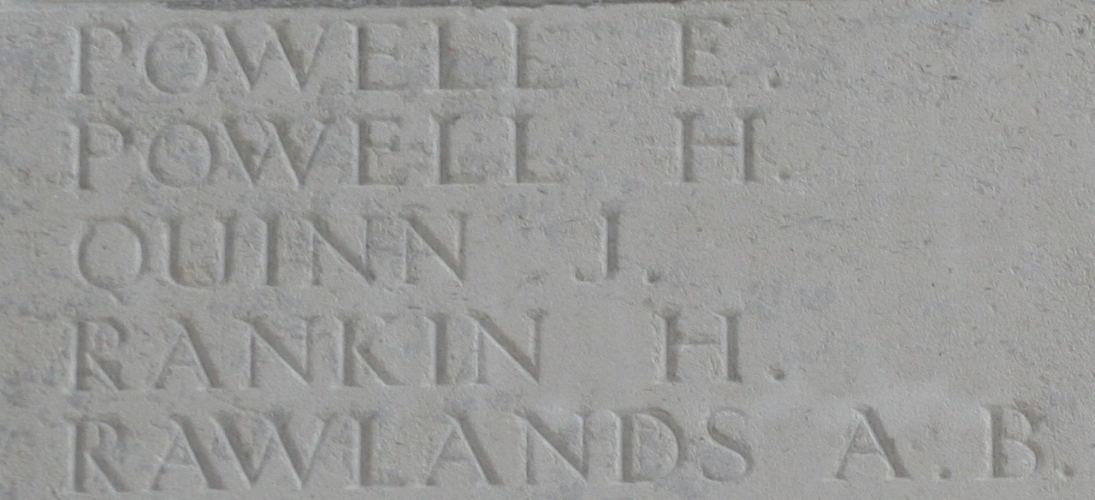
From: Liscard, Cheshire
K.I.A (110 Years this day)
Thursday 12th October 1916.
30 years old
Allan Belk Rawland was born in 1886 in Liscard, Cheshire, the youngest child of George Jennings Rawland and his wife Eleanor (née Belk). His parents, both born in Liverpool, married in St. Luke’s, Liverpool in 1868, George giving his occupation as chemist. They had ten children: Frank and Mary, born in Liverpool, Agnes, William, Henry, Arthur and Sydney, born in Egremont, Gertrude (who died at age 1), Ida and Allan in Liscard. He was baptised in St. Mary's Church, Liscard, on 13th June 1886.
In 1891 his father, with nine children, is living in Westminster Road, Liscard. His father is a vinegar agent, his mother is not listed in the household. Allan is 5 years old, at school. Some time after the census his brother Frank went to Brazil and died there in 1897, aged 27.
The family is still at 16 Westminster Road in 1901, with seven children. His father is a vinegar agent, Allan is 15.
In 1911 they are at the same address. His father, 70, is a vinegar/brewers representative, his mother is 66, Mary, 40, Agnes, 38, and Ida, 28, have no occupation. William, 37, and Henry, 35, are clerks, and Allan, 25, is a clerk to a ships stores dealer.
Shortly afterwards, on 1st July 1911, Allan shipped as assistant purser on the ‘Empress of Britain’, a Canadian Pacific liner, returning on 22nd July. His name does not appear on any other crew lists.
Allan enlisted at St George's Hall in Liverpool on 31st August 1914, as Private 15634, No.3 Company, 17th (Pals) Battalion of The King’s Liverpool Regiment, giving his age as 28 years and 150 days, and his occupation as clerk. He is described as being 5’ 4 and a half inches tall, weighing 165 lbs, with a fair complexion, grey eyes and fair hair. He gives his religion as Church of England and his next of kin as his father George, at 16 Westminster Road. After training locally, then at Belton Park Camp in Lincolnshire, and at Larkhill Camp on Salisbury Plain, Allan left for France with his battalion, disembarking at Boulogne on 7th November 1916. His service record survives and shows -
15/5/1916 to Field ambulance, sick, admitted with myalgia
24/5/1916 returned to duty
16/7/1916 appointed unpaid and same day appointed paid Lance Corporal
15/8/1916 to Field Ambulance, sick with deficient vision
18/8/1916 rejoined unit
31/8/1916 granted a Good Conduct Badge
Allan was declared Missing on 12th October, death later presumed for official purposes.
17th Bn War Diary: Battle of Transloy Ridge –
11-10-16 - Gird Trench/Gird Support – Battalion in front line and support trenches. British bombardment of enemy front line system commenced about midday. Hostile shelling was intermittent throughout the day.
12-10-16 - Our bombardment continued. Enemy reply weak. 2.5 p.m. Zero hour. Attack on German front line system commenced. Enemy wire was found to be uncut and attack was unsuccessful. Hostile machine gun fire was very heavy and caused many casualties. Battalion H.Q. and Support Trench were heavily shelled throughout afternoon and evening. […] During this action all communication had to be carried out by runners and carrier pigeons as all wires were being continually cut by enemy shelling.
Casualties: 5 officers killed, 5 officers wounded, 38 OR killed, about 225 OR wounded/missing etc.
Graham Maddocks, in “Liverpool Pals” p.140, adds: “As the whistle blew, the 17th Battalion left its trenches to move forward. […] As soon as the attacking waves left their trenches the enemy artillery began to register on them, and at the same time, the defending infantry commenced a murderous rain of fire. […] Although their numbers had been depleted by the British bombardment, they were trained and experienced soldiers, well dug in on high ground, and for the most part, looking out on uncut wire. As such, it was virtually impossible for them to miss the City Battalion men struggling to advance in the mud towards them. The 17th Battalion, on the left, was particularly badly hit, as its portion of No Man’s Land contained a slight rise in the ground, and as the troops emerged onto it they were silhouetted against the sky and became easy targets. Those on the left of the attack, who managed to avoid the hail of bullets and make it to the German wire, then found that it was totally uncut, and thus trapped, they too became easy targets, to be picked off almost at the enemy’s will. It was hardly surprising that, seeing the first waves being wiped out, some of the following waves turned back and made for their start lines. These lines were now packed with other waves of troops, however, and the fleeing men added to the congestion already there, and became easy prey for the German gunners. There is some evidence also, to suggest that at this stage, the British trenches were also being hit by their own heavy artillery shells which were falling short.”
His name appeared in the list of Missing in the Liverpool Post & Mercury on 16th November 1916. It is not known when his family were informed of his fate.
Liverpool Daily Post 16th Nov 1916.
MISSING.
King’s (Liverpool Regt.) - Rawland, Lce-Corpl. 15634, A. B.(Liscard)
Allan's body was not recovered or was subsequently lost as he has no known grave and is commemorated on the Thiepval Memorial to the Missing of the Somme, France. His name shows as Rawlands which is incorrect. We have contacted CWGC to see if his name can be amended at a future date in order to correctly identify him and preserve his memory.
The Thiepval Memorial, the Memorial to the Missing of the Somme, bears the names of more than 72,000 officers and men of the United Kingdom and South African forces who died in the Somme sector before 20 March 1918 and have no known grave. Over 90% of those commemorated died between July and November 1916.
On 01st August 1932 the Prince of Wales and the President of France inaugurated the Thiepval Memorial in Picardy. The inscription reads: “Here are recorded the names of officers and men of the British Armies who fell on the Somme battlefields between July 1915 and March 1918 but to whom the fortune of war denied the known and honoured burial given to their comrades in death.”
Soldiers Effects to his brother Rev. Sydney Rawland, Pension to mother Eleanor, 16 Westminster Road.
His name appeared in the list of Missing in the Liverpool Post & Mercury on 16th November 1916. It is not known when his family were informed of his fate.
Allan earned his three medals, which his brother, Rev. Sydney Rawland signed for.
His father died, aged 76, six months after Allan’s death, in the June quarter of 1917 and his mother, aged 79, in Chorley in the December quarter of 1924.
Allan is also commemorated on the Wallasey War Memorial and St John’s C. of E. Church, Egremont.
We currently have no further information on Allan Belk Rawland, if you have or know someone who may be able to add to the history of this soldier, please contact us.

From: Ganllywd, Merioneth
K.I.A (110 Years this day)
Thursday 12th October 1916.
24 years old
Arthur Edwin Reynolds was born in 1892 in Ganllwyd, now part of Snowdonia National Park, the son of Arthur Edwin Reynolds and his wife Winifred (nee Humphreys). He was baptised on 1st May 1892 in the parish of Llanelltydd (5 miles south of Ganllwyd), his parents’ residence given as Glan Y Mawddach Cottages, Llanddwywe-uwch-y-graig, and his father’s occupation as coachman. (Llanddwywe is north of Barmouth, near the coast 8 miles east of Ganllwyd).
By 1894 the family had moved to the Saffron Walden district in Essex.
At the time of the 1901 census they are living in High Street, Great Chesterford (10 miles south of Cambridge), with five children. His father, Arthur E. is aged 42, a domestic coachman born in Arrington, Cambs, mother Winifred is aged 32 born in Ganllwyd, Arthur E. aged 9 born Ganllwyd, born Great Chesterford were Ellen C. 6, Richard 5, Gladys 3 and Winifred 2 months were born in Great Chesterford.
The 1911 Census shows the family living at High Street Great Chesterford, Essex. His father Arthur Edwin is aged 52, born 1859 occupation farm labourer, his mother Winifred is aged 42. They advised that they had been married for 19 years and had 8 children, 7 of whom have survived. They have six children in the household, all but Arthur Edwin born in Great Chesterford, Essex, Arthur being born in Ganllywd, North Wales like his mother. Arthur Edwin aged 19, born 1892 is a gardener (domestic), Richard aged 15, born 1896 house boy, Gladys aged 13, born 1898, Winifred aged 10, born 1901, John Knightly aged 5 born 1906 and Stanley Oliver aged 3 born 1908. His sister Ellen is in London, working as a housemaid in Oxford Square, Hyde Park.
SDGW shows that Arthur was living in Gresford, just north of Wrexham, before enlisting.
He enlisted in Liverpool and was and formerly of the 10th Battalion K.L.R. but was serving in the 17th Battalion, The King’s Liverpool Regiment as Private No 52007 when he was killed in action on the 12th October 1916 aged 24 during the Battle of the Transloy Ridges which was part of the ongoing Somme Offensive.
17th Bn War Diary: Battle of Transloy Ridge –
11-10-16 - Gird Trench/Gird Support – Battalion in front line and support trenches. British bombardment of enemy front line system commenced about midday. Hostile shelling was intermittent throughout the day.
12-10-16 - Our bombardment continued. Enemy reply weak. 2.5 p.m. Zero hour. Attack on German front line system commenced. Enemy wire was found to be uncut and attack was unsuccessful. Hostile machine gun fire was very heavy and caused many casualties. Battalion H.Q. and Support Trench were heavily shelled throughout afternoon and evening. […] During this action all communication had to be carried out by runners and carrier pigeons as all wires were being continually cut by enemy shelling.
Casualties: 5 officers killed, 5 officers wounded, 38 OR killed, about 225 OR wounded/missing etc.
Graham Maddocks, in “Liverpool Pals” p.140, adds:
“As the whistle blew, the 17th Battalion left its trenches to move forward. […] As soon as the attacking waves left their trenches the enemy artillery began to register on them, and at the same time, the defending infantry commenced a murderous rain of fire. […] Although their numbers had been depleted by the British bombardment, they were trained and experienced soldiers, well dug in on high ground, and for the most part, looking out on uncut wire. As such, it was virtually impossible for them to miss the City Battalion men struggling to advance in the mud towards them. The 17th Battalion, on the left, was particularly badly hit, as its portion of No Man’s Land contained a slight rise in the ground, and as the troops emerged onto it they were silhouetted against the sky and became easy targets. Those on the left of the attack, who managed to avoid the hail of bullets and make it to the German wire, then found that it was totally uncut, and thus trapped, they too became easy targets, to be picked off almost at the enemy’s will. It was hardly surprising that, seeing the first waves being wiped out, some of the following waves turned back and made for their start lines. These lines were now packed with other waves of troops, however, and the fleeing men added to the congestion already there, and became easy prey for the German gunners. There is some evidence also, to suggest that at this stage, the British trenches were also being hit by their own heavy artillery shells which were falling short.”
Arthur Edwin has no known grave and is commemorated on the Thiepval Memorial, France.
The Thiepval Memorial, the Memorial to the Missing of the Somme, bears the names of more than 72,000 officers and men of the United Kingdom and South African forces who died in the Somme sector before 20 March 1918 and have no known grave. Over 90% of those commemorated died between July and November 1916.
On 01st August 1932 the Prince of Wales and the President of France inaugurated the Thiepval Memorial in Picardy. The inscription reads: “Here are recorded the names of officers and men of the British Armies who fell on the Somme battlefields between July 1915 and March 1918 but to whom the fortune of war denied the known and honoured burial given to their comrades in death.”
His mother Winifred, living in Carmen Street, Great Chesterford, Essex, received a War Gratuity of £3 and was awarded a pension of 3/- a week from July 1917.
His brother Richard (“second son of Mr. and Mrs. Reynolds of Great Chesterford”) appears to have earned gallantry medals. He served in the Essex Regiment and as Lance Corporal was awarded the Military Medal in 1917. As Sergeant, he was awarded the Distinguished Conduct Medal, the citation reading,
“For conspicuous gallantry and devotion to duty during an attack near Becourt on the morning of 23rd August, 1918. After the line was established on its objective he took forward a fighting patrol and in spite of heavy machine gun fire reached the eastern edge of the wood, about 1,000 yards in front of the line and established a post there. He showed a fine example to his men in his complete disregard for danger.”
His father died in 1938 aged 79.
In 1939 his widowed mother, 71, is still in Carmen Street, with son Stanley. She died in 1943 aged 75.
Arthur is commemorated on the Great Chesterford Cross.
We currently have no further information on Arthur Edwin Reynolds, If you have or know someone who may be able to add to the history of this soldier, please contact us.
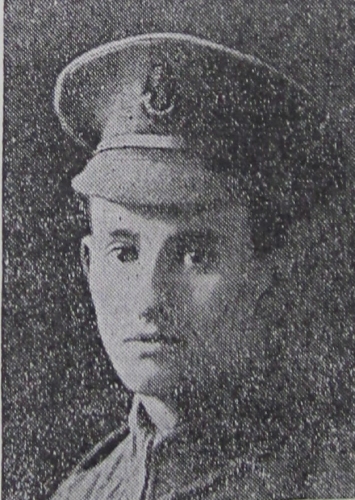
From: Southport, Lancs
K.I.A (110 Years this day)
Thursday 12th October 1916.
22 years old
Richard Alfred Richards was born 23rd July 1894 in Southport and was baptised on the 5th May 1901 in St Andrew’s Church, Southport, the son of Ambrose Barratt Richards and his wife Frances (nee Taylor) who were married in 1882 also at St Andrew's Church, Southport.
The 1911 Census shows the family living at 14 Norwood Avenue, Southport. His father Ambrose Barrett is aged 48, born 1863 occupation Drysalter and Seedsman Dealer, born Tavistock, Devon, his wife Frances is aged 52, born 1859 in Antrobus, Cheshire. They have been married for 29 years. They have eight children all born in Southport. Ambrose aged 27, born 1884 Book-Keeper, Drysalters, Frances aged 25, born 1886 no occupation, Elizabeth aged 23, born 1888, Dressmaker, Gertrude aged 21, born 1890, Sidney aged 20, born 1891 and James aged 17, born 1894 Apprentice Chemists, Richard aged 16, born 1895 and Ada aged 14 born 1897 both at school.
He enlisted in Liverpool as Rifleman 4581 joining the 6th Battalion of The King's Liverpool Regiment (Liverpool Rifles). He embarked aboard the SS Invicta from Folkestone-Boulogne on 14th July 1916, reaching the 24th Infantry Base Depot on 15th July. He proceeded to 11th Entrenching Battalion on 02nd August, then proceeded to 17th Battalion K.L.R. on 05th August and was posted to the 17th Bn from 05th September 1916 as Private No 51600.
He was killed in action on the 12th October 1916 aged 22 during the Battle of the Transloy Ridges which was part of the ongoing Somme Offensive.
17th Bn War Diary: Battle of Transloy Ridge –
11-10-16 - Gird Trench/Gird Support – Battalion in front line and support trenches. British bombardment of enemy front line system commenced about midday. Hostile shelling was intermittent throughout the day.
12-10-16 - Our bombardment continued. Enemy reply weak. 2.5 p.m. Zero hour. Attack on German front line system commenced. Enemy wire was found to be uncut and attack was unsuccessful. Hostile machine gun fire was very heavy and caused many casualties. Battalion H.Q. and Support Trench were heavily shelled throughout afternoon and evening. […] During this action all communication had to be carried out by runners and carrier pigeons as all wires were being continually cut by enemy shelling.
Casualties: 5 officers killed, 5 officers wounded, 38 OR killed, about 225 OR wounded/missing etc.
Graham Maddocks, in “Liverpool Pals” p.140, adds:
“As the whistle blew, the 17th Battalion left its trenches to move forward. […] As soon as the attacking waves left their trenches the enemy artillery began to register on them, and at the same time, the defending infantry commenced a murderous rain of fire. […] Although their numbers had been depleted by the British bombardment, they were trained and experienced soldiers, well dug in on high ground, and for the most part, looking out on uncut wire. As such, it was virtually impossible for them to miss the City Battalion men struggling to advance in the mud towards them. The 17th Battalion, on the left, was particularly badly hit, as its portion of No Man’s Land contained a slight rise in the ground, and as the troops emerged onto it they were silhouetted against the sky and became easy targets. Those on the left of the attack, who managed to avoid the hail of bullets and make it to the German wire, then found that it was totally uncut, and thus trapped, they too became easy targets, to be picked off almost at the enemy’s will. It was hardly surprising that, seeing the first waves being wiped out, some of the following waves turned back and made for their start lines. These lines were now packed with other waves of troops, however, and the fleeing men added to the congestion already there, and became easy prey for the German gunners. There is some evidence also, to suggest that at this stage, the British trenches were also being hit by their own heavy artillery shells which were falling short.”
From the Southport Visiter dated 04th November 1916:
Private Richards joined the colours in November 1915 and proceeded to the front in July 1916. He was educated at the University School, Cambridge Rd, and was an assistant at Righton's the chemists previous to enlisting. He was the youngest of three brothers serving with the Forces.
He was reported as killed in action in the Liverpool Daily Post 23rd April 1917
SOUTHPORT CASUALTIES.
Private R.A. Richards, youngest son of Mr A.B. Richards, Norwood Avenue, Southport, previously reported missing is now reported killed. By occupation he was a chemist’s assistant.
Soldiers Effects to his father Ambrose, Pension to mother Frances.
Richard rests at Warlencourt British Cemetery, France, where his headstone bears the epitaph:
“PEACE PERFECT PEACE”
Warlencourt Cemetery is entirely a concentration cemetery, begun late in 1919 when graves were brought in from small cemeteries and the battlefields of Warlencourt and Le Sars. The Graves Registration form shows graves from “Le Sars 6/1, 6/2, Hexham Road, Seven Elms”.
Graves were brought in from the original cemeteries at Hexham Road (Le Sars), and Seven Elms (Flers), as well as over 3,000 British graves due to the fighting which took place around the Butte de Warlencourt from the autumn of 1916 to the spring of 1917, and again in the German advance and retreat of 1918. The cemetery now contains 3,505 Commonwealth burials and commemorations of the First World War, 1,823 of which are unidentified.
He is also commemorated on the following Memorials:
Southport War Memorial
St Andrew’s C. of E. Church, Southport
He is also commemorated on the family grave at Duke Street Cemetery, Southport which reads:-
Also of RICHARD ALFRED
Son of the above killed in France October 12th 1916
Aged 22 years
His father died, aged 70, in the September quarter of 1933.
His mother died, aged, 79 on the 06th January 1939:
Probate:-
RICHARDS Frances of 14 Norwood Avenue Southport Lancashire widow died 6 January 1939 Probate Liverpool 8 March to Ambrose Barratt Richards dry salter and James Berry Richards chemist. Effects £1150 7s 7d.
Family member Anthony Richards posted a message:-
Richard's wartime effects were found in a safe deposit box. A letter from Record Office in Preston and 2 war medals (British War Medal and Victory Medal) sent to family, dated 05th February 1922 along with an assurance of appreciation from The King for his service.
Grateful thanks are extended to Kevin Shannon the author of the book The Liverpool Rifles for providing details of Richard's service with the 6th Rifles.
We currently have no further information on Richard Alfred Richards, If you have or know someone who may be able to add to the history of this soldier, please contact us.
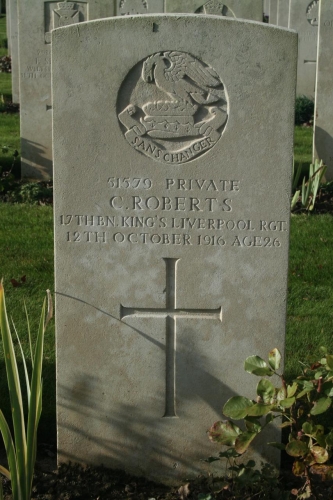
From: Liverpool
K.I.A (110 Years this day)
Thursday 12th October 1916.
26 years old
Charles Roberts was born in 1890 in Liverpool, the youngest son of George Thomas Roberts and his wife Elizabeth Alice(nee Smyth) who were married in 1880.
The 1891 census shows the family living at 18 St Arnaud Street, Liverpool. George was a labourer aged 39 and had been born in Birkenhead. Alice was 40 and had been born in Bow in London. The couple had four sons – Thomas aged 8, George aged 15, Henry aged 3 as well as baby Charles who was just a few months old.
By 1901 the family are living at 73 Maypole Street. His father, George, is aged 48, working as a window cleaner born in Liscard, mother Alice is aged 48, Thomas aged 18, is a window cleaner, George is 15, Harry is 13, and Charles is aged 10.
The 1911 census shows that George aged 60 and Alice E. aged 62 had been married for 30 years and Alice had borne six children with the four boys surviving infancy. The family are living at 22 Janet Street in Wavertree. The eldest son Thomas had left home. George S. aged 25 is working as a mat maker in a blind institution, Henry Kossuth aged 23, is a window cleaner like his father and Charles, aged 20, is a merchants clerk.
Charles enlisted in Liverpool as Rifleman 4286 joining the 6th Battalion of The King's Liverpool Regiment (Liverpool Rifles). He embarked from Folkestone-Boulogne on 15th July 1916 and reached the 24th Infantry Base Depot on 16th July. He proceeded to 11th Entrenching Battalion on 02nd August, then proceeded to 17th Battalion K.L.R. on 05th August, and was posted to the 17th Battalion from 05th September 1916 as Private No 51579.
He was killed in action on the 12th October 1916 aged 26 during the Battle of the Transloy Ridges which was part of the ongoing Somme Offensive.
17th Battalion War Diary: Battle of Transloy Ridge –
11-10-16 - Gird Trench/Gird Support – Battalion in front line and support trenches. British bombardment of enemy front line system commenced about midday. Hostile shelling was intermittent throughout the day.
12-10-16 - Our bombardment continued. Enemy reply weak. 2.5 p.m. Zero hour. Attack on German front line system commenced. Enemy wire was found to be uncut and attack was unsuccessful. Hostile machine gun fire was very heavy and caused many casualties. Battalion H.Q. and Support Trench were heavily shelled throughout afternoon and evening. […] During this action all communication had to be carried out by runners and carrier pigeons as all wires were being continually cut by enemy shelling.
Casualties: 5 officers killed, 5 officers wounded, 38 OR killed, about 225 OR wounded/missing etc.
Graham Maddocks, in “Liverpool Pals” p.140, adds:
“As the whistle blew, the 17th Battalion left its trenches to move forward. […] As soon as the attacking waves left their trenches the enemy artillery began to register on them, and at the same time, the defending infantry commenced a murderous rain of fire. […] Although their numbers had been depleted by the British bombardment, they were trained and experienced soldiers, well dug in on high ground, and for the most part, looking out on uncut wire. As such, it was virtually impossible for them to miss the City Battalion men struggling to advance in the mud towards them. The 17th Battalion, on the left, was particularly badly hit, as its portion of No Man’s Land contained a slight rise in the ground, and as the troops emerged onto it they were silhouetted against the sky and became easy targets. Those on the left of the attack, who managed to avoid the hail of bullets and make it to the German wire, then found that it was totally uncut, and thus trapped, they too became easy targets, to be picked off almost at the enemy’s will. It was hardly surprising that, seeing the first waves being wiped out, some of the following waves turned back and made for their start lines. These lines were now packed with other waves of troops, however, and the fleeing men added to the congestion already there, and became easy prey for the German gunners. There is some evidence also, to suggest that at this stage, the British trenches were also being hit by their own heavy artillery shells which were falling short.”
Charles was reported as Missing in the Liverpool Daily Post on 16th November 1916.
WOUNDED AND MISSING.
King’s (Liverpool Regt.) - Roberts, 51579, C;
His name appeared alongside another two Pals in the Volunteer Service Gazette and Military Dispatch on Saturday 03 February 1917;
INFORMATION WANTED FOR MISSING SOLDIERS.
KING'S LIVERPOOL REGT.
51579 Pte. C. ROBERTS, C Co., 12 Plat. (Oct. 12).
21796 L.-Cpl. E. E. WINKLE, 1 Co., 1 Plat. (w. and m.) (July 30).
1712 Sgt. D. W. IRVINE, 11 Plat. (July 12).
Charles now rests at Warlencourt British Cemetery, France.
Warlencourt Cemetery is entirely a concentration cemetery, begun late in 1919 when graves were brought in from small cemeteries and the battlefields of Warlencourt and Le Sars. The Graves Registration form shows graves from “Le Sars 6/1, 6/2, Hexham Road, Seven Elms”.
Graves were brought in from the original cemeteries at Hexham Road (Le Sars), and Seven Elms (Flers), as well as over 3,000 British graves due to the fighting which took place around the Butte de Warlencourt from the autumn of 1916 to the spring of 1917, and again in the German advance and retreat of 1918. The cemetery now contains 3,505 Commonwealth burials and commemorations of the First World War, 1,823 of which are unidentified.
Soldiers Effects to father George and mother Elizabeth A., Pension to mother Elizabeth A., 14 Thorburn St, Wavertree
Charles is commemorated in the Hall of Remembrance inside Liverpool Town Hall at Panel 45.
His mother died, aged 76, on the 11th March 1924.
His father died, aged 82, in the December quarter of 1932.
Grateful thanks are extended to Kevin Shannon the author of the book The Liverpool Rifles for providing details of Charles' service with the 6th Rifles.
We currently have no further information on Charles Roberts, If you have or know someone who may be able to add to the history of this soldier, please contact us.

From: Liverpool
K.I.A (110 Years this day)
Thursday 12th October 1916.
20 years old
James Edward Robinson was born in 1896 the son of John Instrell Robinson and his wife Martha (née Donnelly). His parents were married on 16th July 1895 at St Simon's Church, Liverpool. John was a 23 year old ship steward, his father Edward, whilst Martha was aged 19, her father James, both of 8 Caxton Building.
James was baptised at St Nathaniel's Church on 29th April 1896, his father was a steward for the Dominican Line, his address at the time of the baptism was 68 Olive Street, off Oxford Street.
James had a younger brother, John, who was baptised in 1900.
James's father died, aged 27, in August 1899 when he was aged 4 or 5. His father was buried on the 19th August at Walton.
The 1901 Census shows the family living at 74 Oliver Street, Edge Hill, Liverpool. The family comprises, widowed Martha aged 24, a shirt seamstress, and her two sons James E. aged 5 and John 1.
Martha remarried on 06th September 1903 at St Mary's Church, Edge Hill to Albert Schofield who had also been widowed. Albert was a 27 year old carter of Cardwell Street, father Henry a carter, whilst Martha was aged 26 also of Cardwell Street, father James a deceased ropemaker.
The 1911 Census shows the family living at 56 Holden Street, Edge Hill, Liverpool. His mother Martha is aged 34, a house keeper, his step father, Albert, is aged 35, a carter and owns his own business. They advised that they had been married for 7 years and had five children, four of whom have survived. James by now 15 is employed as an assistant in a pawn brokers shop. He lives with his brother John and his step brothers Charles and Albert.
James enlisted in Liverpool joining the 17th Battalion of The King's Liverpool Regiment as Private 31174. He was killed in action on 12/10/1916 at Le Transloy, aged 20.
17th Bn War Diary: Battle of Transloy Ridge –
11-10-16 - Gird Trench/Gird Support – Battalion in front line and support trenches. British bombardment of enemy front line system commenced about midday. Hostile shelling was intermittent throughout the day.
12-10-16 - Our bombardment continued. Enemy reply weak. 2.5 p.m. Zero hour. Attack on German front line system commenced. Enemy wire was found to be uncut and attack was unsuccessful. Hostile machine gun fire was very heavy and caused many casualties. Battalion H.Q. and Support Trench were heavily shelled throughout afternoon and evening. […] During this action all communication had to be carried out by runners and carrier pigeons as all wires were being continually cut by enemy shelling.
Casualties: 5 officers killed, 5 officers wounded, 38 OR killed, about 225 OR wounded/missing etc.
Graham Maddocks, in “Liverpool Pals” p.140, adds:
“As the whistle blew, the 17th Battalion left its trenches to move forward. […] As soon as the attacking waves left their trenches the enemy artillery began to register on them, and at the same time, the defending infantry commenced a murderous rain of fire. […] Although their numbers had been depleted by the British bombardment, they were trained and experienced soldiers, well dug in on high ground, and for the most part, looking out on uncut wire. As such, it was virtually impossible for them to miss the City Battalion men struggling to advance in the mud towards them. The 17th Battalion, on the left, was particularly badly hit, as its portion of No Man’s Land contained a slight rise in the ground, and as the troops emerged onto it they were silhouetted against the sky and became easy targets. Those on the left of the attack, who managed to avoid the hail of bullets and make it to the German wire, then found that it was totally uncut, and thus trapped, they too became easy targets, to be picked off almost at the enemy’s will. It was hardly surprising that, seeing the first waves being wiped out, some of the following waves turned back and made for their start lines. These lines were now packed with other waves of troops, however, and the fleeing men added to the congestion already there, and became easy prey for the German gunners. There is some evidence also, to suggest that at this stage, the British trenches were also being hit by their own heavy artillery shells which were falling short.”
He was reported as Missing in the Liverpool Weekly Courier on Saturday 30 December 1916
Missing.
Pte J. Robinson, 31174, K.L.R., is reported missing since October 12th. News is anxiously awaited, and will be gladly received by Miss A. Reeves who resides at 41 Holden Street, Upper Parliament Street, Liverpool.
James now rests at Warlencourt British Cemetery, France.
Warlencourt Cemetery is entirely a concentration cemetery, begun late in 1919 when graves were brought in from small cemeteries and the battlefields of Warlencourt and Le Sars. The Graves Registration form shows graves from “Le Sars 6/1, 6/2, Hexham Road, Seven Elms”.
Graves were brought in from the original cemeteries at Hexham Road (Le Sars), and Seven Elms (Flers), as well as over 3,000 British graves due to the fighting which took place around the Butte de Warlencourt from the autumn of 1916 to the spring of 1917, and again in the German advance and retreat of 1918. The cemetery now contains 3,505 Commonwealth burials and commemorations of the First World War, 1,823 of which are unidentified.
James earned his two medals.
Soldiers Effects, Army Pay of £2 6s 6d and a War Gratuity of £4 to his mother Martha, Pension to remarried mother Martha Schofield, of 253a Upper Parliament Street.
James was remembered by his mother in the Liverpool Evening Express on 12th October 1927 the writing is only partially visible:
ROBINSON - In loving memory of James (our Jim), Liverpool Pals, who was killed in action, October 12, 1916.
.....miles from home he is sleeping,
.....heart in aching for one who is at rest.
.....his loving mother, 48 Holden Street.
On the 1921 Census his parents have moved to 48 Holden Street, Albert is 44, a coal dealer, Martha is 42, with George 22, Albert 23, and Charles Schofield 19, together with John Robinison 24.
His mother died, aged 53, on the 27th July 1930 and was buried on the 31st at Allerton Cemetery, her address at the time of her death was 48 Holden Street.
Her death was reported in the Liverpool Daily Post on Wednesday 30 July 1930:
SCHOFIELD— July 27, at Smithdown-road hospital, MARTHA, dearly-beloved wife of Albert Schofield, 48 Holden-street. (Sadly missed all.) Interment Allerton Cemetery, tomorrow (Thursday), 3 p.m.
James is commemorated on the following Memorials:
Hall of Remembrance, Liverpool Town Hall, Panel 43
St Nathaniel's Church which is now situated at St Brides Church in Percy Street, Liverpool.
His mother died, aged 53, in the September quarter of 1930.
We currently have no further information on James Robinson, if you have or know someone who may be able to add to the history of this soldier, please contact us.

From: Liverpool
K.I.A (110 Years this day)
Thursday 12th October 1916.
21 years old
Bernard Roche was born on 12th December 1894 in Toxteth Park, Liverpool, the youngest son of John Roche and his wife Alicia (née Malloy). John was born in Liverpool, Alicia was born in Westrow, Dublin and baptised on the 31st August 1857 at St Andrew’s in the City. They married Liverpool in 1878 and had 12 children, three of whom died in infancy. Bernard had older siblings Catherine, James, John, Henry, Joseph, Daniel, and Edward, and a younger sister Alicia. Bernard was baptised on 31st December 1894 in St. Patrick’s, Liverpool.
The 1901 Census shows the family living at 60 Lowther Street, Liverpool.
His father, 46, is an export bottle packer, his mother is 43; they have nine children, Catherine 22 a waitress, James 20 an apprentice cooper, John 18 a coffee roasters porter, Henry 14 a bakers van boy, Joseph 13, Daniel 11, and Edward 8, Bernard 6. and Alicia 2.
His mother died on the 23rd January 1908, aged 50, when Bernard had just turned 14. She was buried on the 26th January at St Anne’s, her address 231 Crown Street.
His father died the next year in the workhouse, aged 54. He was buried on the 21st Aug 1909 at Ford Cemetery.
The 1911 census finds Bernard living with three of his brothers at 34 Chatsworth Street, Edge Hill. James, 30, is head of household, employed as a cooper for an oil cake manufacturer, John, 28, is a bricklayer’s labourer with a railway company, Edward, 18, also works for the railway company as an engine cleaner, and Bernard is 16, a pawnbroker’s apprentice. Younger sister Alicia, 12, is a pupil at St. Gerard’s, a convent school in Stockton-on-Tees.
His service record has not survived so the details are not known. According to a later newspaper notice, Bernard enlisted in August 1915, when he would have been 20 years old. We do know that he served with the 20th (Pals) Battalion of The King’s Liverpool Regiment, as Private 31628. Bernard would have trained in the U.K. for many months before shipping to the front.
In the summer of 1916 the 20th battalion was in the front lines on the Somme, and went over the top in those deadly days of July, and took part in the succesful capture of Montauban and Trones Wood as well as the costly attack on Guillemont. In October, as part of the 89th Brigade, the battalion takes up position for the coming assault on the Transloy Ridges. Bernard no aged 21 years was one of the 213 Other Ranks from the Pals battalions killed in this battle.
According to the 20th Bn War Diary, on 10th October 1916 the battalion marched from Dernancourt via Mametz to Bazentin Le Grand where it bivouacked for the night. The next day the battalion moved up to site for assembly trenches, arriving about 11 p.m., where it dug in two good trenches, Nos.1 and 2 Coys front and Nos.3 and 4 Coys in rear.
From the War Diary:
Near Eaucourt L’Abbaye. 12/10/1916. The 4th British and 6th French armies continued the attack. Zero 2.5 p.m. The whole XVth Corps attacked […] The attack of 89th Inf Bde was carried out with 2nd Bn Bedf Regt on right, 17th Bn KLR on left, 20th Bn KLR in support, 19th Bn KLR in reserve. Battalions attacked in four waves. On the departure of the attacking battalions Nos. 1 and 2 companies advanced, each in two waves, to garrison the front line trench vacated by 2nd Bn Bedf Regt on right and 17th KLR on left. On Nos 1 and 2 Coys vacating front assembly trench, it was occupied by two platoons of Nos. 3 and 4 Coys respectively, from rear assembly trench. As the assaulting waves left their trenches they were met by intense machine gun fire, especially on our left. The enemy also opened heavy barrages on our front support and assembly trenches. […] Capt. H. Beckett, commanding No.1 company, reached the front line with few casualties, but Lieut R.D. Paterson leading No.2 company was killed. His company also had few casualties. The assaulting battalions were held up by very heavy machine gun fire, and made little progress. […] At 4.20 p.m. two platoons, No.4 Coy, under Cpl Brighouse, were sent up to reinforce the left, and No.3 Coy under Cpl Sutton followed at 4.45 p.m. Battalion HQ moved up to front line at 4.55 and remaining two platoons of No.4 Coy moved up to join Cpl Brighouse.
Casualties during action:
Officers – Killed Lieut. R.D. Paterson, 2nd Lieut G.L. Grennan, Wounded – 2nd Lieuts A.E. Griffin, L.E. Mclean Hayes, C. Buttemer, Wounded Cpl g. Brighouse.
Other Ranks killed – 20.
It had rained incessantly at the beginning of October 1916 and the ground was full of mud. In his book ‘The Liverpool Pals’ Graham Maddocks describes the day Herbert was killed.
It was obvious that the Germans knew an attack was coming and from which direction it would be mounted. On the evening of the 11th the 20th Battalion moved up the line and dug two deep assembly trenches behind the 17th Battalion’s position for the attack the next day. The 19th Battalion also moved into its reserve positions known as Flers Trench. Although the rain has stopped, the ground was like a morass, with all the natural vegetation destroyed, it was difficult to tell exactly where the objectives lay. On the afternoon of the 12th at exactly 2.05pm, the attack began along the whole Corps line, covered by the local batteries of the Royal Field Artillery which still had line of sight. As the whistles blew, the 17th Battalion left its trenches to move forwards, at the same time No.1 and 2 Companies of the 20th Battalion moved forward and occupied the trenches vacated by the 17th. As they too went over the top, No.3 and 4 Companies took their place and waited in their turn to follow. No.2 and 3 Companies of the 19th Battalion moved up to occupy the assembly trenches dug the previous night by the 20th.
As soon as the attacking waves left their trenches the enemy artillery began to register on them and at the same time the defending infantry commenced a murderous rain of fire. Those German regiments were trained and experienced soldiers, well dug in on high ground, and for the most part, looking out on uncut wire. As such it was virtually impossible for them to miss the City Battalion men struggling to advance in the mud towards them.
Brigadier-General F.C.Stanley wrote that the Battalions were also suffering casualties due to the short shooting of the British heavy artillery fire. “I know from practical experience that they were our own guns which were shooting, and which were causing us quite a considerable number of casualties. The fault lay at that time from the fact that the heavy gunners would not send their FOO’s (Forward Observation Officers) far enough forward, but were content to observe us from right back”
Some ground was gained that day, about 150 yards, the 20th Battalion were not relieved until 24 hours later causing the men to endure another day and night in the front line trench.
His body was never recovered from the battlefield, or was subsequently lost. He has no known grave and is commemorated on the Thiepval Memorial to the Missing of the Somme.
The Thiepval Memorial, the Memorial to the Missing of the Somme, bears the names of more than 72,000 officers and men of the United Kingdom and South African forces who died in the Somme sector before 20 March 1918 and have no known grave. Over 90% of those commemorated died between July and November 1916.
On 01st August 1932 the Prince of Wales and the President of France inaugurated the Thiepval Memorial in Picardy. The inscription reads: “Here are recorded the names of officers and men of the British Armies who fell on the Somme battlefields between July 1915 and March 1918 but to whom the fortune of war denied the known and honoured burial given to their comrades in death.”
His death was announced in the Liverpool Echo on 30th October 1916:
“Private Bernard Roche (21) K.L.R. His parents [sic] reside at 39 Tillotson Street, Liverpool. He joined the Army in August 1915. Previously, he was employed at Smith’s, Williamson Square.” (This likely refers to J. & R. Smith, 19 Williamson Square, carpet importers/floor coverings.)
His siblings placed an In Memoriam notice on the first anniversary of his death:
“In loving memory of our dear brother, Private Bernard Roche (K.L.R.), killed in action October 12, 1916. (Ever remembered by his Sister and Brothers.).- 39, Tillotson Street, Hall Lane.”
His brother Edward served in the Merchant Navy during the war. Daniel was called up in March 1916, but was discharged in June as not likely to become an efficient soldier because of limited intelligence. John served as a labourer at home with the R.A.M.C. 1917-19.
His sister Alicia received his effects, including a War Gratuity of £4.
Bernard is commemorated on the War Memorial on St Anne’s R.C. Church, Edge Hill, Liverpool.
We currently have no further information on Bernard Roche, if you have or know someone who may be able to add to the history of this soldier, please contact us.

From: Melton Constable, Norfolk
K.I.A (110 Years this day)
Thursday 12th October 1916.
25 years old
Samuel John Sands was born in 1891 in Melton Constable, Norfolk, the youngest son of William Creed Sands and his wife Susannah (nee Neale) who were married on the 4th February 1875 in Hindolveston, Norfolk. He was baptised on the 2nd August 1891 in Melton.
Samuel appears to have been known by his middle name John, or Jack. His father William was, for many years, gamekeeper on the estate of Melton Hall in Melton Constable in Norfolk. All of William and Susannah’s ten children were born in Melton Constable.
At the time the 1891 census was taken baby John was just 7 months old. His father was 54 and had been born in East Barsham, Norfolk, and his mother was 37 and had been born in Briston, Norfolk. The couple had other children – Charles aged 13, Rosa 11, Alice 9 and Beatrice 6 who were all at school. There was also William aged 3 and Thomas aged 2. John had an older brother called George who at the age of 15 was a page boy, part of a staff of 15, in the household of wealthy businessman Albert Sassoon in Brighton. A child called Kathleen had died in infancy in 1887.
The 1901 Census shows John was living with his parents and siblings, Beatrice, William, Thomas and Ivy in Thornage, Norfolk where John’s father is now retired. Some of his siblings were now living away from home - his brother George is a stable hand in the Royal Mews, Buckingham Palace, Charles is living in the gamekeepers cottage at Melton Hall, working as the under gamekeeper. His sister Alice was a servant in a farmer’s household in Thornage, and Rosa had married in 1898.
Sadly George died in London early in 1907.
By the 1911 census, only Thomas, John and Ivy are living at home in Thornage with their parents. Father William is aged 77, an ex gamekeeper, mother Susannah is aged 56(married 36 years, 10 children, 8 still alive). John is working as a groom, and Thomas as a labourer in the stone pits. Rosa’s 11 year old daughter is also shown as staying with the family. His brother William was also a gamekeeper on the Melton estate and is living in a cottage in Briston with his sister Beatrice keeping house.
Mother Susannah died aged 61 in 1914
John enlisted in Norwich and was formerly 7182, Norfolk Regiment (1st Battalion, “A” Company), Medical records show he received a bullet wound to the head and neck and was treated at 14th Field Ambulance between the 15th and 16th of June 1916. He was serving in the 20th Battalion, The King’s Liverpool Regiment as Private No 53140 when he was killed in action on the 12th October 1916 aged 25 during the Battle of the Transloy Ridges which was part of the ongoing Somme Offensive.
According to the 20th Bn War Diary, on 10th October 1916 the battalion marched from Dernancourt via Mametz to Bazentin Le Grand where it bivouacked for the night. The next day the battalion moved up to site for assembly trenches, arriving about 11 p.m., where it dug in two good trenches, Nos.1 and 2 Coys front and Nos.3 and 4 Coys in rear.
From the War Diary:
Near Eaucourt L’Abbaye. 12/10/1916. The 4th British and 6th French armies continued the attack. Zero 2.5 p.m. The whole XVth Corps attacked […] The attack of 89th Inf Bde was carried out with 2nd Bn Bedf Regt on right, 17th Bn KLR on left, 20th Bn KLR in support, 19th Bn KLR in reserve. Battalions attacked in four waves. On the departure of the attacking battalions Nos. 1 and 2 companies advanced, each in two waves, to garrison the front line trench vacated by 2nd Bn Bedf Regt on right and 17th KLR on left. On Nos 1 and 2 Coys vacating front assembly trench, it was occupied by two platoons of Nos. 3 and 4 Coys respectively, from rear assembly trench. As the assaulting waves left their trenches they were met by intense machine gun fire, especially on our left. The enemy also opened heavy barrages on our front support and assembly trenches. […] Capt. H. Beckett, commanding No.1 company, reached the front line with few casualties, but Lieut R.D. Paterson leading No.2 company was killed. His company also had few casualties. The assaulting battalions were held up by very heavy machine gun fire, and made little progress. […] At 4.20 p.m. two platoons, No.4 Coy, under Cpl Brighouse, were sent up to reinforce the left, and No.3 Coy under Cpl Sutton followed at 4.45 p.m. Battalion HQ moved up to front line at 4.55 and remaining two platoons of No.4 Coy moved up to join Cpl Brighouse.
Casualties during action:
Officers – Killed Lieut. R.D. Paterson, 2nd Lieut G.L. Grennan, Wounded – 2nd Lieuts A.E. Griffin, L.E. Mclean Hayes, C. Buttemer, Wounded Cpl g. Brighouse.
Other Ranks killed – 20.
It had rained incessantly at the beginning of October 1916 and the ground was full of mud. In his book ‘The Liverpool Pals’ Graham Maddocks describes the day John was killed.
It was obvious that the Germans knew an attack was coming and from which direction it would be mounted. On the evening of the 11th the 20th Battalion moved up the line and dug two deep assembly trenches behind the 17th Battalion’s position for the attack the next day. The 19th Battalion also moved into its reserve positions known as Flers Trench. Although the rain has stopped, the ground was like a morass, with all the natural vegetation destroyed, it was difficult to tell exactly where the objectives lay. On the afternoon of the 12th at exactly 2.05pm, the attack began along the whole Corps line, covered by the local batteries of the Royal Field Artillery which still had line of sight. As the whistles blew, the 17th Battalion left its trenches to move forwards, at the same time
No.1 and 2 Companies of the 20th Battalion moved forward and occupied the trenches vacated by the 17th. As they too went over the top, No.3 and 4 Companies took their place and waited in their turn to follow. No.2 and 3 Companies of the 19th Battalion moved up to occupy the assembly trenches dug the previous night by the 20th.
As soon as the attacking waves left their trenches the enemy artillery began to register on them and at the same time the defending infantry commenced a murderous rain of fire. Those German regiments were trained and experienced soldiers, well dug in on high ground, and for the most part, looking out on uncut wire. As such it was virtually impossible for them to miss the City Battalion men struggling to advance in the mud towards them.
Brigadier-General F.C.Stanley wrote that the Battalions were also suffering casualties due to the short shooting of the British heavy artillery fire. “I know from practical experience that they were our own guns which were shooting, and which were causing us quite a considerable number of casualties. The fault lay at that time from the fact that the heavy gunners would not send their FOO’s (Forward Observation Officers) far enough forward, but were content to observe us from right back”
Some ground was gained that day, about 150 yards, the 20th Battalion were not relieved until 24 hours later causing the men to endure another day and night in the front line trench.
John's body was not recovered or was subseuently lost as he has no known grave and is commemorated on the Thiepval Memorial to the Missing of the Somme.
The Thiepval Memorial, the Memorial to the Missing of the Somme, bears the names of more than 72,000 officers and men of the United Kingdom and South African forces who died in the Somme sector before 20 March 1918 and have no known grave. Over 90% of those commemorated died between July and November 1916.
On 01st August 1932 the Prince of Wales and the President of France inaugurated the Thiepval Memorial in Picardy. The inscription reads: “Here are recorded the names of officers and men of the British Armies who fell on the Somme battlefields between July 1915 and March 1918 but to whom the fortune of war denied the known and honoured burial given to their comrades in death.”
Lynn News and County Press 25th Nov 1916
ON THE FIELD OF HONOUR.
Heavy Toll On The Norfolks.
Norfolk: Pte. S, J. Sands 53140 Liverpool Regt.
Downham Market Gazette 2nd Dec 1916
KILLED.
King’s(Liverpool Regt.) - Sands 53140 S. J. (Norfolk);
John’s brother William served as Private 20922 in the 13th Essex Regiment. He was married and had two small sons. He was killed on 30th November 1917 and is commemorated on the Cambrai Memorial in Louverval.
Both John and William are commemorated in their home villages in Norfolk. William on the tablet in St Peters Church, Melton Constable, and John (as Jack) on the Roll of Honour in All Saints, Thornage.
Soldiers Effects and Pension to father William C.
His father William died at the grand age of 100 in 1931.
We currently have no further information on Samuel John Sands, if you have or know someone who may be able to add to the history of this soldier, please contact us.

From: Dunmow Essex
K.I.A (110 Years this day)
Thursday 12th October 1916.
18 years old
William Saunders was born in 1898 in Dunmow, Essex, the son of Harry Saunders and his wife Annie (nee Bambrook) who were married in 1890 at Holy Trinity Church, Takeley.
The 1901 Census shows the family living at The Downs?, Dunmow, Essex. His father Harry is aged 33, a dairy labourer, born Dunmow, Essex, his wife Ann is aged 30, born in Takeley, Essex. They have five children born in Dunmow, Jane aged 9, George aged 7, Charles aged 5, William aged 3, and Minnie aged 1mth.
The 1911 Census shows the family living at Feltimore Farm Cottage, Harlow, Essex. His father Harry is aged 43, born 1868 occupation Cowman on Farm, born Dunmow, Essex, his wife Annie is aged 40, born 1871 and born in Takeley, Essex. They have seven children George aged 17, born 1894 occupation Gardener Domestic , Charles aged 15, born 1896 occupation Cowman on Farm. William aged 13, born 1898, Minnie aged 10, born 1901, Rachel aged 6, born 1905 were all still at school and twins Harry and John aged 2 born 1909. The four eldest children were all born in Dunmow, Essex and the the three youngest born in Harlow, Essex.
William enlisted in Chelmsford, Essex and was formerly 21719, Essex Regiment but following a transfer he was serving in the 17th Battalion, The King’s Liverpool Regiment as Private No 52951 when he was killed in action on the 12th October 1916, aged 18, during the Battle of the Transloy Ridges which was part of the ongoing Somme Offensive.
17th Bn War Diary: Battle of Transloy Ridge –
11-10-16 - Gird Trench/Gird Support – Battalion in front line and support trenches. British bombardment of enemy front line system commenced about midday. Hostile shelling was intermittent throughout the day.
12-10-16 - Our bombardment continued. Enemy reply weak. 2.5 p.m. Zero hour. Attack on German front line system commenced. Enemy wire was found to be uncut and attack was unsuccessful. Hostile machine gun fire was very heavy and caused many casualties. Battalion H.Q. and Support Trench were heavily shelled throughout afternoon and evening. […] During this action all communication had to be carried out by runners and carrier pigeons as all wires were being continually cut by enemy shelling.
Casualties: 5 officers killed, 5 officers wounded, 38 OR killed, about 225 OR wounded/missing etc.
Graham Maddocks, in “Liverpool Pals” p.140, adds: “As the whistle blew, the 17th Battalion left its trenches to move forward. […] As soon as the attacking waves left their trenches the enemy artillery began to register on them, and at the same time, the defending infantry commenced a murderous rain of fire. […] Although their numbers had been depleted by the British bombardment, they were trained and experienced soldiers, well dug in on high ground, and for the most part, looking out on uncut wire. As such, it was virtually impossible for them to miss the City Battalion men struggling to advance in the mud towards them. The 17th Battalion, on the left, was particularly badly hit, as its portion of No Man’s Land contained a slight rise in the ground, and as the troops emerged onto it they were silhouetted against the sky and became easy targets. Those on the left of the attack, who managed to avoid the hail of bullets and make it to the German wire, then found that it was totally uncut, and thus trapped, they too became easy targets, to be picked off almost at the enemy’s will. It was hardly surprising that, seeing the first waves being wiped out, some of the following waves turned back and made for their start lines. These lines were now packed with other waves of troops, however, and the fleeing men added to the congestion already there, and became easy prey for the German gunners. There is some evidence also, to suggest that at this stage, the British trenches were also being hit by their own heavy artillery shells which were falling short.”
Having initially been reported as Missing, his death was confirmed in the Essex Newsman on 24th February 1917:
ESSEX ROLL OF HONOUR.
Prev. rep'd Missing, now rep’d Killed.
King’s(Liverpool R.) - Saunders, W., Broomfield;
William's body was not recovered or was subsequently lost as he has no known grave and is commemorated on the Thiepval Memorial, France.
The Thiepval Memorial, the Memorial to the Missing of the Somme, bears the names of more than 72,000 officers and men of the United Kingdom and South African forces who died in the Somme sector before 20 March 1918 and have no known grave. Over 90% of those commemorated died between July and November 1916.
On 01st August 1932 the Prince of Wales and the President of France inaugurated the Thiepval Memorial in Picardy. The inscription reads: “Here are recorded the names of officers and men of the British Armies who fell on the Somme battlefields between July 1915 and March 1918 but to whom the fortune of war denied the known and honoured burial given to their comrades in death.”
Soldiers Effects and Pension to father Harry, Lawn Lane Lodge, Springfield, later Boarded Barn Cottages, Shelly, Ongar.
The Chelmsford Chronicle of 21st November 1919 reported that William's name was amongst those parishoner's of the Dunmow Congregational Church who were commemorated on a Memorial Tablet:
DUNMOW
MEMORIAL TABLET
On Sunday morning a memorial service for the members of the congregation who fell in the war was held at the Dunmow Congregational Church, when a memorial tablet, bearing the names of the men, was unveiled by the Pastor, the Rev. W. H. Pace. B.D. The tablet, of green marble, has been erected by subscriptions from members. It bears the inscription : "In ever grateful remembrance of Frederick Attridge, Alfred T. Caton, Walter V. Jakins. Ralph Milbank, Frank L. Pitts, Arthur T. Reed, William G. Saunders, H. Mackenzie Scarfe, Victor Spurgeon, A. Edgar Yeldham, John S. Wackrill, of this congregation, who yielded up life in the great war, 1914-1918, for our sakes-". The Pastor made feeling allusion to the loss of these boys, and the choir rendered the anthem, "What are these?" Kipling's recessional was also sung.
William is also commemorated on the Broomfield War Memorial.
His parents appear on the 1939 register with son Harry at Old Road, Epping Road. Harry, dob 31st December 1867, Ann, dob 22nd February 1871.
His mother died, aged 82, in the September quarter of 1953.
His father died, aged 86, in the March quarter of 1954.
We currently have no further information on William Saunders, If you have or know someone who may be able to add to the history of this soldier, please contact us.
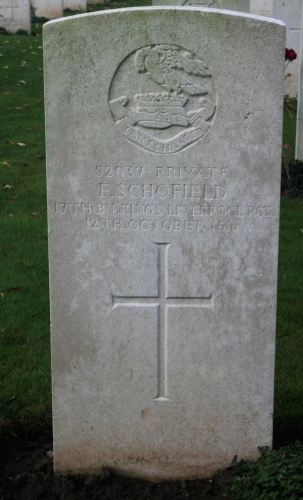
From: Rochdale
K.I.A (110 Years this day)
Thursday 12th October 1916.
21 years old
Fred Schofield was born in 1895 in Rochdale, the son of James Hoyle Schofield and his wife Sarah Jane (nee Tweedale) who were married on the 22nd October 1881 at St Clement's Church, Rochdale. James was a 20 year old spinner of Crawford, father James whilst Sarah was a 20 year old piecer of Meanwood Brow, father also James.
Fred was baptised on the the 11th August 1895 at St Alban's Church, Rochdale, his parents address given as 7 Ruby Street.
The 1901 Census shows the family living at 1 Handley St, Spotland, Rochdale. His father James is aged 39, occupation Cotton Spinner, his wife Sarah Jane is aged 40. The family were all born in Rochdale. They have nine children, James R. aged 19, a grocers assistant, Susannah aged 17, no occupation, Ethel aged 15, and Emily aged 13, both cotton card room hands, Florence aged 10, Mabel aged 8, Fred aged 5, Tom aged 3 and Albert aged 10mths.
The 1911 Census shows the family living at 18 Clement Royds St, Rochdale. His father James is aged 49, born 1862 occupation Cotton Spinner Mule, his wife Sarah Jane is aged 50, born 1861. The family were all born in Rochdale. They have seven children Susannah Butterworth aged 27, born 1884 no occupation, Emily aged 23, born 1888 occupation Rover, Florence aged 20, born 1891 occupation Reeler, Mabel aged 18, born 1893 occupation Reeler, Fred aged 15, born 1896 Paper Tube Maker, Tom aged 13 occupation Little Piercer and Albert aged 10, born 1901 at school.
He enlisted in Rochdale and originally served as Private 29563 in the Lancashire Fusiliers but following a transfer he was serving in the 17th Battalion of The King’s Liverpool Regiment as Private 52937 when he was killed in action on the 12th October 1916, aged 21, during the Battle of the Transloy Ridges which was part of the ongoing Somme Offensive.
17th Bn War Diary: Battle of Transloy Ridge –
11-10-16 - Gird Trench/Gird Support – Battalion in front line and support trenches. British bombardment of enemy front line system commenced about midday. Hostile shelling was intermittent throughout the day.
12-10-16 - Our bombardment continued. Enemy reply weak. 2.5 p.m. Zero hour. Attack on German front line system commenced. Enemy wire was found to be uncut and attack was unsuccessful. Hostile machine gun fire was very heavy and caused many casualties. Battalion H.Q. and Support Trench were heavily shelled throughout afternoon and evening. […] During this action all communication had to be carried out by runners and carrier pigeons as all wires were being continually cut by enemy shelling.
Casualties: 5 officers killed, 5 officers wounded, 38 OR killed, about 225 OR wounded/missing etc.
Graham Maddocks, in “Liverpool Pals” p.140, adds:
“As the whistle blew, the 17th Battalion left its trenches to move forward. […] As soon as the attacking waves left their trenches the enemy artillery began to register on them, and at the same time, the defending infantry commenced a murderous rain of fire. […] Although their numbers had been depleted by the British bombardment, they were trained and experienced soldiers, well dug in on high ground, and for the most part, looking out on uncut wire. As such, it was virtually impossible for them to miss the City Battalion men struggling to advance in the mud towards them. The 17th Battalion, on the left, was particularly badly hit, as its portion of No Man’s Land contained a slight rise in the ground, and as the troops emerged onto it they were silhouetted against the sky and became easy targets. Those on the left of the attack, who managed to avoid the hail of bullets and make it to the German wire, then found that it was totally uncut, and thus trapped, they too became easy targets, to be picked off almost at the enemy’s will. It was hardly surprising that, seeing the first waves being wiped out, some of the following waves turned back and made for their start lines. These lines were now packed with other waves of troops, however, and the fleeing men added to the congestion already there, and became easy prey for the German gunners. There is some evidence also, to suggest that at this stage, the British trenches were also being hit by their own heavy artillery shells which were falling short.”
Fred rests at Warlencourt British Cemetery, France.
Warlencourt Cemetery is entirely a concentration cemetery, begun late in 1919 when graves were brought in from small cemeteries and the battlefields of Warlencourt and Le Sars. The Graves Registration form shows graves from “Le Sars 6/1, 6/2, Hexham Road, Seven Elms”.
Graves were brought in from the original cemeteries at Hexham Road (Le Sars), and Seven Elms (Flers), as well as over 3,000 British graves due to the fighting which took place around the Butte de Warlencourt from the autumn of 1916 to the spring of 1917, and again in the German advance and retreat of 1918. The cemetery now contains 3,505 Commonwealth burials and commemorations of the First World War, 1,823 of which are unidentified.
Soldiers Effects and Pension to mother Sarah, 18 Clements Royds St.
His mother died, aged 62, in the December quarter of 1922.
His father died, aged 64, in the June quarter of 1926.
We currently have no further information on Fred Schofield, If you have or know someone who may be able to add to the history of this soldier, please contact us.
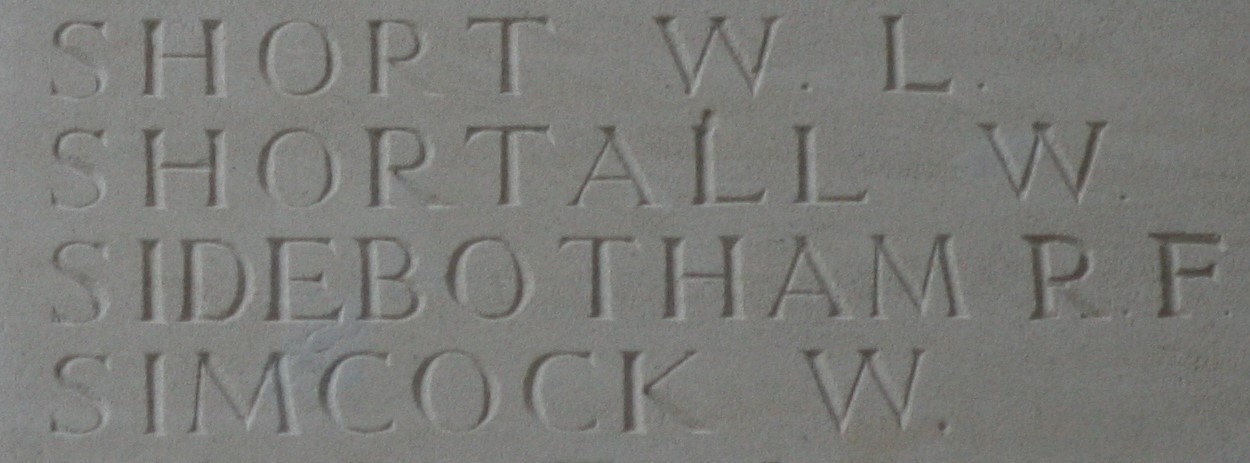
From: Worcester
K.I.A (110 Years this day)
Thursday 12th October 1916.
28 years old
Robert Frederick Sidebotham was born in Worcester in 1888. He was the son of Frederick Robert and Florence Harvey Sidebotham (née Rickaby) who were married on the 24th Dec 1885 at St Luke, Bedminster, Somerset. He was baptised on the 26th Aug 1888 at St Stephen, Worcester, parents address St Stephen Street.
The Census of Wales for 1901 records Robert and his father boarding at 6 Jubilee Street, Llandudno were Frederick was an ironmonger’s assistant and Robert aged 12 a schoolboy. The record indicated Frederick Sidebotham as being married but the whereabouts of Florence Sidebotham remains unknown. However, by 1911 she has reverted to her maiden name living apart from her husband at 8 Broad Court Flats in E.C.London(St Martins in the Field).
The 1911 Census shows Robert now aged 22 boarding at “The Nest”, Penrhyn Bay and his occupation as a conductor on the electric tramway. Father Frederick, a 45 year old printers clerk, was boarding at 2 King’s Rd, Llandudno with the Robert’s family.
He was serving in the 20th Battalion, The King’s Liverpool Regiment as Private No 29622 when he was killed in action on the 12th October 1916 aged 28 during the Battle of the Transloy Ridges which was part of the ongoing Somme Offensive.
According to the 20th Bn War Diary, on 10th October 1916 the battalion marched from Dernancourt via Mametz to Bazentin Le Grand where it bivouacked for the night. The next day the battalion moved up to site for assembly trenches, arriving about 11 p.m., where it dug in two good trenches, Nos.1 and 2 Coys front and Nos.3 and 4 Coys in rear.
From the War Diary:
Near Eaucourt L’Abbaye. 12/10/1916. The 4th British and 6th French armies continued the attack. Zero 2.5 p.m. The whole XVth Corps attacked […] The attack of 89th Inf Bde was carried out with 2nd Bn Bedf Regt on right, 17th Bn KLR on left, 20th Bn KLR in support, 19th Bn KLR in reserve. Battalions attacked in four waves. On the departure of the attacking battalions Nos. 1 and 2 companies advanced, each in two waves, to garrison the front line trench vacated by 2nd Bn Bedf Regt on right and 17th KLR on left. On Nos 1 and 2 Coys vacating front assembly trench, it was occupied by two platoons of Nos. 3 and 4 Coys respectively, from rear assembly trench. As the assaulting waves left their trenches they were met by intense machine gun fire, especially on our left. The enemy also opened heavy barrages on our front support and assembly trenches. […] Capt. H. Beckett, commanding No.1 company, reached the front line with few casualties, but Lieut R.D. Paterson leading No.2 company was killed. His company also had few casualties. The assaulting battalions were held up by very heavy machine gun fire, and made little progress. […] At 4.20 p.m. two platoons, No.4 Coy, under Cpl Brighouse, were sent up to reinforce the left, and No.3 Coy under Cpl Sutton followed at 4.45 p.m. Battalion HQ moved up to front line at 4.55 and remaining two platoons of No.4 Coy moved up to join Cpl Brighouse.
Casualties during action:
Officers – Killed Lieut. R.D. Paterson, 2nd Lieut G.L. Grennan, Wounded – 2nd Lieuts A.E. Griffin, L.E. Mclean Hayes, C. Buttemer, Wounded Cpl g. Brighouse.
Other Ranks killed – 20.
It had rained incessantly at the beginning of October 1916 and the ground was full of mud. In his book ‘The Liverpool Pals’ Graham Maddocks describes the day Herbert was killed.
It was obvious that the Germans knew an attack was coming and from which direction it would be mounted. On the evening of the 11th the 20th Battalion moved up the line and dug two deep assembly trenches behind the 17th Battalion’s position for the attack the next day. The 19th Battalion also moved into its reserve positions known as Flers Trench. Although the rain has stopped, the ground was like a morass, with all the natural vegetation destroyed, it was difficult to tell exactly where the objectives lay. On the afternoon of the 12th at exactly 2.05pm, the attack began along the whole Corps line, covered by the local batteries of the Royal Field Artillery which still had line of sight. As the whistles blew, the 17th Battalion left its trenches to move forwards, at the same time No.1 and 2 Companies of the 20th Battalion moved forward and occupied the trenches vacated by the 17th. As they too went over the top, No.3 and 4 Companies took their place and waited in their turn to follow. No.2 and 3 Companies of the 19th Battalion moved up to occupy the assembly trenches dug the previous night by the 20th.
As soon as the attacking waves left their trenches the enemy artillery began to register on them and at the same time the defending infantry commenced a murderous rain of fire. Those German regiments were trained and experienced soldiers, well dug in on high ground, and for the most part, looking out on uncut wire. As such it was virtually impossible for them to miss the City Battalion men struggling to advance in the mud towards them.
Brigadier-General F.C.Stanley wrote that the Battalions were also suffering casualties due to the short shooting of the British heavy artillery fire. “I know from practical experience that they were our own guns which were shooting, and which were causing us quite a considerable number of casualties. The fault lay at that time from the fact that the heavy gunners would not send their FOO’s (Forward Observation Officers) far enough forward, but were content to observe us from right back”
Some ground was gained that day, about 150 yards, the 20th Battalion were not relieved until 24 hours later causing the men to endure another day and night in the front line trench.
He has no known grave and is commemorated on the Thiepval Memorial, France.
The Thiepval Memorial, the Memorial to the Missing of the Somme, bears the names of more than 72,000 officers and men of the United Kingdom and South African forces who died in the Somme sector before 20 March 1918 and have no known grave. Over 90% of those commemorated died between July and November 1916.
On 01st August 1932 the Prince of Wales and the President of France inaugurated the Thiepval Memorial in Picardy. The inscription reads: “Here are recorded the names of officers and men of the British Armies who fell on the Somme battlefields between July 1915 and March 1918 but to whom the fortune of war denied the known and honoured burial given to their comrades in death.”
Liverpool Daily Post 20th Nov 1916
Killed.
King’s(Liverpool Regiment) - Sidebotham, 29662, R.F. (Llandudno);
North Wales Weekly 23rd Nov 1916
LOCAL CASUALTIES.
KILLED.
29622 R. F. Sidebothom(sic) (King’s Liverpools);
He is also commemorated on the following War Memorials, Llandudno Roll of Honour, Llandudno War Memorial, Memorial Chapel, Holy Trinity Church, Llandudno
Soldiers Effects to father Frederick R., Pension to mother Florence Harvey now living at 13 Rossini St, Seaforth. This is the address of Welsh couple John and Annie Williams.
Father died aged 65 and was buried on the 2nd Jan 1932 at Llan-Rhos, his address still 2 King’s Rd.
Mother died aged 75 in 1940 in Hackney.
We currently have no further information on Robert Frederick Sidebotham, If you have or know someone who may be able to add to the history of this soldier, please contact us.

From: Aintree, Liverpool
K.I.A (110 Years this day)
Thursday 12th October 1916.
28 years old
Charles Iliff Silvester was born in 1888 in Liverpool the son of Charles Silvester and his wife Elizabeth (née Davies). His father was born in Bourton, Warwickshire, and his mother in Liverpool. They married on the 26th July 1880 at St Nicholas' Church, Liverpool. Charles was a 25 year old fireman of Denbigh Street, father John, whilst Elizabeth was aged 24 of Paisley Street, father Samuel.
They had eleven children, one of whom died young (according to his mother’s statement on the 1911 census). The newspaper notice placed by his family refers to him as the fourth son. However, birth records have been found for all eleven, according to which Charles was the fifth child and third-born son. He had older siblings William John, Edith, Thomas Ilif (died at age 1), and Violet, and younger siblings Henry (Harry), Mary Elizabeth, Edward, John, Norman, and Phyllis Maria.
At the time of the 1891 census the family is living at 20 Cambridge Road, Netherton, with five children. His father is 37, employed as a railway engine driver born Bourton, Warks., mother is aged 35, William is 9, twins Edith and Violet are 7, Charles is two years old, and Henry is 1.
His father died in the March quarter of 1900 at the age of 46, when Charles was 11 and the youngest child was 2 or 3 years old.
By 1901 his widowed mother, 44, is living at 13 Oxford Road, near Aintree Station, with all ten children at home. William, 19, is a railway engine stoker, and Edith, 17, makes artificial (?) surgical instruments. Violet, 14, Charles 12, Harry 11, Elizabeth 9, Edward 8, John 6, Norman 5, and Phyllis is 4.
The 1911 Census shows the family still living at 13 Oxford Road, Aintree. His widowed mother Elizabeth is aged 50, She has eight children living with her, all born in Liverpool. Charles Iliff aged 22, born 1889 and a railway clerk, Harry aged 21, born 1890 is a dental mechanic, Edward aged 18, born 1893 is a hotel waiter, John aged 16, born 1895 is a train booker, Norman aged 15, Born 1896 is a dyer, Edith aged 27 born 1884, Elizabeth aged 19 born 1892 and Phyllis aged 14, born 1897 are all dental mechanics. The census form was filled in by his eldest brother William, 29, who is married and lives down the street and provided his own address, no.7, in error. His mother states that ten of her eleven children are still living. His sister Violet, 24, is a sick nurse in the Walton workhouse.
Charles enlisted in Liverpool. The amount of the War Gratuity suggests that he enlisted in about September 1915 and was serving in the 17th Battalion, The King’s Liverpool Regiment as Private No 51949 when he was killed in action on the 12th October 1916 aged 28 during the Battle of the Transloy Ridges which was part of the ongoing Somme Offensive.
17th Bn War Diary: Battle of Transloy Ridge –
11-10-16 - Gird Trench/Gird Support – Battalion in front line and support trenches. British bombardment of enemy front line system commenced about midday. Hostile shelling was intermittent throughout the day.
12-10-16 - Our bombardment continued. Enemy reply weak. 2.5 p.m. Zero hour. Attack on German front line system commenced. Enemy wire was found to be uncut and attack was unsuccessful. Hostile machine gun fire was very heavy and caused many casualties. Battalion H.Q. and Support Trench were heavily shelled throughout afternoon and evening. […] During this action all communication had to be carried out by runners and carrier pigeons as all wires were being continually cut by enemy shelling.
Casualties: 5 officers killed, 5 officers wounded, 38 OR killed, about 225 OR wounded/missing etc.
Graham Maddocks, in “Liverpool Pals” p.140, adds:
“As the whistle blew, the 17th Battalion left its trenches to move forward. […] As soon as the attacking waves left their trenches the enemy artillery began to register on them, and at the same time, the defending infantry commenced a murderous rain of fire. […] Although their numbers had been depleted by the British bombardment, they were trained and experienced soldiers, well dug in on high ground, and for the most part, looking out on uncut wire. As such, it was virtually impossible for them to miss the City Battalion men struggling to advance in the mud towards them. The 17th Battalion, on the left, was particularly badly hit, as its portion of No Man’s Land contained a slight rise in the ground, and as the troops emerged onto it they were silhouetted against the sky and became easy targets. Those on the left of the attack, who managed to avoid the hail of bullets and make it to the German wire, then found that it was totally uncut, and thus trapped, they too became easy targets, to be picked off almost at the enemy’s will. It was hardly surprising that, seeing the first waves being wiped out, some of the following waves turned back and made for their start lines. These lines were now packed with other waves of troops, however, and the fleeing men added to the congestion already there, and became easy prey for the German gunners. There is some evidence also, to suggest that at this stage, the British trenches were also being hit by their own heavy artillery shells which were falling short.”
Charles now rests at Warlencourt British Cemetery, France where his headstone bears the epitaph:
“GOD BE WITH YOU TILL WE MEET AGAIN”
Warlencourt Cemetery is entirely a concentration cemetery, begun late in 1919 when graves were brought in from small cemeteries and the battlefields of Warlencourt and Le Sars. The Graves Registration form shows graves from “Le Sars 6/1, 6/2, Hexham Road, Seven Elms”.
Graves were brought in from the original cemeteries at Hexham Road (Le Sars), and Seven Elms (Flers), as well as over 3,000 British graves due to the fighting which took place around the Butte de Warlencourt from the autumn of 1916 to the spring of 1917, and again in the German advance and retreat of 1918. The cemetery now contains 3,505 Commonwealth burials and commemorations of the First World War, 1,823 of which are unidentified.
A notice appeared in the Liverpool Echo on 31st October 1916:
“October 12, killed in action, Charles (Charlie), fourth son of Elizabeth and the late Charles Silvester, 13, Oxford Road, Aintree.”
His mother and sister Mrs. Violet Steele received his Army pay; the War Gratuity of £3-10s went to his mother, who was awarded a pension of 9/- a week from June 1917.
Charlie is commemorated on the Family Headstone in Kirkdale Cemetery, Liverpool and on the following War Memorials,
Emmanuel C. of E. Church, Aintree
Longmoor Lane Council School, Fazakerley.
Liverpool’s Hall of Remembrance, Panel 42
St. Giles with St. Peter, Aintree
Aintree and Melling Roll of Honour
His brother Harry enlisted in the 20th (Pals) Bn. K.L.R. as Private 22855, was wounded at the Somme in July 1916, transferred to the Cheshire Regiment and then the Manchester Regiment and was wounded again in late 1918, but survived the war.
John Silvester, quite possibly his brother, served in the 13th Bn. K.L.R. and was later posted to the 17th Bn.
His mother died in 1927, aged 71.
We currently have no further information on Charles Iliff Silvester, If you have or know someone who may be able to add to the history of this soldier, please contact us.
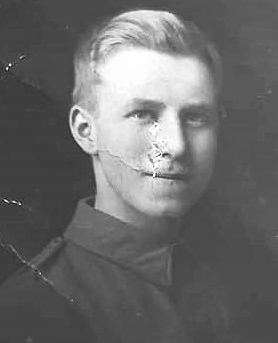
From: Liverpool
K.I.A (110 Years this day)
Thursday 12th October 1916.
21 years old
John was born in 1896 in Liverpool, the only son of James Gaulter Singleton and his wife Hilda (nee Aspinall) who were married on 22nd February 1893 at St Luke's Church, Liverpool. He was baptised on the 24th November 1896 at St Silas' Church, Toxteth, his parents address recorded as 32 Treborth Street.
The 1901 Census shows the family are living at Public House, 63 Essex Street, Toxteth Park, Liverpool. John is 4 years of age and is living with his parents and two sisters. His father is a Licensed Victualler born in Liverpool in 1867, whilst his mother was born in Liverpool in 1868. His two elder siblings were both born in Liverpool, Hilda in 1894 Elizabeth in 1895.
John is not present at the family home in 1911. The family were living at 119 Park Street, Toxteth Park. Both parents were present and the two sisters Hilda and Elizabeth were joined by another daughter Dorothy born in 1902.
At the time of the 1911 Census John was living with his uncle John at 65 Essex Street, Toxteth. He was now 14 years of age, his estimated year of birth again stated as 1897. He is shown as a student.
1914 Gores Directory shows that his father James G. was the licensee of the Derby Arms, 165 and 167 Mill Street.
John enlisted in Liverpool as Rifleman 4608 joining the 6th Battalion of The King's Liverpool Regiment (Liverpool Rifles). He embarked from Folkestone-Boulogne on 15th July 1916, reaching the 24th Infantry Base Depot on 16th July. He proceeded to 11th Entrenching Battalion on 02nd August, and proceeded to 17th Battalion K.L.R. on 05th August. He was posted to the 17th Bn from 05th September 1916 as Private No 51607.
John was killed in action on the 12th October 1916 during the Battle of the Transloy Ridges which was part of the ongoing Somme Offensive.
17th Bn War Diary: Battle of Transloy Ridge –
11-10-16 - Gird Trench/Gird Support – Battalion in front line and support trenches. British bombardment of enemy front line system commenced about midday. Hostile shelling was intermittent throughout the day.
12-10-16 - Our bombardment continued. Enemy reply weak. 2.5 p.m. Zero hour. Attack on German front line system commenced. Enemy wire was found to be uncut and attack was unsuccessful. Hostile machine gun fire was very heavy and caused many casualties. Battalion H.Q. and Support Trench were heavily shelled throughout afternoon and evening. […] During this action all communication had to be carried out by runners and carrier pigeons as all wires were being continually cut by enemy shelling.
Casualties: 5 officers killed, 5 officers wounded, 38 OR killed, about 225 OR wounded/missing etc.
Graham Maddocks, in “Liverpool Pals” p.140, adds:
“As the whistle blew, the 17th Battalion left its trenches to move forward. […] As soon as the attacking waves left their trenches the enemy artillery began to register on them, and at the same time, the defending infantry commenced a murderous rain of fire. […] Although their numbers had been depleted by the British bombardment, they were trained and experienced soldiers, well dug in on high ground, and for the most part, looking out on uncut wire. As such, it was virtually impossible for them to miss the City Battalion men struggling to advance in the mud towards them. The 17th Battalion, on the left, was particularly badly hit, as its portion of No Man’s Land contained a slight rise in the ground, and as the troops emerged onto it they were silhouetted against the sky and became easy targets. Those on the left of the attack, who managed to avoid the hail of bullets and make it to the German wire, then found that it was totally uncut, and thus trapped, they too became easy targets, to be picked off almost at the enemy’s will. It was hardly surprising that, seeing the first waves being wiped out, some of the following waves turned back and made for their start lines. These lines were now packed with other waves of troops, however, and the fleeing men added to the congestion already there, and became easy prey for the German gunners. There is some evidence also, to suggest that at this stage, the British trenches were also being hit by their own heavy artillery shells which were falling short.”
He was initially reported as Missing and his name appeared in the local press on 16th November 1916 amongst a list of men from the King's Liverpool Regiment
Liverpool Daily Post 16th November 1916
MISSING
King’s (Liverpool Regt.) - Singleton, 51607, J. (Liscard);
John now rests at Warlencourt British Cemetery, France, where his headstone bears the epitaph:
“THE DEARLY LOVED AND ONLY SON OF HILDA AND JAMES GAULTER SINGLETON”
Warlencourt Cemetery is entirely a concentration cemetery, begun late in 1919 when graves were brought in from small cemeteries and the battlefields of Warlencourt and Le Sars. The Graves Registration form shows graves from “Le Sars 6/1, 6/2, Hexham Road, Seven Elms”.
Graves were brought in from the original cemeteries at Hexham Road (Le Sars), and Seven Elms (Flers), as well as over 3,000 British graves due to the fighting which took place around the Butte de Warlencourt from the autumn of 1916 to the spring of 1917, and again in the German advance and retreat of 1918. The cemetery now contains 3,505 Commonwealth burials and commemorations of the First World War, 1,823 of which are unidentified.
Soldiers Effects to mother Hilda, also his Pension, 33 Rice Hey Road, Liscard.
John is also commemorated on the following War Memorials;
Wallasey Civic Memorial, Mill Lane
Wallasey Roll of Honour.
His father died, aged 61, in Birkenhead in the December quarter of 1928.
His mother died, aged 83, on the 05th June 1951 and was buried at Rake Lane Cemetery.
Grateful thanks are extended to Lorraine Lister for permission to use the photograph of John now on this site.
Grateful thanks are also extended to Kevin Shannon the author of the book The Liverpool Rifles for providing details of John's service with the 6th Rifles.
We currently have no further information on John Singleton, If you have or know someone who may be able to add to the history of this soldier, please contact us.
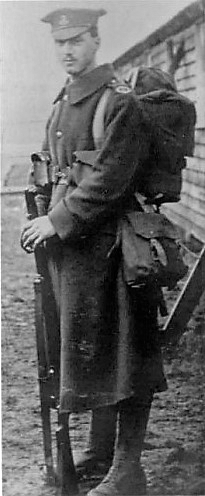
From: Liverpool
K.I.A (110 Years this day)
Thursday 12th October 1916.
23 years old
George Wynne Slee was born on 06th November 1892 in Liverpool the son of Walter Slee and his wife Maria (nee Wynne). He was baptised in St. Bede's Church, Toxteth Park, on 08th February 1893, his parents’ address given as 20 Tunstall Street and his father’s occupation as bookkeeper. His parents married in 1891 at St Michael's Church, Toxteth, Walter was a 30 year old book keeper of St Pauls, Seacombe, father George, whilst Maria was aged 30 of 97 Westminster Road, father David.
At the time of the 1901 Census the family is living at 5 Clydesdale Road, Wallasey. His father is aged 41, a shipping clerk born in Liverpool, his mother, Maria, is aged 41 born in Liverpool. They have three children in the household; George is 8 b.Liverpool, Dorothy is 5 b.Liverpool, and Marie W. aged 1 b.Egremont. Also in the household is his Aunt Elizabeth Slee, 45.
The 1911 Census shows the family living at 29 Fort Street, Liscard, Wallasey. His father Walter is aged 50, , his occupation recorded as an Engineers Clerk Marine, whilst his mother Maria is aged 51. They have been married for 19 years and have had four children. All four children are recorded in the household; George aged 18, an office boy, Dorothy aged 15, born 1896 no occupation, both being born in Liverpool. Marie aged 11, born 1900 and Walter Lorraine aged 9, born 1902 both born in Egremont.
George enlisted in Liverpool and was serving in the 17th Battalion, The King’s Liverpool Regiment as Private No 26026.
He was billeted at Prescot Watch Factory, he trained there and also at Knowsley Hall. On 30th April 1915 the 17th Battalion alongside the other three Pals battalions left Liverpool via Prescot Station for further training at Belton Park, Grantham. They remained here until September 1915 when they reached Larkhill Camp on Salisbury Plain.He arrived in France on 29th December 1915, thus earning his 1914-1915 Star.
He was killed in action on the 12th October 1916, aged 23, during the Battle of the Transloy Ridges which was part of the ongoing Somme Offensive.
17th Bn War Diary: Battle of Transloy Ridge –
11-10-16 - Gird Trench/Gird Support – Battalion in front line and support trenches. British bombardment of enemy front line system commenced about midday. Hostile shelling was intermittent throughout the day.
12-10-16 - Our bombardment continued. Enemy reply weak. 2.5 p.m. Zero hour. Attack on German front line system commenced. Enemy wire was found to be uncut and attack was unsuccessful. Hostile machine gun fire was very heavy and caused many casualties. Battalion H.Q. and Support Trench were heavily shelled throughout afternoon and evening. […] During this action all communication had to be carried out by runners and carrier pigeons as all wires were being continually cut by enemy shelling.
Casualties: 5 officers killed, 5 officers wounded, 38 OR killed, about 225 OR wounded/missing etc.
Graham Maddocks, in “Liverpool Pals” p.140, adds:
“As the whistle blew, the 17th Battalion left its trenches to move forward. […] As soon as the attacking waves left their trenches the enemy artillery began to register on them, and at the same time, the defending infantry commenced a murderous rain of fire. […] Although their numbers had been depleted by the British bombardment, they were trained and experienced soldiers, well dug in on high ground, and for the most part, looking out on uncut wire. As such, it was virtually impossible for them to miss the City Battalion men struggling to advance in the mud towards them. The 17th Battalion, on the left, was particularly badly hit, as its portion of No Man’s Land contained a slight rise in the ground, and as the troops emerged onto it they were silhouetted against the sky and became easy targets. Those on the left of the attack, who managed to avoid the hail of bullets and make it to the German wire, then found that it was totally uncut, and thus trapped, they too became easy targets, to be picked off almost at the enemy’s will. It was hardly surprising that, seeing the first waves being wiped out, some of the following waves turned back and made for their start lines. These lines were now packed with other waves of troops, however, and the fleeing men added to the congestion already there, and became easy prey for the German gunners. There is some evidence also, to suggest that at this stage, the British trenches were also being hit by their own heavy artillery shells which were falling short.”
His death was announced in the Liverpool Echo on 25th October 1918:
“October 12, killed in action, Private George Wynne Slee K.L.R., eldest son of Walter and Marie Slee, 29, Fort Street, New Brighton.”
And in the Wallasey News:
“Another New Brightonian to pay the supreme sacrifice is Private George W. Slee (King’s Liverpool Regiment), of 29, Fort Street, who was killed in action on October 12th. Twenty-three years of age, he enlisted in March, 1915, and had been at the front since December last. An enthusiastic member of St. John’s Church, Egremont, the deceased was also prominently associated with the Clifton Parliamentary Debating Society.”
In the Echo on 27th October:
“October 12, killed in action, aged 23 years, Private George Wynne Slee K.L.R. (Ever remembered by his loving Auntie Betty.)”
George was buried close to where he fell as Unknown Soldier 26036 King’s Liverpool. Only after the war when graves were concentrated was his correct number identified. George was reinterred in Warlencourt British Cemetery, France where he now rests.
Warlencourt Cemetery is entirely a concentration cemetery, begun late in 1919 when graves were brought in from small cemeteries and the battlefields of Warlencourt and Le Sars. The Graves Registration form shows graves from “Le Sars 6/1, 6/2, Hexham Road, Seven Elms”.
Graves were brought in from the original cemeteries at Hexham Road (Le Sars), and Seven Elms (Flers), as well as over 3,000 British graves due to the fighting which took place around the Butte de Warlencourt from the autumn of 1916 to the spring of 1917, and again in the German advance and retreat of 1918. The cemetery now contains 3,505 Commonwealth burials and commemorations of the First World War, 1,823 of which are unidentified.
On the first anniversary of his death an In Memoriam notice appeared in the Liverpool Echo:
“In loving memory of George Wynne Slee and Finlay R. F. Foden, killed in action October 12, 1916. (Fondly remembered by their Friend Percy and all at 50, Longland Road, Liscard.”
(In 1911 William Percival Lund Dunn lived at this address. He served as Pte.15771 in the 17th Bn K.L.R. and was discharged to commission in 1918 with the Manchester Regiment. Percy survived the war, earning a Silver War Badge having suffered shell shock.)
George's mother Marie, 29 Fort Street, was awarded a pension of 13/4d a week from May 1917. His father received George’s Army pay and a War Gratuity of £6-10s.
In 1939 his parents are living at 1 Stoneby Drive, Wallasey with daughters Dorothy and Marie. His father is 78, employed as a cashier, his mother is 79. Brother Walter is married and living in Cheshire.
Both his parents saw another World War and lived long lives. His mother died in 1947 aged 87, and his father in 1952 at the age of 91.
George is commemorated on the following War Memorials:
Wallasey Civic Memorial, Mill Lane
Wallasey Roll of Honour
Emmanuel C. of E. Church, New Brighton
Elder & Dempster Roll of Honour
St John’s C. of E. Church, Egremont.
We currently have no further information on George Wynn Slee, If you have or know someone who may be able to add to the history of this soldier, please contact us.
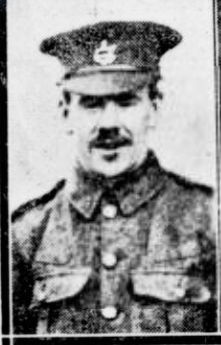
From: Liverpool
K.I.A (110 Years this day)
Thursday 12th October 1916.
26 years old
James Smallshaw (Jim) was born on the 17th October 1889 in Liverpool, the son of William John Smallshaw and his wife Margaret Ellen(nee Gilroy) who were married on the 07th August 1882 at Our Lady, St. Nicholas and St. Anne's Church, Liverpool. William was a 20 year old porter, Margaret was 19, both of Penhryn St, Everton. Jim was baptised on the 20th November 1889 at St Peter's Church, Everton, father William of 17 Sackville Street.
On the 1891 Census the family, all born Liverpool, are living at 26 Joshua St, Everton. Father William aged 29, a dock porter, mother Margaret Ellen aged 26, children Anna aged 6, William aged 4, Nellie aged 3, and Jane aged 1.
On the 1901 Census the family are living at 1 Butterfield Street, Everton. His father, William J., is aged 39, a fowl? porter, mother Margaret E. aged 36, children Hannah aged 16, William aged 14, an errand boy for toy shop, Ellen aged 13, James aged 11, George aged 9, Ernest aged 7, Eva aged 4, Florence aged 2, Hector Baden aged 11 months.
On the 1911 Census the family have moved to 119 Gwladys Street, Walton. His father William is not present, mother Margaret Ellen is aged 36 and advises that she has been married for 29 years, and has had 13 children with 9 surviving. All of her children are declared in the household; Hannah aged 26, William aged 24, a packer at Ogden’s Tobacco Factory, Ellen aged 23, a cigar maker at Cope Bros. James aged 21 a packer at Ogden’s, George aged 19 not working, Ernest aged 17, at Liverpool tin cannister works, Eva aged 14, a dressmaker apprentice, Florence aged 12 at school, Hector aged 11 at school, and Leah 6.
Jim married Edith Bamber in the June quarter of 1912 at St. John The Baptist Church, Tuebrook and they had 3 children Edith (1913), Ellen (1915) and James William (1916).
Jim worked at Ogden's Tobacco factory prior to enlisting.
He enlisted in Liverpool joining the 20th Battalion of The King's Liverpool Regiment as Private 38140.
The 20th Battalion were placed in support of the 17th Battalion during the attack of 12th October 1916:
According to the 20th Bn War Diary, on 10th October 1916 the battalion marched from Dernancourt via Mametz to Bazentin Le Grand where it bivouacked for the night. The next day the battalion moved up to site for assembly trenches, arriving about 11 p.m., where it dug in two good trenches, Nos.1 and 2 Coys front and Nos.3 and 4 Coys in rear.
From the War Diary:
Near Eaucourt L’Abbaye. 12/10/1916. The 4th British and 6th French armies continued the attack. Zero 2.5 p.m. The whole XVth Corps attacked […] The attack of 89th Inf Bde was carried out with 2nd Bn Bedf Regt on right, 17th Bn KLR on left, 20th Bn KLR in support, 19th Bn KLR in reserve. Battalions attacked in four waves. On the departure of the attacking battalions Nos. 1 and 2 companies advanced, each in two waves, to garrison the front line trench vacated by 2nd Bn Bedf Regt on right and 17th KLR on left. On Nos 1 and 2 Coys vacating front assembly trench, it was occupied by two platoons of Nos. 3 and 4 Coys respectively, from rear assembly trench. As the assaulting waves left their trenches they were met by intense machine gun fire, especially on our left. The enemy also opened heavy barrages on our front support and assembly trenches. […] Capt. H. Beckett, commanding No.1 company, reached the front line with few casualties, but Lieut R.D. Paterson leading No.2 company was killed. His company also had few casualties. The assaulting battalions were held up by very heavy machine gun fire, and made little progress. […] At 4.20 p.m. two platoons, No.4 Coy, under Cpl Brighouse, were sent up to reinforce the left, and No.3 Coy under Cpl Sutton followed at 4.45 p.m. Battalion HQ moved up to front line at 4.55 and remaining two platoons of No.4 Coy moved up to join Cpl Brighouse.
Casualties during action:
Officers – Killed Lieut. R.D. Paterson, 2nd Lieut G.L. Grennan, Wounded – 2nd Lieuts A.E. Griffin, L.E. Mclean Hayes, C. Buttemer, Wounded Cpl g. Brighouse.
Other Ranks killed – 20.
It had rained incessantly at the beginning of October 1916 and the ground was full of mud. In his book ‘The Liverpool Pals’ Graham Maddocks describes the day Herbert was killed.
It was obvious that the Germans knew an attack was coming and from which direction it would be mounted. On the evening of the 11th the 20th Battalion moved up the line and dug two deep assembly trenches behind the 17th Battalion’s position for the attack the next day. The 19th Battalion also moved into its reserve positions known as Flers Trench. Although the rain has stopped, the ground was like a morass, with all the natural vegetation destroyed, it was difficult to tell exactly where the objectives lay. On the afternoon of the 12th at exactly 2.05pm, the attack began along the whole Corps line, covered by the local batteries of the Royal Field Artillery which still had line of sight. As the whistles blew, the 17th Battalion left its trenches to move forwards, at the same time No.1 and 2 Companies of the 20th Battalion moved forward and occupied the trenches vacated by the 17th. As they too went over the top, No.3 and 4 Companies took their place and waited in their turn to follow. No.2 and 3 Companies of the 19th Battalion moved up to occupy the assembly trenches dug the previous night by the 20th.
As soon as the attacking waves left their trenches the enemy artillery began to register on them and at the same time the defending infantry commenced a murderous rain of fire. Those German regiments were trained and experienced soldiers, well dug in on high ground, and for the most part, looking out on uncut wire. As such it was virtually impossible for them to miss the City Battalion men struggling to advance in the mud towards them.
Brigadier-General F.C.Stanley wrote that the Battalions were also suffering casualties due to the short shooting of the British heavy artillery fire. “I know from practical experience that they were our own guns which were shooting, and which were causing us quite a considerable number of casualties. The fault lay at that time from the fact that the heavy gunners would not send their FOO’s (Forward Observation Officers) far enough forward, but were content to observe us from right back”
Some ground was gained that day, about 150 yards, the 20th Battalion were not relieved until 24 hours later causing the men to endure another day and night in the front line trench.
James was killed in action during the battle described above.
His body was not recovered or was subsequently lost as he has no known grave and is commemorated on the Thiepval Memorial, France.
The Thiepval Memorial, the Memorial to the Missing of the Somme, bears the names of more than 72,000 officers and men of the United Kingdom and South African forces who died in the Somme sector before 20 March 1918 and have no known grave. Over 90% of those commemorated died between July and November 1916.
On 01st August 1932 the Prince of Wales and the President of France inaugurated the Thiepval Memorial in Picardy. The inscription reads: “Here are recorded the names of officers and men of the British Armies who fell on the Somme battlefields between July 1915 and March 1918 but to whom the fortune of war denied the known and honoured burial given to their comrades in death.”
A short obituary in the Liverpool Echo dated 02nd November 1916 which simply states:
SMALLSHAW-October 12, killed in action, aged 28 years, James (Jim), K.L.R., dearly beloved husband of Edith Smallshaw, 8 Lampeter-road, Anfield. “Sadly missed by his sorrowing wife and family”.
His family photo was posted in the Liverpool Weekly Courier on Saturday 04th November 1916:
A PATHETIC GROUP.
A photo shows Private James Smallshaw of the K.L.R. (who was killed in action on October 12th) and his widow and three children aged respectively, three years, 15 months, and nine weeks, who reside at 8 Lampeter-road, Anfield, Liverpool. Private Smallshaw joined the King’s in April last and after only six months service was killed. His commanding officer, in a sympathetic letter to Mrs Smallshaw, says:- “As far as I can find out he was killed by a shell, and the stretcher bearers gave him and several of his comrades a decent burial. One of the boys who was with him a little previous told me that the last words he heard your husband say were of you, and that the 12th was his eldest child's birthday. I am very sorry to lose him, as he was a good soldier, did his duty, and was well liked by the boys who send their deepest sympathy.”
James earned two medals which suggests that he didn't serve overseas until 1916.
Soldiers Effects, Army Pay of £2 5s 11 to widow Edith, and Pension to widow Edith and children Edith, Ellen and James William, 8 Lampeter Road, Anfield which was the address of her parents. . The War Gratuity of £3 and a pension of 26/3 pw went to Ellen Bamber (her mother), of 8 Lampeter Road, the guardian of the three children, 8 Lampeter Road, Anfield.
He is commemorated on the following Memorials:
Hall of Remembrance, Liverpool Town Hall, Panel 42
Ogdens Tobacco Memorial
St. John the Baptist C.of E. Church, Tuebrook, Liverpool.
Jim's family paid tribute to him in the Liverpool Echo on the second anniversary of his death on 12th October 1918:
SMALLSHAW— in loving memory of my dear husband, killed in action October 12, 1916.
For us he always did his best;
May God grant him eternal rest.
- From his loving wife and children, 8 Lampeter Road.
SMALLSHAW— In loving memory of Jim, killed in action October 12, 1916. - Every remembered by all at 10 Lampeter Road.
His widow Edith died, aged 25, just a few days after the previous week's family notice. Her death was recorded in the Liverpool Echo on 21st October 1918:
SMALLSHAW—October 19, at 8, Lampeter-road, aged 25 years, EDITH, wife of the late James Smallshaw; (killed in action) and beloved daughter of William and Ellen Bamber, 10, Lampeter-Toad (At rest. No flowers.)
Her death was recorded in the Liverpool Echo on 21st October 1918
SMALLSHAW—October 19, at 8, Lampeter-road, aged 25 years, EDITH, the late James Smallshaw; (killed in action) and beloved daughter of William and Ellen Bamber, 10, Lampeter-Toad (At rest. No flowers.)
Jim was one of three brothers who gave their lives during the Great War. His brothers William and George also fell.
William served as Driver 696033 with the Royal Field Artillery. He died of wounds on 08th July 1917 and rests at Merville Communal Cemetery Extension.
George served as Private 359246 with the 2/10th Battalion of The King's Liverpool Regiment. He died of wounds on 24th August 1916 and is commemorated on Panel 3 of the Ploegsteert Memorial in Belgium.
Their father died, aged 67, in the December quarter of 1928.
Their mother died, aged 88, on the 05th March 1953
Probate:-
SMALLSHAW Margaret Ellen of 12 Whitehedge Road, Liverpool 19 widow died 6 March 1953 Probate Liverpool 28 April to Hannah McBride widow and Florence Smallshaw spinster. Effects £2715 10s 1d.
James Smallshaw was the great Uncle of Dr. Lance Smallshaw, Belgium. Here is a summary of the accounts about him and his brothers from information passed down from his father.
SMALLSHAW FAMILY (LIVERPOOL) THE GREAT WAR (The Fate of 4 Great / Grand Uncles from Everton).
Background: The Smallshaws are of a single-line family first recorded in the 13th century in an entry of the Court Rolls of Wakefield in Holne (now Holme) in the West Riding, Yorkshire, England under William de Smalschaghe (1277) and Robert de Smaleschawe (1298). In a Yorkshire Deed (1322) is mentioned the vaccary (a cow-pasture, of Lancashire origin) of Smaleshagh. The Smallshaw name is of 7th century origin Smael-sceaga, meaning a small wood (shaw). This homestead was to become a hamlet and is now a suburb of Ashton-Under-Lyne, Greater Manchester. In the 14th century the Smallshaw’s left their homestead and settled in the ancient priory village of Upholland, Lancashire. The family are mentioned in various documents throughout and beyond the 17th century, particularly in the period of the English Civil War, they were Royalists. It is here they would remain and the family origins would be traced to and then through the 19th century. It is at this time (1830s) during advent of Industrial Revolution when the nearby city of Liverpool expanded due to its thriving port. Like many families in this region during that time, some would relocate from their farming village communities in search of regular work in that city and internationally.
William Smallshaw (Wills) (DOB 9th July 1886) Eldest son of 12 of William John and Margret Ellen Smallshaw (nee Gilroy) born in Liverpool (the parental family home was at 119, Gwladys Street, Everton in Liverpool next to Everton F.C.). Husband to Alice (nee Graham ) 11th May 1912 and father to William, Nora and Alice. He was described by my Great Aunt Hannah as a very responsible, mature family man of smaller stature, 5ft 3inches (1m 60cm) with a tattoo on his left forearm of Buffalo Bill. Interesting Buffalo Bill actually toured the UK in the 1900s and visited Liverpool twice during his time there. Maybe William saw him during that time? Prior to the advent of the Great War in August 1914 he had served for 4 1/2 years with the 1st West Lancashire Division, Liverpool, which had since been disbanded. In November 1915 the War Office authorised its reformation (now designated 55th (West Lancashire) Division. In December 1915 he re-enlisted as a driver 696033 for the 57th (2nd/1st West Lancashire) Divisional Ammunition Column (DAC), Royal Field Artillery (RFA), which was a 2nd- line unit for the Territorial Force (TF), based at the Drill Hall on Stanley Street in Liverpool. In May 1916 as part of the Great War on-going troops expansion they became the 276th (CCLXXXVI) Brigade RFA DAC, commanded by Brigadier-General N.H. Bray. After completing further training in Aldershot they moved to France in February 1917 and disembarked at Le Havre. On 25th February they took over a section of the Western Front under the command of the II ANZAC Corps. On 6th July 1917 near Estaires in France William, another younger driver Bartholomew Dodding 695980 (whose parents lived close by) plus others were severely injured by heavy enemy shelling. William and Bartholomew died from wounds on / around 8th July 1917, sadly on his 31st birthday. Both are buried at Merville Communal Cemetery Extension (B.I.37 and B.I.35 respectively) in France. Buried in between them at B.I.36. is a Private. H.P. Moore 335857, 2nd/10th Bn. Liverpool Scottish (The King’s Regiment).
George Smallshaw (Georgie, dob 24th June 1891), younger brother of William and James, husband to Dorothy (nee Mercedes Forrest) April 1910 and father to George Frederick and Dorothy Leah. My Great Aunts, Florence (Flo.) and Hannah described George as a true Liverpool character with a great sense of humour. It states in the 1911 Census that he was in between jobs after previously working at the Ogden’s Tobacco Factory in Boundary Lane, Liverpool. Maybe James had helped him get that job. On 31st August 1914 the War Office authorised the formation of a reserve / 2nd-line unit for each of the TF units. In September the 2nd/1st South Lancashire Brigade came into existence. In November 1914 it was composed of 2nd-Line duplicates of the battalions of the peacetime South Lancashire Brigade that were due to be sent overseas. George 359246 later enlisted in the 2nd/10th Battalion King’s Liverpool Regiment (KLR) (Liverpool Scottish). The Liverpool Scottish, known diminutively as "the Scottish", is a unit of the British Territorial Army which was originally raised in 1900 as an infantry battalion of the KLR. This was the battalion of Noel Godfrey Chavasse, the Battalions Surgeon-Captain between 1916 to 1917, who was the only soldier during the Great War to be awarded 2 Victoria Crosses (VCs), the King awarding him an award of a bar for his second VC. The battalion was a second line feeder battalion having to undertake a lot of continued training for their significant lack of practical soldiering experience. In August 1915 these formations were assigned numbers, 172nd (2nd/1st South Lancashire) Brigade and 57th (2nd West Lancashire) Division respectively. On 20th February 1917 they left Southampton to go to Le Havre, France arriving the following day, eventually reaching Estaires 3 days later. On 26th February 1917 they took up their positions in the trenches at Bois Grenier, Rue du Bois, on the Western Front, France serving on an 8 days on, 8 days off shift rota commended by the temporary Brigadier-General, G.C.B. Paynter. In August 1917 there was heavy enemy shelling and aircraft activity in this region. The records are unclear but it is believed that George and another were severely wounded on /around 21st August 1917 but died of wounds on 24th August 2017, age 26. A Cairn memorial for the battalion has since been laid for those who served at Bois Grenier region in 1917. George is remembered 2 km across the border in Belgium at the Ploegsteert Memorial, Panel 3, Hainaut. He is mentioned in the 2nd/10th battalion Liverpool Scottish beautifully bound decorative Roll of Honour Book, Section Sm. It is currently held in St George’s Hall in Liverpool (I’d like to mention Major Ian Riley from the Regimental Museum for various communications and his valued help with this). 2nd Lt. Lancelot Slocock (killed at Guillemont in August 1916) who was one of England’s finest rugby union players before he left to do business in the U.S.A, he is mentioned just below but one to George’s inscription. During the Great War there was an on-going close interaction between George, the Scottish and the Queens Own Cameron Highlanders Regiment (see the regiment Great War cap badge and piece of kilt tartan sent to the family after George died). In the final year of the war, what was left of the 2nd/10th Bn. were swallowed up by the 1st/10th Bn. and eventually transferred to the 55th (West Lancashire) Division on 21th April 1918. The Liverpool Scottish formalised its relationship with the Queen's Own Cameron Highlanders and transferred in 1937 to become the regiment's second territorial battalion. The sailor in the picture with George is Ernest (Ernie) another brother (DOB 1893), Married Hilda Stewart in 1948, son Gilroy (Grandmother Mothers maiden name) who served with HMS Dove and with some merchant ships (two of these he served on were torpedoed miraculously he survived both attacks) and the only brother to survive the Great War. George is mentioned in the Roll of Honour at Liverpool Town Hall.
James Smallshaw (“Jim”, dob 17th October 1889), younger brother to William, husband to Edith (nee Bamber) 1912 and father to Ellen, Edith and James William. He had worked at the Ogden’s Tobacco factory, Liverpool prior to the war. He probably had helped his brother George to get a job there. The Liverpool of the 1914s of early summer was prosperous, proud, alive with trading and bustling with people engaged in all types of commerce. James 38140 enlisted in the Pals Kitchener’s New Army, 20th (Service) Battalion (4th City) KLR TF. Formed in Liverpool on 16th October 1914 by Lord Derby, in the old watch factory, Prescot Watches, Liverpool. By the time the last battalion (20th Bn.) of the Pals was formed they were quartered at the Tournament Hall, Knotty Ash and trained each day in Knowsley Park, Liverpool. On 30th April 1915 they came under orders of 89th Brigade, 30th Division. The idea of the formation of the Liverpool Pals battalions is associated with the 17th Earl of Derby (Lord Derby), Stanley family seat nearby at Knowsley Hall at the on-set of war, August 1914. In fact, for the 4 Liverpool Pals battalions their cap badge is in the image of the Family Crest of the Derby Family, Eagle and Child and Motto, Sans Changer (Latin: Without Changing) which was worn by the Pals with distinction from the standard cap badge worn by of the other battalions of the KLR, the Horse of Hanover. The Pals badge had many nicknames not all reverent, ˜the duck and illegitimate”, or words to that effect etc. They were commanded by the brother of Lord Derby, Brigadier-General F.C. Stanley. They landed at Boulogne, France on 8th November 1915. They stayed one night at Ostrehove Camp and the next day James arrived for training at Pont Remy. On 18th December he moved to the Western Front to be deployed at Bienvillers, they were split into platoons attached to the 6th Bn. and 8th Bn. of The Leicestershire Regiment. They came out of the frontline for an uneventful Christmas Eve of 1915 and moved to Louvencourt for Christmas Day where they temporarily came under the Command of Brigadier-General C.J. Sackville-West’s 21st Brigade. In fact during this time the 20th Bn. were recognised by Brigadier-General E.G.T. Bainbridge, commanding the 110th Infantry Brigade, “This is certainly the best Bn. which has been sent to this Brigade for the instruction”. By 23rd June 1916 James was in the front-line N. of Maricourt, Somme Valley. 24th June, 20th Bn. in the front-line trenches suffered quite serious bombardment losses. So the Somme Big Push Offensive had begun. On 1st July 2016 the 20th Bn., zero hour was 07.30hr, No Mans Land was about 450 yards ( 411m) wide. After heavy British bombardment they went over the top. When they reached the front line trenches the shelling had been so effective there was very little resistance. Next was the fight for Montauban, then the debacle of Trones Wood. 30th July, Guillemont, where the 20th Bn. experienced heavy losses, 9 officers and 130 other ranks were KIA or DOW. On 2nd August they were able to get some rest at Abbeville. By August 1916, people at home were beginning to feel uneasy about the euphoric way in which the press were reporting the war, and realizing that the breakthrough that had been promise by the Somme offensive was not going to be realised. The spirit that had bound the Pals Bn’s together at their inception in 1914 was now to bind them together in sorrow and mourning. The 20th Bn. being left with only 8 sergeants and 12 Lieutenants. On 26th August they left for the Givenchy sector. The fighting here, although not quiet wasn’t at all like the Somme, this sector had been involved in mining detonation warfare tactics since 1915. It was a different experience for the Pals which they didn’t find too comfortable, as the trenches were very close to each other in places and so they entered into a new world of close trench warfare. By mid-October 1916 the 20th Bn. KLR had just moved from Moutauban to Bazentin le Grand and were situated at Eaucourt l'Abbaye (Eaucourt), which is NW. of Martinpuich, SE. of Le Sars, S. of the Butte de Warlencourt, W. of Gueudecourt and NW. of Flers, in support of the capture of the Ridges above Thiepval, Le Sars and le Transloy, the Battle of Ligny-Thilloy. There was a sudden inclement change in the weather due to heavy rain fall which made battle logistics very difficult, hindering the artilleries advancement and making it virtually useless. The Royal Flying Corps. spotter planes could rarely fly due to the total cloud. So, the assault faltered and some impetus was lost. It was at this point that General Douglas Haig intervened and insisted that the main attack should continue with an offensive on 12th October in the area south of Ligny-Thilloy. During the night of 10th/11th October, the 17th Bn. moved into assembly trenches which ran N. of Flers, NE. of the ruins of the village of Eaucourt l'Abbaye. At mid-day on 11th October the British artillery bombardment began and there was also an exchange of artillery and the 11th and 20th Bn. including James moved up and dug 2 deep assembly trenches behind the 17th Bn. for the attack the following day and the 19th Bn. moved in the reserve position in Flers Trench. Zero hour was 2.05pm on 12th October 1916, The Pals 17th Bn. left the trenches, both Companies of the Pals 20th Bn. moved forward and occupied those trenches before going over the top then the other companies advanced into the newly vacated trenches behind them and so on. As soon as the Bn’s left the trenches they were faced with incoming artillery bombardment from the Brandenburgers of 4., Brandenburgisches Infanterie-Regiment Nr.24, from Nueruppin, Bavarians of 16, Bayerisches Reserve Infantrie-Regiment from Passau, and 21, Bayerisches Infanterie-Regiment from Furth. These were very experienced soldiers compared to the Pals Bn’s, and were well dug in on high ground. The British bombardment hadn’t cut their barbed wire and the 17th Bn. were badly cut down in the planned cross fire as they had become silhouetted against the sky due to slight rise in the ground in No Mans Land as they advanced. Those on the left were trapped by the uncut barbed wire and were also easy targeted. Seeing the first waves being mowed down some turned back causing congestion to the advancing British troops and so again they became easy prey for the machine guns. Due to the inclement weather the British artillery hadn’t been able to advance sufficiently and as a consequence British shells, the friendly fire, began falling short onto the Pals Bn’s. A British plane was shot down at 2.40pm both occupants were killed. Some ground had been taken, about 150 yards (137m). Then, daylight turned to darkness at 4pm as the 17th Bn., who had taken the brunt of it were relieved by the 1st/2nd Company of the 20th Bn. Sadly, during the battle James was reported as being killed in action. 31 were killed from the 20th Bn. and total of 152 from all the 4 Pals Bn’s. Throughout the month of October 1916, the Liverpool Pals had 226 KIAs, 567 were either wounded or missing. During the first 2 years of the Great War, the Liverpool Pals had lost almost 1750 soldiers. James is listed at the Thiepval Memorial, Somme, France, Pier and Face 1 D 8 B and 8 C.
James is mentioned in the Roll of Honour at Liverpool Town Hall, on the Ogdens Tobacco Memorial and also in the St. John the Baptist C.of E. Church, Tuebrook, Liverpool.
This work has been in progress for some 20 years and now I have been able document it properly on-behalf of the family.
Personal Note: Like many parents during the Great War, Margret Ellen, my Great Grandmother was so overcome with grief of the loss of my 3 Great Uncles with their deaths happening in such a short space of time she reacted by stripping the house of all their belongings, nobody was allowed to discuss them as a way to try to move on in her / family life. I won’t ever truly understand the pain she must have gone through with their loss but I do truly believe now is the right time to share this information and respectfully remember them as we should do.
Lance Smallshaw (Great / Grand Nephew) October 2017.
We currently have no further information on James Smallshaw, if you have or know someone who may be able to add to the history of this soldier, please contact us.
From: Philadelphia, USA
K.I.A (110 Years this day)
Thursday 12th October 1916.
25 years old
The 1900 Philadelphia, Pennsylvania Census for SCHMIDT shows that family are living at 614 Moyamensing Avenue, Father Ludwig, is aged 42 a foreman sugar worker born in 1858 in Germany and US Immigration 1880, mother Elizabeth aged 49 born in 1851 in Germany and Immigration 1884, children Emile aged 22 a sailor b.1878 Germany and Immigration 1884, Max aged 19 a painter b.1881 Germany and Immigration 1880, Julia aged 14 a book folder b.1886 Pennsylvania, Frederick aged 11 at school b.1889 Pennsylvania, and Lewis at school b.Jan 1891 Pennsylvania. Parents had been married 28 years with 9 children, 6 still living.
Louis Harry Smith was residing in Philadelphia, USA. at the outbreak of war.
He enlisted in Liverpool as Rifleman 4539 joining the 6th Battalion of The King's Liverpool Regiment (Liverpool Rifles). He embarked from Folkestone-Boulogne on 15th July 1916, and arrived at 24 Infantry Base Depot on 16th July, he proceeded to 11th Entrenching Battalion on 02nd August and proceeded to 17th Battalion K.L.R. on 05th August and was posted from 05th September 1916 to the 17th Battalion, The King’s Liverpool Regiment as Private No 51594.
He was killed in action on the 12th October 1916, aged25, during the Battle of the Transloy Ridges which was part of the ongoing Somme Offensive.
17th Bn War Diary: Battle of Transloy Ridge –
11-10-16 - Gird Trench/Gird Support – Battalion in front line and support trenches. British bombardment of enemy front line system commenced about midday. Hostile shelling was intermittent throughout the day.
12-10-16 - Our bombardment continued. Enemy reply weak. 2.5 p.m. Zero hour. Attack on German front line system commenced. Enemy wire was found to be uncut and attack was unsuccessful. Hostile machine gun fire was very heavy and caused many casualties. Battalion H.Q. and Support Trench were heavily shelled throughout afternoon and evening. […] During this action all communication had to be carried out by runners and carrier pigeons as all wires were being continually cut by enemy shelling.
Casualties: 5 officers killed, 5 officers wounded, 38 OR killed, about 225 OR wounded/missing etc.
Graham Maddocks, in “Liverpool Pals” p.140, adds: “As the whistle blew, the 17th Battalion left its trenches to move forward. […] As soon as the attacking waves left their trenches the enemy artillery began to register on them, and at the same time, the defending infantry commenced a murderous rain of fire. […] Although their numbers had been depleted by the British bombardment, they were trained and experienced soldiers, well dug in on high ground, and for the most part, looking out on uncut wire. As such, it was virtually impossible for them to miss the City Battalion men struggling to advance in the mud towards them. The 17th Battalion, on the left, was particularly badly hit, as its portion of No Man’s Land contained a slight rise in the ground, and as the troops emerged onto it they were silhouetted against the sky and became easy targets. Those on the left of the attack, who managed to avoid the hail of bullets and make it to the German wire, then found that it was totally uncut, and thus trapped, they too became easy targets, to be picked off almost at the enemy’s will. It was hardly surprising that, seeing the first waves being wiped out, some of the following waves turned back and made for their start lines. These lines were now packed with other waves of troops, however, and the fleeing men added to the congestion already there, and became easy prey for the German gunners. There is some evidence also, to suggest that at this stage, the British trenches were also being hit by their own heavy artillery shells which were falling short.”
Louis Harry's body was not recovered or was subsequently lost as he has no known grave and is commemorated on the Thiepval Memorial to the Missing of the Somme, France.
The Thiepval Memorial, the Memorial to the Missing of the Somme, bears the names of more than 72,000 officers and men of the United Kingdom and South African forces who died in the Somme sector before 20 March 1918 and have no known grave. Over 90% of those commemorated died between July and November 1916.
On 01st August 1932 the Prince of Wales and the President of France inaugurated the Thiepval Memorial in Picardy. The inscription reads: “Here are recorded the names of officers and men of the British Armies who fell on the Somme battlefields between July 1915 and March 1918 but to whom the fortune of war denied the known and honoured burial given to their comrades in death.”
A passenger record exists for a Frederick Schmidt, aged 32, leaving Liverpool on the 24th May 1911 for Philadelphia.
Grateful thanks are extended to Kevin Shannon the author of the book The Liverpool Rifles for providing details of Louis' service with the 6th Rifles.
We currently have no further information on Louis Harry Smith, If you have or know someone who may be able to add to the history of this soldier, please contact us.

From: Widnes, Lancs
K.I.A (110 Years this day)
Thursday 12th October 1916.
22 years old
John Stringer was born in 1894 in Widnes and was the son of Charles Stinger and his wife Caroline (nee Norris or Wateridge) .
His father first married in 1881 to Mary Emma Bostock at St Thomas, Stockton Heath but was widowed when his wife died at the age of 23 soon after giving birth to their son Charles in 1882. He remarried to John’s mother Caroline Norris Wateridge (or Watridge) in 1890 and they had five children; John had older siblings Norris, born in 1890, and Caroline 1892, and younger brothers Harry 1896, and Alan, born in 1898 who died at age 2.
At the time of the 1891 Census the family are living at 80 Cholmondeley Street, Widnes. Father Charles is aged 33, a railway engine driver b.Grappenhall, Cheshire, mother Caroline is aged 32 b.Witley, Surrey, children Charles aged 8, a scholar b.Stockton Heath, and Maurice aged 4mths b.Widnes.
At the time of the 1901 Census his parents, with four children, have moved to 53 Cholmondeley Street, Widnes (close to the River Mersey). His father is aged 43, a railway engine driver, mother Caroline is aged 42, and half-brother Charles, 18, is a railway office clerk. Norris is 10, Caroline 9, John 7, and Harry 5. Also in the household is his cousin, Richard Stringer, 20, also a clerk for the railway.
His brother, Harry, died at the age of 7 in 1903.
The 1911 Census shows the family living at 94 Mersey Road, Widnes. His father, Charles, is aged 53, born in 1858 in Grappenhall, Cheshire, his occupation is shown as a locomotive engine driver with L.N.W., whilst his mother Caroline is aged 52, born 1859 in Whitley, Surrey. They have three children living in the household, all born in Widnes, Norris is aged 20, born 1891 and is a Science Student, Caroline aged 19, born 1892 is recorded as being at home and John aged 17, born 1894 and his occupation is an office boy in a soap works.
He enlisted in Liverpool on 13th November 1914 joining in the 20th Battalion of The King’s Liverpool Regiment as Private No 22266. He gave his age as 20 years and 346 days, and his occupation as clerk. He is described as being 5’ 5” tall, weighing 112 lbs, with a fresh complexion, hazel eyes, and dark brown hair. His physical development is described as fair. He has slight deafness in the left ear. He gives as next of kin his father Charles at 94 Mersey Road, and his religion as C of E.
Formed in November 1914 the 20th Battalion were originally billeted at Tournament Hall, Knotty Ash before on 29th January 1915 they moved to the hutted accommodation purposely built at Lord Derby’s estate at Knowsley Hall. On 30th April 1915 the 20th Battalion alongside the other three Pals battalions left Liverpool via Prescot Station for further training at Belton Park, Grantham. They remained here until September 1915 when they reached Larkhill Camp on Salisbury Plain.
He served in ‘A’ Company. Whilst at Larkhill on 26th September 1915 he forfeited one day’s pay for being absent from 10 p.m. to 01:50 a.m.
John arrived in France with his battalion on 7th November 1915.
On 21st March 1916 John was sent to No.96 Field Ambulance, with influenza, then to No.30 Dressing Station, and rejoined his unit in the field on the 28th.
He was killed in action on the 12th October 1916, aged 22 during the Battle of the Transloy Ridges which was part of the ongoing Somme Offensive. John was originally posted as Missing as his Casualty Form shows -
12/10/1916 Wounded in action
12/10/1916 Wounded and Missing
22/06/1917 Reported buried (nearly nine months after he was reported Missing).
According to the 20th Bn War Diary, on 10th October 1916 the battalion marched from Dernancourt via Mametz to Bazentin Le Grand where it bivouacked for the night. The next day the battalion moved up to site for assembly trenches, arriving about 11 p.m., where it dug in two good trenches, Nos.1 and 2 Coys front and Nos.3 and 4 Coys in rear.
From the War Diary:
Near Eaucourt L’Abbaye. 12/10/1916. The 4th British and 6th French armies continued the attack. Zero 2.5 p.m. The whole XVth Corps attacked […] The attack of 89th Inf Bde was carried out with 2nd Bn Bedf Regt on right, 17th Bn KLR on left, 20th Bn KLR in support, 19th Bn KLR in reserve. Battalions attacked in four waves. On the departure of the attacking battalions Nos. 1 and 2 companies advanced, each in two waves, to garrison the front line trench vacated by 2nd Bn Bedf Regt on right and 17th KLR on left. On Nos 1 and 2 Coys vacating front assembly trench, it was occupied by two platoons of Nos. 3 and 4 Coys respectively, from rear assembly trench. As the assaulting waves left their trenches they were met by intense machine gun fire, especially on our left. The enemy also opened heavy barrages on our front support and assembly trenches. […] Capt. H. Beckett, commanding No.1 company, reached the front line with few casualties, but Lieut R.D. Paterson leading No.2 company was killed. His company also had few casualties. The assaulting battalions were held up by very heavy machine gun fire, and made little progress. […] At 4.20 p.m. two platoons, No.4 Coy, under Cpl Brighouse, were sent up to reinforce the left, and No.3 Coy under Cpl Sutton followed at 4.45 p.m. Battalion HQ moved up to front line at 4.55 and remaining two platoons of No.4 Coy moved up to join Cpl Brighouse.
Casualties during action:
Officers – Killed Lieut. R.D. Paterson, 2nd Lieut G.L. Grennan, Wounded – 2nd Lieuts A.E. Griffin, L.E. Mclean Hayes, C. Buttemer, Wounded Cpl g. Brighouse.
Other Ranks killed – 20.
It had rained incessantly at the beginning of October 1916 and the ground was full of mud. In his book ‘The Liverpool Pals’ Graham Maddocks describes the day Herbert was killed.
It was obvious that the Germans knew an attack was coming and from which direction it would be mounted. On the evening of the 11th the 20th Battalion moved up the line and dug two deep assembly trenches behind the 17th Battalion’s position for the attack the next day. The 19th Battalion also moved into its reserve positions known as Flers Trench. Although the rain has stopped, the ground was like a morass, with all the natural vegetation destroyed, it was difficult to tell exactly where the objectives lay. On the afternoon of the 12th at exactly 2.05pm, the attack began along the whole Corps line, covered by the local batteries of the Royal Field Artillery which still had line of sight. As the whistles blew, the 17th Battalion left its trenches to move forwards, at the same time No.1 and 2 Companies of the 20th Battalion moved forward and occupied the trenches vacated by the 17th. As they too went over the top, No.3 and 4 Companies took their place and waited in their turn to follow. No.2 and 3 Companies of the 19th Battalion moved up to occupy the assembly trenches dug the previous night by the 20th.
As soon as the attacking waves left their trenches the enemy artillery began to register on them and at the same time the defending infantry commenced a murderous rain of fire. Those German regiments were trained and experienced soldiers, well dug in on high ground, and for the most part, looking out on uncut wire. As such it was virtually impossible for them to miss the City Battalion men struggling to advance in the mud towards them.
Brigadier-General F.C.Stanley wrote that the Battalions were also suffering casualties due to the short shooting of the British heavy artillery fire. “I know from practical experience that they were our own guns which were shooting, and which were causing us quite a considerable number of casualties. The fault lay at that time from the fact that the heavy gunners would not send their FOO’s (Forward Observation Officers) far enough forward, but were content to observe us from right back”
Some ground was gained that day, about 150 yards, the 20th Battalion were not relieved until 24 hours later causing the men to endure another day and night in the front line trench.
An appeal for information was published in the Runcorn Weekly News on 1st December 1916:
“Particulars are wanted concerning three West Bank men in France whose whereabouts are unknown. … Private J. Stringer 22266 King’s (Liverpool) Regiment, son of Mr. Charles Stringer, 94 Mersey Road, Widnes. … Private J. Stringer of the “Pals” is officially reported to have been wounded on the 12th of October, but no particulars are given and it is not known where he is. His last letter was received on the 8th October and he was then well. He is 22 years of age, and an old boy of the Widnes Secondary School and before enlisting in November, 1914, was a clerk with Messrs. Gossages’ [soapmakers]. He went to France in November 1915.”
His name finally appeared in the Weekly Casualty List on 28th August 1917
Previously reported wounded and missing, now reported
KILLED.
King’s (Liverpool Regiment) - Stringer, 22266, J.(Widnes(
If John had been buried, his grave was not found or subsequently lost as he has no known grave and is commemorated on the Thiepval Memorial, France.
The Thiepval Memorial, the Memorial to the Missing of the Somme, bears the names of more than 72,000 officers and men of the United Kingdom and South African forces who died in the Somme sector before 20 March 1918 and have no known grave. Over 90% of those commemorated died between July and November 1916.
On 01st August 1932 the Prince of Wales and the President of France inaugurated the Thiepval Memorial in Picardy. The inscription reads: “Here are recorded the names of officers and men of the British Armies who fell on the Somme battlefields between July 1915 and March 1918 but to whom the fortune of war denied the known and honoured burial given to their comrades in death.”
His death was published in the Weekly Casualty List on 27th August 1917.
John earned his three medals, which his father signed for.
In April 1918 his father received John’s personal belongings: 1 Cap badge.
His Army pay and a War Gratuity of £8-10s went to his father. His mother was awarded a pension of 6/- a week from November 1917.
In 1919 his parents were still living at 94 Mersey Road. His siblings were all married; Charles, 36, was living in St. Helens, Norris, 28, was in Newquay in Cornwall, and Caroline, 27, in Cardiff.
His mother died in 1933 aged 74, and his father in 1935 at 77.
John is commemorated on the following Memorials:
Widnes Secondary School now located in Wade Deacon High School, Birchfield Rd, Widnes
Widnes War Memorial
William Gossages & Sons Ltd. erected a marble plaque (no names listed) in honour of employees of the Widnes firm who gave their lives in the service of their country 1914-1918. The plaque is now is the Union Jack Club, Lambeth, Greater London.
We currently have no further information on John Stringer, If you have or know someone who may be able to add to the history of this soldier, please contact us.
From: Liverpool
K.I.A (110 Years this day)
Thursday 12th October 1916.
21 years old
Harold Hume Swift was born in Liverpool on 13th December 1894, the youngest child of Robert Adams Swift and his wife Florence Matilda (nee Hume) who married in St. Luke’s Church, Liverpool on the 30th April 1882. Robert was a mariner of 191 Breck Rd, Everton, whilst Florence was of 108 Whitechapel. His father was born in Essex, his mother in Liverpool. Harold was baptised in St. Peter’s Church, Liverpool on 04th March 1895. His parents were then living in Clarendon Road; his father 's occupation is recorded as a mariner (ship steward) born in Essex, his mother was born in Liverpool.
Robert and Florence had twins Robert and Henry (Henry died in infancy), Albert, Mabel, and Harold, then another set of twins, Richard and Florence, who both died in infancy.
In 1898 his mother Florence died, likely from complications in childbirth, as this was also the same time as the birth and deaths of the youngest twins. She was 39, and the family was living at 7 Cupid Street. As the father was away at sea, the children went to live with relatives. In 1901 Albert, Mabel, and Harold are living with their cousin, Adelaide Seaton, 34, at 19 Compton Street, Liverpool. Harold is 6.
In 1911 father Robert and sister Mabel are living with Marie, brother Robert’s wife, and child at 201 Lisburn Lane. His father is a mariner, and sister Mabel, 18, is a milliner. Cousin Adelaide is now married but Harold and brother Albert do not appear on the census. Harold could have been in the merchant marine, although he is not definitively found on crew lists. By 1915 brother Robert and his wife and child have emigrated to the U.S. and are living at 42nd Street West (NY State census). Robert's occupation is shown as a waiter.
Harold enlisted in Liverpool on 09th November 1914 as Private No 22547 joining the 20th Battalion of The King's Liverpool Regiment, giving his age as 19 years and 10 days and his occupation as steward. He was described as being 5’6” tall, weighing 140lbs, with a 37” chest, a fresh complexion, grey eyes and dark brown hair. He stated his religion as C. of E. He gave his next of kin as father Robert Adams Swift, later crossed out to brother, address unknown.
Formed in November 1914 the 20th Battalion were originally billeted at Tournament Hall, Knotty Ash before on 29th January 1915 they moved to the hutted accommodation purposely built at Lord Derby’s estate at Knowsley Hall. On 30th April 1915 the 20th Battalion alongside the other three Pals battalions left Liverpool via Prescot Station for further training at Belton Park, Grantham. They remained here until September 1915 when they reached Larkhill Camp on Salisbury Plain.
While in training at Grantham, Lincolnshire, Harold was C.B. on several occasions.
05.5.15 - talking after lights out
07.8.15 - went absent without leave for two days
13.8.15 - not complying with an order
16.8.15 - improper conduct on parade
On 07th November 1915 Harold arrived with his Battalion in Boulogne via Folkestone.
His father died, aged 66, in August 1916 when Harold’s battalion was seeing action during the Battle of the Somme. He was buried in Anfield Cemetery on the 17th August.
According to the 20th Bn War Diary, on 10th October 1916 the battalion marched from Dernancourt via Mametz to Bazentin Le Grand where it bivouacked for the night. The next day the battalion moved up to site for assembly trenches, arriving about 11 p.m., where it dug in two good trenches, Nos.1 and 2 Coys front and Nos.3 and 4 Coys in rear.
From the War Diary:
Near Eaucourt L’Abbaye. 12/10/1916. The 4th British and 6th French armies continued the attack. Zero 2.5 p.m. The whole XVth Corps attacked […] The attack of 89th Inf Bde was carried out with 2nd Bn Bedf Regt on right, 17th Bn KLR on left, 20th Bn KLR in support, 19th Bn KLR in reserve. Battalions attacked in four waves. On the departure of the attacking battalions Nos. 1 and 2 companies advanced, each in two waves, to garrison the front line trench vacated by 2nd Bn Bedf Regt on right and 17th KLR on left. On Nos 1 and 2 Coys vacating front assembly trench, it was occupied by two platoons of Nos. 3 and 4 Coys respectively, from rear assembly trench. As the assaulting waves left their trenches they were met by intense machine gun fire, especially on our left. The enemy also opened heavy barrages on our front support and assembly trenches. […] Capt. H. Beckett, commanding No.1 company, reached the front line with few casualties, but Lieut R.D. Paterson leading No.2 company was killed. His company also had few casualties. The assaulting battalions were held up by very heavy machine gun fire, and made little progress. […] At 4.20 p.m. two platoons, No.4 Coy, under Cpl Brighouse, were sent up to reinforce the left, and No.3 Coy under Cpl Sutton followed at 4.45 p.m. Battalion HQ moved up to front line at 4.55 and remaining two platoons of No.4 Coy moved up to join Cpl Brighouse.
Casualties during action:
Officers – Killed Lieut. R.D. Paterson, 2nd Lieut G.L. Grennan, Wounded – 2nd Lieuts A.E. Griffin, L.E. Mclean Hayes, C. Buttemer, Wounded Cpl g. Brighouse.
Other Ranks killed – 20.
It had rained incessantly at the beginning of October 1916 and the ground was full of mud. In his book ‘The Liverpool Pals’ Graham Maddocks describes the day Herbert was killed.
It was obvious that the Germans knew an attack was coming and from which direction it would be mounted. On the evening of the 11th the 20th Battalion moved up the line and dug two deep assembly trenches behind the 17th Battalion’s position for the attack the next day. The 19th Battalion also moved into its reserve positions known as Flers Trench. Although the rain has stopped, the ground was like a morass, with all the natural vegetation destroyed, it was difficult to tell exactly where the objectives lay. On the afternoon of the 12th at exactly 2.05pm, the attack began along the whole Corps line, covered by the local batteries of the Royal Field Artillery which still had line of sight. As the whistles blew, the 17th Battalion left its trenches to move forwards, at the same time No.1 and 2 Companies of the 20th Battalion moved forward and occupied the trenches vacated by the 17th. As they too went over the top, No.3 and 4 Companies took their place and waited in their turn to follow. No.2 and 3 Companies of the 19th Battalion moved up to occupy the assembly trenches dug the previous night by the 20th.
As soon as the attacking waves left their trenches the enemy artillery began to register on them and at the same time the defending infantry commenced a murderous rain of fire. Those German regiments were trained and experienced soldiers, well dug in on high ground, and for the most part, looking out on uncut wire. As such it was virtually impossible for them to miss the City Battalion men struggling to advance in the mud towards them.
Brigadier-General F.C.Stanley wrote that the Battalions were also suffering casualties due to the short shooting of the British heavy artillery fire. “I know from practical experience that they were our own guns which were shooting, and which were causing us quite a considerable number of casualties. The fault lay at that time from the fact that the heavy gunners would not send their FOO’s (Forward Observation Officers) far enough forward, but were content to observe us from right back”
Some ground was gained that day, about 150 yards, the 20th Battalion were not relieved until 24 hours later causing the men to endure another day and night in the front line trench.
Harold was listed as Missing on 12th October 1916 and shortly afterwards his death was presumed to have occurred on that date. He was 21 years of age.
His body was not recovered or was subsequently lost as he has no known grave. He is commemorated on the Thiepval Memorial to the Missing of the Somme, France.
hTe Thiepval Memorial, the Memorial to the Missing of the Somme, bears the names of more than 72,000 officers and men of the United Kingdom and South African forces who died in the Somme sector before 20 March 1918 and have no known grave. Over 90% of those commemorated died between July and November 1916.
On 01st August 1932 the Prince of Wales and the President of France inaugurated the Thiepval Memorial in Picardy. The inscription reads: “Here are recorded the names of officers and men of the British Armies who fell on the Somme battlefields between July 1915 and March 1918 but to whom the fortune of war denied the known and honoured burial given to their comrades in death.”
Infantry Records were informed that Harold’s effects, medals, etc. should be dispatched to Albert Swift, O/C 2/West Lancs 326 Field Ambulance, Roughton, Norwich. Albert Swift had attested on 17th March 1915, as Pte 1957 2/1st West Lancs Field Amb., giving his next of kin as his father Robert Adam Swift, c/o Miss Jones, 25 Priory Road, Anfield (address later crossed out, replaced by 16 Harvey Street, Edge Hill, Liverpool.) On 27/11/1917 Albert signed for his identity disc. Infantry Records in Preston were informed on 3/12/1917 that Harold’s medals should be dispatched to Mr. R. A. Swift (brother Robert), Forest Park Golf Club, Brooklyn, Long Island, NY. On 9th September 1918, Albert Swift, at 74 idston Road, Liverpool, received his personal effects: [largely illegible] … photo…. watch (broken)…purse.
On 23rd June 1919 and 10th January 1922 brother Robert signed for his medals.
Brother Robert had to register for the US WW1 draft in 1917 and also for WW2 in 1942. He was still employed as a ship steward. Robert returned to Liverpool in 1960 and visited his brother Albert in Ivydale Road, Liverpool. Albert died five years later. Robert died in Florida in 1969. It is not known what became of his sister Mabel.
Harold is commemorated on Green Lane Council School, Tuebrook.
We currently have no further information on Harold Swift, if you have or know someone who may be able to add to the history of this soldier, please contact us.

From: Preston, Lancs
K.I.A (110 Years this day)
Thursday 12th October 1916.
33 years old
Near Eaucourt L’Abbaye. 12/10/1916. The 4th British and 6th French armies continued the attack. Zero 2.5 p.m. The whole XVth Corps attacked […] The attack of 89th Inf Bde was carried out with 2nd Bn Bedf Regt on right, 17th Bn KLR on left, 20th Bn KLR in support, 19th Bn KLR in reserve. Battalions attacked in four waves. On the departure of the attacking battalions Nos. 1 and 2 companies advanced, each in two waves, to garrison the front line trench vacated by 2nd Bn Bedf Regt on right and 17th KLR on left. On Nos 1 and 2 Coys vacating front assembly trench, it was occupied by two platoons of Nos. 3 and 4 Coys respectively, from rear assembly trench. As the assaulting waves left their trenches they were met by intense machine gun fire, especially on our left. The enemy also opened heavy barrages on our front support and assembly trenches. […] Capt. H. Beckett, commanding No.1 company, reached the front line with few casualties, but Lieut R.D. Paterson leading No.2 company was killed. His company also had few casualties. The assaulting battalions were held up by very heavy machine gun fire, and made little progress. […] At 4.20 p.m. two platoons, No.4 Coy, under Cpl Brighouse, were sent up to reinforce the left, and No.3 Coy under Cpl Sutton followed at 4.45 p.m. Battalion HQ moved up to front line at 4.55 and remaining two platoons of No.4 Coy moved up to join Cpl Brighouse.
Casualties during action:
Officers – Killed Lieut. R.D. Paterson, 2nd Lieut G.L. Grennan, Wounded – 2nd Lieuts A.E. Griffin, L.E. Mclean Hayes, C. Buttemer, Wounded Cpl g. Brighouse.
Other Ranks killed – 20.
It had rained incessantly at the beginning of October 1916 and the ground was full of mud. In his book ‘The Liverpool Pals’ Graham Maddocks describes the day Herbert was killed.
It was obvious that the Germans knew an attack was coming and from which direction it would be mounted. On the evening of the 11th the 20th Battalion moved up the line and dug two deep assembly trenches behind the 17th Battalion’s position for the attack the next day. The 19th Battalion also moved into its reserve positions known as Flers Trench. Although the rain has stopped, the ground was like a morass, with all the natural vegetation destroyed, it was difficult to tell exactly where the objectives lay. On the afternoon of the 12th at exactly 2.05pm, the attack began along the whole Corps line, covered by the local batteries of the Royal Field Artillery which still had line of sight. As the whistles blew, the 17th Battalion left its trenches to move forwards, at the same time No.1 and 2 Companies of the 20th Battalion moved forward and occupied the trenches vacated by the 17th. As they too went over the top, No.3 and 4 Companies took their place and waited in their turn to follow. No.2 and 3 Companies of the 19th Battalion moved up to occupy the assembly trenches dug the previous night by the 20th.
As soon as the attacking waves left their trenches the enemy artillery began to register on them and at the same time the defending infantry commenced a murderous rain of fire. Those German regiments were trained and experienced soldiers, well dug in on high ground, and for the most part, looking out on uncut wire. As such it was virtually impossible for them to miss the City Battalion men struggling to advance in the mud towards them.
Brigadier-General F.C.Stanley wrote that the Battalions were also suffering casualties due to the short shooting of the British heavy artillery fire. “I know from practical experience that they were our own guns which were shooting, and which were causing us quite a considerable number of casualties. The fault lay at that time from the fact that the heavy gunners would not send their FOO’s (Forward Observation Officers) far enough forward, but were content to observe us from right back”
Some ground was gained that day, about 150 yards, the 20th Battalion were not relieved until 24 hours later causing the men to endure another day and night in the front line trench.
Robert was one of the "Other Ranks" referred to, he was aged 33 years.His body was never recovered from the battlefield, or was subsequently lost. He has no known grave and is commemorated on the Thiepval Memorial to the Missing of the Somme.
The Thiepval Memorial, the Memorial to the Missing of the Somme, bears the names of more than 72,000 officers and men of the United Kingdom and South African forces who died in the Somme sector before 20 March 1918 and have no known grave. Over 90% of those commemorated died between July and November 1916.
On 01st August 1932 the Prince of Wales and the President of France inaugurated the Thiepval Memorial in Picardy. The inscription reads: “Here are recorded the names of officers and men of the British Armies who fell on the Somme battlefields between July 1915 and March 1918 but to whom the fortune of war denied the known and honoured burial given to their comrades in death.”
“Private Robert Swift, 8th [sic] King’s Liverpool Reg., has been killed in action in France. He was a single man, and resided in Shuttleworth Road, Preston. Before the war he was a loomer in the employ of Mr. J. Atherton, at Brookfield Mill, Preston.”
“In loving memory of our dear brother, Pte. Robert Swift, killed in action October 12th, 1916.
- From his Sisters and Brothers-in-Law, Jim and Bill in Salonika. - Shuttleworth Road, Preston.”
“In loving memory of Pte. Robert Swift, killed in action October 12th, 1916. ‘Dearer to memory than words can tell.’ - Sadly missed by his Sisters and Brothers-in-Law, Shuttleworth Road, Preston.”
“Also Private Robert Swift, 20th Kings Liverpool Regiment who was killed in action in France, October 12th 1916, aged 33 years.”
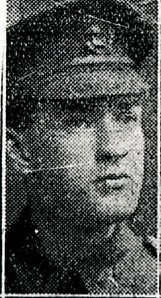
From: Liverpool
K.I.A (110 Years this day)
Thursday 12th October 1916.
21 years old
George Frederick Tallis was born in late 1895 in Liverpool and was the son of George Henry Thomas and his wife Annie (nee Kinrade) who were married in 1885 at St. John The Baptist Church, Tuebrook.
The 1901 Census shows the family living at 22 Turton Street, Kirkdale. His father, George, is aged 36, born in Egremont, Cheshire in 1865 and whose occupation is shown as a weights clerk, on the docks, his mother, Annie, is aged 35, born 1866 in Douglas, Isle of Man. They have six children in the household, all born in Liverpool; Maud aged 12, born 1889, Catherine aged 9, born 1892, Mabel aged 7, born 1894, George aged 5, born 1896, Charles aged 3 born 1898 and Thomas born 1901.
The 1911 Census shows the family living at 18 Cubbin Street, Kirkdale, Liverpool. His father George is aged 46, occupation dock porter, his wife Annie is aged 44. They have been married for 26 years and have had 9 children, seven of whom have survived; Maud aged 22, born 1889 and occupation general servant domestic, Catherine aged 19, born 1892 occupation tailoress, Mabel aged 17, born 1894 a shop assistant, George aged 15, born 1896 and occupation junior clerk, Thomas aged 10, born 1901, Annie aged 7, born 1904 and Ruth aged 5, born 1906 all at school. Charles had died in 1904 aged 6.
Prior to the war George was employed by the Great Central Railway in the Goods Department as a Clerk.
George enlisted in Liverpool joining the 20th Battalion, The King’s Liverpool Regiment as Private 23839.
Formed in November 1914 the 20th Battalion were originally billeted at He arrived in France on 7th November 1915.Tournament Hall, Knotty Ash before on 29th January 1915 they moved to the hutted accommodation purposely built at Lord Derby’s estate at Knowsley Hall. On 30th April 1915 the 20th Battalion alongside the other three Pals battalions left Liverpool via Prescot Station for further training at Belton Park, Grantham. They remained here until September 1915 when they reached Larkhill Camp on Salisbury Plain.
He reached France with his Battalion on 07th November 1915.
He had reached the rank of Sergeant when he was killed in action on the 12th October 1916, aged 21, during the Battle of the Transloy Ridges which was part of the ongoing Somme Offensive.
According to the 20th Bn War Diary, on 10th October 1916 the battalion marched from Dernancourt via Mametz to Bazentin Le Grand where it bivouacked for the night. The next day the battalion moved up to site for assembly trenches, arriving about 11 p.m., where it dug in two good trenches, Nos.1 and 2 Coys front and Nos.3 and 4 Coys in rear.
From the War Diary:
Near Eaucourt L’Abbaye. 12/10/1916. The 4th British and 6th French armies continued the attack. Zero 2.5 p.m. The whole XVth Corps attacked […] The attack of 89th Inf Bde was carried out with 2nd Bn Bedf Regt on right, 17th Bn KLR on left, 20th Bn KLR in support, 19th Bn KLR in reserve. Battalions attacked in four waves. On the departure of the attacking battalions Nos. 1 and 2 companies advanced, each in two waves, to garrison the front line trench vacated by 2nd Bn Bedf Regt on right and 17th KLR on left. On Nos 1 and 2 Coys vacating front assembly trench, it was occupied by two platoons of Nos. 3 and 4 Coys respectively, from rear assembly trench. As the assaulting waves left their trenches they were met by intense machine gun fire, especially on our left. The enemy also opened heavy barrages on our front support and assembly trenches. […] Capt. H. Beckett, commanding No.1 company, reached the front line with few casualties, but Lieut R.D. Paterson leading No.2 company was killed. His company also had few casualties. The assaulting battalions were held up by very heavy machine gun fire, and made little progress. […] At 4.20 p.m. two platoons, No.4 Coy, under Cpl Brighouse, were sent up to reinforce the left, and No.3 Coy under Cpl Sutton followed at 4.45 p.m. Battalion HQ moved up to front line at 4.55 and remaining two platoons of No.4 Coy moved up to join Cpl Brighouse.
Casualties during action:
Officers – Killed Lieut. R.D. Paterson, 2nd Lieut G.L. Grennan, Wounded – 2nd Lieuts A.E. Griffin, L.E. Mclean Hayes, C. Buttemer, Wounded Cpl g. Brighouse.
Other Ranks killed – 20.
It had rained incessantly at the beginning of October 1916 and the ground was full of mud. In his book ‘The Liverpool Pals’ Graham Maddocks describes the day Herbert was killed.
It was obvious that the Germans knew an attack was coming and from which direction it would be mounted. On the evening of the 11th the 20th Battalion moved up the line and dug two deep assembly trenches behind the 17th Battalion’s position for the attack the next day. The 19th Battalion also moved into its reserve positions known as Flers Trench. Although the rain has stopped, the ground was like a morass, with all the natural vegetation destroyed, it was difficult to tell exactly where the objectives lay. On the afternoon of the 12th at exactly 2.05pm, the attack began along the whole Corps line, covered by the local batteries of the Royal Field Artillery which still had line of sight. As the whistles blew, the 17th Battalion left its trenches to move forwards, at the same time No.1 and 2 Companies of the 20th Battalion moved forward and occupied the trenches vacated by the 17th. As they too went over the top, No.3 and 4 Companies took their place and waited in their turn to follow. No.2 and 3 Companies of the 19th Battalion moved up to occupy the assembly trenches dug the previous night by the 20th.
As soon as the attacking waves left their trenches the enemy artillery began to register on them and at the same time the defending infantry commenced a murderous rain of fire. Those German regiments were trained and experienced soldiers, well dug in on high ground, and for the most part, looking out on uncut wire. As such it was virtually impossible for them to miss the City Battalion men struggling to advance in the mud towards them.
Brigadier-General F.C.Stanley wrote that the Battalions were also suffering casualties due to the short shooting of the British heavy artillery fire. “I know from practical experience that they were our own guns which were shooting, and which were causing us quite a considerable number of casualties. The fault lay at that time from the fact that the heavy gunners would not send their FOO’s (Forward Observation Officers) far enough forward, but were content to observe us from right back”
Some ground was gained that day, about 150 yards, the 20th Battalion were not relieved until 24 hours later causing the men to endure another day and night in the front line trench.
George’s death was reported in the Liverpool Daily Post dated 19th December 1916:
Killed in Action –
Sergeant G. F. Tallis of the Kings (Liverpool) who was killed in action October 12 was in his 22nd year. He joined the Kings (Liverpool) Regiment shortly after the outbreak of war and was drafted to France in Nov of 1915. Prior to enlisting he was employed by the Great Central Railway. He was very popular and had a wide circle of friends in and around Kirkdale.
George was buried close to where he fell. After the war, when graves were concentrated his body was exhumed and reburied. He now rests at Caterpillar Valley Cemetery, Longueval, France.
Caterpillar Valley was the name given by the army to the long valley which runs West to East, past "Caterpillar Wood", to the high ground at Guillemont. Longueval village is on the Northern crest of this valley and 500 metres West of the village, on the South side of the road to Contalmaison, is Caterpillar Valley Cemetery.
Caterpillar Valley was captured during a successful night assault by the 3rd, 7th and 9th Divisions on Bazentin Ridge on 14 July 1916. It was lost in the German advance of March 1918 and recovered by the 38th (Welsh) Division on 28 August 1918, when a little cemetery was made (now Plot 1 of this cemetery) containing 25 graves of the 38th Division and the 6th Dragoon Guards. After the Armistice, this cemetery was hugely increased when the graves of more than 5,500 officers and men were brought in from other small cemeteries, and the battlefields of the Somme. The great majority of these soldiers died in the autumn of 1916 and almost all the rest in August or September 1918.
CATERPILLAR VALLEY CEMETERY now contains 5,573 Commonwealth burials and commemorations of the First World War. 3,798 of the burials are unidentified but there are special memorials to 32 casualties known or believed to be buried among them, and to three buried in McCormick's Post Cemetery whose graves were destroyed by shell fire.
Both cemetery and memorial were designed by Sir Herbert Baker.
Soldiers Effects and Pension to mother Annie, 230 Commercial Road.
George was remembered in the Liverpool Evening Express on 13th October 1919 on the third anniversary of his death:
TALLIS – In sad but loving memory of Sergeant George F. Tallis, 20th K.L.R. (Pals), killed in action, October 12, 1916. (Never forgotten by Madge and all at 95 Stanley Park Avenue.)
George is also commemorated on the following Memorials:
Hall of Remembrance, Liverpool Town Hall, Panel 36
National Railway Museum, York
His mother died, aged 54, in July 1919 and was buried on the 24th July at Kirkdale Cemetery. .
His father died, aged 86, in the March quarter of 1950 and was buried on the 14th March at Kirkdale Cemetery.
We currently have no further information on George Frederick Tallis, If you have or know someone who may be able to add to the history of this soldier, please contact us.
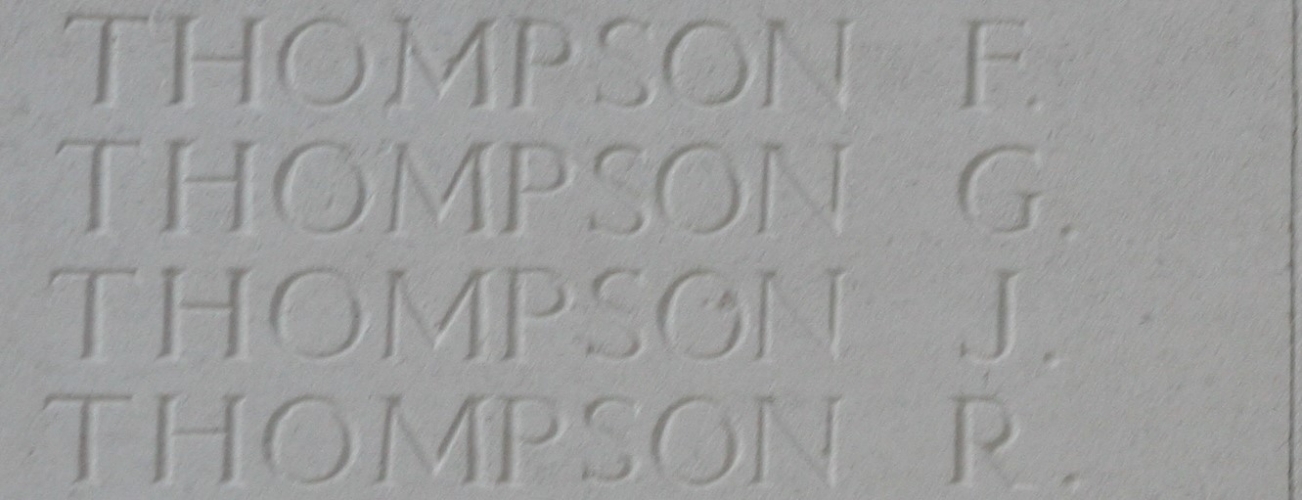
From: Liverpool
K.I.A (110 Years this day)
Thursday 12th October 1916.
20 years old
Frederick Thompson was born in 1896 in Liverpool and was the son of Alfred and Maria (nee Bibbey) Thompson who were married on Christmas Day 1895 at St. Bride with St. Saviour, Percy Street, Toxteth. Alfred was a 25 year old butcher of 28 Rathbone St, father James, whilst Maria was aged 20 of 45 Rathbone St, father John James.
The 1901 Census shows the family living at 205, Smithdown Lane, Liverpool. His father, Alfred, is aged 30, born 1871in Birkenhead and occupation is shown as a seedsman, his wife Maria is aged 25, born 1876 in Liverpool. They have three children in the household, all born in Liverpool; Frederick aged 4, born 1897, Lily aged 3, born 1898 and John Bibbey aged ,1 born 1900, also at the address is Ethel Debarr aged 15, born 1886 in Liverpool occupation domestic servant.
Frederick was educated at Prince Edwin Street School and left in 1911.
The 1911 Census shows the family living still at 205 Smithdown Lane, Liverpool. His father, Alfred, is aged 40, and occupation is seedsman dealer, his wife Maria is aged 35. They now have four children in the household; Frederick aged 14, an apprentice hairdresser, Lily aged 13, John Bibbey aged 11 and Ernest aged 9 born 1902 who are still at school.
He enlisted in Liverpool and was serving in the 20th Battalion, The King’s Liverpool Regiment as Private No 29253 when he was killed in action on the 12th October 1916, aged 20, during the Battle of the Transloy Ridges which was part of the ongoing Somme Offensive.
According to the 20th Bn War Diary, on 10th October 1916 the battalion marched from Dernancourt via Mametz to Bazentin Le Grand where it bivouacked for the night. The next day the battalion moved up to site for assembly trenches, arriving about 11 p.m., where it dug in two good trenches, Nos.1 and 2 Coys front and Nos.3 and 4 Coys in rear.
From the War Diary:
Near Eaucourt L’Abbaye. 12/10/1916. The 4th British and 6th French armies continued the attack. Zero 2.5 p.m. The whole XVth Corps attacked […] The attack of 89th Inf Bde was carried out with 2nd Bn Bedf Regt on right, 17th Bn KLR on left, 20th Bn KLR in support, 19th Bn KLR in reserve. Battalions attacked in four waves. On the departure of the attacking battalions Nos. 1 and 2 companies advanced, each in two waves, to garrison the front line trench vacated by 2nd Bn Bedf Regt on right and 17th KLR on left. On Nos 1 and 2 Coys vacating front assembly trench, it was occupied by two platoons of Nos. 3 and 4 Coys respectively, from rear assembly trench. As the assaulting waves left their trenches they were met by intense machine gun fire, especially on our left. The enemy also opened heavy barrages on our front support and assembly trenches. […] Capt. H. Beckett, commanding No.1 company, reached the front line with few casualties, but Lieut R.D. Paterson leading No.2 company was killed. His company also had few casualties. The assaulting battalions were held up by very heavy machine gun fire, and made little progress. […] At 4.20 p.m. two platoons, No.4 Coy, under Cpl Brighouse, were sent up to reinforce the left, and No.3 Coy under Cpl Sutton followed at 4.45 p.m. Battalion HQ moved up to front line at 4.55 and remaining two platoons of No.4 Coy moved up to join Cpl Brighouse.
Casualties during action:
Officers – Killed Lieut. R.D. Paterson, 2nd Lieut G.L. Grennan, Wounded – 2nd Lieuts A.E. Griffin, L.E. Mclean Hayes, C. Buttemer, Wounded Cpl g. Brighouse.
Other Ranks killed – 20.
It had rained incessantly at the beginning of October 1916 and the ground was full of mud. In his book ‘The Liverpool Pals’ Graham Maddocks describes the day Herbert was killed.
It was obvious that the Germans knew an attack was coming and from which direction it would be mounted. On the evening of the 11th the 20th Battalion moved up the line and dug two deep assembly trenches behind the 17th Battalion’s position for the attack the next day. The 19th Battalion also moved into its reserve positions known as Flers Trench. Although the rain has stopped, the ground was like a morass, with all the natural vegetation destroyed, it was difficult to tell exactly where the objectives lay. On the afternoon of the 12th at exactly 2.05pm, the attack began along the whole Corps line, covered by the local batteries of the Royal Field Artillery which still had line of sight. As the whistles blew, the 17th Battalion left its trenches to move forwards, at the same time No.1 and 2 Companies of the 20th Battalion moved forward and occupied the trenches vacated by the 17th. As they too went over the top, No.3 and 4 Companies took their place and waited in their turn to follow. No.2 and 3 Companies of the 19th Battalion moved up to occupy the assembly trenches dug the previous night by the 20th.
As soon as the attacking waves left their trenches the enemy artillery began to register on them and at the same time the defending infantry commenced a murderous rain of fire. Those German regiments were trained and experienced soldiers, well dug in on high ground, and for the most part, looking out on uncut wire. As such it was virtually impossible for them to miss the City Battalion men struggling to advance in the mud towards them.
Brigadier-General F.C.Stanley wrote that the Battalions were also suffering casualties due to the short shooting of the British heavy artillery fire. “I know from practical experience that they were our own guns which were shooting, and which were causing us quite a considerable number of casualties. The fault lay at that time from the fact that the heavy gunners would not send their FOO’s (Forward Observation Officers) far enough forward, but were content to observe us from right back”
Some ground was gained that day, about 150 yards, the 20th Battalion were not relieved until 24 hours later causing the men to endure another day and night in the front line trench.
Frederick was one of the other ranks referred to as killed, although he was initially reported as Missing.
Liverpool Echo 30th October 1916
ROLL OF HONOUR.
MISSING.
Frederick Thompson, K.L.R. His parents reside at 205, Smithdown-lane, Edge-hill.
It was not until July 1917 that his death was confirmed in the Liverpool Echo on 30th July 1917:
THOMPSON—October 12, 1916, killed action, previously reported missing, aged 20 years, Private Frederick Thompson (our Fred), K.L.R. (Pals), dearly-beloved eldest son of Alfred and Maria Thompson, 205, Smithdown Lane.—Sadly missed by all.
THOMPSON—October 12, 1916, killed in action, previously reported missing, aged 20 years, Private Frederick Thompson, K.L.R. (Pals), dearly-beloved brother of Lily and Jack Thompson (H.M. Navy). 205, Smithdown-lane. (Sans changer.)
Weekly Casualty List 14th Aug 1917
Previously reported missing, now reported
KILLED.
King’s (Liverpool Regiment) - Thompson, 29253, F. (Liverpool);
His body was not recovered or was subsequently lost as he has no known grave and is commemorated on the Thiepval Memorial, France.
The Thiepval Memorial, the Memorial to the Missing of the Somme, bears the names of more than 72,000 officers and men of the United Kingdom and South African forces who died in the Somme sector before 20 March 1918 and have no known grave. Over 90% of those commemorated died between July and November 1916.
On 01st August 1932 the Prince of Wales and the President of France inaugurated the Thiepval Memorial in Picardy. The inscription reads: “Here are recorded the names of officers and men of the British Armies who fell on the Somme battlefields between July 1915 and March 1918 but to whom the fortune of war denied the known and honoured burial given to their comrades in death.”
Soldiers Effects and Pension to mother Maria.
Frederick is commemorated int eh Hall of Remembrance, Liverpool Town Hall. Panel 38 Right
His mother died, aged 61, in the March quarter of 1937
Her death was reported in the Liverpool Daily Post on 13th February 1937
TH0MPS0N— February 11, at Smithdown-road Hospital, aged 61, MARIA, the dearly-beloved wife of Alfred Thompson 205 Smithdown-lane (Her end was peace.) Interment at Anfield Cemetery on Monday next at 2.30pm.
His father died, aged 67, in the September quarter of 1939.
We currently have no further information on Frederick Thompson, if you have or know someone who may be able to add to the history of this soldier, please contact us.
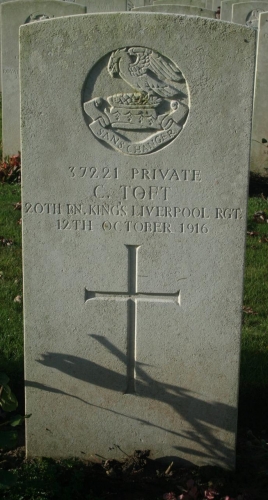
From: Manchester
K.I.A (110 Years this day)
Thursday 12th October 1916.
37 years old
Charles Toft was born in the June quarter of 1879 in Manchester, the youngest son of William Toft and his wife Mary (née Bridge).William, born in Manchester and Mary, born in St. Helens, married in St. Catharine’s, Manchester, in 1867. Charles had older siblings Louisa, Mary Emma, Alice, and William, and a younger sister Edith.In 1881 the family is living at 4 Chapman Square, Chapman Street, Manchester.His father, 35, is a mount card cutter, pictures, his mother, 36, is a charwoman, Louisa is 13, Mary Emma 11, Alice 8, William 3, and Charles is 2.In 1891 they are at 2 Cornwall Street, Manchester.His father, 45, is a card mount cutter for pictures, his mother is 46, Louisa, 23, is a tobacco spinner, Mary Emma, 21, is a tailoress, Alice, 18, is a general domestic servant, William, 13, Charles, 12, and Edith, 9, are at school.They are still at the same address in 1901.His father, 55, is a picture mount cutter, his mother is 56, Mary Emma, 31, is a tailoress, as is Edith, 19, William, 23, is a coal hewer(?), Charles, 22, is a ? labourer. Also in the household is Louisa’s son, grandson William V. Lawley, aged 5.His father died in 1910, aged 64 and his mother in early 1911, aged 66.The 1911 census finds Charles living with his sisters Mary Emma and Edith at 13 Sanitary Street, New Cross, Manchester.Mary Emma, 41, single, is head of household and employed as a tailor’s finisher, Charles, 32, is a glazier’s labourer in a textile machine works, and Edith is 29, a tailor’s machinist. Also in the household are two of Louisa’s children, Charles Lawley, 13, and Louisa, 8.Although his service record has not survived, we do know that Charles enlisted in Manchester and was serving as Private 37221, 20th Battalion of The King’s Liverpool Regiment when he was killed in action on 12th October 1916 during the Battle of the Transloy Ridges which was part of the ongoing Somme Offensive. He was 37 years of age.
According to the 20th Bn War Diary, on 10th October 1916 the battalion marched from Dernancourt via Mametz to Bazentin Le Grand where it bivouacked for the night. The next day the battalion moved up to site for assembly trenches, arriving about 11 p.m., where it dug in two good trenches, Nos.1 and 2 Coys front and Nos.3 and 4 Coys in rear.
From the War Diary:Near Eaucourt L’Abbaye. 12/10/1916. The 4th British and 6th French armies continued the attack. Zero 2.5 p.m. The whole XVth Corps attacked […] The attack of 89th Inf Bde was carried out with 2nd Bn Bedf Regt on right, 17th Bn KLR on left, 20th Bn KLR in support, 19th Bn KLR in reserve. Battalions attacked in four waves. On the departure of the attacking battalions Nos. 1 and 2 companies advanced, each in two waves, to garrison the front line trench vacated by 2nd Bn Bedf Regt on right and 17th KLR on left. On Nos 1 and 2 Coys vacating front assembly trench, it was occupied by two platoons of Nos. 3 and 4 Coys respectively, from rear assembly trench. As the assaulting waves left their trenches they were met by intense machine gun fire, especially on our left. The enemy also opened heavy barrages on our front support and assembly trenches. […] Capt. H. Beckett, commanding No.1 company, reached the front line with few casualties, but Lieut R.D. Paterson leading No.2 company was killed. His company also had few casualties. The assaulting battalions were held up by very heavy machine gun fire, and made little progress. […] At 4.20 p.m. two platoons, No.4 Coy, under Cpl Brighouse, were sent up to reinforce the left, and No.3 Coy under Cpl Sutton followed at 4.45 p.m. Battalion HQ moved up to front line at 4.55 and remaining two platoons of No.4 Coy moved up to join Cpl Brighouse.
Casualties during action:
Officers – Killed Lieut. R.D. Paterson, 2nd Lieut G.L. Grennan, Wounded – 2nd Lieuts A.E. Griffin, L.E. Mclean Hayes, C. Buttemer, Wounded Cpl g. Brighouse.
Other Ranks killed – 20.
It had rained incessantly at the beginning of October 1916 and the ground was full of mud. In his book ‘The Liverpool Pals’ Graham Maddocks describes the day Herbert was killed.
It was obvious that the Germans knew an attack was coming and from which direction it would be mounted. On the evening of the 11th the 20th Battalion moved up the line and dug two deep assembly trenches behind the 17th Battalion’s position for the attack the next day. The 19th Battalion also moved into its reserve positions known as Flers Trench. Although the rain has stopped, the ground was like a morass, with all the natural vegetation destroyed, it was difficult to tell exactly where the objectives lay. On the afternoon of the 12th at exactly 2.05pm, the attack began along the whole Corps line, covered by the local batteries of the Royal Field Artillery which still had line of sight. As the whistles blew, the 17th Battalion left its trenches to move forwards, at the same time No.1 and 2 Companies of the 20th Battalion moved forward and occupied the trenches vacated by the 17th. As they too went over the top, No.3 and 4 Companies took their place and waited in their turn to follow. No.2 and 3 Companies of the 19th Battalion moved up to occupy the assembly trenches dug the previous night by the 20th.
As soon as the attacking waves left their trenches the enemy artillery began to register on them and at the same time the defending infantry commenced a murderous rain of fire. Those German regiments were trained and experienced soldiers, well dug in on high ground, and for the most part, looking out on uncut wire. As such it was virtually impossible for them to miss the City Battalion men struggling to advance in the mud towards them.
Brigadier-General F.C.Stanley wrote that the Battalions were also suffering casualties due to the short shooting of the British heavy artillery fire. “I know from practical experience that they were our own guns which were shooting, and which were causing us quite a considerable number of casualties. The fault lay at that time from the fact that the heavy gunners would not send their FOO’s (Forward Observation Officers) far enough forward, but were content to observe us from right back”
Some ground was gained that day, about 150 yards, the 20th Battalion were not relieved until 24 hours later causing the men to endure another day and night in the front line trench.
Charles was buried near to where he died, initially as ‘Private 37221 Pte C. Bo—-, 13th Lpools‘. After the war, when graves were concentrated, he was identified by the Graves Registration Unit and his body was moved to Warlencourt British Cemetery, where he now rests.
Warlencourt Cemetery is entirely a concentration cemetery, begun late in 1919 when graves were brought in from small cemeteries and the battlefields of Warlencourt and Le Sars. The Graves Registration form shows graves from “Le Sars 6/1, 6/2, Hexham Road, Seven Elms”.
Graves were brought in from the original cemeteries at Hexham Road (Le Sars), and Seven Elms (Flers), as well as over 3,000 British graves due to the fighting which took place around the Butte de Warlencourt from the autumn of 1916 to the spring of 1917, and again in the German advance and retreat of 1918. The cemetery now contains 3,505 Commonwealth burials and commemorations of the First World War, 1,823 of which are unidentified.
It is not known when his family was informed of his death or burial.Manchester Evening News 13th Oct 1919
TOFT - In loving memory of our dear brother, Private WILLIAM TOFT, 8th South Lancashire Regiment, died of wounds, October 8, 1916; also Private CHARLES TOFT, 20th King’s Liverpool Regiment, killed in action, October 12, 1916. Deeply mourned by the loving SISTERS, BROTHERS-IN-LAW, NEPHEWS and NIECES. A tribute of love to their memory, 3 Victoria Square, Oldham Road.
Charles’ effects went to his sisters Mary Emma, Mrs. Louisa Lawley, and Mrs. Edith M. Meakin. No pension was granted; Mary Emma, living at 2 & 3 Oldham Road, Manchester, received a War Gratuity of £3.Louisa’s son, William V. Lawley, died of wounds at the Somme, one month before Charles’ death, on 14th September 1916. He was 21. He rests at Heilly Station Cemetery, where his headstone reads,
“JUST A SAD AND SWEET REMEMBRANCE AND A HEARTACHE STILL FOR YOU“.His brother William died of wounds just days before Charles, on 8th October 1916. He was 39, and rests in Boulogne Eastern Cemetery, Pas de Calais; his headstone inscription reads,
“A TRIBUTE OF LOVE TO HIS MEMORY”His sisters placed an In Memoriam notice in the Manchester Evening news on 12th October 1918:
“In ever-loving memory of our dear brothers, Rifleman William Toft 31476 8th South Lancashires, died of wounds October 8th, 1916. Also Pte Charles Toft 37221, King’s Liverpools, killed in action October 12th, 1916. Deeply mourned by their sorrowing Sisters, Brothers-in-Law, Nephews & Nieces, also Frank (serving). Days of remembrance sad to recall.”Sadly, Charles has not been found on any memorials.We currently have no further information on Charles Toft, If you have or know someone who may be able to add to the history of this soldier, please contact us.
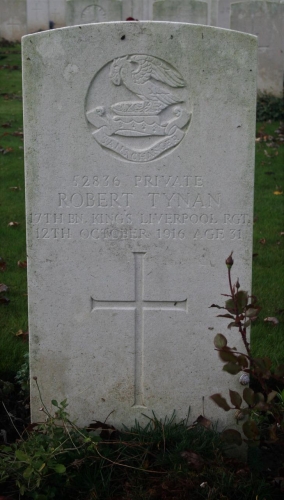
From: Walton, Liverpool
K.I.A (110 Years this day)
Thursday 12th October 1916.
31 years old
Robert (Bob) Tynan was born 03rd February 1885 and baptised 22nd February at Our Lady of Immaculate Conception Church son of Thomas Tynan and his wife Elizabeth Mary (nee Cole). His parents were both born in Ireland and married on the 5th October 1878 at St Anthony’s Church, Liverpool. Thomas was from 5 William Moult Street, father Martin, whilst Elizabeth was of 239 Great Cheetham Street, Salford, father John. They had twelve children all born in Liverpool, two of whom died in infancy. Bob had older siblings Mary, born in 1880, James 1881, and Thomas Edward 1883, and younger siblings Joseph 1887, Ann 1888 (who died at age 1), twins John and Peter, 1889 (John died in infancy), John 1892, Helena 1894, Elizabeth 1896, and Daniel 1898.
At the time of the 1891 census the family is living at 59 Bulwer Street, Everton with five sons and a daughter. His father is 40, a Police Constable; Robert is six years old.
In 1901 they are living at 28 Chirkdale Street, Kirkdale now with nine children. His father, 51, is a Police Sergeant, his mother is 45, and Robert is 16, a joiner’s apprentice.
Bob married Annie Hollis Tracey at St. Luke The Evangelist Church, Walton in 1906. Their son William Hollis was born in 1908 but sadly died at the age of ten months, (the family then living at 9 Woodhouse Street, Kirkdale). Another son Richard Hollis was born on 22nd January 1910.
The 1911 Census shows Robert, married, is living in his mother’s house living at 44 Lenthall Street, Walton, Liverpool. His father is not present, mother Elizabeth is married aged 54 born 1857 in Rathdowney, Ireland. She has been married for 33 years and has had 12 children, 10 of whom have survived. She has five children in the household, all born in Liverpool, at the time of the Census. Robert aged 26, born 1885 occupation general labourer in a tin canister works, John aged 19, born 1892 occupation provision clerk, Helena aged 17, born 1894 apprentice in dressmaking, Elizabeth aged 14, born 1897 an apprentice in Milinery and Daniel aged 12, born 1899 still at school.
His wife, Annie, 25, is found with son Richard, aged one, at the home of her parents, John and Ann Tracey at 23 Furness Street, with brothers Richard Hollis and William Daniel. Her father and brothers are all shipwrights.
The family have left Lenthall Street by 1912 on the Electoral register Mary appears at 73 Makin St. No death record can be found for father Thomas.
A daughter, Vera Mons was born on 15th September 1914 (her middle name being indicative of the intensity of feeling among the British populace after the recent Battle of Mons fought by the regulars of the B.E.F.).
He enlisted in Bootle and was serving in the 17th Battalion, The King’s Liverpool Regiment as Private No 52836 when he was killed in action on the 12th October 1916 aged 31 during the Battle of the Transloy Ridges which was part of the ongoing Somme Offensive.
17th Bn War Diary: Battle of Transloy Ridge –
11-10-16 - Gird Trench/Gird Support – Battalion in front line and support trenches. British bombardment of enemy front line system commenced about midday. Hostile shelling was intermittent throughout the day.
12-10-16 - Our bombardment continued. Enemy reply weak. 2.5 p.m. Zero hour. Attack on German front line system commenced. Enemy wire was found to be uncut and attack was unsuccessful. Hostile machine gun fire was very heavy and caused many casualties. Battalion H.Q. and Support Trench were heavily shelled throughout afternoon and evening. […] During this action all communication had to be carried out by runners and carrier pigeons as all wires were being continually cut by enemy shelling.
Casualties: 5 officers killed, 5 officers wounded, 38 OR killed, about 225 OR wounded/missing etc.
Graham Maddocks, in “Liverpool Pals” p.140, adds:
“As the whistle blew, the 17th Battalion left its trenches to move forward. […] As soon as the attacking waves left their trenches the enemy artillery began to register on them, and at the same time, the defending infantry commenced a murderous rain of fire. […] Although their numbers had been depleted by the British bombardment, they were trained and experienced soldiers, well dug in on high ground, and for the most part, looking out on uncut wire. As such, it was virtually impossible for them to miss the City Battalion men struggling to advance in the mud towards them. The 17th Battalion, on the left, was particularly badly hit, as its portion of No Man’s Land contained a slight rise in the ground, and as the troops emerged onto it they were silhouetted against the sky and became easy targets. Those on the left of the attack, who managed to avoid the hail of bullets and make it to the German wire, then found that it was totally uncut, and thus trapped, they too became easy targets, to be picked off almost at the enemy’s will. It was hardly surprising that, seeing the first waves being wiped out, some of the following waves turned back and made for their start lines. These lines were now packed with other waves of troops, however, and the fleeing men added to the congestion already there, and became easy prey for the German gunners. There is some evidence also, to suggest that at this stage, the British trenches were also being hit by their own heavy artillery shells which were falling short.”
His name appeared in the list of Missing published in the Liverpool Post & Mercury on 16th November 1916.
MISSING
King’s (Liverpool Regt.) - Tynan, 52836, R. ;
Bob was buried close to where he fell and his grave marked with a cross (the Grave Registration form showing No. 5185 King’s Liverpool), with four other soldiers, all unknown.
After the war when graves were concentrated he was correctly identified and reinterred in Warlencourt British Cemetery, France.
Warlencourt Cemetery is entirely a concentration cemetery, begun late in 1919 when graves were brought in from small cemeteries and the battlefields of Warlencourt and Le Sars. The Graves Registration form shows graves from “Le Sars 6/1, 6/2, Hexham Road, Seven Elms”.
Graves were brought in from the original cemeteries at Hexham Road (Le Sars), and Seven Elms (Flers), as well as over 3,000 British graves due to the fighting which took place around the Butte de Warlencourt from the autumn of 1916 to the spring of 1917, and again in the German advance and retreat of 1918. The cemetery now contains 3,505 Commonwealth burials and commemorations of the First World War, 1,823 of which are unidentified.
His death was later officially accepted as having occurred on 12th October 1916.
His children were six and two years old when Bob was killed. His widow Annie received his Army pay and a War Gratuity of £3. The pension card, giving her address as 68 Wilburn Street, Walton Road, Liverpool, shows that she was awarded a pension of £1-2s-11d a week for herself and two children from June 1917. She later moved to 23 Furness Street, Kirkdale.
His family paid tribute on the first anniversary of his death in the Liverpool Echo on 12th October 1917:
“In loving memory of Robert (Bob), the beloved son of the late Thomas Tynan and Mrs. Tynan, who was killed in action October 12.
He did his duty nobly, and never counted the cost;
He was a true soldier, he died at his post.
His name is written in letters of love
In the hearts he has left at home.
(Ever remembered by his Mother, Sisters, and Brothers.)”
His brother John (Jack) served with the 1/10th K.L.R. Territorials before the war. He was released from his job with the Allan Line in December 1914 and volunteered for overseas service on 02nd January 1915. He arrived in France on 27th March and was declared Missing at the Battle of Hooge on 16th June 1915. He was not officially reported killed until eleven months later, in May 1916. Jack is commemorated on the Menin Gate Memorial to the Missing in Ypres.
Jack’s service record survives and shows that in 1919 his mother Mary was living at 73 Makin Street. His siblings are listed: brothers Thomas 35, Joseph 32, Peter 29, and Dan 20, and sisters Mary 40, Helena 25, and Elizabeth 23.
His brother Peter joined the Royal Navy in 1906 as a Boy and served through the war. He was wounded when his destroyer, H.M.S. Contest was sunk by a submarine in September 1917 while assisting a torpedoed steamer in the Western Approaches. He survived the war.
A newspaper notice stated that five brothers served.
Annie remarried James Quinn in 1939.
On the 1939 register taken in September, Annie, 55, date of birth 06th Decmener 1884, and her husband are living at 16 Newark Street, off County Road, Liverpool.
Annie died in 1962 aged 77.
His son Richard married, and died in 1968. His daughter Vera married in 1937 and had a family. She died in 1990 aged 75.
Although Jack is commemorated in Liverpool’s Hall of Remembrance, Panel 38 Right, Bob has not been found on any local memorial.
We currently have no further information on Robert Tynan, If you have or know someone who may be able to add to the history of this soldier, please contact us.

From: Wrexham, N.Wales
K.I.A (110 Years this day)
Thursday 12th October 1916.
27 years old
Harold Venables was born in 1889 in Broughton, a district of Wrexham, the son of William Venables and his wife Eleanor (née Roberts). His parents married in 1886 and had five children; Harold had an older brother William Ewart, and younger siblings Eleanor, Robert John, and Frederic.
In 1891 his father runs a butcher’s shop in Brynteg, Broughton, employing a butcher’s assistant and a domestic servant. They have three children, Harold is 2 years old.
At the time of the 1901 census they are found at Rhosrhenden(?) Farm in Broughton, where his father is a farmer and butcher. They employ a general domestic servant and three farm servants: a milkman, a cattleman, and a yardman. They have five children; Harold is 12.
The 1911 Census shows the family living at 44 Rhosddu Road, Wrexham, Wrexham Regis, Denbighshire. Harold's father William is aged 55, a butcher, dealer, born 1856 in Gwersyllt, Denbighshire, whilst his mother Eleanor is aged 52 born 1859 in Llanrmon. They have five children all born in Broughton, Denbighshire. William Ewart aged 23, born 1888 occupation agent to a Correspondence School, Harold aged 22, born 1889 occupation butcher shop assistant, Eleanor aged 20, born 1891 is a school teacher, Robert John aged 18, born 1893 is a grocers assistant and Frederick aged 16, born 1895 is a schoolboy. Also living at the address is Jane Parry mother in law aged 83 born 1828 in Try Ddyn, Flintshire.
In February 1915 Harold was a witness at his brother William’s wedding. His brother Frederic died in June that year at the age of 20.
Harold enlisted in Liverpool and was serving in the 17th Battalion, The King’s Liverpool Regiment as Private 51986 when he was killed in action on the 12th October 1916, aged 27 during the Battle of the Transloy Ridges which was part of the ongoing Somme Offensive.
17th Bn War Diary: Battle of Transloy Ridge –
11-10-16 - Gird Trench/Gird Support – Battalion in front line and support trenches. British bombardment of enemy front line system commenced about midday. Hostile shelling was intermittent throughout the day.
12-10-16 - Our bombardment continued. Enemy reply weak. 2.5 p.m. Zero hour. Attack on German front line system commenced. Enemy wire was found to be uncut and attack was unsuccessful. Hostile machine gun fire was very heavy and caused many casualties. Battalion H.Q. and Support Trench were heavily shelled throughout afternoon and evening. […] During this action all communication had to be carried out by runners and carrier pigeons as all wires were being continually cut by enemy shelling.
Casualties: 5 officers killed, 5 officers wounded, 38 OR killed, about 225 OR wounded/missing etc.
Graham Maddocks, in “Liverpool Pals” p.140, adds:
“As the whistle blew, the 17th Battalion left its trenches to move forward. […] As soon as the attacking waves left their trenches the enemy artillery began to register on them, and at the same time, the defending infantry commenced a murderous rain of fire. […] Although their numbers had been depleted by the British bombardment, they were trained and experienced soldiers, well dug in on high ground, and for the most part, looking out on uncut wire. As such, it was virtually impossible for them to miss the City Battalion men struggling to advance in the mud towards them. The 17th Battalion, on the left, was particularly badly hit, as its portion of No Man’s Land contained a slight rise in the ground, and as the troops emerged onto it they were silhouetted against the sky and became easy targets. Those on the left of the attack, who managed to avoid the hail of bullets and make it to the German wire, then found that it was totally uncut, and thus trapped, they too became easy targets, to be picked off almost at the enemy’s will. It was hardly surprising that, seeing the first waves being wiped out, some of the following waves turned back and made for their start lines. These lines were now packed with other waves of troops, however, and the fleeing men added to the congestion already there, and became easy prey for the German gunners. There is some evidence also, to suggest that at this stage, the British trenches were also being hit by their own heavy artillery shells which were falling short.”
His name appeared in the list of Missing published in the Liverpool Post & Mercury on 16th November 1916.
MISSING
King’s (Liverpool Regt.) - Venables, 52986, H. (Wrexham);
Harold's body was not recovered or was subsequently lost as he has no known grave and is commemorated on the Thiepval Memorial, France.
The Thiepval Memorial, the Memorial to the Missing of the Somme, bears the names of more than 72,000 officers and men of the United Kingdom and South African forces who died in the Somme sector before 20 March 1918 and have no known grave. Over 90% of those commemorated died between July and November 1916.
On 01st August 1932 the Prince of Wales and the President of France inaugurated the Thiepval Memorial in Picardy. The inscription reads: “Here are recorded the names of officers and men of the British Armies who fell on the Somme battlefields between July 1915 and March 1918 but to whom the fortune of war denied the known and honoured burial given to their comrades in death.”
Harold was initially declared Missing on 12th October 1916 and his death later assumed, for official purposes, as having occurred on that date.
His father William received his Army pay and a War Gratuity of £3. The pension card in the name of his mother at 3 Victoria Terrace, Greenfield, Rhosddu, Wrexham, shows that she was awarded a pension of 15/- a week from May 1917. Her address is later shown as 25 Ffordd Estyn, Garden Village, Wrexham.
His brother William was called up on 18th August 1916 to the Army Service Corps, he served at home as Lance Corporal in the 87th Training Reserve Battalion and was demobbed in April 1919.
His father died in 1929 aged 73.
In 1939 his mother, 80 years old, is at 121 Saxon Street, Wrexham, living with married daughter Eleanor, her husband, a school headmaster, and son, a university student.
His mother died in 1941 aged 82.
Harold is also commemorated in the Wrexham and East Denbighshire Book of Remembrance. (He is not listed on the Broughton Memorial.)
And on the family headstone in Wrexham Cemetery -
SACRED TO THE MEMORY OF
HAROLD, SECOND SON OF
WILLIAM AND ELEANOR VENABLES
KILLED IN ACTION ON OCT. 12, 1916
AGED 27 YEARS
BURIED SOMEWHERE IN FRANCE
We currently have no further information on Harold Venables, If you have or know someone who may be able to add to the history of this soldier, please contact us.
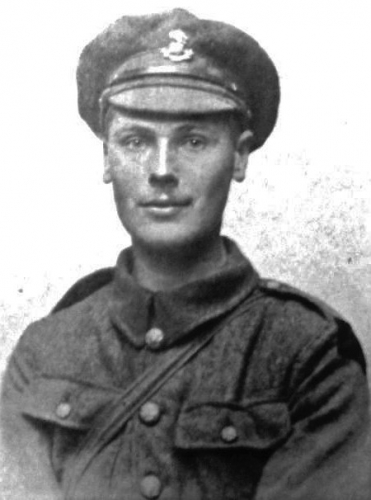
From: Manchester
K.I.A (110 Years this day)
Thursday 12th October 1916.
21 years old
Lawrence Waddington was born was born at Ashton-upon-Mersey, Cheshire, in the December quarter of 1894, the only child of William Henry Waddington and his wife Florence Isabel (nee Farmer). His parents were married at St. John's C.of E. Church, Broughton, in 1890. Both of his parents were born in Manchester. William was employed as an Insurance Clerk.
In 1891 the family were living at Rivers Hill, Ashton-on-Mersey, his father is employed as a fire insurance clerk.
In 1901 the family are found at Baxter Road, Sale, Cheshire. His father William H. is aged 42, an insurance office clerk born in Manchester, mother Florence I. is aged 36 and was also born in Manchester, Lawrence is six years old.
By 1911 they had moved to Liverpool where they were living at 17 Rossett Avenue, Sefton Park. His father, 52, is an insurance clerk, his mother is 46, they have been married for 21 years and have had one child. Lawrence, aged sixteen, was working as a clerk with the dock board.
He enlisted on or about the 31st August 1914 at St George's Hall in Liverpool joining the 17th Battalion (“B” Company), The King’s Liverpool Regiment as Private No 15314 when he was 19 years old.
He was billeted at Prescot Watch Factory from 14th September 1914, he trained there and also at Knowsley Hall. On 30th April 1915 the 17th Battalion alongside the other three Pals battalions left Liverpool via Prescot Station for further training at Belton Park, Grantham. They remained here until September 1915 when they reached Larkhill Camp on Salisbury Plain.
He arrived in France on 7th November 1915, disembarking at Boulogne.
He served in ‘B’ Company, Lewis Gun Section.
Lawrence was initially declared Wounded and Missing on 12th October 1916. His parents made enquiries with the International Red Cross in Geneva but received a response in December 1916 that they held no information on Lawrence. Another enquiry through the Danish Red Cross in Copenhagen received the same response in March 1917. It was over seven months until he was officially declared killed in action, on 12th October 1916, aged 21, during the Battle of the Transloy Ridges which was part of the ongoing Somme Offensive.
17th Bn War Diary: Battle of Transloy Ridge –
11-10-16 - Gird Trench/Gird Support – Battalion in front line and support trenches. British bombardment of enemy front line system commenced about midday. Hostile shelling was intermittent throughout the day.
12-10-16 - Our bombardment continued. Enemy reply weak. 2.5 p.m. Zero hour. Attack on German front line system commenced. Enemy wire was found to be uncut and attack was unsuccessful. Hostile machine gun fire was very heavy and caused many casualties. Battalion H.Q. and Support Trench were heavily shelled throughout afternoon and evening. […] During this action all communication had to be carried out by runners and carrier pigeons as all wires were being continually cut by enemy shelling.
Casualties: 5 officers killed, 5 officers wounded, 38 OR killed, about 225 OR wounded/missing etc.
Graham Maddocks, in “Liverpool Pals” p.140, adds:
“As the whistle blew, the 17th Battalion left its trenches to move forward. […] As soon as the attacking waves left their trenches the enemy artillery began to register on them, and at the same time, the defending infantry commenced a murderous rain of fire. […] Although their numbers had been depleted by the British bombardment, they were trained and experienced soldiers, well dug in on high ground, and for the most part, looking out on uncut wire. As such, it was virtually impossible for them to miss the City Battalion men struggling to advance in the mud towards them. The 17th Battalion, on the left, was particularly badly hit, as its portion of No Man’s Land contained a slight rise in the ground, and as the troops emerged onto it they were silhouetted against the sky and became easy targets. Those on the left of the attack, who managed to avoid the hail of bullets and make it to the German wire, then found that it was totally uncut, and thus trapped, they too became easy targets, to be picked off almost at the enemy’s will. It was hardly surprising that, seeing the first waves being wiped out, some of the following waves turned back and made for their start lines. These lines were now packed with other waves of troops, however, and the fleeing men added to the congestion already there, and became easy prey for the German gunners. There is some evidence also, to suggest that at this stage, the British trenches were also being hit by their own heavy artillery shells which were falling short.”
His death was first reported in the Liverpool Echo on 12th May 1917:
WADDINGTON - Previously reported wounded and missing, now reported killed in action October 12, 1916, aged 21 years, Private Lawrence Waddington, K.L.R., the only son of Mr and Mrs W. H. Waddington, 54 Hartington Road, Liverpool. R.I.P.
It was also reported a week later in the Catholic News on 19th May 1917:
“Private Lawrence Waddington of the King’s (Liverpools), who was previously reported wounded and missing, is now officially reported killed in action. He was 21 years of age and the only son of Mr. and Mrs. W. H. Waddington, of 54 Hartington Road, Liverpool.”
Lawrence had been buried close to where he fell, with an Unknown British Soldier. After the Armistice, when graves were concentrated, his body was identified and reinterred in 1920 in Warlencourt British Cemetery, France, where his headstone bears the epitaph:
“REQUIESCAT IN PACE”
Warlencourt Cemetery is entirely a concentration cemetery, begun late in 1919 when graves were brought in from small cemeteries and the battlefields of Warlencourt and Le Sars. The Graves Registration form shows graves from “Le Sars 6/1, 6/2, Hexham Road, Seven Elms”.
Graves were brought in from the original cemeteries at Hexham Road (Le Sars), and Seven Elms (Flers), as well as over 3,000 British graves due to the fighting which took place around the Butte de Warlencourt from the autumn of 1916 to the spring of 1917, and again in the German advance and retreat of 1918. The cemetery now contains 3,505 Commonwealth burials and commemorations of the First World War, 1,823 of which are unidentified.
Tribute was paid to Lawrence in a passage from the Holt School Magazine
In Memoriam
Lawrence Waddington, who was officially reported killed on 12 October, 1916, entered the school in 1907, and left to enter the service of the Dock Board in 1911. Those who were his contemporaries in the school, both fellow-pupils and members of the staff, will be deeply grieved to hear of the loss of one who was universally esteemed. Waddington was always distinguished by his unfailing courtesy and unselfishness. Absolutely trustworthy in every respect, he was devoted to his work in school and out of school. He was more especially interested in the study of science, and had much out-of-the-way knowledge in that subject. His willingness to put himself to inconvenience in order to help others was characteristic, and was but one of the many evidences of a truly religious nature. He joined the Pals and went out to France, like so many Old Holts, full of enthusiasm born of a belief in the sacred character of the fight against evil. His letters were full of a characteristic spirit of cheerfulness and hope, and his many friends and admirers will sorely miss him.
On the first anniversary of his death his parents paid tribute in the Liverpool Daily Post:
“In loving memory of Lawrence Waddington (K.L.R.), aged 22 (sic) years, who fell in action while nobly serving his King and country in the conflict for righteousness and peace, October 12, 1916. - 54 Hartington Road, Liverpool.”
Lawrence earned his three medals.
His parents received his Army pay and a War Gratuity of £9. His documents were not received in the Pension Office from the paymaster until December 1917. His mother was awarded a pension in February 1918 of 5/- a week to take effect from November 1918.
His mother died in 1937 aged 73, and his father five months later, aged 79, living in Oakdale Road, Waterloo. Their estate of over £4,500 was left to James Thorougood Peet, a solicitor and William Henry Chester, an insurance official.
Lawrence is also commemorated on the following War Memorials:
St Agnes and St Pancras’ C. of E. Church, Toxteth,
St. Agnes and St. Pancras Bible Class Tablet
Holt High School, Childwall
Mersey Docks and Harbour Board.
St. Agnes and St. Pancras Bible Class Tablet
Liverpool Hall of Remembrance Panel 33 Right
We currently have no further information on Lawrence Waddington, If you have or know someone who may be able to add to the history of this soldier, please contact us.
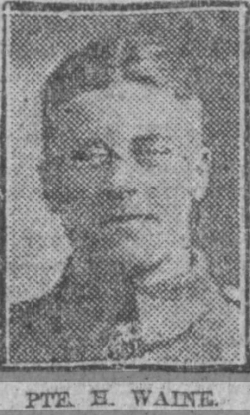
From: Liverpool
K.I.A (110 Years this day)
Thursday 12th October 1916.
19 years old
Herbert Waine was born in 1897 in Liverpool and was the son of William Waine and his wife Alice (nee Marsden) who were married on the 24th February 1872 at Manchester Cathedral. William was a 23 year old furrier of 76 Wilmott St, Hulme, father Septimus, whilst Alice was 19 of 20 Lower Moss Lane, Hulme, father Matthew.
Herbert was baptised on the 27th Feb 1897 at St Nathaniel's Church, Edge Hill, parents address 34 Noel Street, Liverpool, his father was a furrier.
His father, William, died aged 49 shortly after his son Herbert was born, he was buried on 01st September 1897 in Toxteth Cemetery.
The 1901 Census shows the family living at 34 Noel St, Liverpool. Widowed mother Alice is aged 46, born in Bolton. She has six children: born Manchester are Frederick aged 23, a barman, Thomas aged 22, a blacksmiths labourer, John aged 20, a boilermaker for angle smith, born Liverpool are Rachel aged 14, Robert aged 9, and Herbert aged 4. They have a boarder John J. Dodd aged 21.
His mother remarried in 1907 to Dennis O’Brien, who was born in Cork, Ireland in 1850.
The 1911 Census shows the family living at 34 Noel St, Liverpool. His step-father Dennis is not present, his mother Alice O’Brien is aged 56, born 1854 in Bolton. She has five children in the household; John aged 30, born 1881 occupation anglesmith, born in Manchester, the following children were all born in Liverpool; Rachel aged 25, born 1886 domestic cook, Hannah aged 21, born 1890 telephone operator, Robert aged 19, born 1892 apprentice boilermaker and Herbert aged 14, born 1897 an errand boy.
His service records have survived and show Herbert was aged 18 years and 11 months when he enlisted in Liverpool on 09th November 1914. He joined the 20th Battalion of The King’s Liverpool Regiment as Private No 22878. He lists his occupation as boilermaker andwas described as being 5 foot five and ¾ inches tall, weighs 127lbs, with a 37" chest and had a fresh complexion with grey eyes and light brown hair. He stated his religion as Church of England.
Formed in November 1914 the 20th Battalion were originally billeted at He arrived in France on 7th November 1915.Tournament Hall, Knotty Ash before on 29th January 1915 they moved to the hutted accommodation purposely built at Lord Derby’s estate at Knowsley Hall. On 30th April 1915 the 20th Battalion alongside the other three Pals battalions left Liverpool via Prescot Station for further training at Belton Park, Grantham. They remained here until September 1915 when they reached Larkhill Camp on Salisbury Plain.
He sailed to France with his Battalion on the 07th November 1915.
His records show
03/02/16: Admitted to hospital with an Ulcer.
20/02/16: Discharged to duty.
23/02/16: Joined from Hospital at Etaples.
04/03/16: Joined unit in the Field.
24/04/16: Attached to 13th Corps Mortar Battery.
There is an Army memorandum dated 20th January 1916 and 30th September 1916 where Herbert is due a sum of money from the estate of the late Private Thomas Harvey 6068 1st Battalion Wiltshire Regiment.
(Thomas Harvey, aged 36, Died 27/10/1914, buried Le Touret Memorial, France. He was the son of Mr. O'Brien and Mrs. D. O'Brien, of 34 Noel St, Lodge Lane, Liverpool).
Herbert was killed in action on the 12th October 1916, aged 19, during the Battle of the Transloy Ridges which was part of the ongoing Somme Offensive.
According to the 20th Bn War Diary, on 10th October 1916 the battalion marched from Dernancourt via Mametz to Bazentin Le Grand where it bivouacked for the night. The next day the battalion moved up to site for assembly trenches, arriving about 11 p.m., where it dug in two good trenches, Nos.1 and 2 Coys front and Nos.3 and 4 Coys in rear.
From the War Diary:
Near Eaucourt L’Abbaye. 12/10/1916. The 4th British and 6th French armies continued the attack. Zero 2.5 p.m. The whole XVth Corps attacked […] The attack of 89th Inf Bde was carried out with 2nd Bn Bedf Regt on right, 17th Bn KLR on left, 20th Bn KLR in support, 19th Bn KLR in reserve. Battalions attacked in four waves. On the departure of the attacking battalions Nos. 1 and 2 companies advanced, each in two waves, to garrison the front line trench vacated by 2nd Bn Bedf Regt on right and 17th KLR on left. On Nos 1 and 2 Coys vacating front assembly trench, it was occupied by two platoons of Nos. 3 and 4 Coys respectively, from rear assembly trench. As the assaulting waves left their trenches they were met by intense machine gun fire, especially on our left. The enemy also opened heavy barrages on our front support and assembly trenches. […] Capt. H. Beckett, commanding No.1 company, reached the front line with few casualties, but Lieut R.D. Paterson leading No.2 company was killed. His company also had few casualties. The assaulting battalions were held up by very heavy machine gun fire, and made little progress. […] At 4.20 p.m. two platoons, No.4 Coy, under Cpl Brighouse, were sent up to reinforce the left, and No.3 Coy under Cpl Sutton followed at 4.45 p.m. Battalion HQ moved up to front line at 4.55 and remaining two platoons of No.4 Coy moved up to join Cpl Brighouse.
Casualties during action:
Officers – Killed Lieut. R.D. Paterson, 2nd Lieut G.L. Grennan, Wounded – 2nd Lieuts A.E. Griffin, L.E. Mclean Hayes, C. Buttemer, Wounded Cpl g. Brighouse.
Other Ranks killed – 20.
It had rained incessantly at the beginning of October 1916 and the ground was full of mud. In his book ‘The Liverpool Pals’ Graham Maddocks describes the day Herbert was killed.
It was obvious that the Germans knew an attack was coming and from which direction it would be mounted. On the evening of the 11th the 20th Battalion moved up the line and dug two deep assembly trenches behind the 17th Battalion’s position for the attack the next day. The 19th Battalion also moved into its reserve positions known as Flers Trench. Although the rain has stopped, the ground was like a morass, with all the natural vegetation destroyed, it was difficult to tell exactly where the objectives lay. On the afternoon of the 12th at exactly 2.05pm, the attack began along the whole Corps line, covered by the local batteries of the Royal Field Artillery which still had line of sight. As the whistles blew, the 17th Battalion left its trenches to move forwards, at the same time No.1 and 2 Companies of the 20th Battalion moved forward and occupied the trenches vacated by the 17th. As they too went over the top, No.3 and 4 Companies took their place and waited in their turn to follow. No.2 and 3 Companies of the 19th Battalion moved up to occupy the assembly trenches dug the previous night by the 20th.
As soon as the attacking waves left their trenches the enemy artillery began to register on them and at the same time the defending infantry commenced a murderous rain of fire. Those German regiments were trained and experienced soldiers, well dug in on high ground, and for the most part, looking out on uncut wire. As such it was virtually impossible for them to miss the City Battalion men struggling to advance in the mud towards them.
Brigadier-General F.C.Stanley wrote that the Battalions were also suffering casualties due to the short shooting of the British heavy artillery fire. “I know from practical experience that they were our own guns which were shooting, and which were causing us quite a considerable number of casualties. The fault lay at that time from the fact that the heavy gunners would not send their FOO’s (Forward Observation Officers) far enough forward, but were content to observe us from right back”
Some ground was gained that day, about 150 yards, the 20th Battalion were not relieved until 24 hours later causing the men to endure another day and night in the front line trench.
His death was reported in the Liverpool Echo on 03rd November 1916:
BROTHERS KILLED.
Private Herbert Waine K.L.R., who was nineteen years of age, has been killed action. He was the youngest son of Mr. and Mrs. Waine, 34, Noel-street. Previously to joining the army he was apprentice to Messrs. Fawcett and Preston's. His elder brother, Private Thomas Waine (36), was killed early in the war. [They mean step-brother Thomas Harvey]
Herbert's body was not recovered or was subsequently lost as he has no known grave and is commemorated on the Thiepval Memorial, France.
The Thiepval Memorial, the Memorial to the Missing of the Somme, bears the names of more than 72,000 officers and men of the United Kingdom and South African forces who died in the Somme sector before 20 March 1918 and have no known grave. Over 90% of those commemorated died between July and November 1916.
On 01st August 1932 the Prince of Wales and the President of France inaugurated the Thiepval Memorial in Picardy. The inscription reads: “Here are recorded the names of officers and men of the British Armies who fell on the Somme battlefields between July 1915 and March 1918 but to whom the fortune of war denied the known and honoured burial given to their comrades in death.”
His mother received his personal effects which consisted of 1 disc, letters and two photos on 1st May, 1917.
Soldiers Effects to mother Alice O’Brien, sisters Mary and Elizabeth A., brother Thomas was a redirect to Elizabeth, Pension to mother Alice.
Herbert is also commemorated on the following War Memorials:
Hall of Remembrance, Liverpool Town Hall, Panel 33 Right
Liverpool Presbytery, Earle Road, Edge Hill
Lodge Lane Methodist Church, Toxteth.
His step-father died, aged 73, in the September quarter of 1924.
His mother died, aged 79, and was buried in Toxteth Cemetery on the 21st October 1931.
We currently have no further information on Herbert Waine, If you have or know someone who may be able to add to the history of this soldier, please contact us.
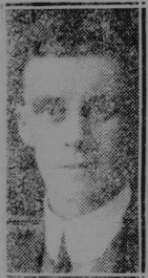
From: Devonport
K.I.A (110 Years this day)
Thursday 12th October 1916.
29 years old
His father, William, appears on the 1881 census at 22 Moon St, Stoke Damerel. He is a 27 year old RN seaman with his widowed mother Ann E. and 4 siblings.
A Royal Navy service record exists for a William Walker No.56583, born 21st April 1854 in Calne, Wiltshire.
Whilst serving on HMS Hotspur at Colesmith Creek in the Medway he was discharged with “? Melville” and died on the 8th Aug 1889 at the Royal Naval Hospital, Yarmouth, Norfolk. The burial took place on the 13th August, the record states he was a boatman Coast Guard.
William enlisted in Liverpool joining in the 19th Battalion, The King’s Liverpool Regiment as Private No 52092.
He was killed in action on the 12th October 1916 during the Battle of the Transloy Ridges which was part of the ongoing Somme Offensive.
It had rained incessantly at the beginning of October 1916 and the ground was full of mud. In his book ‘The Liverpool Pals’ Graham Maddocks describes the day James was killed:
It was obvious that the Germans knew an attack was coming and from which direction it would be mounted. On the evening of the 11th the 20th Battalion moved up the line and dug two deep assembly trenches behind the 17th Battalion’s position for the attack the next day. The 19th Battalion also moved into its reserve positions known as Flers Trench. Although the rain has stopped, the ground was like a morass, with all the natural vegetation destroyed, it was difficult to tell exactly where the objectives lay. On the afternoon of the 12th at exactly 2.05pm, the attack began along the whole Corps line, covered by the local batteries of the Royal Field Artillery which still had line of sight. As the whistles blew, the 17th Battalion left its trenches to move forwards, at the same time No.1 and 2 Companies of the 20th Battalion moved forward and occupied the trenches vacated by the 17th. As they too went over the top, No.3 and 4 Companies took their place and waited in their turn to follow. No.2 and 3 Companies of the 19th Battalion moved up to occupy the assembly trenches dug the previous night by the 20th.
As soon as the attacking waves left their trenches the enemy artillery began to register on them and at the same time the defending infantry commenced a murderous rain of fire. Those German regiments were trained and experienced soldiers, well dug in on high ground, and for the most part, looking out on uncut wire. As such it was virtually impossible for them to miss the City Battalion men struggling to advance in the mud towards them.
Brigadier-General F.C.Stanley wrote that the Battalions were also suffering casualties due to the short shooting of the British heavy artillery fire. “I know from practical experience that they were our own guns which were shooting, and which were causing us quite a considerable number of casualties. The fault lay at that time from the fact that the heavy gunners would not send their FOO’s (Forward Observation Officers) far enough forward, but were content to observe us from right back”
Some ground was gained that day, about 150 yards, the 20th Battalion were not relieved until 24 hours later causing the men to endure another day and night in the front line trench.
He was listed amongst the Missing in the Liverpool Weekly Courier on Saturday 25 November 1916:
Missing Soldiers.
Information concerning the following soldiers who are reported missing at the front will be welcomed at the addresses given:-
Pte W. J. Walker, K.L.R., 1 Redbrook Street, Anfield, Liverpool.
He was also reported as Missing in the Liverpool Daily Post on the 07th December 1916:
MISSING.
King’s(Liverpools) - Walker, 52092, W.;
He was buried close to where he fell. After the war when graves were concentrated, William was identified from his disc, his body was exhumed and he was rebuired. He now rests at Serre Road No2 Cemetery, Beaumont Hamel, France.
He was buried close to where he fell. After the war when graves were concentrated, William was identified from his disc, his body was exhumed and he was rebuired. He now rests at Serre Road No2 Cemetery, Beaumont Hamel, France.
In June 1916, the road out of Mailly-Maillet to Serre and Puisieux entered No Man's Land about 1,300 metres south-west of Serre. On 1 July 1916, the 31st and 4th Divisions attacked north and south of this road and although parties of the 31st Division reached Serre, the attack failed. The 3rd and 31st Divisions attacked once more on the 13 November, but again without success.
Early in 1917, the Germans fell back to the Hindenburg Line and on 25 February, Serre was occupied by the 22nd Manchesters. The village changed hands once more in March 1918 and remained under German occupation, until they withdrew in August.
In the spring of 1917, the battlefields of the Somme and Ancre were cleared by V Corps and a number of new cemeteries were made, three of which are now named from the Serre Road. Serre Road Cemetery No.2 was begun in May 1917 and by the end of the war it contained approximately 475 graves (Plots I and II, except for Row E, Plot II which was added in 1922 and Row AA, Plot I which was added in 1927), but it was greatly enlarged after the Armistice by the addition of further graves from the surrounding area.
There are now 7,127 Commonwealth burials of the First World War in the cemetery, mostly dating from 1916. Of these, 4,944 are unidentified.
The cemetery, which was not completed until 1934, was designed by Sir Edwin Lutyens.
William earned his two medals.
He is also remembered on the Roll of Honour at St Luke’s Church.
We currently have no further information on William John Walker, if you have or know someone who may be able to add to the history of this soldier, please contact us.
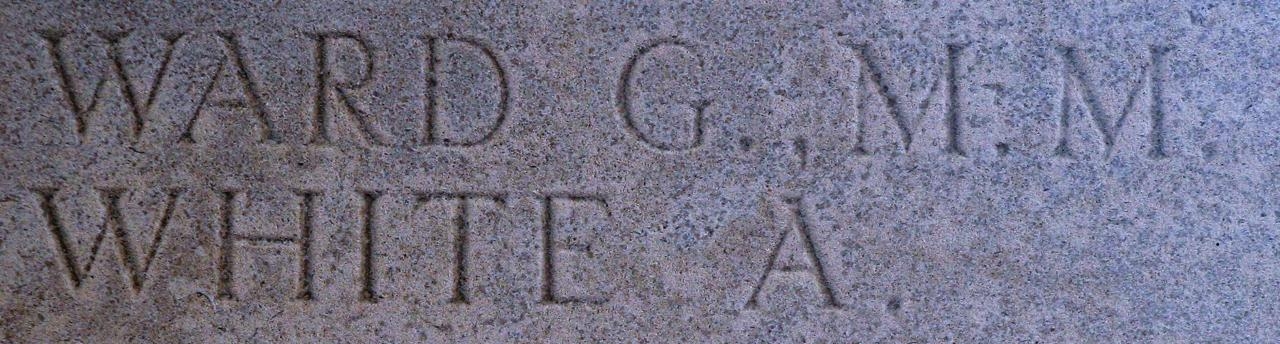
From: Pickering, Yorks
K.I.A (110 Years this day)
Thursday 12th October 1916.
28 years old
George Ward was born in 1888 in Pickering, (Ryedale District) Yorkshire and was the son of Richard Ward and his wife Anne Elizabeth(nee Cross). His father was born in Pickering, and his mother in Canada. (In 1871 Ann Elizabeth Cross, 17, born in Montreal, was living in Leeds, working as a draper’s assistant.) They married in about 1878 and had six children; birth records have been found for five; George had older siblings William, born in 1878, Alice 1880, and Mary 1883, and a younger sister Dorothy, born in 1893.
At the time of the 1891 census the family is living in Bridge Street, Pickering, with four children. His father, 48, is a relieving officer (a relieving officer handed out parish relief and/or arranged for admission to the workhouse). His mother is 38, and George is 3 years old.
The 1901 Census shows the family living at Bridge Street, Pickering. His father, Richard, is aged 56 born 1845 and his occupation is listed as a relieving officer, whilst his mother Annie E. is aged 47 born 1854 and is a dressmaker. They have three children living with them, all born in Pickering, daughter Alice, aged 20, born 1881 is a College Student, George aged 13 born 1888 and Dorothy aged 8 born 1893.
His father died in 1905, aged 61, having held the position of relieving officer with the Pickering Union for thirty-one years.
In 1911 George Ward, 23, born in Pickering, a corn merchant’s clerk, is boarding in Liverpool, with William Jones and family at 57 Mulgrave Street, Toxteth Park. His widowed mother is still in Pickering, at Bridge House, 8 Bridge Street, with two of his siblings and a domestic servant. His mother is 58, still working as a dressmaker, William, 32, like his father, is a relieving officer for the Board of Guardians, and Dorothy, 18, is a student teacher for the North Riding Council. (No.8 Bridge Street is now a Grade II listed building, described as “18th or early 19th century, two-storey in coursed stone in a picturesque location nestling on the banks of Pickering Beck”.)
He enlisted on 31st August 1914 at St George's Hall in Liverpool joining the 17th Battalion of The King’s Liverpool Regiment as Private 15627. He gave his age as 26 years and 210 days, and his occupation as clerk. He is described as being 5’ 9 and three-quarter inches tall, weighing 151 lbs, with a fresh complexion, hazel eyes, and brown hair. He gives his religion as Wesleyan, and as next of kin his mother, Elizabeth Ward, at Bridge House, Pickering.
He was billeted at Prescot Watch Factory from 14th September 1914, he trained there and also at Knowsley Hall. On 30th April 1915 the 17th Battalion alongside the other three Pals battalions left Liverpool via Prescot Station for further training at Belton Park, Grantham. They remained here until September 1915 when they reached Larkhill Camp on Salisbury Plain.
His service records show:
Promoted to the rank of Corporal on 26th October 1914
Appointed paid Lance Sergeant on 31st March 1915
Promoted to the rank of Sergeant 06th May 1915
George arrived in France on 07th November 1915 (his record appears to show embarking at Southampton).
His record shows qualification: machine gunner. From 31st December 1915 he attended a Vickers Gun course at St. Omer, and rejoined his unit on 18th January 1916.
He was granted leave to the U.K. from 21st to 30th May 1916.
On 12th June 1916 in the field he was reprimanded for not complying with an order.
He was awarded the Military Medal which is recorded in the Battalion War Diary on 17th July 1916, 15627 Sgt. Ward awarded M.M. for act of bravery in Trones Wood (the award was published in the London Gazette on 22/08/1916).
George was killed in action on the 12th October 1916, aged 28, during the Battle of the Transloy Ridges which was part of the ongoing Somme Offensive.
17th Bn War Diary: Battle of Transloy Ridge –
11-10-16 - Gird Trench/Gird Support – Battalion in front line and support trenches. British bombardment of enemy front line system commenced about midday. Hostile shelling was intermittent throughout the day.
12-10-16 - Our bombardment continued. Enemy reply weak. 2.5 p.m. Zero hour. Attack on German front line system commenced. Enemy wire was found to be uncut and attack was unsuccessful. Hostile machine gun fire was very heavy and caused many casualties. Battalion H.Q. and Support Trench were heavily shelled throughout afternoon and evening. […] During this action all communication had to be carried out by runners and carrier pigeons as all wires were being continually cut by enemy shelling.
Casualties: 5 officers killed, 5 officers wounded, 38 OR killed, about 225 OR wounded/missing etc.
Graham Maddocks, in “Liverpool Pals” p.140, adds:
“As the whistle blew, the 17th Battalion left its trenches to move forward. […] As soon as the attacking waves left their trenches the enemy artillery began to register on them, and at the same time, the defending infantry commenced a murderous rain of fire. […] Although their numbers had been depleted by the British bombardment, they were trained and experienced soldiers, well dug in on high ground, and for the most part, looking out on uncut wire. As such, it was virtually impossible for them to miss the City Battalion men struggling to advance in the mud towards them. The 17th Battalion, on the left, was particularly badly hit, as its portion of No Man’s Land contained a slight rise in the ground, and as the troops emerged onto it they were silhouetted against the sky and became easy targets. Those on the left of the attack, who managed to avoid the hail of bullets and make it to the German wire, then found that it was totally uncut, and thus trapped, they too became easy targets, to be picked off almost at the enemy’s will. It was hardly surprising that, seeing the first waves being wiped out, some of the following waves turned back and made for their start lines. These lines were now packed with other waves of troops, however, and the fleeing men added to the congestion already there, and became easy prey for the German gunners. There is some evidence also, to suggest that at this stage, the British trenches were also being hit by their own heavy artillery shells which were falling short.”
George has no known grave and is commemorated on the Thiepval Memorial, France.
The Thiepval Memorial, the Memorial to the Missing of the Somme, bears the names of more than 72,000 officers and men of the United Kingdom and South African forces who died in the Somme sector before 20 March 1918 and have no known grave. Over 90% of those commemorated died between July and November 1916.
On 01st August 1932 the Prince of Wales and the President of France inaugurated the Thiepval Memorial in Picardy. The inscription reads: “Here are recorded the names of officers and men of the British Armies who fell on the Somme battlefields between July 1915 and March 1918 but to whom the fortune of war denied the known and honoured burial given to their comrades in death.”
George earned his three campaign medals, which his mother signed for. (One medal roll shows middle initial W.)
From the pension card in the name of his mother it is not clear if a pension was awarded (George had been living away from home and likely had no dependents).
His mother received his Army pay and a War Gratuity of £12.
In May 1919 she provided information on George’s living relatives: His brother William, 41, was in France, Dorothy, 24, was living at home with her mother in Bridge Street, and his married sister Mary, 36, was in Johannesburg, South Africa. He also had relatives in Liverpool.
His mother died in 1922, aged 69.
George is also commemorated on the following Memorials:
St Peter & St Paul’s Church, Pickering, Yorkshire
Pickering War Memorial.
Liverpool Corn Trade Association Memorial
We currently have no further information on George Ward, If you have or know someone who may be able to add to the history of this soldier, please contact us.
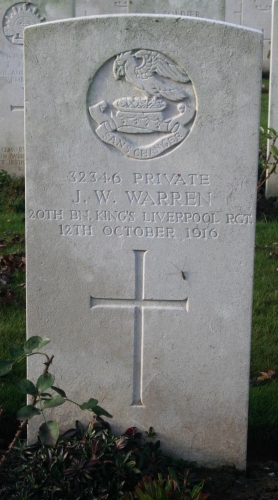
From: Highgate, London
K.I.A (110 Years this day)
Thursday 12th October 1916.
19 years old
In 1901 they are living in Robert Street, Holborn, where his father is employed as a (sp?) grocer, John is 4, and Alice is 9 months old. Son Alfred was born shortly after the census.
He enlisted in Liverpool and was serving in the 20th Battalion, The King’s Liverpool Regiment as Private No 32346 when he was killed in action on the 12th October 1916 during the Battle of the Transloy Ridges which was part of the ongoing Somme Offensive. He was 19 years of age.
According to the 20th Bn War Diary, on 10th October 1916 the battalion marched from Dernancourt via Mametz to Bazentin Le Grand where it bivouacked for the night. The next day the battalion moved up to site for assembly trenches, arriving about 11 p.m., where it dug in two good trenches, Nos.1 and 2 Coys front and Nos.3 and 4 Coys in rear.
From the War Diary:
Near Eaucourt L’Abbaye. 12/10/1916. The 4th British and 6th French armies continued the attack. Zero 2.5 p.m. The whole XVth Corps attacked […] The attack of 89th Inf Bde was carried out with 2nd Bn Bedf Regt on right, 17th Bn KLR on left, 20th Bn KLR in support, 19th Bn KLR in reserve. Battalions attacked in four waves. On the departure of the attacking battalions Nos. 1 and 2 companies advanced, each in two waves, to garrison the front line trench vacated by 2nd Bn Bedf Regt on right and 17th KLR on left. On Nos 1 and 2 Coys vacating front assembly trench, it was occupied by two platoons of Nos. 3 and 4 Coys respectively, from rear assembly trench. As the assaulting waves left their trenches they were met by intense machine gun fire, especially on our left. The enemy also opened heavy barrages on our front support and assembly trenches. […] Capt. H. Beckett, commanding No.1 company, reached the front line with few casualties, but Lieut R.D. Paterson leading No.2 company was killed. His company also had few casualties. The assaulting battalions were held up by very heavy machine gun fire, and made little progress. […] At 4.20 p.m. two platoons, No.4 Coy, under Cpl Brighouse, were sent up to reinforce the left, and No.3 Coy under Cpl Sutton followed at 4.45 p.m. Battalion HQ moved up to front line at 4.55 and remaining two platoons of No.4 Coy moved up to join Cpl Brighouse.
Casualties during action:
Officers – Killed Lieut. R.D. Paterson, 2nd Lieut G.L. Grennan, Wounded – 2nd Lieuts A.E. Griffin, L.E. Mclean Hayes, C. Buttemer, Wounded Cpl g. Brighouse.
Other Ranks killed – 20.
It had rained incessantly at the beginning of October 1916 and the ground was full of mud. In his book ‘The Liverpool Pals’ Graham Maddocks describes the day Herbert was killed.
It was obvious that the Germans knew an attack was coming and from which direction it would be mounted. On the evening of the 11th the 20th Battalion moved up the line and dug two deep assembly trenches behind the 17th Battalion’s position for the attack the next day. The 19th Battalion also moved into its reserve positions known as Flers Trench. Although the rain has stopped, the ground was like a morass, with all the natural vegetation destroyed, it was difficult to tell exactly where the objectives lay. On the afternoon of the 12th at exactly 2.05pm, the attack began along the whole Corps line, covered by the local batteries of the Royal Field Artillery which still had line of sight. As the whistles blew, the 17th Battalion left its trenches to move forwards, at the same time No.1 and 2 Companies of the 20th Battalion moved forward and occupied the trenches vacated by the 17th. As they too went over the top, No.3 and 4 Companies took their place and waited in their turn to follow. No.2 and 3 Companies of the 19th Battalion moved up to occupy the assembly trenches dug the previous night by the 20th.
As soon as the attacking waves left their trenches the enemy artillery began to register on them and at the same time the defending infantry commenced a murderous rain of fire. Those German regiments were trained and experienced soldiers, well dug in on high ground, and for the most part, looking out on uncut wire. As such it was virtually impossible for them to miss the City Battalion men struggling to advance in the mud towards them.
Brigadier-General F.C.Stanley wrote that the Battalions were also suffering casualties due to the short shooting of the British heavy artillery fire. “I know from practical experience that they were our own guns which were shooting, and which were causing us quite a considerable number of casualties. The fault lay at that time from the fact that the heavy gunners would not send their FOO’s (Forward Observation Officers) far enough forward, but were content to observe us from right back”
Some ground was gained that day, about 150 yards, the 20th Battalion were not relieved until 24 hours later causing the men to endure another day and night in the front line trench.
He now rests at Warlencourt British Cemetery, France.
Warlencourt Cemetery is entirely a concentration cemetery, begun late in 1919 when graves were brought in from small cemeteries and the battlefields of Warlencourt and Le Sars. The Graves Registration form shows graves from “Le Sars 6/1, 6/2, Hexham Road, Seven Elms”.
Graves were brought in from the original cemeteries at Hexham Road (Le Sars), and Seven Elms (Flers), as well as over 3,000 British graves due to the fighting which took place around the Butte de Warlencourt from the autumn of 1916 to the spring of 1917, and again in the German advance and retreat of 1918. The cemetery now contains 3,505 Commonwealth burials and commemorations of the First World War, 1,823 of which are unidentified.
We currently have no further information on John William Warren, If you have or know someone who may be able to add to the history of this soldier, please contact us.
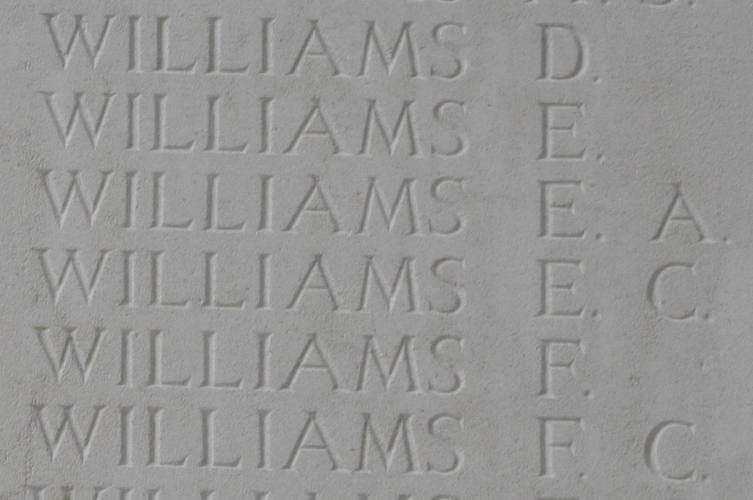
From: New Brighton, Cheshire
K.I.A (110 Years this day)
Thursday 12th October 1916.
19 years old
Their first child, Stanfield Robert de Pierpoint Williams, was born in Warrington in 1891 but died at age 1, when the family were living in Toxteth Park. Another son, Beresford Leslie, was born in 1895 in Toxteth, after which they moved to New Brighton, where Ernest, Dora Elizabeth 1898, and Stanfield Edgar 1902, were born.
His father died, aged 42, in hospital in Douglas, Isle of Man in May 1902, leaving over £1,000 to his widow.
Probate:-
WILLIAMS Stanfield Berkley of Devonshire House, Stoney Hey Road, New Brighton Cheshire commercial traveller died 30 May 1902 at Nobles Hospital, Douglas, Isle of Man Probate London 30 June to Elizabeth Williams widow. Effects £1003 19s 4d.
His death was reported in the Isle of Man Times 7th June 1902:
WILLIAMS—On the 30th May at Noble's I.O.M. Hospital. Stanfield B, second son of R D. Williams, New Brighton, and representative of Messrs R Johnson (Clapham) and Morris (Liverpool), aged 42 years.
Probate 1902:-
WILLIAMS Stanfield Berkley of Devonshire House, Stoney Hey Road, New Brighton Cheshire commercial traveller died 30 May 1902 at Nobles Hospital, Douglas, Isle of Man Probate London 30 June to Elizabeth Williams widow. Effects £1003 19s 4d.
He enlisted in Liverpool as Rifleman 4331 joining the 6th Battalion of The King's Liverpool Regiment (Liverpool Rifles). He embarked aboard the SS Princess Victoria sailing from Folkestone-Boulogne on 15th July 1916, reaching the 24th Infantry Base Depot on 16th July. He proceeded to 11th Entrenching Battalion on 02nd August and proceeded to the 17th Battalion K.L.R. on 05th August and was posted from 05th September 1916 to the 17th Battalion as Private No 51582.
Ernest was killed in action on the 12th October 1916 during the Battle of the Transloy Ridges which was part of the ongoing Somme Offensive.17th Bn War Diary: Battle of Transloy Ridge –
11-10-16 - Gird Trench/Gird Support – Battalion in front line and support trenches. British bombardment of enemy front line system commenced about midday. Hostile shelling was intermittent throughout the day.
12-10-16 - Our bombardment continued. Enemy reply weak. 2.5 p.m. Zero hour. Attack on German front line system commenced. Enemy wire was found to be uncut and attack was unsuccessful. Hostile machine gun fire was very heavy and caused many casualties. Battalion H.Q. and Support Trench were heavily shelled throughout afternoon and evening. […] During this action all communication had to be carried out by runners and carrier pigeons as all wires were being continually cut by enemy shelling.
Casualties: 5 officers killed, 5 officers wounded, 38 OR killed, about 225 OR wounded/missing etc.
Graham Maddocks, in “Liverpool Pals” p.140, adds: “As the whistle blew, the 17th Battalion left its trenches to move forward. […] As soon as the attacking waves left their trenches the enemy artillery began to register on them, and at the same time, the defending infantry commenced a murderous rain of fire. […] Although their numbers had been depleted by the British bombardment, they were trained and experienced soldiers, well dug in on high ground, and for the most part, looking out on uncut wire. As such, it was virtually impossible for them to miss the City Battalion men struggling to advance in the mud towards them. The 17th Battalion, on the left, was particularly badly hit, as its portion of No Man’s Land contained a slight rise in the ground, and as the troops emerged onto it they were silhouetted against the sky and became easy targets. Those on the left of the attack, who managed to avoid the hail of bullets and make it to the German wire, then found that it was totally uncut, and thus trapped, they too became easy targets, to be picked off almost at the enemy’s will. It was hardly surprising that, seeing the first waves being wiped out, some of the following waves turned back and made for their start lines. These lines were now packed with other waves of troops, however, and the fleeing men added to the congestion already there, and became easy prey for the German gunners. There is some evidence also, to suggest that at this stage, the British trenches were also being hit by their own heavy artillery shells which were falling short.”
His death was reported in the Liverpool Echo on 28th October 1916, under the heading, Wallasey Killed and Wounded:
“Rifleman Ernest A. Williams (19) of the K.L.R., second son of Mrs. Williams, of Hamilton Road, New Brighton. Prior to the war he was in the offices of Messrs. Elder, Dempster and Co.”
Ernest’s name also appeared in the list of Killed in Action published in the Liverpool Daily Post on 20th November 1916.
King’s (Liverpool Regiment) - Williams, 51582, E. A. (New Brighton);
His body was not recovered or was subsequently lost as he has no known grave and is commemorated on the Thiepval Memorial, France.
The Thiepval Memorial, the Memorial to the Missing of the Somme, bears the names of more than 72,000 officers and men of the United Kingdom and South African forces who died in the Somme sector before 20 March 1918 and have no known grave. Over 90% of those commemorated died between July and November 1916.
On 01st August 1932 the Prince of Wales and the President of France inaugurated the Thiepval Memorial in Picardy. The inscription reads: “Here are recorded the names of officers and men of the British Armies who fell on the Somme battlefields between July 1915 and March 1918 but to whom the fortune of war denied the known and honoured burial given to their comrades in death.”
His younger brother Stanfield served in the Merchant Navy in World War Two, and died in 1951 aged 48.
Grateful thanks are extended to Kevin Shannon the author of the book The Liverpool Rifles for providing details of Ernest's service with the 6th Rifles.

From: Lancaster
K.I.A (110 Years this day)
Thursday 12th October 1916.
26 years old
Reginald Williams was born on 15th September 1890 in Bowerham Barracks, Lancaster, the third son of Ellis Williams and his wife Eliza Mary (née Studd). He was baptised on 2nd November in St. Paul’s, Scotforth, his father’s occupation Staff Sergeant.
His father was born in Hanmer, Flintshire, and served for 25 years in the King’s Own (Royal Lancaster) Regiment, and his mother was born in Chatham, Kent, the daughter of a soldier. She had married in 1881 and had a daughter Lily Bannister Smith, who was born after her father, Eliza's husband died in 1882.
Ellis and Eliza married in 1885 in Hampshire and had seven children, all boys, one of whom died young. Reginald had an older brother Ellis, born in Hampshire, and by 1888 they had moved to Lancaster, where John, and younger brothers Lloyd, Herbert (Bert), Victor (who died young), and Percival (Percy) were born.
In 1891 his father is a Quarter Master Sergeant in Bowerham Barracks. His mother is 29, half sister Lily is 8, Ellis is 4, John 2, and Reginald 6 months old.
At the time of the 1901 Census the family, with daughter Lily and five sons, is found in Lancaster Barracks. His father is 50, a canteen manager (army pensioner).
Reginald was educated at Bowerham school, and after leaving school was employed by his father as a grocer.
The 1911 census finds his parents in Hanmer Place, Bowerham, with three boys at home. His father is 60, a grocer/employer (army pensioner), and his mother is 51. Reginald is a partner in his father’s grocery business, Lloyd is 18, a printer, and Percy is 12, at school. Also living with them is his grandmother Sarah Studd, 82. Three of the brothers have joined their father’s old regiment. Ellis, 25, is a Lance Corporal with the 1st Bn K.O.R.L. at Havelock Barracks, Lucknow, India. John, 22, a Lance Corporal, and Bert, 16, a Boy, are with the 2nd Bn K.O.R.L. in Fort Regent, Jersey, Channel Islands.
Reginald had moved to Liverpool prior to the war and was employed by Messrs Cooper and Co, wholesale and retail grocers, Liverpool.
He enlisted in Liverpool as Rifleman 4648 joining the 6th Battalion of The King's Liverpool Regiment (Liverpool Rifles). He embarked aboard the SS Princess Victoria sailing from Folkestone-Boulogne on 15th July 1916, reaching the 24th Infantry Base Depot on 16th July. He proceeded to 11th Entrenching Battalion on 02nd August and proceeded to the 17th Battalion K.L.R. on 05th August. He was appointed unpaid Lance Corporal on 09th August and was posted from 05th September 1916 to the 17th Battalion with the new service number 51616.
His biography in De Ruvigny showed his determination to enlist:-
On the outbreak of war in 1914 he endeavoured to enlist but was rejected on medical grounds. In January 1916, after undergoing an operation, he was pronounced fit and then enlisted. After a period of training went to France in August 1916.
He was killed in action on the 12th October 1916 aged 26 during the Battle of the Transloy Ridges which was part of the ongoing Somme Offensive.
All six brothers served, Lloyd enlisted in the K.O.R.L., and Percy enlisted on 01st August 1916 when he was 18 in the A.S.C. Motor Transport Section, and went to France in October 1918. Three of the brothers would not come home. Reginald was the second loss the family suffered. He was killed in action on the 12th October 1916 aged 26 during the Battle of the Transloy Ridges which was part of the ongoing Somme Offensive.
17th Bn War Diary: Battle of Transloy Ridge –
11-10-16 - Gird Trench/Gird Support – Battalion in front line and support trenches. British bombardment of enemy front line system commenced about midday. Hostile shelling was intermittent throughout the day.
12-10-16 - Our bombardment continued. Enemy reply weak. 2.5 p.m. Zero hour. Attack on German front line system commenced. Enemy wire was found to be uncut and attack was unsuccessful. Hostile machine gun fire was very heavy and caused many casualties. Battalion H.Q. and Support Trench were heavily shelled throughout afternoon and evening. […] During this action all communication had to be carried out by runners and carrier pigeons as all wires were being continually cut by enemy shelling.
Casualties: 5 officers killed, 5 officers wounded, 38 OR killed, about 225 OR wounded/missing etc.
Graham Maddocks, in “Liverpool Pals” p.140, adds:
“As the whistle blew, the 17th Battalion left its trenches to move forward. […] As soon as the attacking waves left their trenches the enemy artillery began to register on them, and at the same time, the defending infantry commenced a murderous rain of fire. […] Although their numbers had been depleted by the British bombardment, they were trained and experienced soldiers, well dug in on high ground, and for the most part, looking out on uncut wire. As such, it was virtually impossible for them to miss the City Battalion men struggling to advance in the mud towards them. The 17th Battalion, on the left, was particularly badly hit, as its portion of No Man’s Land contained a slight rise in the ground, and as the troops emerged onto it they were silhouetted against the sky and became easy targets. Those on the left of the attack, who managed to avoid the hail of bullets and make it to the German wire, then found that it was totally uncut, and thus trapped, they too became easy targets, to be picked off almost at the enemy’s will. It was hardly surprising that, seeing the first waves being wiped out, some of the following waves turned back and made for their start lines. These lines were now packed with other waves of troops, however, and the fleeing men added to the congestion already there, and became easy prey for the German gunners. There is some evidence also, to suggest that at this stage, the British trenches were also being hit by their own heavy artillery shells which were falling short.”
Reginald’s name appeared in the list of Killed in Action published in the Liverpool Daily Post on 20th November 1916.
King’s (Liverpool Regiment) - Williams, 51616, R. (Lancaster);
Reginald's body was not recovered or was subsequently lost as he has no known grave and is commemorated on the Thiepval Memorial to the Missing of the Somme.
The Thiepval Memorial, the Memorial to the Missing of the Somme, bears the names of more than 72,000 officers and men of the United Kingdom and South African forces who died in the Somme sector before 20 March 1918 and have no known grave. Over 90% of those commemorated died between July and November 1916.
On 01st August 1932 the Prince of Wales and the President of France inaugurated the Thiepval Memorial in Picardy. The inscription reads: “Here are recorded the names of officers and men of the British Armies who fell on the Somme battlefields between July 1915 and March 1918 but to whom the fortune of war denied the known and honoured burial given to their comrades in death.”
All six brothers served, Lloyd enlisted in the K.O.R.L., Percy enlisted on 01st August 1916 when he was 18 in the A.S.C. Motor Transport Section, and went to France in October 1918. Three of the brothers, Bert, Reg and Lloyd would not come home.
His brother Bert had enlisted in 1909 as a drummer in the King’s Own. He went with his battalion to India, returned to England in December 1914, and arrived on the Western Front in January 1915, as a Corporal. He was severely wounded on 16th March 1915 while repairing trenches near Ypres, and died of his wounds in hospital at Bailleul on 23rd March 1915, aged 19.
Bert now rests in Bailleul Cemetery, Nord, where his epitaph reads,
HIS ONLY FEAR WAS FEAR TO DO UNWORTHY THINGS
HIS WATCHWORD “DUTY”
His eldest brother Ellis went to France as a Corporal on 23rd August 1914. Ellis and John were both wounded in the retreat from Mons. John was captured at Harcourt on 24th August 1914, severely wounded in the right thigh. He was held as a PoW until being repatriated in February 1918.
Ellis served as Company Q.M.S. He earned the Distinguished Conduct Medal in 1917: “For conspicuous gallantry and devotion to duty. He has performed consistent good work throughout the campaign and has at all times set a splendid example (13/2/1917)”
Yet more tragedy befell the family with the loss of a third son.
Lloyd achieved the rank of Sergeant, 2nd Bn K.O.R.L. He suffered shell concussion and was hospitalised in Egypt in 1916. After recuperating he was attached to the Egyptian Army. Lloyd died on 29th May 1917 in the Sudan, aged 24.
Lloyd is remembered on the Jerusalem Memorial, Israel.
Lloyd’s death was announced in the Lancashire Evening Post on 31st May 1917:
“Lancaster Ex-Soldier Loses Third Son:
Mr. Ellis Williams, Hanmer Place, Bowerham, Lancaster, who had 25 years’ service with the King’s Own Royal Lancaster Regiment, the author of several well-known soldier stories in prose and verse, has had the ill-fortune to lose a third son in the war. He has today received news that his fourth son, Sergt. Lloyd Williams, who was serving with his father’s old regiment, the King’s Own, and attached to the headquarters staff at Khartoum, was drowned on the White Nile through the steamer on which he was travelling capsizing in a hurricane. He was previously wounded in France, and invalided home through shell concussion. He went out to Egypt and took part in the successful Darpur [Darfur] expedition, of which he sent home a description.
Mr. Williams’ eldest [sic] son, Lance Corporal Reginald Williams, of the 17th Liverpool’s, was killed in action early in the war. Corpl. Chas. Herbert (Bert) Williams was killed by a sniper while serving with the 2nd King’s Own. Sergt. John Williams of the 2nd King’s Own, was badly wounded and made a prisoner in the retreat from Mons. There are two yet serving their King, Company-Sergt.-Major William [Ellis] Williams, still in France, who was also wounded at Mons, and Percival (“Bobs”), serving with the Military Transport A.S.C.”
In May 1917 the stern wheel steamer “Amara” accompanied the expedition for the reconquest of the Sudan. On the 29th whilst towing four barges ahead and none alongside, she turned turtle in a storm near Khor Galhak, 25 miles south of Renk, with great loss of life. She was returning from the Niger Expedition in the Southern Sudan to Khartoum, a notable casualty was Major Guy Thwaites, D.S.O., of the Egyptian Army.
GUY THWAITES, D.S.O.
Major Guy Thwaites, D.S.O., of the Egyptian Army, was drowned on 29 May 1917 by the capsizing of a small Sudan Mail Steamer, the Amara, during a sudden hurricane on the White Nile, about a hundred miles north of Fashoda. He was the fifth son of the late Rev. Henry Graham Thwaites and of Mrs Clara Thwaites, of 14 Cambridge Park, Durdham Downes, Bristol. Born 4 November 1877 at Bulkington, Warwickshire, he was educated at Malvern College and St Paul's School, London, entering St John's in 1897. He served in the South African War 1899- 1902, taking Part in the operations in Natal, including the action at Lombard's Kop ; at the defence of Ladysmith, including the sortie of 7 December 1899 (Mentioned in despatches, London Gazette, 8 February 1901) ; he took part in the operations in the Orange River Colony in February 1902, and in the Transvaal from March to 31 May 1902. He was awarded the Queen's Medal with four clasps. His first commission, in the Army Service Corps, was dated 1 May 1901 ; he was promoted Lieutenant in the following year, and was gazetted Captain 1 May 1906. In June 1914 he was seconded for duty with the Egyptian Army, and took part in the Darfur campaign in 1915, when he was mentioned in despatches and received the D.S.O. He was returning from the Niger Expedition in the Southern Sudan to Khartum, when the steamer in which he was, after collision with the bank, capsized in mid-stream.
His father received Reginald’s Army effects, and a War Gratuity £3. Their parents received a pension for all three sons.
His father died in 1922 aged 72, leaving effects of £2,542-0s-11d.
In 1939 his mother is living alone at 28 Gloucester Avenue, Lancaster. She died in 1943, aged 84.
All three brothers are commemorated on the Bowerham School Memorial
Reginald and Bert are commemorated on the Lancaster Memorial.
Grateful thanks are extended to Kevin Shannon the author of the book The Liverpool Rifles for providing details of Reginald's service with the 6th Rifles.
We currently have no further information on Reginald Williams, if you have or know someone who may be able to add to the history of this soldier, please contact us.
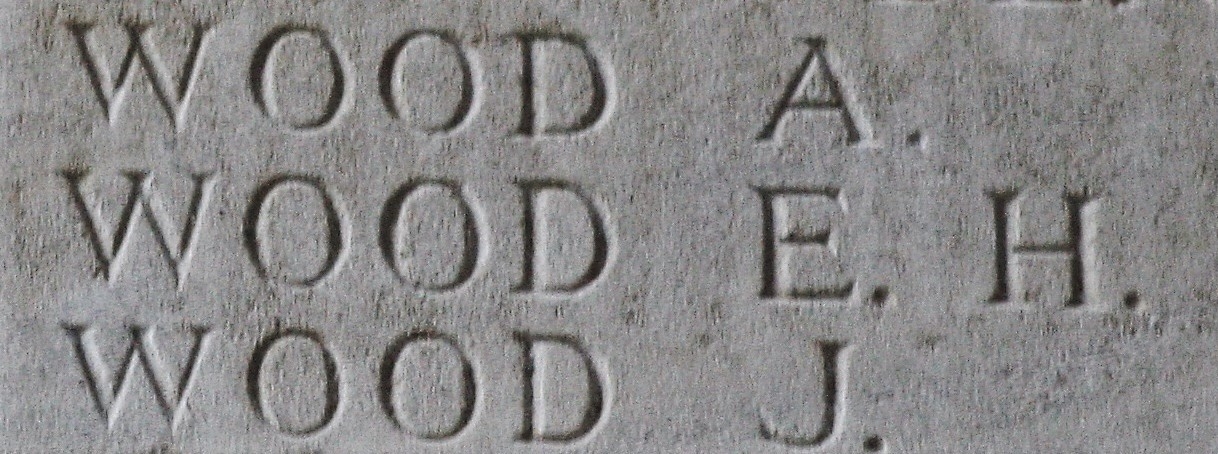
From: Manchester
K.I.A (110 Years this day)
Thursday 12th October 1916.
23 years old
Arthur Wood was born in Failsworth, northeast Manchester, in the March quarter of 1893, the son of George Frederick Wood and his wife Mary Elizabeth (née Henderson). His father, born in Newcastle under Lyne, Staffordshire, and his mother, from Manchester, married in 1889, and had nine children, one of whom died young. Arthur had older siblings Frederick and Florence, and younger siblings Ernest (died in infancy), Lily, Alice, Sidney, Norman, and Dora.
The 1901 census finds the family at 28 Prestage Street, Stretford, with six children. His father, 33, is a railway constable, his mother is 32, Arthur is 8. Also in the household are his uncle William Henderson, 52, and cousin Florence Hopkins, 29.
They are still at 28 Prestage Street in 1911, with eight children. Head of household is William Henderson, 63. His father is 44, an electric tram conductor for Manchester Corporation, and his mother is 42. Frederick is 21, a clerk for a cotton manufacturer, Florence, 19, and Lily, 15, have no occupation. Arthur is 18, an electric motor mechanic, Alice is 13, Sidney 10, Norman 8, and Dora 7 months old.
Arthur enlisted in Manchester and was formerly Private 3000 of The Manchester Regiment and following a transfer he was serving in the 20th Battalion (“A” Company), The King’s Liverpool Regiment as Private No 52266 when he was killed in action on the 12th October 1916 aged 23 during the Battle of the Transloy Ridges which was part of the ongoing Somme Offensive.
According to the 20th Bn War Diary, on 10th October 1916 the battalion marched from Dernancourt via Mametz to Bazentin Le Grand where it bivouacked for the night. The next day the battalion moved up to site for assembly trenches, arriving about 11 p.m., where it dug in two good trenches, Nos.1 and 2 Coys front and Nos.3 and 4 Coys in rear.
From the War Diary:
Near Eaucourt L’Abbaye. 12/10/1916. The 4th British and 6th French armies continued the attack. Zero 2.5 p.m. The whole XVth Corps attacked […] The attack of 89th Inf Bde was carried out with 2nd Bn Bedf Regt on right, 17th Bn KLR on left, 20th Bn KLR in support, 19th Bn KLR in reserve. Battalions attacked in four waves. On the departure of the attacking battalions Nos. 1 and 2 companies advanced, each in two waves, to garrison the front line trench vacated by 2nd Bn Bedf Regt on right and 17th KLR on left. On Nos 1 and 2 Coys vacating front assembly trench, it was occupied by two platoons of Nos. 3 and 4 Coys respectively, from rear assembly trench. As the assaulting waves left their trenches they were met by intense machine gun fire, especially on our left. The enemy also opened heavy barrages on our front support and assembly trenches. […] Capt. H. Beckett, commanding No.1 company, reached the front line with few casualties, but Lieut R.D. Paterson leading No.2 company was killed. His company also had few casualties. The assaulting battalions were held up by very heavy machine gun fire, and made little progress. […] At 4.20 p.m. two platoons, No.4 Coy, under Cpl Brighouse, were sent up to reinforce the left, and No.3 Coy under Cpl Sutton followed at 4.45 p.m. Battalion HQ moved up to front line at 4.55 and remaining two platoons of No.4 Coy moved up to join Cpl Brighouse.
Casualties during action:
Officers – Killed Lieut. R.D. Paterson, 2nd Lieut G.L. Grennan, Wounded – 2nd Lieuts A.E. Griffin, L.E. Mclean Hayes, C. Buttemer, Wounded Cpl g. Brighouse.
Other Ranks killed – 20.
It had rained incessantly at the beginning of October 1916 and the ground was full of mud. In his book ‘The Liverpool Pals’ Graham Maddocks describes the day Herbert was killed.
It was obvious that the Germans knew an attack was coming and from which direction it would be mounted. On the evening of the 11th the 20th Battalion moved up the line and dug two deep assembly trenches behind the 17th Battalion’s position for the attack the next day. The 19th Battalion also moved into its reserve positions known as Flers Trench. Although the rain has stopped, the ground was like a morass, with all the natural vegetation destroyed, it was difficult to tell exactly where the objectives lay. On the afternoon of the 12th at exactly 2.05pm, the attack began along the whole Corps line, covered by the local batteries of the Royal Field Artillery which still had line of sight. As the whistles blew, the 17th Battalion left its trenches to move forwards, at the same time No.1 and 2 Companies of the 20th Battalion moved forward and occupied the trenches vacated by the 17th. As they too went over the top, No.3 and 4 Companies took their place and waited in their turn to follow. No.2 and 3 Companies of the 19th Battalion moved up to occupy the assembly trenches dug the previous night by the 20th.
As soon as the attacking waves left their trenches the enemy artillery began to register on them and at the same time the defending infantry commenced a murderous rain of fire. Those German regiments were trained and experienced soldiers, well dug in on high ground, and for the most part, looking out on uncut wire. As such it was virtually impossible for them to miss the City Battalion men struggling to advance in the mud towards them.
Brigadier-General F.C.Stanley wrote that the Battalions were also suffering casualties due to the short shooting of the British heavy artillery fire. “I know from practical experience that they were our own guns which were shooting, and which were causing us quite a considerable number of casualties. The fault lay at that time from the fact that the heavy gunners would not send their FOO’s (Forward Observation Officers) far enough forward, but were content to observe us from right back”
Some ground was gained that day, about 150 yards, the 20th Battalion were not relieved until 24 hours later causing the men to endure another day and night in the front line trench.
Arthur's body was not recovered or was subsequeenlty lost as he has no known grave and is commemorated on the Thiepval Memorial to the Misisng of the Somme, France.
The Thiepval Memorial, the Memorial to the Missing of the Somme, bears the names of more than 72,000 officers and men of the United Kingdom and South African forces who died in the Somme sector before 20 March 1918 and have no known grave. Over 90% of those commemorated died between July and November 1916.
On 01st August 1932 the Prince of Wales and the President of France inaugurated the Thiepval Memorial in Picardy. The inscription reads: “Here are recorded the names of officers and men of the British Armies who fell on the Somme battlefields between July 1915 and March 1918 but to whom the fortune of war denied the known and honoured burial given to their comrades in death.”
Based on the amount of the War Gratuity, Arthur served for two years, enlisting in about October 1914. The Medal Roll for the British War and Victory Medals shows only 20th Bn K.L.R., and a 1914-1915 Star roll has not been found, suggesting that Arthur did not proceed overseas until 1916, already having been transferred to the 20th K.L.R.
Arthur was initially declared Missing on 12th October 1916. In the Manchester Evening News on 28th October:
“The relatives of the following soldiers, who are reported missing, would be glad to receive news concerning them: Pte. Arthur Wood (3000) Manchester Regiment (attached King’s Liverpool Regiment), missing October 12. Mother: 91 Russell Street, Moss Side, Manchester.”
It was not until nearly a year later that Arthur’s death was officially accepted as having occurred (at Bapaume, per Soldiers’ Effects) on 12th October 1916, published in the Weekly Casualty List on 11th September 1917:
“Previously missing, now reported killed, K.L.R: Wood 52266 (Manchester) A.”
His mother received his Army effects, including a War Gratuity of £9, and the pension card in the name of his mother, 91 Russell Street, Moss Side, shows that she was awarded a pension of 6/- a week from May 1917, increased to 11/- from July 1917.
In 1939 his parents are living at 39 Nettleburn Road, Manchester. His father is 74, Corporation tram driver (retired), his mother is 71. Both his parents appear to have lived through the Second World War, and died in the 1940s.
Arthur Wood is commemorated on the following Memorials:
St. Hilda’s Church, Stretford
Borough of Stretford WW1 Book of Remembrance
We currently have no further information on Arthur Wood, If you have or know someone who may be able to add to the history of this soldier, please contact us.

From: Liverpool
K.I.A (110 Years this day)
Thursday 12th October 1916.
20 years old
George Frederick Wright was born on the 07th February 1896 in Liverpool, the son of James Wright and his wife Sarah (nee Perrins) Wright who were married on the 16th September 1877 at St. Clement’s C. of E. Church, Longsight, Manchester. James was a 20 year old railway guard, father James, whilst Sarah was aged 23 and a domestic servant, father Thomas, their address 4 Hyde View. His father was born at Melling and worked as a railway inspector. His mother and eldest sister were born in Shropshire.
The 1881 Census shows his parents living at 1 Malcolm Grove, Kirkdale with their daughter Sarah E.
The 1891 Census shows the family at 76 Beckett Street, Kirkdale - Parents James and Sarah with children Leah E, Florence, James A and Maud A. Alfred Perrins, who was also a railway inspector, was lodging with the family.
George was baptised at St Mary’s Church, Liverpool.
The 1901 Census shows the family now at 56 Chepstow Street, Walton - His father, James, is aged 44, a railway inspector, mother Sarah aged 47 born Stirchley, Shropshire, with children Leah 22 b.Hadley, Shropshire, Florence 19, James A. 15 an apprentice engineer, Maud 12, Albert 9, and George F. 5. Sarah's nephew Charles Perrins, who was also a stoker on the railways, was also a member of the household.
The 1911 Census shows the family have now moved to 222 Stanley Road, Kirkdale – Father James aged 54, a railway inspector, mother Sarah aged 57(married for 34 years with 8 children born and 6 still alive), with children Florence 27 a confectioner, James 25 an engineers fitter, Maud 22, Albert 20 an electricians fitter, and Frederick 15 at school.
George enlisted in Liverpool joining the 17th Battalion of The King’s Liverpool Regiment as Private 15286.
He was billeted at Prescot Watch Factory from 14th September 1914, he trained there and also at Knowsley Hall. On 30th April 1915 the 17th Battalion alongside the other three Pals battalions left Liverpool via Prescot Station for further training at Belton Park, Grantham. They remained here until September 1915 when they reached Larkhill Camp on Salisbury Plain. He arrived in France on 7th November 1915.
He had reached the rank of Lance Corporal when he was killed in action on the 12th October 1916, aged 20, during the Battle of the Transloy Ridges which was part of the ongoing Somme Offensive.
17th Bn War Diary: Battle of Transloy Ridge –
11-10-16 - Gird Trench/Gird Support – Battalion in front line and support trenches. British bombardment of enemy front line system commenced about midday. Hostile shelling was intermittent throughout the day.
12-10-16 - Our bombardment continued. Enemy reply weak. 2.5 p.m. Zero hour. Attack on German front line system commenced. Enemy wire was found to be uncut and attack was unsuccessful. Hostile machine gun fire was very heavy and caused many casualties. Battalion H.Q. and Support Trench were heavily shelled throughout afternoon and evening. […] During this action all communication had to be carried out by runners and carrier pigeons as all wires were being continually cut by enemy shelling.
Casualties: 5 officers killed, 5 officers wounded, 38 OR killed, about 225 OR wounded/missing etc.
Graham Maddocks, in “Liverpool Pals” p.140, adds: “As the whistle blew, the 17th Battalion left its trenches to move forward. […] As soon as the attacking waves left their trenches the enemy artillery began to register on them, and at the same time, the defending infantry commenced a murderous rain of fire. […] Although their numbers had been depleted by the British bombardment, they were trained and experienced soldiers, well dug in on high ground, and for the most part, looking out on uncut wire. As such, it was virtually impossible for them to miss the City Battalion men struggling to advance in the mud towards them. The 17th Battalion, on the left, was particularly badly hit, as its portion of No Man’s Land contained a slight rise in the ground, and as the troops emerged onto it they were silhouetted against the sky and became easy targets. Those on the left of the attack, who managed to avoid the hail of bullets and make it to the German wire, then found that it was totally uncut, and thus trapped, they too became easy targets, to be picked off almost at the enemy’s will. It was hardly surprising that, seeing the first waves being wiped out, some of the following waves turned back and made for their start lines. These lines were now packed with other waves of troops, however, and the fleeing men added to the congestion already there, and became easy prey for the German gunners. There is some evidence also, to suggest that at this stage, the British trenches were also being hit by their own heavy artillery shells which were falling short.”
George’s name appeared in the list of Killed in Action published in the Liverpool Daily Post on 20th November 1916.
King’s (Liverpool Regiment) - Wright, 15286, G. F. (Bootle);
His death was also reported in the Bootle Times 24th November 1916:
CUNARD EMPLOYEES KILLED.
Mr. and Mrs. James Wright, 27, Exeter-road, Bootle, have received news of the death of their youngest son, Lance-Corporal George F. Wright (20), in France. He was wounded whilst leading his section forward, and killed instantaneously by a bullet on his way back to the dressing station. His loss will be keenly felt by his many friends, and also by his fellow colleagues at the Cunard Steamship Company, in whose employ he was prior to the war.
George's body was not recovered or was subsequently lost as he has no known grave and is commemorated on the Thiepval Memorial, France.
The Thiepval Memorial, the Memorial to the Missing of the Somme, bears the names of more than 72,000 officers and men of the United Kingdom and South African forces who died in the Somme sector before 20 March 1918 and have no known grave. Over 90% of those commemorated died between July and November 1916.
On 01st August 1932 the Prince of Wales and the President of France inaugurated the Thiepval Memorial in Picardy. The inscription reads: “Here are recorded the names of officers and men of the British Armies who fell on the Somme battlefields between July 1915 and March 1918 but to whom the fortune of war denied the known and honoured burial given to their comrades in death.”
Soldiers Effects to father James, pension to mother Sarah, 27 Exeter Rd, Bootle, then after her death to father, of “Lyncroft”, 45 Oxgate Gardens, Cricklewood, London.
George's death was not the only loss that the family had to endure in 1916 as just before Christmas his brother Albert Victor of the 6th Battalion, The King’s Liverpool Regiment was also killed in action on the 22nd December 1916. He was aged 25 and prior to the war he had been employed by Messrs: H Tate and Sons as an Electrician.
Albert now rests at Vlamertinghe Military Cemetery in Belgium where his headstone bears the epitaph:
"JUST WHEN HIS HOPES SEEMED BRIGHTEST GOD CALLED OUR LOVED ONE HOME"
The Liverpool Echo of 09th January 1917 reported:
BOOTLE BROTHERS KILLED.
Rifleman A. V. Wright (25) has been killed in action. He was the second son of Mr. and Mrs. James Wright, 27, Exeter-road, Bootle. His loss keenly felt by his fellow-workers at Messrs. H. Tate and Sons, where he was employed as an electrician prior the war. His youngest brother (George) was killed October 12, 1916.
The family paid tribute to both brothers in the Liverpool Daily Post on 24th December 1917:
WRIGHT - In affectionate remembrance of our dear brother Albert, who was killed in action December 22, 1916, also of Fred, killed October 12, 1916. “Till the day breaks and the shadows flee away.” Never forgotten by Lily, Will and Leonard at 5 Seafield Road.
George is also commemorated on the following War Memorials:
Bootle Civic Memorial
Union Prestbyterian Church, Kirkdale
Liverpool Prestbytery (Union, Kirkdale)
Bootle Secondary School for Boys
Cunard Steam Ship Co, Roll of Honour and Plaque.
His mother died in 1924 (from pension card).
We currently have no further information on George Frederick Wright, if you have or know someone who may be able to add to the history of this soldier, please contact us.
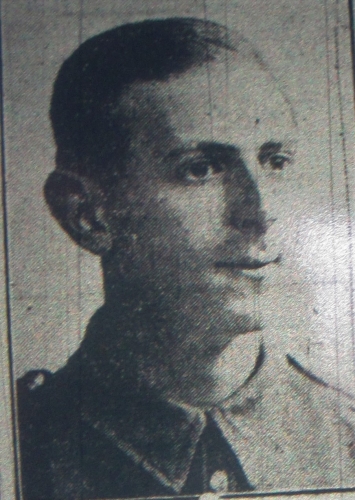
From: Rock Ferry, Cheshire
K.I.A (110 Years this day)
Thursday 12th October 1916.
24 years old
Herbert George Young was born in 1892 in Rock Ferry, the son of George Edwin Young and Frances Young (nee Jones). His mother and father were both born in London and married at St Mary's Church, Barnes, Surrey on the 17th August 1887. George gave his address as Beverley Villa, Sandy Road, Seaforth, his father John Young, a baptist minister, whilst Frances was of Beverley Villas, Lonsdale Road, father Samuel.
The year before Herbert was born, the census shows that his parents were living in Woodland Road, Birkenhead where his father is a merchant tailor and is an employer. The couple have two children – Ethel aged 2 and Edwin aged 1. Also residing in the household are two domestic servants.
The 1901 census shows the family living at 1 Beech Terrace, Fairfield, Liverpool. His father, George E. is aged 48, a merchant tailor, mother Frances aged 39. The 9 year old Herbert now has four siblings – Ethel M. aged 12, Edwin B. 10, Dora M. 7 and 11 month old Leslie B. i A 23 year old niece called Lucy Harrison is also in residence.
By 1911 the family are living at “Sandymount”, Elleray Park Road, New Brighton. His father George E. is aged 59, a merchant tailor, mother Frances is aged 49. They have been married for 23 years and have had five children. Only the three younger children are living at home and Herbert aged 19 is working as a cotton clerk, Dora is aged 17 and Leslie 10. They also have a servant Emily Mills aged 24. His brother Edwin has moved to Doncaster and is working as an automobile motor tester.
His father died, aged 60, in the March quarter of 1914 in Greenwich.
Herbert enlisted at St George's Hall in Liverpool joining the 17th Battalion of The King’s Liverpool Regiment as Private 15022.
He was billeted at Prescot Watch Factory from 14th September 1914, he trained there and also at Knowsley Hall. On 30th April 1915 the 17th Battalion alongside the other three Pals battalions left Liverpool via Prescot Station for further training at Belton Park, Grantham. They remained here until September 1915 when they reached Larkhill Camp on Salisbury Plain. He arrived in France on 7th November 1915.
He had reached the rank of Sergeant when he was killed in action on the 12th October 1916, aged 24, during the Battle of the Transloy Ridges which was part of the ongoing Somme Offensive.
17th Bn War Diary: Battle of Transloy Ridge –
11-10-16 - Gird Trench/Gird Support – Battalion in front line and support trenches. British bombardment of enemy front line system commenced about midday. Hostile shelling was intermittent throughout the day.
12-10-16 - Our bombardment continued. Enemy reply weak. 2.5 p.m. Zero hour. Attack on German front line system commenced. Enemy wire was found to be uncut and attack was unsuccessful. Hostile machine gun fire was very heavy and caused many casualties. Battalion H.Q. and Support Trench were heavily shelled throughout afternoon and evening. […] During this action all communication had to be carried out by runners and carrier pigeons as all wires were being continually cut by enemy shelling.
Casualties: 5 officers killed, 5 officers wounded, 38 OR killed, about 225 OR wounded/missing etc.
Graham Maddocks, in “Liverpool Pals” p.140, adds: “As the whistle blew, the 17th Battalion left its trenches to move forward. […] As soon as the attacking waves left their trenches the enemy artillery began to register on them, and at the same time, the defending infantry commenced a murderous rain of fire. […] Although their numbers had been depleted by the British bombardment, they were trained and experienced soldiers, well dug in on high ground, and for the most part, looking out on uncut wire. As such, it was virtually impossible for them to miss the City Battalion men struggling to advance in the mud towards them. The 17th Battalion, on the left, was particularly badly hit, as its portion of No Man’s Land contained a slight rise in the ground, and as the troops emerged onto it they were silhouetted against the sky and became easy targets. Those on the left of the attack, who managed to avoid the hail of bullets and make it to the German wire, then found that it was totally uncut, and thus trapped, they too became easy targets, to be picked off almost at the enemy’s will. It was hardly surprising that, seeing the first waves being wiped out, some of the following waves turned back and made for their start lines. These lines were now packed with other waves of troops, however, and the fleeing men added to the congestion already there, and became easy prey for the German gunners. There is some evidence also, to suggest that at this stage, the British trenches were also being hit by their own heavy artillery shells which were falling short.”
Herbert's death was reported in the Liverpool Daily Post on 26th October 1916:
Sergeant-Major Herbert George Young (24), K.L.R., second son of the late Mr. G. E. Young and Mrs. Young, of 16 Elleray Park Road, Wallasey. Prior to the war he was employed by a Liverpool cotton firm. He was a well-known member of the Warren Golf Club.
Further detail was provided in the Wallasey News:
Shot Through The Head
The many friends of Sergeant-Major Herbert Young will regret to hear the sad news of his death in the field in France. His mother received the sad intelligence on Sunday morning in a letter from his officer, as follows:-
“It is my sad duty to have to inform you that your son was killed in action. At the time he was acting as my company sergeant-major and was killed by my side. It will, I know, be a consolation to you to know his death was instantaneous. He was shot through the head and died immediately, being buried later on the field of battle. His death is a real loss his company and his battalion, and I feel personally that I have lost a good friend. He did everything a man could do, and gave his life for his country. If there is anything I can do please let me know, although I am sorry I was unable to secure his private papers.”
The gallant young soldier was the second son of Mrs Francis and the late George E. Young, and resided at 6, Ellery Park Road, New Brighton. He was 24 years of age, and one of the first to join the King’s Liverpool Regiment on the outbreak of war. He went to France last year and has since been through several engagements. Prior to the war, he was engaged in the cotton trade with the firm of Messrs. John Rew and Co., Cotton Exchange. He was a popular member of the Warren Golf Club for many years, and was well-known and highly esteemed in New Brighton circles. Great sympathy will be extended to the bereaved mother and family in their sad loss.
Herbert’s name appeared in the list of Killed in Action published in the Liverpool Daily Post on 20th November 1916.
King’s (Liverpool Regiment) - Young, 15022, Sergt. H. G. (New Brighton);
Herbert's body which was reported by his officer to have been buried, appears to have been subsequently lost as his name is commemorated on the Thiepval Memorial to the Missing of the Somme in France.
The Thiepval Memorial, the Memorial to the Missing of the Somme, bears the names of more than 72,000 officers and men of the United Kingdom and South African forces who died in the Somme sector before 20 March 1918 and have no known grave. Over 90% of those commemorated died between July and November 1916.
On 01st August 1932 the Prince of Wales and the President of France inaugurated the Thiepval Memorial in Picardy. The inscription reads: “Here are recorded the names of officers and men of the British Armies who fell on the Somme battlefields between July 1915 and March 1918 but to whom the fortune of war denied the known and honoured burial given to their comrades in death.”
Soldiers Effects to mother Frances, Pension record exists but has no award.
He is also commemorated on the following War Memorials:
Wallasey Civic Memorial, Mill Lane, Wallasey
Wallasey Roll of Honour
Liverpool Cotton Association Liverpool
Collegiate School, Everton, Liverpool.
Family Trees suggest that his mother Frances died aged 80 in the March quarter of 1943 at Pennbury Farm, Amersham, Bucks.
We currently have no further information on Herbert George Young, if you have or know someone who may be able to add to the history of this soldier, please contact us.

From: Northwich, Cheshire
K.I.A (110 Years this day)
Thursday 12th October 1916.
19 years old
James enlisted as Rifleman 4845? joining the 6th Battalion of The King's Liverpool Regiment (Liverpool Rifles). He embarked from Folkestone-Boulogne on 27th July 1916, reaching the 24th Infantry Base Depot on 29th July, he then proceeded to 17th Battalion K.L.R. on 06th August and was posted from 05th September 1916 to the 20th Battalion K.L.R.
James was killed in action on the 12th October 1916 during the Battle of the Transloy Ridges which was part of the ongoing Somme Offensive.
According to the 20th Bn War Diary, on 10th October 1916 the battalion marched from Dernancourt via Mametz to Bazentin Le Grand where it bivouacked for the night. The next day the battalion moved up to site for assembly trenches, arriving about 11 p.m., where it dug in two good trenches, Nos.1 and 2 Coys front and Nos.3 and 4 Coys in rear.
From the War Diary:
Near Eaucourt L’Abbaye. 12/10/1916. The 4th British and 6th French armies continued the attack. Zero 2.5 p.m. The whole XVth Corps attacked […] The attack of 89th Inf Bde was carried out with 2nd Bn Bedf Regt on right, 17th Bn KLR on left, 20th Bn KLR in support, 19th Bn KLR in reserve. Battalions attacked in four waves. On the departure of the attacking battalions Nos. 1 and 2 companies advanced, each in two waves, to garrison the front line trench vacated by 2nd Bn Bedf Regt on right and 17th KLR on left. On Nos 1 and 2 Coys vacating front assembly trench, it was occupied by two platoons of Nos. 3 and 4 Coys respectively, from rear assembly trench. As the assaulting waves left their trenches they were met by intense machine gun fire, especially on our left. The enemy also opened heavy barrages on our front support and assembly trenches. […] Capt. H. Beckett, commanding No.1 company, reached the front line with few casualties, but Lieut R.D. Paterson leading No.2 company was killed. His company also had few casualties. The assaulting battalions were held up by very heavy machine gun fire, and made little progress. […] At 4.20 p.m. two platoons, No.4 Coy, under Cpl Brighouse, were sent up to reinforce the left, and No.3 Coy under Cpl Sutton followed at 4.45 p.m. Battalion HQ moved up to front line at 4.55 and remaining two platoons of No.4 Coy moved up to join Cpl Brighouse.
Casualties during action:
Officers – Killed Lieut. R.D. Paterson, 2nd Lieut G.L. Grennan, Wounded – 2nd Lieuts A.E. Griffin, L.E. Mclean Hayes, C. Buttemer, Wounded Cpl g. Brighouse.
Other Ranks killed – 20.
It had rained incessantly at the beginning of October 1916 and the ground was full of mud. In his book ‘The Liverpool Pals’ Graham Maddocks describes the day Herbert was killed.
It was obvious that the Germans knew an attack was coming and from which direction it would be mounted. On the evening of the 11th the 20th Battalion moved up the line and dug two deep assembly trenches behind the 17th Battalion’s position for the attack the next day. The 19th Battalion also moved into its reserve positions known as Flers Trench. Although the rain has stopped, the ground was like a morass, with all the natural vegetation destroyed, it was difficult to tell exactly where the objectives lay. On the afternoon of the 12th at exactly 2.05pm, the attack began along the whole Corps line, covered by the local batteries of the Royal Field Artillery which still had line of sight. As the whistles blew, the 17th Battalion left its trenches to move forwards, at the same time No.1 and 2 Companies of the 20th Battalion moved forward and occupied the trenches vacated by the 17th. As they too went over the top, No.3 and 4 Companies took their place and waited in their turn to follow. No.2 and 3 Companies of the 19th Battalion moved up to occupy the assembly trenches dug the previous night by the 20th.
As soon as the attacking waves left their trenches the enemy artillery began to register on them and at the same time the defending infantry commenced a murderous rain of fire. Those German regiments were trained and experienced soldiers, well dug in on high ground, and for the most part, looking out on uncut wire. As such it was virtually impossible for them to miss the City Battalion men struggling to advance in the mud towards them.
Brigadier-General F.C.Stanley wrote that the Battalions were also suffering casualties due to the short shooting of the British heavy artillery fire. “I know from practical experience that they were our own guns which were shooting, and which were causing us quite a considerable number of casualties. The fault lay at that time from the fact that the heavy gunners would not send their FOO’s (Forward Observation Officers) far enough forward, but were content to observe us from right back”
Some ground was gained that day, about 150 yards, the 20th Battalion were not relieved until 24 hours later causing the men to endure another day and night in the front line trench.
His body was not recovered or was subsequently lost as he has no known grave and is commemorated on the Thiepval Memorial to the Missing of the Somme, France.
The Thiepval Memorial, the Memorial to the Missing of the Somme, bears the names of more than 72,000 officers and men of the United Kingdom and South African forces who died in the Somme sector before 20 March 1918 and have no known grave. Over 90% of those commemorated died between July and November 1916.
On 01st August 1932 the Prince of Wales and the President of France inaugurated the Thiepval Memorial in Picardy. The inscription reads: “Here are recorded the names of officers and men of the British Armies who fell on the Somme battlefields between July 1915 and March 1918 but to whom the fortune of war denied the known and honoured burial given to their comrades in death.”
“In loving memory of Private James Young (our Jim), killed in action October 12, 1916, aged 19 years.
We currently have no further information on James Frederick Young, if you have or know someone who may be able to add to the history of this soldier, please contact us.

From: Southport, Lancs
K.I.A (110 Years this day)
Thursday 12th October 1916.
30 years old
Joseph Young was born in 1885 in Southport and was the son of Robert Young and his wife Elizabeth (nee Wilcockson) who were married in 1884, this was Elizabeth’s second marriage (formerly Rimmer).
The 1891 Census shows the family living on Moss Lane, North Meols, Southport. His father Robert is aged 39, and is employed as a horseman. His wife Elizabeth is aged 38, and is a laundress. At the time of the Census they have two children, Maud W. aged 9, a scholar, and Geo?. aged 5, a scholar. All the family members were born in Churchtown, Southport.
The 1901 Census shows the family have moved to 41, Botanic Road, Southport. Father, Robert, is aged 49, born 1852, and employed as a gardener (not domestic). His wife Elizabeth is aged 46, born 1855, and has no occupation listed. At the time of the Census they have two children. Maud Wilcockson, stepdaughter aged 18 born 1883 and occupationdressmaker, Joseph aged 15 born 1885 and occupation telegraph messenger. All the family members were born in Southport.
The 1911 Census shows Joseph living at home with his parents at Fern Cottage, Peets Lane, Southport. His father Robert is now aged 59 and his occupation is a domestic gardener, his wife Elizabeth is aged 57 and has no occupation listed. They have been married for twenty six years and have the one child in the household, Joseph who is now aged 25 and gives his occupation as town postman.
He enlisted in Liverpool and was serving in the 18th Battalion, The King’s Liverpool Regiment as Private No 36026 when he was killed in action on the 12th October 1916, aged 30, during the Battle of the Transloy Ridges which was part of the ongoing Somme Offensive.
According to the 20th Bn War Diary, on 10th October 1916 the battalion marched from Dernancourt via Mametz to Bazentin Le Grand where it bivouacked for the night. The next day the battalion moved up to site for assembly trenches, arriving about 11 p.m., where it dug in two good trenches, Nos.1 and 2 Coys front and Nos.3 and 4 Coys in rear.
From the War Diary:
Near Eaucourt L’Abbaye. 12/10/1916. The 4th British and 6th French armies continued the attack. Zero 2.5 p.m. The whole XVth Corps attacked […] The attack of 89th Inf Bde was carried out with 2nd Bn Bedf Regt on right, 17th Bn KLR on left, 20th Bn KLR in support, 19th Bn KLR in reserve. Battalions attacked in four waves. On the departure of the attacking battalions Nos. 1 and 2 companies advanced, each in two waves, to garrison the front line trench vacated by 2nd Bn Bedf Regt on right and 17th KLR on left. On Nos 1 and 2 Coys vacating front assembly trench, it was occupied by two platoons of Nos. 3 and 4 Coys respectively, from rear assembly trench. As the assaulting waves left their trenches they were met by intense machine gun fire, especially on our left. The enemy also opened heavy barrages on our front support and assembly trenches. […] Capt. H. Beckett, commanding No.1 company, reached the front line with few casualties, but Lieut R.D. Paterson leading No.2 company was killed. His company also had few casualties. The assaulting battalions were held up by very heavy machine gun fire, and made little progress. […] At 4.20 p.m. two platoons, No.4 Coy, under Cpl Brighouse, were sent up to reinforce the left, and No.3 Coy under Cpl Sutton followed at 4.45 p.m. Battalion HQ moved up to front line at 4.55 and remaining two platoons of No.4 Coy moved up to join Cpl Brighouse.
Casualties during action:
Officers – Killed Lieut. R.D. Paterson, 2nd Lieut G.L. Grennan, Wounded – 2nd Lieuts A.E. Griffin, L.E. Mclean Hayes, C. Buttemer, Wounded Cpl g. Brighouse.
Other Ranks killed – 20.
It had rained incessantly at the beginning of October 1916 and the ground was full of mud. In his book ‘The Liverpool Pals’ Graham Maddocks describes the day Herbert was killed.
It was obvious that the Germans knew an attack was coming and from which direction it would be mounted. On the evening of the 11th the 20th Battalion moved up the line and dug two deep assembly trenches behind the 17th Battalion’s position for the attack the next day. The 19th Battalion also moved into its reserve positions known as Flers Trench. Although the rain has stopped, the ground was like a morass, with all the natural vegetation destroyed, it was difficult to tell exactly where the objectives lay. On the afternoon of the 12th at exactly 2.05pm, the attack began along the whole Corps line, covered by the local batteries of the Royal Field Artillery which still had line of sight. As the whistles blew, the 17th Battalion left its trenches to move forwards, at the same time No.1 and 2 Companies of the 20th Battalion moved forward and occupied the trenches vacated by the 17th. As they too went over the top, No.3 and 4 Companies took their place and waited in their turn to follow. No.2 and 3 Companies of the 19th Battalion moved up to occupy the assembly trenches dug the previous night by the 20th.
As soon as the attacking waves left their trenches the enemy artillery began to register on them and at the same time the defending infantry commenced a murderous rain of fire. Those German regiments were trained and experienced soldiers, well dug in on high ground, and for the most part, looking out on uncut wire. As such it was virtually impossible for them to miss the City Battalion men struggling to advance in the mud towards them.
Brigadier-General F.C.Stanley wrote that the Battalions were also suffering casualties due to the short shooting of the British heavy artillery fire. “I know from practical experience that they were our own guns which were shooting, and which were causing us quite a considerable number of casualties. The fault lay at that time from the fact that the heavy gunners would not send their FOO’s (Forward Observation Officers) far enough forward, but were content to observe us from right back”
Some ground was gained that day, about 150 yards, the 20th Battalion were not relieved until 24 hours later causing the men to endure another day and night in the front line trench.
His death was reported in the Southport Visiter dated 28th October 1916:
Private Young was called up in April and went to the front in June. He was the only son of Mr and Mrs Young, Peet's Lane, Churchtown, Prior to joining the forces, Private Young was employed at the Southport G.P.O. as a sorter and stamper. He commenced his association with the Post Office as a boy of fourteen where he became a telegraph boy on leaving school. He was afterwards a parcel packer, and subsequently took up his last occupation. He was about thirty years of age, and a prominent member of St Cuthbert's and Emmanuel Church Choirs.
A letter of sympathy has been received by Mr. and Mrs. Young from the secretary of the local branch of the Postmen's Federation, in which it is stated that "he was one of the best, being a genuine friend one could rely on. The stampers with whom he worked will miss his cheery smile and witty sayings."
Also in the Southport Visiter 21st November 1916:
Recently we announced the death in action on October 12th of Private Joseph Young of the King's Liverpool Regiment, and of Peet's Lane, Southport, stamper and sorter at Southport G.P.O. Private Young, who was practically the last man out of 70 in this department, to join the Forces, was the first to be killed. His mother has now received the following letter from 2nd Lieut Francis Lawless, commanding the deceased's company, paying a tribute to his memory:-
"British Expeditionary Force, France, 8th November 1916
Dear Mrs Young
I offer you my deepest apologies for my seeming neglect, in not writing before to send you on behalf of the officers, N.C.O.s and men of No 3 Company, our most sincere sympathy in the loos of your son. It was my privilege, during the time I have been on active service with this Battalion, to come in contact with your son on many occasions, and so knowing well his high ideals, his great courage, his devotion to duty, and his cheerful, invigorating personality, I realise with deepest sorrow and regret, that we have lost in him, a brave soldier, and a comrade we will ever mourn and never forget. His loss to you will be a heavy blow. I only pray that the nobility of his end may later on, soften your grief, and make easier the great sacrifice you are called upon to make. Assuring you again of my deepest sympathy - Yours very truly, Francis Lawless, 2nd Lieutenant"
Liverpool Daily Post 30th October 1916
SOUTHPORT CASUALTIES.
Private Joseph Young, K.L.R.. Peet’s-lane. Churchtown, Southport, who was formerly employed at the Southport Post Office.
Joseph's body was not found or was subsequently lost as he has no known grave and is commemorated on the Thiepval Memorial, France.
The Thiepval Memorial, the Memorial to the Missing of the Somme, bears the names of more than 72,000 officers and men of the United Kingdom and South African forces who died in the Somme sector before 20 March 1918 and have no known grave. Over 90% of those commemorated died between July and November 1916.
On 01st August 1932 the Prince of Wales and the President of France inaugurated the Thiepval Memorial in Picardy. The inscription reads: “Here are recorded the names of officers and men of the British Armies who fell on the Somme battlefields between July 1915 and March 1918 but to whom the fortune of war denied the known and honoured burial given to their comrades in death.”
Soldiers Effects to mother Elizabeth, Pension to father Robert, 1 Peets Lane.
He is also commemorated on the following War Memorials:
Southport Civic Memorial
St Cuthbert’s C. of E. Church, Southport
Southport Post Office War Memorial
His mother died, aged 76, in the June quarter of 1930
His father died, aged 83, in the December quarter 1936
We currently have no further information on Joseph Young, If you have or know someone who may be able to add to the history of this soldier, please contact us.
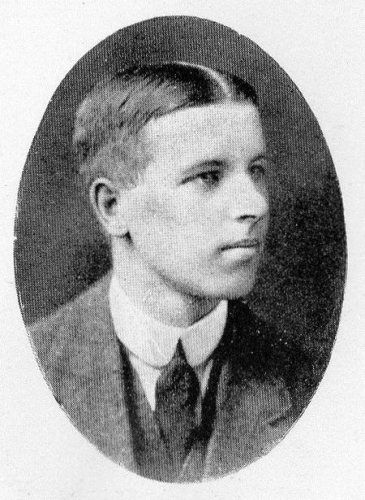
From: Liverpool
(110 Years this day)
Thursday 12th October 1916.
20 years old
He was billeted at Prescot Watch Factory from 14th September 1914, he trained there and also at Knowsley Hall. On 30th April 1915 the 17th Battalion alongside the other three Pals battalions left Liverpool via Prescot Station for further training at Belton Park, Grantham. They remained here until September 1915 when they reached Larkhill Camp on Salisbury Plain.
The Thiepval Memorial, the Memorial to the Missing of the Somme, bears the names of more than 72,000 officers and men of the United Kingdom and South African forces who died in the Somme sector before 20 March 1918 and have no known grave. Over 90% of those commemorated died between July and November 1916.
On 01st August 1932 the Prince of Wales and the President of France inaugurated the Thiepval Memorial in Picardy. The inscription reads: “Here are recorded the names of officers and men of the British Armies who fell on the Somme battlefields between July 1915 and March 1918 but to whom the fortune of war denied the known and honoured burial given to their comrades in death.”
“Private Edward Shepherd, the youngest son of Mr. J. F. Shepherd, formerly of “Lanercost”, Aughton (now of Devon), has been killed in action in France. He was in his early twenties and joined the King’s Liverpool Regiment soon after the war broke out.”
“Killed in action in France on 14th inst., George Edward Shepherd, Machine Gun Co., second and dearly-beloved son of Mr. and Mrs. Shepherd, late of “Lanercost”, Aughton.”
“October 14, killed in action, aged 20 years, George Edward Shepherd, King’s (Liverpool Regiment), younger son of J. F. and Lily Shepherd, Exmouth, Devon (late of Meadowcroft, Aughton, Lancashire).”
We currently have no further information on George Edward Shepherd, If you have or know someone who may be able to add to the history of this soldier, please contact us.
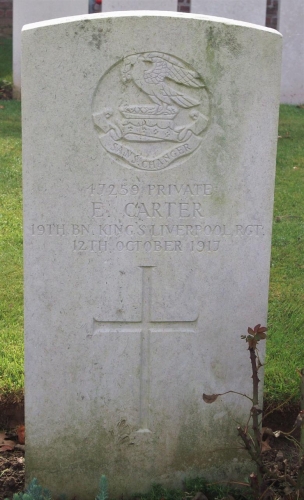
From: Ashton upon Mersey
D.O.W (109 Years this day)
Friday 12th October 1917.
34 years old
Ernest Carter was born in Ashton on Mersey on 6th January 1883, the son of Henry Carter and his wife Jane (née Eachus). Henry, from Uttoxeter, Staffs, and Jane, born in Crewe, married in 1867. Of the surviving children, Ernest had older siblings Annie, Walter, Herbert, and Henry (Harry), and a younger sister Ada.
Bailleul was occupied on 14 October 1914 by the 19th Brigade and the 4th Division. It became an important railhead, air depot and hospital centre, with the 2nd, 3rd, 8th, 11th, 53rd, 1st Canadian and 1st Australian Casualty Clearing Stations quartered in it for considerable periods. It was a Corps headquarters until July 1917, when it was severely bombed and shelled, and after the Battle of Bailleul (13-15 April 1918), it fell into German hands and was not retaken until 30 August 1918.
The earliest Commonwealth burials at Bailleul were made at the east end of the communal cemetery and in April 1915, when the space available had been filled, the extension was opened on the east side of the cemetery. The extension was used until April 1918, and again in September, and after the Armistice graves were brought in from the neighbouring battlefields.
BAILLEUL COMMUNAL CEMETERY EXTENSION contains 4,403 Commonwealth burials of the First World War; 11 of the graves made in April 1918 were destroyed by shell fire and are represented by special memorials. There are also 17 British burials of the Second World War (all 1940) and 154 German burials from both wars (10 of which are Second World War).
During the Second World War the cemetery suffered major bomb damage that necessitated the replacement of nearly 200 headstones after the war.
Both the Commonwealth plot in the communal cemetery and the extension were designed by Sir Herbert Baker.
“On 12 inst., died of wounds received in action, Lance Corporal E. (“Dick”) Carter, King’s (Liverpool Regiment), beloved husband of Grace Carter of Langroyd Lodge, Spath Road, West Didsbury, aged 34.”
“In loving memory of Ernest (Dick) Carter, King’s (Liverpool Regt.) died of wounds October 12th, 1917. From Mother and Brothers, Ashton on Mersey.“
We currently have no further information on Ernest Carter, If you have or know someone who may be able to add to the history of this soldier, please contact us.
From: Hartshorne, Derbyshire
(106 Years this day)
Tuesday 12th October 1920.
46 years old
We currently have no further information on Samuel Worstall, If you have or know someone who may be able to add to the history of this soldier, please contact us.