
1885 - 1916
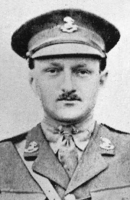
CPL David Wallace Crawford
1887 - 1916
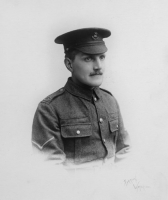
Lce-Corpl John Joseph Nickle
1894 - 1916
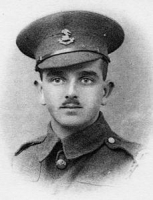
Pte 17911 Morton Neill
1897 - 1916
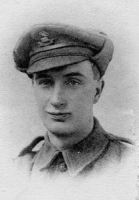
Lieut Edward Stanley Ashcroft
1883 - 1918
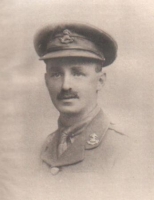
Pte 41806 George Spencer
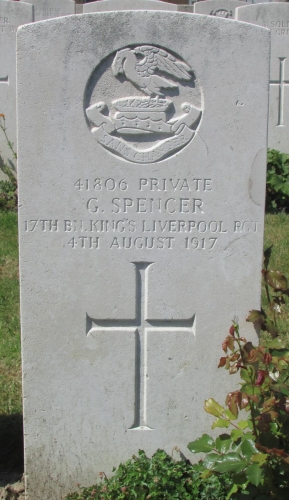
- Age: 21
- From: Liverpool
- Regiment: The King's (Liverpool Regiment) 17th Btn
- K.I.A Saturday 4th August 1917
- Commemorated at: Zantvoorde Brit Cem
Panel Ref: III.J.18
George Spencer was born was born on 30 January 1896 at Liverpool and was and baptised on the 12th February 1896. He was the son of John Spencer and his wife Mary Jane (nee Young) who were married at Our Lady & St. Nicholas C.of E. Church, Liverpool on the 30th May 1876, at which time they were both living at Fox Street. John Spencer gave his occupation as a baker.
The 1901 Census shows the family are living at 11 Court 1 House, Douro St, Liverpool. George is 5 years of age. His father, John, is shown as 47 years of age and a general labourer born in Liverpool. His mother Mary, is shown as aged 39 and also born in Liverpool. George's siblings in the household are Margaret Spencer 19, charwoman, b. Liverpool John Spencer 10, b. Liverpool and Emily Spencer 3, b. Liverpool.
By 1911 the family have moved to 23 Back Strickland St, Liverpool. His parents are both in the household. George is now 15 years of age and working as a confectioner's errand boy. His sister Emily, aged 13 is also in the household. His parents are shown to have been married for 32 years - 5 of their 10 children had survived. George's surviving siblings were William H. (born 1878), Margaret (born 1882), Mary Ann (born 1885), John (born 1891) and Emily (born 1898).
On the 27th December 1914 George's father John Spencer was on duty as a member of No 5 Supernumery Company 3rd/5th Battalion of the King's Liverpool Regiment (National Reserve) when he fell off a gangway into Carriers' Dock at Bootle and was drowned. His body was not recovered until the 10th February 1915 at which time he was buried at Anfield Cemetery.
A report on his death appeared in the Liverpool Daily Courier on the 15th February 1915:
NATIONAL RESERVIST DROWNED.
At the end of December a National Reservist named John Spencer, of Liverpool, while on duty at the Carriers' Dock, Bootle, guarding a German prisoner on the barque Ellen, went aboard another vessel in mistake.
Going ashore again he fell off the gangway into the water and disappeared. When the Ellen was moved a few days ago his body was recovered from the bottom of the dock. it having been pinned beneath the vessel for several weeks.
At the inquest on Saturday it was stated the deceased, who was 61 years of age, was a cotton porter in ordinary life. The jury returned a verdict of "Accidental death."
George enlisted in Liverpool as Private 41806 in The King's Liverpool Regiment and was posted to the 17th Battalion.[1st Liverpool Pals]. The 17th Battalion had arrived in France on 7 November 1915 around the time that he enlisted and he subsequently crossed to France as one of the reinforcements who made up the terrible losses the Battalion suffered during the Battle of the Somme.
Prior to crossing to France, George married Rebecca Mary Burns at St.Matthew's C.of E. Church, Toxteth Park on the 12th January 1916 at which time his home address was 7 Clarke Street and he was working as a carter. He and his bride both gave their age as nineteen but Rebecca was only sixteen. They had a son, also named George, born on 07th July 1916.
On 4 October 1916 George was posted to France as one of the reinforcements who made up the losses that the Battalion suffered during the Battle of the Somme. He joined his Battalion in the Field on 18 October 1916. It is known that between 14 and 19 May 1917 he was treated at 97 Field Ambulance for impetigo.
According to a contemporary report he was killed in action with ‘D’ Company between 31 July and 4 August 1917, and although his Commonwealth War Graves records that he was killed on 4 August it appears that he was actually killed in action on 31 July 1917 during the 3rd Battle of Ypres. This was during the fighting at Pilckem Ridge which took place between 31 July and 2 August. The war diary for the 17th Battalion for 31 July and the previous day states:-
Chateau Segard 30/7/17 :
At 8.30am the Battalion moved to Promenade Trench at the south side of Zillebeke Lake. No casualties were sustained and the Battalion assembled in accordance with orders.
Promenade Trench 31/7/17:
At 5:15am the Battalion moved in order 'A', 'B','C'. 'D' Companies to the Forward Assembly. Position at Maple Copse, where 2/Lieut. N. Henry MC [Military Cross] had made arrangements for marking position with screw pickets and sandbags. The Battalion came under desultory shell fire at Zillebeke. This increased in severity in the neighbourhood of Maple Copse, and the RSM was wounded, Signalling Sergt, JD Rigby was killed, also 3 signallers and a Battalion Runner put out of action. On arrival at Forward Assembly Position, 2/Lieut. CL Childs (Left Flank Guide) was wounded and 2/Lieut. C Bassingham took his place. At 7:50am the Blue Line was reported captured. The Battalion moved forward in artillery formation of half company columns on a bearing of 104 degrees magnetic, with orders to halt just West of Stirling Castle. During the advance the Battalion was shelled with Field Guns, 5.9" and 8" Howitzers, and suffered casualties from machine gun fire. On arrival at Stirling Castle at 8:40am, it was reported that our troops were held up between Blue and Black lines. Seeing that the programme of operations was not being carried to time, and that every minute of delay caused a larger gap between the leading waves and the barrage, the Commanding Officer ordered the Battalion forward with the idea of reinforcing and carrying forward the leading troops into the Black line. The information as to the leading troops was erroneous and, on crossing the crest of the Stirling Castle Ridge, it was discovered that no British troops were in front of this battalion in spite of the fact that the barrage was some four hours away ahead of the 17th Battalion KLR, and in spite of heavy Machine Gun, Rifle and shell fire, the Battalion pushed on until the left, (C Company, Capt. GG Rylands), rested on Clapham Junction. There the advance was stopped. The Battalion dug itself in and held on to the ground gained in spite of very severe shelling from Field Guns and 5.9" Howitzers. During this shelling the following casualties were sustained: Lieut. FR Dimond, (OC B Company) and 2/Lieut. EN Goldspink (A Company) were killed together with 35 other Ranks; 2/Lieut. C Bassingham, (D Company) and 2/Lieut. LEL York, (D Company) and 120 other ranks were wounded. (A large proportion of N.C.O.’s were among the above casualties.)
The following extract has been transcribed from the Regimental History by Everard Wyrall:-
“Meanwhile the two battalions of the 79th Brigade detailed to go through and capture the Green Line had, in accordance with orders, moved forward, i.e., 20th King's on the right, 17th King's on the left, to the Promenade on the previous night. Between 5 and 5.20am on the 31st both battalions marched to forward positions of assembly immediately east of Maple Copse, where they were heavily shelled and suffered a good many casualties. At 7.50am they moved forward in artillery formation, all the while under heavy hostile shell fire, which by now had assumed the character of a heavy barrage.On approaching the Blue Line it was apparent that the troops in front (21st and 90th Brigades) were held up and were unable to advance beyond it. A message, sent back from the 20th King's to Brigade Headquarters, stated that the Black Line had not been taken and that companies were digging in on and consolidating a line running south from Stirling Castle. At this period touch had been established with the 17th King's on the left. A few minutes later a message from Brigade Headquarters stated that the barrage was being brought back on Inverness Copse and Jargon and Jap Trenches at 10.20 a.m. and that the 17th and 20th King's were to co-operate in a further attack. It was obvious that, as the message was not received until 11.6 a.m. and the barrage was ordered for 10.20am, it came too late for compliance. No further movement was made that day. There is among the documents of the 20th King's a message from the O.C. (covered plentifully with the mud of Flanders) to Brigade Headquarters which says: "Front line now roughly along road south of Clapham Junction . . . Enemy machine guns very active and any movement in forward positions is at once stopped by machine gun fire. . . Without careful artillery preparation further attacks will be useless. I am therefore holding on to present line." The 17th King's had similarly come under heavy shell fire when in the neighbourhood of Maple Cross, losing the Regimental Sergt. Major (who was wounded), and Signalling Sergt. J. D. Rigg (killed). Three signallers and a battalion runner were also wounded. On the Forward Assembly Position Second-Lieut. C. L. Childs was wounded. The battalion, on arrival at Stirling Castle at 8.40am, received reports that the troops were held up behind the Blue and. Black Lines, and the C.O. ordered his men forward with the idea of reinforcing and carrying forward the leading troops to the Black Line. But it was only when crossing the Stirling Castle Ridge that the 17th King's discovered that no British troops were in front of them. However, they pushed on until the left flank rested on Clapham Junction. There the advance was stopped, companies digging in and holding on to the ground in spite of very heavy shelling from the enemy's forward guns and howitzers. During this shelling Lieut. F. R. Dimond, Second Lieut. E. N. Goldspink and thirty five other ranks were killed, while Second Lieuts. C. Bassinghem, L. E. L. York, and 120 other ranks were wounded.
His wife, Rebecca received a letter from his 2nd Lt dated 8th August 1917:
Dear Mrs Spencer,
It is with great regret that I have to inform you of the death in action of your husband. He was killed by a shell which exploded in the trench he was standing in. He will be greatly missed by his comrades as he had a bright and cheerful disposition. You will derive a little comfort from the knowledge his death was practically instantaneous and I do not think he suffered any pain. He was killed July 31st.
I must now close hoping you will accept my sympathy.
F.B.Walker 2nd Lieut.
She also received a letter from the Chaplain of the 20th Battalion:
Dear Mrs Spencer,
I expect by now you have heard that your husband :- Pte G. Spencer No.41806, 17th K.L.R. has been killed in action during the recent fighting round Ypres. It is, I know, very hard to face calmly the parting from those we love best, but it is a great comfort to me and I hope it is to you also to remember Christ's promises and pledge of a real future life. I think of these men as taken home by their heavenly Father, where they enjoy a fuller and better life. I feel sure that their splendid and heroic qualities of self sacrifice and devotion are in no way lost, but that they gladly use them still in the service of God for the benefit of mankind.
May God bless and strengthen you to bear your sorrow bravely and guide you through the coming days which I expect look rather black for you at present.
Yours Sincerley
Edgar N. Moore
Church of England Chaplain
The letter of comfort sent by the Reverend Edgar Noel Moore would be one of many that he sent in his capacity as Chaplain. Sadly, Edgar was to fall also during the war. He was killed in action on 5th January 1918 and now rests at Railway Dugouts Burial Ground, Ypres.
A report on George's death appeared in the Liverpool Echo dated 6th September 1917:
KILLED IN ACTION.
Private George Spencer, K.L.R., aged 21, died on July 31. Prior to the war he was employed by Messrs. Edmondson, Fox-street, Liverpool. He resided with his wife and baby at 32, College-lane, late of 3, Strickland-street, Liverpool. Deeply mourned by his loving mother and sister.
George now rests at Zantvoorde British Cemetery, Belgium.
Zantvoorde British Cemetery was made after the Armistice when remains were brought in from the battlefields and nearby German cemeteries. Many were those of soldiers who died in the desperate fighting round Zantvoorde, Zillebeke and Gheluvelt in the latter part of October 1914.
There are now 1,583 servicemen of the First World War buried or commemorated in the cemetery. 1,135 of the burials are unidentified. Special memorials commemorate 32 soldiers buried in two of the German cemeteries whose graves could not be found on concentration. The cemetery also contains one Second World War burial.The Household Cavalry Memorial, unveiled by Lord Haig in May 1924, stands on the South side of the village at the place where part of the Brigade was annihilated in 1914.
The cemetery was designed by Charles Holden.
Reported killed in the Weekly Casualty List 18th Sept 1917 - Spencer, 41806, G. (Liverpool);
Soldiers Effects to widow Rebecca M., Pension to Rebecca Mary Dooley and child George Spencer.
His widow Rebecca, remarried on the 26th January 1920 to Albert Dooley at St.James' C.of E. Church, Toxteth Park. She has five children with her second husband and died at Liverpool in 1979.
Grateful thanks are extended to Johanna Peirson the Grand daughter of George Spencer's son George. Johanna contributed to this biography and also to the Liverpool Pals Memorial Fund in honour of her Great Grandfather. The family were deighted to know that as George was not posted to France until October 1916 as he will have had the chance to see his son who was born on 07th July 1916. It was always thought that they had not had the chance to see each other.
We currently have no further information on George Spencer, If you have or know someone who may be able to add to the history of this soldier, please contact us.
Killed On This Day.
(110 Years this day)Friday 20th October 1916.
L/Cpl 22676 Albert Dunstan
29 years old
(110 Years this day)
Friday 20th October 1916.
Pte 22677 Alfred Dutton
33 years old
(110 Years this day)
Friday 20th October 1916.
Pte 21574 Henry McDowall
25 years old
(110 Years this day)
Friday 20th October 1916.
Sgt 22782 Ellis Molyneux
30 years old
(110 Years this day)
Friday 20th October 1916.
A/CSM 22181 Reginald William Moulton
28 years old
(110 Years this day)
Friday 20th October 1916.
Pte 35948 Albert Newton
26 years old
(110 Years this day)
Friday 20th October 1916.
Pte 23127 Charles Henry Nickson
19 years old
(110 Years this day)
Friday 20th October 1916.
Pte 52217 Norman Samuel Rowe
19 years old
(110 Years this day)
Friday 20th October 1916.
Pte 23841 Alexander Taylor
20 years old
(110 Years this day)
Friday 20th October 1916.
Pte 23856 Samuel John Webber
23 years old
(110 Years this day)
Friday 20th October 1916.
Pte 51609 George Whitehead
20 years old
(110 Years this day)
Friday 20th October 1916.
Pte 37905 William Williams
35 years old
A total of 20 Pals were killed on this day. View All