
1885 - 1916
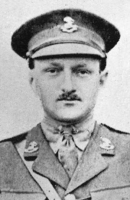
CPL David Wallace Crawford
1887 - 1916
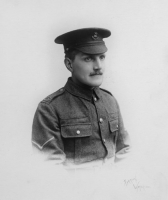
Lce-Corpl John Joseph Nickle
1894 - 1916
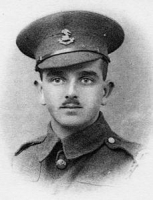
Pte 17911 Morton Neill
1897 - 1916
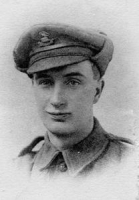
Lieut Edward Stanley Ashcroft
1883 - 1918
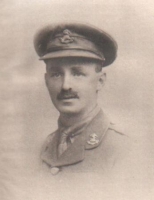
L/Cpl 26185 Sydney Scott
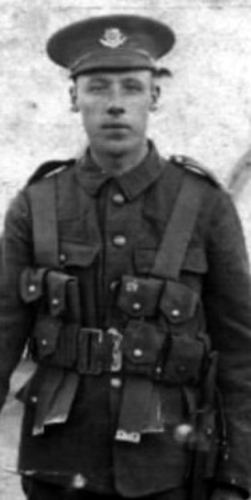
- Age: 24
- From: Everton, Liverpool
- Regiment: The King's (Liverpool Regiment) 17th Btn
- K.I.A Sunday 30th July 1916
- Commemorated at: Guillemont Rd Cem
Panel Ref: V.M.7
Sydney Scott was born in the March quarter of 1892 in Everton, Liverpool, the son of Thomas Scott and his wife Margaret (nee Hannah) who married on the 30th July 1887 at St Mary, Kirkdale. Thomas was a 23 year old clerk, father Robert, whilst Margaret was aged 20, father William deceased, both of 58 Conyers St.
At the time of the 1901 census the family is living at 83 Saint Domingo Vale, Everton, with seven children. His father Thomas is aged 37, born at sea, and is employed as a grain merchant’s warehouseman, mother Margaret aged 33, children William 12, Barbara 11, Sidney 9, Thomas 7, Annie 5, Vera 3 and Robert 2(all born Liverpool).
The 1911 Census shows the family have moved across the Mersey and are living at 17 Beech Road, Woodhey, Higher Bebington, Cheshire. Sydney's father, Thomas, is aged 47, born at sea in 1864, his occupation is shown as a corn merchant clerk, his mother, Margaret, is aged 43, born in 1868 in Glasgow and has no occupation listed. They have been married for twenty three years and have nine children. Those listed in the household are; William aged 22, born 1889 occupation corn merchant clerk as is Sydney aged 19, born 1892, Barbara is aged 21, born 1890 no occupation listed, Thomas aged17, born 1894 is a solicitor’s clerk, Annie aged 15, born 1896, Vera aged 13, born 1898, Robert aged 12, born 1899 and Margaret aged 7, born 1904 are all at school, these children were all born in Liverpool. Martha aged 3, born 1908 was born in New Ferry, Cheshire. Also listed in the household is Martha Hannah noted as sister in law. She is aged 38, born 1873 occupation sick nurse who was born in Liverpool.
Another son, Leslie Stuart, was born in the March quarter of 1916.
Sydney enlisted in Liverpool on 12th August 1914 as Private 10810, Cheshire Regiment (Depot). He passed the medical examination and was posted to the 8th Bn. the same day. He gives his age as 22 years and 68 days, and his occupation as labourer. He is described as being 5’ 6 and five-eighths inches tall, weighing 132 lbs, 35” chest, with a fresh complexion, hazel eyes, and light brown hair. He has a tattoo of clasped hands on a heart on his right forearm, and three scars on his right thigh. He gives his religion as Wesleyan, and as next of kin his father Thomas, at 17 Beech Road, Rock Ferry.
Whilst training at Draycott Camp (Wiltshire) on 09th October 1914 Sydney was confined to barracks for 8 days and forfeited 5 days’ pay for overstaying his pass 125 hours and 45 minutes (over 5 days late).
It is not known whether Sydney was taken ill or incapacitated somehow whilst on leave, but the next day, 10th October, after serving 79 days, he was discharged as medically unfit.
He enlisted again in May 1915 in Liverpool as Private 26185, 17th Battalion, King’s Liverpool Regiment.
On 30th April 1915 the 17th Battalion alongside the other three Pals battalions had left Liverpool via Prescot Station for further training at Belton Park, Grantham. They remained here until September 1915 when they reached Larkhill Camp on Salisbury Plain.
Sydney crossed to France with his battalion on 07th November 1915. He was promoted to Lance Corporal, although the date is not known.
He was killed in action on the 30th July 1916, aged 24, at the village of Guillemont, France, during the Somme Offensive.
17th Battalion Diary 30th July 1916
The Battalion was in support to 19 & 20 Battalions K.L.R. 2 Coys. behind 19th & 2 Coys. behind 20th. Very thick mist. The attack was pushed home to the objective in places but in the main was held up by machine gun fire from hidden machine guns.
Fighting continued all day swaying backwards and forwards until by 6pm about 300 yards in depth had been gained & consolidated all along our front.
Casualties in the 17th Battalion were 15 Officers and 281 Other Ranks
Further details are reported in more detailed by Everard Wyrall in his book The History of the King’s Regiment (Liverpool) 1914-1919 Volume II 1916-1917
The 17th King’s had advanced (two companies each behind the 19th and 20th Battalions) in small columns. They too suffered heavily from machine-gun fire and were quickly absorbed into the waves that preceded them. They also shared the gains and losses of that terrible day.
When darkness fell on the battlefield the 30th Division held a line from the railway on the eastern side of Trones Wood , southwards and including Arrow Head Copse, to east of Maltz Horn Farm. On this line the division was relieved by the 55th Division during the early hours of the 31st July.
The events of 30th July 1916 were regarded at the time as Liverpool’s blackest day. There follows an extract from The History of the 89th Brigade written by Brigadier General Ferdinand Stanley which gives an indication of the events of the day.
Guillemont
Well the hour to advance came, and of all bad luck in the world it was a thick fog; so thick that you couldn’t see more than about ten yards. It was next to impossible to delay the attack – it was much too big an operation- so forward they had to go. It will give some idea when I say that on one flank we had to go 1,750 yards over big rolling country. Everyone knows what it is like to cross enclosed country which you know really well in a fog and how easy it is to lose your way. Therefore, imagine these rolling hills, with no landmarks and absolutely unknown to anyone. Is it surprising that people lost their way and lost touch with those next to them? As a matter of fact, it was wonderful the way in which many men found their way right to the place we wanted to get to. But as a connected attack it was impossible.
The fog was intense it was practically impossible to keep direction and parties got split up. Owing to the heavy shelling all the Bosches had left their main trenches and were lying out in the open with snipers and machine guns in shell holes, so of course our fellows were the most easy prey.
It is so awfully sad now going about and finding so many splendid fellows gone.
Sydney was buried close to where he fell and after the war, when graves were concentrated, his body was removed and reinterred in Guillemont Road Cemetery where he now rests.
Guillemont was an important point in the German defences at the beginning of the Battle of the Somme in July 1916. It was taken by the 2nd Royal Scots Fusiliers on 30 July but the battalion was obliged to fall back, and it was again entered for a short time by the 55th (West Lancashire) Division on 8 August. On 18 August, the village was reached by the 2nd Division, and on 3 September (in the Battle of Guillemont) it was captured and cleared by the 20th (Light) and part of the 16th (Irish) Divisions. It was lost in March 1918 during the German advance, but retaken on 29 August by the 18th and 38th (Welsh) Divisions.
The cemetery was begun by fighting units (mainly of the Guards Division) and field ambulances after the Battle of Guillemont, and was closed in March 1917, when it contained 121 burials. It was greatly increased after the Armistice when graves (almost all of July-September 1916) were brought in from the battlefields immediately surrounding the village and certain smaller cemeteries, including:-
HARDECOURT FRENCH MILITARY CEMETERY. The village of Hardecourt-au-Bois was captured by French troops on the 8th July 1916, and again by the 58th (London) and 12th (Eastern) Divisions on 28 August 1918. Five British Artillerymen were buried by their unit in the French Military Cemetery, in the middle of the village, in September 1916; and in 1918 the 12th Division buried in the same cemetery 14 men of the 9th Royal Fusiliers and two of the 7th Royal Sussex.
Guillemont Road Cemetery now contains 2,263 Commonwealth burials and commemorations of the First World War. 1,523 of the burials are unidentified but there are special memorials to eight casualties known or believed to be buried among them.
The cemetery was designed by Sir Herbert Baker.
The CWGC Graves Registration form shows Private S. Scott, K.L.R., later amended with correct rank and battalion.
His death was announced in the Birkenhead News on 23rd August 1916:
“Mr. and Mrs. Scott, of 6, Queen’s Road, Rock Ferry, have received official notice from the War Office that their second son, Lance-Corporal Sidney Scott of the King’s Liverpool Reg’t. (1st “Pals”), was killed in action on July 30. Lance-Corporal Scott, who was well known in the South End of the borough, joined the army at the commencement of hostilities, being in the 8th Cheshires, in which battalion he served for six months. He was afterwards discharged and enlisted in the 1st “Pals” in May 1915. Previous to enlisting he was in the forwarding business connected with the Alfred Holt Line. He was only 24 years of age. Mr. and Mrs. Scott have two other sons serving - Robert, who is in the 4th Cheshires and took part in the memorable landing at Suvla Bay; and Thomas, who also took part in the operations in Gallipoli with the 13th Divisional Cycle Corps, and was afterwards invalided to England and is now with the Essex Reg’t. Great sympathy will be extended to Mr. and Mrs. Scott and family in their sad loss.”
His eldest brother William also served. Enlisting on 07th December 1915, he was placed on the Reserve, and mobilised on 02nd October 1916 in the R.F.A. He served in France in 1917 and in Italy 1917-18, and was demobbed in July 1919 with a partial disability pension (sickness attributable to service).
Sydney earned his three medals. His Army pay and a War Gratuity of £4-10s went to his father. His mother was awarded a pension, but the amount is not clear from the pension card.
His father appears to have died in 1935 aged 72, and his mother two years later, aged 69.
Sadly, Sydney has not been found on any local memorial. His name is not listed on the Alfred Holt Blue Funnel Line Memorial, or on the Men of Birkenhead Cenotaph.
Grateful thanks are extended to June Portbridge who has given permission to use the photograph of Sydney now on the site. Sydney is wearing the Cheshire Regiment cap badge in the photograph so it will have been taken prior to his medical retirement from the Cheshire Regiment and therefore before his enlistment in the King's Liverpool Regiment as a Liverpool Pal.
June advised that her Great Aunt Ruth had visited Sydney's grave in the late 1990's. So he was still remembered by his family almost a century after his death.
We currently have no further information on Sydney Scott, If you have or know someone who may be able to add to the history of this soldier, please contact us.
Killed On This Day.
(110 Years this day)Friday 20th October 1916.
L/Cpl 22676 Albert Dunstan
29 years old
(110 Years this day)
Friday 20th October 1916.
Pte 22677 Alfred Dutton
33 years old
(110 Years this day)
Friday 20th October 1916.
Pte 21574 Henry McDowall
25 years old
(110 Years this day)
Friday 20th October 1916.
Sgt 22782 Ellis Molyneux
30 years old
(110 Years this day)
Friday 20th October 1916.
A/CSM 22181 Reginald William Moulton
28 years old
(110 Years this day)
Friday 20th October 1916.
Pte 35948 Albert Newton
26 years old
(110 Years this day)
Friday 20th October 1916.
Pte 23127 Charles Henry Nickson
19 years old
(110 Years this day)
Friday 20th October 1916.
Pte 52217 Norman Samuel Rowe
19 years old
(110 Years this day)
Friday 20th October 1916.
Pte 23841 Alexander Taylor
20 years old
(110 Years this day)
Friday 20th October 1916.
Pte 23856 Samuel John Webber
23 years old
(110 Years this day)
Friday 20th October 1916.
Pte 51609 George Whitehead
20 years old
(110 Years this day)
Friday 20th October 1916.
Pte 37905 William Williams
35 years old
A total of 20 Pals were killed on this day. View All