
1885 - 1916
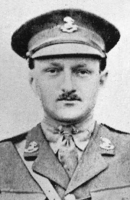
CPL David Wallace Crawford
1887 - 1916
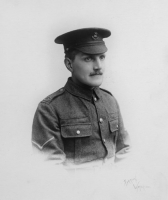
Lce-Corpl John Joseph Nickle
1894 - 1916
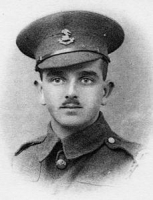
Pte 17911 Morton Neill
1897 - 1916
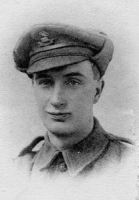
Lieut Edward Stanley Ashcroft
1883 - 1918
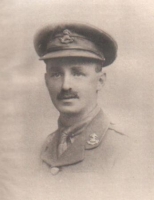
L/Cpl 16971 Douglas Wall Kemp

- Age: 21
- From: Chester
- Regiment: The King's (Liverpool Regiment) 18th Btn
- K.I.A Saturday 1st July 1916
- Commemorated at: Thiepval Memorial
Panel Ref: P&F1D8B &8 C.
16971 L/Corporal Douglas Wall KEMP, 18th Battalion, KLR.
Douglas Wall Kemp was born on 03rd April 1895 at 59 Bridge Street, Chester and was baptised in May 1895 in the Church of St Michael with St Olave. He was the second son of George Kemp, and his wife Mary (nee Wall) who were married on the 01st June 1893 at Holy Trinity, Coventry. Widowed George was a 40 year old chemist of 59 Bridge Street, Chester, father Joseph, whilst Mary was aged 33 of 29 Nicholas Street, father George.
The 1901 Census shows Douglas aged 6 living at 18 Prussia Road, Hoylake with his parents and two siblings. His father is a 48 year old retired chemist born in Allesley, Warwickshire, whilst his mother is 40 years of age and was born in Shustoke, Warwickshire. His siblings, both born in Chester are shown as: Philip G. aged 7 and Margery aged 4. His mother's brother George Wall is staying with the family, he is a 38 year old poultry farmer from Shustoke. Also present is Mary Whiteley aged 51 and described as mother's help.
By 1911 the family have moved to 1 Ethelbert Road, Meols, Birkenhead. Douglas is aged 16 and a schoolboy, he lives with his widowed father and two siblings. His father is now 59 and described as a tobacconist and newsagent, employer. His siblings are shown as Philip George now 17 and Margery aged 14. Also living in the household is Mary Whiteley aged 62 and described as housekeeper.
Douglas attended Caldy Grange Grammar School.
Douglas enlisted at St George's Hall in Liverpool on 31st August 1914, joining the 18th Battalion as Private 16971. he was aged 19 years 150 days, born in St Michael’s Parish, Chester. He gave his occupation as clerk and his next of kin as his father, 1 Ethelbert Road, Meols nr Birkenhead. He was described as being 5' 11" tall, weight 144lbs, 35" chest, with a good physical development. He had a fresh complexion with hazel eyes and brown hair. His religion was stated as Church of England.
From the 23rd September 1914 he was billeted at Hooton Park Race Course and remained there until 03rd December 1914 when they moved into the hutted accommodation at Lord Derby’s estate at Knowsley Hall. On 30th April 1915 the 18th Battalion alongside the other three Pals battalions left Liverpool via Prescot Station for further training at Belton Park, Grantham. They remained here until September 1915 when they reached Larkhill Camp on Salisbury Plain.
On 01st November 1915 he was appointed unpaid Lance Corporal and Lance Corporal (Paid) on 6th February 1916. He sailed to France with his Battalion on the 07th Novemeber 1915 aboard the SS Invicta.
He had been admitted to a Field Ambulance on 24th January 1916 suffering from synovitis and rejoined his unit on 27th January.
He was killed in action on 01st July 1916 at Montauban, aged 21.
18th Battalion Diary
At 6.30am the artillery commenced an intensive bombardment of the enemy’s trenches. Zero Hour – 7.30 am – the battalion commenced to leave their trenches and the attack commenced. The attack was pressed with great spirit and determination in spite of heavy shelling and machine gun enfilade fire which caused casualties amounting to 2/3rds of the strength of the Battalion in action. The whole system of German trenches including the Glatz Redoubt was captured without any deviation from the scheduled programme. Consolidated positions and made strong points for defence against possible counter attacks.
Graham Maddocks provides more detail concerning the events of the day:
As the first three waves began to move forward towards the German reserve line, known as Alt Trench and then on to the Glatz Redoubt itself, they suddenly came under enfilading fire from the left. This was from a machine gun which the Germans had sited at a strong point in Alt Trench. The gun itself was protected by a party of snipers and bombers, who, hidden in a rough hedge, were dug into a position in Alt Trench, at its junction with a communication trench known as Alt Alley. These bombers and snipers were themselves protected by rifle fire from another communication trench, Train Alley which snaked back up the high ground and into Montauban itself. The machine gun fire was devastating and it is certain that nearly of the Battalion’s casualties that day were caused by that one gun.
Lieutenant Colonel Edward Henry Trotter wrote in the conclusion of his account of the days action:
I cannot speak to highly of the gallantry of the Officers and men. The men amply repaid the care and kindness of their Company Officers, who have always tried to lead and not to drive. As laid down in my first lecture to the Battalion when formed, in the words of Prince Kraft:
“Men follow their Officers not from fear, but from love of the Regiment where everything had always and at all times gone well with them”.
Joe Devereux in his book A Singular Day on the Somme gives the Casualty Breakdown for the 18th Battalion as Killed in Action 7 Officers and 165 men and of those who died in consequence of the wounds 3 Officers and 19 men a total of 194 out of a total loss for the four Liverpool Pals Battalions of 257.
Douglas has no known grave and is commemorated on the Thiepval Memorial to the Missing of the Somme.
The Thiepval Memorial, the Memorial to the Missing of the Somme, bears the names of more than 72,000 officers and men of the United Kingdom and South African forces who died in the Somme sector before 20 March 1918 and have no known grave. Over 90% of those commemorated died between July and November 1916.
On 01st August 1932 the Prince of Wales and the President of France inaugurated the Thiepval Memorial in Picardy. The inscription reads: “Here are recorded the names of officers and men of the British Armies who fell on the Somme battlefields between July 1915 and March 1918 but to whom the fortune of war denied the known and honoured burial given to their comrades in death.”
He earned all three medals.
His death was reported in the Birkenhead News on 22nd July 1916:
Deeside Heroes Fall.
Harry Sparrow and Douglas Kemp.
Another Deeside athlete who is said to have answered the last call is Douglas Kemp, second son of Mr.George Kemp, the newsagent, Hoylake. It only seems like yesterday since Douglas was a school boy as Calday Grange Grammer School. He made his mark in the examination lists, and also in the playing fields. As a cricketer he was the best batsman of his time, as well as captain of the first eleven. As an all-rounder, he won the championship of the school in 1912, only four short years ago. When he left he started to work for a steamship company, Sir Alfred Holt's. He joined New Brighton Cricket Club, and soon proved worth a regular place in the second eleven, no mean honour for a mere youth, as the club is one of the best in the Liverpool district, and in normal times turns out three really strong elevens. To keep in touch with his office mates he afterwards played for the Booth-Holt C.C., Aigburth and turned out to be the best batsman in the club.The father was for many years sidesman at the church at Great Meols, where the family then resided, Douglas being for a short time in the choir. Both he and Harry Sparrow were in the Liverpool "Pals," and to their respective families sincere sympathy is extended. Though the expressed words may be few,the feeling is very deep. Since writing the above our correspondent learns that there can be no reasonable doubt about both these cases, though official news is still lacking. Lieut.Walter C.Glover (Hoylake) wrote intimating the death of Harry Sparrow, and the news was confirmed in a letter written to his own home by Sid Bird, an old clubmate. The loss of Douglas Wall Kemp was notified by Private John P. Morris (son of Jack Morris) in a beautiful letter written to Mr.Kemp, and confirmed in a later communication from Private Wm.Bland.
Douglas is also remembered on the following Memorials:
West Kirby war memorial located on Grange Hill overlooking West Kirby
St Hildeburgh Church, Hoylake
Alfred Holt, Blue Funnel Line, now in the offices of Ocean Group, India Buildings, Water Street, Liverpool.
On his file is a letter from a Private James MacFarlane who writes on behalf of Douglas’s father stating that his son is in France and they have had no word of him for a considerable time - “Kindly inform me whether you have knowledge of his whereabouts or if he has been reported to you as a casualty”. There is no reply on his file.
Personal items returned included:- 2 letters, hymn book, 5 cards, wallet, and insurance card to Paymaster 11th September 1916.
Soldiers Effects to father George, no Pension record found.
On 7th May 1919, George Kemp swore a declaration naming Douglas’ surviving family as himself, his son Philip George, aged 25 years, and his daughter Margery, 22 years, all living at 33 Church Road, Hoylake.
We currently have no further information on Douglas Wall Kemp, if you have or know someone who may be able to add to the history of this soldier, please contact us.
89th Brigade On This Day.
110 Years Ago.The Battle of the Transloy Ridges begins. more....
Killed On This Day.
(110 Years this day)Wednesday 18th October 1916.
Pte 32713 William Joseph Blayney
25 years old
(110 Years this day)
Wednesday 18th October 1916.
Pte 52464 William Bradford
18 years old
(110 Years this day)
Wednesday 18th October 1916.
Pte 17046 William Theophilus Broady
30 years old
(110 Years this day)
Wednesday 18th October 1916.
Pte 24646 Thomas Bulfield
22 years old
(110 Years this day)
Wednesday 18th October 1916.
Pte 17272 Michael Joseph Burke
26 years old
(110 Years this day)
Wednesday 18th October 1916.
Pte 29492 John Joseph Cadwell
22 years old
(110 Years this day)
Wednesday 18th October 1916.
L/Cpl 52443 James Caine
25 years old
(110 Years this day)
Wednesday 18th October 1916.
Pte 25828 Thomas Cooper
25 years old
(110 Years this day)
Wednesday 18th October 1916.
Cpl 17180 Arthur William Stanley Cork
26 years old
(110 Years this day)
Wednesday 18th October 1916.
Cpl 16706 Thomas Leonard Cromwell
26 years old
(110 Years this day)
Wednesday 18th October 1916.
Pte 32741 Frederick Fitzroy
22 years old
(110 Years this day)
Wednesday 18th October 1916.
Sgt 32690 William Percy Golothan
26 years old
A total of 51 Pals were killed on this day. View All