
1885 - 1916
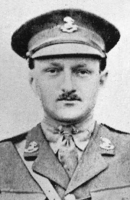
CPL David Wallace Crawford
1887 - 1916
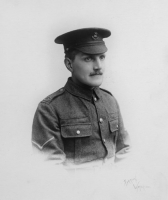
Lce-Corpl John Joseph Nickle
1894 - 1916
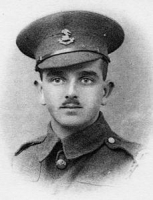
Pte 17911 Morton Neill
1897 - 1916
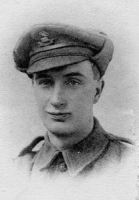
Lieut Edward Stanley Ashcroft
1883 - 1918
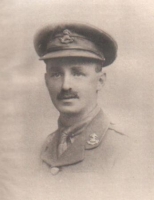
Pte 47456 Joseph Edward Kearns
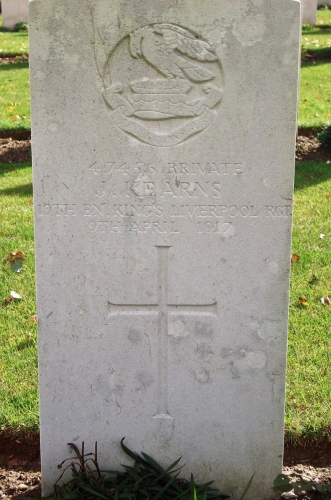
- Age: 21
- From: Liverpool
- Regiment: The King's (Liverpool Regiment) 19th Btn
- K.I.A Monday 9th April 1917
- Commemorated at: St Martin Calvaire Brit Cem
Panel Ref: I.A.17
Joseph Edward Kearns was born on the 30th October 1895 and was baptised 19th November 1895 at Our Lady of Immaculate Conception Church, Liverpool. He was the son of John Peter Kearns and Catherine Thursby who were married in May 1877 in St George's Church, Everton, Liverpool.
Joseph was 5 at the time of the 1901 census and he lived at 23 Potters Street, Everton with his parents John Peter aged 52 who was a blacksmith and had been born in Ireland, and Catherine aged 41 who was Liverpool born. Besides Joseph, the couple had another eight children living with them: Edith aged 23 and Catherine 21, who were both kitchen maids, Elizabeth 18 and Sarah 15 who were both tailoresses, Frances 13, John 11 and Jane 7 who were all at school and last but not least little Nellie aged 3. The family also had a boarder, a 20 year old sailor called John Reddington.
The family had moved to 38 Rupert Lane, Everton by the time of the 1911 census. Joseph is now at work as a grocers errand boy. The family are living in the household of the eldest daughter Edith who was now married to Henry Turner. Edith and Henry had been married for 10 years and had no children, but they had a 5 year old adopted daughter, Alice Leybourne. Joseph’s parents are living in the house as well as his siblings – John, a clerk in a cafe, Jane, a wire weaver and Sarah is a tailoress. Also living there is his married sister Frances and her one year old son John.
Joseph enlisted in Liverpool and was serving in the 19th Battalion, The King’s Liverpool Regiment as Private No 47456 when he was killed in action, aged 21, on 09th April 1917.
Everard Wyrall records the events of the 9th April 1917 for the 17th, 19th and 20th Battalions in Volume 2 of his History of the King's Regiment (Liverpool).
The 89th Brigade formed up for the attack with the 19th King's on the right and the 20th King’s on the left. The 17th King’s supplied the “mopping up" parties and he 2nd Bedfords were in close support.
It was just after 3pm when the advance began “According to scheduled time the waves advanced in good style and with determination; everyone was cheerful and in the best of spirits”
That advance is described by others as magnificent. From the OP’s the observing officers saw a wonderful sight – long lines of men advancing steadily up a long and gradual slope towards the enemy’ front line. Then suddenly they disappeared. The observers quite pardonably, imagined that the German front line had fallen into the hands of the assaulting troops and that the latter were on the way to the enemy’s support line. Alas something very different had happened. When the advancing troops had reached the summit of the long slope up which they advanced the ground suddenly dipped before the German front line , and when the observing officers thought they were already in the Bosche lines they had not, as a matter of fact, even reached the wire. What the observers took to be the front line was really the support line; the front line could not be seen - it lay just behind the crest of that slight rise in the ground.
The attacking waves of the 19th King’s got within 100 yards of the German wire but were then held up. They were faced by three belts of entanglements, practically untouched by our artillery, and nothing could be done but to dig in or else take shelter in the many shell- shell-with which “No Man’s Land" was pitted. By this time the battalion’s losses were very heavy, and when darkness fell “A" and “B" Companies (about 140 in all) lay in shell-holes, two or three hundred yards north east of St. Martin,but just south of the Cojeul River, and “C" and “D" Companies (140 all ranks) were along the river bank, but on the northern side about 150 yards north east of St. Martin.
The first waves of the 20th King’ advanced at 3.7pm. At 4pm Lieut Beaumont, commanding “A" Company, reported that he had had some forty casualties in passing through the enemy’s barrage. The next message, timed 4.40pm, stated that the position of the battalion at that period was on a crest in front of the enemy’s wire and about 100 yards from it. On the right the 21st Division was observed to have penetrated the enemy’s front line, but in the left the right Battalion of the 21st Brigade (the Wilts) was on the St. Martin- Neuville Vitasse road; the left flank of the 20th King's was, therefore, “ in the air”.
Urgent messages were sent up from Battalion Headquarters to “push on, keeping in touch with right” But little else could be accomplished until those formidable belts of wire had been cut sufficiently to allow the rapid passage of the attacking troops, headed by their bombers.
At 9:30 that night 89th Brigade Headquarters ordered both the 19th and 20th Battalions to withdraw, the former to the two sunken roads running south east from St. Martin, the latter to north west of St. Martin; the guns had been ordered to cut the enemy’s wire during the night in preparation for another attack during the 10th April.
Of the 17th King’s - the “moppers up" – there is little to relate. There was nothing to “mop up" so that they did not function. Yet they had shared all the perils of the advance, and when after they had fallen back and at midnight held the following positions, “B", “C", and “D" Companies in and around the sunken road north of Boiry-Becquerelle and “A" Company in trenches west of Henin, they lost 2 officers and 16 other ranks killed, and 3 officers and 48 other ranks wounded.
Joseph now rests at St Martin-Calvaire British Cemetery, France.
The village of St. Martin-sur-Cojeul was taken by the 30th Division on 9 April 1917. It was lost in March 1918 but retaken in the following August. St. Martin Calvaire British Cemetery was named from a calvary which was destroyed during the war. It was begun by units of the 30th Division in April 1917 and used until March 1918. Plot II was made in August and September 1918. The cemetery contains 228 Commonwealth burials of the First World War, five of them unidentified. There are also three German graves within the cemetery. The cemetery was designed by Sir Edwin Lutyens.
The Liverpool Echo of a year later on the 09th April 1918 published the following tribute to Joseph:
Kearns – In sad but loving remembrance of Private Joseph Kearns (K.L.R), killed in action in France, 9th April 1917 – never forgotten by his brother John and sister in law Sarah. RIP
The Liverpool Echo on the 10th April 1918 printed the following:
KEARNS - In loving memory of JOSEPH, second son of John and Catherine KEARNS, killed in action, Easter Monday April 9 1917. R.I.P. - Never forgotten by Father, Mother, Brother and Sisters at 38 Rupert Lane, Everton
Soldiers effects and pension to his mother Catherine.
Joseph is commemorated in the Hall of Remembrance, Liverpool Town Hall, Panel 67.
His father died in 1926, aged 78, and was buried at Ford Cemetery on the 17th December, address 38 Rupert Lane and his mother died in 1931, aged 71, and was buried at Ford Cemetery on the 24th March, address 86 Shaw Street.
We currently have no further information on Joseph Kearns, If you have or know someone who may be able to add to the history of this soldier, please contact us.
89th Brigade On This Day.
110 Years Ago.The Battle of the Transloy Ridges begins. more....
Killed On This Day.
(110 Years this day)Wednesday 18th October 1916.
Pte 32713 William Joseph Blayney
25 years old
(110 Years this day)
Wednesday 18th October 1916.
Pte 52464 William Bradford
18 years old
(110 Years this day)
Wednesday 18th October 1916.
Pte 17046 William Theophilus Broady
30 years old
(110 Years this day)
Wednesday 18th October 1916.
Pte 24646 Thomas Bulfield
22 years old
(110 Years this day)
Wednesday 18th October 1916.
Pte 17272 Michael Joseph Burke
26 years old
(110 Years this day)
Wednesday 18th October 1916.
Pte 29492 John Joseph Cadwell
22 years old
(110 Years this day)
Wednesday 18th October 1916.
L/Cpl 52443 James Caine
25 years old
(110 Years this day)
Wednesday 18th October 1916.
Pte 25828 Thomas Cooper
25 years old
(110 Years this day)
Wednesday 18th October 1916.
Cpl 17180 Arthur William Stanley Cork
26 years old
(110 Years this day)
Wednesday 18th October 1916.
Cpl 16706 Thomas Leonard Cromwell
26 years old
(110 Years this day)
Wednesday 18th October 1916.
Pte 32741 Frederick Fitzroy
22 years old
(110 Years this day)
Wednesday 18th October 1916.
Sgt 32690 William Percy Golothan
26 years old
A total of 51 Pals were killed on this day. View All