
1885 - 1916
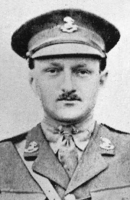
CPL David Wallace Crawford
1887 - 1916
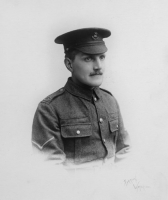
Lce-Corpl John Joseph Nickle
1894 - 1916
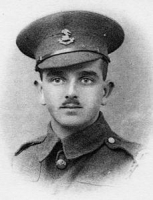
Pte 17911 Morton Neill
1897 - 1916
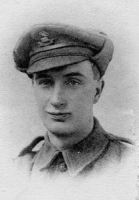
Lieut Edward Stanley Ashcroft
1883 - 1918
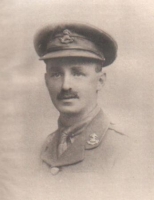
2nd Lieut Gerald Lismore Grennan
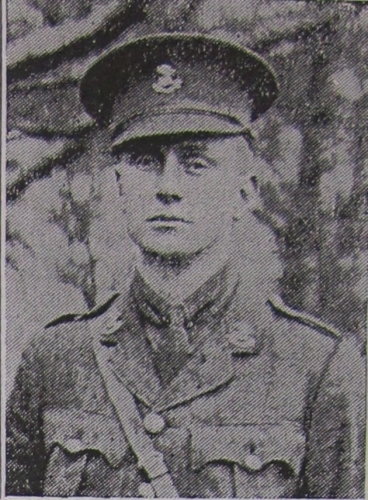
- Age: 19
- From: Southport, Lancs
- Regiment: The King's (Liverpool Regiment) 20th Btn
- K.I.A Thursday 12th October 1916
- Commemorated at: Thiepval Memorial
Panel Ref: P&F1D8B &8 C.
Gerald Lismore Grennan was born in 1897 the son of Edward Henry Grennan and his wife Mary (Watson). His parents married on 23rd February 1878 at Girgaum, Bombay, whilst his father was a member of the Bombay Police Service. Superintendent Grennan was foremost in opening career paths for literate Indians of the upper classes into the Police. According to the 1921 census his father was born in Derbyshire around 1849, and his mother in Bellary, India in 1858.
The Madras Times of 02nd January 1902 featured details of the wedding of Gerald's sister, Mary Wilhemina.
A WEDDING IN BOMBAY —The wedding solemnised at the Bowen Memorial Church, Apollo Bunder, of Mary Wilhelmina, second daughter of Mr. E. H. Grennan, Superintendent of Police, and Alfred George Newell, M.D., the third son of Captain W. Newell, late of the P. and 0. Dockyard, Bombay. The Church was prettily decorated for the occasion with palms and flowers. The bride, who was given away by her father, was attended by Miss R. Grennan and Miss N. Crummy, as bridesmaids.
The Homeward Mail from India, China and the East edition of 01st December 1906 featured another sisters weeding, this time Ruth:
Nov. 14, at Apollo Bunder, H. Whitehead to Ruth Constance, daughter of E. H. Grennan, late superintendent of police, Bombay.
His brother George Condict Parkman Grennan has a service record, he enlisted on the 18th December 1908 in Bristol as Pte 3219 The Rifle Brigade, aged 21 born in Bombay. He gave his family as:-
Father Edward Henry Grennan, 2 Northumberland Road(should be Street), Canton, Cardiff.
Brother Edward Watson Grennan, Bombay, India.
Brother William Charles Grennan, P.O. Vernon, British Columbia.
Brother Gerald Grennan, 2 Northumberland Rd, Canton, Cardiff.
At the age of 18 George immigrated to Canada arriving on 26 May 1906. He spent two years in Kelowna, B.C. before returning to England. George progressed to CSM 24338 KLR, WO II, then Lt Indian Army.
His brother, William Charles Grennan, who joined him in BC in 1907, stayed in Canada and enlisted with the CEF (#2683718) in 1918.
His father, Edward Henry, appears on the Lancashire Electoral Roll 1912-14, most probably at 21 Chester Road, Southport.
Gerald was educated at Southport Grammar School. He left from the port of Liverpool on the 02nd May, 1914 aboard the Canada, a ship of the White Star- Dominion Line which docked in Montreal. The passenger list has him aged 17 and occupation joiner. He was working in a bank before he returned to this country on the outbreak of war.
He enlisted as Private 17589 joining the 19th Battalion (“Pals”) of The King's Liverpool Regiment on September 03rd, 1914. Two days later he received a commission, and after training at Woolwich, Cheshire and Knowsley and went on Active service in April 1915. He joined the colours aged 17 and was over 19 at the time of his death.
His brother was wounded and reported in theLiverpool Daily Post on 11th September 1916:
King’s (Liverpools) - Grennan, 24338, Sgt G. C. (Southport);
Gerald was serving in the 20th Battalion, The King’s Liverpool Regiment as a Second Lieutenant when he was killed in action on the 12th October 1916, aged 19, during the Battle of the Transloy Ridges which was part of the ongoing Somme Offensive.
According to the 20th Bn War Diary, on 10th October 1916 the battalion marched from Dernancourt via Mametz to Bazentin Le Grand where it bivouacked for the night. The next day the battalion moved up to site for assembly trenches, arriving about 11 p.m., where it dug in two good trenches, Nos.1 and 2 Coys front and Nos.3 and 4 Coys in rear.
From the War Diary:
Near Eaucourt L’Abbaye. 12/10/1916. The 4th British and 6th French armies continued the attack. Zero 2.5 p.m. The whole XVth Corps attacked […] The attack of 89th Inf Bde was carried out with 2nd Bn Bedf Regt on right, 17th Bn KLR on left, 20th Bn KLR in support, 19th Bn KLR in reserve. Battalions attacked in four waves. On the departure of the attacking battalions Nos. 1 and 2 companies advanced, each in two waves, to garrison the front line trench vacated by 2nd Bn Bedf Regt on right and 17th KLR on left. On Nos 1 and 2 Coys vacating front assembly trench, it was occupied by two platoons of Nos. 3 and 4 Coys respectively, from rear assembly trench. As the assaulting waves left their trenches they were met by intense machine gun fire, especially on our left. The enemy also opened heavy barrages on our front support and assembly trenches. […] Capt. H. Beckett, commanding No.1 company, reached the front line with few casualties, but Lieut R.D. Paterson leading No.2 company was killed. His company also had few casualties. The assaulting battalions were held up by very heavy machine gun fire, and made little progress. […] At 4.20 p.m. two platoons, No.4 Coy, under Cpl Brighouse, were sent up to reinforce the left, and No.3 Coy under Cpl Sutton followed at 4.45 p.m. Battalion HQ moved up to front line at 4.55 and remaining two platoons of No.4 Coy moved up to join Cpl Brighouse.
Casualties during action:
Officers – Killed Lieut. R.D. Paterson, 2nd Lieut G.L. Grennan, Wounded – 2nd Lieuts A.E. Griffin, L.E. Mclean Hayes, C. Buttemer, Wounded Cpl g. Brighouse.
Other Ranks killed – 20.
It had rained incessantly at the beginning of October 1916 and the ground was full of mud. In his book ‘The Liverpool Pals’ Graham Maddocks describes the 12th of October:
It was obvious that the Germans knew an attack was coming and from which direction it would be mounted. On the evening of the 11th the 20th Battalion moved up the line and dug two deep assembly trenches behind the 17th Battalion’s position for the attack the next day. The 19th Battalion also moved into its reserve positions known as Flers Trench. Although the rain has stopped, the ground was like a morass, with all the natural vegetation destroyed, it was difficult to tell exactly where the objectives lay. On the afternoon of the 12th at exactly 2.05pm, the attack began along the whole Corps line, covered by the local batteries of the Royal Field Artillery which still had line of sight. As the whistles blew, the 17th Battalion left its trenches to move forwards, at the same time No.1 and 2 Companies of the 20th Battalion moved forward and occupied the trenches vacated by the 17th. As they too went over the top, No.3 and 4 Companies took their place and waited in their turn to follow. No.2 and 3 Companies of the 19th Battalion moved up to occupy the assembly trenches dug the previous night by the 20th.
As soon as the attacking waves left their trenches the enemy artillery began to register on them and at the same time the defending infantry commenced a murderous rain of fire. Those German regiments were trained and experienced soldiers, well dug in on high ground, and for the most part, looking out on uncut wire. As such it was virtually impossible for them to miss the City Battalion men struggling to advance in the mud towards them.
Brigadier-General F.C.Stanley wrote that the Battalions were also suffering casualties due to the short shooting of the British heavy artillery fire. “I know from practical experience that they were our own guns which were shooting, and which were causing us quite a considerable number of casualties. The fault lay at that time from the fact that the heavy gunners would not send their FOO’s (Forward Observation Officers) far enough forward, but were content to observe us from right back”
Some ground was gained that day, about 150 yards, the 20th Battalion were not relieved until 24 hours later causing the men to endure another day and night in the front line trench.
Details of the circumstances surrounding his death appeared in the local press:
"Second-Lieutenant Gerald L. Grennan, Liverpool Regiment was killed on October 12. He was shot by a sniper while cheering his men. His brother officers and Colonel write deploring the loss of a promising officer who died a soldiers deathand "behaved most gallantly throughout the day". The youngest son of Edward Grennan (retired from the Bombay Police Service), he was educated at Southport Grammar School. At the outbreak of war he returned from Canada and joined the Liverpool Regiment in which he got his commission. His brother is in the same regiment".
From the Southport Visiter dated 24th October 1916:
Lieutenant Grennan was the fourth son of Mr & Mrs Grennan, 21 Chester Rd. A letter from one of his fellow officer’s states;
"You will by now have heard of your son's death in action. He was killed by a sniper on the morning of the 12th, and died instantly. We his brother officers of No 3 Company, wish to covey to you our feelings of deep sympathy. We all loved him. There was not a more popular officer in the battalion, amongst the men. He loved his men and always considered their welfare, and it was while he was going round the trenches talking to them that he was shot. We buried him after dark behind the lines. It is difficult to express in words what we feel in our hearts. We can only assure you once more that with you we mourn his loss, yet at the same time, we are proud to have been associated with him."
Liverpool Echo 25th Oct 1916
OFFICER KILLED BY SNIPER.
Second-Lieutenant Gerald Lismore Grennan, K.L.R., who was killed by a sniper, was the fourth son of Mr. and Mrs. Grennan, 21, Chester-road, Southport. He was shot in the head and died instantly. Three months before the commencement of the war he went to Canada take up a banking position. He returned to England in September and joined the King's Liverpools, receiving commission two days after enlisting. He was then only seventeen years of age.
An official telegram was received from the War Office, and on Sunday came a letter from the Commanding Officer, who wrote:
“It is with deepest regret that I write to inform you of the death of your son, Second-Lieut. Grennan of this battalion, who was killed instantly on the 12th and was buried on the field of battle. He was a most Promising Officer, and will be much missed by us all. Please accept our deep sympathy in your sorrow. Your son died a soldier’s death, and had behaved himself gallantly throughout the whole day. We all deplore his loss.”
Sergeant-Major George Grennan, a brother of the deceased officer who is serving with a battalion of the King’s (Liverpool Regiment) at the front, heard of his brother’s death, and in a letter to his parents he said:
“Our brigade made an attack on the German lines on the 12th and it was then that Gerald was killed. I have come through all right myself. I cannot describe to you the horror and scenes of devastation that surround us. We have been in the trenches for six days, and are worn and tired out. I was only talking to Gerald the night before the attack and bid him good-bye. There is one consolation—he died doing his duty, and is now lying in a soldier’s grave on the battlefield.”
Gerald's grave referred to in the above letters must have been destroyed on the later fighting as has no known grave and is commemorated on the Thiepval Memoiral to the Missing of the Somme, France.
The Thiepval Memorial, the Memorial to the Missing of the Somme, bears the names of more than 72,000 officers and men of the United Kingdom and South African forces who died in the Somme sector before 20 March 1918 and have no known grave. Over 90% of those commemorated died between July and November 1916.
On 01st August 1932 the Prince of Wales and the President of France inaugurated the Thiepval Memorial in Picardy. The inscription reads: “Here are recorded the names of officers and men of the British Armies who fell on the Somme battlefields between July 1915 and March 1918 but to whom the fortune of war denied the known and honoured burial given to their comrades in death.”
Soldiers Effects to father Edward, no Pension record found.
Gerald is also commemorated on the following Memorials:
Hall of Remembrance, Liverpool Town Hall, Panel 49
Southport Civic Memorial.
His father died, aged 79, on the 02nd August 1928 in St Leonards, Sussex. He was buried on the 27th August 1928 at St Mary Magdalen.
Probate:-
GRENNAN Edward Henry of 53 Pevensey Road, St Leonards-on-sea died 2 August 1928 Probate Lewes 27 August to Mary Grennan widow. Effects £491 18s 6d. Resworn £515 9s 11d.
There are no UK death records for his mother, however she may have returned to Bombay on the 28th September 1932.
We currently have no further information on Gerald Lismore Grennan, If you have or know someone who may be able to add to the history of this soldier, please contact us.
Killed On This Day.
(110 Years this day)Tuesday 15th August 1916.
Pte 26141 John Henry Alfred Higham
23 years old
(110 Years this day)
Tuesday 15th August 1916.
Pte 32718 George Robert Leslie Street
18 years old
(109 Years this day)
Wednesday 15th August 1917.
Pte 10037 James Isely
20 years old
(108 Years this day)
Thursday 15th August 1918.
L/Cpl 50689 Frederick Spencer Chambers
26 years old
(108 Years this day)
Thursday 15th August 1918.
L/Cpl 269892 Roger Rooney
28 years old
(107 Years this day)
Friday 15th August 1919.
Pte 28317 Lawrence Edwin Sorby
33 years old