
1885 - 1916
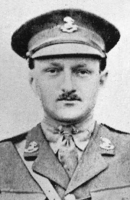
CPL David Wallace Crawford
1887 - 1916
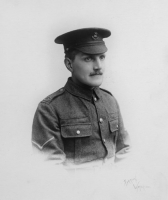
Lce-Corpl John Joseph Nickle
1894 - 1916
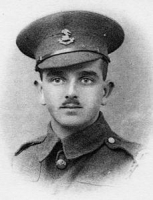
Pte 17911 Morton Neill
1897 - 1916
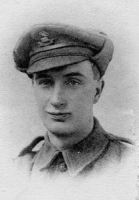
Lieut Edward Stanley Ashcroft
1883 - 1918
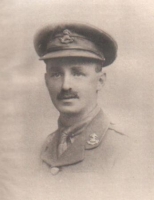
2nd Lieut William James Graham
- Age: 24
- From: Newton le Willows
- Regiment: The King's (Liverpool Regiment) 18th Btn
- K.I.A Tuesday 31st July 1917
- Commemorated at: Menin Gate Memorial
Panel Ref: Panel 4 & 6
William James Graham was born in Newton-le-Willows in the third quarter of 1893 the son of Albert and Martha (nee Morris) Graham who were married on 14th Oct 1892 at St John, Earlstown. Albert was a 30 year old weighman of Newton Common, father John, whilst Martha was 25 of Crow Lane, father William.
On the 1901 census the family are living at 5 Wharf Rd, Newton-in-Makerfield.
Father Albert is aged 39, an underground colliery labourer b.Wigan, mother Martha 33 b.Bulchgwym, Wales, children born Newton-le-Willows, William J. 8, Florence 6, Phyllis 4, and Pollie 1.
On the 1911 census the family are living at 92, Culson Grove, Collins Green, Earlstown.
Father Albert is aged 49, coal miner deputy b.Newburgh, Wigan, mother Martha 43 (married 18 years 4 children), children born William James aged 19, a coal miner motor driver, and Pollie 11 at school.
Prior to the war he was employed at the Collins Green Colliery.
He joined the West Lancashire Field Ambulance in September 1914 as 1640 Royal Army Medical Corps . He was sent to France in January 1916, and was there until December when he came back to take up a commission. He was gazetted in April 1917 to the King’s Liverpool Regiment as 2nd Lieutenant in the 18th Battalion.
William was struck down and killed by Machine-gun fire on the 31st July 1917 aged 24 years during the Third Battle of Ypres (Passchendaele). Accounts from those present thought that this fire came from a British Tank that raked the strong point, not realising it was in British hands, despite the waving of flags to indicate the presence of British Soldiers. However, the Commanding Officer of the 18th Battalion, and writer of the Battalion War Diary, Lieutenant Colonel WR Pinweel thought that is was far more likely that the shots came from the German side, as there was much Machine-gun and rifle fire from that direction at that time.
18th Battalion
On this day, before Zero Hour, the 18th Battalion was part of 21st Brigade and was to form up for the attack from trenches from the area of Sanctuary Wood to Observatory Ridge but it was dark and continually falling rain gave very poor visibility. The departure of the 21st Brigade was delayed by heavy shelling.
The 18th King’s began to move forward in the rear of the 2nd Battalion of the Wiltshire Regiment who had been detailed as the left attacking battalion of the 21st Brigade.
No’s 1 and 3 Companies of the King’s led the way followed by No’s 2 and 4. In Sanctuary Wood there was considerable confusion, as a result No.2 and No.4 Companies became separated from the others, and were moved over to the left flank towards positions known as Surbiton Villas and Clapham Junction in the direction of the 90th Brigade.
No.1 and 3 Companies were soon in action with the enemy, and were for a time, held up against an enemy strong point. They pushed forward with their right on a trench known as Jar Row and their left on the tramway south of Stirling Castle. Advance along Jar Row was held up by the Germans who put up a fierce resistance and the party was forced to withdraw.
Another group of men from No.1 and No.3 Companies led by 2nd Lieutenant Graham were being held up by another strongpoint which was south of Stirling Castle, which was eventually stormed and taken. Not far away from this action, an attempt, by other men of No.1 and No.3 companies, was made to penetrate a broad belt of uncut wire, but this was covered by Machine-guns which killed almost every man attempting to pass through the two gaps that were discovered.
The situation was similar with No.2 and 4 Companies, who had attacked along the wrong axis. Their advance was met with fierce opposition, and once all the experienced officer’s had been killed or wounded, all cohesion was lost, although some men did reach and cross the Menin Road at Clapham Junction.
By that time, the situation had become extremely confused, and the whereabouts of all four companies being unknown to Battalion Headquarters, urgent attempts were made to discover their locations. Eventually by mid- afternoon, it was established that the bulk of the companies, although all mixed together, were dug in the vicinity of Stirling Castle and by mid evening, the Battalion Headquarters moved forward to meet them.
During its time in the line the 18th Battalion lost 7 officers and 76 men killed or died of wounds and 7 officers and 177 men wounded. They were relieved on the 2nd August.
The official History of the King's Regiment records:
The 30th Division (Major-General W. de L. Williams) had the most difficult task in the II Corps. The best available division was needed. for the advance across the plateau. The 30th, mostly of Liverpool and Manchester battalions raised by Lord Derby, excellent though it was, had not yet recovered from the severe losses suffered in the Somme and Arras battles. A suggestion, made by G.H.Q., that a fresher division from the centre should replace the 30th Division was not, as time was short, carried into effect; but in compensation, a brigade of the 18th Division was allotted to it, to assist in gaining the more distant objectives. The 21st Brigade (Br.-General G. D. Goodman) was delayed at the exits of its assembly dug-outs by German shell-fire; it reached the starting line soon after the barrage had moved on, but the two leading battalions were unable to catch it up, owing to the wilderness of tree-stumps, shell-holes and barbed wire in Sanctuary Wood. Too heavily laden with equipment to negotiate such an obstacle at the pace of the barrage, the men entirely lost its protection. * On reaching the eastern edge of the wood they met fire from intact machine-gun nests on the Stirling Castle ridge, five hundred yards ahead. After an exhausting and costly advance over very heavy and broken ground, in which the support battalions detailed for the next objective became engaged, it was nearly 6 a.m. before the 21st Brigade won this ridge, including the castle ruins, where 44 Germans were captured. The barrage had meanwhile moved on to the second objective on the far side of the Bassevillebeek valley. Time after time attempts were made to press on without artillery support down the slope from Stirling Castle; but machinegun fire from the belt of strongpoints and concealed emplacements a few hundred yards away across the valley checked all of them with severe losses. A line was then consolidated approximately along the first objective from Bodmin Copse northwards to Stirling Castle.
*On 29th July Major-General Williams had told the Fifth Army commander that he considered the rate of the creeping barrage, 25 yards a minute, too fast for the infantry in his sector and advised 20 yards a minute. The following morning he repeated the request for the alteration to the corps commander, who replied that it was too late.
He has no known grave and is commemorated on the Menin Gate Memorial at Ypres in Belgium.
The site of the Menin Gate was chosen because of the hundreds of thousands of men who passed through it on their way to the battlefields. It commemorates casualties from the forces of Australia, Canada, India, South Africa and United Kingdom who died in the Salient. In the case of United Kingdom casualties, only those prior 16 August 1917 (with some exceptions). United Kingdom and New Zealand servicemen who died after that date are named on the memorial at Tyne Cot, a site which marks the furthest point reached by Commonwealth forces in Belgium until nearly the end of the war. New Zealand casualties that died prior to 16 August 1917 are commemorated on memorials at Buttes New British Cemetery and Messines Ridge British Cemetery.
The YPRES (MENIN GATE) MEMORIAL now bears the names of more than 54,000 officers and men whose graves are not known. The memorial, designed by Sir Reginald Blomfield with sculpture by Sir William Reid-Dick, was unveiled by Lord Plumer on 24 July 1927.
His obituary published in the NEG of December 1917 included a letter from Major Gerald M. Clayton, which said that
“his conduct and leading of his platoon was magnificent. He captured a German strong point ahead of all other troops, and held the position in spite of no troops being on his right and left. It was largely due to his action that an important position was able to be taken – this being a high ridge for which the action was mainly fought."
William had a child with Annie Silverwood, 32 Rydal Street, Earlestown, Lancashire. Florence May Silverwood was born March quarter 1918 in Warrington. Annie withdrew her claim for a pension for the child.
Soldiers Effects to father Albert
William is commemorated on the Newton-le-Willows Memorial, Earlestown.
Parents appear on the 1939 register at 26 Penford Lane, Newton-le-Willows. Father Albert, dob 3rd Feb 1863, a retired colliery deputy mother Martha, dob 11th Sept 1862.
The father died aged 77 in 1940 and the mother died shortly afterwards in 1940 aged 78 in Blackburn.
We currently have no further information on William James Graham, If you have or know someone who may be able to add to the history of this soldier, please contact us.
89th Brigade On This Day.
110 Years Ago.The Battle of the Transloy Ridges begins. more....
Killed On This Day.
(110 Years this day)Monday 16th October 1916.
Pte 22929 Edward Bird
19 years old
(110 Years this day)
Monday 16th October 1916.
Pte 16795 William Frederick Collister
23 years old
(109 Years this day)
Tuesday 16th October 1917.
L/Cpl 49038 Ernest Yardley
31 years old
(108 Years this day)
Wednesday 16th October 1918.
Pte 85187 James Hoy
31 years old
(107 Years this day)
Thursday 16th October 1919.
Pte 36438 Hugh Morris
23 years old