
1885 - 1916
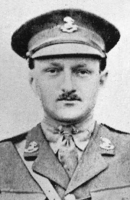
CPL David Wallace Crawford
1887 - 1916
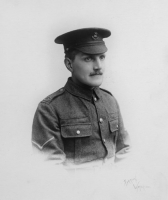
Lce-Corpl John Joseph Nickle
1894 - 1916
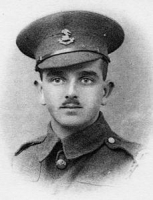
Pte 17911 Morton Neill
1897 - 1916
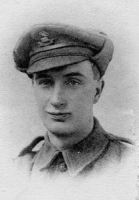
Lieut Edward Stanley Ashcroft
1883 - 1918
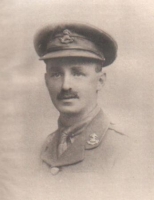
Pte 26197 Jack Fursland

- Age: 26
- From: Liverpool
- Regiment: The King's (Liverpool Regiment) 17th Btn
- K.I.A Thursday 12th October 1916
- Commemorated at: Warlencourt Brit Cem
Panel Ref: II.A.28
John “Jack” Fursland was born in 1890 in Liverpool and was the son of John Fursland and his wife Mary (née Roberts) who were married on the 30th March 1888 at St Mary's Church, Kirkdale. John snr was a 27 year old miller of 43 Major Street, father John a mariner, whilst Mary was aged 21 of Orrell Road, father Griffith a mariner.
The 1891 Census shows the family were living at 23 Pansy Street, Kirkdale. His father, John, is aged 30, a miller who was born in Liverpool. His mother, Mary, is aged 24, and was also born in Liverpool. They have two children living at the address, both born in Liverpool; Mary is aged 2, and John aged 1.
The 1901 Census shows the family have moved and were living at 46 Sessions Road, Kirkdale. His father, John, is aged 40, a flour miller, his mother, Mary is aged 33. They have five children living at the address, all of whom were born in Liverpool. Mary is aged 12, John aged 11, Griffiths is aged 10, Florence aged 8, and Margaret aged 5.
The 1911 Census shows that the family were living at 24 Dart Street, Kirkdale. His father, John, is aged 50, born 1861 and occupation mill hand, his mother Mary is aged 44, they have been married for 23 years and have had 6 children. They have six children living in the household; Mary is aged 22, born 1889, John aged 21, born 1890 and is a Labourer, Griffiths is aged 20, born 1891 and Florence aged 17, born 1894 are also employed as Labourers. Margaret aged 15, born 1896 has no occupation and Ethel aged 8, born 1903 is at school.
Prior to the outbreak of the war Jack had been employed by the North Dingle Tannery, Liverpool.
Jack enlisted in Liverpool and was serving in the 17th Battalion, The King’s Liverpool Regiment as Private No 26197 when he was killed in action on the 12th October 1916 aged 26 during the Battle of the Transloy Ridges which was part of the ongoing Somme Offensive.
17th Bn War Diary: Battle of Transloy Ridge –
11-10-16 - Gird Trench/Gird Support – Battalion in front line and support trenches. British bombardment of enemy front line system commenced about midday. Hostile shelling was intermittent throughout the day.
12-10-16 - Our bombardment continued. Enemy reply weak. 2.5 p.m. Zero hour. Attack on German front line system commenced. Enemy wire was found to be uncut and attack was unsuccessful. Hostile machine gun fire was very heavy and caused many casualties. Battalion H.Q. and Support Trench were heavily shelled throughout afternoon and evening. […] During this action all communication had to be carried out by runners and carrier pigeons as all wires were being continually cut by enemy shelling.
Casualties: 5 officers killed, 5 officers wounded, 38 OR killed, about 225 OR wounded/missing etc.
Graham Maddocks, in “Liverpool Pals” p.140, adds:
“As the whistle blew, the 17th Battalion left its trenches to move forward. […] As soon as the attacking waves left their trenches the enemy artillery began to register on them, and at the same time, the defending infantry commenced a murderous rain of fire. […] Although their numbers had been depleted by the British bombardment, they were trained and experienced soldiers, well dug in on high ground, and for the most part, looking out on uncut wire. As such, it was virtually impossible for them to miss the City Battalion men struggling to advance in the mud towards them. The 17th Battalion, on the left, was particularly badly hit, as its portion of No Man’s Land contained a slight rise in the ground, and as the troops emerged onto it they were silhouetted against the sky and became easy targets. Those on the left of the attack, who managed to avoid the hail of bullets and make it to the German wire, then found that it was totally uncut, and thus trapped, they too became easy targets, to be picked off almost at the enemy’s will. It was hardly surprising that, seeing the first waves being wiped out, some of the following waves turned back and made for their start lines. These lines were now packed with other waves of troops, however, and the fleeing men added to the congestion already there, and became easy prey for the German gunners. There is some evidence also, to suggest that at this stage, the British trenches were also being hit by their own heavy artillery shells which were falling short.”
Jack was reported missing in the Liverpool Daily Post 16th Nov 1916.
King’s (Liverpool Regiment) - Fursland, 26197, J;
His photo appeared in the Liverpool Weekly Courier on Saturday 04 November 1916;
MISSING SOLDIERS.
Pte Jack Fursland, 26187 (K.L.R.);
The tributes in 1917 show Jack was engaged in the Liverpool Evening Express on Friday 12 October 1917:
FURSLAND - Oct 12, 1916, killed in action, aged 26 years, Pte J. Fursland, K.L.R., machine gunner, eldest son of John and Mary Furland, 24 Dart Street, Kirkdale. (Sadly missed by all at home.)
FURSLAND - In loving memory of Private Jack Fursland, K.L.R., killed in action, Oct 12, 1916 .
Thy purpose, Lord, we cannot see,
But all is well that's done by Thee.
(Ever remembered by his sorrowing fiancée Maggie and all at 43 Lancaster Street, Kirkdale.)
Soldiers Effects to father John, Pension to mother Mary
He now rests at Warlencourt British Cemetery, France.
Warlencourt Cemetery is entirely a concentration cemetery, begun late in 1919 when graves were brought in from small cemeteries and the battlefields of Warlencourt and Le Sars. The Graves Registration form shows graves from “Le Sars 6/1, 6/2, Hexham Road, Seven Elms”.
Graves were brought in from the original cemeteries at Hexham Road (Le Sars), and Seven Elms (Flers), as well as over 3,000 British graves due to the fighting which took place around the Butte de Warlencourt from the autumn of 1916 to the spring of 1917, and again in the German advance and retreat of 1918. The cemetery now contains 3,505 Commonwealth burials and commemorations of the First World War, 1,823 of which are unidentified.
His brother Griffith was reported wounded in the Liverpool Daily Post 03rd November 1916.
King’s (Liverpool Regiment) - Fursland, 14037, G;
He was discharged with the SWB on the 25th Nov 1918.
Jack was remembered by his family in the Liverpool Evening Express on 13th October 1919:
ROLL OF HONOUR.
FURSLAND - In loving memory of Private Jack Fursland of the Pals, killed in action, October 12, 1916. (Ever remembered by his sisters and brother-in-law, 32 Venice Street.)
On the 1921 Census the family are living at 24 Dart Street.
Jack is commemorated on the following Memorials:
Hall of Remembrance, Liverpool Town Hall, Panel 64
St Athanasius’ C. of E. Church, Kirkdale.
His mother died, aged 61, in the December quarter of 1928.
Her death was reported in the Liverpool Daily Post on Thursday 20th December 1928;
FURSLAND - December 17, at 24 Dart Street, Kirkdale, aged 61 years, Mary, the dearly loved wife of John Fursland. Funeral at Kirkdale Cemetery, tomorrow (Friday) at 3 30 p.m.
His father died, aged 75, in 1935 and was buried on the 01st June in Kirkdale Cemetery.
We currently have no further information on John “Jack” Fursland, If you have or know someone who may be able to add to the history of this soldier, please contact us.
89th Brigade On This Day.
110 Years Ago.The Battle of the Transloy Ridges begins. more....
Killed On This Day.
(110 Years this day)Monday 16th October 1916.
Pte 22929 Edward Bird
19 years old
(110 Years this day)
Monday 16th October 1916.
Pte 16795 William Frederick Collister
23 years old
(109 Years this day)
Tuesday 16th October 1917.
L/Cpl 49038 Ernest Yardley
31 years old
(108 Years this day)
Wednesday 16th October 1918.
Pte 85187 James Hoy
31 years old
(107 Years this day)
Thursday 16th October 1919.
Pte 36438 Hugh Morris
23 years old