
1885 - 1916
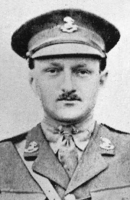
CPL David Wallace Crawford
1887 - 1916
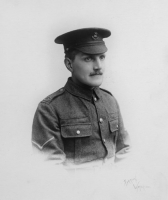
Lce-Corpl John Joseph Nickle
1894 - 1916
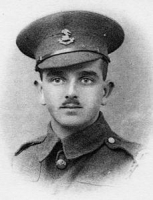
Pte 17911 Morton Neill
1897 - 1916
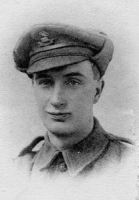
Lieut Edward Stanley Ashcroft
1883 - 1918
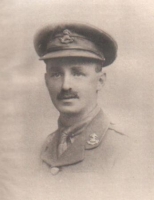
Pte 30800 George Verner Fleming
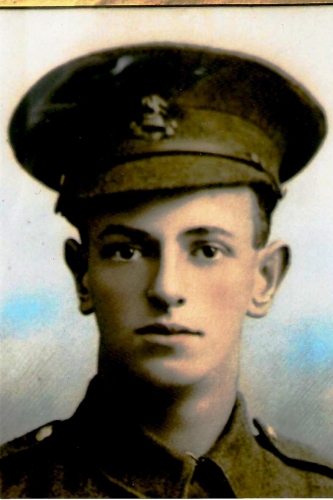
- Age: 20
- From: Liverpool
- Regiment: The King's (Liverpool Regiment) 17th Btn
- D.O.W Sunday 13th August 1916
- Commemorated at: Anfield Cem Liverpool
Panel Ref: XIV.C.1077
George Verner was born in Liverpool on the 11th April 1896 the son of Arthur Edward Fleming and his wife Rosa Catherine (née Thomas) who were married on the 28th March 1891 at St Cuthbert’s Church, Everton. Arthur was aged 25, his father, James, whilst Rosa was aged 26, her father, John. George was baptised on 19th August 1896 at St Cuthbert’s Church, Everton, his father, was a clerk, of 9 Newcombe Street.
The 1901 Census shows the family are living at 61 Guelph Street, West Derby, Liverpool. His father Arthur Edward is aged 34 and a ships steward, whilst his mother Rosa Catherine is also 34 years of age. Their children are recorded as Arthur Cyril aged 7, and George Verner aged 4. All of the family was born in Liverpool.
At the time of the 1911 Census the family have moved to 73 Chatsworth Avenue, Orrell Park, Liverpool. His father, Arthur Edward, is shown as a 43 year old licensed warehouseman, his mother, Rosa Catherine, is also 43. They have been married for 20 years and have had three children. Arthur Cyril is aged 17, and is a shipowners apprentice, George Verner, is aged 14 and is an office boy (Timber), and Rosa Kathleen is aged 6.
George enlisted in the 17th Battalion of The King's Liverpool Regiment as Private 30800.
He was wounded at Guillemont on 30th July 1916 and was returned to the UK for treatment. The events of the day are described as follows:
17th Battalion Diary 30th July 1916
The Bn was in support to 19 & 20 Bn K.L.R. 2 Coys. behind 19th & 2 Coys. behind 20th. Very thick mist. The attack was pushed home to the objective in places but in the main was held up by machine gun fire from hidden machine guns.
Fighting continued all day swaying backwards and forwards until by 6pm about 300 yards in depth had been gained & consolidated all along our front.
Casualties in the 17th Battalion were 15 Officers and 281 Other Ranks
Further details are reported in more detailed by Everard Wyrall in his book The History of the King’s Regiment (Liverpool) 1914-1919 Volume II 1916-1917
The 17th King’s had advanced (two companies each behind the 19th and 20th Battalions) in small columns. They too suffered heavily from machine-gun fire and were quickly absorbed into the waves that preceded them. They also shared the gains and losses of that terrible day.
When darkness fell on the battlefield the 30th Division held a line from the railway on the eastern side of Trones Wood , southwards and including Arrow Head Copse, to east of Maltz Horn Farm. On this line the division was relieved by the 55th Division during the early hours of the 31st July.
The events of 30th July 1916 were regarded at the time as Liverpool’s blackest day. There follows an extract from The History of the 89th Brigade written by Brigadier General Ferdinand Stanley which gives an indication of the events of the day.
Guillemont
Well the hour to advance came, and of all bad luck in the world it was a thick fog; so thick that you couldn’t see more than about ten yards. It was next to impossible to delay the attack – it was much too big an operation- so forward they had to go. It will give some idea when I say that on one flank we had to go 1,750 yards over big rolling country. Everyone knows what it is like to cross enclosed country which you know really well in a fog and how easy it is to lose your way. Therefore, imagine these rolling hills, with no landmarks and absolutely unknown to anyone. Is it surprising that people lost their way and lost touch with those next to them? As a matter of fact, it was wonderful the way in which many men found their way right to the place we wanted to get to. But as a connected attack it was impossible.
The fog was intense it was practically impossible to keep direction and parties got split up. Owing to the heavy shelling all the Bosches had left their main trenches and were lying out in the open with snipers and machine guns in shell holes, so of course our fellows were the most easy prey.
It is so awfully sad now going about and finding so many splendid fellows gone.
Sadly, George succumbed to his wounds at Manchester Royal Infirmary on 13th August 1916, aged 20, and is buried at Anfield Cemetery where his headstone bears the epitaph:
"DUTY NOBLY DONE".
In December 1914, Liverpool became one of the 21 Auxiliary Patrol Bases and in February 1915, the base of the 10th Cruiser Squadron. During the Second World War, Liverpool was headquarters of Western Approaches Command and a manning depot for officers and men of the Merchant Navy who agreed to serve with the Royal Navy for the duration of the war.
Liverpool (Anfield) Cemetery contains burials of both wars. The majority are in two war graves plots in Section 5, with Screen Walls bearing the names of those buried there. The rest of the war burials are scattered throughout the cemetery.
There are 453 Commonwealth servicemen of the First World War buried or commemorated in the cemetery. Included in this total are 17 casualties who are commemorated by name on the Screen Wall as their graves in Bootle (St Mary) Churchyard and Liverpool (St James) Cemetery could no longer be maintained. Second World War burials number 459 including 2 unidentified British soldiers. There is also another Screen Wall memorial to those whose burials are not marked by headstones. There are also 67 war graves of other nationalities, the majority of them Dutch and Norwegian Merchant seamen, and there are 9 non war service burials here.
His death was reported in the Liverpool Echo 15th August 1916;
DIED FROM WOUNDS.
FLEMING—At the Royal Infirmary, Manchester, suddenly, from wounds received in action, July 30, George Verner Fleming, of the "Pals,” the youngest and dearly-loved son of Arthur and Rosa Fleming, of 73, Chatsworth Avenue, Orrell Park.
A notice in the Liverpool Evening Express of the 17th August 1916 states:
Private G V Fleming 19 son of Mr & Mrs Fleming of Orrell Park, has died in Manchester Royal Infirmary of wounds received in action. Private Fleming, prior to joining was anxious, awaiting his 19th birthday, to be taken into the Army.
He was buried on the 18th August 1916 at Anfield Cemetery.
His death was reported in the Liverpool Daily Post on Thursday 19th October 1916;
PREVIOUSLY REPORTED WOUNDED,
NOW REPORTED DIED OF WOUNDS.
King's (Liverpools) - Fleming, 30800, G. V.;
His family remembered George on the first anniversary of his death in the Liverpool Echo on Monday 13th August 1917;
FLEMING - In loving memory of Private George V. Fleming (K.L.R.), who died from wounds received in action between Trones Wood and Guillemont on July 30, 1916 – 73, Chatsworth-avenue, Aintree.
Also in the Liverpool Echo on Tuesday 13th August 1918;
FLEMING - Private GEORGE (1st Pals), Battle of Guillemont, August 13, 1916. -Affectionately remembered by all at 73, Chatsworth-avenue, Aintree.
He earned his two medals indicating he did not embark for France until 1916.
His Soldiers Effects, Army Pay of £2 17s 10d and a £3 10s War Gratuity went to his mother Rosa Catherine. A pension of 10/- pw went to his father Arthur Edward.
By a singular coincidence he accidentally met his brother, a Sergeant in the signalling section, just before going into action wherein he received his fatal injuries.
He was Arthur Cyril Fleming, also a Pal 17826 of the 19th Battalion KLR, who was awarded all 3 medals.
George Verner Fleming is commemorated in the Hall of Remembrance in Liverpool Town Hall at Panel 64.
His mother, died in the June quarter of 1927, aged 60.
His father died, in the June quarter of 1942, aged 75.
Grateful thanks are extended to Mrs Elizabeth Dolman and family for providing the wonderful photograph of George and for giving us permission to use it. Elizabeth also wrote a heartful poem entitled I Didn't Know and it is reproduced below:
I Didn’t Know
I didn’t know my Uncle George
I wasn’t there.
I didn’t know the grief they bore,
It wasn’t mine to bear.
My mother was a girl of ten
A hundred years ago,
When both her brothers went to war,
But then, they didn’t know.
The Liverpool Pals signed up for war
Outside St. George’s Hall,
With thousands more who volunteered
In answer to the call.
They didn’t know the truth about
The killing fields of France,
Where poppies grew and blood was shed,
Till they lay gassed, or maimed, or dead,
And when they knew, they never said
What they had seen.
The family waited year by year,
They knew the worry and the fear
But not the fate of either son,
Until the letter came.
George was shot but still alive!
Their hopes were raised – He will survive!
His painful journey, long and slow
Soon took its toll. He paid the price
For peace he didn’t know.
A peace that didn’t last for long;
But fighting’s nothing new.
Although we said we didn’t know,
Now, perhaps, we do.
On the 1921 Census at Chatsworth Avenue, his father, Arthur, is a 54 year cotton importers foreman, his mother, Rosa, is also 54, with Rosa Kathleen 29, a milliner's apprentice.
His mother, died in the June quarter of 1927, aged 60.
His father, died in the June quarter of 1942, aged 75.
His death was reported in the Liverpool Echo on Wednesday 15th April 1942;
FLEMING - April 14, suddenly, in hospital, ARTHUR EDWARD FLEMING. of 73 Chatsworth Avenue.
We currently have no further information on George Verner Fleming. If you have or know someone who may be able to add to the history of this soldier, please contact us.
89th Brigade On This Day.
110 Years Ago.The Battle of the Transloy Ridges begins. more....
Killed On This Day.
(110 Years this day)Sunday 15th October 1916.
Pte 30280 James Patrick Doyle
25 years old
(110 Years this day)
Sunday 15th October 1916.
Pte 34608 Thomas Foster
19 years old
(110 Years this day)
Sunday 15th October 1916.
Pte 53107 Joseph Green
32 years old
(110 Years this day)
Sunday 15th October 1916.
Pte 11282 Stephen Hynes
21 years old
(110 Years this day)
Sunday 15th October 1916.
Pte 32717 Evan Lee
25 years old
(110 Years this day)
Sunday 15th October 1916.
Pte 34271 James Vickers
21 years old
(108 Years this day)
Tuesday 15th October 1918.
Cpl 15764 Alan Douglas Ellison
30 years old