
1885 - 1916
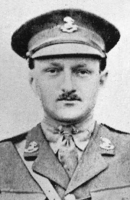
CPL David Wallace Crawford
1887 - 1916
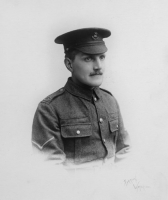
Lce-Corpl John Joseph Nickle
1894 - 1916
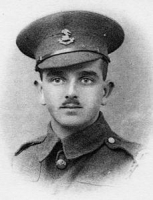
Pte 17911 Morton Neill
1897 - 1916
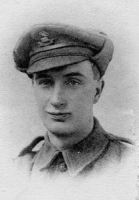
Lieut Edward Stanley Ashcroft
1883 - 1918
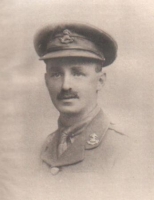
2nd Lieut Eric Fitzbrown
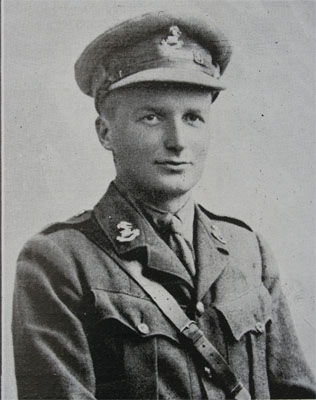
- Age: 21
- From: Hough Green, Widnes
- Regiment: The King's (Liverpool Regiment) 18th Btn
- K.I.A Saturday 1st July 1916
- Commemorated at: Thiepval Memorial
Panel Ref: P&F1D8B &8 C.
T/2nd Lieutenant Eric Fitzbrown, 18th Battalion KLR.
Eric was born in Hough Green, Widnes on 02nd August 1894 and was baptised at St Michael’s C of E, Ditton, on the 02nd September 1894. He was the fourth child of George Fitzherbert Fitzbrown (or Fitz Brown), born in Shirley, Hampshire in 1851, managing director of the Broughton Copper Company, and his wife, Eliza Forder (nee Low) who was born in Highbury, London in 1855. They married in Hampstead, London on the 27th April 1886 at St Mary the Virgin Church, Hampstead, George was a 35 year old engineer of 110 Waterloo Road, New Bury Road, Manchester, father George, whilst Eliza was aged 31 of 29 O? Road, father William Shand.
George Fitzherbert Fitz-Brown was born in 1851 and was baptised on 09th July 1851 at Shirley, Millbrook near Southampton, son to George Brown and Mary Ann Brown (nee ‘White’). George Brown was a butcher. George Fitzherbert Fitz-Brown it can be noted adjusted his name to 'Fitz-Brown'. The boys’ mother Eliza Forder Fitz-Brown was the daughter of William Shand Low (a stationer) and Eliza Low of Highbury Place -thus she was born in Highbury & Islington on 16th March 1855 and was baptised at St. Mary’s Parish Church, Islington on 11th May 1855.
The 1901 Census finds the family living at Copper Works, New Road, Ditton. Eric, shown as Eric Brown is 6 years of age and is living with his father George Fitzbrown a 49 year old married man and described as manager of a copper works. He has four siblings all born in Ditton: Elsie M. 12, Mary I. 10, Geoffrey 8 and Arnold 4. Also present in the household are a nurse and a cook.
His mother, Eliza F., is aged 46, and is visiting William Sumner (the director of a coffee company) and family at Butt Hill, a mansion house in Prestwich, near Manchester.
In 1911 the family have moved to 28 Ashton Drive, Hunts Cross, Liverpool. His father, George, is shown as a managing director of a copper works and is living with his daughters Mary Isabel (20 years) and Elsy Margaret (22 years) and his eldest son, Geoffrey aged 18, an engineering student, at 28 Ashton Drive, Hunts Cross, Liverpool.
His mother, Eliza Forder, aged 56, is visiting Leonard Sumner (the managing director of the Copper Manufacturers) and family at Butt Hill, Prestwich, near Manchester.
At the time of the 1911 Census Eric will have been resident at one of his schools.
Eric was educated at Rhos-On-Sea Preparatory School and at Aldenham School, Hertfordshire where he was a member of the Officer Training Corps and shortly before the war he was apprenticed to a firm of metal brokers.
He joined the ranks of “C” Company 7th Battalion the Norfolk Regiment on 29th August 1914 enlisting as No 12641 in St Pauls Churchyard, London. His enlistment papers record his occupation as a metal merchant, his height as 5' 6", weight 126lbs with very good physical development. He had a fresh complexion, with brown hair and brown eyes, his religion was stated as Church of England. Whilst stationed at Moore Barracks, Shorncliffe, Eric successfully applied for a commission and was discharged as as a 2nd Lieutenant in the 18th Battalion Kings (Liverpool) Regiment (2nd Liverpool Pals) on 23rd December 1914.
He was stationed at the hutted accommodation at Lord Derby’s estate at Knowsley Hall. On 30th April 1915 the 18th Battalion alongside the other three Pals battalions left Liverpool via Prescot Station for further training at Belton Park, Grantham. They remained here until September 1915 when they reached Larkhill Camp on Salisbury Plain.
Eric crossed over to France on board the SS Invicta on 07th November 1915 as part of No 1 Company. He was granted leave in the UK between 02nd and 13th May 1916.
By the time of his death on the 01st July 1916, Eric was in command of No 1 Company:
Graham Maddocks describes his part in the fighting of 1st July 1916 -
“Second Lieutenant E. Fitzbrown was the first officer from the 18th Battalion to reach Silesia Trench (ie the German front line) and as he led his men forward over the obliterated position the Germans were already retreating towards their support line and beyond. Fitzbrown emptied his revolver at them as they ran, and accompanied by the rest of the first wave, pressed on towards this support line. There the British came under machine gun fire from the high ground on the right until the gun was finally silenced... the German support line was then systematically cleared by bombing parties.” However, the Germans quickly recovered from the effects of the allied bombardment and brought their machine guns into concealed positions “and poured a devastating fire onto the third and fourth waves of attacking Pals who were either still leaving the British front line or just crossing No Man’s Land.” Captain de Bels Adams and Lieutenant George Herdman were killed in the ensuing fighting and “the tenacious Fitzbrown was shot through the head and killed”.
The Commander of the 18th Battalion, Lieutenant Colonel E.H.Trotter DSO found Eric's body the following day, where he fell.
His death was reported in the Liverpool Echo on 08th July 1916:
LIEUT. ERIC FITZBROWN.
Second-Lieutenant Fitzbrown of the “Pals” has been killed action. He was the son of Mr George Fitzbrown, a director of Broughton Copper, whose residence is Shirley, Hillfoot, Woolton. The dead soldier belonged to the King’s(Liverpool Regiment), joining last January, crossing over to France with his regiment in September. He was 22 years of age, and in real life before entering the Army was connected with a firm of metal brokers.
Eric's body, found by Lt Col Trotter, was evidently lost or subsequently destroyed as he has no known grave and is commemorated on the Thiepval Memorial.
The Thiepval Memorial, the Memorial to the Missing of the Somme, bears the names of more than 72,000 officers and men of the United Kingdom and South African forces who died in the Somme sector before 20 March 1918 and have no known grave. Over 90% of those commemorated died between July and November 1916.
On 01st August 1932 the Prince of Wales and the President of France inaugurated the Thiepval Memorial in Picardy. The inscription reads: “Here are recorded the names of officers and men of the British Armies who fell on the Somme battlefields between July 1915 and March 1918 but to whom the fortune of war denied the known and honoured burial given to their comrades in death.”
Tributes were paid to Officer's who were killed during the attack at Montauban in the Liverpool Echo on 02nd July 1917
Lost At The Somme Battle:
To the Glorious Memory of Lieut.-Colonel E. H. Trotter, D.S.O., Captain A. de Bels Adam, Captain C. N. Brockbank, Lieut. G. M. Dawson, Lieut. B. Withy, Sec.-Lieut. N. A. Barnard, Sec.-Lieut. L. R. Davies, Sec.-Lieut. E. Fitzbrown, Sec.-Lieut. D. M. Griffin, Sec.-Lieut. G. B. Golds, Sec.-Lieut. G. A. Herdman, Sec.-Lieut. R. V. Merry, Sec.-Lieut. R. H. Tomlinson, Sec.-Lieut. T. R. Walker, and the non-commissioned officers and men the 18th (Serv.) Battalion “The King's” (Liverpool Regiment), who fell in the battle of the Somme, July, 1916.
Eric is also remembered on the following Memorials:
St Peter’s Church, Church Road, Woolton
Woolton Golf Club, Speke Road, Hunts Cross, Liverpool
Ramblers FC in Crosby
Rhos on Sea School
St Hilda’s Parish Church, Speke Road, Hunts Cross, Liverpool.
His brother, Geoffrey, born in 1892, enlisted as a Private in the Public Schools Battalion of the 21st Royal Fusiliers and was commissioned as a Second Lieutenant in the Durham Light Infantry, serving in France from 14th November 1915. He was wounded on 23rd October 1916 when he went over the top with his Platoon and sustained his wounds while helping to dig a link trench. Although tended by a fellow officer and taken via Field Ambulance to a Casualty Clearing Station, he died of his wounds next day.
Geoffrey now rests at grave, 1B 10, in Grove Town Cemetery, Meaulte.
In September 1916, the 34th and 2/2nd London Casualty Clearing Stations were established at this point, known to the troops as Grove Town, to deal with casualties from the Somme battlefields. They were moved in April 1917 and, except for a few burials in August and September 1918, the cemetery was closed. Grove Town Cemetery contains 1,395 First World War burials. The cemetery was designed by Sir Edwin Lutyens.
Geoffrey's death was reported in the Liverpool Echo on 30th October 1916:
SECOND-LIEUTENANT FITZ-BROWN.
Second Lieutenant Geoffrey Fitz-Brown, Durham L.I., who died of wounds on October 24, was the eldest son of Mr. and Mrs. Fitz-Brown, of Hunt's Cross, Liverpool, and was educated at Rhos Preparatory School, Aldenham, Liverpool University, and the Royal School of Mines. He enlisted in the Public Schools Brigade in September, 1914, and went to the front in November, 1915. He received his commission in the Durham Light Infantry in July, 1916, and went back to the front in September. He was on the staff of the Broughton Copper Company, Manchester. His younger brother, Second-Lieutenant Eric Fitz-Brown, K.L.R., was killed on July 1.
Soldiers Effects of both Eric and George to father George, no Pension records found.
His parents appear on the passenger list of the White Star liner “SS Adriatic” from Southampton to New York on the 06th October 1920, and were still together on the 1921 Census in Woolton.
Their father died on 26th April 1931 leaving estate valued at £53,292 1s 1d.
Their mother died, aged 82, on 26th November 1937 and was buried at St Peter's Church, Woolton on the 29th November.
The Liverpool Scroll of Honour biography to Eric Fitzbrown is listed below:
Splendid work was done in the opening day of the 1916 Somme offensive by the “Pals” Brigade.
The 18th Kings(Liverpool) Regiment suffered that day, as well as in a following engagement, exceedingly heavily.
Second – Lieutenant Eric Fitzbrown was one of the many heroic officers who fell in that wonderful charge. Colonel Trotter, who did not long survive that terrible ordeal, told how the young leader was mortally hit nearly at the final objective after he and his men had carried it in irresistible style. He explained that the gallant young officer, who led his company and was the first man to enter the enemy’s front line trench, where he had emptied his revolver, seeing the situation, took two bombs in his hand, and attempted to bomb the position, but was hit by a bullet from a enemy snipers.
“I can only say how we all loved him – so cheery and brave, and such a good officer”, wrote the Colonel, and they were the words of a commander who had for his men, and received from them in return, an attachment seldom approached in the army. “It was a great and glorious day, the victory was complete, the Battalion behaved magnificently, the cost was heavy, but the objective was most important, for on their success depended the whole operation. I know that it cannot replace your loss, but that he fell in the hour of victory, still young and happy, comforted me slightly. “
Eric Fitzbrown belonged to Hunt’s Cross, and amongst these memoirs also appears that of his brother, Geoffrey, who, too, was killed on the Somme. Eric was educated at Rhos-on – Sea, and afterwards at Aldenham School, Hertfordshire. Shortly before the war he had been appointed to a firm of metal brokers, but he interrupted his career as soon as the call was sounded, joining the ranks of the 7th Norfolk Regiment. Early in 1915 he received his commission in the 18th Kings (Liverpool) Regiment, and he formed many happy comradeships at Knowsley, Grantham, and Salisbury Plain. Cheerful and loveable and endowed with a manly courage and a high sense of duty, he died when only 21 years of age.
Grateful thanks are extended to Alan Walker, who contacted this website, for providing the information concerning both Eric and Geoffrey's lineage.
We currently have no further information on Eric Fitzbrown, if you have or know someone who may be able to add to the history of this soldier, please contact us.
89th Brigade On This Day.
110 Years Ago.The Battle of the Transloy Ridges begins. more....
Killed On This Day.
(110 Years this day)Sunday 15th October 1916.
Pte 30280 James Patrick Doyle
25 years old
(110 Years this day)
Sunday 15th October 1916.
Pte 34608 Thomas Foster
19 years old
(110 Years this day)
Sunday 15th October 1916.
Pte 53107 Joseph Green
32 years old
(110 Years this day)
Sunday 15th October 1916.
Pte 11282 Stephen Hynes
21 years old
(110 Years this day)
Sunday 15th October 1916.
Pte 32717 Evan Lee
25 years old
(110 Years this day)
Sunday 15th October 1916.
Pte 34271 James Vickers
21 years old
(108 Years this day)
Tuesday 15th October 1918.
Cpl 15764 Alan Douglas Ellison
30 years old