
1885 - 1916
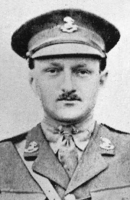
CPL David Wallace Crawford
1887 - 1916
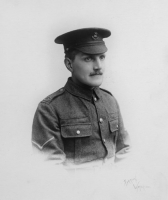
Lce-Corpl John Joseph Nickle
1894 - 1916
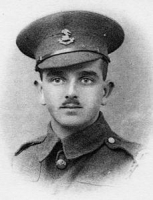
Pte 17911 Morton Neill
1897 - 1916
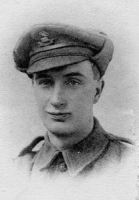
Lieut Edward Stanley Ashcroft
1883 - 1918
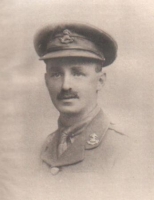
2nd Lieut Sturton Johnston Faris

- Age: 30
- From: Armagh, Ireland
- Regiment: The King's (Liverpool Regiment) 20th Btn
- K.I.A Sunday 30th July 1916
- Commemorated at: Guillemont Rd Cem
Panel Ref: VII.L.6
Sturton Johnston Faris was born at Cathedral Close, Armagh, Ireland on 16th August 1885 the son of the Reverend Charles Faris and his wife Elizabeth Catherine (nee Prentice). Charles was the Choral Vicar at St. Patrick's (Church of Ireland) Cathedral, Armagh. His father was born in Dublin, and his mother in Armagh City. They married on the 01st October 1874 at Armagh Cathedral and had ten children.
At the time of the 1901 Census Sturton is 15, a scholar, and living with his parents, four siblings and a domestic servant/cook at Cathedral Close, Armagh Town. His father, Charles, is aged 54, a vicar, born in Dublin, his mother, Elizabeth, is aged 47, born Armagh. Charles Howard aged 22 and Romney Robinson aged 19 who are both undergraduates at T.C.D, (Trinity College Dublin), Mary Elizabeth, aged 17, and Arthur Percy aged 7. The couple have had five other children, Clamina b.1875, Thomas b.1877 who died in 1902, John George b.1880, William b.1887 and Cecil who was born in 1897, but who died the same year.
His brother Charles died in 1906 at the age of 27, having suffered from T.B. since a young age.
On the 1911 Census Sturton is shown as a boarder in a boarding house run by the Marchbank family at 14 Balfour Street, Birkenhead. He is 25 years old, single and is working as a cotton salesman born at Armagh. It’s possible he moved to Birkenhead as he had an uncle, aunt and cousins living there.
His parents are still in Cathedral Close with John 31, single, and a Captain in the Indian Army. His father is 64 and his mother 57. Six of their ten children are still living. Also in the household is his mother's sister Frances Augusta Prentice, 54, as well as a cook and a parlour maid.
Before the war Sturton playing golf in Coleraine and was a member of Chester Golf Club, playing off a handicap of 6.
Sturton enlisted at St George's Hall, Liverpool on the 01st of September 1914 as Private 15021 joining the 17th (Pals) Battalion of The King's Liverpool Regiment. As part of the Cotton contingent he was billeted at Prescot Watch Factory from 14th September 1914, he trained there and also at Knowsley Hall. On 30th April 1915 the 17th Battalion alongside the other three Pals battalions left Liverpool via Prescot Station for further training at Belton Park, Grantham. They remained here until September 1915 when they reached Larkhill Camp on Salisbury Plain. He arrived in France on 01st December 1915.
He was commissioned on the 02nd April 1915 as a 2nd Lieutenant and was attached to the Headquarters Staff of the 90th Brigade on 29th January 1916 and then, on 07th March he was attached to the 20th Battalion, The King's Liverpool Regiment with who he remained until his death in action. On 25th July 1916 he took part in a daylight reconnaissance near Maltz Horn Farm for the forthcoming Battle of Guillemont on 30th July 1916, in which he was to lose his life.
He was killed in action on the 30th July 1916, aged 30, at the village of Guillemont, France, during the Somme Offensive.
The Battalion’s objectives on the day were the German Trenches on the South Eastern edge of Guillemont, which was a heavily fortified village on top of a gentle slope, with a front of about seven hundred yards. Each end of the front was also defended by machine guns, which could give covering and enfilading fire. The line of attack was entirely without cover. The 20th Battalion was on the right of the British line, next to the French153e Regiment d’infanterie, and this necessitated an advance of more than a mile before the main enemy positions were reached.
The attack began at 04.45am in a thick mist, which only gave ten yards visibility. Despite this, the initial attack went quite well, and Maltz Horn Farm fell fairly early in a joint attack between the 2nd Battalion, The Bedfordshire Regiment, of the 89th Brigade, and the French Infantry. However the continuing mist and a barrage of high explosive and gas shells made it extremely difficult for the attacking waves moving forward to keep together and when the mist began to lift at about 6am, most of the waves had lost touch.
However, the Battalion continued to move forward against the Maltz Horn Trench System and took the first one, killing nearly all its occupants. As it moved into the open however, to take the German second line it had to proceed down an exposed slope overlooked by the enemy who were in a perfect enfilading position. The attackers were easily seen by the Germans who, firing from the left flank, opened up on them with withering machine gun fire. Most of the Battalion’s Casualties on the day were probably sustained at this time. Also many of the men were pinned down and could not move in any direction until night fell. One party of two hundred and fifty men made it to the Guillemont to Hardencourt Road, where they had to stay without support, before they could withdraw at nightfall.
Some of the Headquarters Company were able to occupy and consolidate a trench to the north of Maltz Horn Farm until ‘ C ‘Company of the Bedfords was able to join it up with Arrow Head Copse, which was South West of Guillemont itself. This allowed the Maltz Horn Ridge to be held until the Battalion was relieved in the early hours of 31st July 1916. By that time the Casualties sustained were nine officers and one hundred and thirty seven other ranks killed or missing and many more wounded.
Second Lieutenant Faris was amongst those reported missing. His body was eventually found by men of the 1/8th Battalion The King’s Liverpool Regiment and buried by them in a sunken road near Guillemont itself.
The 20th King’s Battalion Diary records:
“At 4.45am prompt the attack was launched. Unfortunately, a thick mist prevailed and it was impossible to see more than 10 yards ahead. This continued until about 6 o’clock when it lifted slightly, but it was still too hazy and impossible to see what was happening 100 yards ahead. This being so, it was not surprising to find that the attacking waves were experiencing great difficulty in maintaining connection.”
At 6am, Lt. RE Melly, No.1 Company, reported that his men had taken the German Maltz Horn trench.
At 6.30am, 2/Lt. CP Moore reported that he had 150 men, 4 Stokes Mortars and 2 Lewis Guns, but he was the only officer. He also said that due to the fog, both his “flanks were in the air” i.e. he was not in contact with neighbouring troops.
At 9.10am, Moore was still not in contact at his flanks, and now he had only 75 men, he had sent out 2 patrols and neither not returned. Later Moore established communication with the French on his right.
Around 10.00am, 2/Lt Musker reported that he had just over a company with him, but his left flank was suffering from German machine gun fire. Later he reported that he had over 30 casualties from the machine gun fire. His flanks were also “in the air”. No contact was made with this party until the remnants returned around 9.30pm, all runners sent were killed or missing. The War Diary states that this group had: ”held the ground won all day, and this permitted the consolidation of the ground won on the Maltz Horn ridge with little interference from the enemy”.
Relief for 20/Kings had been planned for 11.00pm, but it was 5.00am on the 31st July before it took place, ending a tragic day for the Liverpool Pals.
Casualties for 20th Battalion were 16 Officers and 357 Other Ranks
When darkness fell on the battlefield the 30th Division held a line from the railway on the eastern side of Trones Wood , southwards and including Arrow Head Copse, to east of Maltz Horn Farm. On this line the division was relieved by the 55th Division during the early hours of the 31st July.
The events of 30th July 1916 were regarded at the time as Liverpool’s blackest day. There follows an extract from The History of the 89th Brigade written by Brigadier General Ferdinand Stanley which gives an indication of the events of the day.
Guillemont
Well the hour to advance came, and of all bad luck in the world it was a thick fog; so thick that you couldn’t see more than about ten yards. It was next to impossible to delay the attack – it was much too big an operation- so forward they had to go. It will give some idea when I say that on one flank we had to go 1,750 yards over big rolling country. Everyone knows what it is like to cross enclosed country which you know really well in a fog and how easy it is to lose your way. Therefore, imagine these rolling hills, with no landmarks and absolutely unknown to anyone. Is it surprising that people lost their way and lost touch with those next to them? As a matter of fact, it was wonderful the way in which many men found their way right to the place we wanted to get to. But as a connected attack it was impossible.
The fog was intense it was practically impossible to keep direction and parties got split up. Owing to the heavy shelling all the Bosches had left their main trenches and were lying out in the open with snipers and machine guns in shell holes, so of course our fellows were the most easy prey.
It is so awfully sad now going about and finding so many splendid fellows gone.
Sturton was initially reported Missing in the newspaper on 10th August 1916, and was reported Killed in the Belfast News-Letter on 14th February 1917.
After the war his body was removed and reinterred in Guillemont Road Cemetery where he now rests in Plot VII, Row L, Grave 6.
Guillemont was an important point in the German defences at the beginning of the Battle of the Somme in July 1916. It was taken by the 2nd Royal Scots Fusiliers on 30 July but the battalion was obliged to fall back, and it was again entered for a short time by the 55th (West Lancashire) Division on 8 August. On 18 August, the village was reached by the 2nd Division, and on 3 September (in the Battle of Guillemont) it was captured and cleared by the 20th (Light) and part of the 16th (Irish) Divisions. It was lost in March 1918 during the German advance, but retaken on 29 August by the 18th and 38th (Welsh) Divisions.
The cemetery was begun by fighting units (mainly of the Guards Division) and field ambulances after the Battle of Guillemont, and was closed in March 1917, when it contained 121 burials. It was greatly increased after the Armistice when graves (almost all of July-September 1916) were brought in from the battlefields immediately surrounding the village and certain smaller cemeteries, including:-
HARDECOURT FRENCH MILITARY CEMETERY. The village of Hardecourt-au-Bois was captured by French troops on the 8th July 1916, and again by the 58th (London) and 12th (Eastern) Divisions on 28 August 1918. Five British Artillerymen were buried by their unit in the French Military Cemetery, in the middle of the village, in September 1916; and in 1918 the 12th Division buried in the same cemetery 14 men of the 9th Royal Fusiliers and two of the 7th Royal Sussex.
Guillemont Road Cemetery now contains 2,263 Commonwealth burials and commemorations of the First World War. 1,523 of the burials are unidentified but there are special memorials to eight casualties known or believed to be buried among them.
The cemetery was designed by Sir Herbert Baker.
His headstone is inscribed to his parent Battalion, the 17th, as he was never actually transferred to the 20th, rather he was just loaned on attachment. The Cemetery Register does not contain any personal or family details.
Probate, giving his address as 11 Beresford Road, Birkenhead, (17th attached 20th Bn.), was granted to his father in the amount of £229-5s.
Sturton earned his three medals.
He is commemorated on the following Memorials;
Birkenhead Constitutional Club, WWI plaque, The Clubhouse Restaurant, Beresford Road, Birkenhead.
Cotton Association Memorial, Walker House, Exchange Flags, Liverpool
Hall of Remembrance, Liverpool Town Hall, Panel 2
Men of Birkenhead Cenotaph
Sturton came from a military family. His cousin, from Birkenhead, Thomas Alfred Prentice was a Major in the Cheshire Regiment who was killed in Gallipoli in August 1915. Of Sturton’s brothers; Thomas died of wounds in Aberdeen, South Africa in April 1902 during the Boer War, John George was a Major in the Indian Army, Arthur was a Captain in the Royal Irish Fusiliers, who was wounded in June 1916 and Romney who was a civil engineer served as 2nd Lieutenant in the Royal Engineers in France all through WW1.
His Soldiers Effects of £69 7s 6d was sent to his father Rev. Charles.
His father died on the 07th April 1924, aged 77.
Probate:-
FARIS The reverend Charles of Cathedral Close Armagh clerk died 7 April 1924 Probate Belfast to Elizabeth Catherine Faris widow. Effects £639 7s 2d in England. Sealed London 8 September.
His mother died on the 25th May 1944, aged about 90.
Probate:-
FARIS Elizabeth Catherine of Vellore Greystones County Wicklow widow died 25 May 1944 Probate Llandudno 25 October to Romney Robinson Faris civil engineer. Effects £3683 17s 8d in England.
We currently have no further information on Sturton Johnstone Faris. If you have or know someone who may be able to add to the history of this soldier, please contact us.
89th Brigade On This Day.
110 Years Ago.The Battle of the Transloy Ridges begins. more....
Killed On This Day.
(110 Years this day)Monday 16th October 1916.
Pte 22929 Edward Bird
19 years old
(110 Years this day)
Monday 16th October 1916.
Pte 16795 William Frederick Collister
23 years old
(109 Years this day)
Tuesday 16th October 1917.
L/Cpl 49038 Ernest Yardley
31 years old
(108 Years this day)
Wednesday 16th October 1918.
Pte 85187 James Hoy
31 years old
(107 Years this day)
Thursday 16th October 1919.
Pte 36438 Hugh Morris
23 years old