
1885 - 1916
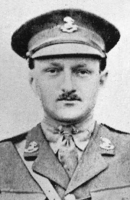
CPL David Wallace Crawford
1887 - 1916
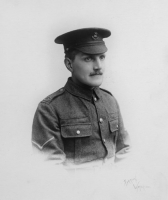
Lce-Corpl John Joseph Nickle
1894 - 1916
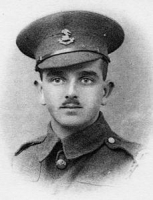
Pte 17911 Morton Neill
1897 - 1916
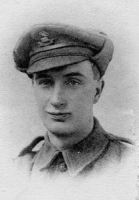
Lieut Edward Stanley Ashcroft
1883 - 1918
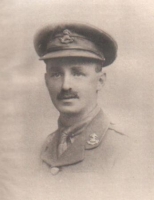
Pte 57784 William Elliot (MM)

- Age: 21
- From: Bellingham, Northumberland
- Regiment: The King's (Liverpool Regiment) 18th Btn
- K.I.A Saturday 22nd September 1917
- Commemorated at: Torreken Farm
Panel Ref: B.13
William Elliot was born 16th June 1896 at Bellingham, Northumberland, he was the son of George and Anne Elliot (nee Dodd)of 1 Coronation Street, Plessey Rd, Blyth, Northumberland. He was a native of Bebside, Northumberland. His father was a colliery horse-keeper (below ground) in 1901, but by 1911 had become a colliery stone-man.
After attending the County Secondary School, (now Blyth Tynedale High School), William became a student at Bede College, Durham in 1914-1915. It is noted in the June 1915 issue of The Bede magazine that William, with other first year students, had offered himself for military service in the army upon the conclusion of that present term. After taking his first year examination for the Archbishops’ Certificate, he enlisted at Sunderland.
The 1911 Census shows the family living at 74 Front Row Bebside, Northumberland. His father, George, is aged 39, having been born in 1872 at Castleton, Roxburghshire. His occupation is shown as a miner/stonemason below ground. His wife Anne is aged 36, born 1875 in Cumberland. They have been married for sixteen years and have had five children, Rosanna Jane aged 16, born 1895 no occupation, William aged 14, born 1897, John aged 13, born 1898 and Robert aged 10, born 1901 are at school, and Ann is born in 1911
William enlisted in Sunderland in June 1916 and joined the 8th Northern Cyclist Battalion as Private No 326. Two other Bede students from his year, Edward Smith and Robinson Wallace, also joined this unit at the same time. The Northern Cyclist battalion was independent, unaffiliated to any regiment, and their primary role was reconnaissance and communication. They were, however, armed as infantry and so could provide firepower when needed. When 8th Battalion was disbanded Elliot was transferred to 14/16th King’s Liverpool Regiment (no. 57784), along with Edward Smith. In July 1917, the regiment’s battalions were consolidated and re-organised and the 14/16th amalgamated into the 18th King’s Liverpool Regiment as Private No 57784. Throughout this time Elliot wrote regularly to The Bede, and indeed his obituary in the December 1917 issue quotes from his last letter, which must have been written around 10 September.
- H. Smith, R.G.A., (Bede College 1914-1915), wrote to The Bede on 17 September 1917, which reported “that he had run into Elliot in June 1917 and had a real Bede chat with him about the College and the happy time spent there. He added that Elliot had been in some very rough fighting, but had come through all right, and was quite willing to tackle more”. Edward Smith, still serving with William, reported that William had been given the Military Medal for his courageous conduct, as he then described.
Apparently on July 31, whilst advancing, he came to a shell hole in which several men were crouching. They immediately told him to get down, as a machine gun was very active in the region. He got into the shell hole and after receiving some information regarding the Germans in front of them, had a look for himself. He saw some German helmets moving in a trench and tried to drop some grenades in at them from the shell hole. As he found it impossible to get the range, forgetful of all danger, he immediately jumped out of the shell hole into the open, to fire several grenades point blank at them, succeeding in putting them out of action, and undoubtedly saving the lives of many comrades.
The Bede magazine, vol. 14, no. 1 (December 1917), p.8.
In another letter to The Bede, W. P. Crossland (Bede 1914-1916) wrote that Elliot gained his Military Medal in the heavy fighting near Arras, and that he had subsequently declined promotion. The medal was awarded for “conspicuous gallantry in action”, the citation appearing in the Edinburgh Gazette on 1 October 1917, and also in the Morpeth Herald. Crossland wrote further of having had “many a long chat” with Elliott in a Field Ambulance Hospital where Elliott was recovering after being slightly wounded in the shoulder and neck. According to the regimental diaries, at the end of July the battalion had been ordered to withdraw to Château Segard. This was very difficult, not only due to the darkness but the heavy state of the track, and although the men were in good heart they were exhausted. The Commander later recommended that several officers and men be awarded gallantry medals for their actions on the day, and William Elliot was included in this list.
He was killed in action on the 22nd September, 1917 aged 21 during the Third Battle of Ypres (Passchendaele). He wasawarded the Military Medal for conspicious bravery in action on the 31st July 1917.
18th Battalion War Diary for 22nd September 1917
Enemy shelled intermittently. Found working parties to Front Line, Wiring and Digging.
Casualties. Killed
17076 Sergt D Malcolm
203094 Pte G Fearon
57694 Pte B Brearley
202830 Pte J Conway
57784 Pte W Elliott
203179 Pte N. Williams
William now rests at Torreken Farm Cemetery No 1, Belgium, where the inscription on his headstone reads:
“THY WILL BE DONE”
He is also commemorated at Bede College, Blyth Tynedale High School (Plaque)and Waterloo Road Presbyterian Church.
We currently have no further information on William Elliot, If you have or know someone who may be able to add to the history of this soldier, please contact us.
89th Brigade On This Day.
110 Years Ago.The Battle of the Transloy Ridges begins. more....
Killed On This Day.
(110 Years this day)Sunday 15th October 1916.
Pte 30280 James Patrick Doyle
25 years old
(110 Years this day)
Sunday 15th October 1916.
Pte 34608 Thomas Foster
19 years old
(110 Years this day)
Sunday 15th October 1916.
Pte 53107 Joseph Green
32 years old
(110 Years this day)
Sunday 15th October 1916.
Pte 11282 Stephen Hynes
21 years old
(110 Years this day)
Sunday 15th October 1916.
Pte 32717 Evan Lee
25 years old
(110 Years this day)
Sunday 15th October 1916.
Pte 34271 James Vickers
21 years old
(108 Years this day)
Tuesday 15th October 1918.
Cpl 15764 Alan Douglas Ellison
30 years old