
1885 - 1916
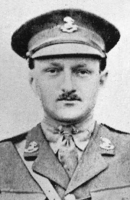
CPL David Wallace Crawford
1887 - 1916
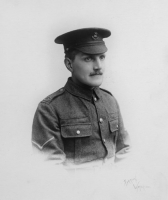
Lce-Corpl John Joseph Nickle
1894 - 1916
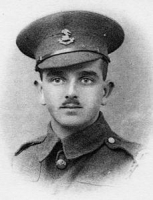
Pte 17911 Morton Neill
1897 - 1916
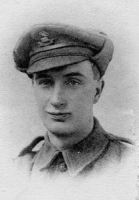
Lieut Edward Stanley Ashcroft
1883 - 1918
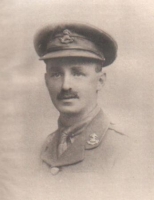
Pte 24959 Frank Wolfenden Eggleston
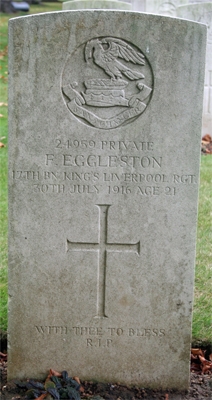
- Age: 22
- From: Liverpool
- Regiment: The King's (Liverpool Regiment) 17th Btn
- K.I.A Sunday 30th July 1916
- Commemorated at: Serre Rd No 2 Cem, B-hamel
Panel Ref: XXXIV.B.1
Francis (Frank) Wolfenden Eggleston was born in the March quarter of 1894 in Waterloo, Liverpool the son of Bertha Eggleston. Frank had an elder sister, Emmeline, born in 1879.
The 1901 Census shows the family are living at 63 Norway Street, Waterloo. Head of the household is mother, Bertha, aged 39 and a single woman born in Sheffield and is shown as being employed as a laundress. Also recorded are Francis aged 7 and his elder sister Emmeline 21, born in Wavertree. Also in the household are two widowed female boarders living on their own means.
By 1911 the family have moved to 46 Sweden Street, Waterloo. Frank is now 17 and an apprentice plasterer. He is living with his mother, aged 46, and still working as a laundress, and a boarder. Emmeline is also a laundress boarding nearby in Sweden Grove. She married in 1912 and had four daughters, one of whom she called Frances, born in 1918.
He was a member of the Young Men's Catholic Society at St. Thomas of Canterbury Church, Waterloo.
Prior to the war he was employed as a steward with the White Star Line prior to enlisting, but has not been found on crew lists.
Frank enlisted in Liverpool in about January 1915 joining in the 17th Battalion of The King’s Liverpool Regiment as Private No 24959.
He was billeted at Prescot Watch Factory from 14th September 1914, he trained there and also at Knowsley Hall. On 30th April 1915 the 17th Battalion alongside the other three Pals battalions left Liverpool via Prescot Station for further training at Belton Park, Grantham. They remained here until September 1915 when they reached Larkhill Camp on Salisbury Plain. He arrived in France, with his Battalion on 07th November 1915.
He was killed in action on the 30th July 1916, aged 21, at the village of Guillemont, France, during the Somme Offensive.
17th Battalion Diary
The Battalion was in support to 19 & 20 Battalions K.L.R. 2 Coys. behind 19th & 2 Coys. behind 20th. Very thick mist. The attack was pushed home to the objective in places but in the main was held up by machine gun fire from hidden machine guns.
Fighting continued all day swaying backwards and forwards until by 6pm about 300 yards in depth had been gained & consolidated all along our front.
Casualties in the 17th Battalion were 15 Officers and 281 Other Ranks
Further details are reported in more detailed by Everard Wyrall in his book The History of the King’s Regiment (Liverpool) 1914-1919 Volume II 1916-1917
The 17th King’s had advanced (two companies each behind the 19th and 20th Battalions) in small columns. They too suffered heavily from machine-gun fire and were quickly absorbed into the waves that preceded them. They also shared the gains and losses of that terrible day.
When darkness fell on the battlefield the 30th Division held a line from the railway on the eastern side of Trones Wood , southwards and including Arrow Head Copse, to east of Maltz Horn Farm. On this line the division was relieved by the 55th Division during the early hours of the 31st July.
The events of 30th July 1916 were regarded at the time as Liverpool’s blackest day. There follows an extract from The History of the 89th Brigade written by Brigadier General Ferdinand Stanley which gives an indication of the events of the day.
Guillemont
Well the hour to advance came, and of all bad luck in the world it was a thick fog; so thick that you couldn’t see more than about ten yards. It was next to impossible to delay the attack – it was much too big an operation- so forward they had to go. It will give some idea when I say that on one flank we had to go 1,750 yards over big rolling country. Everyone knows what it is like to cross enclosed country which you know really well in a fog and how easy it is to lose your way. Therefore, imagine these rolling hills, with no landmarks and absolutely unknown to anyone. Is it surprising that people lost their way and lost touch with those next to them? As a matter of fact, it was wonderful the way in which many men found their way right to the place we wanted to get to. But as a connected attack it was impossible.
The fog was intense it was practically impossible to keep direction and parties got split up. Owing to the heavy shelling all the Bosches had left their main trenches and were lying out in the open with snipers and machine guns in shell holes, so of course our fellows were the most easy prey.
It is so awfully sad now going about and finding so many splendid fellows gone.
Frank was buried close to where he fell and after the war, when graves were concentrated, his body (identified by his Identity Disc) was removed and reinterred.
He now rests at Serre Road No 2 Cemetery, Beaumont Hamel, France where his headstone bears the epitaph:
"WITH THEE TO BLESS R.I.P"
In June 1916, the road out of Mailly-Maillet to Serre and Puisieux entered No Man's Land about 1,300 metres south-west of Serre. On 1 July 1916, the 31st and 4th Divisions attacked north and south of this road and although parties of the 31st Division reached Serre, the attack failed. The 3rd and 31st Divisions attacked once more on the 13 November, but again without success.
Early in 1917, the Germans fell back to the Hindenburg Line and on 25 February, Serre was occupied by the 22nd Manchesters. The village changed hands once more in March 1918 and remained under German occupation, until they withdrew in August.
In the spring of 1917, the battlefields of the Somme and Ancre were cleared by V Corps and a number of new cemeteries were made, three of which are now named from the Serre Road. Serre Road Cemetery No.2 was begun in May 1917 and by the end of the war it contained approximately 475 graves (Plots I and II, except for Row E, Plot II which was added in 1922 and Row AA, Plot I which was added in 1927), but it was greatly enlarged after the Armistice by the addition of further graves from the surrounding area.
There are now 7,127 Commonwealth burials of the First World War in the cemetery, mostly dating from 1916. Of these, 4,944 are unidentified.
The cemetery, which was not completed until 1934, was designed by Sir Edwin Lutyens.
His age on the CWGC headstone is shown as 21, but given his birth registration and age on censuses, Frank would have been 22 years old.
His death was announced in the Liverpool Echo on 21st August 1916 and also in the Liverpool Daily Post on 12th September 1916:
Killed.
King’s(Liverpool Regiment) - Eggleston, 24959, F. (Bootle);
Frank earned his three medals.
His outstanding Army pay and a War Gratuity of £6 went to his mother, who was awarded a pension of 10/- a week from February 1917, at that time living at 52 Norway Street.
More than three years after Frank fell, despite his death being officially reported in August 1916, his mother was desperately appealing for information in the Liverpool Daily Post on 27th October 1919 under the heading:
Missing - Information Wanted:
"Reported missing July 30, 1916, now presumed died on that date or since, Frank Eggleston, 24959, 17th Batt., K.L.R. - Any information will be gratefully received by his mother, Mrs. Eggleston, 52, Norway Street, Waterloo, Liverpool."
His mother remarried to Thomas Lawrinson in Warrington in 1922.
By the time his CWGC headstone was erected (in about 1925), her residence was given as 167 Dalton Lane, Warrington.
On the 1939 register Bertha and her husband were living at 30 Troutbeck Avenue, Warrington.
His mother was widowed in 1944 and moved back to the Liverpool area where Emmeline lived. She lived into her 90s and died in 1954.
Frank is commemorated on the following Memorials:
Waterloo and Seaforth Civic Memorial
Liverpool's Hall of Remembrance, Panel 1
We currently have no further information on Frank Woolfenden Eggleston, if you have or know someone who may be able to add to the history of this soldier, please contact us.
89th Brigade On This Day.
110 Years Ago.The Battle of the Transloy Ridges begins. more....
Killed On This Day.
(110 Years this day)Monday 16th October 1916.
Pte 22929 Edward Bird
19 years old
(110 Years this day)
Monday 16th October 1916.
Pte 16795 William Frederick Collister
23 years old
(109 Years this day)
Tuesday 16th October 1917.
L/Cpl 49038 Ernest Yardley
31 years old
(108 Years this day)
Wednesday 16th October 1918.
Pte 85187 James Hoy
31 years old
(107 Years this day)
Thursday 16th October 1919.
Pte 36438 Hugh Morris
23 years old