
1885 - 1916
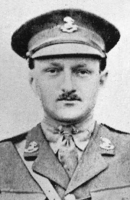
CPL David Wallace Crawford
1887 - 1916
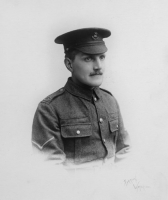
Lce-Corpl John Joseph Nickle
1894 - 1916
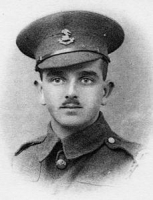
Pte 17911 Morton Neill
1897 - 1916
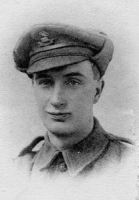
Lieut Edward Stanley Ashcroft
1883 - 1918
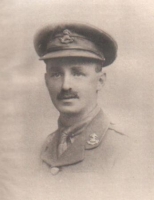
Pte 52449 Ernest Edgar Edwins
- Age: 28
- From: Redditch, Worcestershire
- Regiment: The King's (Liverpool Regiment) 18th Btn
- K.I.A Monday 9th April 1917
- Commemorated at: Wancourt Brit Cem
Panel Ref: V.E.27
Ernest Edgar Edwins was born in 1890 in Redditch, Worcestershire, the son on Frederick Edwins and his wife Martha (nee Morrall) who were married in 1870 in Alcester, Warwickshire.
Ernest's father died in the September quarter of 1909, aged 67. His death was registered in Bromsgrove.
Ernest enlisted in Ammanford, Carmarthen. SDGW shows that he served originally as Private 24004 of the South Lancashire Regiment whilst the medal index card shows that he served in the King's Own Royal Lancaster Regiment as Private 22439.
Ernest has three service numbers on his military records:-
The pension ledger and index card states that he had a son called Llewelyn who was "born out of wedlock" on the 30th September 1915, it was registered in Llandilofawr (about 6 miles away from Ammanford).
His mother, Martha, died shortly before her son in 1917, aged 66.
Ernest was killed in action on the 09th April 1917, aged 28, during the opening phase of the Battle of Arras.
Arras 09th April 1917
Details of the circumstances the 18th Battalion had to contend with are illustrated below:
The battalion formed the left assaulting battalion of the brigade, the 2nd Wiltshire Regiment being on the right, the 19th Manchester Regiment being in support and 2nd Battalion Yorkshire Regiment furnishing “moppers -up” for the two assaulting battalions. The brigade advance was timed to begin at ---- hour after “Zero”, suited to conform with the movements of 56th Division and other divisions on our left further north (near Arras). This battalion’s objective was the front-line system Lion Lane on the left (exclusive) to Panther Lane on right (exclusive). This sector included the strongpoint known as “The Egg”.
The brigade advanced at prearranged time, i.e., 11.38 a.m, from position of assembly trenches south of Neuville Vitasse to German front line. This necessitated an advance across the open of at least 2,000 yards. This area up to Neuville Vitasse- Henin road was crossed in artillery formation; after this, owing to machine-gun fire and considerable resistance from German posts forward in the sunken roads, it was found necessary to deploy. During the whole movement across the open the advancing columns had been under considerable artillery fire from guns of all calibres. On gaining the position immediately in front of German line it was found that the wire was practically uncut; this wire formed two strong belts in front of German trenches. Two small gaps were eventually discovered and Second-Lieut H.F.Merry gallantly led a bombing party through them, but his three remaining men were killed as they reached the German trenches.
From the moment the battalion was “held up” in front of German wire Capt. R. W. Jones, the senior company commander on the spot, at once began the work of consolidating in front of German wire. The battalion held on in this position for the remainder of the day, until relieved by the 16th Manchester Regiment about 3 a.m. on the 10th of April, all the time under intense machine-gun and rifle fire.
Between 9th-10th April, 1917, the 18th King's lost 2 officers 2nd Lt. F. Ashcroft and 2nd Lt. H.G. Ewing and 59 other ranks killed. 8 other officers were wounded.
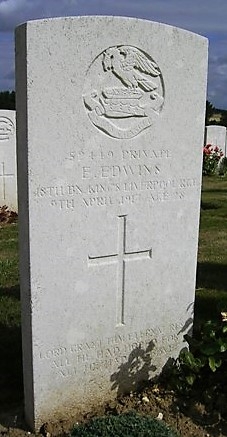
He now rests at Wancourt British Cemetery, France, where his headstone bears the epitaph:
“LORD GRANT HIM ETERNAL REST. ALL HE HAD HOPED FOR ALL HE HAD HE GAVE”
Wancourt was captured on 12 April 1917 after very heavy fighting and the advance was continued on the following days. The cemetery, called at first Cojeul Valley Cemetery, or River Road Cemetery, was opened about ten days later; it was used until October 1918, but was in German hands from March 1918 until 26 August, when the Canadian Corps recaptured Wancourt. At the Armistice, the cemetery contained 410 graves, but was very greatly increased in the following years when graves were brought in from other small cemeteries and isolated positions on the battlefields south-east of Arras including HENIN-SUR-COJEUL, about 800 metres North of the village, contained the graves of 29 British soldiers who fell on 9 April 1917, almost all of whom belonged to the 2nd Wilts or the 18th King's Liverpools. The cemetery now contains 1,936 burials and commemorations of the First World War. 829 of the burials are unidentified but there are special memorials to 76 casualties known or believed to be buried among them, and to 20 who were buried in Signal Trench Cemetery whose graves were destroyed in later battles. The cemetery was designed by Sir Edwin Lutyens.
CWGC incorrectly show Ernest's service No. as 57449 on CWGC (they have been notified), although his headstone has his correct service number.
Another Pension card in 1924 states that Thomas R. Thomas, No. 493, Royal Welsh Fusiliers is now the step-father of the child Llewellyn Thomas Edwins.
Sadly, Ernest has not been found on any local memorial.
We currently have no further information on Ernest Edgar Edwins, If you have or know someone who may be able to add to the history of this soldier, please contact us.
89th Brigade On This Day.
110 Years Ago.The Battle of the Transloy Ridges begins. more....
Killed On This Day.
(110 Years this day)Monday 16th October 1916.
Pte 22929 Edward Bird
19 years old
(110 Years this day)
Monday 16th October 1916.
Pte 16795 William Frederick Collister
23 years old
(109 Years this day)
Tuesday 16th October 1917.
L/Cpl 49038 Ernest Yardley
31 years old
(108 Years this day)
Wednesday 16th October 1918.
Pte 85187 James Hoy
31 years old
(107 Years this day)
Thursday 16th October 1919.
Pte 36438 Hugh Morris
23 years old