
1885 - 1916
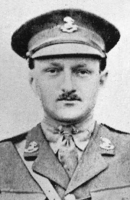
CPL David Wallace Crawford
1887 - 1916
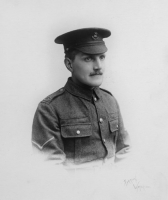
Lce-Corpl John Joseph Nickle
1894 - 1916
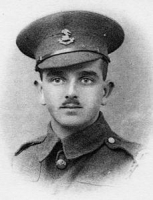
Pte 17911 Morton Neill
1897 - 1916
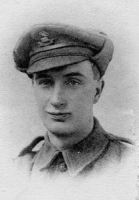
Lieut Edward Stanley Ashcroft
1883 - 1918
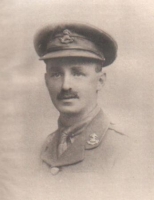
Pte 21751 William John Duggan

- Age: 32
- From: Liverpool
- Regiment: The King's (Liverpool Regiment) 20th Btn
- K.I.A Sunday 30th July 1916
- Commemorated at: Guillemont Rd Cem
Panel Ref: IX.L.3
William John Duggan was born 07th July 1884 in Liverpool and was baptised 25th July 1884 at St Patrick's Church, Liverpool. He was the son of Michael and Catherine Duggan (nee Doolan) who had married 25th June 1877 also at St Patrick's Church, Liverpool, their address 1/3 Denley Street. William was the youngest of their three children, and the only son.
At the time of the 1891 census the family is living at 139 Wolfe Street, Toxteth Park. His father, 48, is a general labourer, his mother is 40, Willie is 6.
The 1901 Census shows the family living at 101 Wolfe Street, Toxteth Park, Liverpool. His father, Michael, is aged 56, born in Ireland 1845 is a general labourer, his mother, Catherine, is aged 44, born 1857 in Liverpool and has no occupation listed. They have three children at the time of the Census who were all born in Liverpool; Mary aged 22, born 1879 employed as a hair spinner, Annie aged 21, born 1880 is a domestic servant and William John is aged 16, born 1885 is a boiler cleaner.
His father died around 1910, this is reflected on the Electoral Roll but no death record has been found.
In 1911 they are at the same address. William, 27, is head of household, employed as a street sweeper for Liverpool Corporation. His mother Catherine is 56, and now widowed, and his sister Mary, 33, works in a hair factory as a machine minder.
William enlisted in Liverpool on 13th November 1914, as Private 21751, 22nd (Reserve) Battalion, King’s (Liverpool) Regiment, giving his age as 30 years and 4 months, and his occupation as foreman. He was described as being five feet five inches tall, weighing 128 lbs, 36" chest, with a fresh complexion, grey eyes and light brown hair. He stated his religion as Roman Catholic. He gave his mother Catherine as his next of kin.
Whilst training at Knowsley near Liverpool, on 06th August 1915, William was confined to barracks for 2 days for having ‘dirty buttons for first parade’.
He was posted to the 19th Battalion on 29th October 1915.
William arrived in France on 06th January 1916, and joined 20th Battalion in the field on 07th January 1916 with a roll of reinforcements from 30th Infantry Base Depot.
He was killed in action on 30th July 1916, aged 32, during the failed attack on the German-held village of Guillemont.
His name was listed amongst those killed in the Liverpool Daily Post on 09th September 1916.
30th July 1916
The 20th King’s Battalion Diary records:
“At 4.45am prompt the attack was launched. Unfortunately, a thick mist prevailed and it was impossible to see more than 10 yards ahead. This continued until about 6 o’clock when it lifted slightly, but it was still too hazy and impossible to see what was happening 100 yards ahead. This being so, it was not surprising to find that the attacking waves were experiencing great difficulty in maintaining connection.”
At 6am, Lt. RE Melly, No.1 Company, reported that his men had taken the German Maltz Horn trench.
At 6.30am, 2/Lt. CP Moore reported that he had 150 men, 4 Stokes Mortars and 2 Lewis Guns, but he was the only officer. He also said that due to the fog, both his “flanks were in the air” i.e. he was not in contact with neighbouring troops.
At 9.10am, Moore was still not in contact at his flanks, and now he had only 75 men, he had sent out 2 patrols and neither not returned. Later Moore established communication with the French on his right.
Around 10.00am, 2/Lt Musker reported that he had just over a company with him, but his left flank was suffering from German machine gun fire. Later he reported that he had over 30 casualties from the machine gun fire. His flanks were also “in the air”. No contact was made with this party until the remnants returned around 9.30pm, all runners sent were killed or missing. The War Diary states that this group had: ”held the ground won all day, and this permitted the consolidation of the ground won on the Maltz Horn ridge with little interference from the enemy”.
Relief for 20/Kings had been planned for 11.00pm, but it was 5.00am on the 31st July before it took place, ending a tragic day for the Liverpool Pals.
Casualties for 20th Battalion were 16 Officers and 357 Other Ranks
When darkness fell on the battlefield the 30th Division held a line from the railway on the eastern side of Trones Wood , southwards and including Arrow Head Copse, to east of Maltz Horn Farm. On this line the division was relieved by the 55th Division during the early hours of the 31st July.
The events of 30th July 1916 were regarded at the time as Liverpool’s blackest day. There follows an extract from The History of the 89th Brigade written by Brigadier General Ferdinand Stanley which gives an indication of the events of the day.
Guillemont
Well the hour to advance came, and of all bad luck in the world it was a thick fog; so thick that you couldn’t see more than about ten yards. It was next to impossible to delay the attack – it was much too big an operation- so forward they had to go. It will give some idea when I say that on one flank we had to go 1,750 yards over big rolling country. Everyone knows what it is like to cross enclosed country which you know really well in a fog and how easy it is to lose your way. Therefore, imagine these rolling hills, with no landmarks and absolutely unknown to anyone. Is it surprising that people lost their way and lost touch with those next to them? As a matter of fact, it was wonderful the way in which many men found their way right to the place we wanted to get to. But as a connected attack it was impossible.
The fog was intense it was practically impossible to keep direction and parties got split up. Owing to the heavy shelling all the Bosches had left their main trenches and were lying out in the open with snipers and machine guns in shell holes, so of course our fellows were the most easy prey.
It is so awfully sad now going about and finding so many splendid fellows gone.
William was buried close to where he fell and after the war, when graves were concentrated, his body was removed and reinterred in Guillemont Road Cemetery where he now rests.
Guillemont was an important point in the German defences at the beginning of the Battle of the Somme in July 1916. It was taken by the 2nd Royal Scots Fusiliers on 30 July but the battalion was obliged to fall back, and it was again entered for a short time by the 55th (West Lancashire) Division on 8 August. On 18 August, the village was reached by the 2nd Division, and on 3 September (in the Battle of Guillemont) it was captured and cleared by the 20th (Light) and part of the 16th (Irish) Divisions. It was lost in March 1918 during the German advance, but retaken on 29 August by the 18th and 38th (Welsh) Divisions.
The cemetery was begun by fighting units (mainly of the Guards Division) and field ambulances after the Battle of Guillemont, and was closed in March 1917, when it contained 121 burials. It was greatly increased after the Armistice when graves (almost all of July-September 1916) were brought in from the battlefields immediately surrounding the village and certain smaller cemeteries, including:-
HARDECOURT FRENCH MILITARY CEMETERY. The village of Hardecourt-au-Bois was captured by French troops on the 8th July 1916, and again by the 58th (London) and 12th (Eastern) Divisions on 28 August 1918. Five British Artillerymen were buried by their unit in the French Military Cemetery, in the middle of the village, in September 1916; and in 1918 the 12th Division buried in the same cemetery 14 men of the 9th Royal Fusiliers and two of the 7th Royal Sussex.
Guillemont Road Cemetery now contains 2,263 Commonwealth burials and commemorations of the First World War. 1,523 of the burials are unidentified but there are special memorials to eight casualties known or believed to be buried among them.
The cemetery was designed by Sir Herbert Baker.
William earned the British War and Victory Medals.
Pension of 5/- a week and a War Gratuity of £7-10s went to his mother Catherine at 147 Beaufort Street, Toxteth.
In 1919, when the Army requested information, William’s only living relatives were his mother Catherine, 67, and married sister Annie O’Rourke, 38, and two nephews and two nieces, all living at 147 Beaufort Street. His sister Annie married Thomas O'Rourke, a fireman who also resided at 147 Beaufort St.
His mother died, aged 70, in 1924.
William is commemorated on the following Memorials:
Liverpool’s Hall of Remembrance, Panel 4
St. Malachy, Beaufort Street, Toxteth (now located in St. Vincent de Paul)
We currently have no further information on William John Duggan. If you have or know someone who may be able to add to the history of this soldier, please contact us.
89th Brigade On This Day.
110 Years Ago.The Battle of the Transloy Ridges begins. more....
Killed On This Day.
(110 Years this day)Monday 16th October 1916.
Pte 22929 Edward Bird
19 years old
(110 Years this day)
Monday 16th October 1916.
Pte 16795 William Frederick Collister
23 years old
(109 Years this day)
Tuesday 16th October 1917.
L/Cpl 49038 Ernest Yardley
31 years old
(108 Years this day)
Wednesday 16th October 1918.
Pte 85187 James Hoy
31 years old
(107 Years this day)
Thursday 16th October 1919.
Pte 36438 Hugh Morris
23 years old