
1885 - 1916
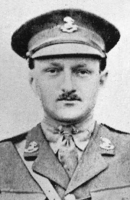
CPL David Wallace Crawford
1887 - 1916
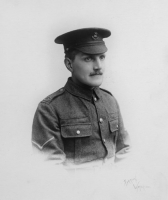
Lce-Corpl John Joseph Nickle
1894 - 1916
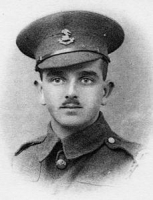
Pte 17911 Morton Neill
1897 - 1916
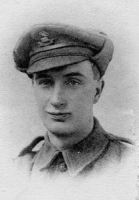
Lieut Edward Stanley Ashcroft
1883 - 1918
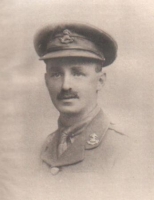
Sgt 17315 Ernest Henry Dowling
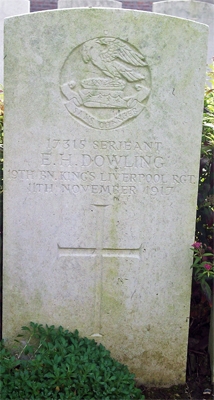
- Age: 28
- From: Bristol
- Regiment: The King's (Liverpool Regiment) 19th Btn
- D.O.W Sunday 11th November 1917
- Commemorated at: Bailleul Cc Ext
Panel Ref: III.E.68
Ernest Henry Dowling was born on 17th August 1889 in Bedminster, Bristol and was baptised on the 01st December 1889 at St Mary Redcliffe, Bristol. He was the son of George and Elizabeth Dowling (nee Fowles). The family were living at 19 Philip Street, where his father is working as a plasterer.
Philip Street was at the heart of the speedy industrial expansion of the Bedminster area of Bristol during the 1880s, with the arrival of two large factories: W.D. & W.O. Wills cigarette manufacturers, and Robinson’s packaging factory, both of which employed thousands of people. Bedminster also had coal mines, tanneries, a slaughterhouse, breweries, chemical works, glue and paint factories as well as many small industries. The nearby docks also provided employment. New terraced houses were being built to accommodate the expanding population, but there were also many slum houses with families crammed into small rooms. A ragged school existed for the education of the poor, and many people were living ‘on the parish pay’. A railway station to serve all the industry, several churches and a park were built during the late 19th century.
Ernest’s family had lived Bedminster since his parents were married in St Philip & Jacob Chapel in November 1870. George was born in Bristol in 1848, son of a painter and Elizabeth, daughter of a smith, in Whitchurch, just outside Bristol in 1849. When they were first married they are recorded in the 1871 census as living at 39 Weare Street, Bedminster, but by the time of the 1881 census they have taken residence in Philip Street at number 6 with their first four children. A large Baptist chapel was opened in 1861 in Philip Street, where later Ernest would get married. The chapel is still functioning today and their online history shows that they were very much involved with the welfare of the local residents. Given that Ernest was married there, it is very possible that the family were worshipers.
Ernest was one year old when the 1891 census was taken. Living in 19 Philip Street were his father whose occupation is plasterer and tiler, his mother and older siblings – George Walter aged 19 who was working as a tipper in a chocolate factory, Arthur James who was already working at the age of 13 as a venetian blind painter, and sisters Florence Elizabeth aged 11, Edith Rose aged 9 and Lily Beatrice aged 7 who were all at school. There are also two other daughters Clara Maud aged 15 who is working as a servant in the household of a bookkeeper just around the corner, and Emily Bertha aged 17 and Ethel Victoria aged 3 are staying with their mother’s sister and her family in Cardiff.
By 1901 the family had moved to a house at 34 Upper Perry Hill about a 10 minute walk from their old house. Ernest’s sister Emily Bertha had married Harry Harris in 1899, and on the day of the census was at home with her parents, possibly living with them as Harry was a 21 year veteran in the Royal Garrison Artillery who was not discharged until 1913. Also living at home were four of Ernest’s sisters – 21 year old Florence was working as a box maker, Edith 19 was a cream coverer in a confectioners, Lily 17 a cigarette packer, and Ethel who was 13. In 1894 Ernest’s mother gave birth to another daughter called Frances Elsie May, but she is not listed on the census.
The 1901 census also shows Ernest’s older brother George was working as a chocolate factory foreman in Watford. George married in New Zealand in 1908 and lived there until he died in 1928. Older sister Clara was a servant in the household of a hardware manager in Bishopston, Bristol. She went on to marry George James in 1905. Brother Arthur James cannot be found in that census but he does go on to marry in 1909 and later also lived in New Zealand.
Ernest’s sisters Edith married Oliver Rogers in 1904 and Florence married Charles Lane in 1907.
The 1911 Census shows the family still living at 34 Upper Perry Hill. His father George is now 63 and is still working as a plasterer in the building trade. His mother Elizabeth is now 60. They have been married for forty years and have had twelve children of which two had died. Living at home with their parents are Lily Beatrice now 27, and Ethel Victoria aged 23, born 1888 are both packers for a tobacco company, Ernest Henry now aged aged 21, is a shipping clerk and Frances Elsie May aged 16 is a cigarette maker. Lily married Edward Martin later in 1911. Although no connection to Liverpool can be found, Ernest travelled there and enlisted at St George's Hall in Liverpool on 7th September 1914 which was only a few days after Lord Derby invited would be recruits to the Pals to assemble for the first time for attestation on 31st August 1914. Ernest joined the 19th Battalion of The King’s Liverpool Regiment as Private No 17315, he was amongst the first recruits, and according to his record was 25 years and 21 days old. He is described as 5’10½”, weighing 136lbs and had brown hair and eyes. Ernest was promoted to Corporal within days of being recruited, and then to Sergeant in March 1915.
His brother in law Harry Harris also volunteered early, (or was possibly still on recall) on 14th September 1914 at Bulford Camp, Wiltshire despite being 45 years old. Harry had only been discharged in February 1913 from 21 years of service in the Royal Garrison Artillery where he had reached the rank of Company Sergeant Major. He was eventually discharged in October 1917 due to his age.
Formed on 07th September 1914 the 19th Battalion trained locally at Sefton Park and remained living at home or in rented accommodation until November 1914. They then moved to the hutted accommodation at Lord Derby’s estate at Knowsley Hall. While they were at Knowsley, Ernest returned to Bristol on leave and married Hilda May Goss of 14 Brigstock Road, Ashley Road, St Pauls, Bristol. Ernest was of the Baptist faith and the couple were married in the Philip Street Baptist Chapel on 03rd April 1915. Hilda was born in 1888 and baptised 26th February 1889 at St Philip and Jacob Chapel, Bristol. The 1911 Census shows Hilda aged 22 and her occupation as a milliner.
On 30th April 1915 the 19th Battalion alongside the other three Pals battalions left Liverpool via Prescot Station for further training at Belton Park, Grantham. They remained here until September 1915 when they reached Larkhill Camp on Salisbury Plain. The battalion left Larkhill training camp for France on 6th November 1915 and arrived in France the next day.
Ernest’s records show that was he wounded in the back by shrapnel on 22nd May 1916. He had 10 days leave back to the UK in June 1916 and was again injured by gunshot in the arm at Guillemont on 30th July 1916. He had another 10 days leave in September 1917.
According to the War Diary, on the 07th of November 1917, the battalions were based in Ramilles Camp near Ypres, and training classes were being carried out in Lewis Gun,musketry, signalling and bombing. On that day Ernest was wounded severely in his left thigh in an accidental shooting incident which also killed L/Corporal 17992 Richard Sutton Walberg and injured L/Sergeant 17297 Cockburn. This accident happened when a Lewis gun was fired by Private 17934 William Roughley. Pte Roughley and L/Corporal 52202 Lee (who was giving the Lewis gun instruction class) were tried by Field General Court Martial. Private Roughley had believed the gun to be empty, having used it that morning empty in training, he then returned to the training hut and while handling it had accidentally discharged it. There were several eye witness statements including one which stated "Corporal Walberg was just inside a barrack hut, when a Lewis Gun was fired by No.17943 Pte Roughley of 19th Battalion KLR, who was cleaning the gun, pulled the trigger, accidentally discharging four rounds".
The court concluded that “it could not be ascertained who placed the loaded magazine on the gun”. It found that that Private Roughley had accidentally discharged the gun, he was found guilty and fined 28 days pay. He was to win a Military Medal himself before he was killed in action on the 08th October 1918 at the age of 23.
Ernest succumbed to his wounds on 11th November 1917. He now rests at Bailleul Communal Cemetery Extension, France, near the border with Belgium.
Bailleul was occupied on 14 October 1914 by the 19th Brigade and the 4th Division. It became an important railhead, air depot and hospital centre, with the 2nd, 3rd, 8th, 11th, 53rd, 1st Canadian and 1st Australian Casualty Clearing Stations quartered in it for considerable periods. It was a Corps headquarters until July 1917, when it was severely bombed and shelled, and after the Battle of Bailleul (13-15 April 1918), it fell into German hands and was not retaken until 30 August 1918.
The earliest Commonwealth burials at Bailleul were made at the east end of the communal cemetery and in April 1915, when the space available had been filled, the extension was opened on the east side of the cemetery. The extension was used until April 1918, and again in September, and after the Armistice graves were brought in from the neighbouring battlefields.
BAILLEUL COMMUNAL CEMETERY EXTENSION contains 4,403 Commonwealth burials of the First World War; 11 of the graves made in April 1918 were destroyed by shell fire and are represented by special memorials. There are also 17 British burials of the Second World War (all 1940) and 154 German burials from both wars (10 of which are Second World War).
During the Second World War the cemetery suffered major bomb damage that necessitated the replacement of nearly 200 headstones after the war.
Both the Commonwealth plot in the communal cemetery and the extension were designed by Sir Herbert Baker.
In April and May 1918, Ernest’s widow Hilda received two bundles of his belongings. In the first were: a horseshoe trinket, an electric torch, a razor, a belt, 2 badges, 4 instruction books, a pad, letters, 2 religious books, elastic knee stocking, razor strop, 2 handkerchiefs, a purse, a counterfeit half crown and a halfpenny. In the second parcel were: an identity disc, photographs, a notebook, 4 religious books, cigarette case, wrist watch, strap and protector, fountain pen, pocket knife, one franc note (souvenir) and a 10 centimes coin. Hilda was awarded a widow’s pension of 16s and 3d.
Ernest’s sister Frances married Thomas Gibbins in 1919, and in 1932 his sister Ethel married her brother in law Edward Martin, the widower of her sister Lily who died in 1930. Ernest’s widow Hilda remarried in 1934, and died in 1954. His father George died in 1932 and his mother in 1926.
We currently have no further information on Ernest Henry Dowling, If you have or know someone who may be able to add to the history of this soldier, please contact us.
89th Brigade On This Day.
110 Years Ago.The Battle of the Transloy Ridges begins. more....
Killed On This Day.
(110 Years this day)Monday 16th October 1916.
Pte 22929 Edward Bird
19 years old
(110 Years this day)
Monday 16th October 1916.
Pte 16795 William Frederick Collister
23 years old
(109 Years this day)
Tuesday 16th October 1917.
L/Cpl 49038 Ernest Yardley
31 years old
(108 Years this day)
Wednesday 16th October 1918.
Pte 85187 James Hoy
31 years old
(107 Years this day)
Thursday 16th October 1919.
Pte 36438 Hugh Morris
23 years old