
1885 - 1916
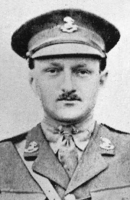
CPL David Wallace Crawford
1887 - 1916
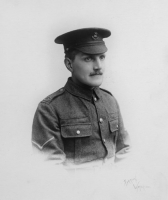
Lce-Corpl John Joseph Nickle
1894 - 1916
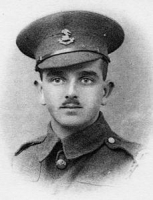
Pte 17911 Morton Neill
1897 - 1916
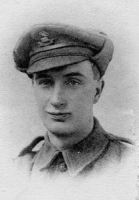
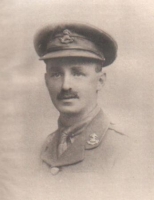
Lieut Edward Stanley Ashcroft
1883 - 1918
Pte 22362 James Robert Delbanco
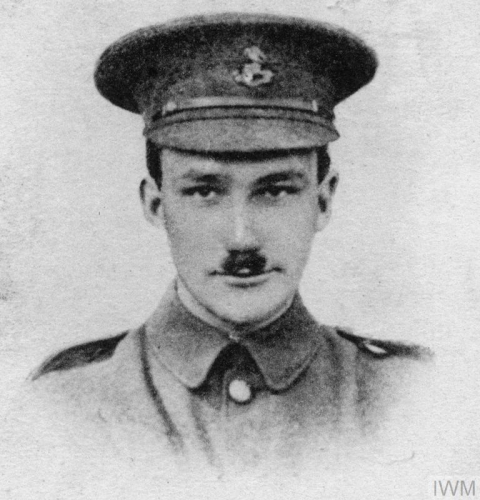
- Age: 20
- From: Southport, Lancs
- Regiment: The King's (Liverpool Regiment) 20th Btn
- K.I.A Sunday 30th July 1916
- Commemorated at: Thiepval Memorial
Panel Ref: P&F1D8B &8 C.
James Robert Delbanco was born in Southport on 24th July 1896 the son of Charles Ludwig Delbanco who was born in Hamburg, Germany, and his mother Marie (nee Watling). Charles and Marie were married in Liverpool in 1896. Charles was a convert from Judaism and was baptised Church of England in 1898 when he was 34 years old. He traded as a provision merchant. His mother, Marie, born in Kingston, Surrey, had a son, Charles Ludwig Watling, born in Southport in January 1893. After their marriage they had James Robert and Victoria May, born in 1900 (also called Vera).
James was baptised in Christ Church, Southport, on 01st November 1896, his family's residence 33 Derby Road, and his father's occupation given as merchant. Charles was baptised on the same day, as Delbanco.
The 1901 Census finds the couple living at 33 Derby Road, Southport with their children, 7 year old Charles, James aged 4 and Victoria aged 1. Living in the household also were a domestic nurse and a cook.
By the time of the 1911 Census the family have moved and were living at 5 Rutland Road, Southport. His father, 47, is a provision merchant, his mother is 42. They advised that they had been married for 19 years and had 3 children. Two of their children are declared in the household; James ,14, and Victoria, 11, were at school. The couple also employed a domestic servant 28 year old Emily Gilbert from St Helens.
Charles is a farming pupil on the Biggin Grange farm of Henry Abell in Hartington, Derbyshire. In November 1911, when he was 18, Charles sailed from London to Brisbane.
Charles Ludwig Delbanco was granted British Citizenship in July 1913.
James was educated at the University School in Southport and achieved honours in the Cambridge Local Examinations as a Junior Boy in 1910.
Prior to the outbreak of the war James was studying English Literature and Art at Manchester University. He entered the University in 1912, joining the OTC in October 1913.
He enlisted on 05th November 1914 at Liverpool joining the 20th Battalion of The King’s Liverpool Regiment as Private No 22362. He gave his age as 20 years and 60 days, when actually he was only 18 and gave his occupation as a student. He was a member of Manchester University O.T.C. He was described as being five feet eight inches tall, weighed 140lbs, 38” chest, with a sallow complexion, brown eyes and brown hair. He stated his religion as Church of England and gave his father, as next of kin, at 6 Rutland Road.
Formed in November 1914 the 20th Battalion were originally billeted at Tournament Hall, Knotty Ash before on 29th January 1915 they moved to the hutted accommodation purposely built at Lord Derby’s estate at Knowsley Hall. On 30th April 1915 the 19th Battalion alongside the other three Pals battalions left Liverpool via Prescot Station for further training at Belton Park, Grantham. They remained here until September 1915 when they reached Larkhill Camp on Salisbury Plain.
08.12.14: Promoted to Corporal.
Whilst at Knowsley on 08th March 1915, he was reprimanded for quitting his duty without permission, and on 10th October 1915 he was admonished for being absent from staff parade at 10:25 p.m.
29.10.15: Posted to 20th Battalion, King's Liverpool Regiment.
27.11.15: Revert to Private at own request.
22.12.15 Reached France and was part of the roll of reinforcements 30th I.B.D.
07.01.16 To No.2 Entrenching Bn.
06.02.16: Illness not yet diagnosed admitted to 10th Stationary Hospital.
His family was informed and his worried father wrote to Infantry Records on 29th February 1916:
"Referring to your report of the 14th inst re 22362 Pte. Jas. Delbanco, 20th (Service) Battn., King's Liverpool Regiment, admitted into 10th Stationary Hospital, St. Omer, suffering from "Sickness". I should esteem it a favor if you would kindly inform me whether any further information has been received at your office as to the nature of his illness and condition. My reason for writing you is that I am without any news whatsoever from my son since the 10th of this month.
Thanking you in anticipation,
Yours obediently,
Chas. Delbanco."
16.02.16 Discharged to duty, joined from hospital
26.05.16 Proceeded to join 20th K.L.R.
29.05.16 Joined 20th K.L.R. from no.2. Ent. Bn.
He was serving as a Machine Gunner in No.3 company of the 20th Battalion when he was killed in action on the 30th July 1916, aged 20, at Guillemont, France, during the Somme Offensive.
The 20th King’s Battalion Diary records:
“At 4.45am prompt the attack was launched. Unfortunately, a thick mist prevailed and it was impossible to see more than 10 yards ahead. This continued until about 6 o’clock when it lifted slightly, but it was still too hazy and impossible to see what was happening 100 yards ahead. This being so, it was not surprising to find that the attacking waves were experiencing great difficulty in maintaining connection.”
At 6am, Lt. RE Melly, No.1 Company, reported that his men had taken the German Maltz Horn trench.
At 6.30am, 2/Lt. CP Moore reported that he had 150 men, 4 Stokes Mortars and 2 Lewis Guns, but he was the only officer. He also said that due to the fog, both his “flanks were in the air” i.e. he was not in contact with neighbouring troops.
At 9.10am, Moore was still not in contact at his flanks, and now he had only 75 men, he had sent out 2 patrols and neither not returned. Later Moore established communication with the French on his right.
Around 10.00am, 2/Lt Musker reported that he had just over a company with him, but his left flank was suffering from German machine gun fire. Later he reported that he had over 30 casualties from the machine gun fire. His flanks were also “in the air”. No contact was made with this party until the remnants returned around 9.30pm, all runners sent were killed or missing. The War Diary states that this group had: ”held the ground won all day, and this permitted the consolidation of the ground won on the Maltz Horn ridge with little interference from the enemy”.
Relief for 20/Kings had been planned for 11.00pm, but it was 5.00am on the 31st July before it took place, ending a tragic day for the Liverpool Pals.
Casualties for 20th Battalion were 16 Officers and 357 Other Ranks
When darkness fell on the battlefield the 30th Division held a line from the railway on the eastern side of Trones Wood , southwards and including Arrow Head Copse, to east of Maltz Horn Farm. On this line the division was relieved by the 55th Division during the early hours of the 31st July.
The events of 30th July 1916 were regarded at the time as Liverpool’s blackest day. There follows an extract from The History of the 89th Brigade written by Brigadier General Ferdinand Stanley which gives an indication of the events of the day.
Guillemont
Well the hour to advance came, and of all bad luck in the world it was a thick fog; so thick that you couldn’t see more than about ten yards. It was next to impossible to delay the attack – it was much too big an operation- so forward they had to go. It will give some idea when I say that on one flank we had to go 1,750 yards over big rolling country. Everyone knows what it is like to cross enclosed country which you know really well in a fog and how easy it is to lose your way. Therefore, imagine these rolling hills, with no landmarks and absolutely unknown to anyone. Is it surprising that people lost their way and lost touch with those next to them? As a matter of fact, it was wonderful the way in which many men found their way right to the place we wanted to get to. But as a connected attack it was impossible.
The fog was intense it was practically impossible to keep direction and parties got split up. Owing to the heavy shelling all the Bosches had left their main trenches and were lying out in the open with snipers and machine guns in shell holes, so of course our fellows were the most easy prey.
It is so awfully sad now going about and finding so many splendid fellows gone.
His father was notified that his son was Missing in the Battle at Trones Wood.
In their anxiety and desperation, his parents pursued any possible avenue to obtain information on their son. His father contacted the International Red Cross (referring to James as machine gunner, 3rd Coy). He was notified on 25th September 1916 and again on 02nd October 1916 that they held no information on his son. The ICRC card also shows enquiries on 11th October 1916 through Palais Kneuterdyk, The Hague, in neutral Holland, and through the Bureau de Secours aux Prisonniers de Guerre, (POW Relief Office), English Section, Berne, Switzerland.
Charles wrote to Infantry Records on 25th October 1916_
"I beg to inform you that I have just received the following communication concerning my Son from the British Red Cross and Order of St. John, Enquiry Dept. for Prisoners of War, 18 Carlton House Terrace, S.W., dated October 21st -
'With the compliments of Mrs. Bucklesfor(?) - the Earl of Lucan, who would be glad to learn if the family know anything of this. [Lord Lucan was the Director of the British Red Cross at the time.] The name has so far not reached the Red Cross Prisoners [illegible] from Germany, so enquiries are being continued on both sides of the German line.'
Copy of Report, Reference Pt. C. Jones, 17625, No.3 Coy, K.L.R.-
'I knew him quite well. He came out in the same draft as I did. He belonged to IX Pl., No.3 Co. and not to the M.G.S. [Machine Gun Section?]. He was missing on July 30 at Trones Wood when we made the attack on Guillemont. He is now known to be a Prisoner of War in Germany. This fact came through in Battalion Orders about three weeks ago.
(Pte. Jones later suffered shell wounds and was discharged on 11/01/1918 with a Silver War Badge and disability pension.
His father wrote again on 14th November 1916 to Infantry Records -
"Re J. R. Delbanco no.22363, IX Platoon, No.3 Compy, 20th K.L.R. Officially reported "Missing" after engagement of July 30th 1916
Dear Sir,
I much regret to be still without your news since writing you Oct. 25th and should esteem it a favor if you would kindly favor me with a reply to my enquiry concerning my Son, as soon as you can possibly make it convenient, in order to relieve the anxiety of the family.
Yours faithfully,
Chas. Delbanco"
Another partial letter from his father is included in his service record (date unknown) -
[....] "time and place (Guillemont). Pte. Yates further states that among the Officers belonging to No.3 Compy who were made Prisoners on that occasion, was Lieutenant G. Lamb, and I would be glad if you would kindly furnish me with the name of the Prisoners' Camp in Germany where Lieut. G. Lamb is now said to be interned. Or, if you are unable to name the Prisoners' Camp, his usual address in England, to enable me to get into communication with him if possible, regarding my Son, Pte. Delbanco. Being still without your further news since receiving your previous letter dated [page missing]"
(Lt. Geoffrey Waring Lamb was wounded in the lungs (German POW records give date of capture 03/08/16). He survived his captivity in a number of POW camps and was repatriated on 18th November 1918.)
He wrote to the War Office on 07th March 1917, with a copy to Infantry Records -
"Referring to your letter of the 28th Jany 1917, I beg to inform you that the following information concerning my Son 22362, J. R. Delbanco, 20th Batt. King's L'pool Reg't., has just reached me through the Queen Victoria Jubilee Fund Assocn., Geneva -
'The Prisoner of War R. H. Clark states that he saw Delbanco seriously wounded in the face, breast, and stomach. As he lay he made a sign as if he wished to drink, but apparently died as the water bottle was held to his lips. Clark supposes that Delbanco had been at first slightly wounded and was then struck by a bursting grenade as he was on his way back to the Dressing Station.'
The above information was furnished by Pte. R. H. Clark 22040, 20th Batt. King's L'pool Regiment, now Prisoner of War at Langensalza, one of the names you kindly handed me per your letter 28/1/17."
(Robert Henry Clark suffered shrapnel wounds to the thigh. After being held at Langensalza POW Camp, he was repatriated in January 1919.)
James' death was later officially accepted as having occurred on 30th July 1916.
His death was reported in the local press on 09th March 1917:
Private James Robert Delbanco, son of Mr C Delbanco, of 6 Rutland Road, Southport is now reported killed, having previously been reported as missing.
James earned his three medals.
James' body was not recovered or was subsequently lost as he has no known grave and is commemorated on the Thiepval Memorial.
The Thiepval Memorial, the Memorial to the Missing of the Somme, bears the names of more than 72,000 officers and men of the United Kingdom and South African forces who died in the Somme sector before 20 March 1918 and have no known grave. Over 90% of those commemorated died between July and November 1916.
On 01st August 1932 the Prince of Wales and the President of France inaugurated the Thiepval Memorial in Picardy. The inscription reads: “Here are recorded the names of officers and men of the British Armies who fell on the Somme battlefields between July 1915 and March 1918 but to whom the fortune of war denied the known and honoured burial given to their comrades in death.”
He is also commemorated on the following Memorials:
Southport War Memorial
Manchester University.
His outstanding Army pay and a War Gratuity of £7-10s went to his father.
His Soldiers' Effects entry notes, "attached R.F.C." but there is no mention of this in his service record. A pension card showing his parents' address as 27 Alma Road, Birkdale, and later 3 Grove Maisonettes, Southall (Middlesex), does not specify the amount awarded.
In 1919 his parents with Victoria, 19, were at a temporary address, 19 St. James' Street, Southport. Charles, 26, was in New South Wales.
In 1924 his father’s business was wound up and was reported in the Liverpool Evening Express on Monday 22 December 1924;
LIVERPOOL MERCHANTS Messrs Delbanco and Co’s
Voluntary Winding-Up.
Delbanco and Co. Ltd, African merchants, who have been prominently identified with Liverpool but whose head offices are Great Tower-street, London, to-day went into voluntary liquidation. A meeting of the company was held in private at its offices to-day, Mr Del-banco presiding. It was stated at the close of the meeting that at the chairman’s suggestion, the shareholders present agreed to adopt the resolution of the voluntary winding-up of the company. Mr Blackadder being appointed liquidator. No financial statement was presented to the meeting.
His father died on the 13th April 1933, aged 70. His death was reported in the Liverpool Daily Post on Saturday 15 April 1933;
DELBANCO - April 13, at 5 Boulton Road, Birkdale, aged 70 years, CHARLES, the beloved husband of Mary Delbanco.
By 1937 his mother Marie was living with married daughter Vera Burney in St. Joseph's Drive, Southall.
The 1939 register finds his mother still living with daughter Vera, 39, now widowed, and her 14-year old son Allan.
His mother died as “Mary” in 1957 in Ealing at the age of 95.
The photograph of James is used by kind permission of the IWM: (c) IWM.
We currently have no further information on James Robert Delbanco. If you have or know someone who may be able to add to the history of this soldier, please contact us.
89th Brigade On This Day.
110 Years Ago.The Battle of the Transloy Ridges begins. more....
Killed On This Day.
(110 Years this day)Monday 16th October 1916.
Pte 22929 Edward Bird
19 years old
(110 Years this day)
Monday 16th October 1916.
Pte 16795 William Frederick Collister
23 years old
(109 Years this day)
Tuesday 16th October 1917.
L/Cpl 49038 Ernest Yardley
31 years old
(108 Years this day)
Wednesday 16th October 1918.
Pte 85187 James Hoy
31 years old
(107 Years this day)
Thursday 16th October 1919.
Pte 36438 Hugh Morris
23 years old