
1885 - 1916
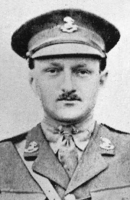
CPL David Wallace Crawford
1887 - 1916
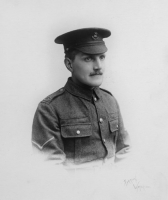
Lce-Corpl John Joseph Nickle
1894 - 1916
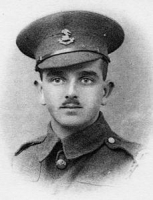
Pte 17911 Morton Neill
1897 - 1916
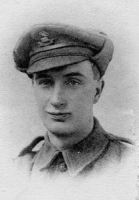
Lieut Edward Stanley Ashcroft
1883 - 1918
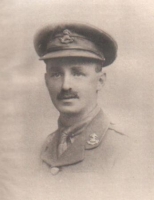
2nd Lieut Lindsay Ramsay Davies

- Age: 25
- From: Kirkdale, Liverpool
- Regiment: The King's (Liverpool Regiment) 18th Btn
- D.O.W Wednesday 5th July 1916
- Commemorated at: La Neuville Brit Cem Corbie
Panel Ref: I.A.75
Lyndsay Ramsay Davies was born at 13 Daisy Street, Kirkdale, Liverpool on 27th December 1890 and baptised in St Athanasius Church, Kirkdale on 04th March 1891. He was the son of William John Davies and his wife Eliza (nee Carr) who married on 27th March 1890.
The 1891 Census finds the family living at Daisy Street where Lindsay is a new born baby, the only child in the household. His father is an Assayer born in Swansea in 1865 whilst his mother was born in Liverpool in 1869.
By 1901 the family have moved to 98 Hawthorne Road, Bootle.
Lindsay is now 10 years of age and has three younger sisters; May b. 1892, Dorothy b. 1894 and Vera b.1897.
His father died on 18th May 1909.
The 1911 Census finds the family living at 3 Milton Road, Waterloo, Liverpool.
His mother is now a widow living by private means. Lindsay is described as a University Student. His siblings listed are Dorothy and Vera both at school. There is also a boarder recorded in the household.
Lindsay was educated at Bedford Road Council School, Bootle, at Liverpool Institute and at Liverpool University where he graduated in Science. After graduation he took a position at Worksop College where he taught science and where he was a member of the Officer training Corps.
A religious man Lindsay was drawn to the Church and entered Worksop Theological College with the intention of taking Holy Orders in the Church of England. Prior to the war he worshipped at St Faith's Church, Great Crosby where he frequently read the lessons.
Lindsay originally enlisted in Liverpool on 16th June 1910 as Private No 2262 in the 10th (Territorial) Battalion King's (Liverpool) Regiment [Liverpool Scottish]. He attended camp in 1910, 1911 and 1912 and was discharged at the end of his engagement.
His prior military service was no doubt instrumental in him being commissioned and after a period of officer training, he crossed to France on 12th February 1916 and joined the 18th Battalion four days later. He was granted leave to the UK between 22nd May and 1st June 1916.
He wrote the following valedictory letter dated 23rd June 1916 to his mother ahead of the commencement of the Battle of the Somme:
"Mumsie Darling,
This is undoubtedly the most difficult letter I have ever had to write and I sincerely hope that there will be no necessity for it to be sent to you.
If the circumstances do arise, please remember that it is my wish that neither you nor the girls should fret or worry about things. I say that knowing as I do how much more difficult all things will be but secure in the knowledge that God will watch over you.
There may be consolation, mother in the fact that I could not have met with a more noble end than to die fighting for the right for my King and for my country: in the fact that I am one among many and that thousands of Mothers have given up their sons. As you know only too well my best friend is buried in France.
I am writing now because that at any moment we may go up to the trenches in order to attack, to take part in one of the biggest battles the world has ever seen. Number Six are in the First Line. I naturally am with number Six. Thus I run more risk than usual. Hence I thought it better to be prepared whatever may happen.
With regard to monetary matters, I know only too well that I should have settled all these things before I left but Mother dear I never had the courage to discuss with you the possibility of my being killed. Everything that I possess is for you and the girls with a few exceptions. Several of these are subject to my kit being returned to you. You can claim, I think an allowance from the War Office as you were dependant upon me to some extent. My bank balance, if any will be very small.
I want you to send you several things to Miss Hanson. As you know I was awfully fond of her and thought a great deal of her, and I only wish you and she had met.
If my things are sent to you please send her my glasses. They are her property and were only lent to me for the period of the war [ comment: the binoculars were not amongst the list of his property returned to his mother]. I should also like you to give her all the photographs of her which I possess and any of my college photographs which you do not wish to keep. Please give her too, two books which may be returned with my kit "Character and Comfort" and "Bees in Amber". Lastly as a gift from me I should like you to send her my wristlet watch.
If they desire it, I should like Lloyd Jacob, Alan Getley, Madge and Gladys France to have one of my books.
Everything else I possess and I regret it is so little is for you and the girls.
Mother dearest, May, Dorothy and Vera, I think you know this is a hard letter to write, but I do want you to understand that if it is God's will that I should be killed I die perfectly happy, secure in the thought that in fighting for my King and Country, I am fighting for God and the Right.
Your loving son and brother,
Lindsay"
On the 01st July 1916, Lindsay took part in the attack at Montauban on the German trenches with No 2 Company.
The Battalion’s objectives on that day, were the capture of the German front and support line trenches, and the German fortified position known as the Glatz Redoubt, to allow the 19th Battalion The Manchester Regiment, to follow through and capture the village of Montauban. The German front line trenches fell according to the plan, but as the Battalion tried to leave the German support line, its advance was held up by enfillading fire from a machine-gun firing from Alt Trench, on the left flank. This gun was further protected by snipers and bombers who held a position in Alt Trench, at right angles to Alt Alley, who were hidden by a rough tree hedge. These bombers and snipers were themselves supported by rifle fire from Train Alley, which ran back to Montauban itself.
Eventually, Lieutenant HC Watkins led a party of bombers towards the position in Alt Trench and one of these, with great luck, hurled a grenade which exploded in the midst of the Germans, killing two, and driving the rest back into Train Alley. This action allowed the advance to continue, as the Germans retreated or sought shelter in deep dugouts, where they were bombed, and the Battalion was able to take its main objective the Glatz Redoubt.
At some stage during the course of the action Second Lieutenant Davies was severely wounded when he was hit in the abdomen by gunfire. He was evacuated to 96 Field Ambulance and transferred to 21 Casualty Clearing Station at Corbie where he succumbed to his wounds five days later, on 05th July 1916.
Lindsay now rests at La Neuville British Cemetery where his headstone has a private inscription:
"For God, my country and the Right" (A paraphrase from his last letter to his mother)
In April 1916, No.21 Casualty Clearing Station came to La Neuville and remained there throughout the 1916 Battles of the Somme, until March 1917. La Neuville British Cemetery was opened early in July 1916. Most of the burials date from this period, but a few graves were added during the fighting on the Somme in 1918. Neuville British Cemetery contains 866 Commonwealth burials of the First World War. There are also 27 German war graves. The cemetery was designed by Sir Edwin Lutyens.
Liverpool Echo 2nd July 1917
Lost At The Somme Battle:
To the Glorious Memory of Lieut.-Colonel E. H. Trotter, D.S.O., Captain A. de Bels Adam, Captain C. N. Brockbank, Lieut. G. M. Dawson, Lieut. B. Withy, Sec.-Lieut. N. A. Barnard, Sec.-Lieut. L. R. Davies, Sec.-Lieut. E. Fitzbrown, Sec.-Lieut. D. M. Griffin, Sec.-Lieut. G. B. Golds, Sec.-Lieut. G. A. Herdman, Sec.-Lieut. R. V. Merry, Sec.-Lieut. R. H. Tomlinson, Sec.-Lieut. T. R. Walker, and the non-commissioned officers and men the 18th (Serv.) Battalion “The King's” (Liverpool Regiment), who fell in the battle of the Somme, July, 1916.
His mother who in 1922 was living at 44 Courtenay Avenue, Waterloo received a yearly pension of £52 as she was totally dependent on her son.
Lindsay is also commemorated on the following Memorials:
St Faith's Church, Crosby Road North, Great Crosby
Waterloo Civic Memorial
Bedford Road Council School, which is now preserved in Bedford County Primary School, Quarry Road, Bootle
Liverpool Institute in Mount Street
Liverpool University war memorial which is located in Victoria Hall, Brownlow Hill.
Hall of Remembrance, Liverpool Town Hall Panel 7 Left
Grateful thanks are extended to Sefton RUFC for permission to use the photograph of Lindsay.
We currently have no further information on Lyndsay Ramsey Davies, If you have or know someone who may be able to add to the history of this soldier, please contact us.
89th Brigade On This Day.
110 Years Ago.The Battle of the Transloy Ridges begins. more....
Killed On This Day.
(110 Years this day)Monday 16th October 1916.
Pte 22929 Edward Bird
19 years old
(110 Years this day)
Monday 16th October 1916.
Pte 16795 William Frederick Collister
23 years old
(109 Years this day)
Tuesday 16th October 1917.
L/Cpl 49038 Ernest Yardley
31 years old
(108 Years this day)
Wednesday 16th October 1918.
Pte 85187 James Hoy
31 years old
(107 Years this day)
Thursday 16th October 1919.
Pte 36438 Hugh Morris
23 years old