
1885 - 1916
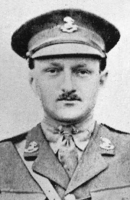
CPL David Wallace Crawford
1887 - 1916
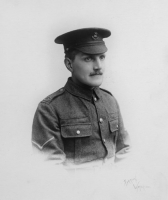
Lce-Corpl John Joseph Nickle
1894 - 1916
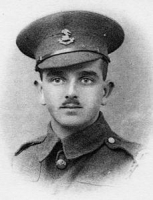
Pte 17911 Morton Neill
1897 - 1916
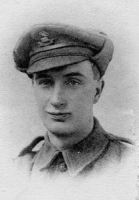
Lieut Edward Stanley Ashcroft
1883 - 1918
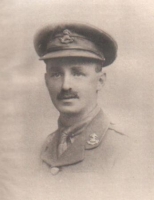
Pte 22667 John Francis Davies

- Age: 23
- From: Kirkdale, Liverpool
- Regiment: The King's (Liverpool Regiment) 20th Btn
- D.O.W. Monday 31st July 1916
- Commemorated at: Peronne Cc Ext
Panel Ref: III.L.18
John Francis Davies was born in May 1893, the son of William Davies and his wife Mary(nee Francis). His parents married in Rhyl in North Wales in 1885; John was the fourth of their six children, all born in Liverpool. He had elder brothers Robert Arthur, Thomas Francis, and William Henry, and younger brothers Ernest Abraham and Frank Evan.
The 1901 Census shows the family are living at 95 Flinders Street, Kirkdale. John's father, William, is a 44 year old railway porter born in Flintshire, his mother, Mary, is 40 years of age and advises that she was born in Liverpool. They have six children in the household; Robert A. is a 15 year old railway clerk, Thomas F. is 13, William H. is 10, John F. is 8, Ernest A. is 5 and Frank E. is 2.
The 1911 Census shows the family living at 10 Melrose Road, Kirkdale, Liverpool. John's father, William, was born in 1858 in Mold and now aged 53 is employed as a delivery man on the railway. His mother, Mary, is 50 years old and advises that she was born 1861 in Llanarmon Denbighshire. They have been married for 26 years and have had six children, all sons, and all declared at home: Robert born in 1886 now aged 25 working as a railway clerk, Thomas born 1888 aged 23, is a railway shunter, William born 1891 is aged 20, and a clerk for a meat importer, John born 1893 is aged 18, and a junior clerk, also for a meat importer, Ernest born 1896, aged 15, is an apprentice grocer and Frank born 1899 aged 12, is still at school.
John enlisted on the 10th November, 1914 at Liverpool joining the 20th Battalion of The King's Liverpool Regiment as Private 22667. He gave his age as 21 years and 6 months. He listed his occupation as a clerk. He was described as being 5 foot 4 and half inches tall, and weighed 123lbs. He stated his religion as 'other Protestant'.
Formed in November 1914 the 20th Battalion were originally billeted at Tournament Hall, Knotty Ash before on 29th January 1915 they moved to the hutted accommodation purposely built at Lord Derby’s estate at Knowsley Hall. On 30th April 1915 the 20th Battalion alongside the other three Pals battalions left Liverpool via Prescot Station for further training at Belton Park, Grantham. They remained here until September 1915 when they reached Larkhill Camp on Salisbury Plain. He arrived in France on 07th November 1915.
SDGW show John as having been killed in action on 31st July 1916, but his CWGC record states Died of Wounds. This is the day after the intense fighting at Guiilemont that saw the Liverpool Pals battalions suffer close to 500 men killed on that one day. The details of the action in which John was involved is described in the 20th Battalion Diary:
“At 4.45am prompt the attack was launched. Unfortunately, a thick mist prevailed and it was impossible to see more than 10 yards ahead. This continued until about 6 o’clock when it lifted slightly, but it was still too hazy and impossible to see what was happening 100 yards ahead. This being so, it was not surprising to find that the attacking waves were experiencing great difficulty in maintaining connection.”
At 6am, Lt. RE Melly, No.1 Company, reported that his men had taken the German Maltz Horn trench.
At 6.30am, 2/Lt. CP Moore reported that he had 150 men, 4 Stokes Mortars and 2 Lewis Guns, but he was the only officer. He also said that due to the fog, both his “flanks were in the air” i.e. he was not in contact with neighbouring troops.
At 9.10am, Moore was still not in contact at his flanks, and now he had only 75 men, he had sent out 2 patrols and neither not returned. Later Moore established communication with the French on his right.
Around 10.00am, 2/Lt Musker reported that he had just over a company with him, but his left flank was suffering from German machine gun fire. Later he reported that he had over 30 casualties from the machine gun fire. His flanks were also “in the air”. No contact was made with this party until the remnants returned around 9.30pm, all runners sent were killed or missing. The War Diary states that this group had: ”held the ground won all day, and this permitted the consolidation of the ground won on the Maltz Horn ridge with little interference from the enemy”.
Relief for 20/Kings had been planned for 11.00pm, but it was 5.00am on the 31st July before it took place, ending a tragic day for the Liverpool Pals.
Casualties for 20th Battalion were 16 Officers and 357 Other Ranks
When darkness fell on the battlefield the 30th Division held a line from the railway on the eastern side of Trones Wood , southwards and including Arrow Head Copse, to east of Maltz Horn Farm. On this line the division was relieved by the 55th Division during the early hours of the 31st July.
The events of 30th July 1916 were regarded at the time as Liverpool’s blackest day. There follows an extract from The History of the 89th Brigade written by Brigadier General Ferdinand Stanley which gives an indication of the events of the day.
Guillemont
Well the hour to advance came, and of all bad luck in the world it was a thick fog; so thick that you couldn’t see more than about ten yards. It was next to impossible to delay the attack – it was much too big an operation- so forward they had to go. It will give some idea when I say that on one flank we had to go 1,750 yards over big rolling country. Everyone knows what it is like to cross enclosed country which you know really well in a fog and how easy it is to lose your way. Therefore, imagine these rolling hills, with no landmarks and absolutely unknown to anyone. Is it surprising that people lost their way and lost touch with those next to them? As a matter of fact, it was wonderful the way in which many men found their way right to the place we wanted to get to. But as a connected attack it was impossible.
The fog was intense it was practically impossible to keep direction and parties got split up. Owing to the heavy shelling all the Bosches had left their main trenches and were lying out in the open with snipers and machine guns in shell holes, so of course our fellows were the most easy prey.
It is so awfully sad now going about and finding so many splendid fellows gone.
It appears that John was captured by the Germans and died the following day at 12th Res. German Field Hospital, from his wounds received at Guiilemont.
His father wrote to Infantry Records on 04th September 1916:
"Gentlemen,
I should be pleased to learn of any further information you may have received re above. If nothing to add perhaps you will be good enough to advise me of say 6 names and addresses of other chaps posted as missing on the same day from the 10th Platoon or from the 20th Batt. [...] many men are posted as missing of this Batt on July 30th. To receive this information I will esteem it a favour whilst thanking you in anticipation,
I remain yours faithfully
W. Davies (father)"
The reply sent on 07th September 1916 informed the family that sufficient evidence had been received to give his date of death as 31st July 1916.
An enquiry to the Red Cross by his mother via 17 Kings Road, Crosby shows that John was wounded in both legs on 30th July 1916 and died the following day of his wounds. A response, advising the sad news was sent on 21st September 1916
He was originally buried at Lieramont Communal Cemetery, this is 20 km (12 miles) east of Guillemont. Following the war his body was exhumed and he now rests at Peronne Communal Cemetery Extension, France, where his headstone bears the epiaph:
“WHOSOEVER LIVETH AND BELIEVETH IN ME SHALL NEVER DIE”
Peronne was taken by the German on 24 September 1914. On 18 March 1917, the 40th and 48th Divisions captured the town, but it was recovered by the Germans on the 23rd March 1918. It changed hands for the last time on 1 September 1918, when it was taken by the 2nd Australian Division
The cemetery extension was begun by the 48th (South Midland) Division in March 1917, used by the Germans in 1918, and resumed by Australian units in September 1918. At the Armistice it contained 177 graves, now in Plots I and II. It was then enlarged when graves were brought in from the battlefields north and east of Peronne and from small cemeteries in the area including:
LIERAMONT COMMUNAL CEMETERY GERMAN EXTENSION, in which 63 soldiers from the United Kingdom were buried by the Germans in 1916-1918 and by the 58th (London) Division in September 1918.
There are now 1,595 Commonwealth servicemen of the First World War buried or commemorated in the extension. 224 of the burials are unidentified but there are special memorials to seven casualties known or believed to be buried among them, and ten buried in other cemeteries whose graves could not be found. The extension also contains five Second World War burials. There are 97 German war graves, 68 being unidentified.
The adjoining communal cemetery contains the grave of one airman of the First World War, killed in August 1914.
The extension was designed by Sir Reginald Blomfield.
There was some confusion over his surname; CWGC Graves Registration records show he was buried with the surname Frank or Francis, later amended to John F. Davies.
On the first anniversary of his death a notice appeared in the Liverpool Echo:
"In loving memory of our dear brother Jack (Liverpool Pals), who died of wounds, July 31, 1916.
The earth has lost and heaven gained
One of the best the world contained.
- Harry and May." (Brother William Henry)
John earned his three medals. His 1914-1915 Star, issued in the name of John R. Dutton, was returned for amendment.
His Army pay and a War Gratuity of £7-10s went to his father, William Davies of 10 Melrose Road, Kirkdale, Liverpool.
His mother was awarded a pension of 3/6d a week from December 1917.
In 1919 his parents were still living at 10 Melrose Road. Frank, 20, is listed at the address with a note stating, France. Robert, 33, is in Great Crosby with the 17th K.L.R. (Pte. 51900 Robert Davies served in Russia.) Thomas, 31, lives in Liverpool in Belgrave Street, and William, 29, is in Cedardale Road. Ernest, 23, has an address of Main Street, Athlone(?).
His father died on Boxing Day in 1928 aged 71, still at 10 Melrose Road.
In 1939 his mother Mary was living with daughter-in-law Elizabeth Evelyn Davies, the wife of Ernest, and grandson Ainsley, in Gwynfryn, Conway, North Wales. Also in the household is her sister Sarah Elizabeth Francis, born in 1858, and Mary Elizabeth Francis, born 1890. Ernest is in Liverpool at 20 Stanley Gardens.
His mother returned to Liverpool and died aged 82 in 1942. At the time of her death she was living at 21 Ivernia Road.
The following extract is taken from the Liverpool Echo on 27th December 2000:
Mystery of Kirkdale's unknown soldier
WORLD War I papers chronicling the life and death of a "mystery" Merseyside soldier have been found in a Liverpool attic. Faded letters and yellowed photographs from Pte John Francis Davies were found alongside telegrams notifying his parents of his death. But the Davies family have since disappeared, seemingly without trace. Original telegrams from July, 1916, addressed to the Davies family home at 10 Melrose Road in Kirkdale - since demolished - informed the family that John Davies, known to them as Jack, was missing. The death telegram, which arrived a few days later, recorded only that he had been killed "somewhere in Germany" on July 31, 1916. David Wilson, from Bromborough, found the documents, kept in chronological order in a rusty old tin alongside three army helmets, in his parents' loft in Ivernia Road, Walton. David said: "It's a mystery. We don't know how they got from Kirkdale to Walton. That is the missing link. We haven't been able to trace the family. "It's all very sad, if you read the documents, to see that someone has left something in the loft that they probably forgot was there. "Apart from the helmets, there was absolutely nothing else up there." The tin contains a full record of Jack's life, from his birth certificate and recruitment papers to the 20th Battalion the King's Liverpool regiment, through to Jack's letters from the front line and finally a letter from the French Red Cross concerning his war grave. Pvt Davies died in 1916 at the age of 23. He is buried at the Peronne Communal Cemetery in Somme-, France. A letter from Jack's best friend, Arthur, reassured Mr and Mrs Davies that their son had died a hero's death: "Nobly did Jack answer his country's call," he wrote. The discovery is featured in "Revealing Secrets", a forthcoming Channel 4 programme which hopes to fill the gaps in the story.
His youngest brother Frank Evan Davies is found at 21 Ivernia Road with his wife Elsie on the 1939 register, and lived there until his death in 1967.
Sadly, John has not been identified on any U.K. memorial.
We currently have no further information on John Francis Davies, If you have or know someone who may be able to add to the history of this soldier, please contact us.
89th Brigade On This Day.
110 Years Ago.The Battle of the Transloy Ridges begins. more....
Killed On This Day.
(110 Years this day)Monday 16th October 1916.
Pte 22929 Edward Bird
19 years old
(110 Years this day)
Monday 16th October 1916.
Pte 16795 William Frederick Collister
23 years old
(109 Years this day)
Tuesday 16th October 1917.
L/Cpl 49038 Ernest Yardley
31 years old
(108 Years this day)
Wednesday 16th October 1918.
Pte 85187 James Hoy
31 years old
(107 Years this day)
Thursday 16th October 1919.
Pte 36438 Hugh Morris
23 years old