
1885 - 1916
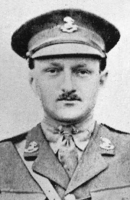
CPL David Wallace Crawford
1887 - 1916
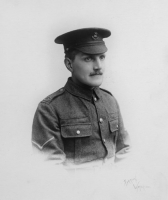
Lce-Corpl John Joseph Nickle
1894 - 1916
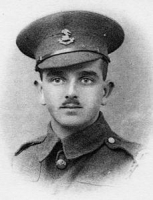
Pte 17911 Morton Neill
1897 - 1916
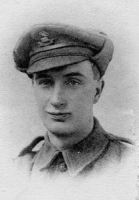
Lieut Edward Stanley Ashcroft
1883 - 1918
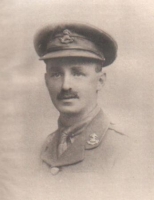
Sgt 16053 Peter Forrester Dalton
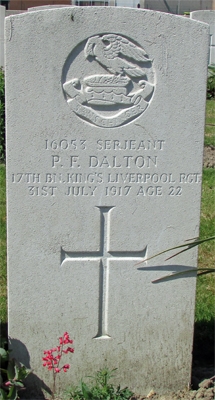
- Age: 22
- From: Liverpool
- Regiment: The King's (Liverpool Regiment) 17th Btn
- K.I.A Tuesday 31st July 1917
- Commemorated at: Zantvoorde Brit Cem
Panel Ref: III.J.20
Peter Forrester Dalton was born on 17th March 1894 in Seaforth, Liverpool and was the only son of James Dalton and his wife Elizabeth Park (nee Forrester) who were married on the 28th August 1879 at St Mary's Church, Walton on the Hill, Liverpool. (Elizabeth signs her name as "Parks"). Peter was baptised on 17th June 1894 in St Thomas' Church, Seaforth where the family’s address is given as 36 Rawson Road, Seaforth and his father’s occupation is recorded as a commercial traveller.
Prior to the outbreak of war Peter had been an employee of The Union Bank of Manchester Ltd.
Peter enlisted at St George's Hall in Liverpool on the 31st August 1914 at the age of 20. He initially served in the 17th Battalion (“C” Company), of The King’s Liverpool Regiment as Private number 16053. His records show that he was described as being 5ft 7¾ inches, weighed 132lbs and had blue eyes and brown hair.
He was billeted at Prescot Watch Factory from 14th September 1914, he trained there and also at Knowsley Hall. On 30th April 1915 the 17th Battalion alongside the other three Pals battalions left Liverpool via Prescot Station for further training at Belton Park, Grantham. They remained here until September 1915 when they reached Larkhill Camp on Salisbury Plain.
Peter was posted to France, with the rest of his Battalion on the 07th November 1915.
He went up the ranks from Lance Corporal in December 1914 to Sergeant in July 1916. He was appointed Company Sergeant Major in October 1916 and transferred to Etaples to act as a training instructor, but in February 1917 he reverted to the rank of Sergeant at his own request, and returned to the front in May 1917.
He was given leave to return to the UK from the 25th June to the 05th July 1917 which was extended to the 10th July for urgent private family reasons – this must have been the death of his mother who died, aged 60, on the 13th June 1917. her death was reported in the Liverpool Daily Post on 16th June 1917:
Just over a month later Peter was killed in action on the 31st July 1917 aged 22 on the first day of the Third Battle of Ypres, better known as the Battle of Passchendaele. This must have been a terrible time for his sister, losing her mother and her only sibling within a few weeks.
On the day of Peter’s death, the 89th Brigade was to follow up the attacks of the 21st and 90th Brigades and once their objectives had been taken, to go through them and secure a line of strong points on the German third line. The 89th Brigade line of attack was from the South West corner of Polygon Wood, to the Menin Road. The 17th Battalion The King’s Liverpool Regiment was on the left of the attack, and the 20th to the right, with the 19th Battalion and the 2nd Battalion The Bedfordshire Regiment, in Divisional Reserve.
The Battalion moved into assembly positions east of Maple Copse between 05.00 and 05.20am, they were heavily shelled and suffered many casualties. At 07.50 they began to advance with the 17th Battalion on the left, and the 20th on the right, the whole time under heavy shell fire. On reaching their position which was the Blue Line , troops of both the 21st and 90th Brigades were still pinned down and thus any attempt at further progress were futile.
Despite this they pushed on until their flank was just touching Clapham Junction. They then dug in and awaited the inevitable bombardment which hit them soon after. Despite this, they held onto the ground.
During the action and their time in the line the 17th Battalion lost three officers and 79 men killed or died of wounds, and four officers and 198 men wounded. They were eventually relieved on the night of 3rd -4th August.
Peter now rests at Zantvoorde British Cemetery, Belgium.
Zantvoorde British Cemetery was made after the Armistice when remains were brought in from the battlefields and nearby German cemeteries. Many were those of soldiers who died in the desperate fighting round Zantvoorde, Zillebeke and Gheluvelt in the latter part of October 1914.
There are now 1,583 servicemen of the First World War buried or commemorated in the cemetery. 1,135 of the burials are unidentified. Special memorials commemorate 32 soldiers buried in two of the German cemeteries whose graves could not be found on concentration. The cemetery also contains one Second World War burial.The Household Cavalry Memorial, unveiled by Lord Haig in May 1924, stands on the South side of the village at the place where part of the Brigade was annihilated in 1914.
The cemetery was designed by Charles Holden.
Barclays Bank Book of Remembrance
Waterloo and Seaforth War Memorial.
Peter’s war record has two handwritten letters from his sister Janet, one just after she received the news that he was missing. The letter is to his Captain saying she “is trying to follow him up with the aid of his men at the Front” as it has been suggested he may be a prisoner of war. There is also a later letter thanking the Army staff for their kind attention and sympathy and informing them of her change of address from Seaforth to Thatto Heath.
Their father must still be alive in 1918 as Janet informs them that she has power of attorney over his affairs. Janet married in 1928, and died in 1946.
There is a death record for his father in 1925. The death was registered in Woolwich, he was aged 69.
We currently have no further information on Peter Forrester Dalton. If you, or you know someone who may be able to add to the history of this soldier, please contact us.
89th Brigade On This Day.
110 Years Ago.The Battle of the Transloy Ridges begins. more....
Killed On This Day.
(110 Years this day)Monday 16th October 1916.
Pte 22929 Edward Bird
19 years old
(110 Years this day)
Monday 16th October 1916.
Pte 16795 William Frederick Collister
23 years old
(109 Years this day)
Tuesday 16th October 1917.
L/Cpl 49038 Ernest Yardley
31 years old
(108 Years this day)
Wednesday 16th October 1918.
Pte 85187 James Hoy
31 years old
(107 Years this day)
Thursday 16th October 1919.
Pte 36438 Hugh Morris
23 years old