
1885 - 1916
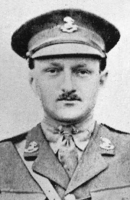
CPL David Wallace Crawford
1887 - 1916
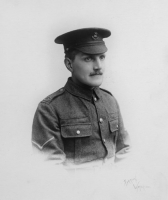
Lce-Corpl John Joseph Nickle
1894 - 1916
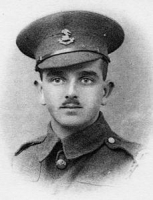
Pte 17911 Morton Neill
1897 - 1916
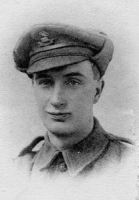
Lieut Edward Stanley Ashcroft
1883 - 1918
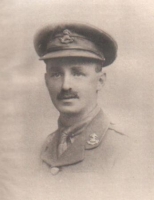
L/Cpl 15257 Philip Howard Cook (MM)
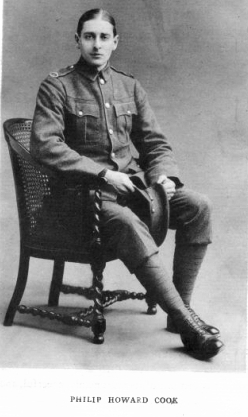
- Age: 30
- From: Liverpool
- Regiment: The King's (Liverpool Regiment) 17th Btn
- K.I.A Sunday 30th July 1916
- Commemorated at: Thiepval Memorial
Panel Ref: P&F1D8B &8 C.
Philip Howard Cook was born on 13th May 1886 in Waterloo the son of Arthur Cook and his wife Eliza (nee Townsend or Townshend). His parents were both born in Liverpool and married on the 02nd September 1880 at Waterloo. Philip was the fourth of their six children; he had older siblings Dorothy, Arthur Edwin, and Gertrude, and younger sisters Elinor (Lena) and Nora. His father Arthur Cook was a ship owner who became managing director of the Lamport and Holt line along with George H. Melly. His father later moved to Marlow, Bucks and Philip lived at Holmfield House, Aigburth.
The marriage was reported in the Liverpool Mail on 04th September 1880:
Marriages
COOK-TOWNSHEND - Sept 2, at Waterloo, by the Reverend T. Hodgkinson, Arthur, son of H.J. Cook, Blundellsands, to Lizzie, daughter of the late John Townshend, Breckside Park.
His birth was registered as Philip but he was baptised Philip Howard when he was 7 years old on 03rd June 1893 with younger sister Elinor in St. Mary's, Grassendale, Liverpool.
At the time of the 1891 census, Philip and his three older siblings were staying with his maternal grandmother, Eliza Townsend, 71 living on her own means, who lived at 17 Adelaide Terrace, Waterloo which overlooks the River Mersey. The family employed three servants.
The 1901 census finds Philip, 14, a pupil at Rugby School in Warwickshire. His family lives about 25 miles away at Grendon Hall in Grendon, between Tamworth and Nuneaton, with four children, two visitors and nine domestic servants. His father is 44, listed as a ship owner working on his own account, his mother is 39, Dorothy 18, Gertrude 16, Lena 8, and Nora is 4.
Philip was educated at Rugby School 1900 -1903 and was a keen sportsman.
In 1902 Philip’s sister Dorothy married John Watson Hughes who was involved in the Harrison Line shipping company.
Philip is found on a passenger list in October 1907 on the Lusitania to New York.
In 1911 Philip, 24, a shipping merchant, and Elinor, 18, are living in Holmfield House, a 22-room house on 22 acres in Mossley Hill Road, Aigburth, with a butler, waitress, cook, kitchen maid and two housemaids. Also listed is Elizabeth (sic) Cook, wife, aged 46 (his mother would have been about 53), married 27 years, who has had six children, all still living. They have a visitor, Noel Slocock, a cotton merchant, 24 years old. (The house fell into disrepair and was demolished in 1942.)
Nora, 14, is a pupil at Roedean School near Brighton.
In June 1912 Philip was a steward at the wedding of his sister Lena to Lancelot (Noel) Slocock in St. Matthew and St. James' Church, Mossley Hill. Another steward was John Sergiades, from Liverpool, who was the same age as the bridegroom and who attended Marlborough College with him.
Prior to the outbreak of war Philip was in business and travelled to both North and South America.
He enlisted at St George's Hall, Liverpool joining the 17th Battalion, The King’s Liverpool Regiment as Private No 15257.
He was billeted at Prescot Watch Factory from 14th September 1914, he trained there and also at Knowsley Hall. On 30th April 1915 the 17th Battalion alongside the other three Pals battalions left Liverpool via Prescot Station for further training at Belton Park, Grantham. They remained here until September 1915 when they reached Larkhill Camp on Salisbury Plain. He arrived in France on 7th November 1915.
He was awarded the Military Medal for bravery whilst in charge of a Lewis Gun during the Battle of the Somme. (London Gazette 21st September 1916).
Philip was killed in action on 30th July 1916 during an assault on the village of Guillemont. He was 30 years of age.
17th Battalion Diary 30th July 1916
The Battalion was in support to 19 & 20 Battalions K.L.R. 2 Coys. behind 19th & 2 Coys. behind 20th. Very thick mist. The attack was pushed home to the objective in places but in the main was held up by machine gun fire from hidden machine guns.
Fighting continued all day swaying backwards and forwards until by 6pm about 300 yards in depth had been gained & consolidated all along our front.
Casualties in the 17th Battalion were 15 Officers and 281 Other Ranks
Further details are reported in more detailed by Everard Wyrall in his book The History of the King’s Regiment (Liverpool) 1914-1919 Volume II 1916-1917
The 17th King’s had advanced (two companies each behind the 19th and 20th Battalions) in small columns. They too suffered heavily from machine-gun fire and were quickly absorbed into the waves that preceded them. They also shared the gains and losses of that terrible day.
When darkness fell on the battlefield the 30th Division held a line from the railway on the eastern side of Trones Wood , southwards and including Arrow Head Copse, to east of Maltz Horn Farm. On this line the division was relieved by the 55th Division during the early hours of the 31st July.
The events of 30th July 1916 were regarded at the time as Liverpool’s blackest day. There follows an extract from The History of the 89th Brigade written by Brigadier General Ferdinand Stanley which gives an indication of the events of the day.
Guillemont
Well the hour to advance came, and of all bad luck in the world it was a thick fog; so thick that you couldn’t see more than about ten yards. It was next to impossible to delay the attack – it was much too big an operation- so forward they had to go. It will give some idea when I say that on one flank we had to go 1,750 yards over big rolling country. Everyone knows what it is like to cross enclosed country which you know really well in a fog and how easy it is to lose your way. Therefore, imagine these rolling hills, with no landmarks and absolutely unknown to anyone. Is it surprising that people lost their way and lost touch with those next to them? As a matter of fact, it was wonderful the way in which many men found their way right to the place we wanted to get to. But as a connected attack it was impossible.
The fog was intense it was practically impossible to keep direction and parties got split up. Owing to the heavy shelling all the Bosches had left their main trenches and were lying out in the open with snipers and machine guns in shell holes, so of course our fellows were the most easy prey.
It is so awfully sad now going about and finding so many splendid fellows gone.
His death was announced in the Liverpool Echo on 15th August 1916 and in the Bucks Herald:
"July 30, killed in action, aged 30 years, Lance-Corporal Philip H. Cook, Machine Gun Section, King's (Liverpool Regiment), younger son of Mr. and Mrs. Arthur Cook, Oakden Grove, Marlow, Bucks, and Liverpool."
He was also reported as killed in action in the Liverpool Daily Post on 12th September 1916:
Killed.
King’s(Liverpool Regiment) - Cook, 15257, Lance-Corpl. P.H. (Liverpool);
His Colonel wrote :
"He was always a most excellent soldier, and I have especially noticed him since we arrived in France last November. He set a very good example to others of bravery and smartness on all occasions."
His Major wrote :
" The whole time we have been out Phil Cook proved himself to be a good soldier and earned praise on all sides. In the trenches there was no cooler or keener man, and in the higher trial of the attack he never failed."
A fellow soldier wrote :
"This Battalion has lost one of its most manly, cheerful, and courageous men." And another said :— " Phil Cook is the bravest man we have. He is simply wonderful. If he comes home alive he is bound to get the V.C.; there is no holding him."
Philip's body was not recovered or was subsequently lost as he has no known grave and is commemorated on the Thiepval Memorial to the Missing of the Somme.
The Thiepval Memorial, the Memorial to the Missing of the Somme, bears the names of more than 72,000 officers and men of the United Kingdom and South African forces who died in the Somme sector before 20 March 1918 and have no known grave. Over 90% of those commemorated died between July and November 1916.
On 01st August 1932 the Prince of Wales and the President of France inaugurated the Thiepval Memorial in Picardy. The inscription reads: “Here are recorded the names of officers and men of the British Armies who fell on the Somme battlefields between July 1915 and March 1918 but to whom the fortune of war denied the known and honoured burial given to their comrades in death.”
He was a very keen sportsman as can be seen by the fact that he is commemorated locally on the following memorials:
Formby Golf Club
Liverpool Cricket and Rugby Football Clubs
Liverpool Ramblers Football Club
Liverpool Racquet Club
Rugby School War Memorial, Lawrence Sheriff Street, Rugby
Hall of Remembrance, Liverpool Town Hall, Panel 11 Right
A biography of Philip appears in the book, "Wisden on the Great War: The Lives of Cricket's Fallen 1914-1918".
Soldiers' Effects shows his Army pay and eligibility for a War Gratuity of £8-10 but no beneficiary or record of them being disbursed.
No pension has been found; likely his parents did not apply for a pension.
Lt. John Sergiades, 19th K.L.R., aged 29, a fellow steward at Philip's sister Elinor's wedding, was also killed during the attack on Guillemont and like Philip is commemorated on the Thiepval Memorial to the Missing.
The family suffered further loss just days after Philip's death when Elinor's husband, 2nd Lt. Lancelot Slocock of the Liverpool Scottish was reported Missing on 09th August 1916 and subsequently reported killed in action. He played football and cricket for Liverpool and international rugby for England. He was born on 25 December 1886 in Wootton Wawen, Warwickshire. He was educated at Marlborough College, where he discovered rugby and proved to be an excellent player. He was an all-round athlete and played cricket and field hockey.
After completing his studies, Lancelot went into the cotton trade in Liverpool and continued playing rugby as a lineout jumper for Liverpool St Helens Football Club, England's oldest rugby club.
Lancelot began his international career in 1906 when he was capped for England. His first international match was against France, where England won 41-13. Lancelot was capped in total eight times and played in every international match for two years, including captaining the 1908 match against Scotland at Inverleigh.
However, as his commercial activity grew in importance, Lancelot put an end to his rugby career to concentrate on his cotton business. He moved to the United States, married Elinor Cook in 1912 and two years later moved to Savannah, Georgia. However, at the outbreak of the First World War, Lancelot returned to England to enlist.
Lancelot joined the 1/10th Battalion of the Kings (Liverpool) Regiment, better known as the Liverpool Scottish, as Second Lieutenant. He arrived in France in January 1916 and took part in the Somme offensive. He was killed on 09 August 1916 at Guillemont, alongside his fellow England international John Abbott King.
Lancelot has no known grave and is commemorated on the Thiepval memorial (Pier and Face 1D, 8B, 8C). He was 29 years old, with a 1-year old son. He is also commemorated on the Thiepval Memorial.
Noel's brother Cyprian Henry Benson Slocock also fell, on 03rd April 1918, age 21. He rests at Boulogne Eastern Cemetery.
Philip's brother Arthur served as a Captain in the Royal Field Artillery, went to France in March 1915 and was awarded the Military Cross. He remained in the Army and was promoted to Major in the Royal Artillery.
His parents remained in Buckinghamshire. His mother died in 1928, aged 71, and his father in 1938 at the age of 80.
His death was reported in the Liverpool Daily Post on 16th March 1938:
FORMER SHIPPING CHIEF
LATE MR. ARTHUR COOK
LEAVES £93,107
Arthur Cook of Redpits, Marlow, Bucks formerly of Aigburth, Liverpool, late director and formerly managing director of Lamport Holt, shipowners, died on January 20 last, aged 80 years, left £93,107 with net personalty £87,231 (estate duty £17,425). He left £100 to his butler William Hale, £100 to his chauffeur Thomas P. Bosworth and three months’ wages to each other servant of two years’ service if not under notice. He desired that his body should be cremated and his funeral private and as simple and inexpensive as possible, and no monument of any kind should be erected to his memory, and also directed that no member of his family should wear mourning for him.
We currently have no further information on Philip Howard Cook, if you have or know someone who may be able to add to the history of this soldier, please contact us.
89th Brigade On This Day.
110 Years Ago.The Battle of the Transloy Ridges begins. more....
Killed On This Day.
(110 Years this day)Monday 16th October 1916.
Pte 22929 Edward Bird
19 years old
(110 Years this day)
Monday 16th October 1916.
Pte 16795 William Frederick Collister
23 years old
(109 Years this day)
Tuesday 16th October 1917.
L/Cpl 49038 Ernest Yardley
31 years old
(108 Years this day)
Wednesday 16th October 1918.
Pte 85187 James Hoy
31 years old
(107 Years this day)
Thursday 16th October 1919.
Pte 36438 Hugh Morris
23 years old