
1885 - 1916
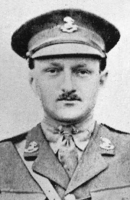
CPL David Wallace Crawford
1887 - 1916
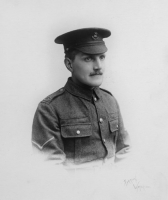
Lce-Corpl John Joseph Nickle
1894 - 1916
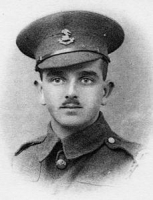
Pte 17911 Morton Neill
1897 - 1916
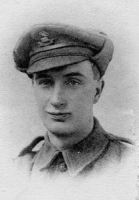
Lieut Edward Stanley Ashcroft
1883 - 1918
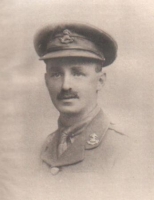
L/Cpl 16227 Edgar Alan Carter

- Age: 23
- From: Manchester
- Regiment: The King's (Liverpool Regiment) 18th Btn
- K.I.A Saturday 1st July 1916
- Commemorated at: Thiepval Memorial
Panel Ref: P&F1D8B &8 C.
16227 L/Cpl. Edgar Alan CARTER, 18th Battalion KLR.
Edgar Alan was born on the 17th September 1892 in Manchester, the elder son of Alfred and Jane (née Howarth) Carter who were married in 1886 also in Manchester.
The 1901 Census shows the family are living at 74 Didsbury Road, Heaton Norris. Edgar is 8 years of age and is living with his parents and two siblings. His father, Alfred, is aged 37, and is a Congregational Minister, who was born in Manchester, whilst his mother is aged 36, and was also born in Manchester. His two siblings are listed as: Mary aged 12 born in Manchester and Norman aged 2 and born in Partington, Cheshire.
By 1911 the family have moved to 275 Stockport Road, Cheadle Heath. Edgar is now 18 and employed as a loss assessor's clerk in an insurance company. His father, Alfred, is aged 47, and is still a Minister, his mother, is aged 46 and they confirm that they have been married for 24 years having four children, three of whom have survived. His sister, living at home, is shown as May Howarth Carter now aged 22.
His father, sadly died, aged 49, on the 06th February 1913;
His death was reported in the Alderley and Wilmslow Advertiser 14th February 1913;
LOCAL MINISTERS DEATH.
THE REV. ALFRED CARTER.
IMPRESSIVE FUNERAL AT CHEADLE.
A remarkable manifestation of the regret of the early demise of one of Stockport’s most popular ministers was seen at the funeral of the late Reverend Alfred Carter, pastor of the Brinksway Congregational Church, which took place of the Cheadle Cemetery on Monday afternoon. The service at the church was attended by practically the whole of the members of the congregation, the edifice being crowded to the doors, and afterwards an imposing procession to the cemetery was formed consisting of some two or three hundred persons. As the cortege proceeded along the route the blinds of the houses and shops where all drawn, and there was every sign of sincere regret at the passing away of the deceased.
The service in church was a very impressive one. It was conducted by the Reverend F. J. Shepherd of Withington, assisted by Reverend H. J. Barton Lee, and the Reverend T. W. Pinn. The latter paid a touching tribute to the memory of the deceased, during the course of which he said “We have met this afternoon to pay a last tribute of esteem and affection to the memory of one who for upwards of 13 years has lived and worked amongst us as Minister of this church. Of Mr Carter's early life I know nothing saved that as a young man he held for some time a position as school master in Manchester. More than 20 years ago he accepted service as evangelist under the Bowden rural mission, first at Mobberley and then as Partington. The esteem in which he is still held by many in connection with the Bowden Downs church bears witness to the good work he did in this capacity. In the autumn of 1889 he accepted a call to the pastorate of this church. It was my privilege to preside at his ordination, when the charge to the ministers was given by the late Dr Mackennal, under whose supervision he had worked at Bowden, and who thus by his presence and words gave warm testimony to the worth of Mr Carter's character and work, and signified his hearty approval of the step he was taking on entering on the pastorate. Since then I have been in constant touch with him and have known him and his work intimately and I am sure that I speak not only for myself but for all my ministerial brethren when I say that he has exerted a splendid influence and done magnificent service in our town. Mr Carter came to Brinksway as a comparative stranger to most of us, but we soon recognised that a man had come amongst us of sterling character, sound judgment, good common sense, earnest purpose, strong principle, generous and kindly spirit, who would be a great model and spiritual force in our midst. He was a man of no mean intellectual gifts, and in some directions of considerable attainments, and with untiring industry he used all his gifts in his work as a Christian minister. But his chief strength lay in the beauty of force of his Christian character. He was unassuming, kindly, earnest, thoughtful for others, every ready to take his share in work that had to be done and always putting his best into it. He was one who could be thoroughly trusted, at true and faithful friend, who gave and inspired love. He was a man of principle, who was always ready to assert firmly but cautiously his convictions, but to stand for what he considered right. He was always loyal to conscience, even when loyalty meant inconvenience, unpopularity, loss. He was in a word, a strong Christian man, of gentle spirit, of rare unselfishness, of untiring devotion, of firm and determined purpose, whom to know was to love and admire. In connection with this church he has done a splendid work. He came to it at a critical time in its history. Good work had already been done, a congregation had been gathered, there were many earnest workers, but the church needed to be consolidated, organized, built up, directed, and this has been done with singular success. You know his work here better than I do, but to myself and others who have looked on as interested spectators, it has been an unmixed pleasure to witness its development and progress under the ministry of our departed friend. He was devoted to its interests, and was never happier than when engaged in its service. He laboured for the good of his people not only as a whole but individually, taking a deep and loving interest in each one, old and young alike. He guided the affairs of the church with remarkable wisdom and tact. He resorted to no sensational methods of achieving success, but utterly disliked them, but by steady, earnest and self-sacrificing work he sought to build up his people in Christian character, to instruct and guide them in Christian service and also to win for Christ those who lived around. Thus has he built up a strong, healthy vigorous, high toned Christian church. He loved his people and they learn to love him, on the considerate kindness with which they have treated him during his long illness and the loving and anxiety with which they have hoped almost against hope for his recovery and the continuance of his ministry amongst them, bear eloquent testimony, honourable to him, to them like to the way in which he won their hearts on the value they set on his work. But his work was not confined to his own church, he has always ready to respond to calls for help from other churches and frequently rendered to them valuable, valued service. More than this he had his full share in the work common to all our churches. The Congregational Association and in Church Council, the County Union enlisted his sympathy and active service. In movements which concerned the moral and religious welfare of the town e.g. temperance, municipal purity, and such like, he was ever to the front. And so, though the minister of a church comparatively small in numbers, and consisting chiefly of working class people, he won a high place and excited a large influence not only on his own denomination, but in the religious life of the town. Generally his relations with his brother ministers where of the most cordial, they learned to admire his character, to appreciate his work, to value his friendship, and in their esteem and affectionate regard he held a place second to none. The trend of his life was that he was a true Christian, he knew whom he had believed, he walked with God, he felt that he had a God-given work to do and sought and found in God the sufficiency with which to do it. Some three or four years ago his health began to fail. For a time he was seriously ill and many others feared that his work on earth was done. He, however, partially recovered, and was to his great joy permitted to resume his ministry and continued for a season the work he loved so well. In October last, he was again seized with acute illness, and from that time till his death he endured with wonderful bravery and patience his prolonged and often intense suffering; hoping against hope; thoughtful for others even in his suffering, never losing his faith in the Divine wisdom and goodness but maintaining a bright and cheerful spirit until on Thursday morning last he passed “to the life that is life indeed.” In his active life and service he showed the reality of his religion, the style of beauty of his character, and the power of his faith; but in his suffering he had showed this yet more clearly. The bravery with which he did his work during his years of weakness, when it is scarcely too much to say that he knew that the curtain of death was hanging over him, was a marvel and an admiration to all who knew his condition, and spoke of “a life lived with Christ is good” which lifted him above bodily weakness and fear. And the same bravery, this instance of living faith in God as his Father, was even more conspicuous in the long weeks of fluctuating hope and intense suffering through which he has now passed to the rest and reward of higher service. The presence and grace of Christ were manifested in his scenes of activity by the consistency and beauty of his character and his earnest, self-sacrificing work, but still more clearly were they manifested in his last scenes, in his brave struggle with bodily weakness, and in the sustained courage and cheerfulness with which he bore his sufferings. Right nobly did he live, right nobly did he die, upheld by that grace which was ever sufficient for him. And now he rests from his labours. “Absent from the body he is at home with the Lord.” We cannot mourn for him. Our loss in his unspeakable gain. He is “with Christ which is very far better.” But we shall miss him. Miss him as a friend. Miss him as a counsellor and loyal fellow worker. Miss him as a Christian minister. Miss him as a force for righteousness in the town. Why he should be taken from us in the very prime of his life and the fullness of useful service we cannot understand. It is one of those things which we know not now, but perchance may know hereafter. But it is undoubtedly a call to us to be faithful and to strive to carry on his way. Nay, we have to obey the call. For his widow and children we all feel the deepest sympathy, but conscious that human sympathy can avail but little, we could turn our sympathy into our prayer that “the God of all comfort may be their comforter, the Husband of the widow, and the Father of the fatherless, and that the Divine sympathizer may speak to their hearts his words of sympathy today, and may enable them to find consolation in the thought of the present happiness and reward which their loved one is now enjoying. For the church which he served so faithfully and well, which has benefited so much by his ministry, and has nobly stood by her in his weakness. We must pray that the removal of the under shepherd may mean the fuller realisation of the presence and power of the Chief Shepherd and those entirely dependent on Him. May the life and ministry of their pastor now taken from them be remembered by them, and yet bear fruit in the fuller convention of Christianity, and in the leading of the undecided to take their place on the Lord's side. May the Living Lord of the Church be their strength and guide! May the influence of his ministry still be felt in this town not only in the remembrance of his words and work, but the lives and work of those who have been led to Christ and strengthened in Christian character by him. May we all, stimulated by his example, convert ourselves anew to Christ, and in our generation, as he did his, according to the will of God, be faithful as he was even unto death, and at length there will be the crown of life!”
The service was choral, the choir being in attendance, and the hymns sung were “Oh God, our health in ages past,“ and “Captain and Saviour of the Host.” Mr Thomas Jefferson presided at the organ, and rendered the Dead March in “Saul” prior to the body being removed to the Cemetery. The coffin, during the service, was placed on the reredos, and was covered with a white silk pall.
The principal mourners where as follows:-
First carriage.- Mrs Carter, Mr Edgar Carter, Mr Norman Carter, Miss Carter.
Second carriage.- Mr and Mrs John Carter, Mr G. Carter, Mrs Ashton.
The grave was lined with purple drapings, and decorated with ivy, narcissus, and daffodils. The last rites were performed by the Rev. F.J. Shepherd and the choir sang the hymn, “I heard the voice of Jesus say.”
His father's death was also reported in the Alderley and Wilmslow Advertiser on the 02nd January 1914;
STOCKPORT AND DISTRICT DEATH TOLL 1913
February 6th, the Rev. Alfred Carter, aged 49 years, of 275 Stockport Road, Cheadle Heath, for 20 years pastor of Brinksway Congregational Church.
Prior to enlisting Edgar was employed as a Clerk with Lever Brothers in Port Sunlight.
Edgar enlisted in Liverpool on the 02nd September 1914 joining the 18th Battalion of The King's Liverpool Regiment as Private 16277. He gave his age as 21 years and 350 days (on medical), his occupation as clerk with Lever Brothers and his next of kin as his mother of 44 Kirkland Road, Higher Tranmere. He was described as being 5'9" tall, weighing 123lbs, with a 35” chest, a fresh complexion, grey eyes and light brown hair. His religion was stated as Nonconformist.
From the 23rd September 1914 he was billeted at Hooton Park Race Course and remained there until 03rd December 1914 when they moved into the hutted accommodation at Lord Derby’s estate at Knowsley Hall. On 30th April 1915 the 18th Battalion alongside the other three Pals battalions left Liverpool via Prescot Station for further training at Belton Park, Grantham. They remained here until September 1915 when they reached Larkhill Camp on Salisbury Plain.
He crossed to France, from Folkstone, with his Battalion, arriving at Boulogne on the 07th November 1915 aboard the SS Invicta and on 24th January 1916 was appointed Lance Corporal (Unpaid). Apart from the 1st to the 5th of April 1916 when he was attached to the 2nd Battalion Yorkshire Regiment, he served with 18th King’s Battalion.
He was killed in action on the 01st July 1916 during the attack at Montauban.
18th Battalion Dairy
At 6.30am the artillery commenced an intensive bombardment of the enemy’s trenches. Zero Hour – 7.30 am – the battalion commenced to leave their trenches and the attack commenced. The attack was pressed with great spirit and determination in spite of heavy shelling and machine gun enfilade fire which caused casualties amounting to 2/3rds of the strength of the Battalion in action. The whole system of German trenches including the Glatz Redoubt was captured without any deviation from the scheduled programme. Consolidated positions and made strong points for defence against possible counter attacks.
Graham Maddocks provides more detail concerning the events of the day:
As the first three waves began to move forward towards the German reserve line, known as Alt Trench and then on to the Glatz Redoubt itself, they suddenly came under enfilading fire from the left. This was from a machine gun which the Germans had sited at a strong point in Alt Trench. The gun itself was protected by a party of snipers and bombers, who, hidden in a rough hedge, were dug into a position in Alt Trench, at its junction with a communication trench known as Alt Alley. These bombers and snipers were themselves protected by rifle fire from another communication trench, Train Alley which snaked back up the high ground and into Montauban itself. The machine gun fire was devastating and it is certain that nearly of the Battalion’s casualties that day were caused by that one gun.
Lieutenant Colonel Edward Henry Trotter wrote in the conclusion of his account of the days action:
I cannot speak to highly of the gallantry of the Officers and men. The men amply repaid the care and kindness of their Company Officers, who have always tried to lead and not to drive. As laid down in my first lecture to the Battalion when formed, in the words of Prince Kraft:
“Men follow their Officers not from fear, but from love of the Regiment where everything had always and at all times gone well with them”.
Joe Devereux in his book A Singular Day on the Somme gives the Casualty Breakdown for the 18th Battalion as Killed in Action 7 Officers and 165 men and of those who died in consequence of the wounds 3 Officers and 19 men a total of 194 out of a total loss for the four Liverpool Pals Battalions of 257.
Edgar's death was reported in the Liverpool Echo on the 26th July 1916 and also in the Alderley and Wilmslow Advertiser on 28th July 1916;
CARTER - July 1, killed in action in his 24th year, Lance Corporal Edgar Alan Carter (“Pals”), the beloved eldest son of the late Rev. Alfred Carter of Brinksway, Stockport and Mrs Carter, 44 Kirkland Avenue, Higher Tranmere, Birkenhead.
Edgar's body was not recovered or was subsequently lost as has no known grave and is commemorated on the Thiepval Memorial.
The Thiepval Memorial, the Memorial to the Missing of the Somme, bears the names of more than 72,000 officers and men of the United Kingdom and South African forces who died in the Somme sector before 20 March 1918 and have no known grave. Over 90% of those commemorated died between July and November 1916.
On 01st August 1932 the Prince of Wales and the President of France inaugurated the Thiepval Memorial in Picardy. The inscription reads: “Here are recorded the names of officers and men of the British Armies who fell on the Somme battlefields between July 1915 and March 1918 but to whom the fortune of war denied the known and honoured burial given to their comrades in death.”
Liverpool Echo 26th July 1916
CARTER - July 1, killed in action in his 24th year, Lance Corporal Edgar Alan Carter (“Pals”), the beloved eldest son of the late Rev. Alfred Carter of Brinksway, Stockport and Mrs Carter, 44 Kirkland Avenue, Higher Tranmere, Birkenhead.
He is also commemorated on the war memorials at:
Highfield United Reform Church, Rock Lane West, Rock Ferry.
Lever Brothers War Memorial, The Causeway, Port Sunlight.
Soldiers Effects of £4 10s, war gratuity of £8, and Pension of 10/- pw to mother Jane, 44 Kirkland Avenue, Higher Tranmere.
His mother, Jane, date of birth 17th March 1865, appears on the 1939 register with daughter May H. at “Verulam”, Bertram Drive, Hoylake.
She died the following year, aged 75.
We currently have no further information on Edgar Alan Carter, if you have or know someone who may be able to add to the history of this soldier, please contact us.
Grateful thanks are extended to Lever Brothers, Port Sunlight for permission to use the photograph of Edgar now shown on this site.
89th Brigade On This Day.
110 Years Ago.The Battle of the Transloy Ridges begins. more....
Killed On This Day.
(110 Years this day)Sunday 15th October 1916.
Pte 30280 James Patrick Doyle
25 years old
(110 Years this day)
Sunday 15th October 1916.
Pte 34608 Thomas Foster
19 years old
(110 Years this day)
Sunday 15th October 1916.
Pte 53107 Joseph Green
32 years old
(110 Years this day)
Sunday 15th October 1916.
Pte 11282 Stephen Hynes
21 years old
(110 Years this day)
Sunday 15th October 1916.
Pte 32717 Evan Lee
25 years old
(110 Years this day)
Sunday 15th October 1916.
Pte 34271 James Vickers
21 years old
(108 Years this day)
Tuesday 15th October 1918.
Cpl 15764 Alan Douglas Ellison
30 years old