
Capt Arthur de Bells Adam (MC)
1885 - 1916
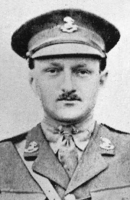
CPL David Wallace Crawford
1887 - 1916
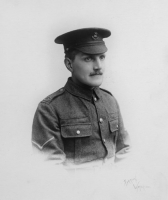
Lce-Corpl John Joseph Nickle
1894 - 1916
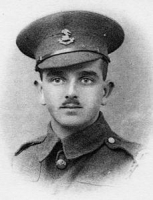
Pte 17911 Morton Neill
1897 - 1916
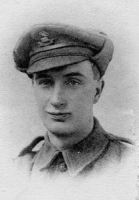
Lieut Edward Stanley Ashcroft
1883 - 1918
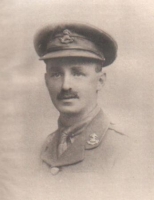
1885 - 1916
CPL David Wallace Crawford
1887 - 1916
Lce-Corpl John Joseph Nickle
1894 - 1916
Pte 17911 Morton Neill
1897 - 1916
Lieut Edward Stanley Ashcroft
1883 - 1918
Pte 32482 Henry Taylor

- Age: 20
- From: Liverpool
- Regiment: 10 L N LANCS RE
- Died on Sunday 29th April 1917
- Commemorated at: Etaples Mil Cem
Panel Ref: XVIII. E. 3.
Henry “Harry” Taylor was born Chorlton, Manchester in 1897, the son of Charles Taylor and his wife Margaret (née Boyton) who were married in 1893 in Manchester. His father was born in Bradford, his mother in Maryborough, Queens County, Ireland. She was born on the 04th February 1873 at Lesters Lane, the daughter of Michael, a shoemaker, and Mary (née Dalton).
By the 1901 Census the family have moved to Liverpool and are living at 51 Northbrook Street, Toxteth Park. His father, Charles, is aged 28, a cabinet maker and upholsterer, born in Bradford, his mother, Margaret, is aged 26, born Ireland. They havefour children in the household born in Manchester are Margaret aged 7, William 5, Henry 4, and Charles aged 7 month, born in Liverpool.
On the 1911 Census the family have moved to 36 Herondale Road, Mossley Hill. His father, Charles, is aged 38, and a cabinet maker, his mother Margaret is aged 36. They advised that they have been married for 18 years, and have had 4 children. All four children are in the household; Margaret aged 17, a dressmakers assistant, William 15 and Henry 14 are cabinet maker apprentices, Charles aged 10 is at school.
His service record has not survived so his military career can only be estimated.
Harry enlisted in Seaforth as Private 36788, most probably with the 22nd Battalion, King’s Liverpool Regiment. Private 36770 Willam Kidd enlisted on the 29th February 1916 in 22/KLR and shipped to France on the 11th July 1916.
He was transferred at first to the 7th Loyal North Lancashire Regiment as Private 32480, and then onto the 10th Battalion.
He died on the 29th April 1917 from wounds received in heavy fighting around Arras on the 28th.
10 Battn. Loyal North Lancs War Diary
AMBRINES, HARBARQ, and ST NICHOLAS
27th April 1917 – We received orders to attack GREENLAND HILL at dawn the next day.
28th April 1917 - 4.25 a.m. - Barrage opened, Battalion being already in position for attack. The enemy did not put up much of an artillery barrage so I immediately brought my second wave into new trench.
4.27 a.m. - The Battalion attacked and reached a point where a trench had been begun by the enemy. By this time the Battalion had suffered heavily and only one officer (2/Lt Jones) was left. The Battalion immediately commenced to dig in into this newly begun trench. As they were so heavily enfiladed with machine guns from right flank (chemical works) there were several batches of the regiment still further advanced in shell holes. These wisely remained there all day, sniping and doing as much damage as they could. By the time the Battalion was dug in between 50-60 were all that remained. During the advance a few of the East Lancs, Bedfords and Warwicks joined my Battalion and digging in with us. The attack on GREENLAND HILL once more failed, although we did gain some ground. Undoubtedly the chemical works was the main reason for this failure, but I cannot help thinking that if my Battalion had been supported in a more determined manner, we might have got to the enemy trench, but they were so few in numbers they were killed or wounded. There was a great delay and much confusion at the time of the start, amongst the supporting battalions, which I myself witnessed and tried to rectify. I am afraid they delay was a great hamper to the leading Battalion as the wave which should have been the first evidently never started, or if it did, it didn't support my Battalion. Only the second wave appears to have got through, so eventually there was a gap between the front waves and the supporting ones. Still, on the hole, I am afraid the Right Flank was the main reason for our failure.
30th April 1917 - We estimate our casualties for these operations as 8 officers killed and wounded, O.R’s killed 19, wounded 112, missing 78.
He now rests at Etaples Military Cemetery in France.
During the First World War, the area around Etaples was the scene of immense concentrations of Commonwealth reinforcement camps and hospitals. It was remote from attack, except from aircraft, and accessible by railway from both the northern or the southern battlefields. In 1917, 100,000 troops were camped among the sand dunes and the hospitals, which included eleven general, one stationary, four Red Cross hospitals and a convalescent depot, could deal with 22,000 wounded or sick. In September 1919, ten months after the Armistice, three hospitals and the Q.M.A.A.C. convalescent depot remained.
The cemetery contains 10,771 Commonwealth burials of the First World War, the earliest dating from May 1915. 35 of these burials are unidentified. It is the largest CWGC cemetery in France, and was designed by Sir Edwin Lutyens.
His death was reported in the Liverpool Weekly Courier on Saturday 05 May 1917:
Pte Harry Taylor, aged 20, who was wounded in France on April 9th, and died on the 29th, enlisted in “the Pals” at 18, and was attached to the Loyal North Lancs. Before joining he was employed by Messrs. J. and R. Smith, and resided with his parents at 36 Helendale-road. His elder brother William is serving in the Royal Flying Corps.
His death was also reported in the Liverpool Daily Post on Saturday 26 May 1917:
DIED OF WOUNDS
Loyal North Lancashire R. - Taylor, 32482, H.;
Harry earned his two medals.
Soldiers Effects, Army pay of £3 9s 1d, £4 War Gratuity, and Pension of 8/6 pw to mother Margaret, 36 Herondale Road.
On the 1921 Census at 36 Herondale Road, his father Charles is aged 49, a furniture restorer, mother Margaret is aged 48, children Margaret 27, a clerk for Waring and Gillow, and Harold Raymond aged 2.
His father died aged 66 in a motor accident in 1938.
His death was reported in the Liverpool Echo on Wednesday 31 August 1938:
"Almost Lays Trap For Motorists"
Man Who Refused To Use Crossing
At the inquest on an elderly cabinet-maker at Liverpool, to-day, medical evidence revealed that his eyesight had been seriously impaired by the thickening of the translucent portion of the eye, a fact which was unknown to his son who had just stated that his father's eyesight was good. He only used glasses for fine work, his son had said. The inquest was on Charles Taylor, aged 66, of 36 Herondale Road, Mossley Hill, who was knocked down by a motor car while crossing Ullet Road, near its junction with Smithdown Road, shortly before midnight on Monday. A verdict of “Accidental death” was returned.
On the 1939 Register at Herondale Road his widowed mother Margaret had a lodger, William Rayner, a postman. She is not on the Electoral Roll there in 1947, no positive death record can be found though.