
1885 - 1916
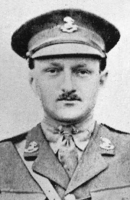
CPL David Wallace Crawford
1887 - 1916
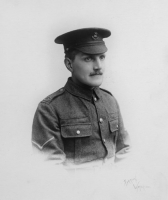
Lce-Corpl John Joseph Nickle
1894 - 1916
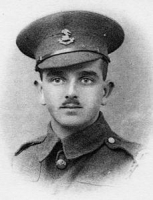
Pte 17911 Morton Neill
1897 - 1916
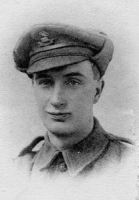
Lieut Edward Stanley Ashcroft
1883 - 1918
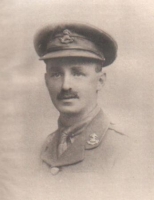
Captain Harold Esmond Cooke (MC)
- Age: 28
- From: Bristol
- Regiment: 12 KLR
- Died on Friday 30th November 1917
- Commemorated at: Cambrai Memorial
Panel Ref: Panel 4
Mary returned to Liverpool with the children and by 1901 Mary, 37, is head of household, living on her own means, at 23 Hawarden Avenue, Toxteth Park. Daughter Mary is 13, and Harold is 11. Also in the household is his maternal aunt, Isabella Braithwaite, 39, and a cousin Sarah Carson, 50, both also living on their own means, as well as a domestic servant.
Harold (Lieutenant Esmond Cooke) was a steward at his sister’s wedding, announced in the Liverpool Daily Post on 23rd September 1915. Mary (May) married Capt. Walter Willmer, 19th Battalion King's.Liverpool.Regiment, Walter died at Guillemont on 30th July 1916. (Mary never remarried, taught for many years, and died in Sussex in 1950.)
His award of the Military Cross was reported in the Birkenhead News on 05th October 1918:
CAPTAIN H. ESMOND COOKE'S MILITARY CROSS
The friends of Capt. H. Esmond Cooke who was reported missing some time ago, have not given up hope respecting him, despite the receipt of official intimation presuming his death. In officially announcing the award to Capt. Cooke, who was attached to the Liverpool Regiment, it is stated that the honour was for:
"Conspicious gallantry and devotion to duty. He captured all his objectives in an attack in spite of strong resistance from the enemy. He showed great ability in handling his company, and set his men a splendid example of courage and determination".
The anxiety on his account has been prolonged since the first information was received, and general sympathy will be extended to his relatives. Capt. Cooke is a nephew of Mr J Cooke of Shrewsbury-road, Oxton and brother to Mrs Walter Willmer whose husband Capt. Walter Willmer fell leading his men on July 30th 1916.
Harold's body was never recovered from the battlefield or was subsequently lost as he is commemorated on the Cambrai Memorial, Louverval, Nord.
The CAMBRAI MEMORIAL commemorates more than 7,000 servicemen of the United Kingdom and South Africa who died in the Battle of Cambrai in November and December 1917 and whose graves are not known.
Sir Douglas Haig described the object of the Cambrai operations as the gaining of a 'local success by a sudden attack at a point where the enemy did not expect it' and to some extent they succeeded. The proposed method of assault was new, with no preliminary artillery bombardment. Instead, tanks would be used to break through the German wire, with the infantry following under the cover of smoke barrages.
The attack began early in the morning of 20 November 1917 and initial advances were remarkable. However, by 22 November, a halt was called for rest and reorganisation, allowing the Germans to reinforce. From 23 to 28 November, the fighting was concentrated almost entirely around Bourlon Wood and by 29 November, it was clear that the Germans were ready for a major counter attack. During the fierce fighting of the next five days, much of the ground gained in the initial days of the attack was lost.
For the Allies, the results of the battle were ultimately disappointing but valuable lessons were learnt about new strategies and tactical approaches to fighting. The Germans had also discovered that their fixed lines of defence, no matter how well prepared, were vulnerable.
The Cambrai Memorial was designed by Harold Chalton Bradshaw with sculpture by Charles S. Jagger. It was unveiled by Lieut-General Sir Louis Vaughan on 4 August 1930.
The memorial stands on a terrace at one end of LOUVERVAL MILITARY CEMETERY. The chateau at Louverval, was taken by the 56th Australian Infantry Battalion at dawn on 2 April 1917. The hamlet stayed in Allied hands until the 51st (Highland) Division was driven from it on 21 March 1918 during the great German advance, and it was retaken in the following September.
Parts of Rows B and C of the cemetery were made between April and December 1917 and in 1927, graves were brought in from Louverval Chateau Cemetery, which had been begun by German troops in March 1918 and used by Commonwealth forces in September and October 1918.
The cemetery now contains 124 First World War burials.
“T./Capt. Harold Esmond Cooke, attd. L’Pool R. For conspicuous gallantry and devotion to duty. He captured all his objectives in an attack in spite of strong resistance from the enemy. He showed great ability in handling his company and set his men a splendid example of courage and determination.”
Probate was granted to his widow, Emily, address 13 Woodchurch Road, Stoneycroft, Liverpool, in the amount of £318-10s-1d. Emily received his Army effects, including a War Gratuity of £8. The medal card shows Emily living at Hafod Cottage, Brookdale, Meliden, North Wales.
Emily never remarried and died on 15th February 1972. She now rests at grave Q10 in God's Acre Cemetery, Corfe Castle. The details on the headstone are as follows:
In Memory of
EMILY COOKE
DIED 15-2-72
WIDOW OF
CAPTAIN HAROLD ESMOND COOKE
KILLED IN ACTION 30-11-17
REUNITED
Sadly, Harold had not been found on any memorial.
Margaret also rests alongside her husband in God's Acre Cemetery, her headstone shows her as Joan Sutton. Her husband Emil Frederic Sutton died on 21st March 1985.
We currently have no further information on Harold Esmond Cooke, If you have or know someone who may be able to add to the history of this soldier, please contact us.
Killed On This Day.
(108 Years this day)Sunday 16th June 1918.
Pte 57615 Fred William Preddy
23 years old
(105 Years this day)
Thursday 16th June 1921.
Captain Leonard George Duncan
43 years old