
1885 - 1916
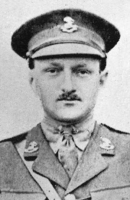
CPL David Wallace Crawford
1887 - 1916
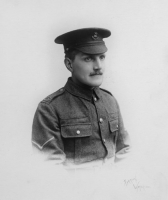
Lce-Corpl John Joseph Nickle
1894 - 1916
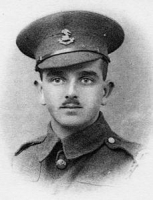
Pte 17911 Morton Neill
1897 - 1916
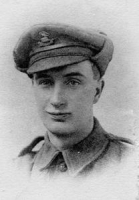
Lieut Edward Stanley Ashcroft
1883 - 1918
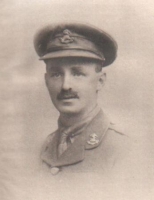
Serjeant 22829 Hugh Sammond (MM)
- Age: 34
- From: Liverpool
- Regiment: 6th Kings
- Died on Tuesday 9th April 1918
- Commemorated at: Browns Road Cem
Panel Ref: IV.H.7
Hugh Sammonds was born in Liverpool in January 1884. Given the potential for errors in the spelling of the last name, records are difficult to verify. The name appears as Sammonds in early records (his father at marriage, and Hugh’s birth registration). His mother’s maiden name is written McGowan or McGowen. In addition, not all the children’s births appear to have been registered.
Hugh Sammonds and Bridget McGowen married in 1880 in St. Nicholas R.C. Church, Liverpool. Their first child Edward was born in 1881 and baptised in (Roman Catholic) St. Peter’s Priory, but died at age 22 months, the family then living at 163 Upper Frederick Street. Hugh had younger sisters Mary Catherine, born in 1886 (also baptised in St. Peter’s Priory), Sarah 1888, and Christina, born in 1890/91.
At the time of the 1891 census, the family, listed as Lammond, are living in court housing at 14 Pownall Street, off Liver Street, near the docks. His father, 32, is a dock labourer, his mother is 28. Hugh is 7, Mary, 5, Sarah, 2, and Christina 3 months old. Christina died in late 1891 before her first birthday. Another daughter, also named Christina was born in 1893/4 (no birth registration found).
His mother died in April 1897 aged 34, when Hugh was 13.
In 1901 his widowed father is living in court housing in Mount View, off Rathbone Street, with daughters Mary, 16, Sarah, 12, and Christina, 6. Hugh does not appear in the 1901 census as he was in South Africa with the Army, having enlisted in 1899. He earned the South Africa Medals for 1901 and 1902.
Hugh would have been discharged to the Reserves in 1906, after seven years with the Colours.
When his sisters married, Mary in 1905, and Sarah in 1910, both signed Sammonds. (His youngest sister Christina died in 1919).
He married Jane Lynch at St Michael's Church on 23rd April 1905. They had a daughter Lilian who was born on 10th February 1906.
In 1911 Hugh and Jane Sammond, both 28, are living at 31 Nickleby Street. Hugh is a pressman for the Imperial Tobacco Company, daughter Lilian is 5. Also living with them is Jane’s niece, Alice Dodd, 8.
His father, a dock labourer, and sister Christina, 17, a domestic servant, both Sammond, are living with married daughter Mary Unsworth and her family in Mercer Court, Redcross Street.
His father died in July 1912, his death recorded as Sammonds.
Hugh enlisted as Sammond in Liverpool on 05th November 1914 when he joined the 20th Battalion of THe King's Liverpool Regiment as Private 22829. He gave his age as 30 years and 300 days and his occupation as a Foreman. He listed his previous service with the King's Liverpool Regiment (3rd Battalion) as 6561 having attested on 14th August 1899 aged 18 years and 6 months.He is described as being 5'9 and a half inches tall, weighing 151lbs being of fresh complexion with grey eyes and brown hair.
Formed in November 1914 the 20th Battalion were originally billeted at Tournament Hall, Knotty Ash before on 29th January 1915 they moved to the hutted accommodation purposely built at Lord Derby’s estate at Knowsley Hall. On 30th April 1915 the 20th Battalion alongside the other three Pals battalions left Liverpool via Prescot Station for further training at Belton Park, Grantham. They remained here until September 1915 when they reached Larkhill Camp on Salisbury Plain.
Hugh was posted as Private on 05/11/1914 and was very quickly promoted to Corporal on 08/12/1914 on probation. This promotion was confirmed on 09/02/1915. He was promoted, again on probation this time to Serjeant on 19/04/1915. This was confirmed on 05/10/1915. He was then posted to the 22nd Reserve Battalion at Formby before being transferred to the Western Command Depot on 16/03/1917. From there Hugh was sent to the 3rd Battalion on 09/08/17 before joining the Labour Corps at Oswestry on 03/11/1917,
He embarked for France on 11/12/17 joining the 18th Battalion upon his arrival. He was then transferred on 16/12/1917 to the 6th Battlion of The King's Liverpool Regiment.
In early December 1917 the 1/6th K.L.R., part of the 165th (Liverpool) Brigade, 55th (West Lancashire) Division, moved to Villers Faucon, northeast of Péronne.
Hugh was awarded the Military Medal for bravery in February 1918, the award being Gazetted on 02/04/1918.
The War Diary for January 1918 records them in billets at Fontaine-lès-Boulans, (18 miles west of Béthune), engaged in “usual training” for the month. On 8th February the battalion moved to Busnettes. On the 12th they moved to Beuvry, just east of Béthune, and the next day moved up to the right sub-sector, Givenchy sector. The 14th records the enemy heavily shelled WINDY CORNER with gas, and on the 15th back areas were heavily shelled. After quiet days from 16th to 18th, the battalion was relieved on the 19th and moved into Support trenches.
On 17th March they moved to Festubert, 3 miles northeast, moved to billets at Gorre on the 24th, and moved back up to Festubert on the night of the 27th. The Battalion War Diary for April records quiet days until moving up to Gorre Chateau on the 5th.
The Battle of the Lys, from 7th to 29th April, was part of the German Spring Offensive in Flanders. The German plan was to break through the First Army, push the Second Army aside to the north, and drive west to the English Channel, cutting off British forces in France from their supply line which ran through the Channel ports of Calais, Dunkirk, and Boulogne.
The German bombardment opened on the evening of 7th April, against the southern part of the Allied line between Armentières and Festubert. The barrage continued until dawn on 9th April. The Sixth Army then attacked with eight divisions.
The German assault struck the Portuguese Second Division, which held a front of 6-7 miles. The Portuguese division was overrun and withdrew towards Estaires after hours of heavy fighting. The British 55th (West Lancashire) Division, to the south of the Portuguese in a more defensible position, pulled back its northern brigade and held its ground for the rest of the battle, despite attacks from two German reserve divisions.
The War Diary for 9th April records -
“About 4 a.m. the enemy commenced an extremely heavy bombardment with guns of every calibre on all our positions and on the village of Gorre. Many gas shells were mixed with the H.E. The gas was phosgene, no mustard oil was encountered. About 5:15 a.m. the order was received from Brigade by code word “BUSTLE” for Bn HQ and the two companies in Gorre to move up to their battle positions in the TUNING FORK LINE. These companies immediately moved up over the open through a very heavy barrage of gas and H.E. There was a very thick mist and the compass was necessary to maintain direction. A number of casualties were suffered on the way up. […]
“At 11:15 a.m. information was received that the front line and the O.B.L. had been captured by the enemy and the Portuguese had retired, and shortly after, that Route “A” Keep had been captured. […]. From 9th to 15th April all four companies took part equally with 5th and 7th King’s in the fighting on the Village LINE.
“About 11:15 a.m. the shelling was very severe, several shells falling in vicinity of Bn HQ. […]. Owing to the situation at WINDY CORNER and PLANTINS it was not possible to provide the necessary counterattack to retake Route “A” Keep for the time being, and its occupation by the enemy caused no little anxiety. […]. Rifle and M.G. fire kept the enemy in neighbourhood of Route “A” Keep in hand and, after dusk, the shelling slackened.
Hugh was killed in action on 09/04/1918.
After the battle, each Officer and NCO was required to submit a narrative of operations. Unfortunately, there is no mention of Sgt. Sammond among the multiple reports included in the Brigade War Diary.
Hugh now rests at Brown’s Road Cemetery, Festubert.
Festubert was occupied by Commonwealth forces in October 1914 and on 23-24 November, the Indian Corps repulsed a German attack. The Battle of Festubert (15-25 May 1915) resulted in a short advance which left the village somewhat less exposed than it had been. Except for an advance which was attempted just to the south of Festubert (the Second Action of Givenchy, 15-16 June 1915), this sector remained quiet until 9 April 1918 and the beginning of the Battle of the Lys. Festubert was held by the 55th (West Lancashire) Division against the German assault, and successive attacks lasting through the month were repelled by the 1st and other Divisions. It remained an outpost for Commonwealth forces until the final advance began in September 1918. The cemetery was begun in October 1914, and carried on by fighting units and field ambulances until November 1917, when it contained 299 graves. It was greatly enlarged after the Armistice when graves were brought in from small cemeteries and isolated sites on the surrounding battlefields. Brown's Road Cemetery now contains 1,071 burials and commemorations of the First World War. 407 of the burials are unidentified but special memorials commemorate three casualties believed to be buried among them. The cemetery was designed by Charles Holden.
His effects were sent to his wife at 31 Nickleby Street on 26/07/1918.
His daughter Lilian was 12 years old when Hugh died. Jane was awarded a pension £1-6s-9d a week from November 1918, and received Hugh’s Army effects and a War Gratuity of £19.
In 1939 Jane, 56 and retired, is living at 80 Abingdon Road with married daughter Lilian, 33.
Jane died in 1952, aged 69, living at 22 Woodchurch Road, Old Swan. His daughter Lilian died in Liverpool in 1990.
Hugh is commemorated in Liverpool’s Hall of Remembrance, Panel 39.
We currently have no further information on Hugh Sammond, If you have or know someone who may be able to add to the history of this soldier, please contact us.
Killed On This Day.
(110 Years this day)Thursday 19th October 1916.
C.S.M 15156 Frederick Preston Beckett
34 years old
(110 Years this day)
Thursday 19th October 1916.
Pte 53077 Walter Bullimore
27 years old
(110 Years this day)
Thursday 19th October 1916.
Pte 33720 William Clarke
21 years old
(110 Years this day)
Thursday 19th October 1916.
Pte 52010 Thomas Francis Cross
24 years old
(110 Years this day)
Thursday 19th October 1916.
L/Cpl 16381 William Leyland
31 years old
(110 Years this day)
Thursday 19th October 1916.
Pte 53196 Stephen Mannion
18 years old
(110 Years this day)
Thursday 19th October 1916.
Pte 52028 George Edward Vernon
23 years old
(109 Years this day)
Friday 19th October 1917.
L/Cpl 49197 Robert William Dugdale
34 years old
(109 Years this day)
Friday 19th October 1917.
Pte 32328 George Arthur Stewart
29 years old
(108 Years this day)
Saturday 19th October 1918.
Pte 27167 John Howarth
21 years old