
1885 - 1916
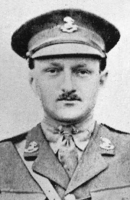
CPL David Wallace Crawford
1887 - 1916
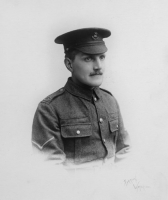
Lce-Corpl John Joseph Nickle
1894 - 1916
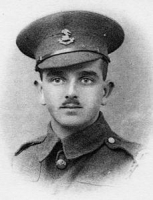
Pte 17911 Morton Neill
1897 - 1916
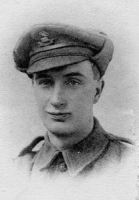
Lieut Edward Stanley Ashcroft
1883 - 1918
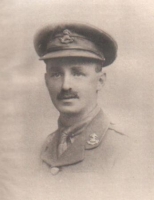
Pte 21763 Thomas Harvey Eastwood
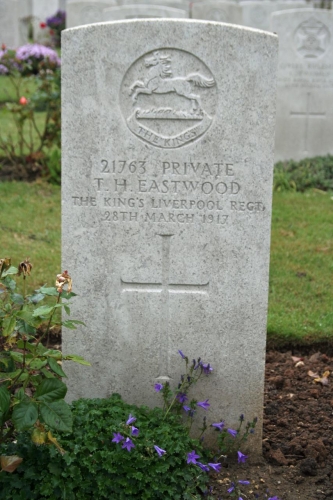
- Age: 27
- From: Clitheroe
- Regiment: 13th Kings
- Died on Wednesday 28th March 1917
- Commemorated at: Fauborg D'amiens
Panel Ref: III.L.10
Thomas (Tom) Harvey Eastwood was born in Clitheroe on 09th March 1891 and baptised on the 3rd May 1891. He was the son of Joseph William Eastwood and his wife Ann (nee Harvey).
The 1901 Census shows the family living at 80 Grey Rock Street, Liverpool. His father, Joseph William, is aged 37, born in Clitheroe in 1864 and is a cow keeper, his mother, Anne, is also aged 37 and has no occupation listed, she was born in Newton, Yorkshire. At the taking of the Census, they have two children, Nellie is aged 15, born 1886 and has no occupation listed and Thomas Harvey is aged 10 and was born in 1891. Both children were born in Clitheroe. They also have Abraham Mills living with them at the address, he is aged 18, born 1873 in Liverpool and employed as a cow man.
His father, Joseph William, died on 6th April 1901.
Probate on 26th April, 1901.
By the time of the 1911 Census, the head of the household is his mother, Anne, who is now a widow, aged 48, and she listed her occupation as a cow keeper. Her two children are both still living at home, Nellie is aged 25 and Thomas Harvey now aged 20 and both are employed assisting in the dairy. They have a further two males at the address when the Census was taken, Fred Griffin aged 26, born 1885 in Liverpool and he also assists in the dairy. The other male Alfred McLeoy is a visitor aged 19, born 1892 in Dublin and his occupation is shown as a ships steward.
The early 19th Century Industrial Revolution led to a massive removal of people from the countryside into Britain’s towns and cities. Amongst these were a number of farming families who relocated from Yorkshire to Liverpool. This was in response to prevailing economic circumstances as milk producers found their market for fresh milk shifted from rural to urban areas. The introduction of the rail network provided some solution to the problems of transporting milk from the countryside to towns and cities. Despite this city cow keepers prospered as milk did not travel well by train and by providing fresh milk locally these businesses were also able to cut out the ‘middle man’.
Cows were kept in back yards behind terraced housing which became known as City Milk Houses. Short horn cattle were initially the preferred breed as good milkers combined with their suitability to be sold as fatstock. The turnover of city cows was fairly rapid, optimising the herd for milk production, hence the term ‘flying herd’. Muck was stored in a midden pending removal. The whole family were usually employed in the business, keeping and milking the herd, delivering milk and running a shop for the sale of milk on the premises.
In 1878 there were 452 cowhouses in Liverpool, in 1900, 900 cowhouses with 4000 cattle, and in 1939, 199 cowhouses with 2500 cattle. Fodder was grass supplied from parks and cemeteries and hay and rotten vegetables were exchanged for milk. Although the cowkeepers were in competition with each other, they were a closely knit group with strong community links to their suppliers of equipment and services.
Cows were milked twice a day and the milk delivered daily by cart to nearby streets first in churns and later bottled. With the advent of mechanisation in bottling and the influx of larger dairies, numbers steadily declined until the last cowhouse closed in 1975.
Thomas married Jane Wallace at the Register office on 16th October 1913.
Thomas enlisted in Liverpool on 11th November 1914 as Tom Harvey Eastwood, initially joining the 22nd Battalion of The King's Liverpool Regiment as Private 21763. He gave his age as 23 years and 6 months and his occupation as a dairyman. He was described as being 5'3 inches tall, weighed 108lbs, chest 35 “ and has a fresh complexion with grey eyes and brown hair and had an appendix scar. He stated his religion as Church of England. At the time of his enlistment he was living with his wife Jane at 53 Albion Street, Everton, Liverpool.
It appears that Tom was transferred to the 19th Battalion K.L.R. on 10th January 1916. Posted to Depot on 17th March 1916, back to 22nd Bn on 14th April 1916 and finally back to the 19th Battalion.
He embarked onboard the S S Onward and arrived in France on 21st January 1916 at the 30th IBD at Etaples. He proceeded to the 19th Battalion on 04th February 1916. He then went to the 98th Field Ambulance on 05th February and was admitted to the field ambulance with Bronchitis on 07th February remaining there until 16th February when he was discharged and rejoined his unit. On 01st March he returned to 98th Field Ambulance and was transferred to the 21st Casualty Clearing Station on 03rd March with Trench Foot, remaining in the CCS until 05th March 1916. He returned to England on the hospital ship St George on 16th March until 26th April 1916. He returned to France onboard the S.S. Victoria on 28th April and was in France from 29th April - 05th August 1916 with the 19th Battalion. He was wounded with a gun shot wound to the right leg on 30th July 1916 during the Pals offensive at Guillemont. He was sent to the Field Ambulance, then onto 21 CCS before being admitted to the 5th General Hospital. He returned home on 04th August 1916 on the Hospital ship S.S. Marama and was hospitalised in the U.k.from 06th August to 18th October 1916 and remained at home until 18th December 1916. When he arrived back in France on 18th December he was posted to the 1st Battalion K.L.R. He was subsequently transferred to the 13th Battalion of The King's Liverpool Regiment on 23rd December 1916.
On 15th March 1917, Tom was fined 2 shillings and 2 pence for being deficient of two pairs of socks.
He was killed in action on 28th March 1917, aged 27.
He now rests at Fauborg d' Amiens Cemetery in France at Grave III.L.10.
The French handed over Arras to Commonwealth forces in the spring of 1916 and the system of tunnels upon which the town is built were used and developed in preparation for the major offensive planned for April 1917.
The Commonwealth section of the FAUBOURG D'AMIENS CEMETERY was begun in March 1916, behind the French military cemetery established earlier. It continued to be used by field ambulances and fighting units until November 1918. The cemetery was enlarged after the Armistice when graves were brought in from the battlefields and from two smaller cemeteries in the vicinity.
The cemetery contains over 2,650 Commonwealth burials of the First World War, 10 of which are unidentified. The graves in the French military cemetery were removed after the war to other burial grounds and the land they had occupied was used for the construction of the Arras Memorial and Arras Flying Services Memorial.
The adjacent ARRAS MEMORIAL commemorates almost 35,000 servicemen from the United Kingdom, South Africa and New Zealand who died in the Arras sector between the spring of 1916 and 7 August 1918, the eve of the Advance to Victory, and have no known grave. The most conspicuous events of this period were the Arras offensive of April-May 1917, and the German attack in the spring of 1918. Canadian and Australian servicemen killed in these operations are commemorated by memorials at Vimy and Villers-Bretonneux. A separate memorial remembers those killed in the Battle of Cambrai in 1917.
The adjacent ARRAS FLYING SERVICES MEMORIAL commemorates more than 1,000 airmen of the Royal Naval Air Service, the Royal Flying Corps, and the Royal Air Force, either by attachment from other arms of the forces of the Commonwealth or by original enlistment, who were killed on the whole Western Front and who have no known grave.
During the Second World War, Arras was occupied by United Kingdom forces headquarters until the town was evacuated on 23 May 1940. Arras then remained in German hands until retaken by Commonwealth and Free French forces on 1 September 1944. The 1939-1945 War burials number 8 and comprise 3 soldiers and 4 airmen from the United Kingdom and 1 entirely unidentified casualty. Located between the 2 special memorials of the 1914-1918 War is the special memorial commemorating an officer of the United States Army Air Force, who died during the 1939-1945 War. This special memorial, is inscribed with the words "Believed to be buried in this cemetery". In addition, there are 30 war graves of other nationalities, most of them German.
Both cemetery and memorials were designed by Sir Edwin Lutyens, with sculpture by Sir William Reid Dick.
Tom earned two medals, the British War Medal and the Victory Medal.
His widow received a pension of 13 shillings and 9 pence from 15th October 1917.
On 23rd April 1919 his widow, Jane, advised that the living relatives of Tom were his mother and sister, Mrs Owen both living at 23 Beaconsfield Road, Liverpool.
Thomas is commemorated in the Hall of Remembrance, Liverpool Town Hall, Panel 2 as 18th Battalion.
We currently have no further information on Thomas Harvey Eastwood. If you have or know someone who may be able to add to the history of this soldier, please contact us.
Killed On This Day.
(110 Years this day)Tuesday 15th August 1916.
Pte 26141 John Henry Alfred Higham
23 years old
(110 Years this day)
Tuesday 15th August 1916.
Pte 32718 George Robert Leslie Street
18 years old
(109 Years this day)
Wednesday 15th August 1917.
Pte 10037 James Isely
20 years old
(108 Years this day)
Thursday 15th August 1918.
L/Cpl 50689 Frederick Spencer Chambers
26 years old
(108 Years this day)
Thursday 15th August 1918.
L/Cpl 269892 Roger Rooney
28 years old
(107 Years this day)
Friday 15th August 1919.
Pte 28317 Lawrence Edwin Sorby
33 years old