
Capt Arthur de Bells Adam (MC)
1885 - 1916
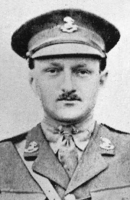
CPL David Wallace Crawford
1887 - 1916
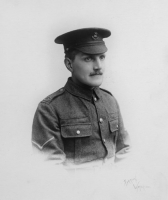
Lce-Corpl John Joseph Nickle
1894 - 1916
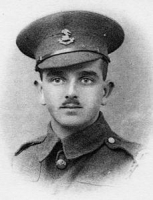
Pte 17911 Morton Neill
1897 - 1916
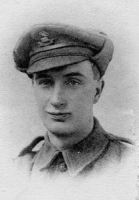
Lieut Edward Stanley Ashcroft
1883 - 1918
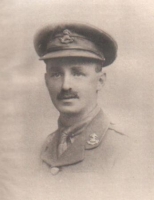
1885 - 1916
CPL David Wallace Crawford
1887 - 1916
Lce-Corpl John Joseph Nickle
1894 - 1916
Pte 17911 Morton Neill
1897 - 1916
Lieut Edward Stanley Ashcroft
1883 - 1918
Pte 15398 William Robert Davies

- Age: 31
- From: Birkenhead, Cheshire
- Regiment: 8th Kings
- Died on Friday 30th August 1918
- Commemorated at: H.a.c. Cemetery, Ecoust-st. Mein
Panel Ref: VI.G.11
William Robert Davies was born in Birkenhead, Cheshire, on 07th August 1887, the son of Humphrey John Davies and his wife Catherine Jane (née Fern). His father was born in Birkenhead, and his mother in Carnarvon. The spelling of her maiden name varies on records (Fearn, Fearne), but she signed her marriage certificate Fern. They married in Liverpool in 1885, and had four children.Humphrey Thomas was born in Liverpool in 1886, after which the family moved across the water to the Birkenhead area, where William was born in 1887. His brother Humphrey Thomas died in 1888, at the age of 2. Another son, Humphrey John, was born in 1889, followed by a daughter, Margaret Grace in 1895.William was baptised in St. Catherine’s, Tranmere, on 09th October 1887, his parents living at 12 Church Terrace, his father’s occupation listed as bookkeeper.In 1891 the family is living at 3 Church Road, Tranmere, with two children. His father is a clerk with the Mersey Docks and Harbour Board, William is 3. Also living with them is a cousin, William D. Hughes, from Carnarvon, 21, a stevedore’s clerk.The 1901 census finds them at 37 Empress Road, Liscard. His father is a bookkeeper for the Dock Board, William is 13. The cousin, William David Hughes, 32, is a clerk in a steamship office.They are still at 37 Empress Road in 1911. His father is 50, a bookkeeper, shipping, and his mother is 48. William is 23, a tailor’s cutter, Humphrey, 21, is a bank clerk, Margaret is 15, no occupation listed. Also his aunt, his father’s married sister Ann Grace Buddle, 56.He enlisted at St George's Hall in Liverpool soon after war broke out, as Private 15398, joining the 17th Battalion of The King’s Liverpool Regiment.
He was billeted at Prescot Watch Factory from 14th September 1914, he trained there and also at Knowsley Hall. On 30th April 1915 the 17th Battalion alongside the other three Pals battalions left Liverpool via Prescot Station for further training at Belton Park, Grantham. They remained here until September 1915 when they reached Larkhill Camp on Salisbury Plain. William shipped to France with his battalion, disembarking at Boulogne on 07th November 1915.At some point William was transferred to the 8th Bn K.L.R. (Liverpool Irish), part of the 171st Brigade, 57th Division. Whether with the 17th or the 8th, William would have seen action at the Somme in 1916, including a costly attack on the village of Guillemont, and at the Third Battle of Ypres (Passchendaele) in 1917.On 8th August 1918 the 100 Days Offensive began with the Battle of Amiens, an attack by 10 Allied divisions supported by tanks and aircraft. On 28th August the 8th K.L.R. marched to vicinity of St. Martin sur Cojeul and bivouacked for a few hours prior to moving up to positions in the Hindenburg Line, in divisional reserve. The Battalion War Diary records -On the 29th orders were received at 10:39 p.m. for the whole battalion to move onto the ridge between Hendicourt and Reincourt to strengthen the line. As no reports from Companies had been received by dawn, a personal reconnaissance of the forward area was made by the commanding officer and other officers. It was found that before this battalion could reach the positions assigned to it, the village of Reincourt was again in the hands of the enemy.At 8:30 a.m. on the 30th, word was received that the enemy was preparing to deliver a counter attack from the direction of Bullecourt. No enemy action followed but at 11 a.m. an enemy operation was observed starting from Reincourt - parties of the enemy moving towards our positions. These were engaged by all troops in the front line and the attack dispersed. Between 1 p.m. and 2 p.m. parties of the enemy were seen moving into Hendecourt, instructions were to hold the existing line. Brigade orders were received at 5 p.m. that the line was to be held on a two battalion front, with the 8th K.L.R. on the right and the 2/7th on the left. Positions were taken up by midnight and the following day, the 31st, posts and patrols were pushed forward and touch gained with the division on the right. That night orders were received to attack the following morning (1.9.1918).Casualties 28th-31st August:1 Officer wounded, 9 O.R. killed, 52 woundedWilliam was killed in action on 30th August 1918 and buried close to where he fell. The CWGC Graves Registration report, giving his date of death as 01.9.1918, shows that his body was exhumed after the war, when graves were concentrated, and reinterred in H.A.C. Cemetery, Ecoust-St. Mein, where his headstone bears the epitaph;
“HE DIED FOR FREEDOM AND HONOUR”.The enemy positions from Doignies to Henin-sur-Cojeul, including the village of Ecoust, were captured on 2 April 1917, by the 4th Australian and 7th Divisions. This cemetery was begun by the 7th Division after the battle, when 27 of the 2nd H.A.C., who fell (with one exception) on the 31st March or the 1st April, were buried in what is now Plot I, Row A. After the German counter-attack near Lagnicourt on the 15th April, twelve Australian gunners were buried in the same row. Rows B, C and part of D were made in August and September 1918, when the ground had been recaptured by the 3rd Division after five months enemy occupation. The 120 graves thus made were the original H.A.C. Cemetery; but after the Armistice graves were added from the battlefields of Bullecourt and Ecoust and from a number of smaller burial grounds. There are now nearly 2,000, 1914-18 war casualties commemorated in this site. Of these, over half are unidentified and special memorials are erected to 17 soldiers from the United Kingdom and 14 from Australia, known or believed to be buried among them. Other special memorials record the names of 34 soldiers from the United Kingdom, buried in other cemeteries, whose graves were destroyed by shell fire. The cemetery covers an area of 5,801 square metres and is enclosed by a low red brick wall.His parents announced his death in the Liverpool Echo on 18th September 1918:
“August 30, killed in action, W. R. Davies, the dearly-beloved elder son of Humphrey J. and C. J. Davies, 13 Trinity Road, Wallasey.”His death was also reported as:
One Of The “Pals”
Mr and Mrs H.J. Davies, of 13, Trinity Road, Wallasey, have received word that their elder son, Private W.R. Davies, K.L.R., was killed in action on the 30th August. He was a regular attendant at the Manor Road Wesleyan Church, and joined the “Pals” on their formation in the early part of the war. (Wallasey News).
William earned his three medals.His father received William’s Army effects, including a War Gratuity of £19. A pension card has not been found.His father died in June 1939, aged 78. On the 1939 Register, taken in September, his mother Catherine, 77, is living with married daughter Margaret and her family at 19 Croome Drive, Hoylake, Cheshire. His mother died in 1956, at the age of 94.William is commemorated on the Trinity Wesleyan Church, Egremont, Memorial and on his parents’ gravestone in Grange Cemetery, West Kirby, Wirral:ALSO WILLIAM ROBERTBELOVED SON OF THE ABOVEKILLED IN FRANCE 30TH AUGUST 1918AGED 31 YEARS
We currently have no further information on William Robert Davies. If you have or know someone who may be able to add to the history of this soldier, please contact us.
89th Brigade On This Day.
110 Years Ago.The Battle of the Transloy Ridges begins. more....
Killed On This Day.
(110 Years this day)Sunday 15th October 1916.
Pte 30280 James Patrick Doyle
25 years old
(110 Years this day)
Sunday 15th October 1916.
Pte 34608 Thomas Foster
19 years old
(110 Years this day)
Sunday 15th October 1916.
Pte 53107 Joseph Green
32 years old
(110 Years this day)
Sunday 15th October 1916.
Pte 11282 Stephen Hynes
21 years old
(110 Years this day)
Sunday 15th October 1916.
Pte 32717 Evan Lee
25 years old
(110 Years this day)
Sunday 15th October 1916.
Pte 34271 James Vickers
21 years old
(108 Years this day)
Tuesday 15th October 1918.
Cpl 15764 Alan Douglas Ellison
30 years old