
1885 - 1916
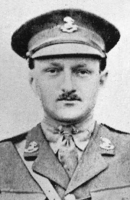
CPL David Wallace Crawford
1887 - 1916
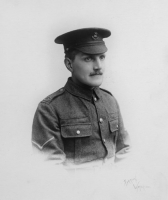
Lce-Corpl John Joseph Nickle
1894 - 1916
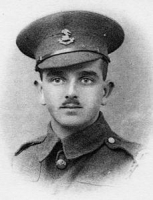
Pte 17911 Morton Neill
1897 - 1916
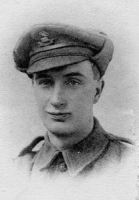
Lieut Edward Stanley Ashcroft
1883 - 1918
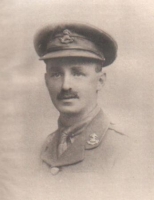
A/Cpl 16098 Neils John Tunnington

- Age: 25
- From: Ripley Yorks
- Regiment: The King's (Liverpool Regiment) 17th Btn
- K.I.A Sunday 30th July 1916
- Commemorated at: Thiepval Memorial
Panel Ref: P&F1D8B &8 C.
Neils John Tunnington was born in 1891 in Ripley, Yorkshire and resided in Liverpool. He was baptised 18th October 1891 and was the son of John Tunnington and his wife Anna Berthina or Bertina (née Anderson). His mother was born in Copenhagen, and became a British subject in 1890, the year she married in Stamford, Northamptonshire.
The 1901 Census shows the family living at Ripley Village, Ripley, Knaresborough. His father, John, is aged 35, born 1866 in Knowsley, Lancashire, his occupation is a domestic gardener, whilst his mother, Anna, is aged 36, born in 1865 with no occupation listed. They have two children Neils John aged 9, and Elizabeth aged 8, born 1893. Both were born in Ripley.
A younger brother, William Frederick, was born in 1907 in Tisbury, Wiltshire.
Neils attended Shaftesbury Grammar School from January 1905 to December 1908. He played for the school football and cricket teams of 1906, 1907 and 1908, captaining the cricket team in 1908. He passed the Cambridge Junior Locals in July 1907 (II Class Honours, distinguished and top boy in England in Physical Geography).
The 1911 Census shows Neils John living with his grandmother and her daughter at 19 Strathcona Road Wavertree Liverpool. Elizabeth Tunnington was a widow aged 71, born 1840 in Knowsley, her daughter whose is shown as a occupation dressmaker was born in Knotty Ash and Neils John was aged 19, born 1892 occupation articled clerk for a chartered accountant.
His parents are living in Ferne Gardens, Berwick St. John, Salisbury, Wiltshire, where his father, now aged 45, is a domestic gardener. His mother is 46, Elizabeth, 18, is a teaching student, and William is 3.
After leaving school he was articled to a Liverpool firm of Chartered Accountants, and passed his final Institute of Chartered Accountants examination shortly before war broke out.
By 1914 his parents have moved to Liverpool, and are found on the electoral roll at 21 Church Road, Wavertree.
He enlisted at St George's Hall in Liverpool on 01st September 1914 joining the 17th Battalion of The King’s Liverpool Regiment as Private 16098, He gave his age as 22 years and 11 days and his occupation as a chartered accountant. He also noted he had been an apprentice to Mr W Glass of 5 Cook Street, Liverpool. He was described as being six feet one inches tall, weighed 146lbs, fresh complexion, hazel eyes, brown hair and gave his religion as Church of England. He gave his father as next of kin at 21 Church Road.
He was billeted at Prescot Watch Factory from 14th September 1914, he trained there and also at Knowsley Hall. On 30th April 1915 the 17th Battalion alongside the other three Pals battalions left Liverpool via Prescot Station for further training at Belton Park, Grantham. They remained here until September 1915 when they reached Larkhill Camp on Salisbury Plain.
His service record shows the following:
07.11.15: Embarked for France with his battalion.
19.5.15: Appointed unpaid Lance Corporal.
30.10.15: Appointed paid Lance Corporal.
15.7.16: Appointed acting Corporal.
He was serving with No 4 Company of the 17th Battalion of The King’s Liverpool Regiment when he was killed in action on the 30th July 1916, aged 25, at the village of Guillemont, France, during the Somme Offensive.
17th Battalion Diary 30th July 1916
The Battalion was in support to 19 & 20 Battalions K.L.R. 2 Coys. behind 19th & 2 Coys. behind 20th. Very thick mist. The attack was pushed home to the objective in places but in the main was held up by machine gun fire from hidden machine guns.
Fighting continued all day swaying backwards and forwards until by 6pm about 300 yards in depth had been gained & consolidated all along our front.
Casualties in the 17th Battalion were 15 Officers and 281 Other Ranks
Further details are reported in more detailed by Everard Wyrall in his book The History of the King’s Regiment (Liverpool) 1914-1919 Volume II 1916-1917
The 17th King’s had advanced (two companies each behind the 19th and 20th Battalions) in small columns. They too suffered heavily from machine-gun fire and were quickly absorbed into the waves that preceded them. They also shared the gains and losses of that terrible day.
When darkness fell on the battlefield the 30th Division held a line from the railway on the eastern side of Trones Wood , southwards and including Arrow Head Copse, to east of Maltz Horn Farm. On this line the division was relieved by the 55th Division during the early hours of the 31st July.
The events of 30th July 1916 were regarded at the time as Liverpool’s blackest day. There follows an extract from The History of the 89th Brigade written by Brigadier General Ferdinand Stanley which gives an indication of the events of the day.
Guillemont
Well the hour to advance came, and of all bad luck in the world it was a thick fog; so thick that you couldn’t see more than about ten yards. It was next to impossible to delay the attack – it was much too big an operation- so forward they had to go. It will give some idea when I say that on one flank we had to go 1,750 yards over big rolling country. Everyone knows what it is like to cross enclosed country which you know really well in a fog and how easy it is to lose your way. Therefore, imagine these rolling hills, with no landmarks and absolutely unknown to anyone. Is it surprising that people lost their way and lost touch with those next to them? As a matter of fact, it was wonderful the way in which many men found their way right to the place we wanted to get to. But as a connected attack it was impossible.
The fog was intense it was practically impossible to keep direction and parties got split up. Owing to the heavy shelling all the Bosches had left their main trenches and were lying out in the open with snipers and machine guns in shell holes, so of course our fellows were the most easy prey.
It is so awfully sad now going about and finding so many splendid fellows gone.
His body was not recovered from the battlefield or was subsequently lost as he has no known grave and is commemorated on the Thiepval Memorial.
The Thiepval Memorial, the Memorial to the Missing of the Somme, bears the names of more than 72,000 officers and men of the United Kingdom and South African forces who died in the Somme sector before 20 March 1918 and have no known grave. Over 90% of those commemorated died between July and November 1916.
On 01st August 1932 the Prince of Wales and the President of France inaugurated the Thiepval Memorial in Picardy. The inscription reads: “Here are recorded the names of officers and men of the British Armies who fell on the Somme battlefields between July 1915 and March 1918 but to whom the fortune of war denied the known and honoured burial given to their comrades in death.”
His death was reported in the Liverpool Daily Post on 22nd August 1916:
“Corporal N. J. Tunnington was educated at Shaftesbury Grammar School, when he secured his colours in both the football and cricket teams, being captain of the latter in his last year. He also made records in the 12 yards hurdle and in the high jump. He served articles with Mr. W. J. Glass of Glass and Edwards, chartered accountants, 5 Cook Street. He passed the final of the Institute of Chartered Accountants in June 1914, when he joined the staff of Langton and MacConnal, 22 Lord Street. He enlisted in the “Pals” at the end of August, 1914, going to France in November last. He was a first-class rifle shot.”
His death was also recorded in the Shaftesbury Grammar School magazine and his character described:
“N.J. Tunnington was an old boy who kept very closely in touch with the School after he left. While here he was good at work and games, straight as a die, and a general favourite with everybody. He was a first class shot, and was “sniper” to his platoon. His commanding officer speaks of him as ‘a fine soldier, trustworthy to the utmost degree, and of great personal charm and character.’ He last visited the School on October, 1915, shortly before going out to France.”
Neils earned his three medals, which his father signed for.
His personal effects were sent in January 1917 to his uncle, Charles Tunnington (who was also an accountant), Unity Buildings, Lord Street, Liverpool, who received his nephew’s Army pay and a War Gratuity of £9-10s.
Probate was also granted to his Uncle Charles:
Neils John of 21 Church Road, Wavertree, Liverpool acting corporal 17th King's Liverpool Regiment died 30 July 1916 in France. Probate 27 September Liverpool to Charles Tunnington incorporated accountant. Effects £128 3s 10d.
Neils played cricket for Wavertree C.C. prior to the war. Wavertree CC in Liverpool lost 6 players who have played for them in the 1914 season; J. Hewitt of the Royal Engineers Tunnelling Company; Robert Talbot Jones, a Sergeant in the King's Liverpool regiment (KLR) 17th Battalion; Thomas Oakes, a rifleman in the KLR; Fred J. Roberts, the Captain in the KLR, 1st Battalion; Herbert Done Roberts, a private in the KLR, 12th Battalion, and Neils John Tunnington, a corporal in the 17th (Pals) Battalion. All were first eleven players except Hewitt and Tunnington.
Neils John is also remembered on the family headstone in Toxteth Cemetery, Liverpool and on the following Memorials:
Hall of Remembrance, Liverpool Town Hall, Panel 38 Right
All Hallows Church, Allerton, Liverpool
Shaftesbury Grammar School now in Shaftesbury School
Liverpool Chartered Accountants Memorial Board.
In 1919 his father provided information on Neils’ living relatives: William, 21, was at home with his parents at 21 Church Road, and his sister Elizabeth, 26, was living in India.
His mother died in 1931 in Liverpool, aged 65, leaving £625-18s-11d to husband John, a Christian Science practitioner. (A Christian Science practitioner is an individual who prays for others according to the teachings of their faith. Treatment, which is non-medical, but is based on the Bible and the Christian Science textbook, addresses physical conditions, as well as relationship or financial difficulties and any other problem.)
Her death was reported in the Liverpool Daily Post on Wednesday 11 March 1931:
TUNNINGTON - March 8, ANNA BERTINA, beloved wife of John Tunnington, 21 Church-road, Wavertree. Interment at Holy Trinity, Wavertree to-day (Wednesday).
His father remarried in 1937 to widow Eleanor Brockhill at All Saints Church, Childwall.
In 1939 on the outbreak of the Second World War, his father, 74, occupation Christian Science Practitioner, is living in Mayville Road, Liverpool, with wife Eleanor, 57, her son Charles Brockhill, 42, and his sister Mary A. Tunnington, 69.
His father died in 1942, aged 76.
His death was reported in the Liverpool Daily Post on Tuesday 31 March 1942:
TUNNINGTON—March 28, suddenly, beloved husband of Eleanor Tunnington, Mayville Road, Liverpool 18. (No flowers) Cremation at Anfield to-morrow, at 12 o’clock.
We currently have no further information on Neil John Tunnington, If you have or know someone who may be able to add to the history of this soldier, please contact us.
Killed On This Day.
(110 Years this day)Thursday 17th August 1916.
Pte 15784 Charles Leslie Bibby
24 years old
(110 Years this day)
Thursday 17th August 1916.
Pte 16517 Samuel Arthur Dicks
24 years old
(109 Years this day)
Friday 17th August 1917.
Pte 49203 Arthur Hargreaves
20 years old
(109 Years this day)
Friday 17th August 1917.
Pte 33155 Francis Douglas Wilkinson
21 years old
(109 Years this day)
Friday 17th August 1917.
Lance Corporal James Bernes
28 years old
(109 Years this day)
Friday 17th August 1917.
Lieutenant Alexander Vyvyan Johnston
32 years old
(108 Years this day)
Saturday 17th August 1918.
Pte Michael O'Rorke (MM)
23 years old