
1885 - 1916
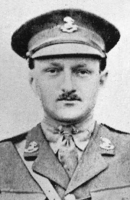
CPL David Wallace Crawford
1887 - 1916
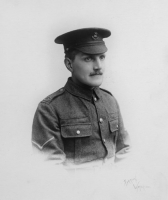
Lce-Corpl John Joseph Nickle
1894 - 1916
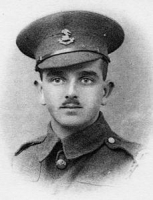
Pte 17911 Morton Neill
1897 - 1916
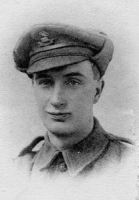
Lieut Edward Stanley Ashcroft
1883 - 1918
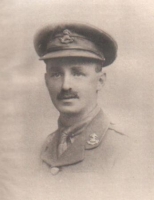
A/Cpl 57879 Joseph Sutherland

- Age: 29
- From: Langholm,Dumfries
- Regiment: The King's (Liverpool Regiment) 18th Btn
- K.I.A Monday 9th April 1917
- Commemorated at: Arras Memorial
Panel Ref: Bay 3
Joseph was born in Charlotte Street, Langholm, Dumfries on Christmas Day 1887, the only son of John Sutherland and his wife Jane (née Inglis), who was known as Jean. His parents were both born in about 1860, his father in Crakaig, 57 miles southwest of John O’Groats, in the historic county of Sutherland, and his mother in Georgetown, a suburb of Dumfries. His parents married in Carlisle, England, in 1884 and had at least six children found on censuses. Joseph had an older sister Betsy, born in 1886, and younger sisters Mary 1890, Martha 1893, Annie D. 1896, and Georgina 1900, all born in Langholm (birthdates approximate).
Langholm is 20 miles north of Carlisle and 8 miles north of the border and is known colloquially as the "Muckle Toon". It grew around the textile industry and in its heyday had 22 woollen mills.
At the time of the 1891 census the family is living at 120 High Street, Langholm, where his father, 31, is a domestic gardener/servant. His mother is 30, Betsy is 5, Joseph 3, and Mary 7 months old.
By 1901 they have moved to Moffat, 30 miles northwest of Langholm, and are found in Harthope Place, with five children. His father is 41, a domestic gardener, his mother is 40, Joseph, 13, Mary, 10, and Martha, 7, are at school. Annie is 4 and Georgina 1 year old.
(Air Chief Marshall Hugh Dowding, who led Fighter Command during the Battle of Britain, was born in Moffat in 1882 and the town erected a monument in his honour, “Leader of The Few”, “Architect of Deliverance”.)
Joseph's father served as the St. Ninian’s School gardener in Moffat for many years. The prep school was founded by Hugh Dowding’s father and Dowding was born and educated there.
Unfortunately, the 1911 Scotland census is not available. Online family trees show another daughter Janet born in Moffat in 1902.
A later newspaper article states that Joseph worked as a joiner in Moffat. SDGW shows that he lived in Dennistoun, Glasgow at the time of enlisting.
He enlisted in Glasgow joining the Army Cyclist Corps as Private 1036. He was subsequently transferred to the 18th Battalion of The King's Liverpool Regiment as Private 57879. He was serving as Acting Corporal when he was killed in action on 09th April 1917. This was the opening day of the Battle of Arras.
Arras 09th April 1917
Details of the circumstances the18th Battalion had to contend with are illustrated below:
The battalion formed the left assaulting battalion of the brigade, the 2nd Wiltshire Regiment being on the right, the 19th Manchester Regiment being in support and 2nd Battalion Yorkshire Regiment furnishing “moppers -up” for the two assaulting battalions. The brigade advance was timed to begin at ---- hour after “Zero”, suited to conform with the movements of 56th Division and other divisions on our left further north (near Arras). This battalion’s objective was the front-line system Lion Lane on the left (exclusive) to Panther Lane on right (exclusive). This sector included the strongpoint known as “The Egg”.
The brigade advanced at prearranged time, i.e., 11.38 a.m, from position of assembly trenches south of Neuville Vitasse to German front line. This necessitated an advance across the open of at least 2,000 yards. This area up to Neuville Vitasse- Henin road was crossed in artillery formation; after this, owing to machine-gun fire and considerable resistance from German posts forward in the sunken roads, it was found necessary to deploy. During the whole movement across the open the advancing columns had been under considerable artillery fire from guns of all calibres. On gaining the position immediately in front of German line it was found that the wire was practically uncut; this wire formed two strong belts in front of German trenches. Two small gaps were eventually discovered and Second-Lieut H.F.Merry gallantly led a bombing party through them, but his three remaining men were killed as they reached the German trenches.
From the moment the battalion was “held up” in front of German wire Capt. R. W. Jones, the senior company commander on the spot, at once began the work of consolidating in front of German wire. The battalion held on in this position for the remainder of the day, until relieved by the 16th Manchester Regiment about 3 a.m. on the 10th of April, all the time under intense machine-gun and rifle fire.
Between 9th-10th April, 1917, the 18th King's lost 2 officers 2nd Lt. F. Ashcroft and 2nd Lt. H.G. Ewing and 59 other ranks killed. 8 other officers were wounded.
Joseph was 29 years old when he was killed, his body was not recovered from the battlefield or was subsequently lost as his name is recorded on the Arras Memorial in France.
The ARRAS MEMORIAL commemorates almost 35,000 servicemen from the United Kingdom, South Africa and New Zealand who died in the Arras sector between the spring of 1916 and 7 August 1918, the eve of the Advance to Victory, and have no known grave. The most conspicuous events of this period were the Arras offensive of April-May 1917, and the German attack in the spring of 1918. Canadian and Australian servicemen killed in these operations are commemorated by memorials at Vimy and Villers-Bretonneux. A separate memorial remembers those killed in the Battle of Cambrai in 1917. Both cemetery and memorial were designed by Sir Edwin Lutyens, with sculpture by Sir William Reid Dick. The memorial was unveiled by Lord Trenchard, Marshal of the Royal Air Force on the 31 July 1932 (originally it had been scheduled for 15 May, but due to the sudden death of French President Doumer, as a mark of respect, the ceremony was postponed until July).
The Dumfries & Galloway Standard reported on 12th May 1917:
“News has been received that Private Joseph Sutherland, King’s Liverpool Regiment, son of Mr. J. Sutherland, gardener, Braehead, Moffat, has been wounded in France.”
But on 6th June 1917 they reported:
“Official intimation has been received by Mr. J. Sutherland, gardener, Braehead, Moffat, that his only son, Private Joseph Sutherland, King’s Liverpool Regiment, who was previously reported wounded, has been killed in action. Private Sutherland was formerly a joiner in the employment of Mr. James Henry, Moffat.”
The Scotsman reported on 14th June 1917:
“Previously reported Wounded now reported Killed - King’s Liverpool Reg’t. Sutherland 57879 (Moffat)”.
His Army effects and a War Gratuity of £8 went to his father John. No pension card has been found, indicating that Joseph had moved away from home and lived independently before enlisting.
His father lived through the Second World War and died in April 1945 at the age of 85. His obituary recorded that “his wife predeceased him nine years ago and he leaves six daughters to mourn his loss. His only son made the supreme sacrifice in the last war.”
Joseph is commemorated on the following memorials -
Moffat Academy, Dumfries and Galloway
Scottish National War Memorial.
We currently have no further information on Joseph Sutherland, If you have or know someone who may be able to add to the history of this soldier, please contact us.
Killed On This Day.
(110 Years this day)Thursday 19th October 1916.
C.S.M 15156 Frederick Preston Beckett
34 years old
(110 Years this day)
Thursday 19th October 1916.
Pte 53077 Walter Bullimore
27 years old
(110 Years this day)
Thursday 19th October 1916.
Pte 33720 William Clarke
21 years old
(110 Years this day)
Thursday 19th October 1916.
Pte 52010 Thomas Francis Cross
24 years old
(110 Years this day)
Thursday 19th October 1916.
L/Cpl 16381 William Leyland
31 years old
(110 Years this day)
Thursday 19th October 1916.
Pte 53196 Stephen Mannion
18 years old
(110 Years this day)
Thursday 19th October 1916.
Pte 52028 George Edward Vernon
23 years old
(109 Years this day)
Friday 19th October 1917.
L/Cpl 49197 Robert William Dugdale
34 years old
(109 Years this day)
Friday 19th October 1917.
Pte 32328 George Arthur Stewart
29 years old
(108 Years this day)
Saturday 19th October 1918.
Pte 27167 John Howarth
21 years old