
1885 - 1916
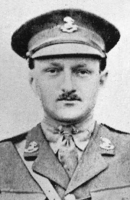
CPL David Wallace Crawford
1887 - 1916
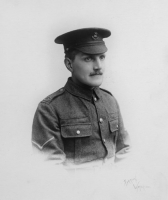
Lce-Corpl John Joseph Nickle
1894 - 1916
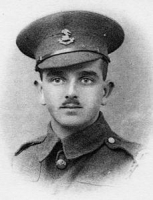
Pte 17911 Morton Neill
1897 - 1916
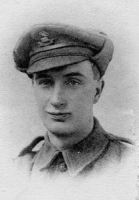
Lieut Edward Stanley Ashcroft
1883 - 1918
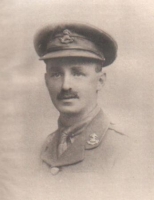
Pte 32718 George Robert Leslie Street
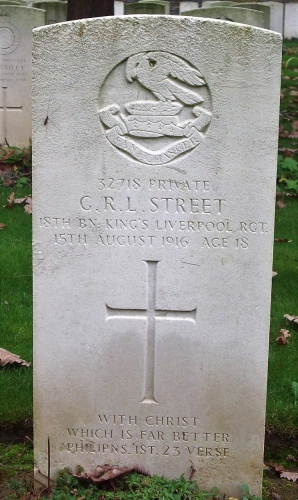
- Age: 18
- From: Liverpool
- Regiment: The King's (Liverpool Regiment) 18th Btn
- K.I.A Tuesday 15th August 1916
- Commemorated at: Gorre Brit Cem, Beuvry
Panel Ref: II.D.55
George Robert Leslie Street was born in 1898 in Liverpool and was the son of George Henry Street and his wife Mary Cicely Ann (nee Evans), of 38, Kelvin Grove, Princes Park, Liverpool. His parents married in 1897 at St Agnes' Church, Toxteth.
On 1901 Census the family are boarding at 49 Great George St, and George Robert is aged 3.
The 1911 Census shows the family living at 100 Mulgrave St Toxteth Park Liverpool.
His father George Henry is aged 42, born 1869 in Liverpool is a corn trade clerk whilst his mother Mary Cicely Ann is aged 42, born 1869 in Liverpool. They have been married for 14 years and have two children. George Robert Leslie aged 13, born 1898 at school and Harry Welling aged 4, born 1907. They have a servant Sarah Gabrielsen aged 23, born 1888 living with them, as well as three boarders David Williams aged 34, born 1877 a clerk in the engineering department of the G.P.O., Catherine Williams aged 24, born 1887 occupation clerk and telegraphist for the G.P.O. and Jennie Williams aged 21, born 1890 a typist in the Corn Trade. They also have a visitor Mary Hughes aged 31, born 1880 at the address during the Census.
Leslie enlisted in Liverpool and was serving in the 18th Battalion, The King’s Liverpool Regiment as Private No 32718 when he was killed in action on the 15th August, 1916 aged 18 during the Somme offensive.
He now rests at Gorre British Cemetery, Beuvry, France, where his headstone bears the epitaph:
“WITH CHRIST WHICH IS FAR BETTER >>>PHILIPNS.1ST. 23 VERSE”
The chateau at Gorre was occupied early in the war by troops serving with the British Expeditionary Force and the Indian Corps, and the cemeteries, located in the south-east corner of original the chateau grounds, were begun in the autumn of 1914. The Indian section of the cemetery was closed in October 1915, shortly before the Indian infantry divisions left France for redeployment to the Middle East.
Many of those who now lie in plots V and VI of the British section of the cemetery were killed during the Battle of Estaires in April 1918. There are now over 930 Commonwealth servicemen of the First World War buried or commemorated here. The cemetery, which was designed by Charles Holden, also contains nine war graves of other nationalities, most of them German.
Gorre Chateau during the First World War
For much of the war, the chateau stood approximately four kilometres behind a section of the British front-line that ran northward along the Aubers Ridge from Givenchy-lès-la-Bassée to Festubert. From the end of the Battle of Festubert in May 1915 until the spring of 1918, this was considered a relatively ‘quiet’ sector. The village of Gorre was occasionally bombarded by German artillery during this period, but the chateau remained intact and its rooms were used as an officer’s mess and headquarters for British units stationed in the area. The grounds of the chateau were also the site of several artillery emplacements, a rifle range and an improvised parade ground and football pitch. Throughout 1916 and ’17 British troops could be seen drilling in the fields next to the chateau or unloading supplies from barges on the La Bassée Canal, which runs just south of the village.
The British section of the cemetery was used by infantry and artillery units stationed in the area until April 1918, when the relative quiet of the sector was shattered by the German Spring Offensive and Gorre became a support post close behind the front line during the Battle of Estaire. This battle was one of two massive German assaults on the Commonwealth positions from Ypres to Festubert that became known as the Battle of the Lys. When the battle erupted on 9 April, the 55th (West Lancashire) Division occupied the front-line trenches running north from Givenchy to Richebourg L’Avoué. The Allied positions to their left, around the village of Le Touret, were held by Portuguese units.
After a preliminary artillery bombardment that began on the evening of 7 April the German Sixth Army, spearheaded by storm troops, attacked in force early on the morning of the 9th. Heavy mist enabled the attackers to get very close to the Allied lines before they were observed and Portuguese units suffered heavy casualties and began to retire. Further south, the various formations of the 55th Division were hard pressed from the outset and the front line trenches around Givenchy were the scene of fierce fighting between British and German troops. The divisional brigade holding the northern section of the British line was forced to pull back, but well-organised counter-attacks and determined defence elsewhere enabled the 55th Division to hold its ground for the rest of the battle and prevent a major German breakthrough. Fighting continued in the trenches east of Gorre until 17 April when the German forces finally broke off the attack. In just over a week of fighting almost 3,000 officers and men of the Division had been killed, wounded, or taken prisoner, but the territory over which they had fought remained in Allied hands.
His death was reported in the Liverpool Echo on 24th August 1916:
STREET - August 15, killed in action, aged 18 years, G. R. Leslie STREET, elder son of Mr and Mrs George H. Street, 38 Kelvin Grove, Liverpool.
Soldiers Effects to his father George Henry and pension to his mother Mary Cicely Ann.
He is also commemorated on the following Memorials:
Liverpool Institute School
Toxteth Tabernacle Baptist Church
We currently have no further information on George Robert Leslie Street, If you have or know someone who may be able to add to the history of this soldier, please contact us.