
1885 - 1916
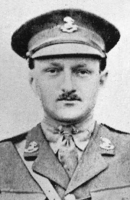
CPL David Wallace Crawford
1887 - 1916
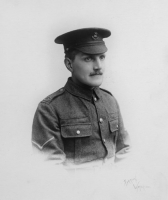
Lce-Corpl John Joseph Nickle
1894 - 1916
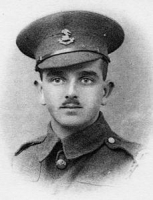
Pte 17911 Morton Neill
1897 - 1916
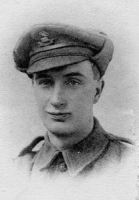
Lieut Edward Stanley Ashcroft
1883 - 1918
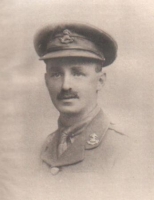
Pte 57957 Edward Frederick Stephan

- Age: 20
- From: Frankfurt
- Regiment: The King's (Liverpool Regiment) 18th Btn
- K.I.A Tuesday 31st July 1917
- Commemorated at: Hagle Dump Cem,
Panel Ref: III.AA.5
Edward was born Edward Ernst Stephan on 03rd March 1897 in Frankfurt, Germany. His parents Karl Ernst Stephan and his wife Sybilla (nee Classen) married in Hesse in 1896. His father was born in Frankfurt and his mother in Cologne. They had eight children, two of whom died young. After Edward was born his parents moved to London, where his younger siblings Marie, Charles, Ernest, Elisabeth and Frederick were born. After moving to England his father adopted the name Charles, and Edward replaced his middle name Ernst with Frederick and was called Teddy by the family.
By 1900 they have moved to England, and in 1901 are living at 12 Pimlico Road, Shoreditch, with Edward, 4, and Marie 1. His father's occupation is stated as an artificial florist, employer.
By 1905 they have moved to Goswell Road, where Edward attended White Lion Street School, Islington.
In 1911 the family, with six children, is living at 335 Goswell Road, Clerkenwell which is also the business premises. His father is an artificial florist ‘using all kinds of material’. Edward is 14, Marie 11, Charles 9, Ernest 5, Elisabeth and Frederick are 4. Later that year his father and all six children became naturalised British Citizens.
His mother died from an accidental fall at home in 1912, at the age of 34. Edward gave evidence at the inquest.
On 24th April 1913, giving the name Edward Stephens, Edward enlisted in Hounslow as Pte 15576 in the 5th Bn Royal Fusiliers (Special Reserve). He gives his age as 18 (in fact he was 16), his occupation as florist, and his next of kin as his father Charles and brother Charles at 335 Goswell Road. He is described as being 5’ 4 and a half inches tall, weighing 111 lbs, with a fresh complexion, blue eyes and fair hair. He gives his religion as Church of England. Edward obviously felt patriotic towards his adopted country; he has tattoos on his forearms; on the right a flower and ‘Rule Britannia’ and a union jack with Jefferies(?) and Buffalo Bill’s head, on the left a gravestone, in loving memory of my dear mother, with a soldier’s head and shoulders.
He was discharged at his own request on 04th February 1914 on payment of £18.
When he was 18 Edward married Harriet Annie Huckle in Islington Parish Church on 5th December 1915. He gives his residence as 27 Florence Street, and his occupation as artificial florist. His father is now deceased. Their daughter Annie Sybilla Lily was born in 1916.
He enlisted in Highbury, London and was formerly 575, Army Cyclist Corps. Following a transfer he was serving in the 18th Battalion, The King’s Liverpool Regiment as Private No 57957 when he was killed in action on the 31st July 1917, aged 20, during the Third Battle of Ypres (Passchendaele).
18th Battalion
On this day, before Zero Hour, the 18th Battalion was part of 21st Brigade and was to form up for the attack from trenches from the area of Sanctuary Wood to Observatory Ridge but it was dark and continually falling rain gave very poor visibility. The departure of the 21st Brigade was delayed by heavy shelling.
The 18th King’s began to move forward in the rear of the 2nd Battalion of the Wiltshire Regiment who had been detailed as the left attacking battalion of the 21st Brigade.
No’s 1 and 3 Companies of the King’s led the way followed by No’s 2 and 4. In Sanctuary Wood there was considerable confusion, as a result No.2 and No.4 Companies became separated from the others, and were moved over to the left flank towards positions known as Surbiton Villas and Clapham Junction in the direction of the 90th Brigade.
No.1 and 3 Companies were soon in action with the enemy, and were for a time, held up against an enemy strong point. They pushed forward with their right on a trench known as Jar Row and their left on the tramway south of Stirling Castle. Advance along Jar Row was held up by the Germans who put up a fierce resistance and the party was forced to withdraw.
Another group of men from No.1 and No.3 Companies led by 2nd Lieutenant Graham were being held up by another strongpoint which was south of Stirling Castle, which was eventually stormed and taken. Not far away from this action, an attempt, by other men of No.1 and No.3 companies, was made to penetrate a broad belt of uncut wire, but this was covered by Machine-guns which killed almost every man attempting to pass through the two gaps that were discovered.
The situation was similar with No.2 and 4 Companies, who had attacked along the wrong axis. Their advance was met with fierce opposition, and once all the experienced officer’s had been killed or wounded, all cohesion was lost, although some men did reach and cross the Menin Road at Clapham Junction.
By that time, the situation had become extremely confused, and the whereabouts of all four companies being unknown to Battalion Headquarters, urgent attempts were made to discover their locations. Eventually by mid- afternoon, it was established that the bulk of the companies, although all mixed together, were dug in the vicinity of Stirling Castle and by mid evening, the Battalion Headquarters moved forward to meet them.
During its time in the line the 18th Battalion lost 7 officers and 76 men killed or died of wounds and 7 officers and 177 men wounded. They were relieved on the 2nd August.
Edward was one of those casualties referred to.
He now lies in Hagle Dump Cemetery, Elveringhe, Belgium.
Elverdinge was behind the Allied front line throughout the war, and Hospital Farm and Ferme-Olivier Cemeteries, both in the commune, were used in the earlier years for Commonwealth burials.
The cemetery, which was begun in April 1918, during the Battles of Lys, was named after a nearby stores dump. It was used by fighting units and field ambulances until the following October and was enlarged after the Armistice when more than 200 graves were brought into Plots III and IV from the battlefields of the Ypres Salient and Brielen Military Cemetery which was close to the South side of Brielen village, contained the graves of 31 French soldiers, 16 from the United Kingdom and four Canadian, and was used from April 1915 to September 1917.
The graves of 26 American soldiers, who fell in July-September 1918, and two French soldiers were removed to other burials grounds.
Hagle Dump Cemetery contains 437 Commonwealth burials of the First World War, 139 of which are unidentified.
The cemetery was designed by Sir Reginald Blomfield.
His pension card shows he was initially reported as Wounded and Missing.
Neither of his German-born parents lived to see their son killed fighting against their homeland.
His widow Harriet, living at 16 Milner Square, Finsbury, London, received a pension of 18/9d a week for herself and child.
She remarried in 1920 and had two sons. Harriet died in 1976, aged 80.
His daughter Annie married in 1939 to William Doyle, and they had a son. William served as Guardsman 2613568 in the 3rd Battalion of the Grenadier Guards in WW2 and was killed on 21st May 1940, aged 28. He now lies in Esquelmes War Cemetery, Belgium.
The British Expeditionary Force was involved in the later stages of the defence of Belgium following the German invasion in May 1940, and suffered many casualties in covering the withdrawal to Dunkirk. Those buried in Esquelmes War Cemetery died in defending the line of the River Scheldt; the Germans attempted to cross the river near Esquelmes during the morning of 21 May, but were replused after heavy fighting. They eventually crossed on 23 May, when the British Expeditionary Force withdrew to the Gort Line. Casualties buried in various places in the neighbourhood were brought to Esquelmes by the Belgian authorities in September 1940. The cemetery contains 233 Commonwealth burials of the Second World War, 32 of them unidentified.
She remarried in 1947 and had a daughter. Having lost her father in WW1 and a husband in WW2, Annie died in 1994 at the age of 77.
We currently have no further information on Edward Frederick Stephan, If you have or know someone who may be able to add to the history of this soldier, please contact us.
Killed On This Day.
(110 Years this day)Thursday 19th October 1916.
C.S.M 15156 Frederick Preston Beckett
34 years old
(110 Years this day)
Thursday 19th October 1916.
Pte 53077 Walter Bullimore
27 years old
(110 Years this day)
Thursday 19th October 1916.
Pte 33720 William Clarke
21 years old
(110 Years this day)
Thursday 19th October 1916.
Pte 52010 Thomas Francis Cross
24 years old
(110 Years this day)
Thursday 19th October 1916.
L/Cpl 16381 William Leyland
31 years old
(110 Years this day)
Thursday 19th October 1916.
Pte 53196 Stephen Mannion
18 years old
(110 Years this day)
Thursday 19th October 1916.
Pte 52028 George Edward Vernon
23 years old
(109 Years this day)
Friday 19th October 1917.
L/Cpl 49197 Robert William Dugdale
34 years old
(109 Years this day)
Friday 19th October 1917.
Pte 32328 George Arthur Stewart
29 years old
(108 Years this day)
Saturday 19th October 1918.
Pte 27167 John Howarth
21 years old