
1885 - 1916
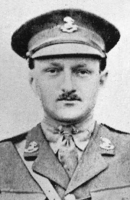
CPL David Wallace Crawford
1887 - 1916
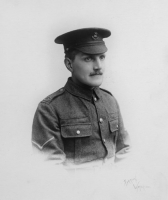
Lce-Corpl John Joseph Nickle
1894 - 1916
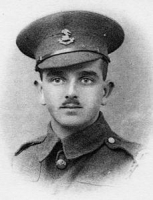
Pte 17911 Morton Neill
1897 - 1916
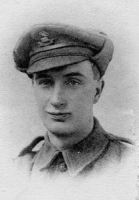
Lieut Edward Stanley Ashcroft
1883 - 1918
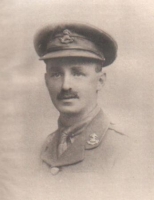
Pte 17466 George Arthur Smith
- Age: 23
- From: Garston, Liverpool
- Regiment: The King's (Liverpool Regiment) 19th Btn
- K.I.A Wednesday 23rd February 1916
- Commemorated at: Carnoy Mil Cem
Panel Ref: G.11
George Arthur Smith was born in 1893 in Garston and was baptised 10th October 1893 also in Garston, Liverpool. George was the second of two children, and the only son, of George Smith, born in Audlem, Cheshire and his wife Louisa, born Bucknell, Staffordshire. His father was a railway engine driver and had lived with Louisa at 39 Vineyard Street, Garston (railway employees’ houses) since 1891. His parents George and Louisa (Nee Cooper) were married 11th April 1887 at Bucknall cum Bagnall, Stafford.
In 1911, George and Louisa, with their son, George Arthur, and their daughter, Ethel, born 1891, a dressmaker, live at the same address. By this time, young George is employed as an order clerk with Messrs Wilson & Bros Bobbin Works in Garston.
On 31st August 1914, George Arthur enlisted at Liverpool, giving his age as 21 years and his occupation as clerk. He was described as being 5' 7" tall, weighed 110 lbs, chest 34", with a fresh complexion, grey eyes and brown hair. He stated that his religion was Wesleyan and gave his next of kin as his father George Smith 39 Vineyard Street.
On 4th October 1915 he transferred from 22nd Reserve Battalion to the 19th Battalion of The King's Liverpool Regiment.
He served in France from 7th November 1915, earning his 3 medals.
He was serving in the 19th Battalion, The King’s Liverpool Regiment as Private No 17466 when he was killed in action on the 23rd February 1916 aged 23 years.
George Arthur Smith now rests at Carnoy Military Cemetery, Grave G 11, France where his headstone bears the epitaph:
"OUR MEMORIES OF HIS BRIEFER DAY MIX WITH LOVE FOR US AND OURS"
The cemetery was begun in August 1915, by the 2nd King's Own Scottish Borderers and the 2nd King's Own Yorkshire Light Infantry, when the village was immediately South of the British front line. It continued in use by troops holding this sector until July 1916, when Field Ambulances came up and a camp was established on the higher ground North of the village. It was closed in March 1917. From March to August 1918, it was in German hands, and German (and a few British) graves were made between the British graves and the entrance, and also in a German Cemetery alongside; but the German graves and the German Cemetery were removed in 1924.
There are now over 850, 1914-18 war casualties commemorated in this site. Of these, nearly 30 are unidentified and special memorials are erected to 17 soldiers and one airman from the United Kingdom, known or believed to be buried among them.
The cemetery covers an area of 4,441 square metres and is enclosed by a red brick wall.
His death was reported in the Runcorn Weekly News on 10th July 1916:
GARSTON AND AIGBURTH CASUALTIES.
PALS KILLED IN ACTION.
NOBLE TRIBUTES FROM OFFICERS.
Two of the casualties reported this week in the Liverpool City Battalions refer to Garston and Aigburth members —Private George Arthur Smith, of Vineyard street, Garston, and Private Leslie Price, of Ashbourne road, Aigburth. Private Smith is the only son of Mr. and Mrs. George Smith, to whom much sympathy is extended in the particularly sad circumstances, for since the outbreak of the war they have lost their only son and their only daughter, the late Mrs. Fred Jackson. Private Smith, who was 22 years of age, was widely known in the Garston district, and highly esteemed at the Garston bobin works and gave promise of a brilliant career, having earned the approval of the principals of the firm for the faithful way in which he discharged his duties, while his popularity with his colleagues and the whole of the staff was evidenced in the affecting scenes witnessed at the works when the sad announcement was made that he had been killed. He enlisted in the early days of the war, August, 1914, in the 3rd " Pals," the 19th Kings (Liverpool), and trained at Knowsley. Illness prevented him going with the Brigade to Grantham, but in October of last year he was a member of one of the final drafts sent to Salisbury to complete the strength of the battalion for foreign service, and he went out to France in the first week in November. During the four months he had been on service he has written home regularly, and two days before his death, which occurred on February 23rd, he wrote a most cheery and comforting letter, indicating that he had just come out from a spell in the trenches. On the 27th ult., his platoon sergeant, B. H. Partridge, wrote as follows:-
In France.
Dear Mr. and Mrs. Smith,— lt is with deep feelings of sympathy in such a trying hour as this appears to you that I pen these few lines on behalf of the boys and myself of the platoon to which your late son, George, was attached. We offer you our condolence and pray that the Almighty God, in His own fatherly way, will comfort your own bleeding hearts. Your son was one of the best soldiers that ever graced the king's uniform. He was perfect in his work, ever ready to carry out to the letter any order given to him, cheery in disposition, bighearted to the extreme, and at all times ready to comfort and relieve a distressed a comrade. Such a personality as his was really an essential among troops, and speaking personally, and as his platoon sergeant for some time past, I feel his loss more than words would describe. A bond of friendship existed between your late son and me, which I shall in memory treasure, and I think I can say that the same existed between him and all comrades of the platoon. His early going to his heavenly home is our momentary loss. I was with him till he died, for he only lived but a few minutes, and it will be a consolation for you to know that he suffered no pain, but passed away with a facial expression of his own self.—Yours in sympathy, B. H. Partridge, sergeant No. 6 platoon.
At the Brooks road Wesleyan Church and schools, and in the various institutions there, the late Private Smith will be fondly remembered for the prominent part he took in many of the movements. He was connected with, and an active worker for, the Wesley Guild and the Young Men's Class; he was a teacher in the Sunday School. and a worker and speaker in the children's service. At the outbreak of war he had just got on the plan of local preachers. His place will be exceedingly difficult to fill. Private Smith was a playing member of the Garston Cricket Club, which has many of its members serving on the various battle fronts and in training in the home camps. Though he had not risen to first team excellence, he gave promise of a meritorious cricket career. He is the first member on the books, when war broke out, to give his life for his country, though Sergt. Tom Jones, of the Scottish, who was killed in the famous charge, was a member prior to his leaving Garston for Hoylake.
George’s death was commemorated in the Liverpool Echo dated 23rd February 1917:
- Roll of Honour –
SMITH – February 23 1916 killed in action aged 22 years Private George Arthur Smith (KLR) the dearly beloved son of Mr & Mrs George Smith 39 Vineyard Street Garston. A loving son so true and kind, he was to us in heart and mind, his toils are past his work is done, he fought the fight the victory won. Some time, some day, in the Better land we shall meet again and understand. (Sadly missed by his sorrowing Mother and Father)
Not gone from memory or from love, but to his heavenly home above. Fondly remembered by his brother in law Fred and little Arthur.
SMITH – In affectionate remembrance of Private George A Smith (KLR) killed in action February 23 1916 (Greater love hath no man than this, that he gave his life with all its promised that other men might live) Gladys
Soldiers Effects to father George: Personal items returned:- disc, pkt of correspondence, bible, cig holder in case, scissors, pack of cards, cig case, cig tin, tube of tablets, belt, safety razor, shaving brush and soap, tin of vigoral(scalp treatment), tin of buttons, wallet with photos, 4 tins of oxo.
Pension to mother Louisa
His medals were sent to his father who was still living in Vineyard Street. George senior submitted a sworn declaration stating that he and Louisa were the only surviving relatives.
His sister Ethel married Fred Jackson at Garston Island Road Methodist church in 1913 and sadly Ethel died 14th November 1914 shortly after she gave birth to a son Arthur on 30th October 1914.
George is commemorated on the following Memorials:
St Michaels Church of England Church, Garston
Banks Road Methodist Garston
Wilson Bros Bobbin Co, Garston.
We currently have no further information on George Arthur Smith, If you have or know someone who may be able to add to the history of this soldier, please contact us.
Killed On This Day.
(110 Years this day)Thursday 19th October 1916.
C.S.M 15156 Frederick Preston Beckett
34 years old
(110 Years this day)
Thursday 19th October 1916.
Pte 53077 Walter Bullimore
27 years old
(110 Years this day)
Thursday 19th October 1916.
Pte 33720 William Clarke
21 years old
(110 Years this day)
Thursday 19th October 1916.
Pte 52010 Thomas Francis Cross
24 years old
(110 Years this day)
Thursday 19th October 1916.
L/Cpl 16381 William Leyland
31 years old
(110 Years this day)
Thursday 19th October 1916.
Pte 53196 Stephen Mannion
18 years old
(110 Years this day)
Thursday 19th October 1916.
Pte 52028 George Edward Vernon
23 years old
(109 Years this day)
Friday 19th October 1917.
L/Cpl 49197 Robert William Dugdale
34 years old
(109 Years this day)
Friday 19th October 1917.
Pte 32328 George Arthur Stewart
29 years old
(108 Years this day)
Saturday 19th October 1918.
Pte 27167 John Howarth
21 years old