
1885 - 1916
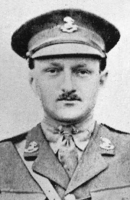
CPL David Wallace Crawford
1887 - 1916
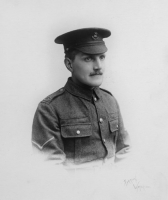
Lce-Corpl John Joseph Nickle
1894 - 1916
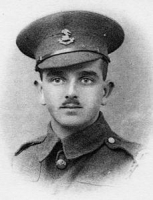
Pte 17911 Morton Neill
1897 - 1916
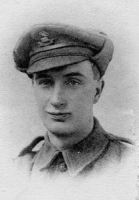
Lieut Edward Stanley Ashcroft
1883 - 1918
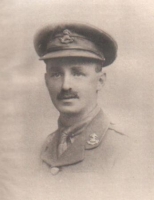
Pte 25356 Edward Pye
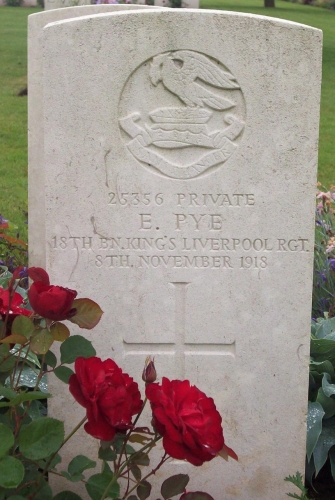
- Age: 34
- From: Burscough
- Regiment: The King's (Liverpool Regiment) 18th Btn
- D.O.W Friday 8th November 1918
- Commemorated at: Le Cateau Mil Cem
Panel Ref: II.B.2
Edward was born in the second quarter of 1884 in Burscough, the son of Nathan Pye and his wife Harriet (nee Cooper) who married in 1876. He was baptised on the 01st June 1884 in Ormskirk.
Edward's father Nathan died in the March quarter of 1888, aged 36. His death was registered in Ormskirk.
On the 1891 Census Edward is aged 7 and a scholar living at 76 Ormskirk Road with his widowed mother Harriet, who is a 34 year old charwoman. There are three siblings listed in the household; John William 11 scholar, Edward 8 scholar, and Enoch 5 scholar, all born Lydiate.
By the time of the 1901 Census, Edward's mother had remarried. She was now Harriet Sephton. The family were living at Back Lane, Lathom. Edward is shown as step son of John Sephton, he is now aged 17 and a colliery jigger boy. His mother is 45 years of age and was born in Lathom, whilst his step father is a coal miner hewer born in Ormskirk in 1846. Edward's three siblings are listed as; Margaret aged 24, Nathan aged 18 and Enoch 14. There are three half sisters Lily 8, Elsie 5 and Reita 4 plus a half brother newborn Moses.
The 1911 Census shows the family living at Back Lane, Westhead, Ormskirk, Lancashire. Edward's stepfather, John Sephton, is aged 62 and employed underground in a colliery, his mother, Harriet, is aged 52 born 1859 with no occupation listed. They have been married for eighteen years. They have four sons living with them, Edward aged 27 and working as a colliery drawer, Enoch aged 24, born 1887 works underground in a colliery, Harry Sephton aged 10, born 1901 and John Sephton aged 7, born 1904 are both at school.
“Private Edward Pye, of Scarth Hill, Ormskirk, who had been reported missing for several days with the forces in Salonika, has returned to the camp rather badly wounded. One of his comrades, Private Stanley Spencer, sends this information in a letter received this week.”
His mother, Harriet, died in the March quarter of 1930, aged 73.
We currently have no further information on Edward Pye, If you have or know someone who may be able to add to the history of this soldier, please contact us.
Killed On This Day.
(110 Years this day)Thursday 19th October 1916.
C.S.M 15156 Frederick Preston Beckett
34 years old
(110 Years this day)
Thursday 19th October 1916.
Pte 53077 Walter Bullimore
27 years old
(110 Years this day)
Thursday 19th October 1916.
Pte 33720 William Clarke
21 years old
(110 Years this day)
Thursday 19th October 1916.
Pte 52010 Thomas Francis Cross
24 years old
(110 Years this day)
Thursday 19th October 1916.
L/Cpl 16381 William Leyland
31 years old
(110 Years this day)
Thursday 19th October 1916.
Pte 53196 Stephen Mannion
18 years old
(110 Years this day)
Thursday 19th October 1916.
Pte 52028 George Edward Vernon
23 years old
(109 Years this day)
Friday 19th October 1917.
L/Cpl 49197 Robert William Dugdale
34 years old
(109 Years this day)
Friday 19th October 1917.
Pte 32328 George Arthur Stewart
29 years old
(108 Years this day)
Saturday 19th October 1918.
Pte 27167 John Howarth
21 years old