
1885 - 1916
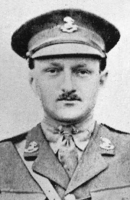
CPL David Wallace Crawford
1887 - 1916
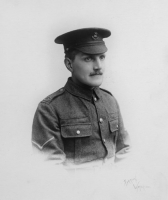
Lce-Corpl John Joseph Nickle
1894 - 1916
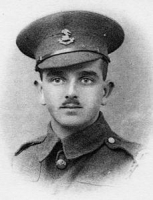
Pte 17911 Morton Neill
1897 - 1916
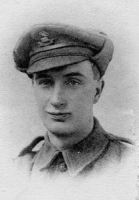
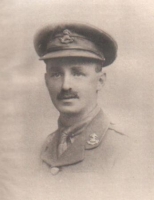
Lieut Edward Stanley Ashcroft
1883 - 1918
L/Cpl 21589 Norman Gordon Pinches
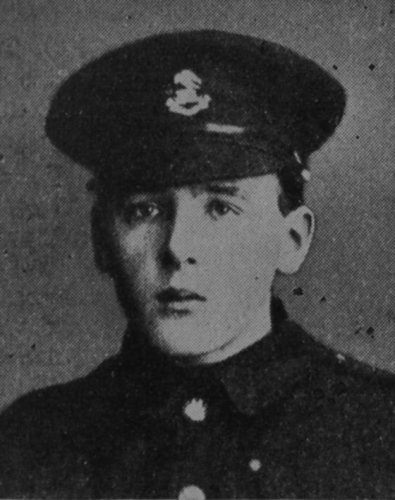
- Age: 22
- From: Chester
- Regiment: The King's (Liverpool Regiment) 19th Btn
- K.I.A Sunday 30th July 1916
- Commemorated at: Guillemont Rd Cem
Panel Ref: IV.L.2
Norman Gordon Pinches was born 10th September 1893 in Chester and baptised 29th October 1893 at St Oswald Church, Chester. He was the son of William George Pinches and his wife Katherine (née Brace). His parents married at St John the Baptist Church, Chester on the 9th January 1889; Gordon was the middle of five children, all sons.
In 1901 the family is living at 76 Gladstone Avenue, Chester. His father is a 42 year old Prudential Insurance agent (he would remain at this company for over 30 years), whilst his mother is 45 years of age. They have five boys declared at home; Cecil is 11, George V. is 10, Norman G. is 7, Ernest N. is 4 and Lionel D. is 1.
Gordon was educated at Chester College School.
The 1911 Census shows the family living at 71 Gladstone Avenue, Chester.
His father, William George, is aged 52, born in Christchurch, Hampshire in 1859 occupation, insurance agent, whilst his mother Katherine is aged 53, born 1858 in Newham, Gloucestershire. They have been married for twenty two years and have five children, who were all born in Chester. All are declared on the Census as at home; Cecil Howard aged 21, born 1890 occupation clothiers clerk, George Vincent Brace aged 20, born 1891 is an elementary assistant school teacher, Norman aged 17, born 1894 is a tobacconists clerk, Ernest Neville aged 14, born 1897 is a grocer’s apprentice and Lionel Douglas aged 11, born 1900 is at school.
Gordon enlisted on the 03rd September 1914 at St George's Hall, Liverpool, joining the 19th Battalion of The King’s Liverpool Regiment as Private 21589 . He gave his age as 20 years and 358 days, and his occupation as a clerk. He was described as being five feet seven and a quarter inches tall, weighed 123lbs, 35” chest, being of fresh complexion with grey eyes and brown hair. He stated his religion as Church of England and his father as next of kin at 66 Lightfoot Street.
Formed on 07th September 1914 the 19th Battalion trained locally at Sefton Park and remained living at home or in rented accommodation until November 1914. They then moved to the hutted accommodation at Lord Derby’s estate at Knowsley Hall. On 30th April 1915 the 19th Battalion alongside the other three Pals battalions left Liverpool via Prescot Station for further training at Belton Park, Grantham. They remained here until September 1915 when they reached Larkhill Camp on Salisbury Plain. He arrived in France on 7th November 1915.
His service record shows:
06.8.15: Appointed unpaid Lance-Corporal.
13.7.16: Appointed paid Lance-Corporal.
19.7.16: Attached to Machine Gun company for course.
27.7.16: Rejoined unit after course.
He was serving in No.4 Company of the 19th Battalion K.L.R. when he was killed in action on the 30th July 1916, aged 22 during an attack on the village of Guillemont, France, during the Somme Offensive. The attack fails and with nearly 500 killed, this is the blackest day of the war for the City of Liverpool.
Graham Maddocks, in his book “Liverpool Pals” (p.123-4), gives details of the events:-
No.3 and No.4 Companies, intermingled because of the fog, soon came across a small German strongpoint on their line of advance, just to the south of Arrowhead Copse, and after a fierce hand-to-hand encounter, they captured it. Two friends from Chester wrote home separately to describe their experiences.
“We were in reserve for a week just behind the line waiting for our third attack. On the night of 29th July we moved up to our position just ahead and on the right of Trones Wood. Here we took up our position in shell holes just behind the 19th, and dug ourselves in for safety, awaiting early morning when the advance was due to take place at 4.45. We were in our stations, myself being with Ossy Eyes [Pte 15985 J.O. Eyes]. Frank [16016 F.A. Pierce] and his mates were quite near, also Sam’s [15938 S.H. Thomas] gun team. We were under constant fire, but not heavy, being mostly gas shells. It would be towards one or two o’clock when poor old Sam met his fate. Our sergeant had just given us our rum ration and gone to the shell hole where the gun team were, and here, unfortunately, one gas shell found its mark, landing in the centre of the gunners. Poor lads, it wiped the whole of them out.
It was a bad start for us, but at 4.45 the boys were up – into the mist they went headed by our section commanders. We ploughed along taking shelter here and there, for they poured one continual rain of lead at us. We were suffering terrible losses but the boys kept on. When we first started the attack, I saw Frank leading his section on. He was on our right, but he disappeared into the mist. We kept pushing forward and were then held up by a German advance trench (a strong point). Here we fought for three-quarters of an hour, when the enemy saw their chance was hopeless they downed arms, hands up, and cried like children for mercy.
We took up our position in what was once the German trench – only three of us out of our section, our NCO, Ossy, and myself. Getting lost, we attached ourselves to the 19th. Here we met another of our Pals who had also got lost. He was one of Frank’s section. Then he told us the terrible news. Frank was leading his section in the charge, and unfortunately was shot through the heart. The sights were bad enough, but the shock of losing Frank and Sam as well! I can’t describe my feelings – it’s heart-breaking. They were two fine fellows, so very popular in the company, and not only were they excellent soldiers, but thorough gentlemen too!” - 15971 Lance Corporal H. Foster (who survived the war).
“Ossy Eyes [15985, J.O. Eyes] and I who managed to come out of this without a scratch are badly cutup over this terrible affair, and I know you, and all those who know those dear comrades of ours will be badly upset about it. Poor old Charlie [21518 C. Heath] met his death while performing a very brave act. Our battalion were in the first wave that went over, and when we advanced so far, we got orders to get down, and Charlie, who noticed a German machine-gun a few yards ahead of him, charged with one or two others to try and capture it, but was fatally hit by a bomb. Frank Pierce [16016 F.A. Pierce] was sniped through the head and Sam Thomas [15938 S.H. Thomas] was knocked out by a gas shell while going up the trenches the night previous to the attack. Gordon Pinches [21589 N.G. Pinches] was killed with a bullet, but where it caught him exactly, I could not say.” – 21646 Private C.J. Wright (recipient of the Military Medal, himself hit and killed by an aerial bomb on 8th October 1918, just a month before the Armistice).
The Lieut. and Adjutant wrote:
"I am not in the company now, nor was Gordon in my platoon, but I knew him better and I liked him more than he was ever aware of, and the reason was: that he always bore the stamp of a boy from a loving home, and of a boy who loved his home. In the tough army life, where most of us are amateurs, many become roughened - he did not; without putting on the rough coating of war, he was able to be a reliable N.C.O. in a platoon- our No14- where the N.C.O.'s under Sergt. Griffiths had, during the last two or three months, worked wonders.
I saw Gordon to speak to on Saturday the 29th. He had just got back from his Lewis Gun course. I wish for your sake he had not. He went with his battalion that evening and fell in the heavy fighting of the early morning of Sunday the 30th. It was ten days after that definite news came of him, and I am afraid there is no room for doubt. I have a map reference which tells me the exact spot where he has been buried; it is a little to the east of the south corner of ____ Wood, and later, when I may be allowed to say more of the recent events, I could possibly show you by map the exact spot.
“If there is anything I can do to help you at any time, please count on me. We out here are kept busy; the greater sorrow is yours at home. You mothers have been wonderful - mine has six sons - five of us on active service - and none of us ever meant to be soldiers. I don’t know what Gordon was, save he was a son to be proud of in death as in life. With sincere sympathy, Will Ashcroft, Lieut. and Adjt., King’s Liverpool Regiment.”
(Lt. William Ashcroft had served in the same unit as Gordon since the beginning, as a ranker. He was later severely wounded in April 1917 at the Battle of Arras, on the same day his brother 2nd Lt. Frederic Ashcroft, 18th Bn., was killed. William was invalided back to England and returned to his battalion at his request in January 1918. Lt. Will Ashcroft was killed in action on 22nd March 1918 during the German Spring Offensive. Another brother, Lt. Edward Ashcroft, 17th K.L.R., was wounded in action and captured on 29th April 1918, and died of his wounds on 12th May 1918.)
Gordon was buried close to where he fell, with a number of other Pals from his unit, and their grave marked with a cross. After the war when graves were concentrated, his body was removed and reinterred in Guillemont Road Cemetery, France. His headstone bears the epitaph:
"GREATLY LOVED AND SADLY MISSED"
Guillemont was an important point in the German defences at the beginning of the Battle of the Somme in July 1916. It was taken by the 2nd Royal Scots Fusiliers on 30 July but the battalion was obliged to fall back, and it was again entered for a short time by the 55th (West Lancashire) Division on 8 August. On 18 August, the village was reached by the 2nd Division, and on 3 September (in the Battle of Guillemont) it was captured and cleared by the 20th (Light) and part of the 16th (Irish) Divisions. It was lost in March 1918 during the German advance, but retaken on 29 August by the 18th and 38th (Welsh) Divisions.
The cemetery was begun by fighting units (mainly of the Guards Division) and field ambulances after the Battle of Guillemont, and was closed in March 1917, when it contained 121 burials. It was greatly increased after the Armistice when graves (almost all of July-September 1916) were brought in from the battlefields immediately surrounding the village and certain smaller cemeteries, including:-
HARDECOURT FRENCH MILITARY CEMETERY. The village of Hardecourt-au-Bois was captured by French troops on the 8th July 1916, and again by the 58th (London) and 12th (Eastern) Divisions on 28 August 1918. Five British Artillerymen were buried by their unit in the French Military Cemetery, in the middle of the village, in September 1916; and in 1918 the 12th Division buried in the same cemetery 14 men of the 9th Royal Fusiliers and two of the 7th Royal Sussex.
Guillemont Road Cemetery now contains 2,263 Commonwealth burials and commemorations of the First World War. 1,523 of the burials are unidentified but there are special memorials to eight casualties known or believed to be buried among them.
The cemetery was designed by Sir Herbert Baker.
His death was reported in the Cheshire Observer on 26th August 1916 under the heading:
"Chester Pal Killed“:
“We regret to announce that official news has now been received by his parents that Lance-Corporal Gordon Pinches of the Liverpool “Pals” has been killed in action. The first information received by his parents was contained in a letter written home by Pte. J. Edwards, who stated: ‘Gordon Pinches has gone under I believe, but he died fighting hard, keeping the name of the regiment we have already made.’ Later official intimation was received from the Records Office that the gallant soldier was killed in action on July 30th.
"Norman Gordon Pinches was the third son of Mr. W. G. Pinches, insurance agent, of 66, Lightfoot Street, Hoole, and grandson of the late Police Constable T. Pinches, formerly sergeant in the Royal Field Artillery. The family are exceedingly well known in Chester and district, and for several generations have been freemen of the ancient city. The deceased was educated at the Chester College School and was a member of St. Oswald’s Church choir. On leaving school he entered the office of Messrs. T. Nicholls and Co., tobacco manufacturers, and was in their employment at the time of enlisting in the second month of the War. Deceased was connected with the Sealand Road United football team and was a playing member of St. John’s Cricket Club. The following letter has been received by Mr. and Mrs. Pinches from the adjutant of the regiment: “I am not in the company now, nor was Gordon in my platoon, but I knew him better and liked him more than he was aware of, and the reason was that he always bore the stamp of a boy from a loving home, of a boy who loved his home; in tough Army life where most of us are amateurs, many become roughened; he was not. Without putting on the rough coating of war he was able to be a reliable, efficient N.C O., in a platoon where the N.C.O.’s under Sergeant Griffiths had during the two or three months worked wonders....... I saw Gordon to speak to on Saturday, the 29th. He had just got back from his Lewis gun course, I wish for he had not. He went with his battalion on that evening and fell in the heavy fighting of the early morning of Sunday the 30th. It was ten days after that definite news came of him, and I am afraid there is no room for doubt. I have a map reference which tells me the exact spot where he was buried; it is a little to the east of the south corner of [Trones] Wood, and later, when I may be allowed to say more of the recent events, I could possibly shew you, by map, the exact spot. If there is anything I can do to help you at any time please count on me. We out here are kept busy; the greater sorrow is yours at home. You mothers have been wonderful—mine has six sons—five of us on active service—and none of us ever meant to be soldiers. I don’t know what Gordon was, save he was a son to be proud of in death as in life. With sincere sympathy (Signed) Will Ashcroft, Lieut. and Adjt., King’s Liverpool Regiment.” - Much sympathy will be extended to the bereaved family in their hour of trial.
Mr. G. H. Grant, of Messrs. Nicholls, sent the following letter to Gordon’s father:
“Dear Mr. Pinches,
It was with sincere regret that I heard the report concerning the death of Gordon a week on Friday. I have hoped and trusted that some news would eventually filter through, but after reading the letter of the adjutant I am sorry to be compelled to think that the report is true. I can only say that while I have lost many friends in this crisis I have not experienced such a blow. Gordon came to the office as a boy, and his amiable disposition and his ever ready desire and willingness to assist all and everyone with whom he had to work or whom he met, endeared him to his colleagues, and even more than that his association made some of us take that interest in him and his after welfare that is not often experienced outside the home circle. I trust that his mother and yourself will take heart and bear up bravely. You have the consolation of knowing that he died a fearless and noble hero, a martyr for liberty and justice, and his self-sacrifice, and yours, will, God willing, not have been in vain. Knowing Gordon as I did (and knowing him much better) you will, I think, agree with me, that he would not have desired any conclusion to his career than one in which he had the satisfaction of knowing that his duty had been done and he had earned the life-long respect of his fellow men. . .
With my sincere sympathy,
Geo. H. Grant.”
His death was confirmed in the Liverpool Daily Post on Saturday 23 September 1916:
Killed.
King’s(Liverpools) - Pinches, 21589, Lance-Corpl. N. G. (Chester);
He earned his three medals, which his mother signed for. His Army pay and a War Gratuity of £8-10s went to his father. His mother was awarded a pension of 3/- a week from February 1917.
In the Liverpool Echo, on 30th July 1917 under the heading ‘Lost At The Battle of Guillemont’ friends paid tribute to their fallen "chums":
Pierce, Heath, Pinches, and Thomas – To the memory of Frank Pierce, Charles Heath, Gordon Pinches, and Sam Thomas, K.L.R. (Pals), killed in action on Sunday, July 30, 1916, at Guillemont. (Ever dear to all their Chums.)”
Gordon is also remembered on the Chester Town Hall War Memorial.
His father died aged 61 in 1920.
Chester Chronicle - Saturday 03 April 1920
The funeral of Mr Wm. G. Pinches of 6 Lightfoot-street, Hoole, a district agent of the Prudential Co. for about thirty years took place on Friday. The service was held at St Oswald’s Church where Rev. H. H. officiated. The interment was at New Cemetery.
When his mother died in 1938 the newspaper reported that she was “survived by four sons. Another son was killed in action at Trones Wood (sic) while serving with the King’s Liverpool (Pals) Regiment during the Great War.”
Chester Chronicle - Saturday 24 September 1938
DEATH OF MRS PINCHES.
We regret to record the death of Mrs Pinches, widow of Mr William G. Pinches, 60 Clare-avenue, Hoole, which occurred on Monday in her 84th year. Mrs Pinches was formerly a member of the Trinity Ward branch of the Chester Women’s Unionist Association and until recently a regular worshipper at St Oswald’s Church. Her husband, who died in 1920, was well-known in the city as an insurance agent. Mrs Pinches is survived by three sons, Mr Cecil Pinches a departmental manager at Bradley’s Ltd outfitters, City-road, Mr Neville Pinches Leicester, Mr Lionel Pinches, Plymouth. Another son, Mr Gordon Pinches, was killed in action at Trones Wood while serving with the King's Liverpool Pals’ Regiment in France during the war. The funeral took place at Chester Cemetery on Thursday, the Rev. A. T. Wise (All Saints’ Church Hoole) officiating.
George, a teacher in Ellesmere Port, served as a Gunner in the Royal Garrison Artillery.
Youngest brother Lionel joined up in November 1917 and later served in the RAF.
Ernest joined the Cheshire Regiment (Territorials) before the war (he turned 17 on 01/09/1913) and served in France with this unit (earning the Territorial Force War Medal). He was later transferred to the Welsh Regiment and was discharged in June 1917 (neurasthenia) with a Silver War Badge and a 20% disability pension.
We currently have no further information on Norman Gordon Pinches, If you have or know someone who may be able to add to the history of this soldier, please contact us.
89th Brigade On This Day.
110 Years Ago.The Battle of the Transloy Ridges begins. more....
Killed On This Day.
(110 Years this day)Monday 16th October 1916.
Pte 22929 Edward Bird
19 years old
(110 Years this day)
Monday 16th October 1916.
Pte 16795 William Frederick Collister
23 years old
(109 Years this day)
Tuesday 16th October 1917.
L/Cpl 49038 Ernest Yardley
31 years old
(108 Years this day)
Wednesday 16th October 1918.
Pte 85187 James Hoy
31 years old
(107 Years this day)
Thursday 16th October 1919.
Pte 36438 Hugh Morris
23 years old