
1885 - 1916
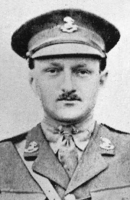
CPL David Wallace Crawford
1887 - 1916
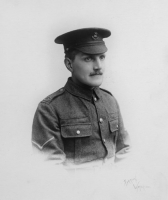
Lce-Corpl John Joseph Nickle
1894 - 1916
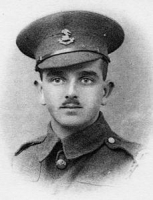
Pte 17911 Morton Neill
1897 - 1916
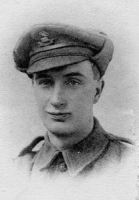
Lieut Edward Stanley Ashcroft
1883 - 1918
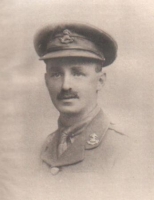
Cpl 17254 Albert James Moore

- Age: 24
- From: Liverpool
- Regiment: The King's (Liverpool Regiment) 18th Btn
- K.I.A Saturday 8th December 1917
- Commemorated at: Bedford House Cem Encl 4
Panel Ref: II.F.6
Albert James Moore was born on the 08th September 1893 the son of Albert Richard Moore and his wife Ann Jane (née Cannell) who were married on the 04th August 1890 at Holy Trinity Church, Walton Breck Road, Liverpool. Albert senior, was a 25 year old clerk of 12 Poplar Street, Everton, his father, Henry, was a traveller, whilst Ann, was aged 21 of 20 Poplar Street, her father, James, was a mason. Albert was baptised on the 19th November 1893 at St Benedict’s Church, Everton.
The 1901 Census finds the family living at 26 Pickering Street, Everton. Albert J. is 7 years of age and lives with his parents. His father Albert R. is a 36 year old commercial clerk, born in Birmingham, whilst his mother Ann J. is a 32 year old bookkeeper and cashier (and open air preacher) born in Liverpool.
Albert's mother, Anne Jane, died in 1903 and his father Albert Richard re-married to Harriet Mary Rolling on the 30th July 1904 at Christ Church, Kensington, Liverpool. Widower, Albert, was a 39 year old book keeper of 44 Castor Street, whilst Harriet, was aged 35, of 29 Seldon Street, her father, James, was deceased.
The 1911 Census finds the family living at 89 Tweed Street, Liverpool. His father Albert Richard and wife Harriet Mary have been married for 6 years. Albert James is a 17 year old accountants clerk and has three step siblings, Blanche aged 8, Francis Rolling aged 5 and Clara Winifred is aged 3.
Albert James enlisted at St George's Hall on 31st August 1914 joining the 18th Battalion of The King's Liverpool Regiment as Private 17254, giving his age as 20 years and 330 days and his occupation as a Clerk. He was described as being 5' 5 and a half inches tall and weighed 123lbs, with a 34” chest, a dark complexion, grey eyes and brown hair. He gave his next of kin as his father of 88 Tweed Street, but no religion was declared.
From the 23rd September 1914 he was billeted at Hooton Park Race Course and remained there until 03rd December 1914 when they moved into the hutted accommodation at Lord Derby’s estate at Knowsley Hall. On 30th April 1915 the 18th Battalion alongside the other three Pals battalions left Liverpool via Prescot Station for further training at Belton Park, Grantham. They remained here until September 1915 when they reached Larkhill Camp on Salisbury Plain. He arrived in France on 7th November 1915.
His service record shows the following;
07.11.15 - Embarked for France.
31.08.16 - Received a Good Conduct badge for two years service, and granted Class II Proficiency Pay.
07-20.02.17 - On leave to U.K.
10.04.17 - Appointed unpaid Lance Corporal.
20-21.04.17 - In U.K.
21.04.17 - Appointed paid Lance Corporal.
09.08.17 - To Divn. Signal School.
28.09.17 - Resumed duty.
21.10.17 - Promoted to Corporal.
08.12.17 - Killed in Action.
He received a Good Conduct badge for two years service on 31st August 1916 and was promoted to the rank of Lance Corporal in April 1917 with a further promotion to Corporal on 21st October 1917. He was attached to the 5th Army signal school between 09th August - 28th September 1917.
Albert James was killed in action on 08th December 1917, aged 24.
He now rests at Bedford House Cemetery in Belgium where his headstone bears the epitaph:
"WITH CHRIST WHICH IS FAR BETTER".
Zillebeke village and most of the commune were in the hands of Commonwealth forces for the greater part of the First World War, but the number of cemeteries in the neighbourhood bears witness to the fierce fighting in the vicinity from 1914 to 1918.
Bedford House, sometimes known as Woodcote House, were the names given by the Army to the Chateau Rosendal, a country house in a small wooded park with moats. Although it never fell into German hands, the house and the trees were gradually destroyed by shell fire. It was used by field ambulances and as the headquarters of brigades and other fighting units, and charcoal pits were dug there from October 1917.
In time, the property became largely covered by small cemeteries; five enclosures existed at the date of the Armistice, but the graves from No.1 were then removed to White House Cemetery, St. Jean, and those from No.5 to Aeroplane Cemetery, Ypres.
ENCLOSURE No.2 was begun in December 1915, and used until October 1918. After the Armistice, 437 graves were added, all but four of which came from the Ecole de Bienfaisance and Asylum British Cemeteries, both at Ypres.
ENCLOSURE No.3, the smallest, was used from February 1915 to December 1916; the burials made in August-October 1915 were largely carried out by the 17th Division.
ENCLOSURE No.4, the largest, was used from June 1916 to February 1918, largely by the 47th (London) Division, and after the Armistice it was enlarged when 3,324 graves were brought in from other burial grounds and from the battlefields of the Ypres Salient. Almost two-thirds of the graves are unidentified.
ENCLOSURE No.6 was made in the 1930s from the graves that were continuing to be found on the battlefield of the Ypres Salient. This enclosure also contains Second World War burials, all of them soldiers of the British Expeditionary Force, who died in the defence of the Ypres-Comines canal and railway at the end of May 1940. The canal lies on high ground on the west side of the cemetery.
Commonwealth casualties buried in the following smaller cemeteries were either concentrated into Bedford House Cemetery after the war or if lost, are now commemorated in Bedford House Cemetery:-
ASYLUM BRITISH CEMETERY, YPRES, was established in the grounds of a psychiatric hospital (the Hospice du Sacre Coeur) a little West of the railway station, between the Poperinghe road and the railway. It was used by Field Ambulances and fighting units from February 1915, to November 1917, and it contained the graves of 265 soldiers from the United Kingdom, nine from Canada, seven from Australia and two of the British West Indies Regiment.
BOESINGHE FRENCH CEMETERY No.2, a little South of Bard Cottage, contained the grave of one soldier from Canada.
DROOGENBROODHOEK GERMAN CEMETERY, MOORSLEDE, contained the graves of two United Kingdom soldiers who fell in October 1914.
ECOLE DE BIENFAISANCE CEMETERY, YPRES, was on the North side of the Poperinghe road, immediately West of the railway, in the grounds of a school (later rebuilt). It was used by Field Ambulances in 1915-1917, and it contained the graves of 133 soldiers from the United Kingdom, three from Canada, three from Australia and one of the British West Indies Regiment.
KERKHOVE CHURCHYARD contained the graves of five United Kingdom soldiers, who fell in October and November 1918, and seven German.
POELCAPELLE GERMAN CEMETERY No.4, between Langemarck and the Poelcapelle-St. Julien road, contained the graves of 52 soldiers from the United Kingdom who fell in 1914 and 1916.
ZONNEBEKE BRITISH CEMETERIES No.1 and No.3 were on the South and North sides respectively of the Broodseinde-Zonnebeke road. Zonnebeke was occupied by the Germans on the 22 October 1914, retaken by the French on the following day, and evacuated at the beginning of May 1915; retaken by British troops on the 26 September 1917; evacuated again in April 1918; and retaken by Belgian troops on the 28th September, 1918. Four British Cemeteries were made by the Germans on the Broodseinde-Zonnebeke road; No.1 contained the graves of 31 United Kingdom soldiers (mainly 2nd East Surrey) who fell in April 1915, and No.3 those of 69 who fell in April, and May 1915.
In all, 5,139 Commonwealth servicemen of the First World War are buried or commemorated in the enclosures of Bedford House Cemetery. 3,011 of the burials are unidentified but special memorials commemorate a number of casualties known or believed to be buried among them. Other special memorials name casualties buried in other cemeteries whose graves could not be found on concentration. Second World War burials number 69 (3 of which are unidentified). There are 2 Germans buried here.
The cemetery was designed by W.C. Von Berg.
Albert remembered one of his Pals killed on the first day of the Somme. Similar notices were placed from 89 Tweed Street and 80 Hannan Road.
The death of one of his Pals was reported in the Liverpool Echo on Monday 02nd July 1917;
WILSON - In affectionate remembrance of John Wilson, K.L.R. (2nd Pals), killed in action July 1, 1916. (Duty nobly done) - From his devoted Chum, Albert J. Moore (somewhere in Belgium).
Albert James' death was reported in the Liverpool Echo 17th December 1917;
DEATHS – Killed in Action – MOORE – In affectionate memory of Corporal A. J. Moore (Signaller) KLR Dearly beloved son of A. R. and stepson of Harriet M Moore of 89 Tweed Street. Not gone from our memory, not gone from our love, But to our dear Father’s home above.
MOORE In affectionate memory of Corporal A.J. Moore (Signaller) killed instantly while performing his duty on Dec 8. My Hero “Sans Changer” His devoted May and all at 80 Hannan Road. Not lost but gone before.
He was also remembered on the 09th December 1918 in the Liverpool Echo - In Memoriam;
MOORE – In loving memory of our dear elder son Corporal Albert James Moore (Signaller 18th KLR) Killed in action Dec 8th 1917. With deep sorrow he is missed by Father, Mother, Blanch, Frank and Freda. Always dutiful, always strong and patient while showing kindness, sympathy and a quiet smile.
MOORE - In affectionate remembrance of Corporal Albert James Moore 18th KLR Killed in Action Dec 8 1917. (Sans Changer). Sadly missed by his devoted May and all at 80 Hannan Road. Lips need not speak where the heart mourns sincerely, Thoughts often dwell where they seldom are seen.
Soldiers Effects and Pension to father Albert R. His personal belongings which were sent to his father in April 1918 were described as follows: cigarette case, pocket case, photographs, 9 carat ring "Mizpah", wallet, letters, watch and strap, cap badge, disc and chain, cert. from army signal school.
The ring referred to inscribed with the word "Mizpah" were popular in England in Victorian times and evidently a the turn of the 20th Century. Mizpah means "watchtower" in Hebrew and is mentioned in the biblical story of Jacob and Laban.
“Sans Changer” used by "his devoted May" is the motto displayed on the Pals cap badge. It comes directly from the family crest of Lord Derby.
He earned his three medals.
His Soldiers Effects, Army Pay £9 2s 2d, £14 War Gratuity and a Pension of 6/- pw to father Albert R.
On the 1921 Census at Tweed Street his father, Albert, is aged 56, and is an accountants clerk, his mother, Harriet, is aged 51, with Blanche aged 18, Francis Rolling aged 15 and Clara Winifred aged 13.
His father died, aged 64, in 1929.
Probate declared as follows;
MOORE Albert Richard of 89 Tweed-street Liverpool died 10 January 1929 Probate Liverpool 18 February to Harriet Mary Moore widow. Effects £441 1s. 6d.
His death was reported in the Liverpool Echo on Wednesday 10th January 1934;
MOORE - In loving memory of my dear husband, ALBERT, called to his heavenly home, January 10, 1929. - Ever missed at 89, Tweed-street. (To be for ever with the Lord.)
His step-mother, died also aged 64, in 1934.
Her death was reported in the Liverpool Echo on Tuesday 06th February 1934;
MOORE - February 4, suddenly, at 89,Tweed-street, aged 64 years. HARRIET MARY, widow of Albert Richard Moore. Service at St. Benedict's, Everton, to-morrow (Wednesday), at 10.45 a.m.; interment at Anfield Cemetery at 11.30 a.m. (With Christ, which is far better.)
Grateful thanks are extended to Ancestry member Lorna Moore for her kind permission for use of the photograph of Alfred.
We currently have no further information on Albert James Moore, If you have or know someone who may be able to add to the history of this soldier, please contact us.
89th Brigade On This Day.
110 Years Ago.The Battle of the Transloy Ridges begins. more....
Killed On This Day.
(110 Years this day)Monday 16th October 1916.
Pte 22929 Edward Bird
19 years old
(110 Years this day)
Monday 16th October 1916.
Pte 16795 William Frederick Collister
23 years old
(109 Years this day)
Tuesday 16th October 1917.
L/Cpl 49038 Ernest Yardley
31 years old
(108 Years this day)
Wednesday 16th October 1918.
Pte 85187 James Hoy
31 years old
(107 Years this day)
Thursday 16th October 1919.
Pte 36438 Hugh Morris
23 years old