
1885 - 1916
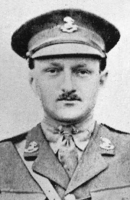
CPL David Wallace Crawford
1887 - 1916
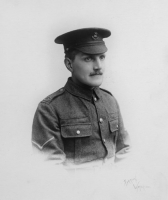
Lce-Corpl John Joseph Nickle
1894 - 1916
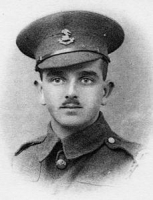
Pte 17911 Morton Neill
1897 - 1916
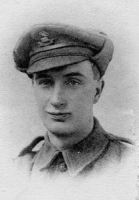
Lieut Edward Stanley Ashcroft
1883 - 1918
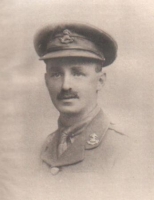
Pte 57513 William McIntosh
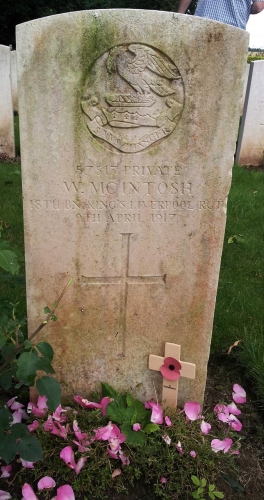
- Age: 32
- From: Dundee
- Regiment: The King's (Liverpool Regiment) 18th Btn
- K.I.A Monday 9th April 1917
- Commemorated at: Bucquoy Rd Cem Ficheux
Panel Ref: VI.L.10
He enlisted in Dundee and originally served as Private 832 in the Army Cyclist Corps.
Arras 09th April 1917
Details of the circumstances the 18th Battalion had to contend with are illustrated below:
The battalion formed the left assaulting battalion of the brigade, the 2nd Wiltshire Regiment being on the right, the 19th Manchester Regiment being in support and 2nd Battalion Yorkshire Regiment furnishing “moppers -up” for the two assaulting battalions. The brigade advance was timed to begin at ---- hour after “Zero”, suited to conform with the movements of 56th Division and other divisions on our left further north (near Arras). This battalion’s objective was the front-line system Lion Lane on the left (exclusive) to Panther Lane on right (exclusive). This sector included the strongpoint known as “The Egg”.
The brigade advanced at prearranged time, i.e., 11.38 a.m, from position of assembly trenches south of Neuville Vitasse to German front line. This necessitated an advance across the open of at least 2,000 yards. This area up to Neuville Vitasse- Henin road was crossed in artillery formation; after this, owing to machine-gun fire and considerable resistance from German posts forward in the sunken roads, it was found necessary to deploy. During the whole movement across the open the advancing columns had been under considerable artillery fire from guns of all calibres. On gaining the position immediately in front of German line it was found that the wire was practically uncut; this wire formed two strong belts in front of German trenches. Two small gaps were eventually discovered and Second-Lieut H.F.Merry gallantly led a bombing party through them, but his three remaining men were killed as they reached the German trenches.
From the moment the battalion was “held up” in front of German wire Capt. R. W. Jones, the senior company commander on the spot, at once began the work of consolidating in front of German wire. The battalion held on in this position for the remainder of the day, until relieved by the 16th Manchester Regiment about 3 a.m. on the 10th of April, all the time under intense machine-gun and rifle fire.
Between 9th-10th April, 1917, the 18th King's lost 2 officers 2nd Lt. F. Ashcroft and 2nd Lt. H.G. Ewing and 59 other ranks killed. 8 other officers were wounded.
In November 1916, the village of Ficheux was behind the German front line, but by April 1917, the German withdrawal had taken the line considerably east of the village and in April and May, the VII Corps Main Dressing Station was posted near for the Battles of Arras. It was followed by the 20th and 43rd Casualty Clearing Stations, which remained at Boisleux-au-Mont until March 1918, and continued to use the Bucquoy Road Cemetery begun by the field ambulances. From early April to early August 1918 the cemetery was not used but in September and October, the 22nd, 30th and 33rd Casualty Clearing Stations came to Boisleux-au-Mont and extended it. By the date of the Armistice, it contained 1,166 burials but was greatly increased when graves were brought in from the surrounding battlefields and from small cemeteries in the neighbourhood.
The cemetery now contains 1,901 burials and commemorations of the First World War. 168 of the burials are unidentified but there are special memorials to 23 casualties known or believed to be buried among them. Other special memorials commemorate 21 casualties buried by their comrades in Henin-sur-Cojeul German Cemetery, whose graves could not be found on concentration.
The cemetery was used again in May 1940 for the burial of troops killed during the German advance. There are 136 burials and commemorations of the Second World War; 26 of the burials are unidentified and special memorials commemorate 39 soldiers whose graves in the cemetery could not be specifically located.
By 1917 his parents had moved south of Edinburgh, to Malleny Lodge, Balerno, Midlothian (7-8 miles south of Edinburgh), where his father was most likely employed as a gardener.
“Mrs. M’Intosh, Blindloch, has received the sad intelligence that her husband, Private William M’Intosh of the King’s Liverpool Regiment, met his death in action on 9th inst. He was the eldest son of Mr. A. M’Intosh, of Malleny Lodge, Balerno, Midlothian.” (45 Balerno men fell in WW1 from a village with a population in 1912 of 674.)
A family tree states his mother Isabella died on the 03rd September 1925 at Malleny Lodge, aged 62 and is buried at Western Cemetery, Arbroath.
We currently have no further information on William McIntosh, If you have or know someone who may be able to add to the history of this soldier, please contact us.
89th Brigade On This Day.
110 Years Ago.The Battle of the Transloy Ridges begins. more....
Killed On This Day.
(110 Years this day)Tuesday 17th October 1916.
Pte 21665 William Bertram Morton
33 years old
(110 Years this day)
Tuesday 17th October 1916.
Sgt 16984 John Stanley Orrett
25 years old
(110 Years this day)
Tuesday 17th October 1916.
Capt Guy Ravenscroft
34 years old