
1885 - 1916
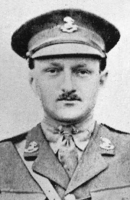
CPL David Wallace Crawford
1887 - 1916
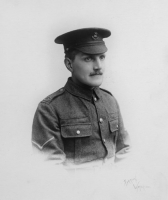
Lce-Corpl John Joseph Nickle
1894 - 1916
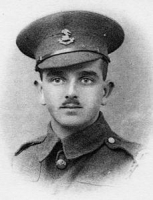
Pte 17911 Morton Neill
1897 - 1916
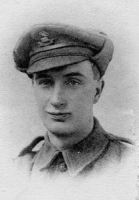
Lieut Edward Stanley Ashcroft
1883 - 1918
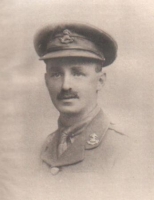
Pte 56298 William Leonard Lock
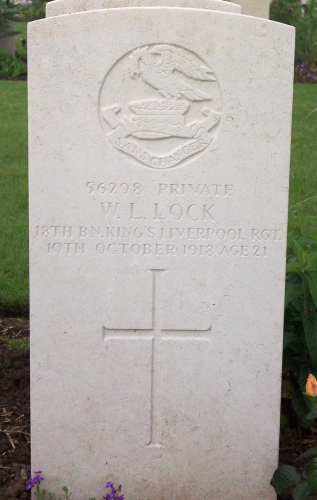
- Age: 21
- From: Liverpool
- Regiment: The King's (Liverpool Regiment) 18th Btn
- K.I.A Thursday 10th October 1918
- Commemorated at: Le Cateau Mil Cem
Panel Ref: V.G.5
William Leonard Lock was born in 1897 in Liverpool and was the son of Edward William Henry Lock and his wife Elizabeth (nee Guest). His parents married in Liverpool in 1897.
The 1901 Census: shows the family living at 22 Haseman Street, Liverpool. His father, Edward, is a 33 year old stockbrokers clerk, born in Bristol, Gloucestershire, whilst his mother Elizabeth is aged 32, born Liverpool. They have two children in the household; William Leonard 4, and Leslie 1, both born in Liverpool. Also at the address was Joseph Guest 57 (father of Elizabeth, Grandfather of children) Customs Officer, born Hellaby, Yorkshire, Elizabeth Guest 59 (mother of Elizabeth, Grandmother of children) born Moulton, Yorkshire, Mary McAllis 30 (sister of Elizabeth, Aunt to children) born Liverpool, and her husband Charles McAllis 31, manager of Bread Shop, born Bebington, Cheshire.
His mother died in the December quarter of 1910, aged 41.
The 1911 Census shows the family now living at 72 Fell Street, Kensington, Liverpool. His father, Edward William Henry is now 42 years old, and a widower and employed as a stock and share broker’s clerk, Widowed, born Bristol. Children William Leonard 14, Leslie Pennington 11, Elizabeth 9, Joseph Edward 6. All children were born in Liverpool.
His father remarried in 1911 to Ellen Wilson at All Saints Church, Toxteth.
He enlisted at Seaforth, Liverpool and was serving in the 18th Battalion, The King’s Liverpool Regiment as Private No 56298 when he was killed in action on the 10th October 1918 aged 21 during the hundred days offensive which ended the First World War (8th August-11th November 1918).
On 07th October 1918 the 18th Bn arrives at the Hindenburg Line and pursues the retreating German army. The battalion War Diary records -
10th October 1918 - At 0230 hours the battalion moved forward to a position near RUEMONT, and attacked towards LE CATEAU at 0510. Very little opposition was met with at the start but later considerable M.G. fire was encountered. … Our right company was not in touch with the flank, and the troops on the right appeared to be held up by M.G. fire from the railway embankment … A short length of trench on the high ground immediately E. of LE CATEAU was also reported to be held by the enemy. At 0848 the Centre Coy reached K.33.b and pushed a platoon into the N. W. outskirts of LE CATEAU. The right company was temporarily held up by MG and sniper fire, but appeared to be almost in the town itself. Hostile M.G. fire was reported from the direction of Q.10. … Houses in K.28.a were reported to be strongly held by the Bosche, and a patrol was sent out to investigate and deal with them. … During the advance on LE CATEAU considerable difficulty was experienced, owing to a “whizz bang” battery being able to fire over open sights at the troops as they moved up the rise and along a slight valley.
Total Casualties from 7th to 13th October:
Killed – 2 Officers, 18 O.R.
Wounded – 6 Officers, 111 O.R.
Died of Wounds – 1 O.R.
Wounded and Missing – 1 Officer, 20 O.R.
William Leonard was one of the casualties referred to in the diary, he now rests at Le Cateau Military Cemetery, France.
Le Cateau-Cambrésis and the country to the west of it was the scene of a battle fought by the British II Corps on 26 August 1914 against a greatly superior German force. The town remained in German hands from that date until the evening of 10 October 1918, when it was rushed by the 5th Connaught Rangers and finally cleared a week later. During the war Le Cateau had been a German railhead and the site of an important hospital centre. The military cemetery was laid out by the Germans in February 1916 with separate plots for the Commonwealth and German dead. It contains the graves of over 5,000 German soldiers, many of whom were buried during the occupation, the rest being brought in from other German cemeteries after the Armistice. A separate plot contains the graves of 34 Russian prisoners of war who died in captivity. The Commonwealth plot is the site of almost 700 graves and commemorations of the First World War. The majority of the graves in Plots I, III, IV and V are those of British dead buried by the Germans, mainly from the battleground of 1914; Plot II contains entirely graves of October and November 1918, eight of which were brought in after the Armistice.
His death was not officially recorded until it appeared in the Liverpool Daily Post on 05th March 1919:
LOCK - Missing October 10, 1918, now officially reported killed in action in France on that date. Private WILLIAM LEONARD LOCK, the dearly loved eldest son of E. W. H. LOCK and the late Elizabeth Lock, 11 Doric Road, Stoneycroft.
Soldiers Effects to father Edward W.H., Pension to step-mother Ellen.
William is remembered on the following Memorials:
Hall of Remembrance, Liverpool Town Hall, Panel 24 Right
St Paul's Church, Stoneycroft.
His father died in the March quarter in 1945, aged 77.
We currently have no further information on William Leonard Lock, If you have or know someone who may be able to add to the history of this soldier, please contact us.
89th Brigade On This Day.
110 Years Ago.The Battle of the Transloy Ridges begins. more....
Killed On This Day.
(110 Years this day)Monday 16th October 1916.
Pte 22929 Edward Bird
19 years old
(110 Years this day)
Monday 16th October 1916.
Pte 16795 William Frederick Collister
23 years old
(109 Years this day)
Tuesday 16th October 1917.
L/Cpl 49038 Ernest Yardley
31 years old
(108 Years this day)
Wednesday 16th October 1918.
Pte 85187 James Hoy
31 years old
(107 Years this day)
Thursday 16th October 1919.
Pte 36438 Hugh Morris
23 years old