
1885 - 1916
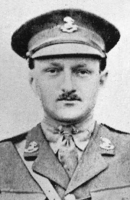
CPL David Wallace Crawford
1887 - 1916
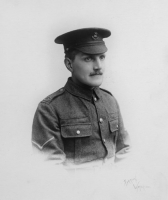
Lce-Corpl John Joseph Nickle
1894 - 1916
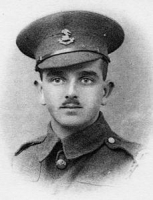
Pte 17911 Morton Neill
1897 - 1916
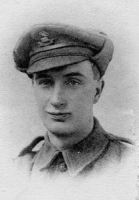
Lieut Edward Stanley Ashcroft
1883 - 1918
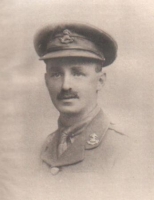
Pte 25349 Arthur Kenrick Lloyd
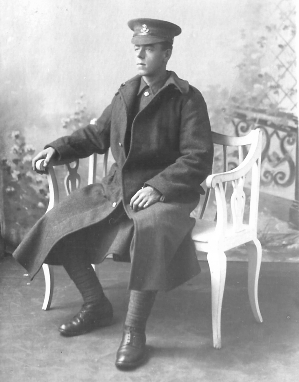
- Age: 20
- From: Liverpool
- Regiment: The King's (Liverpool Regiment) 19th Btn
- K.I.A Sunday 30th July 1916
- Commemorated at: Guillemont Rd Cem
Panel Ref: II.J.1
Arthur Kenrick Lloyd was born on 04th December 1895 in Liverpool the son of Kenrick Morton Lloyd and his wife Louisa Jane (nee Moxey) who were married on the 27th Sept 1890 at Emmanuel, Everton. Kenrick was a 27 year old sailor of 21 Dunkeld St, father Ebernezer, whilst Louisa was a 25 year old dressmaker of 279 West Derby Rd, father James. Kenrick had joined the merchant service as a boy in 1880 and obtained his First Mate’s Certificate in 1888.
At the time of the 1901 census they are living at 10 Thirlmere Road, Everton. His father, aged 37, has left the sea and is employed as a dock gateman. His mother is 35, a fancy goods shop keeper, working on her own account at home. Maude is 7, Arthur 5, and James 4 years old.
The 1911 Census shows the family living at 50 Faraday Street, Everton, Liverpool. His father, Kenrick Morton, is shown as being aged 47, born in Liverpool in 1864 with his occupation recorded as a dock gateman for Mersey Docks. His mother, Louisa is aged 45, born 1866 in Liverpool as were their children. They have been married for twenty years and have four children. They are shown on the Census as; Maud Eda aged 17, born 1894 no occupation, Arthur Kenrick aged 15, born 1896 an apprentice boot maker, James Isaac Moxey aged 14, no occupation listed and Herbert Charles aged 9, born 1902 is at school.
Arthur enlisted in Liverpool and joining the 19th Battalion, The King’s Liverpool Regiment as Private No 25349. Based on the amount of the War Gratuity, Arthur volunteered in late 1914, probably upon reaching age 19.
Formed on 07th September 1914 the 19th Battalion trained locally at Sefton Park and remained living at home or in rented accommodation until November 1914. They then moved to the hutted accommodation at Lord Derby’s estate at Knowsley Hall. On 30th April 1915 the 19th Battalion alongside the other three Pals battalions left Liverpool via Prescot Station for further training at Belton Park, Grantham. They remained here until September 1915 when they reached Larkhill Camp on Salisbury Plain.
He arrived in France with his battalion, disembarking at Boulogne on 07th November 1915.
Arthur wrote and received a number of letters home whilst stationed in France. They are reproduced below as they were written;
France
11/6/16
My dear Mother,
Thank you very very much indeed for your letter and Cigarettes, received yesterday the 10th.
Dear Mother, thank Maude for the Photograph, tell her it is very nice indeed, and all the boys wanted to know how old she was, and where she lived, so she had better look out.
I am very sorry to hear that your other Photo’s went astray I wondered why you didn’t send me one before, I see by your letter you say you are enclosing some more but I have only received one more.
Well Dear, I don’t think getting up an hour earlier would suit me, I couldn’t get up an hour late never mind earlier, the Daylight Saving seems quite funny but I suppose in time you will forget all about the clock being an hour fast. You know I have almost forgotten the day and date of the year, every day seems alike out here so you can guess what its like.
Dear Mother, I am glad to hear Jim has been home and hope that he can get home pretty often. I hear they only get weekends every ten weeks, is that right, I hope not, I am pleased to hear he is looking and feeling quite well and hope he keeps the same. tell him not to forget to write.
Dear Mother, it is very funny that you should ask me if I had seen anything of Stanley Allison the very same day I do see him, he ask me how you were all keeping and asked to be remembered to you, tell his Mother that he is quite alright, he looks fine and very well indeed.
Stanley told me about Bob being in India and what a time he was having.
Yes Dear I do remember George Whitehead but I didn’t know he had joined the “Pals” I thought it was the Regular Army.
(for Maude) Yes Dear I did know that you never had a girl friend but George told me you had, and I told him I didn’t think you had but he wouldn't have that, he wanted me to find out who was the girl friend you went to Church with. I can tell him now that you haven't one. I didn’t did tell him that you hadn't one, but he wouldn't believe it.
Well, Dear what sort of weather are you having in Liverpool it has done nothing but rain here since I wrote that last letter, so you can imagine what it is like here.
Well Dear Mother I think that is all at present, please remember me to Maude, Dad, Jim, Bert, and Mrs. Braithwaite, tell her to remember me to Mr. Braithwaite, hoping you are all in the Best of Health the same as myself. Goodbye and God Bless you all. I am and will remain your Ever Loving and Devoted Son, Arthur [three lines of kisses]
————-
France
16/7/16
My Dear Mother,
Thank you very much indeed for your nice letter dated 8/7/16.
My Darling Mother, I was very sorry to hear that you had been ill and sincerely hope that by the time you receive this letter you will be quite better again
I received a letter from George the other day but he doesn't say anything about leaving that place, I hope he doesn’t go for a bit until I have seen him again.
What do you think of the “Pals” now somme lads “eh”
Well Darling I don’t think I have any more to say just at present so I must close, hoping you are all in the best of health the same as myself,
Goodbye Dear Mother and God Bless you now and always
I am and will always remain your Ever Loving and Devoted, Son, Arthur [four lines of kisses]
P.S. send me anon another of those small pads my papers all finished
—————
His sister Maude wrote to Arthur on 22nd July 1916
50 Faraday Street
Liverpool
Sunday July 22nd 16
My dear Brother Arthur,
Many, many thanks for both your most welcome letters dear, Yes Arthur, the Pals are truly “Somme” lads (good pun dear) and I think everybody in Liverpool as well as other places know they are now, and I think they are sorry they spoke. You should just see everybody polishing up their Pals badges, and wearing their brooches in the most prominent place - more swank, sort of way.
It was a very, very anxious time for us at home because we knew your brigade was in it, but it was very thoughtful of you to send field cards so often, Arthur dear, and I need not tell you again how glad we were to receive them.
The daily and evening papers have been full of “The Pals” and Mam has cut every word out and is keeping them to show you.
Dear Arthur I have received a letter from George, he also was very glad to hear you were well. He is quite well,
Bertie is sending you cigarettes by the same post and it has taken him all afternoon to write the little note inside. He insisted on paying for his own stamps and sending them himself.
I think I will close now, dear Arthur, Mam will send writing pad tomorrow, and she will enclose some foot powder, perhaps it will be handy for you, if you have to keep your boots on a long time, as we have read in the papers you have. I am still working late but hope to finish before the weekend.
Good Night, dear Arthur, very best love from Mam, she is quite well again from her cold, Dad, Jim, and Bert, kind regards from George, and fondest love from
Your loving and devoted sister
Maude (kisses)
God bless you, dear Arthur, and protect you now and always.
His brother sent him a gift of some Cigarettes:
My Dear Brother,
I am sending you a few cigarettes with all my love hoping you will be home soon
I remain your loving brother
Bertie
—————
Arthur wrote what was to be his last letter home. In it he expresses his dismay at some of the insults that were thrown at the Pals, by some of the public in Liverpool, during their training. It was apparently commonplace for taunts of being "Derby's Lapdogs" and that they would never see service overseas etc. Arthur is vexed by this and understandably so given what he must have witnessed at Montauban on 01st July 1916 and at Trones Wood in mid July. Losing many of his friends in the process, including Lance Scarff who he mentions in particular and who was killed in action at Montauban.
France
28/7/16
My Darling Mother,
Thank you very very much indeed for your most welcome letter.
Well Dear, I am glad to hear that the people of Liverpool have taken a tumble to themselves. I daresay they are sorry and will be a jolly sight sorrier for saying the things they did say about us before we left England, they have need to be sorry.
“Yes” Dear Mother they can swank now but what they said will never be forgotten or forgiven.
Dear Mother, I daresay you have had rather an anxious time, and I hope it will soon be all over.
I am glad to hear you are keeping the cuttings.
Darling Mother I am glad Maude has heard from George. I had a letter from him a few days ago, and he is very please to say, that he has had more letters and very nice ones from Maude and thanks me for them.
Tell Bertie I am very please with him for sending those cigarettes, tell him that I had only a very few left, and they came in very handy indeed thank him for his little note.
Well Dear I was very very sorry indeed to hear about Lance Scarff, it was a very great surprise to me and I haven't got over it yet.
Dear Mother, I would like you to convey my deepest sympathy to Mr. and Mrs. Scarff.
Well Darling Mother I think that is all I can say now.
Please remember me to all at home, Maude, Dad, Jim, and Bert, hoping you are all quite well, the same as this letter leaves me.
Good-bye my Darling Mother and God be with you till we meet again.
I am and will remain your Ever Loving and Devoted Son, Arthur [two lines of kisses]
P.S. instead of 7 Platoon, 2 Coy, put 2 Platoon, Headquarters Coy
(Passed Censor W.Ashcroft) [Lieut. William Ashcroft, KIA 22/03/1918]
[stamped Field Post Office 31 JY 16]
—————
Arthur was killed in action on the 30th July 1916, aged 20, at the village of Guillemont, France, during the Somme Offensive.
19th Battalion Diary 30th July 1916
MALTZ HORN FARM
BATTLE begun. ZERO hour 4:45 am. The Battalion reached its objective, but suffered heavy losses, and had to evacuate its position owing to no reinforcements.
Everard Wyrall gives details of the attack in his book The History of The King’s Regiment;
"The 2nd Attack on Guillemont- 29th July 1916 the 89th Brigade the 20th King's were to attack on the right and the 19th on the left. During the evening of the 29th the night was dark and foggy when the Battalions moved off and the 19th with Lt Col G Rollo commanding, when passing the South east of the Briqueterie they were heavily shelled first with H E and then with a new kind of asphyxiating Gas shell which had curious results, at first it had no nasty effect but about 8 hrs later men began to fall sick with violent headaches and pains in the stomach. All ranks had to wear gas masks which in the darkness and mist made the going terribly difficult. It was indeed wonderful that they were able to reach their Assembly point at all. But they did and by 2.45 a.m. on the 30th July 1916 the Btn was assembled having suffered about 30 Casualties on the way up ready for the Zero hour at 4.45 a.m.
It is known that the two left Companies of the 19th under Capt. Dodd and Capt. Nicholson advanced in touch with the 2nd Royal Scots Fusiliers on their left although they suffered many casualties from Machine gun Fire did not encounter many Germans and reached their final objective about the time allocated, beginning at once to dig in south of the orchard on the South east corner of Guillemont.
On the left of the 19th the Scots Fusiliers most gallantly forced their way through Guillemont to the eastern side of the village but were soon overwhelmed by the enemy and few returned.
At 8 a.m. finding that the village was not held the two left Companies of the 19th received no word from the rear or either flank believed themselves to be totally isolated so were forced to fall back and dig in, their position being untenable.
At midday the effective fighting strength of the 19th Btn was just 7 Officers and 43 other ranks"
When darkness fell on the battlefield the 30th Division held a line from the railway on the eastern side of Trones Wood , southwards and including Arrow Head Copse, to east of Maltz Horn Farm. On this line the division was relieved by the 55th Division during the early hours of the 31st July.
Casualties in the 19th Battalion were 11 Officers and 435 Other Ranks
The events of 30th July 1916 were regarded at the time as Liverpool’s blackest day. There follows an extract from The History of the 89th Brigade written by Brigadier General Ferdinand Stanley which gives an indication of the events of the day.
Guillemont
Well the hour to advance came, and of all bad luck in the world it was a thick fog; so thick that you couldn’t see more than about ten yards. It was next to impossible to delay the attack – it was much too big an operation- so forward they had to go. It will give some idea when I say that on one flank we had to go 1,750 yards over big rolling country. Everyone knows what it is like to cross enclosed country which you know really well in a fog and how easy it is to lose your way. Therefore, imagine these rolling hills, with no landmarks and absolutely unknown to anyone. Is it surprising that people lost their way and lost touch with those next to them? As a matter of fact, it was wonderful the way in which many men found their way right to the place we wanted to get to. But as a connected attack it was impossible.
The fog was intense it was practically impossible to keep direction and parties got split up. Owing to the heavy shelling all the Bosches had left their main trenches and were lying out in the open with snipers and machine guns in shell holes, so of course our fellows were the most easy prey.
It is so awfully sad now going about and finding so many splendid fellows gone.
Arthur was buried close to where he fell and his grave marked with a cross, “A British Soldier”. After the war when graves were concentrated his body was removed and identified and reinterred.
He now rests at Guillemont Road Cemetery, France where his headstone bears the epitaph:
"Good night Beloved Good night Good night"
Guillemont was an important point in the German defences at the beginning of the Battle of the Somme in July 1916. It was taken by the 2nd Royal Scots Fusiliers on 30 July but the battalion was obliged to fall back, and it was again entered for a short time by the 55th (West Lancashire) Division on 8 August. On 18 August, the village was reached by the 2nd Division, and on 3 September (in the Battle of Guillemont) it was captured and cleared by the 20th (Light) and part of the 16th (Irish) Divisions. It was lost in March 1918 during the German advance, but retaken on 29 August by the 18th and 38th (Welsh) Divisions.
The cemetery was begun by fighting units (mainly of the Guards Division) and field ambulances after the Battle of Guillemont, and was closed in March 1917, when it contained 121 burials. It was greatly increased after the Armistice when graves (almost all of July-September 1916) were brought in from the battlefields immediately surrounding the village and certain smaller cemeteries, including:-
HARDECOURT FRENCH MILITARY CEMETERY. The village of Hardecourt-au-Bois was captured by French troops on the 8th July 1916, and again by the 58th (London) and 12th (Eastern) Divisions on 28 August 1918. Five British Artillerymen were buried by their unit in the French Military Cemetery, in the middle of the village, in September 1916; and in 1918 the 12th Division buried in the same cemetery 14 men of the 9th Royal Fusiliers and two of the 7th Royal Sussex.
Guillemont Road Cemetery now contains 2,263 Commonwealth burials and commemorations of the First World War. 1,523 of the burials are unidentified but there are special memorials to eight casualties known or believed to be buried among them.
The cemetery was designed by Sir Herbert Baker.
Following Arthur's loss the family received a number of letters of condolence including one from the father of Lance Scarff, referred to by Arthur in his last letter home.
Dyffryn -Wales
Aug 14th/16
Dear Mrs. Lloyd,
We have just heard of the great loss that has befallen you in the death of your dear son Arthur and our hearts go out to you and to Mr. Lloyd and the other members of your family in your deep sorrow. We too, as you know, have suffered, and are suffering, and from stricken hearts may we offer you our loving sympathy. Arthur was a good lad and I am sure he would be brave in the face of danger and you will find consolation in the thought that he has made the supreme sacrifice for his homeland and homefolk.
Your chief comfort must come as ours has from the thought of God’s great pitying and loving heart. He is all wise and wonderfully kind - and although our way now may often be dark - we know that he will make all things work for the good of those who love him, and some day we shall understand the meaning of those happenings which are meanwhile full of darkness and mystery.
We do trust that in your deep grief you will look to the loving Saviour in whom is to be found all solace and comfort - and be helped to bravely face your pilgrim journey in the certain hope of a glad reunion - when crossing the stream that divides us, we shall once more meet our loved ones and be for ever with them.
Mrs. Scarff joins me in this message of affectionate sympathy.
Your sincerely,
Geo. Scarff
Arthur's sister Maude responded to a letter received from Private Arthur Smith who was obviously with Arthur when he was killed;
50 Faraday Street
Liverpool
August 28th 16
Private Albert Smith,
Our Dear Friend,
We have been too deeply grieved by our great loss to write before, but I feel I must now thank you for your great kindness to my dear Brother Arthur and also for writing to us.
Mr. Kinley, who in our trouble, offered to write you, has given us your letter, And it is a consolation to us that our dear Arthur had a loving friend with him till the last, and so comforting to know he didn’t suffer long, or die alone.
If you can find out where he is buried, will you write us, perhaps when this cruel war is over we might be able to see where he is lying. It has been a big shock for us for we did hope and pray he would come home again. We would like to have been with him, but we do feel everything was done for him that could be done, and we from our sorrowing hearts again thank you for your great kindness and true sympathy.
His father received Arthur’s outstanding Army pay of £1-13s-8d in December 1916. After his death in December 1917 aged 54, the War Gratuity of £6-10s went to his mother Louisa, who was awarded a pension of 8/- a week from May 1917.
In the Liverpool Echo, on 30th July 1917 under the heading Lost At The Battle of Guillemont his family paid tribute to Arthur on the first anniversary of his death:
“In sad but loving memory of Private Arthur Kenrick Lloyd, Liverpool Pals, who was killed in action July 30, 1916, in his 21st year, the loving and dearly-beloved eldest son of Mr. and Mrs. Lloyd, 50, Faraday Street, Everton.
One long sad year has passed Since out great sorrow fell;
Deep in our hearts we mourn the loss Of him we loved so well.
But in the morn his angel face will smile,
Which we have loved long since, but lost awhile.”
“In loving memory of dear Arthur, Liverpool Pals, my loving and beloved brother, who was killed in action July 30, 1916.
Days of sadness still come o’er me, Hidden tears often flow;
Dear memories keep my brother near me, Though he died a year ago.
Time may heal the broken heart, Time may make the wound less sore;
But time can never stay the longing For our loved one gone before.
His only Sister Maud.”
“In loving memory of my dear brother Arthur (Liverpool Pals), who was killed in action July 30, 1916.
Sad and oft my thoughts do wander To a grave so far away;
Where they laid my loving brother Just a year ago to-day.
He sleeps beside his comrades, In a hallowed grave unknown;
And memory is the only friend That grief can call its own.
His Brother Jim (K.L.R.)”
“In loving memory of Private Arthur Kenrick Lloyd (Liverpool Pals), the beloved nephew of Mr. and Mrs. Bartley, 279 West Derby Road, who was killed in action July 30, 1916. (At rest. Worthy of everlasting love from those he left behind.)”
On his birthday in 1918, his loved ones placed In Memoriam notices in the Liverpool Echo:
“In sad but loving birthday remembrance of Private Arthur Kenrick Lloyd, Liverpool Pals, who was killed in action at Guillemont July 30, 1916, the loving and beloved eldest son of Mrs. Lloyd and the late Kenrick Lloyd, 50, Faraday Street, Everton.
It is not the tears at the moment shed
That tell how beloved is the soul that has fled,
But the tears through many a long day wept,
And the sad remembrance so fondly kept.
Loved and missed by his sorrowing Mother, Sister, and Brothers, Bert and Jim B.E.F.”
“Lloyd - December 4. Treasured in memory is the birthday of my beloved brother, Liverpool Pals.
Dear Arthur, you are sleeping in your last long sleep
And your grave I may never see;
May some loving hand in that distant land
Gently place some flowers for me.
His only sister Maude.”
His father's death was reported in the Liverpool Evening Express on Thursday 27 December 1917:
LLOYD Dec 21, at his residence, 50 Faraday Street, Everton, after a short and very painful illness, bravely borne, Kenrick Morton, for 25 years in the employ of the Mersey Docks and Harbour Board, the beloved husband of Louie Lloyd and second son of the late Mr and Mrs Ebenezer Lloyd. Interment at Anfield Cemetery today (Thursday) at 1:30 p.m. (at rest.) - Mourned by his loving wife, only daughter, and two sons.
He was remembered also on the anniversary of his father’s death in 1919:
“In loving memory of my dear husband, Kenrick Lloyd, who died of pneumonia December 21, 1917; also dear Arthur, the beloved eldest son of the above, who was killed in action July 30, 1916.
Not now, but in the coming years,
It may be in the Better Land,
We’ll know the meaning of our tears,
And then, perhaps, we’ll understand.
Never forgotten by all at home, 50, Faraday Street, Everton.”
Liverpool Evening Express - Friday 30 July 1926
ROLL OF HONOUR.
LLOYD - To the dear and cherished memory of our beloved ARTHUR, 19th Battalion K.L.R. Pals, who was killed in action at Guillemont, July 30, 1916.
Gone from our home; oh how we miss him,
Loving him dearly his memory we’ll keep.
Never while life lasts shall we forget him.
Far away in the grave where our loved one sleeps;
Oh may the summer sun shine kindly o’er his grave,
Warm southern winds blow gently where he’s laid.
Green grass above lie light, lie light.
Good night, beloved good night, good night.
(Dearly loved and so sadly missed by all at home, 50 Faraday Street.)
In 1939 his mother, 74, a pensioner, is still at 50 Faraday Street with son Herbert, 38, a gents’ hairdresser, and married daughter Maude Williams, 46, and her husband, a police constable.
His mother lived to see the end of the Second World War and died in 1951 at the age of 85, still living in Faraday Street.
James enlisted in the 18th Bn. K.L.R., was posted to the 20th, and later served with the 12th and 1st K.L.R. He survived the war.
Arthur is commemorated in Liverpool’s Hall of Remembrance, Panel 65 Right
We currently have no further information on Arthur Kenrick Lloyd, If you have or know someone who may be able to add to the history of this soldier, please contact us.
89th Brigade On This Day.
110 Years Ago.The Battle of the Transloy Ridges begins. more....
Killed On This Day.
(110 Years this day)Tuesday 17th October 1916.
Pte 21665 William Bertram Morton
33 years old
(110 Years this day)
Tuesday 17th October 1916.
Sgt 16984 John Stanley Orrett
25 years old
(110 Years this day)
Tuesday 17th October 1916.
Capt Guy Ravenscroft
34 years old