
1885 - 1916
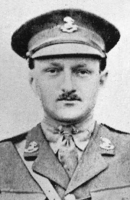
CPL David Wallace Crawford
1887 - 1916
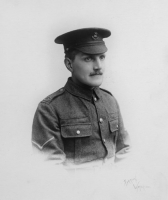
Lce-Corpl John Joseph Nickle
1894 - 1916
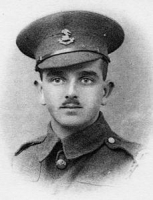
Pte 17911 Morton Neill
1897 - 1916
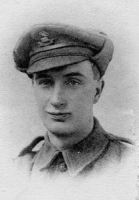
Lieut Edward Stanley Ashcroft
1883 - 1918
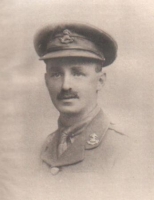
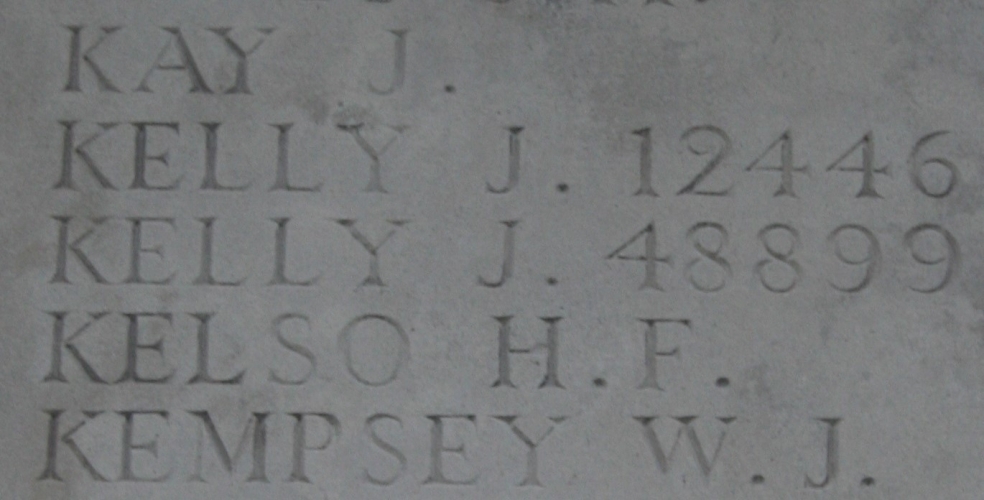
Pte 12446 John Kelly
- Age: 36
- From: London
- Regiment: The King's (Liverpool Regiment) 18th Btn
- K.I.A Thursday 28th March 1918
- Commemorated at: Pozieres Memorial
Panel Ref: P21-23
The Battalion Diary gives an insight into the chaotic events of the day
28th March
At about 6am the enemy commenced to shell heavily the whole of the forward line and brought Trench Mortars and MACHINE Guns into action.
FOLIES was shelled and the area in the rear of the village as far back as LE QUESNEL.
Rations were received at dawn and parties were organised to carry them to the Companies on the right. Owing to the heavy fire, however, it was not possible to get them up.
Heavy fighting was in progress on the right from soon after dawn and at 8am the enemy was reported to be in possession of BOUCHOIR and progressing towards the BEETROOT FACTORY. About 10am the 59th Infy Brigade was notified that it was relieved by the French and the Battalions of that Brigade were at once withdrawn in the direction of LE QUESNEL.
At noon the enemy was bombarding the village and vicinity heavily and reports were received that he was in occupation of WARVILLERS on the left and ARVILLERS on the right.
The front line East of FOLIES continued to resist until about 2pm when the order was received from the 89th Infy Brigade to the effect that the Battalions were relieved by the French and would withdraw at once to MEZIERES, where the men would be fed. Companies withdrew under some shelling and very heavy M.G. and rifle fire from the left , through K10 -K3 – North side LE QUESNEL to the main ROYE road and reorganised about D.29 c. The march from this point was conducted in good order despite the congested roads.
At MEZIERES it was decided to continue a rearward movement and the march was resumed via VILLERS-MOREUIL – MORISEL – ROUVREL, which village was reached about 7pm and the Battalion billeted. The men had marched 13 miles from the left position in good order and with practically no straggling. They were exhausted on arrival at ROUVREL, but in good heart.
Echelon ‘A’ of the Transport joined the Battalion at this village and the men were fed immediately on arrival. The night passed without incident.There was some delay and miscommunication in notifying his family.
“In answer to your enquiry for further particulars of my son, he was two years Time Expired when he rejoined in 1914 having served in the South African Campaign with the A.S.C. When he rejoined he was put in the 11th Battn then in the 20th afterwards to the 18 Battn. To say that you cannot trace him surprises me in face of the enclosure that I send you from a personal friend who wrote without my knowledge. By this you will notice that I gave you his right number. Kindly return the regimental form enclosed, and oblige, yours respectfully, W.E. Kelly.”
“I received a letter asking had I seen or heard anything from him. I answered that I had not. Since that time I have not heard anything more, is it not time that I did. Hoping that you will let me know something, Yours respectfully, His Father.”
“Sir, Can you please give me information about my brother, No.12446, D Coy, Pte. J. Kelly, 11th Bn, King’s Liverpools. I have just returned from India and have had no correspondence with him, but he kept regular correspondence with our grandmother, who is 85 years of age, her last communication from him was from France May (?) 1918 and told her he was coming on leave in a couple of days time. Since then she had not received a letter from him or any official communication from the War Office. Will you please write and set our doubts at rest. Believe me, Yours sincerely, His Brother, L/Cpl W. Kelly.”
“I regret to inform you that his death was assumed by the Army Council to have been on or since 21-28/3/1918. Notification being sent to his father at 22 Travis Street, London Road, Manchester.”
The POZIERES MEMORIAL relates to the period of crisis in March and April 1918 when the Allied Fifth Army was driven back by overwhelming numbers across the former Somme battlefields, and the months that followed before the Advance to Victory, which began on 8 August 1918. The Memorial commemorates over 14,000 casualties of the United Kingdom and 300 of the South African Forces who have no known grave and who died on the Somme from 21 March to 7 August 1918.
The cemetery and memorial were designed by W.H. Cowlishaw, with sculpture by Laurence A. Turner. The memorial was unveiled by Sir Horace Smith-Dorrien on 4 August 1930.
Walter had shipped overseas on 21st August 1915 and after the war his battalion returned to India; he was awarded the Afghanistan North-West Frontier 1919 Medal. He was discharged some time after 1921.
We currently have no further information on John Kelly, If you have or know someone who may be able to add to the history of this soldier, please contact us.
J
89th Brigade On This Day.
110 Years Ago.The Battle of the Transloy Ridges begins. more....
Killed On This Day.
(110 Years this day)Tuesday 17th October 1916.
Pte 21665 William Bertram Morton
33 years old
(110 Years this day)
Tuesday 17th October 1916.
Sgt 16984 John Stanley Orrett
25 years old
(110 Years this day)
Tuesday 17th October 1916.
Capt Guy Ravenscroft
34 years old