
1885 - 1916
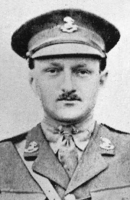
CPL David Wallace Crawford
1887 - 1916
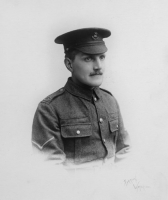
Lce-Corpl John Joseph Nickle
1894 - 1916
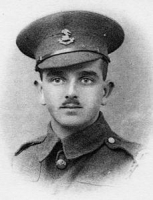
Pte 17911 Morton Neill
1897 - 1916
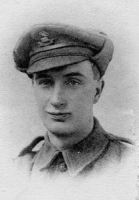
Lieut Edward Stanley Ashcroft
1883 - 1918
Pte 31658 John Rimmer Cartwright Jones
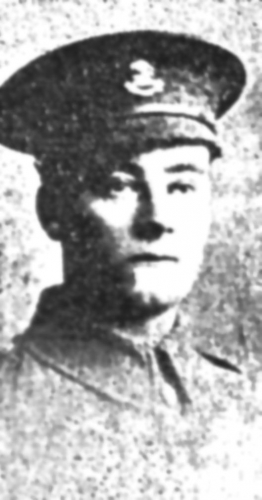
- Age: 23
- From: Liverpool
- Regiment: The King's (Liverpool Regiment) 20th Btn
- K.I.A Thursday 12th October 1916
- Commemorated at: Thiepval Memorial
Panel Ref: P&F1D8B &8 C.
John Rimmer Cartwright Jones was born on the 10th of May 1892 in Liverpool and was the son of Charles William and Louisa Jane Rimmer Cartwright who were married at St George's Church, Everton on 28th December 1884. Louisa was born in October 1857 in Liverpool, she lived with her family at Tower Chambers, The Old Churchyard until she was married as her father was an office keeper (presumably a caretaker) from at least 1851 until his death in 1890. Charles was born in 1860 in Liverpool. The couple lived at 3 Spellow Place after their marriage.
The 1901 census finds the family living at 127 Gloucester Road, Bootle. His father, Charles, is aged 41, working as a foreman stevedore, mother Louisa is also 41 and the couple have four sons – Charles William aged 15 who is working as an office boy, Harold Herbert 13, Arthur Percy 12 and 8 year old John Rimmer. Also living with the family is Charles’s mother Mary Jane who was 68, and his 24 year old sister Alice The couple had a daughter called Louisa Jane Rimmer early in 1891 but sadly she died aged just 6 months at her grandparents address in Tower Chambers and was buried in the Necropolis, Low Hill Cemetery.
The 1911 Census shows the family living at 45 Keble Road, Bootle. Charles aged 51 is now working as a grain foreman and Louisa is also aged 51. They have been married for 26 years and have had 5 children 4 of whom have survived. All four sons are now working – Charles William is aged 25, a commercial clerk as is Harold Herbert aged 23, Arthur Percy is aged 22, a grain foreman like his father and John R.C. is aged 18, an electrical engineer. They have a niece Emily Gibney aged 13, born 1898 in Seacombe and still at school, living at the address.
John enlisted in Liverpool and was serving in the 20th Battalion, The King’s Liverpool Regiment as Private No 31658.
Formed in November 1914 the 20th Battalion were originally billeted at Tournament Hall, Knotty Ash before on 29th January 1915 they moved to the hutted accommodation purposely built at Lord Derby’s estate at Knowsley Hall. On 30th April 1915 the 20th Battalion alongside the other three Pals battalions left Liverpool via Prescot Station for further training at Belton Park, Grantham. They remained here until September 1915 when they reached Larkhill Camp on Salisbury Plain and arrived in France on 7th November 1915.
John was killed in action on the 12th October 1916, aged 23, during the Battle of the Transloy Ridges which was part of the ongoing Somme Offensive.
According to the 20th Bn War Diary, on 10th October 1916 the battalion marched from Dernancourt via Mametz to Bazentin Le Grand where it bivouacked for the night. The next day the battalion moved up to site for assembly trenches, arriving about 11 p.m., where it dug in two good trenches, Nos.1 and 2 Coys front and Nos.3 and 4 Coys in rear.
From the War Diary:
Near Eaucourt L’Abbaye. 12/10/1916. The 4th British and 6th French armies continued the attack. Zero 2.5 p.m. The whole XVth Corps attacked […] The attack of 89th Inf Bde was carried out with 2nd Bn Bedf Regt on right, 17th Bn KLR on left, 20th Bn KLR in support, 19th Bn KLR in reserve. Battalions attacked in four waves. On the departure of the attacking battalions Nos. 1 and 2 companies advanced, each in two waves, to garrison the front line trench vacated by 2nd Bn Bedf Regt on right and 17th KLR on left. On Nos 1 and 2 Coys vacating front assembly trench, it was occupied by two platoons of Nos. 3 and 4 Coys respectively, from rear assembly trench. As the assaulting waves left their trenches they were met by intense machine gun fire, especially on our left. The enemy also opened heavy barrages on our front support and assembly trenches. […] Capt. H. Beckett, commanding No.1 company, reached the front line with few casualties, but Lieut R.D. Paterson leading No.2 company was killed. His company also had few casualties. The assaulting battalions were held up by very heavy machine gun fire, and made little progress. […] At 4.20 p.m. two platoons, No.4 Coy, under Cpl Brighouse, were sent up to reinforce the left, and No.3 Coy under Cpl Sutton followed at 4.45 p.m. Battalion HQ moved up to front line at 4.55 and remaining two platoons of No.4 Coy moved up to join Cpl Brighouse.
Casualties during action:
Officers – Killed Lieut. R.D. Paterson, 2nd Lieut G.L. Grennan, Wounded – 2nd Lieuts A.E. Griffin, L.E. Mclean Hayes, C. Buttemer, Wounded Cpl g. Brighouse.
Other Ranks killed – 20.
It had rained incessantly at the beginning of October 1916 and the ground was full of mud. In his book ‘The Liverpool Pals’ Graham Maddocks describes the day Herbert was killed.
It was obvious that the Germans knew an attack was coming and from which direction it would be mounted. On the evening of the 11th the 20th Battalion moved up the line and dug two deep assembly trenches behind the 17th Battalion’s position for the attack the next day. The 19th Battalion also moved into its reserve positions known as Flers Trench. Although the rain has stopped, the ground was like a morass, with all the natural vegetation destroyed, it was difficult to tell exactly where the objectives lay. On the afternoon of the 12th at exactly 2.05pm, the attack began along the whole Corps line, covered by the local batteries of the Royal Field Artillery which still had line of sight. As the whistles blew, the 17th Battalion left its trenches to move forwards, at the same time No.1 and 2 Companies of the 20th Battalion moved forward and occupied the trenches vacated by the 17th. As they too went over the top, No.3 and 4 Companies took
their place and waited in their turn to follow. No.2 and 3 Companies of the 19th Battalion moved up to occupy the assembly trenches dug the previous night by the 20th.
As soon as the attacking waves left their trenches the enemy artillery began to register on them and at the same time the defending infantry commenced a murderous rain of fire. Those German regiments were trained and experienced soldiers, well dug in on high ground, and for the most part, looking out on uncut wire. As such it was virtually impossible for them to miss the City Battalion men struggling to advance in the mud towards them.
Brigadier-General F.C.Stanley wrote that the Battalions were also suffering casualties due to the short shooting of the British heavy artillery fire. “I know from practical experience that they were our own guns which were shooting, and which were causing us quite a considerable number of casualties. The fault lay at that time from the fact that the heavy gunners would not send their FOO’s (Forward Observation Officers) far enough forward, but were content to observe us from right back”
Some ground was gained that day, about 150 yards, the 20th Battalion were not relieved until 24 hours later causing the men to endure another day and night in the front line trench.
John's body was not recovered or was subsequently lost as he has no known grave and is commemorated on the Thiepval Memorial to the Missing of the Somme, France.
The Thiepval Memorial, the Memorial to the Missing of the Somme, bears the names of more than 72,000 officers and men of the United Kingdom and South African forces who died in the Somme sector before 20 March 1918 and have no known grave. Over 90% of those commemorated died between July and November 1916.
On 01st August 1932 the Prince of Wales and the President of France inaugurated the Thiepval Memorial in Picardy. The inscription reads: “Here are recorded the names of officers and men of the British Armies who fell on the Somme battlefields between July 1915 and March 1918 but to whom the fortune of war denied the known and honoured burial given to their comrades in death.”
Probate 1916:-
JONES John Rimmer Cartwright of 31 Hertford Road, Bootle Lancashire Private 20th Battalion K.L.R. died 12 October 1916 in France Probate Liverpool 22 December to Harold Herbert Jones timekeeper. Effects £226 7s 6d.
Soldiers Effects to brother Harold Herbert, Pension to father Charles William.
His family paid tribute to John on the first anniversary of his death in the Liverpool Echo on 13th October 1917:
JONES—In loving memory of our dear brother John R. C. JONES (‘Our Jack’), K.L.R., killed in action October 12, 1916.
We have lost, Heaven has gained,
One of the best the world contained.
— Charlie and Kitty, 21, Marion road.
Also on the second anniversary of his death in the Liverpool Echo on 13th October 1918:
JONES—In loving memory of our dear brother JOHN R. C. JONES (Jack), who was killed in action October 12, 1916, aged 24 years.
He gave his life, his best, his all,
That we he might live.
— Charlie and Kitty, 21, Marion road.
JONES—In loving memory Private J. R. C. JONES (Jack), K.L.R., killed in action October 12, 1916.
A loving brother, true and kind,
A beautiful memory left behind.
— Never forgotten by his brother and sister, Arthur and Florrie, 31, Hertford-road, Bootle.
He is also commemorated on the following Memorials:
Bootle Civic Memorial
Christ Church C. of E. School, Bootle.
John’s brother married Catherine Maher in August 1914 and Arthur married Florence Gough in February 1918, and subsequently married Maud Gough in December 1929.
John’s mother died, aged 74, in the March quarter of 1931.
His father died, aged 74, on the 09th April 1934. (from pension card).
We currently have no further information on John Rimmer Cartwright Jones, If you have or know someone who may be able to add to the history of this soldier, please contact us.
Killed On This Day.
(110 Years this day)Thursday 17th August 1916.
Pte 15784 Charles Leslie Bibby
24 years old
(110 Years this day)
Thursday 17th August 1916.
Pte 16517 Samuel Arthur Dicks
24 years old
(109 Years this day)
Friday 17th August 1917.
Pte 49203 Arthur Hargreaves
20 years old
(109 Years this day)
Friday 17th August 1917.
Pte 33155 Francis Douglas Wilkinson
21 years old
(109 Years this day)
Friday 17th August 1917.
Lance Corporal James Bernes
28 years old
(109 Years this day)
Friday 17th August 1917.
Lieutenant Alexander Vyvyan Johnston
32 years old
(108 Years this day)
Saturday 17th August 1918.
Pte Michael O'Rorke (MM)
23 years old