
1885 - 1916
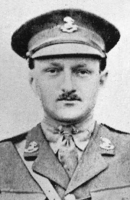
CPL David Wallace Crawford
1887 - 1916
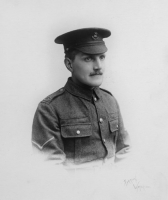
Lce-Corpl John Joseph Nickle
1894 - 1916
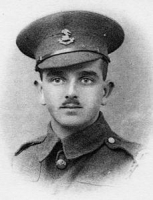
Pte 17911 Morton Neill
1897 - 1916
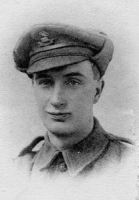
Lieut Edward Stanley Ashcroft
1883 - 1918
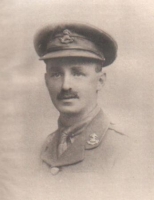
Pte 53133 John Jones

- Age: 24
- From: Jackfield, Salop
- Regiment: The King's (Liverpool Regiment) 19th Btn
- K.I.A Thursday 12th October 1916
- Commemorated at: Caterpillar Valley, Longueval
Panel Ref: VII.H.15
John Jones was born in 1892 in Jackfield, Salop and was the son of John Jones and his wife Elizabeth (nee Burns) who had been married in November 1879.
The 1901 census shows the family living at Lloyds Head, Ironbridge, Salop. John senior is 48 and is a roofing tile presser, he was born in Madley, Salop. His wife Elizabeth was 43 and had been born in Jackfield, Salop as were all seven of their children – Alfred aged 20 and 17 year old Henry who are both roofing tile pressers assistants, Susannah 13 a general servant, Henrietta 11, John 9, Edward 6 and 4 year old Harriet.
By the time of the 1911 census the family live at 82 Lloyds Head. John and Elizabeth had been married for 32 years and had 9 children, 7 of whom are still living. Only John junior and William Edward are still living at home. John jnr is a pipe maker in an ironworks and William is working in an encaustic tile factory. Their younger sister at the age of 14 had also been working in the tile factory, but at this time she is a patient in the nearby Lady Forester Hospital and described as a former tile sorter. Sadly Harriet died a few months later. Their sister Henrietta is a servant in the household of an accountant in Edgbaston.
John was serving in the 19th Battalion, The King’s Liverpool Regiment as Private No 53133 when he was killed in action on the 12th October 1916, aged 24, during the Battle of the Transloy Ridges which was part of the ongoing Somme Offensive.
It had rained incessantly at the beginning of October 1916 and the ground was full of mud. In his book ‘The Liverpool Pals’ Graham Maddocks describes the day John was killed:
It was obvious that the Germans knew an attack was coming and from which direction it would be mounted. On the evening of the 11th the 20th Battalion moved up the line and dug two deep assembly trenches behind the 17th Battalion’s position for the attack the next day. The 19th Battalion also moved into its reserve positions known as Flers Trench. Although the rain has stopped, the ground was like a morass, with all the natural vegetation destroyed, it was difficult to tell exactly where the objectives lay. On the afternoon of the 12th at exactly 2.05pm, the attack began along the whole Corps line, covered by the local batteries of the Royal Field Artillery which still had line of sight. As the whistles blew, the 17th Battalion left its trenches to move forwards, at the same time No.1 and 2 Companies of the 20th Battalion moved forward and occupied the trenches vacated by the 17th. As they too went over the top, No.3 and 4 Companies took their place and waited in their turn to follow. No.2 and 3 Companies of the 19th Battalion moved up to occupy the assembly trenches dug the previous night by the 20th.
As soon as the attacking waves left their trenches the enemy artillery began to register on them and at the same time the defending infantry commenced a murderous rain of fire. Those German regiments were trained and experienced soldiers, well dug in on high ground, and for the most part, looking out on uncut wire. As such it was virtually impossible for them to miss the City Battalion men struggling to advance in the mud towards them.
Brigadier-General F.C.Stanley wrote that the Battalions were also suffering casualties due to the short shooting of the British heavy artillery fire. “I know from practical experience that they were our own guns which were shooting, and which were causing us quite a considerable number of casualties. The fault lay at that time from the fact that the heavy gunners would not send their FOO’s (Forward Observation Officers) far enough forward, but were content to observe us from right back”
Some ground was gained that day, about 150 yards, the 20th Battalion were not relieved until 24 hours later causing the men to endure another day and night in the front line trench.
John now rests at Caterpillar Valley Cemetery, Longueval, France. The inscription on his headstone reads:
“IN JESU'S KEEPING”
Caterpillar Valley was the name given by the army to the long valley which runs West to East, past "Caterpillar Wood", to the high ground at Guillemont. Longueval village is on the Northern crest of this valley and 500 metres West of the village, on the South side of the road to Contalmaison, is Caterpillar Valley Cemetery.
Caterpillar Valley was captured during a successful night assault by the 3rd, 7th and 9th Divisions on Bazentin Ridge on 14 July 1916. It was lost in the German advance of March 1918 and recovered by the 38th (Welsh) Division on 28 August 1918, when a little cemetery was made (now Plot 1 of this cemetery) containing 25 graves of the 38th Division and the 6th Dragoon Guards. After the Armistice, this cemetery was hugely increased when the graves of more than 5,500 officers and men were brought in from other small cemeteries, and the battlefields of the Somme. The great majority of these soldiers died in the autumn of 1916 and almost all the rest in August or September 1918.
CATERPILLAR VALLEY CEMETERY now contains 5,573 Commonwealth burials and commemorations of the First World War. 3,798 of the burials are unidentified but there are special memorials to 32 casualties known or believed to be buried among them, and to three buried in McCormick's Post Cemetery whose graves were destroyed by shell fire.
On the 6th November 2004, the remains of an unidentified New Zealand soldier were removed from this cemetery and entrusted to New Zealand at a ceremony held at the Longueval Memorial, France. The remains had been exhumed by staff of the Commonwealth War Graves Commission from Plot 14, Row A, Grave 27 and were later laid to rest within the Tomb of the Unknown Warrior, at the National War Memorial, Wellington, New Zealand.
On the east side of the cemetery is the CATERPILLAR VALLEY (NEW ZEALAND) MEMORIAL, commemorating more than 1,200 officers and men of the New Zealand Division who died in the Battles of the Somme in 1916, and whose graves are not known.
This is one of seven memorials in France and Belgium to those New Zealand soldiers who died on the Western Front and whose graves are not known. The memorials are all in cemeteries chosen as appropriate to the fighting in which the men died.
Both cemetery and memorial were designed by Sir Herbert Baker.
Soldiers Effects to father John, Pension to mother Elizabeth, 82 Lloyds Head, Jackfield.
He is also commemorated on the Jackfield and Coalport Memorial Bridge.
During the war his parents lived at 47, Ladywood Terrace, Ironbridge, Salop.
His father John died in 1927 and his mother Elizabeth in 1931.
We currently have no further information on John Jones, If you have or know someone who may be able to add to the history of this soldier, please contact us.
89th Brigade On This Day.
110 Years Ago.The Battle of the Transloy Ridges begins. more....
Killed On This Day.
(110 Years this day)Tuesday 17th October 1916.
Pte 21665 William Bertram Morton
33 years old
(110 Years this day)
Tuesday 17th October 1916.
Sgt 16984 John Stanley Orrett
25 years old
(110 Years this day)
Tuesday 17th October 1916.
Capt Guy Ravenscroft
34 years old