
1885 - 1916
CPL David Wallace Crawford
1887 - 1916
Lce-Corpl John Joseph Nickle
1894 - 1916
Pte 17911 Morton Neill
1897 - 1916
Lieut Edward Stanley Ashcroft
1883 - 1918
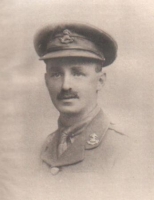
Pte 17225 Hugh Eidiol Jones
- Age: 24
- From: Liverpool
- Regiment: The King's (Liverpool Regiment) 18th Btn
- K.I.A Saturday 1st July 1916
- Commemorated at: Thiepval Memorial
Panel Ref: P&F1D8B &8 C.
Hugh Eidiol Jones was born on April 16th 1892 in Liverpool. He was the second child and eldest son of the five surviving children of David Thomas (Dafydd) Jones, and his wife Jane (nee Hughes) who were married in 1888 in Liverpool.
In 1901 the family lived at 81 Seacombe Street , Everton. Hugh’s father Dafydd was 42 and working as a cotton warehouseman, he had been born in Llanuwchllyn, Merioneth. Hugh’s mother was 37 and had been born in Bangor, North Wales. Hugh was 9 and had four siblings – Catherine aged 11, Gwendoline 6, Ceridwen 4 and 10 month old Dafydd A. The children had all been born in Liverpool.
Dafydd and Jane had a daughter called Mary Hughes in 1902, and a son called Emrys Meirion in 1905, a son who did not survive and who died the same year. Sadly the couple’s 17 year old daughter Catherine died in 1907.
By the 1911 census the family were living at 55 Faraday Street, Everton. The census records that Dafydd and Jane had been married for 22 years and that five of their seven children had survived. Hugh is working as a clerk in a shipping office, his 17 year old sister Gwendoline was assisting her mother at home, Ceridwen then aged 14 was an apprentice draper and Dafydd Ap aged 10 and Mary aged 8 were at school.
According to a report in the Liverpool Evening Express, Hugh was employed by Messrs G & J Burns, ship owners, before his enlistment.
He was a member of the Douglas Road Welsh Calvinistic Methodist Church.
On 02nd September 1914 at St George's Hall, Liverpool Hugh joined the 18th Battalion of The King's Liverpool Regiment as Private 17225. He gave his age as 22 years 139 days and his next of kin as his father of 55 Faraday Street. His enlistment papers describe him as being 5ft 9 inches tall, weight of 139 lbs, 35" chest with good physical development, a sallow complexion with fair hair and olive eyes. He stated his religion as Church of England.
From the 23rd September 1914 he was billeted at Hooton Park Race Course and remained there until 03rd December 1914 when they moved into the hutted accommodation at Lord Derby’s estate at Knowsley Hall. On 30th April 1915 the 18th Battalion alongside the other three Pals battalions left Liverpool via Prescot Station for further training at Belton Park, Grantham. They remained here until September 1915 when they reached Larkhill Camp on Salisbury Plain.
He sailed to France with the 18th Battalion, from Folkestone on board the SS Invicta arriving at Boulogne on 07th November 1915.
Hugh was killed in action at Montauban on 01st July 1916.
The events of the day for the 18th Battalion were as follows:
At 6.30am the artillery commenced an intensive bombardment of the enemy’s trenches. Zero Hour – 7.30 am – the battalion commenced to leave their trenches and the attack commenced. The attack was pressed with great spirit and determination in spite of heavy shelling and machine gun enfilade fire which caused casualties amounting to 2/3rds of the strength of the Battalion in action. The whole system of German trenches including the Glatz Redoubt was captured without any deviation from the scheduled programme. Consolidated positions and made strong points for defence against possible counter attacks.
Graham Maddocks provides more detail concerning the events of the day:
As the first three waves began to move forward towards the German reserve line, known as Alt Trench and then on to the Glatz Redoubt itself, they suddenly came under enfilading fire from the left. This was from a machine gun which the Germans had sited at a strong point in Alt Trench. The gun itself was protected by a party of snipers and bombers, who, hidden in a rough hedge, were dug into a position in Alt Trench, at its junction with a communication trench known as Alt Alley. These bombers and snipers were themselves protected by rifle fire from another communication trench, Train Alley which snaked back up the high ground and into Montauban itself. The machine gun fire was devastating and it is certain that nearly of the Battalion’s casualties that day were caused by that one gun.
Lieutenant Colonel Edward Henry Trotter wrote in the conclusion of his account of the days action:
I cannot speak to highly of the gallantry of the Officers and men. The men amply repaid the care and kindness of their Company Officers, who have always tried to lead and not to drive. As laid down in my first lecture to the Battalion when formed, in the words of Prince Kraft:
“Men follow their Officers not from fear, but from love of the Regiment where everything had always and at all times gone well with them”.
Joe Devereux in his book A Singular Day on the Somme gives the Casualty Breakdown for the 18th Battalion as Killed in Action 7 Officers and 165 men and of those who died in consequence of the wounds 3 Officers and 19 men a total of 194 out of a total loss for the four Liverpool Pals Battalions.
His death was reported in the Liverpool Daily Post of the 17th July 1916:
FOUND BY R.A.M.C. MAN.
“Private Hugh Eidiol Jones (24), also belonging to the “Pals”, is another victim of the great offensive movement of July . Two of Private Jones’s comrades, writing to his parents (Mr and Mrs David Jones, 55 Faraday Street), state that he was a special favourite in his platoon on account of his kind disposition and his willingness to help. He was found on the battlefield by a R.A.M.C. man, who recognised him as one who had been in training with him, and who after attending to his wounds, communicated with his comrades. A member of Douglas Road Welsh Calvinist Methodist Church, along with his parents, Private Jones was the first in the chapel to enlist and the first belonging to the same place of worship to be killed. Before joining the colours, immediately the “Pals” were formed, he remarked to his parents that “it would be a shame for a young man to be seen walking the streets who had not enlisted". The parents have received a letter of much sympathy from the young soldiers pre-war employers Messrs G. And J. Burns, ship owners".
Also the Liverpool Echo of 17th July 1916:
Private.Hugh Eidiol Jones (24), of the Liverpool Pals, was found on the battlefield in France on July 1st by a R.A.M.C.man, who recognised him as one who had been in training with him. A member of Douglas-road Welsh Calvinistic Methodist Church. Private Jones was the first in the chapel to enlist, and the first belonging to the same place of worship to be killed.
The Liverpool Evening Express of 21st July 1916 reported:
Pte.Hugh Eidiol Jones (24), of the Liverpool Pals, was found on the battlefield in France on July 1st by a R.A.M.C.man, who recognised him as one who had been in training with him. His wounds proved fatal, and two of his comrades wrote to say he was a special favourite in his platoon on account of his kind disposition and his willingness to help. He was a son of Mr. and Mrs.David Jones, 55,Faraday-street,Everton. He was in the employment of Messrs.G. and J.Burns, the shipowners before enlisting.
Each of the reports advise that Hugh was identified and treated for his wounds. If he was eventually buried in a marked grave, this must have been subsequently lost as Hugh's name is recorded on the Thiepval Memorial to the Missing of the Somme.
The Thiepval Memorial, the Memorial to the Missing of the Somme, bears the names of more than 72,000 officers and men of the United Kingdom and South African forces who died in the Somme sector before 20 March 1918 and have no known grave. Over 90% of those commemorated died between July and November 1916.
On 01st August 1932 the Prince of Wales and the President of France inaugurated the Thiepval Memorial in Picardy. The inscription reads: “Here are recorded the names of officers and men of the British Armies who fell on the Somme battlefields between July 1915 and March 1918 but to whom the fortune of war denied the known and honoured burial given to their comrades in death.”
Soldiers Effects to brother Daffyd ap D., Pension to mother Jane.
His personal effects were returned to brother Daffyd A. – 1 letter, 1 card and 5 photos.
On the Relatives Statement in 1919 brother Daffyd was serving with the Cheshire Regt in Germany.
His father died, aged 80, on the 27th May 1939.
His death was reported in the Liverpool Echo on 29th May 1939:
JONES - May 27 at 55 Faraday Street, Everton, aged 80 years DAVID THOMAS (Nodwr), the dearly beloved husband of Jane Jones (for many years warehouse keeper for the Liverpool Warehousing Company Limited.) Service at Douglas Road Welsh C.M. Chapel on Wednesday next at 3 p.m., interment following at Anfield Cemetery at 4 p.m.
Also in the Liverpool Echo on 30th May 1939:
A WELSH SOCIAL WORKER.
DEATH OF MR. DAVID T. JONES.
The death is announced of much esteemed Liverpool Welshman, Mr. David Thomas Jones ("Nodwr"), at 55 Faraday Street, Everton. A native of Bala district. North Wales, Mr. Jones came to Liverpool over half a century ago. He was a deacon, and one of the oldest members of Douglas Road Welsh Presbyterian Church, Anfield. Mr. Jones retired ten years ago after long service with the Liverpool Warehousing Company, Ltd. He was noted for his many benefactions, and kindness to others. Amongst Mr. Jones’s many activities in this city, the one which afforded him the highest measure of happiness was as a constant visitor to the sick and needy, both home and hospital. He leaves a widow, and a son and daughter.
His mother died, aged 78, on the 16th June 1942 in Caernarvon.
Her death was reported in the Liverpool Echo on 18th June 1942:
JONES - June 16 at Eryri Hospital, Caernarvon, JANE, widow of D.T. Jones and mother of Ceridwen, Barrow, and D ap D. Jones, 55 Faraday Street, Everton, Liverpool. Funeral at Anfield Cemetery tomorrow (Friday) at 2 p.m. Flowers to Douglas Road Welsh Church Anfield.
We currently have no further information on Hugh Eidiol Jones, if you have or know someone who may be able to add to the history of this soldier, please contact us.
89th Brigade On This Day.
110 Years Ago.The Battle of the Transloy Ridges begins. more....
Killed On This Day.
(110 Years this day)Tuesday 17th October 1916.
Pte 21665 William Bertram Morton
33 years old
(110 Years this day)
Tuesday 17th October 1916.
Sgt 16984 John Stanley Orrett
25 years old
(110 Years this day)
Tuesday 17th October 1916.
Capt Guy Ravenscroft
34 years old