
1885 - 1916
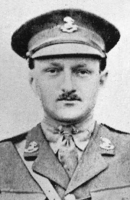
CPL David Wallace Crawford
1887 - 1916
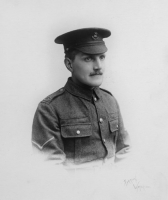
Lce-Corpl John Joseph Nickle
1894 - 1916
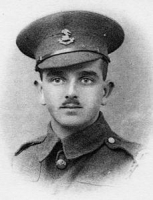
Pte 17911 Morton Neill
1897 - 1916
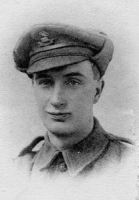
Lieut Edward Stanley Ashcroft
1883 - 1918
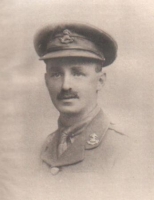
Pte 22119 Alfred Hough

- Age: 30
- From: Liverpool
- Regiment: The King's (Liverpool Regiment) 20th Btn
- K.I.A Sunday 30th July 1916
- Commemorated at: Guillemont Rd Cem
Panel Ref: V.E.4
Alfred Hough was born in Liverpool in 1886, the youngest son of Robert Hough and Annie Greenall (nee Stubbs). He was baptised in St. John's Chapel on 11th August 1886. Robert, who had been born in Whitford, Flintshire, was a widower when he married Annie in 1878 and Annie had also been previously married to Peter Mitchell Greenall in 1871 and had a daughter Ann. Annie was widowed in 1874 when her husband died at the age of 25. Sadly, her daughter died the following year when she was two and a half. Robert had three children with his first wife Jane: William John b. 1868, Robert Arthur b.1869 and Walter Charles b. 1872.
The 1891 Census shows 4 year old Alfred living with his parents at 29 Carter Street, Toxteth.
His mother Annie is 40, his father Robert is 55 and a sail maker. His siblings are Susannah aged 12, Margaret 10, Ernest 7, and Sarah Edith aged 3. His half brother William is a salesman, and Robert and Walter are commercial clerks.
Alfred’s half brother Walter married in 1896 and sadly died in 1914. His half brother Robert married in 1900 and went to live across the Mersey in Wallasey.
By the 1901 Census the family are at the same address and most of the household are working.
His father Robert is now shown as 62 years of age and still a sail maker, his mother is 50. Also declared as living at home are his half brother William J. who is a 33 year old commercial traveller, and his siblings listed as; Susie is a 22 year old manageress in a dyers, Margaret is a 20 year old dressmaker, Ernest is a 17 year old shipping clerk, 14 year old
The 1911 Census records the family living at 3 Arnold Street, Toxteth Park.
His parents Annie 59 and Robert 72, who is now retired advise that they have been married for 33 years and have had six children. Declared in the household are; William John who is a 44 year old commercial traveller in the sugar industry, Margaret is a 30 year old dressmaker, Ernest is a 27 year old bookeeper, Alfred,24, is an order clerk, Edith Sarah is a 23 year old dyers manager, and Annie aged 18.
Alfred enlisted on the 06th November 1914 at Liverpool, joining the 20th Battalion, The King’s Liverpool Regiment as Private No 22119. He gave his age as 28 years and 155 days and his occupation as a clerk. He was five feet eight inches tall, weighed 132lb, 36” chest, sallow complexion, brown eyes, and brown hair and gave his religion as Wesleyan. His records show his next of kin as his mother Annie, 3 Arnold St, later changed to father Robert.
Formed in November 1914 the 20th Battalion were originally billeted at Tournament Hall, Knotty Ash before on 29th January 1915 they moved to the hutted accommodation purposely built at Lord Derby’s estate at Knowsley Hall. On 30th April 1915 the 20th Battalion alongside the other three Pals battalions left Liverpool via Prescot Station for further training at Belton Park, Grantham. They remained here until September 1915 when they reached Larkhill Camp on Salisbury Plain.
7.11.15: Embarked for France with his battalion.
He was killed in action on the 30th July 1916, aged 30, at the village of Guillemont, France, during the Somme Offensive.
The 20th King’s Battalion Diary records:
“At 4.45am prompt the attack was launched. Unfortunately, a thick mist prevailed and it was impossible to see more than 10 yards ahead. This continued until about 6 o’clock when it lifted slightly, but it was still too hazy and impossible to see what was happening 100 yards ahead. This being so, it was not surprising to find that the attacking waves were experiencing great difficulty in maintaining connection.”
At 6am, Lt. RE Melly, No.1 Company, reported that his men had taken the German Maltz Horn trench.
At 6.30am, 2/Lt. CP Moore reported that he had 150 men, 4 Stokes Mortars and 2 Lewis Guns, but he was the only officer. He also said that due to the fog, both his “flanks were in the air” i.e. he was not in contact with neighbouring troops.
At 9.10am, Moore was still not in contact at his flanks, and now he had only 75 men, he had sent out 2 patrols and neither not returned. Later Moore established communication with the French on his right.
Around 10.00am, 2/Lt Musker reported that he had just over a company with him, but his left flank was suffering from German machine gun fire. Later he reported that he had over 30 casualties from the machine gun fire. His flanks were also “in the air”. No contact was made with this party until the remnants returned around 9.30pm, all runners sent were killed or missing. The War Diary states that this group had: ”held the ground won all day, and this permitted the consolidation of the ground won on the Maltz Horn ridge with little interference from the enemy”.
Relief for 20/Kings had been planned for 11.00pm, but it was 5.00am on the 31st July before it took place, ending a tragic day for the Liverpool Pals.
Casualties for 20th Battalion were 16 Officers and 357 Other Ranks
When darkness fell on the battlefield the 30th Division held a line from the railway on the eastern side of Trones Wood , southwards and including Arrow Head Copse, to east of Maltz Horn Farm. On this line the division was relieved by the 55th Division during the early hours of the 31st July.
The events of 30th July 1916 were regarded at the time as Liverpool’s blackest day. There follows an extract from The History of the 89th Brigade written by Brigadier General Ferdinand Stanley which gives an indication of the events of the day.
Guillemont
Well the hour to advance came, and of all bad luck in the world it was a thick fog; so thick that you couldn’t see more than about ten yards. It was next to impossible to delay the attack – it was much too big an operation- so forward they had to go. It will give some idea when I say that on one flank we had to go 1,750 yards over big rolling country. Everyone knows what it is like to cross enclosed country which you know really well in a fog and how easy it is to lose your way. Therefore, imagine these rolling hills, with no landmarks and absolutely unknown to anyone. Is it surprising that people lost their way and lost touch with those next to them? As a matter of fact, it was wonderful the way in which many men found their way right to the place we wanted to get to. But as a connected attack it was impossible.
The fog was intense it was practically impossible to keep direction and parties got split up. Owing to the heavy shelling all the Bosches had left their main trenches and were lying out in the open with snipers and machine guns in shell holes, so of course our fellows were the most easy prey.
It is so awfully sad now going about and finding so many splendid fellows gone.
Alfred was initially declared Missing, and his name published in the list of K.L.R. Missing published on 14th September 1916.
Confirmation of Alfred’s death was slow to arrive for the family. There is a series of letters in his file most of which are too faded to read, but one is from his sister Susie in October 1916 asking for any news on her missing brother as “he was last seen helping a wounded comrade” and also "The letters returned to us are marked, Wounded, in hospital."
A notice in the Liverpool Echo dated 03rd October 1916 asked for any information on Alfred.
Miss S. Hough, of 3 Arnold Street, also contacted the International Red Cross in hopes that her brother had been taken prisoner, but was notified in a reply dated 21st October 1916 that they held no information on Alfred.
His death was later presumed for official purposes as having occurred on 30th July 1916.
His family was able to finally publish his death in the Liverpool Daily Post on 12th June 1917:
Hough – July 30th 1916 now officially reported killed on that day aged 30 years, Private Alfred Hough (KLR), the dearly beloved youngest son of Mr and Mrs Hough of 3 Arnold Street, Liverpool (Deeply regretted by his sorrowing Mother, Father, Sisters and Brothers)
Alfred was buried close to where he fell and after the war, when graves were concentrated, his body was removed and reinterred in Guillemont Road Cemetery where he now rests.
Guillemont was an important point in the German defences at the beginning of the Battle of the Somme in July 1916. It was taken by the 2nd Royal Scots Fusiliers on 30 July but the battalion was obliged to fall back, and it was again entered for a short time by the 55th (West Lancashire) Division on 8 August. On 18 August, the village was reached by the 2nd Division, and on 3 September (in the Battle of Guillemont) it was captured and cleared by the 20th (Light) and part of the 16th (Irish) Divisions. It was lost in March 1918 during the German advance, but retaken on 29 August by the 18th and 38th (Welsh) Divisions.
The cemetery was begun by fighting units (mainly of the Guards Division) and field ambulances after the Battle of Guillemont, and was closed in March 1917, when it contained 121 burials. It was greatly increased after the Armistice when graves (almost all of July-September 1916) were brought in from the battlefields immediately surrounding the village and certain smaller cemeteries, including:-
HARDECOURT FRENCH MILITARY CEMETERY. The village of Hardecourt-au-Bois was captured by French troops on the 8th July 1916, and again by the 58th (London) and 12th (Eastern) Divisions on 28 August 1918. Five British Artillerymen were buried by their unit in the French Military Cemetery, in the middle of the village, in September 1916; and in 1918 the 12th Division buried in the same cemetery 14 men of the 9th Royal Fusiliers and two of the 7th Royal Sussex.
Guillemont Road Cemetery now contains 2,263 Commonwealth burials and commemorations of the First World War. 1,523 of the burials are unidentified but there are special memorials to eight casualties known or believed to be buried among them.
The cemetery was designed by Sir Herbert Baker.
Alfred's headstone bears the epitaph:
"HE ASKED LIFE OF THEE THOU GAVEST HIM LENGTH OF DAYS FOREVER AND EVER"
This is taken from Psalm 21:4.
Alfred's Army pay and a War Gratuity of £7-10s went to his sister Annie. From the pension card in the name of his mother the amount awarded is not clear.
Alfred was initially declared Missing, and his name published in the list of K.L.R. Missing published on 14th September 1916.
King’s (Liverpools) - Hough, 22119, A.;
Alfred is commemorated in the Hall of Remembrance in Liverpool Town Hall at Panel 59.
In 1919 his mother Annie provided information on his living relatives: His parents were still at 3 Arnold Street with William, Susie, Edith, and Annie. Robert, 49, lived in Wallasey, Margaret, 39, in Orrell Park, and Ernest, 35, is shown with address 4 Whitehall Terrace and also A.P.C. (Army Pay Corps?), Shrewsbury.
There is also an answer from the Army Records Office, to a letter from his sister Sarah which reads: With reference to your letter dated 05/3/1919, respecting the late Pvt A. Hough The King’s (Liverpool Regiment). In reply I regret I cannot furnish you with the map reference as to the place your late husband (it is in fact her brother) is buried. If you write to the Director of Graves Registration and Enquiries, War Office, Winchester House, London, you may be able to obtain the required information.
His father died at home on the 17th August 1920 aged 82.
Liverpool Evening Express - Friday 20 August 1920
HOUGH— Aug 17, at 3 Arnold-street, Princes Park, aged 82 years, ROBERT, the beloved husband of Anne Hough. Interment at Smithdown Road Cemetery to-day, at 10 o’clock. (Friends please accept this, the only, intimation.)
Sarah Edith was still trying to ascertain the location of her brother's grave in 1922. She was informed by Infantry Records that they had received no new information, and referred her to the Imperial War Graves Commission.
His mother died on the 16th June 1930, aged 79.
Liverpool Echo - Wednesday 18 June 1930
HOUGH— June 16, at 24 Gresford Avenue, Sefton Park, ANNE, the beloved wife of the late Robert Hough. Interment at Smithdown Road Cemetery to-morrow (Thursday), at 11 a.m.
We currently have no further information on Alfred Hough. If you have or know someone who may be able to add to the history of this soldier, please contact us.
89th Brigade On This Day.
110 Years Ago.The Battle of the Transloy Ridges begins. more....
Killed On This Day.
(110 Years this day)Sunday 15th October 1916.
Pte 30280 James Patrick Doyle
25 years old
(110 Years this day)
Sunday 15th October 1916.
Pte 34608 Thomas Foster
19 years old
(110 Years this day)
Sunday 15th October 1916.
Pte 53107 Joseph Green
32 years old
(110 Years this day)
Sunday 15th October 1916.
Pte 11282 Stephen Hynes
21 years old
(110 Years this day)
Sunday 15th October 1916.
Pte 32717 Evan Lee
25 years old
(110 Years this day)
Sunday 15th October 1916.
Pte 34271 James Vickers
21 years old
(108 Years this day)
Tuesday 15th October 1918.
Cpl 15764 Alan Douglas Ellison
30 years old