
1885 - 1916
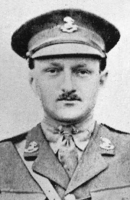
CPL David Wallace Crawford
1887 - 1916
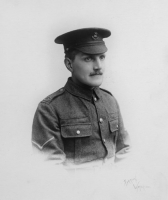
Lce-Corpl John Joseph Nickle
1894 - 1916
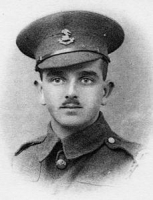
Pte 17911 Morton Neill
1897 - 1916
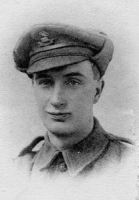
Lieut Edward Stanley Ashcroft
1883 - 1918
2nd Lieut William Hornby
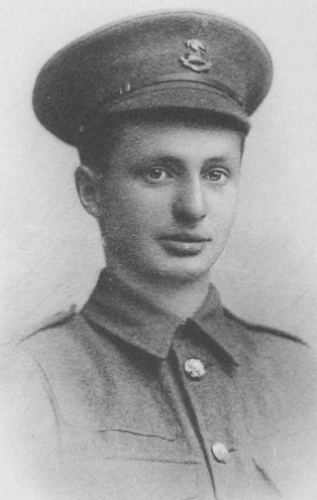
- Age: 23
- From: Garstang, Lancs
- Regiment: The King's (Liverpool Regiment) 17th Btn
- K.I.A Thursday 12th October 1916
- Commemorated at: Warlencourt Brit Cem
Panel Ref: II.D.24
William Hornby was born on the 18th August 1893 in St Michael’s on Wyre, Garstang, Lancashire, the third son of the Venerable Phipps John Hornby (O.R. 1866-1872), Archdeacon of Lancaster and Vicar of St Michael’s on Wyre, and of his wife Agnes Eleanor Leycester(nee Penrhyn) who were married on the 30th Dec 1885 at Christ Church, East Sheen, Surrey.
On the 1901 census the family are living at the Vicarage, Upper Rawcliffe, Garstang, Lancashire. His father, Phipps John, is aged 48, a clergyman of the Church of England, born in St Michael’s on Wyre, Lancs, his mother, Agnes Eleanor, is aged 42, born in East Sheen, Surrey. They have five children declared in the household all were born St Michael’s; Geoffrey Phipps 10, daughter Cecil Vere 8, William 7, Edward Windham 5, and Katherine 4. They also have 4 servants.
William was educated at Rugby school from 1907-1912 and afterwards at Balliol College, Oxford. He then entered the offices of Messrs. Wilson, Hiles and Co, Cotton Brokers, Liverpool.
At the outbreak of war he enlisted in the ranks of the 17th Battalion, The King’s Liverpool Regiment as Private No 15048.
He was billeted at Prescot Watch Factory from 14th September 1914, he trained there and also at Knowsley Hall. On 30th April 1915 the 17th Battalion alongside the other three Pals battalions left Liverpool via Prescot Station for further training at Belton Park, Grantham. They remained here until September 1915 when they reached Larkhill Camp on Salisbury Plain. He arrived in France on 7th November 1915.
He had more than one chance of a Commission, but declined as “he thought he was more useful where he was.” He went to France in November 1915 and spent all the winter and the following summer in or near the trenches.
On July 1st, 1916, he was wounded in the head, but rejoined before the end of the month, and was acting as commander of” the runners” in the fighting on the Somme. He received a commission in September, and was killed while leading his Platoon in an attack on German lines a mile north west of Flers, October 12th 1916, aged 23.
His Colonel wrote:-
“He was a very gallant officer and was getting well hold of his work.”
His Company Commander wrote:-
“ I would like, very inadequately, to express my personal sense of loss at his death. He joined my company when he given his Commission in September, and a finer Officer one could not possibly wish to meet. He was extremely popular with his brother Officers, and his men simply worshipped him. I join with you in grieving over the loss of a gallant soldier and a true gentleman.”
17th Bn War Diary: Battle of Transloy Ridge –
11-10-16 - Gird Trench/Gird Support – Battalion in front line and support trenches. British bombardment of enemy front line system commenced about midday. Hostile shelling was intermittent throughout the day.
12-10-16 - Our bombardment continued. Enemy reply weak. 2.5 p.m. Zero hour. Attack on German front line system commenced. Enemy wire was found to be uncut and attack was unsuccessful. Hostile machine gun fire was very heavy and caused many casualties. Battalion H.Q. and Support Trench were heavily shelled throughout afternoon and evening. […] During this action all communication had to be carried out by runners and carrier pigeons as all wires were being continually cut by enemy shelling.
Casualties: 5 officers killed, 5 officers wounded, 38 OR killed, about 225 OR wounded/missing etc.
Graham Maddocks, in “Liverpool Pals” p.140, adds:
“As the whistle blew, the 17th Battalion left its trenches to move forward. […] As soon as the attacking waves left their trenches the enemy artillery began to register on them, and at the same time, the defending infantry commenced a murderous rain of fire. […] Although their numbers had been depleted by the British bombardment, they were trained and experienced soldiers, well dug in on high ground, and for the most part, looking out on uncut wire. As such, it was virtually impossible for them to miss the City Battalion men struggling to advance in the mud towards them. The 17th Battalion, on the left, was particularly badly hit, as its portion of No Man’s Land contained a slight rise in the ground, and as the troops emerged onto it they were silhouetted against the sky and became easy targets. Those on the left of the attack, who managed to avoid the hail of bullets and make it to the German wire, then found that it was totally uncut, and thus trapped, they too became easy targets, to be picked off almost at the enemy’s will. It was hardly surprising that, seeing the first waves being wiped out, some of the following waves turned back and made for their start lines. These lines were now packed with other waves of troops, however, and the fleeing men added to the congestion already there, and became easy prey for the German gunners. There is some evidence also, to suggest that at this stage, the British trenches were also being hit by their own heavy artillery shells which were falling short.”
William now rests at Warlencourt British Cemetery, France.
Warlencourt Cemetery is entirely a concentration cemetery, begun late in 1919 when graves were brought in from small cemeteries and the battlefields of Warlencourt and Le Sars. The Graves Registration form shows graves from “Le Sars 6/1, 6/2, Hexham Road, Seven Elms”.
Graves were brought in from the original cemeteries at Hexham Road (Le Sars), and Seven Elms (Flers), as well as over 3,000 British graves due to the fighting which took place around the Butte de Warlencourt from the autumn of 1916 to the spring of 1917, and again in the German advance and retreat of 1918. The cemetery now contains 3,505 Commonwealth burials and commemorations of the First World War, 1,823 of which are unidentified.
The Ormskirk Advertiser of 29th July 1915 noted an accident involving his father:
ARCHDEACON'S MISHAP.— The Rev. Phipps John Hornby, Archdeacon of Lancaster, was seriously hurt whilst following his parochial duties at St. Michael’s-on-Wyre, near Preston, on Sunday afternoon. In crossing a road he was knocked down by a motor-car and thrown head first on to a heap of stones. The Archdeacon was removed home in an unconscious condition, suffering from concussion and severe cuts on the head. He is progressing satisfactorily. Archdeacon Hornby is fairly well known in the Ormskirk district, being closely connected with the Lancashire Federation of Rural Friendly Societies.
William's death was reported in the Yorkshire Post on 19th October 1916:
WILLIAM HORNBY, King's Liverpool Regt., third son of the Archdeacon Lancaster (the Rev. P. J. Hornby), is officially reported to have been killed in action October 12 while gallantly leading his men. Sec-Lieut. Hornby was educated at Rugby and Balliol, and was in business in Liverpool when the war broke out. He enlisted in September, 1914, and went out the Front in November last. He was wounded on July 1, but rejoined his regiment. He received commission in the same battalion on September 9, and was 23 years of age. One of his brothers was killed at Ypres on May 8. 1915.
William's loss was the second that his family had to endure as his brother 2nd Lieutenant Geoffrey Phipps Hornby also fell. He was killed in action on 08th May 1915, aged 24 whilst serving with the Suffolk Regiment. His body was not recovered or was subsequently lost as he has no known grave and is commemorated on the Memin Gate Memorial at Ypres.
William is commemorated on the following Memorials:
Hall of Remembrance, Liverpool Town Hall, Panel 51 Left
Southport Civic Memorial
St Michael’s on Wyre Church.
Soldiers Effects to father Phipps John, no Pension record found.
His mother, Agnes Eleanor, died on the 21st May 1934, aged 75.
Probate 1934:-
HORNBY Agnes Eleanor of the Old House, St Michael's-on-Wyre Lancashire wife of the venerable Phipps John Hornby died 21 May 1934 Probate Lancaster 4 July to the said venerable Phipps John Hornby Archdeacon of Lancaster. Effects £453 19s 3d.
His father died on the 04th April 1936, aged 83.
Probate 1936:-
HORNBY The venerable Phipps John Hornby Archdeacon of the Old House, St Michael's-on-Wyre Lancashire died 4 April 1936 Probate Lancaster 27 May to the Reverend Hugh Leycester Hornby clerk and Edward Windham Hornby gentleman of independent means. Effects £6058 6s 8d.
Grateful thanks are extended to Rugby School for the permission to use the photograph of William Hornby now shown on the website.
We currently have no further information on William Hornby, If you have or know someone who may be able to add to the history of this soldier, please contact us.
89th Brigade On This Day.
110 Years Ago.The Battle of the Transloy Ridges begins. more....
Killed On This Day.
(110 Years this day)Sunday 15th October 1916.
Pte 30280 James Patrick Doyle
25 years old
(110 Years this day)
Sunday 15th October 1916.
Pte 34608 Thomas Foster
19 years old
(110 Years this day)
Sunday 15th October 1916.
Pte 53107 Joseph Green
32 years old
(110 Years this day)
Sunday 15th October 1916.
Pte 11282 Stephen Hynes
21 years old
(110 Years this day)
Sunday 15th October 1916.
Pte 32717 Evan Lee
25 years old
(110 Years this day)
Sunday 15th October 1916.
Pte 34271 James Vickers
21 years old
(108 Years this day)
Tuesday 15th October 1918.
Cpl 15764 Alan Douglas Ellison
30 years old