
1885 - 1916
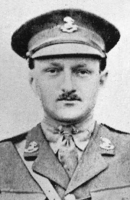
CPL David Wallace Crawford
1887 - 1916
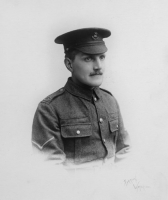
Lce-Corpl John Joseph Nickle
1894 - 1916
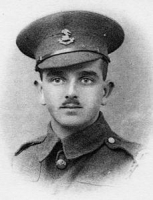
Pte 17911 Morton Neill
1897 - 1916
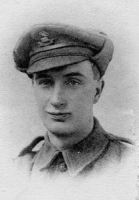
Lieut Edward Stanley Ashcroft
1883 - 1918
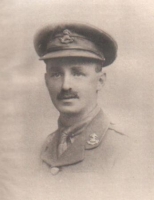
Pte 18398 William Holland
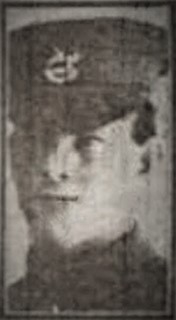
- Age: 25
- From: Patricroft, Manchester
- Regiment: The King's (Liverpool Regiment) 18th Btn
- K.I.A Thursday 10th October 1918
- Commemorated at: Vis-en-artois Memorial
Panel Ref: Panel 3 & 4
William Holland was born in 1893 in Patricroft, Manchester the son of William Holland and his wife Martha Ann (nee Mersey). His parents were both born in Lancashire, his father in St. Helens, and his mother in Winton. William Holland and Martha Ann Mersey married in 1891 and had two children. William had a younger sister Martha born in 1895.
His father served 12 years in the 2nd Bn Scots Guards, joining up in 1887 when he was 18, completing four years with the Colours, and was discharged in 1899. He rejoined the Colours and served in South Africa from May 1900 until August 1902.
The 1901 census finds his mother, 28, with William, 7, and Martha, 5, at 33 West Terrace, Eccles.
William attended St. Mary’s Catholic School.
By 1911 the family is living at 3 Police Street, Patricroft. His father, 43, is a general labourer, and his mother is 38. William is 17, employed as railway porter with the Lancashire and Yorkshire Railway; Martha, 15, is a cotton weaver (calico).
He attested in Manchester on 04th September 1914 as Private 18398 King’s Liverpool Regiment (Depot). He gives his age as 21 years and one month, and his occupation as a porter. He is described as being 5’ 8 and a quarter inches tall, weighing 128 lbs, with a sallow complexion, grey eyes, and brown hair. He gives his religion as R.C. and as next of kin his father William at 3 Police Street. He was posted to the 14th Bn. K.L.R. on 17th September and served in ‘B’ Company.
The sense of duty, the willingness to serve, was also felt by his father. The next month, on 12th October 1914, his father enlisted at the age of 46 in the Lancashire Fusiliers. He was subsequently transferred to the East Yorks Regiment and the Military Foot Police. He was discharged in March 1918 at the age of 50 as being no longer physically fit for war service.
William forfeited 6 days’ pay, and was confined to barracks for 8 days whilst training at Aldershot on 25th July 1915, for being absent for two days. Again on 8th August he was 10 days C.B. for being drunk and creating a disturbance in barracks.
He arrived in France on 4th September 1915, disembarking at Boulogne In October they entrained for Marseilles and embarked for Salonika on the 29th.
04/11/1915 appointed paid L/Cpl
In 1916 the battalion fought in the Battles of Horseshoe Hill and Machukovo and in 1917 were in action during the Battles of Doiran.
He had a series of hospitalisations beginning on:
21/05/17 - 03/06/17 when he was admitted to 28th General Hospital suffering from Trench Fever
26/9/1917 to 66 F.A. and 31 C.CS., fever of unknown origin
28/9/1917 admitted 65 General hospital, Salonika
17/10/1917 to No.6 Convalescent Depot
28/10/1917 to No.2 Base Depot
4/11/1917 rejoined unit in the field
18/01/1918 to 67 F.A. and 31 C.C.S. I.C.T. right hand
21/01/1918 admitted 28 General Hospital, Salonika
14/02/1918 to No.3 Convalescent Depot
09/3/1918 to No.2 Base Depot
16/3/1918 rejoined unit in the field
The 14th Kings left the Balkans, embarking at Itea in Greece on 18/6/1918 to Taranto in the heel of Italy, and arrived in France in late June 1918.
William was granted leave to the U.K. from 24/7/1918 until 08/8/1918. On 13th August the 14th Battalion were amalgamated with the 18th Bn. K.L.R., becoming the 18th (Lancashire Hussars Yeomanry), The King’s Liverpool Regiment.
22/8/1918 reduced to Private for drunkenness
The 100 Days Offensive, the final Allied push that would end the war, had begun on 8th August 1918.
On 7th October 1918 the 18th Bn arrives at the Hindenburg Line and pursues the retreating German army. The battalion War Diary records -
10th October 1918 - At 0230 hours the battalion moved forward to a position near RUEMONT, and attacked towards LE CATEAU at 0510. Very little opposition was met with at the start but later considerable M.G. fire was encountered. … Our right company was not in touch with the flank, and the troops on the right appeared to be held up by M.G. fire from the railway embankment … A short length of trench on the high ground immediately E. of LE CATEAU was also reported to be held by the enemy. At 0848 the Centre Coy reached K.33.b and pushed a platoon into the N. W. outskirts of LE CATEAU. The right company was temporarily held up by MG and sniper fire, but appeared to be almost in the town itself. Hostile M.G. fire was reported from the direction of Q.10. … Houses in K.28.a were reported to be strongly held by the Bosche, and a patrol was sent out to investigate and deal with them. … During the advance on LE CATEAU considerable difficulty was experienced, owing to a “whizz bang” battery being able to fire over open sights at the troops as they moved up the rise and along a slight valley.
Total Casualties from 7th to 13th October:
Killed – 2 Officers, 18 O.R.
Wounded – 6 Officers, 111 O.R.
Died of Wounds – 1 O.R.
Wounded and Missing – 1 Officer, 20 O.R.
William was initially declared Missing in Action on 10/10/18; his name was published in the list of Missing in the Weekly Casualty List on 19th December 1918.
His death was later presumed, for official purposes, as having occurred on or since 10th October 1918. He has no known grave and is commemorated on the Vis-en-Artois Memorial, France.
The Vis en Artois Memorial bears the names of over 9,000 men who fell in the period from 8 August 1918 to the date of the Armistice in the Advance to Victory in Picardy and Artois, between the Somme and Loos, and who have no known grave.
The memorial was designed by J.R. Truelove, with sculpture by Ernest Gillick. It was unveiled by the Rt. Hon. Thomas Shaw on 4 August 1930.
It is not known when his parents were officially informed of his fate; his documents were received in the Pension Office from the Paymaster in April 1919, suggesting a delay of six months. A report appeared in a local newspaper, date unknown:
“Pte. William Holland (18398) of the 18th King’s Liverpool Regiment, who was officially reported missing on October 10th, 1918, is now presumed to have died on that date or since. Pte. Holland, who was 25 years of age, resided with his parents at 3 Police Street, Patricroft. He joined up on the 04th September, 1914, and went to France 12 months later. In November 1915 he was sent to Salonika and returned on July 27th, 1918. After 10 days leave he again went to France and there took part in the last big push. No further information having been received, his parents would be grateful to anyone who could give them news about him. Before joining the Colours he worked on the Lancashire and Yorkshire Railway, and was an old scholar of St. Mary’s Catholic School, Eccles.”
William earned his three medals.
His Army effects and a War Gratuity of £24 went to his mother.
In 1919 his parents provided information on William’s living relatives. They were living at 3 Police Street, and his married sister Martha Offer, 24, was also in Patricroft, at 72 Nelson Street.
1939 his parents are living at 16 Heath Terrace, Ormskirk. His father 71, is retired, and his mother is 66. They lived through the Second World War; his father died in 1946 aged 77, and his mother died at the age of 90 in 1963.
William is commemorated on the Lancashire and Yorkshire Railway Memorial.
We currently have no further information on William Holland, If you have or know someone who may be able to add to the history of this soldier, please contact us.
89th Brigade On This Day.
110 Years Ago.The Battle of the Transloy Ridges begins. more....
Killed On This Day.
(110 Years this day)Sunday 15th October 1916.
Pte 30280 James Patrick Doyle
25 years old
(110 Years this day)
Sunday 15th October 1916.
Pte 34608 Thomas Foster
19 years old
(110 Years this day)
Sunday 15th October 1916.
Pte 53107 Joseph Green
32 years old
(110 Years this day)
Sunday 15th October 1916.
Pte 11282 Stephen Hynes
21 years old
(110 Years this day)
Sunday 15th October 1916.
Pte 32717 Evan Lee
25 years old
(110 Years this day)
Sunday 15th October 1916.
Pte 34271 James Vickers
21 years old
(108 Years this day)
Tuesday 15th October 1918.
Cpl 15764 Alan Douglas Ellison
30 years old