
1885 - 1916
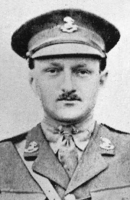
CPL David Wallace Crawford
1887 - 1916
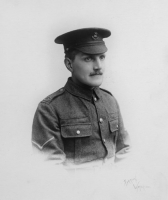
Lce-Corpl John Joseph Nickle
1894 - 1916
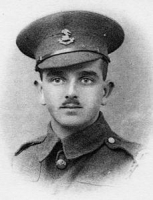
Pte 17911 Morton Neill
1897 - 1916
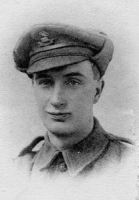
Lieut Edward Stanley Ashcroft
1883 - 1918
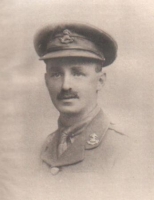
L/Cpl 22111 Bertram Mayhew Hibbert

- Age: 24
- From: Seacombe, Cheshire
- Regiment: The King's (Liverpool Regiment) 20th Btn
- K.I.A Sunday 30th July 1916
- Commemorated at: Thiepval Memorial
Panel Ref: P&F1D8B &8 C.
Bertram Mayhew Hibbert was born in Seacombe, Cheshire in 1892, the son of John James Hibbert and his wife Mary Elizabeth (nee Sayer). The couple were married in the June quarter of 1884 in Hayfield, Derbyshire. His parents were both born in Derbyshire, his father in New Mills, on the edge of the Peak District, and his mother in nearby Whaley Bridge. They had six children; their first child, Edith Mary, was born in 1885 in Little Sutton, near Ellesmere Port, Cheshire. They then returned to New Mills, where James Frost (1888) and Lilian Jessie (1890) were born.
In 1891 the family lived in Bankfield Terrace, New Mills. His father worked as a chemist's clerk, and grandfather James Hibbert, 72, lived with them.
By 1892 they had returned to Cheshire, and settled in Seacombe where Bertram, and younger siblings John (1895) and Dorothy Maud (1997) were born.
At the time of the 1901 Census the family are living at 7 Leopold Road, Wallasey. James is 40 and working as a commercial clerk, Mary is 41. The 8 year old Bertram has three older and two younger siblings: Edith is 15, James 12, Lilian 11, Jack 5 and Dorothy is 3. Sadly Dorothy died in 1903.
The 1911 Census records the family still at 7 Leopold Road. His father, James, is aged 50, a bookkeeper and cashier for a printers, his mother Mary is 50. They advised that they had been married for 27 years and have had 6 children, with 5 having survived. Edith 25, is working as a typist and bookkeeper for a boot manufacturer, James 22, is a teacher, Lilian 21, a typist for a solicitor, Bertram 18, is a clerk for a mineral manufacturer and John (Jack) 15, is a clerk in a chartered accountants.
Bertram was a member of Seacombe Wesleyan Church and worked there for a number of years. He taught in the Sunday school and was secretary to both the Band of Hope and the Football club connected to the church. He was also a member of the bible class.
He enlisted on 5th November 1914 at Liverpool, joining the 20th Battalion, The King’s Liverpool Regiment as Private 22111. He gave his age as 22 years and 146 days and gave his occupation as a clerk. He was described as being five feet eleven inches tall, weighed 143lbs, 36" chest with a brown complexion and brown eyes. He stated his religion as Wesleyan and as next of kin his father at 7 Leopold Road.
Formed in November 1914 the 20th Battalion were originally billeted at Tournament Hall, Knotty Ash before on 29th January 1915 they moved to the hutted accommodation purposely built at Lord Derby’s estate at Knowsley Hall. On 30th April 1915 the 20th Battalion alongside the other three Pals battalions left Liverpool via Prescot Station for further training at Belton Park, Grantham. They remained here until September 1915 when they reached Larkhill Camp on Salisbury Plain.
01.7.15: Appointed to unpaid Lance Corporal.
07.11.15: Embarked for France with his battalion.
He was killed in action, reportedly shot by a sniper, on the 30th July 1916, aged 24, at the village of Guillemont, France, during the Somme Offensive.
The 20th King’s Battalion Diary records:
“At 4.45am prompt the attack was launched. Unfortunately, a thick mist prevailed and it was impossible to see more than 10 yards ahead. This continued until about 6 o’clock when it lifted slightly, but it was still too hazy and impossible to see what was happening 100 yards ahead. This being so, it was not surprising to find that the attacking waves were experiencing great difficulty in maintaining connection.”
At 6am, Lt. RE Melly, No.1 Company, reported that his men had taken the German Maltz Horn trench.
At 6.30am, 2/Lt. CP Moore reported that he had 150 men, 4 Stokes Mortars and 2 Lewis Guns, but he was the only officer. He also said that due to the fog, both his “flanks were in the air” i.e. he was not in contact with neighbouring troops.
At 9.10am, Moore was still not in contact at his flanks, and now he had only 75 men, he had sent out 2 patrols and neither not returned. Later Moore established communication with the French on his right.
Around 10.00am, 2/Lt Musker reported that he had just over a company with him, but his left flank was suffering from German machine gun fire. Later he reported that he had over 30 casualties from the machine gun fire. His flanks were also “in the air”. No contact was made with this party until the remnants returned around 9.30pm, all runners sent were killed or missing. The War Diary states that this group had: ”held the ground won all day, and this permitted the consolidation of the ground won on the Maltz Horn ridge with little interference from the enemy”.
Relief for 20/Kings had been planned for 11.00pm, but it was 5.00am on the 31st July before it took place, ending a tragic day for the Liverpool Pals.
Casualties for 20th Battalion were 16 Officers and 357 Other Ranks
When darkness fell on the battlefield the 30th Division held a line from the railway on the eastern side of Trones Wood , southwards and including Arrow Head Copse, to east of Maltz Horn Farm. On this line the division was relieved by the 55th Division during the early hours of the 31st July.
The events of 30th July 1916 were regarded at the time as Liverpool’s blackest day. There follows an extract from The History of the 89th Brigade written by Brigadier General Ferdinand Stanley which gives an indication of the events of the day.
Guillemont
Well the hour to advance came, and of all bad luck in the world it was a thick fog; so thick that you couldn’t see more than about ten yards. It was next to impossible to delay the attack – it was much too big an operation- so forward they had to go. It will give some idea when I say that on one flank we had to go 1,750 yards over big rolling country. Everyone knows what it is like to cross enclosed country which you know really well in a fog and how easy it is to lose your way. Therefore, imagine these rolling hills, with no landmarks and absolutely unknown to anyone. Is it surprising that people lost their way and lost touch with those next to them? As a matter of fact, it was wonderful the way in which many men found their way right to the place we wanted to get to. But as a connected attack it was impossible.
The fog was intense it was practically impossible to keep direction and parties got split up. Owing to the heavy shelling all the Bosches had left their main trenches and were lying out in the open with snipers and machine guns in shell holes, so of course our fellows were the most easy prey.
It is so awfully sad now going about and finding so many splendid fellows gone.
His name appeared in the list of K.L.R. Killed published on 09th September 1916 in the Liverpool Daily Post;
King’s (Liverpools) - Hibbert, 22111, L.-Cpl. B. (Seacombe);
The Wallasey News reported his death under the header:
Shot By A Sniper
The news of the death in action of Lance Corporal Bertram Mayhew Hibbert will cause widespread regret in Seacombe where he was very well known.
He was a member of Seacombe Wesleyan Church and worked there for a number of years. He taught in the Sunday School and was secretary of both the Band of Hope and the Football Club connected with the Church. He also belonged to Mr. Noel French’s Bible Class.
He exerted a good influence everywhere, even in the trenches, under the most trying circumstances. To his parents, Mr. and Mrs. J.J. Hibbert, his comrade, Mr. H. Vernon Jones writes:- “It is with profound sorrow that I have to say that Bert has been called upon to pay the supreme sacrifice for his country. He was shot by a sniper on July 30th, death was instantaneous. I cannot possibly tell you how keenly I feel the loss of my best and most sincere friend. His life as a soldier was an example to all He had a far-reaching influence and was always a source of great help to me. I cannot speak too highly of him. Please accept my deepest sympathy.”
On the 14th August 1916 the Liverpool Daily Post reported:
Lance Corporal Bertram M. Hibbert of the King’s (Liverpool) Regiment was killed in the fighting on 30th July. He was 24 years of age and lived with his parents at 77 Brougham Road, Seacombe. He was in the employ of Messrs H.A. Watson and Co. a Liverpool firm of cotton brokers. He was a former Wallasey Grammar School boy and a well known footballer, playing regularly for the Seacombe Wesleyan Club under I Zingari auspices.
His name appeared in the list of K.L.R. Killed published on 09th September 1916 in the Liverpool Daily Post.
His body was not recovered or was subsequently lost as he has no known grave and is commemorated on the Thiepval Memorial to the Missing of the Somme.
The Thiepval Memorial, the Memorial to the Missing of the Somme, bears the names of more than 72,000 officers and men of the United Kingdom and South African forces who died in the Somme sector before 20 March 1918 and have no known grave. Over 90% of those commemorated died between July and November 1916.
On 01st August 1932 the Prince of Wales and the President of France inaugurated the Thiepval Memorial in Picardy. The inscription reads: “Here are recorded the names of officers and men of the British Armies who fell on the Somme battlefields between July 1915 and March 1918 but to whom the fortune of war denied the known and honoured burial given to their comrades in death.”
His Army pay and a War Gratuity of £7-10s went to his mother, who was awarded a gratuity in lieu of a pension in February 1917, by which time his parents had moved to "Ivy Lea", 77 Brougham Road, Wallasey.
In the Liverpool Echo, on the first anniversary of his death on 30th July 1917 under the heading Lost At The Battle of Guillemont, his family paid tribute to Bertram:
“Lance-corporal Bertram Mayhew, 20th K.L.R., who was killed in action at Trones Wood, July 30, 1916. (Lovingly remembered by Mother, Father, Sisters, and Brothers.) – 77 Brougham Road, Seacombe.”
Bertram is also remembered on the following Memorials:
Wallasey Grammar School
Wallasey war memorial to the fallen men of WW1 which is now situated in the Community Hospital at Mill Lane, Wallasey.
After a long delay, in March 1918 Infantry Records sent his Small Book to the War Office.
In 1919 his parents still lived at 7 Brougham Road, with James, 31, Lilian, 26, and John, 24. Edith, 33, was married and lived in Manchester.
His father died at home, aged 75, on the 13th March 1936.
His death was reported in the Liverpool Daily Post on Saturday 14 March 1936;
HIBBERT— March 13, at Brougham-rd., Wallasey in his 76th year, JAMES, the dearly-beloved husband of Mary Elizabeth Hibbert (Warren Lodge 1276). Service at Brighton-street Methodist Church, Monday next at 11 a.m.; interment at Rake-lane Cemetery at 11.30 a.m.
In 1939 his mother, 80, was at 50 Brougham Road with son John, 44.
She died on the 08th February 1943 at the age of 84.
Her death was reported in the Liverpool Echo on Tuesday 09 February 1943;
HIBBERT—Feb 8, peacefully at Malpas, in her 85th year, MARY ELIZABETH, dearly-beloved wife of the late John James Hibbert, late of Brougham Road, Wallasey. Service at Seacombe Methodist Church, to-morrow (Wednesday), at 2.30 p.m., followed interment at Rake Lane.
We currently have no further information on Bertram Mayhew Hibbert. If you have or know someone who may be able to add to the history of this soldier, please contact us.
89th Brigade On This Day.
110 Years Ago.The Battle of the Transloy Ridges begins. more....
Killed On This Day.
(110 Years this day)Monday 16th October 1916.
Pte 22929 Edward Bird
19 years old
(110 Years this day)
Monday 16th October 1916.
Pte 16795 William Frederick Collister
23 years old
(109 Years this day)
Tuesday 16th October 1917.
L/Cpl 49038 Ernest Yardley
31 years old
(108 Years this day)
Wednesday 16th October 1918.
Pte 85187 James Hoy
31 years old
(107 Years this day)
Thursday 16th October 1919.
Pte 36438 Hugh Morris
23 years old