
1885 - 1916
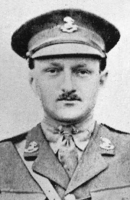
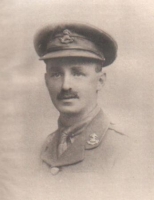
CPL David Wallace Crawford
1887 - 1916
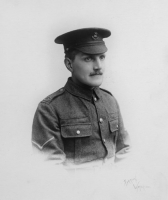
Lce-Corpl John Joseph Nickle
1894 - 1916
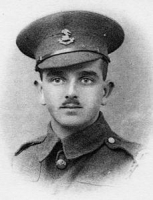
Pte 17911 Morton Neill
1897 - 1916
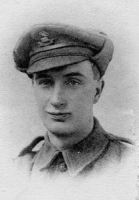
Lieut Edward Stanley Ashcroft
1883 - 1918
Pte 15590 Sidney Bertram Heyes
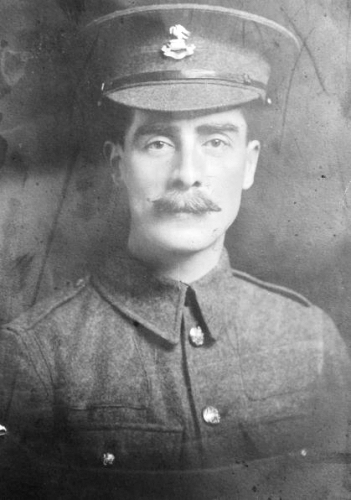
- Age: 42
- From: Liverpool
- Regiment: The King's (Liverpool Regiment) 17th Btn
- Died Monday 20th March 1916
- Commemorated at: Mericourt L'abbe Cc Ext
Panel Ref: III.H.25
CWGC, GRO and baptism all record his name as Sidney.
Sidney Bertram (Bertie) was born in Bootle in 1873, the second son of William Henry Heyes, a colliery agent, and his wife Sarah (nee Crierie) who were married on the 02nd June 1870 at St Silas' Church, Pembroke Place. William was a coal agent of Brownlow Street, father James a cabinet maker, whilst Sarah was of Eskine Street, father Jacob a surveyor.
He was baptised as Sidney on the 15th May 1874 at St Mary's Church, Bootle, his parents address then was 13 Marsh Lane.
In 1881 the family lived at 26 Orrell Park, Walton, and consisted of his father, William aged 41 and a colliery agent, Sarah aged 40, and their then three children; Sidney 7 at school, elder brother Arthur W. 9 at school, and a younger sister Ethel M. 4. The family also employed a servant.
Bertie played Hockey for Warbreck Hockey Club, the team took their name from Warbreck Road, close to where he was living at the time. They were a team of Liverpool College Old Boys. The club disbanded in 1899 and Bertie joined West Derby HC. He made his debut for Lancashire in 1898 playing 25 times for the county and in 1899 he was chosen to play for England against Wales but injury prevented his appearance but in 1903 he played in England’s first ever fixture against Scotland winning 5-0. In 1900 he played left half in the first North side to beat the South after ten years of trying and in the 1902 Boxing Day Cheshire v Lancashire 1-1 game he was described as “the best of a sound defence.”
In 1901 the family live at 22 Moss Lane, Walton, when William, aged 62, is a coal salesman, Sarah is aged 61, Arthur 29 is a provisions salesman and Sidney, aged 27, is shown as a corn salesman. He worked at the Liverpool Corn Exchange as a broker.
The 1911 Census finds the family still living at 22 Moss Lane. His father, William, is a 71 year old retired colliery agent, his mother Sarah is 70 years old. They have been married for 40 years, and have had 3 children. There are two children in the household; Sidney is aged 37 a corn broker, Ethel Mary is 34. The family still have a servant.
On 31st August 1914, Bertie, aged 41, enlisted at St George's Hall, Liverpool as Private 15990 in the 17th (Pals) Battalion of The King's Liverpool Regiment, giving his age as 38 years and 200 days, as those over 40 years were not eligible at the time to enlist. He gave his Christian name as Sydney.
He was billeted at Prescot Watch Factory from 14th September 1914, he trained there and also at Knowsley Hall. On 30th April 1915 the 17th Battalion alongside the other three Pals battalions left Liverpool via Prescot Station for further training at Belton Park, Grantham. They remained here until September 1915 when they reached Larkhill Camp on Salisbury Plain.
He served in France from 07th November 1915, no doubt seeing action as some 20 of his comrades in 17th Battalion were killed in January and February 1916.
The Battalion was brought out of the line in mid-March and on 20th March his company, C Company, was paraded for a surprise kit inspection, when eleven of them, including Bertie Heyes, were found to have lost or mislaid their gas helmets. They were immediately brought before their Commanding Officer, Lieutenant Colonel B. C. Fairfax, who sentenced them all to 1 day, Field Punishment No. 1. This was introduced into the British Army to replace flogging. It was a humiliating punishment and somewhat sadistic, for the miscreant was to be bound to a wagon wheel or other fixed object for up to 2 hours during the day in such a position that he was clearly visible to his comrades. They were also compelled to do some heavy demanding manual tasks. Prior to undergoing their punishment, each man was examined by the Battalion Medical Officer Lieutenant T. B. Dakin, who despite having treated Heyes just 24 hours earlier for gastric catarrh declared him "quite able to be tied to a wheel". The fact that being tied to a wheel was only part of the punishment was to have a devastating effect on Bertie Heyes. He was actually 42 years old and the oldest of all eleven men, but like the others had to firstly dig a hole for the disposal of rubbish before being made to march at the double around the square for some ten minutes. After then being tied to a wagon wheel, allegedly for only 30 minutes, they were released and again forced to march at the double around the square. The official report says that at about 6.40pm, ten minutes after being untied, Heyes complained of feeling unwell and asked for permission to drop out. The Provost Sergeant stated that he readily agreed to this request and accompanied Heyes to the Medical Inspection Room where he complained of acute pain below his right lung and had difficulty breathing. He allegedly then collapsed and died whilst awaiting further medical attention. A subsequent enquiry, ordered by Lieutenant Colonel Fairfax and presided over by Major G. F. Higgins, found that the probable cause of death was Cardiac Syncope, a heart attack which could not have been foreseen. His death certificate recorded the cause of death as "Died of Sickness".
Another of those who were punished with Heyes was 15771 Private W. Dunn who in 1970 spoke to Graham Maddocks and is quoted in Graham’s book as saying:
“We were all given Field Punishment Number One and as the Colonel passed sentence on us he said : ‘I award you this punishment as an example to the Battalion - I am your father, you are my children....After we had been tied up for the second time, and released, we were once again made to run around the square in double time. It was then that Private Heyes collapsed on the road in front of me, crying ‘I can’t go on, I can’t go on’. I stopped and tried to help him up, and he just died in my arms! Some time later, when I was on leave, I had to go and tell his mother what had happened to him”.
The fact that Private Dunn was not required to give evidence at the Enquiry, and the discrepancies between his recollection and the statements made by the officers concerned, raises the suspicion of a cover-up. Whatever the truth, there was quite a public outcry.
The Illustrated Sunday Herald newspaper’s leading writer Robert Blanchford took a keen interest in the case and in fact others concerning this type of field punishment. For Blatchford the punishment was ‘Boche-like’; a ‘Hun-like torture’ authorised by ‘doltish martinets.’ He stressed that the army currently fighting in France and elsewhere was made up of patriotic volunteers, who had left decent jobs for the good of their country. Moreover, the army was ‘the King’s Service … not a reformatory for the punishment and reclamation of refractory hooligans and thieves.’
Questions were asked in Parliament with Quaker MP Philip Morrell particularly involved. During a debate in the Commons on 21st December 1916 he brought up the case of Bertie Heyes but did not actually name him. Instead he referred to an interview with the Evening Standard given by General B E W Childs who was Director of Personnel Service. The transcript of the interview is reproduced here, taken from Graham Maddock's book" Liverpool Pals". It is quite a contrast to the version of events recalled, with clarity, some 54 years later by Private Dunne.
"The soldier concerned, together with eleven other men, was sentenced to one day's field punishment No.1. On the morning upon which he was sentenced, he was medically inspected by the medical officer of the battalion, who certified him as fit to undergo the punishment. The field punishment consisted of fatigue. From 1.45 to 4.40 the men were employed in digging a hole for the disposal of rubbish. From 4.40 until 6 they were doing nothing. They were then confined under the conditions laid down in the Rules for Field Punishment, for half an hour. Here, it should be noted that the maximum period allowed is two hours. Subsequent to this, the soldier concerned, whilst on the march, asked leave of the provost-sergeant to fall out, as he did not feel well. The sergeant himself took the man to the medical inspection room, where he was placed on a stretcher and made as comfortable as possible. He complained of acute pains below the right lung and difficulty in breathing. He shortly afterwards collapsed and died.
A post mortem examination was held the next day, at which the Lieutenant Colonel, a major, two captains and an expert bacteriologist were present. They investigated every organ of the man's body, and apart from some slight trace of fatty disease of the heart, there was no other evidence to the naked eye of the cause of death. In the words of the finding of the post mortem the only suggestion is that of an acute attack of dilation of the heart supervened".
Whether there was a cover-up or not a public outcry over Field Punishment No.1 had begun. Field Punishment No 1. was available to courts martial in theatres of operations for offences that ranged from losing equipment to drunkenness and from selling rations or supplies to attempted rape. The significant thing about the punishment, however, was the requirement that the offender be tied up for two hours a day for three consecutive days out of four and for a period totalling up to 21 days. The tying up was designed as a warning to others and a humiliation for the offender and it harkened back to the old shaming punishments of the stocks and the pillory. But, like these, it often had the opposite effect from that intended. In particular, the variants that were developed on how to tie up the offender evoked sympathy and incensed the rank and file. Nevertheless, it would appear to be common practice in the Kings Liverpool Regiment as Lieutenant Colonel S.C. Marriott, who commanded a territorial battalion of professional soldiers wrote home early in 1916 explaining to his father how he was bringing his men up to a new level of discipline:
… the last time we went down for a rest I had as many as 31 men tied to the wheel at the same time. In the old days this would have been heart breaking [in the Territorials] but nowadays it is very different, all sentiment has gone to the winds. Even Eckes, my second in command, had his faithful servant strung up for forgetting to put his anti-gas helmet over his shoulder one day. Eckes did not like it at all but realises the necessity of these things now.
Blatchford’s article appears to have crystallised a growing popular disquiet. It encouraged a wave of protest letters and petitions from individuals and organisations. The War Office enquired of French and Italian allies about how they punished in the field. Senior generals were consulted and most insisted that the punishment was necessary. Sir Douglas Haig, for example, thought that removing men from the Western Front to prison would provide a wrong signal and allow men to shirk their dangerous duties. He reiterated the belief that the stigma provided by the punishment was good both for the offender and as a deterrent to others. Moreover, he feared that abolition would have disastrous consequences and would mean that:
… a far larger percentage of those men whose moral fibre requires bracing by the daily fear of adequate punishment would give way at moments of supreme stress, and that recourse to the death penalty would have to become more frequent.
The outrage expressed across the country was such that the army council thought it necessary to draw up precise details of how the punishment was to be carried out in future and particularly without the brutal extras that had come to characterise it. A watercolour sketch was prepared of what Field Punishment No 1 should look like. The scarcely visible pencilled comments noted on the sketch emphasise the sensibility felt at the highest military levels, who seem to have been more aware and more considerate of popular opinion than Haig. The ropes were not to look too tight. The rope at the top of the post was to be lowered otherwise ‘it looks like garrotting’. Perhaps most significantly: ‘Make the post look entirely unlike the Cross.’ Other sketches followed and in January 1917 a printed form was issued with an illustration on one side and detailed instructions on the other of how the punishment should henceforth be carried out. The instructions stated specifically that a man’s feet were not to be tied more than 12 inches apart and that he must be able to move them three inches; more significantly, if a man’s arms and wrists were tied, there was to be at least six inches’ play between them, and the fixed object and they were to be tied either at a man’s side or behind him. A subsequent instruction declared that Field Punishment No 1 should only be awarded for offences of ‘a disgraceful or insubordinate nature or for drunkenness’.
Despite the furore Field Punishment No. 1 was not to be abolished until 1923.
Bertie Heyes had enlisted as part of the Corn Exchange contingent and as we have read was a former international hockey player. At his age he almost certainly had no obligation to enlist and it seems so unfair that such a man, a volunteer, should die so unnecessarily. Ironically, Fairfax was himself to suffer the effects of exposure to gas - it’s not known whether he had his gas mask with him!- on 29th July that year, was treated at 38 Casualty Clearing Station and then evacuated to England, where he survived the war but never returned to the Pals. Major Higgins who presided over the Enquiry was himself killed in action on 10th July 1916, while 4 of those punished with Bertie Heyes were also to lose their lives before the end of the war.
Bertie now rests at Mericourt-l’Abbe Communal Cemetery Extension, Grave III H 25. His headstone bears the epitaph:
"HE TROD THE PATHS OF DUTY NOR SHRANK WHEN HONOUR CALLED"
In the early summer of 1915, Commonwealth forces relieved French troops on this part of the front and Mericourt-Ribemont Station became a railhead. The extension to the communal cemetery at Mericourt was begun in August 1915 and was used chiefly by field ambulances until July 1916, when it was closed until the German advance of March 1918. From March 1918 to August 1918 it was used by units engaged in the defence of Amiens. After the Armistice, Rows G and K of Plot III were added when isolated graves (only one of which could be identified) were brought in from the battlefields north-east of Mericourt. There are now 411 Commonwealth burials and commemorations of the First World War in the extension. 73 of the burials are unidentified and there are special memorials to two casualties buried in the German cemetery at Clery-sur-Somme whose graves could not be found. The extension also contains 11 German burials. The extension was designed by Sir Edwin Lutyens.
His death was reported in the Liverpool Echo on Saturday 01 April 1916:
"PAL'S" DEATH IN FRANCE.
The flag is flying half-mast on the Liverpool Corn Exchange to mark of respect to the memory of Private Sidney Bertram Heyes, of the 17th King's Liverpool Regiment, who died from heart failure while on active service. He was a broker on the Atlantic News Room prior the war. He joined the colours on the formation of the " Pals’ " battalion, though over the age limit, and had been in France during the past five months. He was the younger son of the late Mr. William H. Heyes, Moss-lane, Aintree, and of Mrs. Heyes, of Quarry Bank, Thingwall-road. Wavertree.
He was announced as killed in action in the Liverpool Daily Post on Saturday 08 April 1916:
Died.
King’s(Liverpools) - Heyes, 15590, S. B.
His effects and medals were sent to his mother who in 1919 was living at 4 Ryecroft Road, Great Meols, Cheshire.
His personal items included a metal pencil box, mirror in case, 2 cases containing correspondence, disc, handkerchief, diary, jack knife, cig case and cigs, metal watch, penknife, scissors and card case.
His father died, aged 75, in the December quarter of 1915.
Sidney is commemorated in St Nicholas’s Church on the memorial for those members of the Corn Exchange who gave their lives.
Grateful thanks are extended to James Ormandy of The Hockey Museum for providing the details of Bertie Heyes' domestic clubs and his international appearances for England.
We currently have no further information on Sydney Bertram Heyes. If you have or know someone who may be able to add to the history of this soldier, please contact us.
89th Brigade On This Day.
110 Years Ago.The Battle of the Transloy Ridges begins. more....
Killed On This Day.
(110 Years this day)Sunday 15th October 1916.
Pte 30280 James Patrick Doyle
25 years old
(110 Years this day)
Sunday 15th October 1916.
Pte 34608 Thomas Foster
19 years old
(110 Years this day)
Sunday 15th October 1916.
Pte 53107 Joseph Green
32 years old
(110 Years this day)
Sunday 15th October 1916.
Pte 11282 Stephen Hynes
21 years old
(110 Years this day)
Sunday 15th October 1916.
Pte 32717 Evan Lee
25 years old
(110 Years this day)
Sunday 15th October 1916.
Pte 34271 James Vickers
21 years old
(108 Years this day)
Tuesday 15th October 1918.
Cpl 15764 Alan Douglas Ellison
30 years old