
1885 - 1916
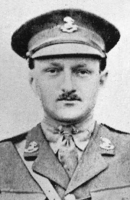
CPL David Wallace Crawford
1887 - 1916
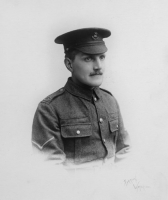
Lce-Corpl John Joseph Nickle
1894 - 1916
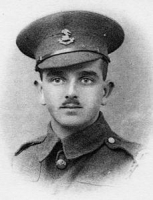
Pte 17911 Morton Neill
1897 - 1916
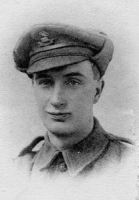
Lieut Edward Stanley Ashcroft
1883 - 1918
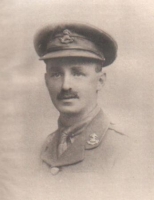
Pte 24592 John Henshaw
- Age: 29
- From: Liverpool
- Regiment: The King's (Liverpool Regiment) 17th Btn
- K.I.A Thursday 12th October 1916
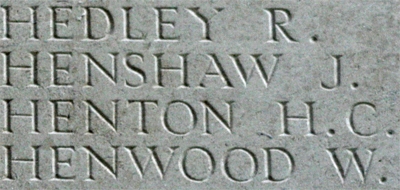
- Commemorated at: Thiepval Memorial
Panel Ref: P&F1D8B &8 C.
John Henshaw was born in 1887 in Liverpool and was the son of James Henshaw and his wife Mary (nee Bowes) who married on the 25th April 1875 at Sacred Heart, Liverpool. James was of 15a Charles Street, father George, whilst Mary was of 33 Sherdley Street, father Michael.
The 1891 census shows James and Mary and their family were living at 18 Warren Street, Mount Pleasant, Liverpool. They were both fish and poultry dealers operating in St Johns Market, Liverpool. Their 14 year old daughter Mary was assisting them in the business and their other children were Alfred aged 13, James 10, Thomas 8, Rose 5, John 3 and Arthur Peter aged 2.
By 1901 the family were living at 28 Pleasant Street. John’s father, aged 47, is now described as a master poulterer and is an employer, mother Mary is aged 49. Living at home are all the children except Alfred who appears as a boarder in a household in Northumberland, he is also a poulterer. Daughter Mary aged 25, is a fishmonger, James aged 20 is a poulterer, Thomas is 18 is a poulterer, Rose is 16, John is 14 and Peter is 12.
John’s sister Rose died in 1907 at the age of 21.
The 1911 census shows John’s parents living at 114 Leopold Road with two of their sons Alfred aged 33, a poulterer and Arthur aged 22 who is working as a ships steward. His parents are shown as having had nine children, four of whom had died. John aged 23, is recorded as a bar attendant at 67 Oxford Street, with the licensed victualler Morgan Rees Taylor.
Of the rest of John’s siblings: Mary married in 1901, James was a ships steward and Thomas was married with 2 young children and was working as a poulterer and fishmonger at Muirheads in Leece Street.
John enlisted in Liverpool and was serving in the 17th Battalion, The King’s Liverpool Regiment as Private No 24592 when he was killed in action on the 12th October 1916 aged 29 during the Battle of the Transloy Ridges which was part of the ongoing Somme Offensive.
17th Bn War Diary: Battle of Transloy Ridge –
11-10-16 - Gird Trench/Gird Support – Battalion in front line and support trenches. British bombardment of enemy front line system commenced about midday. Hostile shelling was intermittent throughout the day.
12-10-16 - Our bombardment continued. Enemy reply weak. 2.5 p.m. Zero hour. Attack on German front line system commenced. Enemy wire was found to be uncut and attack was unsuccessful. Hostile machine gun fire was very heavy and caused many casualties. Battalion H.Q. and Support Trench were heavily shelled throughout afternoon and evening. […] During this action all communication had to be carried out by runners and carrier pigeons as all wires were being continually cut by enemy shelling.
Casualties: 5 officers killed, 5 officers wounded, 38 OR killed, about 225 OR wounded/missing etc.
Graham Maddocks, in “Liverpool Pals” p.140, adds: “As the whistle blew, the 17th Battalion left its trenches to move forward. […] As soon as the attacking waves left their trenches the enemy artillery began to register on them, and at the same time, the defending infantry commenced a murderous rain of fire. […] Although their numbers had been depleted by the British bombardment, they were trained and experienced soldiers, well dug in on high ground, and for the most part, looking out on uncut wire. As such, it was virtually impossible for them to miss the City Battalion men struggling to advance in the mud towards them. The 17th Battalion, on the left, was particularly badly hit, as its portion of No Man’s Land contained a slight rise in the ground, and as the troops emerged onto it they were silhouetted against the sky and became easy targets. Those on the left of the attack, who managed to avoid the hail of bullets and make it to the German wire, then found that it was totally uncut, and thus trapped, they too became easy targets, to be picked off almost at the enemy’s will. It was hardly surprising that, seeing the first waves being wiped out, some of the following waves turned back and made for their start lines. These lines were now packed with other waves of troops, however, and the fleeing men added to the congestion already there, and became easy prey for the German gunners. There is some evidence also, to suggest that at this stage, the British trenches were also being hit by their own heavy artillery shells which were falling short.”
John was originally reported as Missing.
Reported missing in the Liverpool Daily Post on the 16th November 1916:
King’s (Liverpool Regt.) - Henshaw, 24952, J.;
John's body was not recovered or was subsequently lost as he has no known grave and is commemorated on the Thiepval Memorial.
The Thiepval Memorial, the Memorial to the Missing of the Somme, bears the names of more than 72,000 officers and men of the United Kingdom and South African forces who died in the Somme sector before 20 March 1918 and have no known grave. Over 90% of those commemorated died between July and November 1916.
On 01st August 1932 the Prince of Wales and the President of France inaugurated the Thiepval Memorial in Picardy. The inscription reads: “Here are recorded the names of officers and men of the British Armies who fell on the Somme battlefields between July 1915 and March 1918 but to whom the fortune of war denied the known and honoured burial given to their comrades in death.”
In the Liverpool Echo, on 30th July 1917 his family paid tribute to Jack who had been reported missing since the previous October and had obviously only then, some nine months later, been informed of his official status of Killed in Action:
“Missing since October 12, 1916, now officially reported killed, in his 29th year, P. John Henshaw (our Jack), K.L.R. (Pals), fourth dearly-beloved son of James and Mary Henshaw, 14, Leopold Road. R.I.P. (Deeply mourned by all at home, and his three Brothers, serving with the colours.)
The Nottingham and Midland Catholic News also reported his death on Saturday 04 August 1917:
Private John Henshaw of the Liverpool "Pals," posted as missing since October 12th of last year, is now officially reported killed on or about that date. He was 28 years of age, and the fourth son of Mr. And Mrs. James Renshaw, of 14, Leopold Road, Kensington. Three of his brothers are serving with the forces. They are members of the Sacred Heart congregation.
Soldiers Effect to father James, Pensions to mother Mary.
His father died, aged 68, in 1921 and was buried on the 21st October 1921 at Ford Cemetery.
His mother died, aged 76, in 1926 and was buried on the 08th March 1926 at Ford Cemetery.
We currently have no further information on John Henshaw, If you have or know someone who may be able to add to the history of this soldier, please contact us.
89th Brigade On This Day.
110 Years Ago.The Battle of the Transloy Ridges begins. more....
Killed On This Day.
(110 Years this day)Sunday 15th October 1916.
Pte 30280 James Patrick Doyle
25 years old
(110 Years this day)
Sunday 15th October 1916.
Pte 34608 Thomas Foster
19 years old
(110 Years this day)
Sunday 15th October 1916.
Pte 53107 Joseph Green
32 years old
(110 Years this day)
Sunday 15th October 1916.
Pte 11282 Stephen Hynes
21 years old
(110 Years this day)
Sunday 15th October 1916.
Pte 32717 Evan Lee
25 years old
(110 Years this day)
Sunday 15th October 1916.
Pte 34271 James Vickers
21 years old
(108 Years this day)
Tuesday 15th October 1918.
Cpl 15764 Alan Douglas Ellison
30 years old