
1885 - 1916
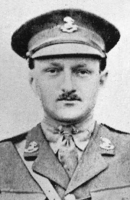
CPL David Wallace Crawford
1887 - 1916
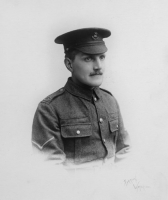
Lce-Corpl John Joseph Nickle
1894 - 1916
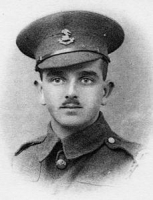
Pte 17911 Morton Neill
1897 - 1916
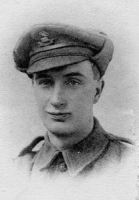
Lieut Edward Stanley Ashcroft
1883 - 1918
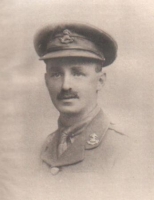
Pte 17194 Albert Henshaw

- Age: 28
- From: Garston, Liverpool
- Regiment: The King's (Liverpool Regiment) 18th Btn
- D.O.W Sunday 9th July 1916
- Commemorated at: Abbeville Cc
Panel Ref: V.B.11
Albert Henshaw was born on 20th August 1887 in Garston, Liverpool, Albert was the fourth child and second son of James Phythian Henshaw, and his wife, Mary Jane (nee Vicars). His parents were married on 5th June 1873 at St Saviour's Church, Liverpool. Albert was baptised on 28th December 1887 at St Peter's Church, Liverpool.
On the 1891 census the family are living at 51 Island Road, Garston. Father James P. is 47 years old and manager of Assurance Co. born in Liverpool, mother Mary J. 41 b.Liverpool, children William E. 15 scholar b.Liverpool, Thomas V. 13 scholar b.Liverpool, Edith 9 scholar b.Garston, Frederick 7 b.Garston, Albert 3 b.Garston, Arthur J. 1 b.Garston. Also 2 servants Elizabeth Finney 18, and Martha E Hazlewood 18.
The 1901 Census finds the family living at 41 Berkley Street, Toxteth. Albert is 13 years of age and lives with his parents, maternal aunt and five siblings. His father is a 57 year old insurance office manager born in Liverpool, whilst his mother is 51 years of age and was also born in Liverpool. His siblings are listed as William E. aged 25, an insurance clerk, Thomas V aged 23, an architects assistant, Edith aged 19, Frederick aged 17, and Arthur J. aged 10. Their maternal aunt is Hannah E. Adamson, a widow aged 40. There is also a servant listed; Elizabeth Dunn aged 28.
His father James Pythian Henshaw died on 03rd January 1907 aged 63.
Albert was educated at Liverpool Institute.
The 1911 Census finds the family living at "Lyndhurst", Brookfield Gardens, West Kirby. Albert is now 23 and is a sugar broker's clerk. His mother Mary Jane is declared as a widow. She advises that all six of her children have survived. Albert's siblings are listed as; William Edward a 35 year old insurance clerk, Edith aged 29, Frederick aged 27, a cotton salesman, and Arthur James aged 20 and also a cotton salesman.
Albert enlisted at St George's Hall in Liverpool on 02nd September 1914 joining the 18th Battalion as Private 17194. He gave his age as 27 years and 13 days and his occupation as a clerk (with Edward Grey & Co sugar merchants of Liverpool). He is described as being 5′ 3 and 3/4 inches tall, weighed 125 lbs and with a 36″ chest when fully expanded. He had a fresh complexion, grey eyes, brown hair and gave his religion as Church of England. His next of kin is shown as his mother, 1 Brookfield Gardens, West Kirby, previously of 33 Westbourne Road, West Kirby.
From the 23rd September 1914 he was billeted at Hooton Park Race Course and remained there until 03rd December 1914 when they moved into the hutted accommodation at Lord Derby’s estate at Knowsley Hall. On 30th April 1915 the 18th Battalion alongside the other three Pals battalions left Liverpool via Prescot Station for further training at Belton Park, Grantham. They remained here until September 1915 when they reached Larkhill Camp on Salisbury Plain.
He embarked for France France with his Battalion on board the SS Invicta on the 07th November 1915.
During the attack on Montauban on 01st July 1916, he was reportedly struck by shrapnel which wounded his fingers, leg and fractured his arm. He was treated at No 5 Casualty Clearing Station(Corbie) then transferred to 2 Stationary Hospital in Abbeville where he died of his wounds on the 09th July, aged 28, and according to Revd S. M. White was buried the same day in Abbeville Communal Cemetery, where he now rests.
For much of the First World War, Abbeville was headquarters of the Commonwealth lines of communication and No.3 BRCS, No.5 and No.2 Stationary Hospitals were stationed there variously from October 1914 to January 1920. The communal cemetery was used for burials from November 1914 to September 1916, the earliest being made among the French military graves. The extension was begun in September 1916. During the early part of the Second World War, Abbeville was a major operational aerodrome, but the town fell to the Germans at the end of May 1940. On 4 June, an attempt was made by the 51st Division, in conjunction with the French, to break the German bridgehead, but without success. Towards the end of 1943, eight large ski shaped buildings appeared near Abbeville. These proved to be storage units for flying bomb components an they were heavily bombed by Commonwealth air forces. Abbeville was retaken on 4 September 1944 by Canadian and Polish units. Abbeville Communal Cemetery contains 774 Commonwealth burials of First World War and 30 from the Second.
The Battalion Diary for 1st July describes the events of the day when Albert received his wounds:
18th Battalion Diary
At 6.30am the artillery commenced an intensive bombardment of the enemy’s trenches. Zero Hour – 7.30 am – the battalion commenced to leave their trenches and the attack commenced. The attack was pressed with great spirit and determination in spite of heavy shelling and machine gun enfilade fire which caused casualties amounting to 2/3rds of the strength of the Battalion in action. The whole system of German trenches including the Glatz Redoubt was captured without any deviation from the scheduled programme. Consolidated positions and made strong points for defence against possible counter attacks.
Graham Maddocks provides more detail concerning the events of the day:
As the first three waves began to move forward towards the German reserve line, known as Alt Trench and then on to the Glatz Redoubt itself, they suddenly came under enfilading fire from the left. This was from a machine gun which the Germans had sited at a strong point in Alt Trench. The gun itself was protected by a party of snipers and bombers, who, hidden in a rough hedge, were dug into a position in Alt Trench, at its junction with a communication trench known as Alt Alley. These bombers and snipers were themselves protected by rifle fire from another communication trench, Train Alley which snaked back up the high ground and into Montauban itself. The machine gun fire was devastating and it is certain that nearly of the Battalion’s casualties that day were caused by that one gun.
Lieutenant Colonel Edward Henry Trotter wrote in the conclusion of his account of the days action:
I cannot speak to highly of the gallantry of the Officers and men. The men amply repaid the care and kindness of their Company Officers, who have always tried to lead and not to drive. As laid down in my first lecture to the Battalion when formed, in the words of Prince Kraft:
“Men follow their Officers not from fear, but from love of the Regiment where everything had always and at all times gone well with them”.
Joe Devereux in his book A Singular Day on the Somme gives the Casualty Breakdown for the 18th Battalion as Killed in Action 7 Officers and 165 men and of those who died in consequence of the wounds 3 Officers and 19 men a total of 194 out of a total loss for the four Liverpool Pals Battalions of 257.
On 21st July 1916 The Deeside Advertiser reported Albert's passing as follows:
WEST KIRBYITE DIES FROM WOUNDS
"The death is reported, from wounds received in action of Private Albert Henshaw ("Pals") fourth son of the late James P. Henshaw and Mrs Henshaw, Westbourne Road, West Kirby. The deceased soldier was educated at the Liverpool Institute and was associated with the firm of Messrs Edward Grey and Co. sugar merchants, Liverpool. He had been at the front some eight months and was highly esteemed by all his comrades"
On 22nd July 1916 the Birkenhead News carried the following:
"Private Albert Henshaw, Liverpool Pals, fourth son of the late James P.Henshaw and Mrs.Henshaw, 33 Westbourne-road, died from wounds received on July 9th, death taking place in a hospital in France. Deceased,who joined the "Pals" soon after the outbreak of war, went to France last November. He was very enthusiastic about his military duties, and a general favourite with his comrades in arms. Another brother is at present serving with the same regiment. He was educated at the Liverpool Institute, being connected in civil life with the firm Edward Grey and Co., sugar merchants,Liverpool".
On 01st December 1916, his effects were sent to his mother at 33 Westbourne Road. No Pension record found
In 1919, Mary Jane completed a sworn declaration stating that her husband was deceased and apart from herself Albert had 3 brothers, William (43 years), Thomas (42 years) and Frederick (35 years) and 1 sister, Edith, who lived at 33 Victoria Road, West Kirby.
Albert earned the 1914-15 Star, British War Medal and Victory medal.
Research shows that a fourth son, Arthur James, born 1890, served as Lance Corporal in the 17th Battalion and was killed in action aged 26 years on 12th July 1916 just 3 days after Albert. Arthur James is buried in Delville Wood Cemetery, Grave XXXI K 38.
Albert Henshaw – Probate – 33 Westbourne Road, West Kirby to mother Mary Jane £209.2.8d.
Both brothers are commemorated on the family headstone at Toxteth Cemetery.
Albert is commemorated on the following Memorials :
West Kirby Civic Memorial
St Bridgets Church
Liverpool Institute Memorial, Mount Street, Liverpool (now LIPA)
Hall of Remembrance, Liverpool Town Hall, Panel 55 Left
His mother died on 14th December 1925.
We currently have no further information on Albert Henshaw. If you have or know someone who may be able to add to the history of this soldier, please contact us.
89th Brigade On This Day.
110 Years Ago.The Battle of the Transloy Ridges begins. more....
Killed On This Day.
(110 Years this day)Sunday 15th October 1916.
Pte 30280 James Patrick Doyle
25 years old
(110 Years this day)
Sunday 15th October 1916.
Pte 34608 Thomas Foster
19 years old
(110 Years this day)
Sunday 15th October 1916.
Pte 53107 Joseph Green
32 years old
(110 Years this day)
Sunday 15th October 1916.
Pte 11282 Stephen Hynes
21 years old
(110 Years this day)
Sunday 15th October 1916.
Pte 32717 Evan Lee
25 years old
(110 Years this day)
Sunday 15th October 1916.
Pte 34271 James Vickers
21 years old
(108 Years this day)
Tuesday 15th October 1918.
Cpl 15764 Alan Douglas Ellison
30 years old